

Balcony Corner Hanging Planters That Save Space
Balcony corner hanging planters turn the most ignored square footage on your apartment into a lush vertical display. If you’re working with a small balcony garden, corners are your secret weapon for big impact without sacrificing floor space.
Table of Contents
Transforming Dead Space With Balcony Corner Hanging Planters
I garden on a 6×8-foot east-facing balcony in zone 6b. The two back corners were dead zones — too dark for a pot, too tight for a chair. Then I started treating them as vertical real estate, and everything changed.
Hang a tiered basket in a corner and your eye is immediately pulled upward. That single move makes a cramped 60-square-foot balcony feel twice as generous. Corners give you wall support on two sides, meaning your setup is more stable and your plants can grow in three directions instead of one.
The goal is to build a living column of foliage that softens the hard architectural angle and makes your whole balcony feel like it was designed, not just furnished.
Assessing Your Corner Microclimate and Structural Limits
Before you buy a single hook or basket, spend one full day watching your corner. Recessed balcony corners behave very differently from the open railing area. The sun hits at odd angles, wind moves in unexpected patterns, and overhead load limits matter more than most renters realize.
Skip this step and you’ll plant the wrong things in the wrong spots with hardware that isn’t safe. Do it right and everything else gets easier.
Mapping Corner Sun and Wind Exposure
Check your corner at 8 a.m., noon, and 4 p.m. and take a photo each time. Corners that face south may receive 6+ hours of sun at the railing but less than 2 hours in the deep recess where the walls meet.
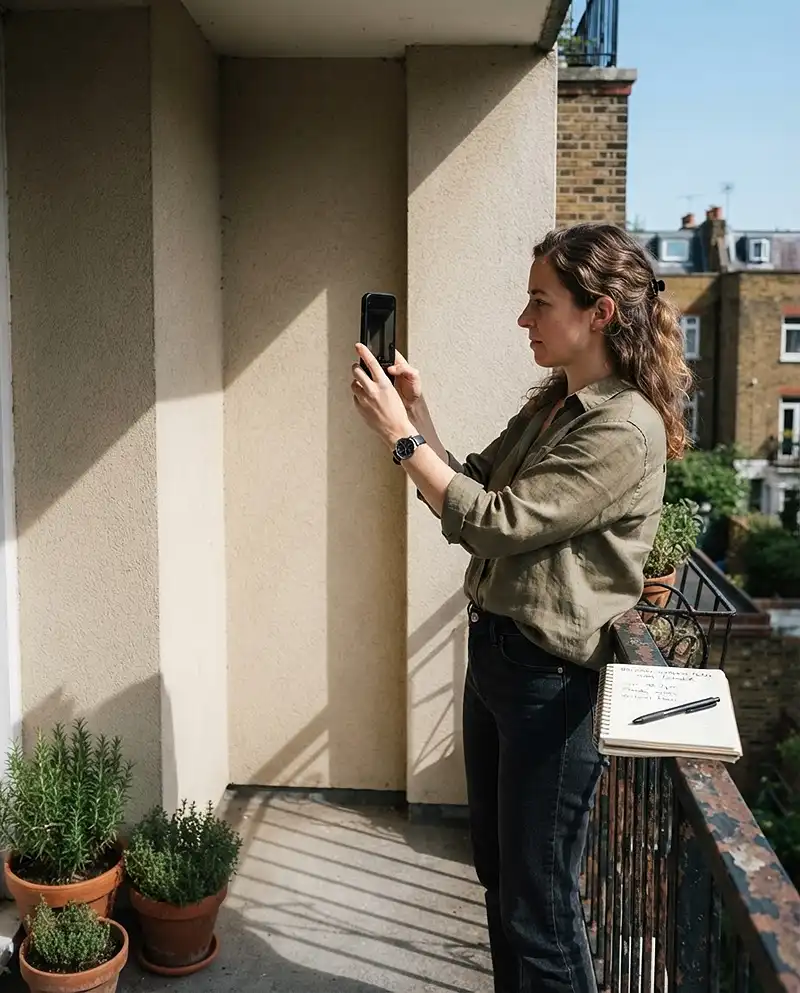
Wind is the trickier issue. Balcony corners create what’s called a “wind eddy” — air that curls around the wall junction and whips unpredictably. I lost a hanging fuchsia in August 2023 because I didn’t account for this. The soil dried out in under 24 hours, and the stems snapped in a gust I never saw coming from the front of the balcony.
For corners with strong eddy winds, stick to compact trailing varieties rather than long vines, and use heavier baskets that don’t swing freely. A balcony vertical garden setup with wall-mounted brackets handles wind better than a free-swinging basket on a single hook.
Load-Bearing Limits and Landlord Restrictions
A 12-inch hanging basket fully planted and freshly watered can weigh 15 to 20 pounds. Multiply that by three tiers and you’re looking at potential 60-pound overhead loads. That’s not a job for a drywall anchor.
Read your lease before drilling anything. Most apartment leases prohibit ceiling penetrations, and concrete balcony soffits require masonry anchors anyway — not standard toggle bolts. If drilling is off-limits, skip to the tension pole solution in the FAQ below. If it’s allowed, hire a handyman to locate a joist or use a masonry anchor rated for at least 3x your basket’s wet weight.
Top Hanging Planter Styles for Tight Balcony Corners
Not every hanging basket works in a corner. Round baskets bump into adjacent walls. Long horizontal hangers stick out awkwardly. What you need are shapes and systems specifically built for 90-degree spaces.
Tiered Macrame and Multi-Level Baskets
Quick Answer: A three-tiered macrame hanger lets you stack multiple plants on a single ceiling hook, turning the full vertical height of your corner into growing space. Place shade-lovers at the bottom, sun-seekers at the top.
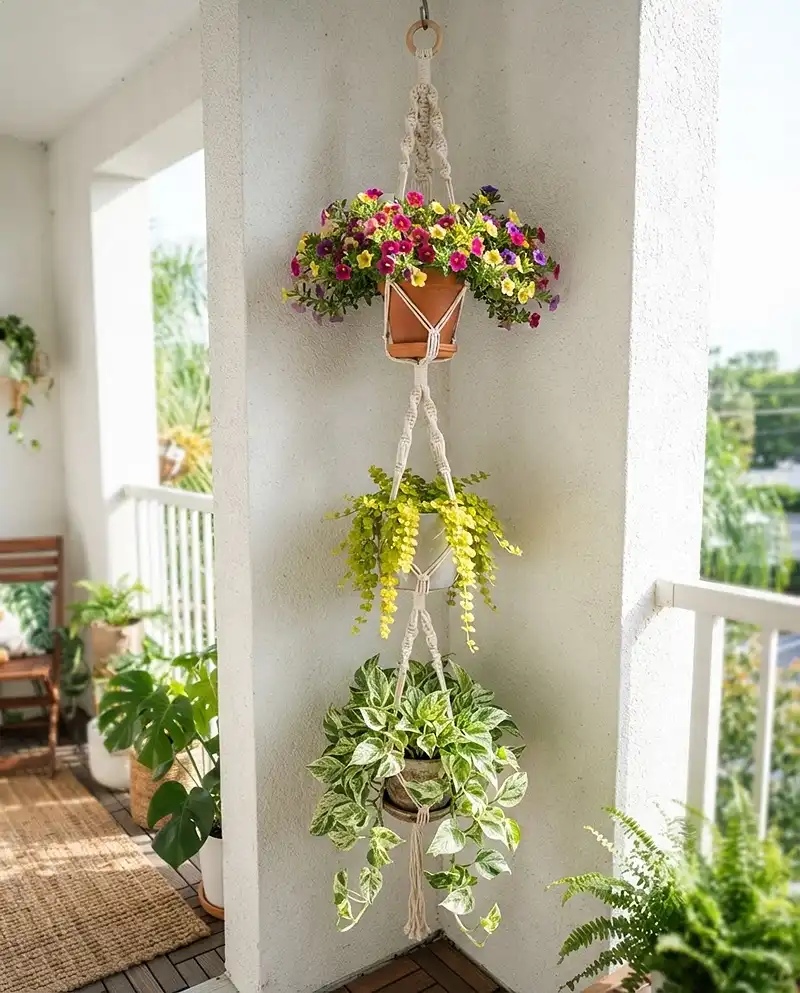
I installed a 5-foot cotton macrame hanger in my northeast corner in spring 2024. Bottom tier holds a ‘Marble Queen’ pothos (loves the dim light), middle tier has a golden creeping Jenny, and the top basket gets enough morning sun for a trailing calibrachoa. Three plants, one hook.
Look for macrame hangers with sturdy wooden or metal rings rather than just knotted loops — the rings distribute weight more evenly and don’t stretch over time. Opt for synthetic macrame cord if your corner gets rain exposure; natural cotton rots after two wet seasons.
Pro Tip: Add a staggered-length hanger so your tiers form a diagonal line rather than straight levels — it looks more intentional and lets light reach every basket.
Corner-Specific Bracket Planters and Corner-Fit Trellises
Quick Answer: Quarter-circle wire baskets mount flush into the 90-degree wall junction and waste zero space. Paired with a corner-leaning trellis, they create a climbing structure for vines that doubles as a privacy screen.
These baskets — sometimes sold as “wedge planters” or “corner wall baskets” — sit flat against both walls simultaneously. They’re lined with coco coir and hold a surprising amount of soil for their compact profile.
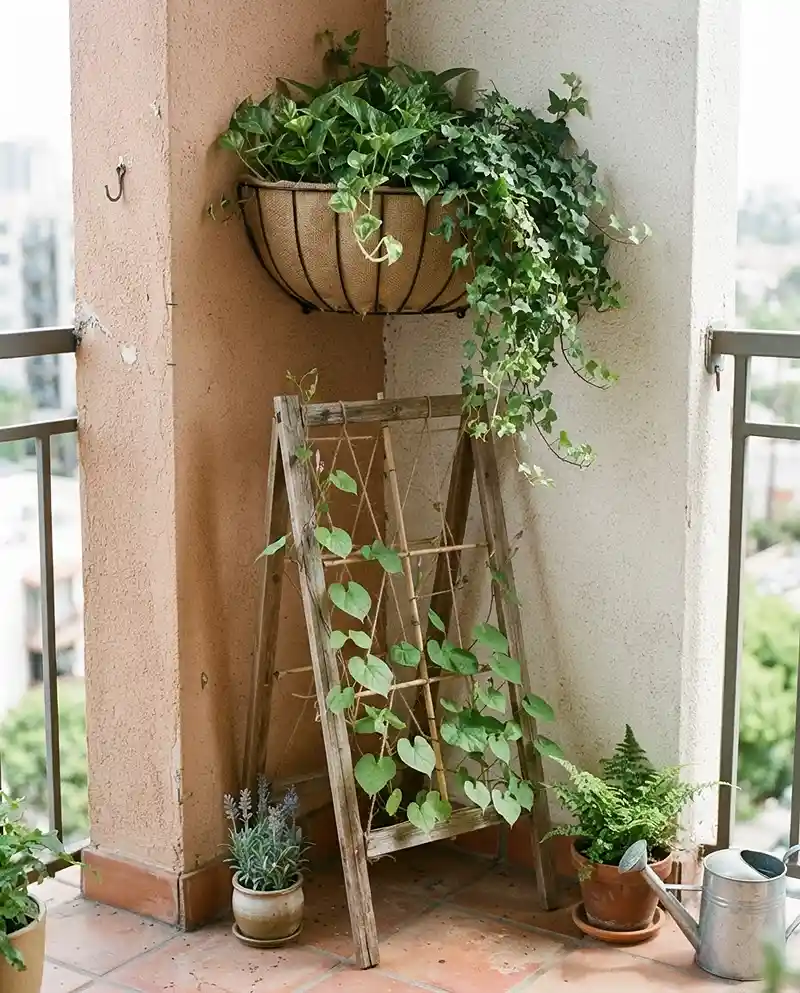
Pair one with a freestanding corner trellis (the A-frame style that leans into the corner without mounting) for a vertical gardening wall effect that costs less than $40 total. Train a ‘Heavenly Blue’ morning glory up the trellis in summer and the whole corner becomes a focal point.
Pro Tip: Line the back of wire baskets with burlap instead of moss — burlap retains moisture longer and breaks down more slowly in shaded corners.
Best Plants for High-Impact Corner Displays
The best balcony corner plants do two things: they trail downward to cover hardware and soften the hard edge of the building’s corner, and they tolerate the unique light and wind conditions of a recessed space. Choose “spillers” first, then “fillers” to anchor the center.
Lush Trailing Spillers: Pothos, Creeping Jenny, and Ivy
Quick Answer: Golden pothos thrives in shaded corners and produces 3-foot trailing vines by midsummer. Creeping Jenny (‘Aurea’ cultivar) works better in corners that get a few hours of direct sun and produces chartreuse cascades that glow in low light.
For deep shade corners, nothing beats pothos. It’s nearly unkillable, trails aggressively, and the ‘Golden’ and ‘Marble Queen’ varieties add color without needing sun. I’ve had a ‘Neon’ pothos produce 4-foot trails in a north-facing corner with no direct light whatsoever.
For a space saving garden idea that also provides privacy, plant ‘Glacier’ English ivy in two corner baskets and train the vines to meet in the middle across a horizontal wire. By late July it reads as a living wall panel rather than two separate pots.
Avoid Boston fern in very windy corners — the fronds shred in gusts and look ragged within two weeks. It’s a beautiful plant that belongs on a sheltered balcony, not an exposed corner.
Edible Cascades: Strawberries and Trailing Tomatoes
Quick Answer: Day-neutral strawberries like ‘Seascape’ and bush-variety cherry tomatoes like ‘Tumbling Tom Red’ produce fruit in hanging baskets all summer. Both need at least 6 hours of direct sun, so reserve them for south- or west-facing corners.
I grew ‘Tumbling Tom Red’ in a 12-inch basket on my sunniest corner in summer 2023. By mid-July the vines were trailing 18 inches below the basket and producing golf-ball-sized clusters of cherry tomatoes. The key is a deep basket — at least 10 inches — and feeding with liquid tomato fertilizer every two weeks starting in June.
Strawberries are even easier. Plant ‘Albion’ (a day-neutral variety) in April in zone 6b and you’ll get fruit by late June with no pollination fuss. One 12-inch basket holds four plants and produces enough berries to snack on throughout the season.
Pro Tip: Water edible corner baskets from below using a drip tray attachment — wet foliage in shaded corners invites powdery mildew on tomatoes faster than anything.
Soil and Hardware: Setting Up Your Corner Hanging Garden
Weight is the enemy of overhead hanging gardens. Every gram you add to your basket increases the load on your anchor point. The goal is maximum water retention with minimum dead weight — and that means rethinking standard potting soil.
Formulating a Lightweight, High-Retention Potting Mix
Use this ratio for all hanging corner baskets:
- 50% premium bagged potting mix (not “garden soil” — topsoil is 3x heavier when wet)
- 30% perlite for drainage and weight reduction
- 20% coco coir to hold moisture without adding bulk
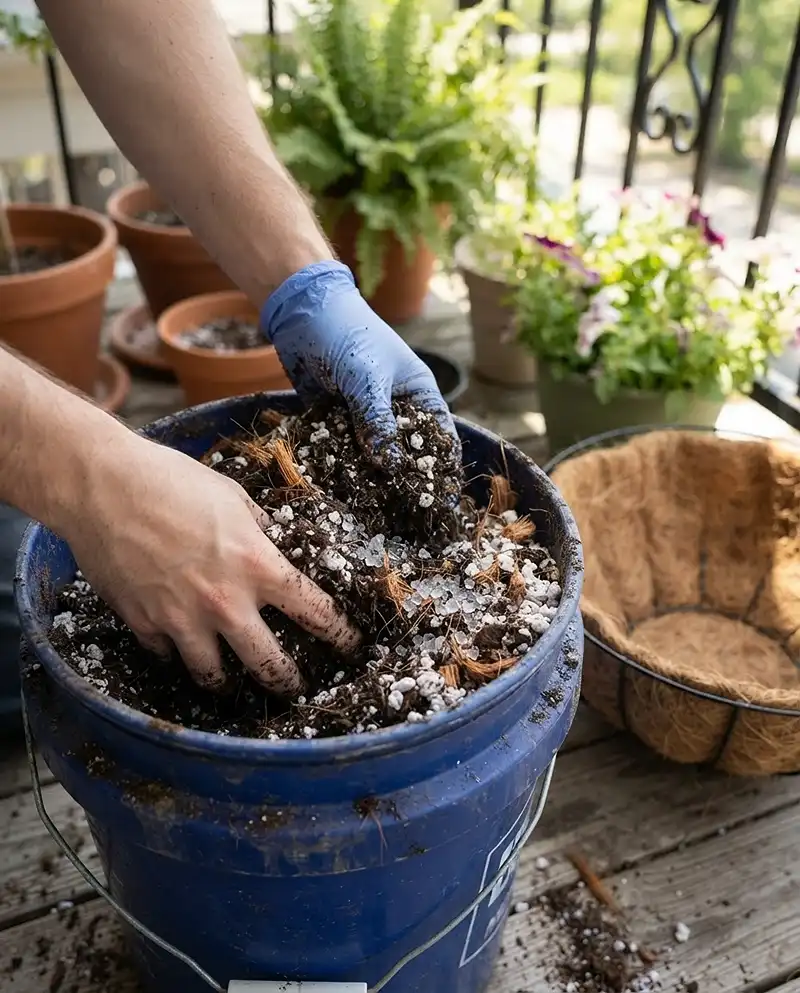
This blend weighs roughly 40% less than standard potting soil when wet. That difference matters enormously when you’re hanging multiple baskets from a single ceiling anchor. I mix mine in a 5-gallon bucket each spring and use it exclusively for all overhead containers.
Pro Tip: Add two tablespoons of hydrogel water-storing crystals per gallon of mix — they absorb water during irrigation and release it slowly, cutting watering frequency nearly in half for high baskets.
Heavy-Duty Hooks, Swivels, and Anchors
For concrete or masonry ceilings: use a carbide-tipped masonry drill bit and a wedge anchor rated for at least 50 lbs. For hollow gypsum board soffits: use a toggle bolt (the folding wing type, not a simple drywall anchor) rated for 30 lbs minimum.
Always add a swivel hook between the ceiling anchor and your basket’s chain. Swivels allow the basket to rotate freely in wind rather than torquing against a fixed point — this prevents the chain from loosening the anchor over time. Stainless steel swivels resist rust better than zinc-plated versions in outdoor conditions.
| Ceiling Type | Best Anchor | Min. Weight Rating |
|---|---|---|
| Concrete soffit | Masonry wedge anchor | 50 lbs |
| Hollow gypsum board | Toggle bolt (wing type) | 30 lbs |
| Wood joist (located) | Lag screw + eye hook | 75+ lbs |
| No drilling allowed | Tension pole system | Per manufacturer spec |
Maintenance Guide for High, Hard-to-Reach Planters
Hanging corner planters need a slightly different care routine than ground-level pots. They dry out faster, receive uneven light, and are harder to reach for pruning. A few adjustments to your routine keep them looking full and healthy all season without turning balcony care into a daily chore.
Watering Hacks for High Corner Planters
A long-reach watering wand (30 to 48 inches) is the single best tool investment for a hanging corner garden. It delivers water at soil level rather than splashing it across foliage, and it saves you from standing on a step stool every morning.
For baskets you genuinely can’t reach easily, try the ice cube method: place 4 to 6 large ice cubes directly on the soil surface each morning during peak summer heat. They melt slowly over 2 to 3 hours, releasing water at a rate the soil can actually absorb rather than letting it run straight out the bottom.
Always attach a drip tray with a clip-on basket saucer. This catches runoff and prevents muddy water from streaking your walls — a common annoyance covered in the problems section below.
Rotating and Pruning for Balanced Growth
Plants in a corner only receive light from one or two directions. The back of the basket — pushed against the walls — will thin out and die back if you don’t rotate the basket 90 degrees every two weeks. Set a calendar reminder; it takes 10 seconds and makes a visible difference within a month.
Prune trailing vines back by one-third once they reach 24 inches. This sounds counterproductive, but cutting back long, leggy stems encourages the crown to push out new branching growth, which creates the full, bushy look rather than a few sparse ropes.
For a complete approach to this type of apartment balcony garden care, keep a simple seasonal log of what you planted, when you pruned, and what worked. One season of notes saves years of guessing.
Common Problems and Solutions
Two issues come up again and again with balcony corner hanging baskets: soil that dries out shockingly fast, and muddy water staining your walls. Both are preventable with the right setup from the start.
Rapid Soil Dehydration and Dry Roots
Hot air rises and collects in balcony corners, especially against sun-warmed walls. A hanging basket in a south-facing corner can lose 80% of its moisture within 6 hours on a July afternoon in zone 7 or warmer. This isn’t just inconvenient — it stresses roots and stunts growth.
Beyond the coco coir mix above, incorporate hydrogel water-storing crystals into your potting blend. Use 1 teaspoon of dry crystals per 6-inch pot — they expand dramatically when wet and release water steadily as the surrounding soil dries. They roughly double the time between waterings in a hot corner.
Also consider self-watering inserts — reservoir trays that sit inside the basket and wick moisture upward. They’re available for most standard basket sizes and are worth every penny in a dry or heat-exposed corner.
Muddy Runoff Staining Corner Walls
Dirty water tracking down stucco or brick walls is a common complaint — and a lease violation risk in some buildings. The fix is simple but often overlooked: hang your baskets so they sit at least 4 inches away from the wall surface. This allows runoff to fall freely rather than running along the wall.
Use baskets with integrated sealed saucers on the bottom, not clip-on trays that can detach. And choose a lightweight, coarse potting mix — dense soil holds water poorly and flushes out with more force during irrigation, increasing splatter.
If staining has already occurred, a diluted white vinegar solution (1 part vinegar, 10 parts water) removes most mineral deposits from stucco without damaging the finish. Test on a small spot first.
balcony corner hanging planters FAQs
How do I hang a planter in a balcony corner without drilling into the ceiling?
Use a heavy-duty freestanding tension pole designed for floor-to-ceiling installation. These poles wedge securely between the floor and ceiling using a compression mechanism, leaving zero marks on the property. Most models include multiple adjustable arms for hanging 2 to 4 baskets at different heights. Look for poles rated for ceilings up to 9 feet and a minimum load capacity of 20 lbs per arm.
What size pot is best for a balcony corner hanging basket?
A 10-inch to 12-inch diameter plastic or fiberglass basket is the ideal size for most balcony corners. Smaller baskets dry out within hours in warm weather. Larger baskets exceed safe weight limits for most overhead anchors and look visually overwhelming in a tight space. Avoid clay or ceramic — they add unnecessary weight and can crack in freeze-thaw cycles.
How do I protect hanging corner planters from high winds?
Use rigid wire hangers rather than plastic S-hooks or lightweight chain, which can open or break in gusts. During severe storm warnings, unhook your baskets and set them on the balcony floor. Avoid brittle-stemmed plants like coleus or tall geraniums in exposed corners — choose flexible trailers like pothos or creeping Jenny that bend without snapping.
What are the best plants for a shaded balcony corner?
Golden pothos, ‘Marble Queen’ pothos, creeping fig, and trailing ‘Glacier’ English ivy all thrive in low-light corners with no direct sun. For a pop of color in shade, try ‘Dragon Wing’ begonias or impatiens. Avoid sun-dependent plants like tomatoes, petunias, or calibrachoa in corners that receive fewer than 3 hours of direct light per day.
How do I keep my hanging corner planters looking full all season?
Deadhead spent flowers weekly, rotate the basket 90 degrees every two weeks, and prune trailing stems back by one-third once they exceed 24 inches. Feed with a balanced liquid fertilizer every two weeks from May through August. Replace any plants that die back with new plugs from a nursery — most baskets can be refreshed mid-season without starting over.
Key Takeaways
- Balcony corner hanging planters unlock vertical space that most gardeners completely ignore — even a single tiered hanger can hold three plants in the footprint of zero floor space.
- Always assess your corner’s microclimate first: track sun exposure at three times of day and account for wind eddies before choosing plants or hardware.
- Use a lightweight potting mix (50% potting soil, 30% perlite, 20% coco coir) plus hydrogel crystals to cut watering frequency and reduce dangerous overhead weight.
- Rotate baskets 90 degrees every two weeks and prune trailing vines back by one-third once they hit 24 inches — both habits keep displays full rather than one-sided and leggy.
- For renters who can’t drill, a tension pole system solves the installation problem completely and works with any vertical herb ladder or hanging basket setup without leaving a mark.