
Designing a Small Garden
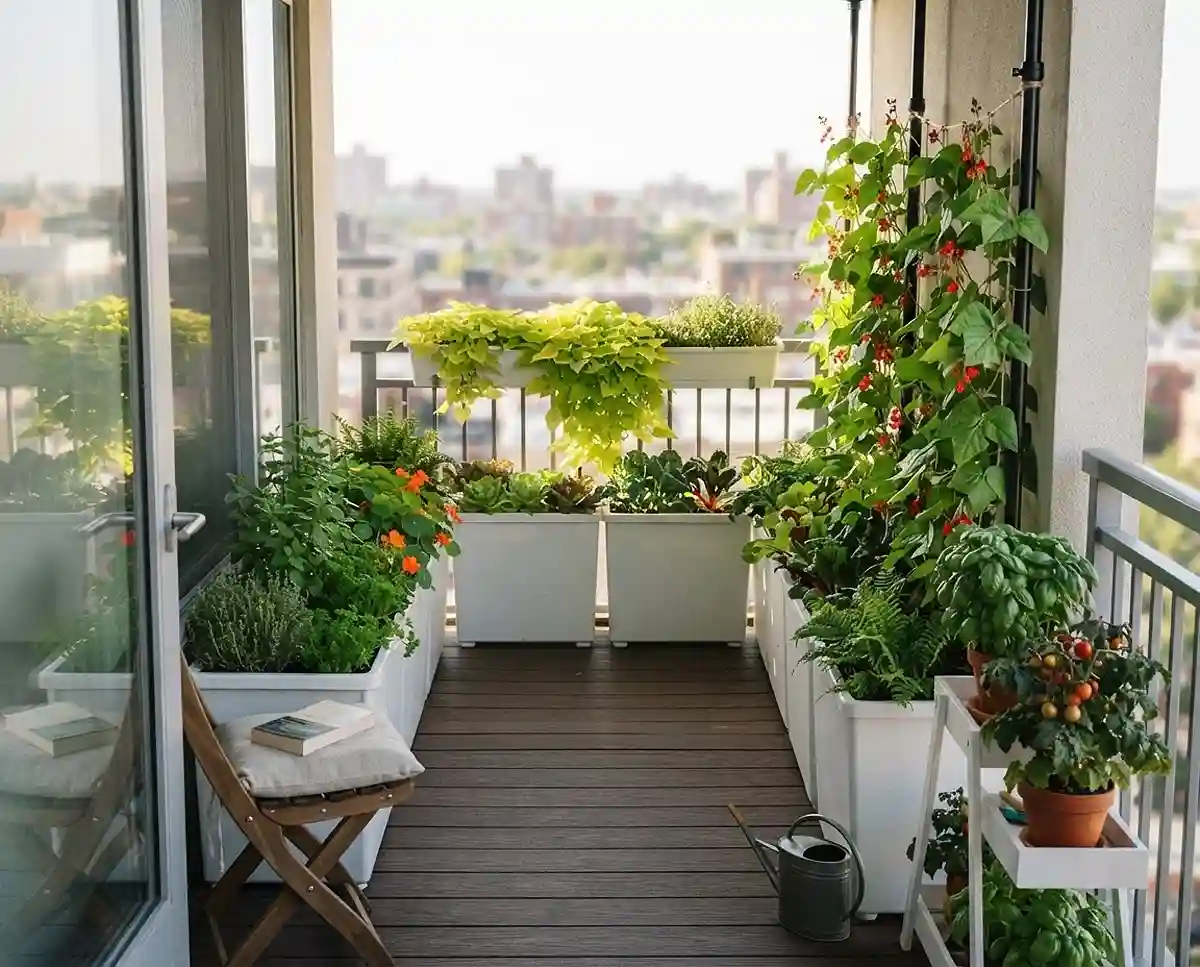
Designing a small garden on a tiny balcony takes discipline: a clear walkway, vertical growing, and matched pots. Here’s how my small balcony garden works.
I grow on a north-facing, 32-square-foot balcony in zone 6b. I’ve made every mistake in this guide, from tripping over pots to losing a cucumber crop to mildew.
Table of Contents
Designing a Small Garden: The Golden Rules for Tiny Balconies
Designing a small garden on 30 square feet is an exercise in strict spatial discipline. You can’t add floor, so you borrow air. Walls, railings, and the ceiling become growing space.
Three rules do most of the work:
- Grow up before you grow out. Every plant that leaves the floor hands square footage back to you.
- Protect the sightline. Keep the view past the railing open so your eye travels outward.
- Repeat one shape and color. Matching containers make 30 square feet read like 50.
That’s small space gardening in a nutshell: every inch has to earn its spot.
Auditing Your Tiny Space and Constraints
Measure and observe before you buy a single container. One tape measure and a sunny weekend of notes will save you from expensive mistakes.
Measuring Usable Square Footage and Walkways
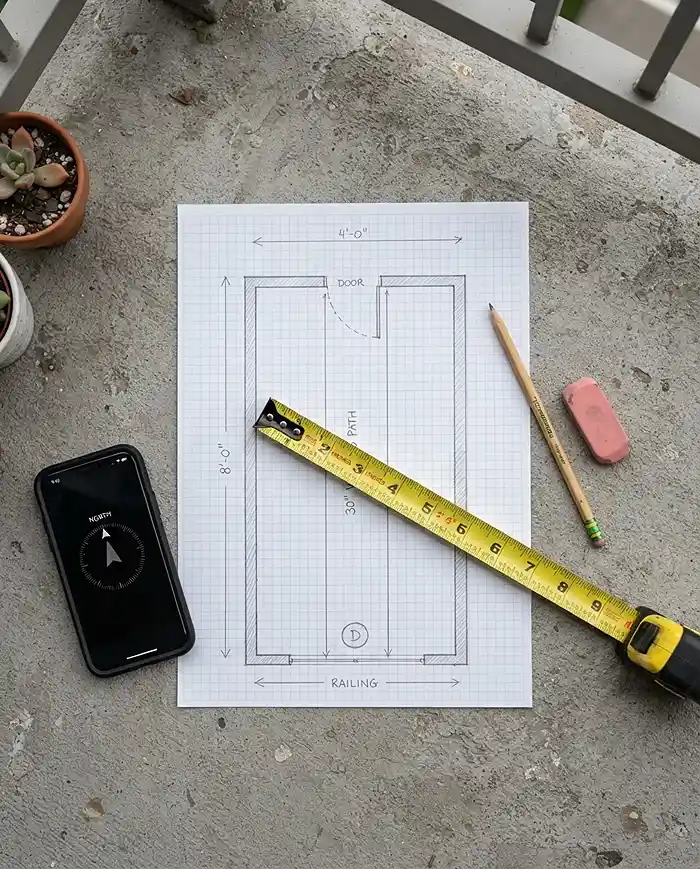
Draw your balcony floor to scale on graph paper, one square per 6 inches. Mark the door swing, the drain, and anything fixed, like an AC unit.
Then carve out an unobstructed central walkway of 24 to 36 inches. I use 30. That’s enough to carry a watering can and reach a chair without knocking anything over.
My first year, I skipped this step and crammed in 14 mismatched pots. I tripped twice and broke a ceramic planter.
Identifying Microclimates and Weight Limits
Track sun hours on a typical day, noting when light hits each corner. Six or more hours is full sun. Three to five is part shade.
Also find your wind corridors. Corners between buildings often funnel gusts and shred tall plants.
Renters, check your lease for weight limits. A 36-inch trough, 8 inches deep and wide, holds about 1.3 cubic feet of mix. Wet, that’s roughly 60 pounds before you add a plant.
Essential Layout Strategies for Cramped Footprints
These three floor plans fit the most plants into the least space, and each one protects your walkway. For more options, browse our balcony garden layouts.
| Layout | Best For | Floor Left Open | Watch Out For |
|---|---|---|---|
| U-Shape Perimeter | Rectangular balconies, shallow-rooted greens and herbs | Center walkway | Trough weight along the railing |
| L-Shape Corner Retreat | One sunny back wall, tall plants | One full corner | Tall plants shading short ones |
| Vertical and Railing | Balconies under 4 feet wide | 100% | Wind and lease rules |
The U-Shape Perimeter Plan
Set long rectangular troughs flush against both side walls and the front railing. That maximizes horizontal growing space and leaves the center bare for standing or seating.
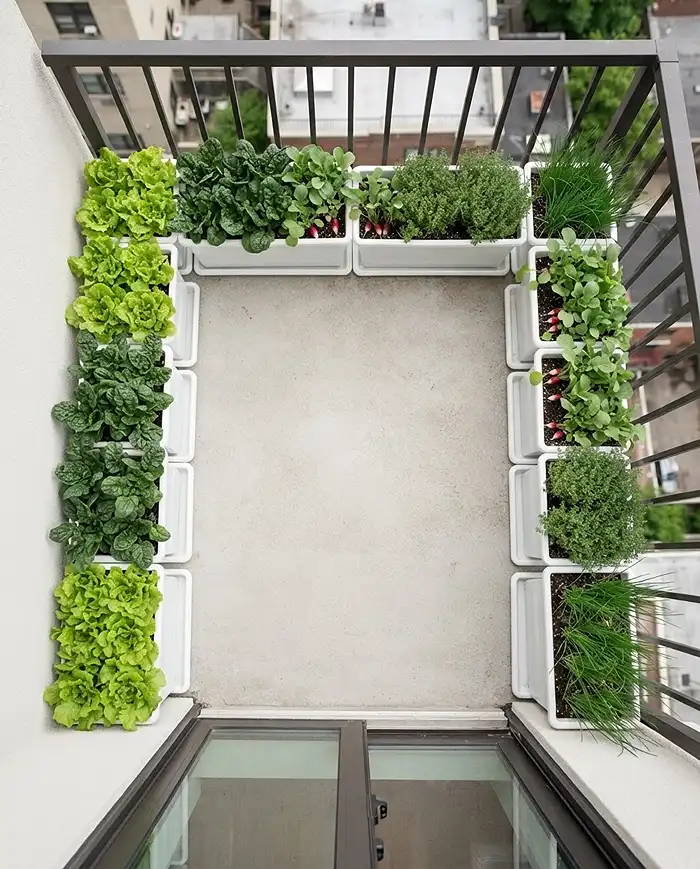
It suits shallow-rooted crops like lettuce, spinach, radishes, thyme, and chives. Our herb garden layout for a sunny balcony shows how to group herbs by water needs.
Keep troughs about 8 inches wide so the walkway survives.
The L-Shape Corner Retreat
Concentrate all tall plants and tiered corner stands against one side wall and the back apartment wall. You get a dense, immersive backdrop, and the opposite corner stays open for a reading chair.
Put the tallest plants at the far end of the L and step down toward the open corner so light reaches everything. A container garden layout with 5 pots makes a good starting cluster.
The Vertical and Railing-Focused Design
This plan keeps 100% of your concrete floor. Use floor-to-ceiling tension poles, a modular living wall, and heavy-duty saddle planters that grip the railing.
Last June, I ran two tension poles on a 3-foot-wide balcony and planted ‘Scarlet Runner’ beans at their bases. By August the vines reached 8 feet, and I picked about two quarts of pods.
Watch the wind. A loaded railing planter catches gusts, so choose locking brackets rated for the weight.
Selecting the Right Containers for a Tiny Footprint
Container geometry is a foundational step in designing a small garden. Swap wide, space-hogging round pots for sleek, flush-mounting shapes.
Space-Saving Troughs and Half-Pots
Choose narrow fiberglass troughs, 8 inches deep, which are light and weatherproof. Add flat-backed half-circle wall planters that sit flush against vertical surfaces.
A round pot wastes the gap where its curve meets the wall. Half-pots erase that dead space, which adds up fast across five containers.
Using Vertical Trellises and Tension Poles
Set a sturdy A-frame trellis inside a rectangular planter for climbers like pole beans or ‘Sugar Snap’ peas. Or use spring-loaded tension poles to support vines without drilling.
Both push growth into overhead space instead of letting plants sprawl into your seating zone. Keep poles to light loads, and confirm your ceiling can take the pressure.
Plant Selection for High-Density Layouts
Choose architectural plants with predictable, upright habits. Skip wide, messy bushes, because they’ll swallow your walkway by midsummer.
Layering Thrillers, Fillers, and Spillers
Build depth without using floor. Tall thrillers go in the back corners, compact fillers in the middle, and cascading spillers over the railing to draw the eye outward.
- Thrillers: ‘Sky Pencil’ holly or a dwarf canna in the back corners.
- Fillers: ‘Spicy Globe’ basil or ‘Durango Red’ marigolds in the mid-ground.
- Spillers: Sweet Potato Vine (‘Margarita’) draped over the railing.
Choosing Upright and Compact Cultivars
Pick columnar cultivars bred to grow straight up. ‘Sky Pencil’ holly (zones 5-9) reaches 6 to 8 feet but stays about 2 feet wide. ‘Karl Foerster’ feather reed grass (zones 4-9) makes a 4 to 5 foot upright plume.
For vegetables, grow dwarf patio types: ‘Patio Choice Yellow’ tomato, ‘Fairy Tale’ eggplant, and ‘Spacemaster’ cucumber. They stay compact instead of sprawling into your seating zone.
Check your zone on the USDA Plant Hardiness Zone Map, updated in 2023.
Roots in containers freeze harder than roots in the ground, so pick cultivars rated one or two zones hardier than yours.
Step-by-Step Guide to Executing Your Garden Layout
Follow this order so you never lift a heavy pot twice.
- Clean the balcony floor and clear the drain.
- Install vertical frames and railing planters first, before pots block access.
- Stage heavy corner anchor pots and troughs empty, in their final spots.
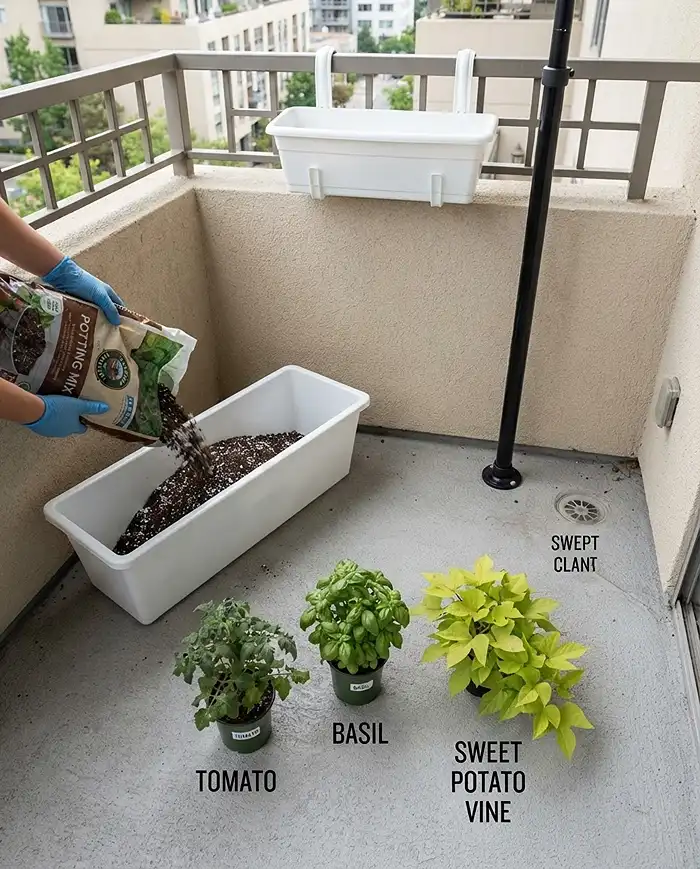
- Fill containers with lightweight potting mix, ideally blended with perlite.
- Plant last: tall in back, fillers in the middle, spillers at the railing.
Pro tip: Fill pots where they’ll live. A filled 16-inch pot easily tops 50 pounds.
Maintenance for High-Density Small Gardens
A packed layout needs a tighter routine. Small habits keep the space tidy and your seating clear.
Watering and Pruning in Tight Spaces
Put an exact-fit glazed drip tray under every container so muddy runoff never stains the floor. Bottom-water thirsty pots by filling the tray, letting it soak 20 minutes, then emptying it.
Prune trailing vines weekly. Snip anything within 6 inches of the walkway or your chair.
Common Problems & Solutions
Dense balconies usually fail in two ways: they feel cramped, or plants get sick from poor airflow. Both are fixable.
Claustrophobia and Visual Clutter
A crowd of mismatched, multicolored pots causes visual anxiety rather than relaxation. Unify them under one strict palette, like all white or all terracotta.
I swapped my 14 random pots for nine white fiberglass ones. The balcony felt twice as big, and every plant stayed.
Poor Airflow and Powdery Mildew
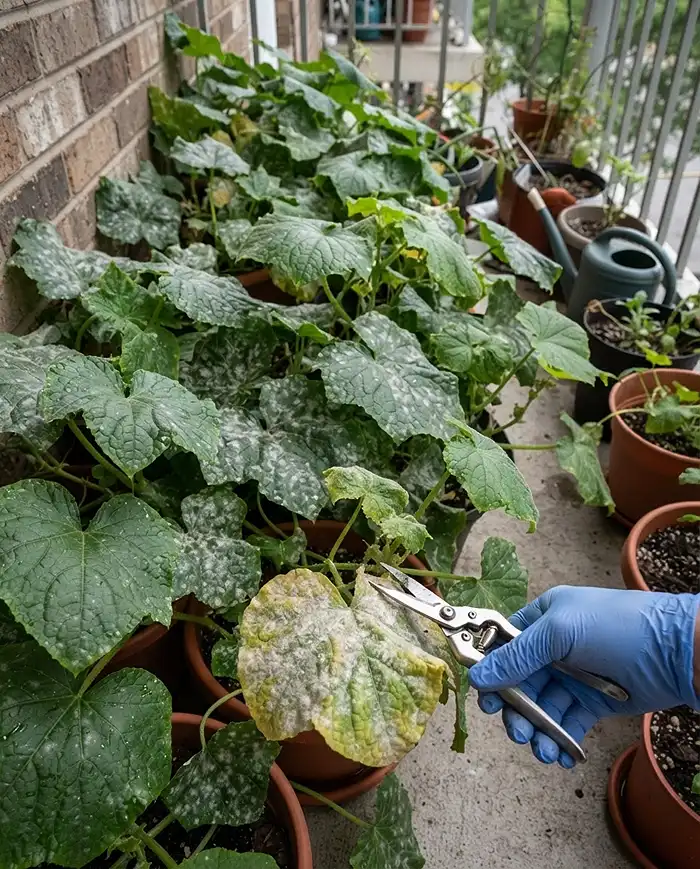
Powdery mildew [a fungal disease] looks like white flour dusted on leaves. It thrives where plants crowd and air stalls. In July 2022, it wiped out most of my ‘Spacemaster’ cucumbers in a packed corner.
The fix: aggressively thin the bottom 12 inches of interior foliage to restore wind circulation. Water at the soil line, not the leaves.
Frequently Asked Questions
How do you make a small garden look bigger?
Use light-colored planters to reflect ambient light, keep the center of the floor completely clear, and plant trailing vines along the railing. The vines blur the hard edge of the balcony, so your brain perceives more space than there is.
What is the best way to arrange pots on a balcony?
Use the rule of threes: cluster pots asymmetrically in odd numbers. Put the tallest planters in the far back corners and stagger medium and small pots in front of them. This creates organic depth instead of military-style rows.
Can I hang planters on the outside of my balcony railing?
Check your lease or HOA guidelines first. Many buildings prohibit outward-facing hardware because a falling pot can seriously injure someone below. If it’s allowed, use locking brackets, or choose inside-facing planters instead.
How much weight can a balcony hold?
It depends on the structure, so ask your landlord or building manager for the rated load. Wet potting mix weighs roughly 45 pounds per cubic foot, so a few large containers add hundreds of pounds quickly. Use lightweight mix and fiberglass containers.
What is the best layout for a very narrow balcony?
On balconies under 4 feet wide, go vertical. Tension poles, a modular living wall, and railing saddle planters keep the whole floor open, while side troughs would leave too little walkway.
Key Takeaways
- Designing a small garden starts with a scale drawing and a 24 to 36 inch walkway.
- Pick a U-shape, L-shape, or vertical plan based on your balcony’s width and sun.
- Use flush, rectangular containers and upright cultivars like ‘Sky Pencil’ holly.
- Match your pots, prune weekly, and thin the bottom 12 inches of foliage to prevent mildew.
- Check your lease for weight limits before loading up the balcony.