
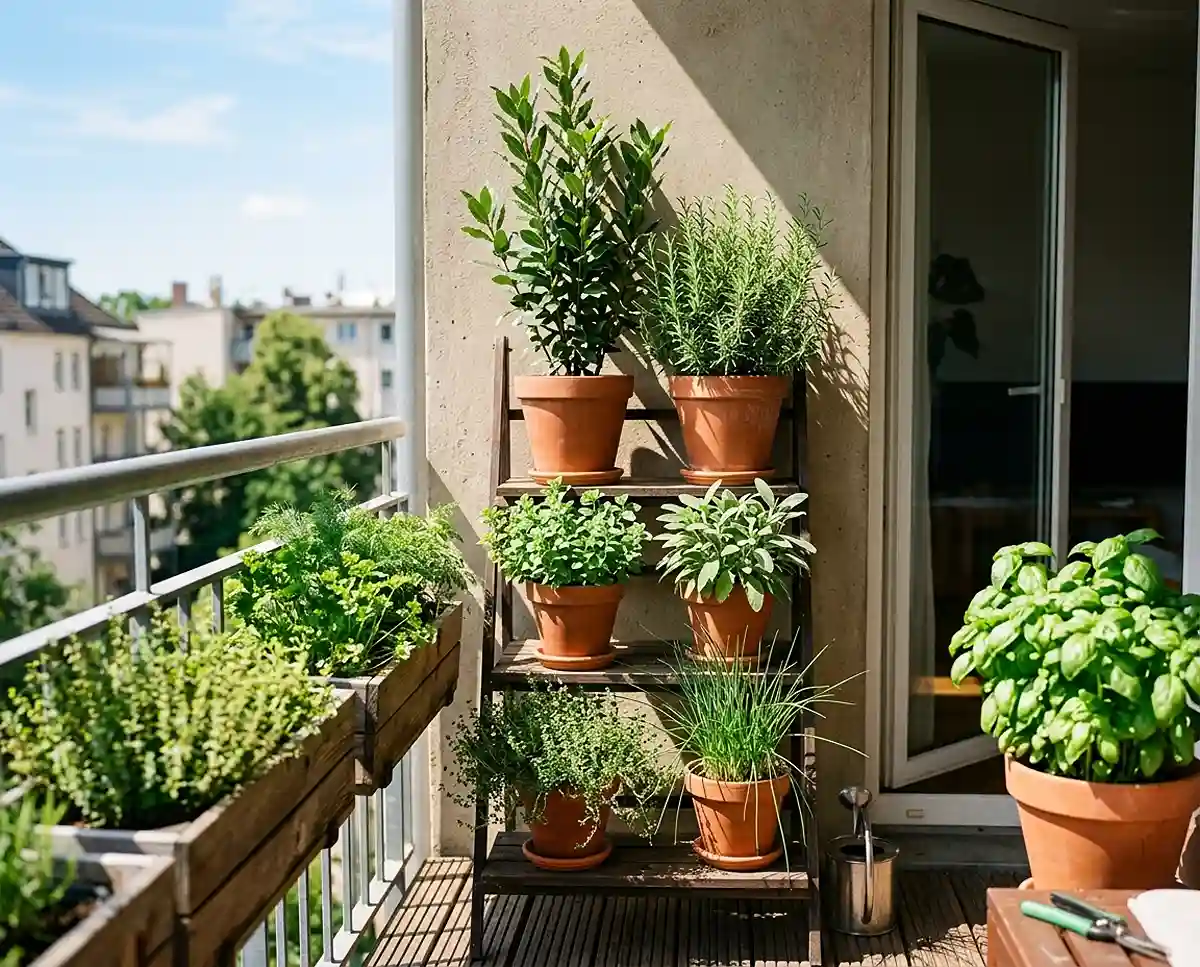
Herb Garden Layout for a Sunny Balcony
A smart herb garden layout for a sunny balcony groups plants by water needs, stacks them by height, and puts your most-used herbs closest to the door. Here’s the exact system I use on my own south-facing balcony.
I grow container herbs on a south-facing balcony in zone 7a, and full sun used to intimidate me. Turns out it’s the best problem a small-space gardener can have. This is the layout that finally stopped my rosemary from cooking and my basil from wilting by 2pm.
Table of Contents
Why Sunny Balconies Are Ideal for a Productive Herb Garden
Six or more hours of direct sun mimics the rocky, dry hillsides of the Mediterranean, which is exactly where rosemary, thyme, oregano, and sage originally come from. That’s why these herbs practically beg to be grown on a hot, exposed balcony.
My thyme plant on the sunniest end of the railing outgrew its 6-inch pot in one season, something it never did in my old apartment’s part-shade spot. More sun means more essential oils, which means stronger flavor when you cook with it. Full sun isn’t a limitation for a small balcony garden — it’s an advantage most in-ground gardeners would envy.
Mapping Your Balcony’s Sun Exposure Before Planting
Tracking Direct Sun Hours by Zone
Quick Answer: Check your balcony every two hours for a full day (8am, 10am, noon, 2pm, 4pm) and jot down which spots are in direct sun versus shade. Do this once in spring before you buy a single plant.
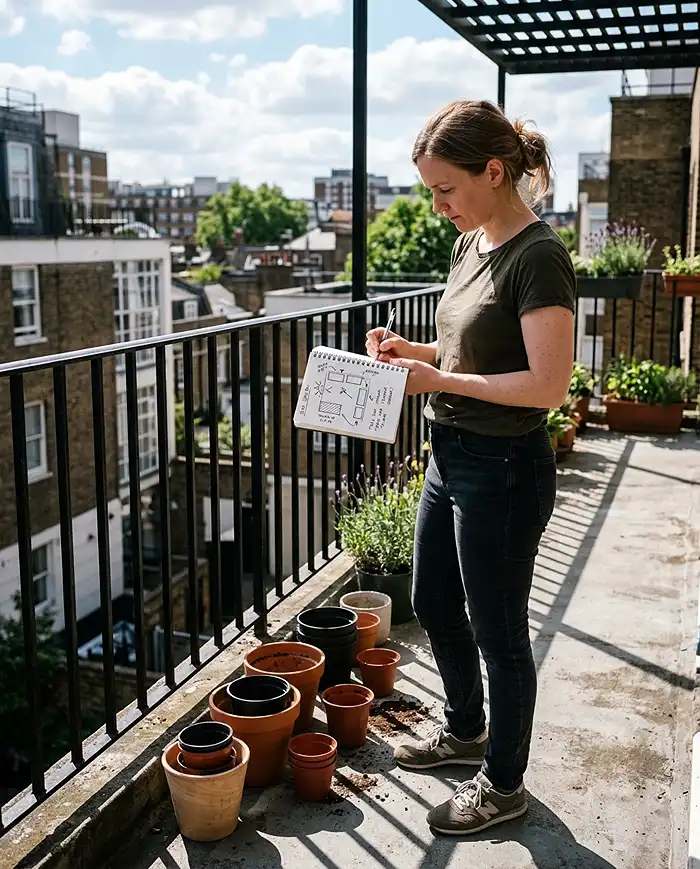
Most balconies aren’t uniformly sunny. A railing edge might get 8 hours while a back corner near the sliding door only gets 3. I use my phone’s notes app and just log “sunny” or “shady” next to a rough sketch of the space each time I check.
- Morning zone (8am-10am): often mild, good for basil and mint
- Midday zone (11am-2pm): usually the hottest, best for rosemary and thyme
- Afternoon zone (2pm-6pm): can be intense on west-facing balconies
Accounting for Heat Reflection and Wind
Quick Answer: Light-colored railings and walls bounce extra heat onto nearby pots, while open balconies funnel wind that dries soil fast. Both factors matter as much as raw sun hours when you’re deciding where each herb goes.
My balcony has a white vinyl railing that reflects so much afternoon light my basil got scorched leaf edges the first summer. I moved it 18 inches inward and the problem disappeared. Fourth-floor balconies also catch more wind than ground-level patios, so anything in a small pot dries out faster than the tag suggests.
Grouping Herbs by Water and Sun Needs
Mediterranean Herbs for Full Sun and Dry Soil
Quick Answer: Rosemary, thyme, oregano, and sage want your hottest, driest spot with 6-8 hours of direct sun and soil that dries out between waterings. These are the workhorses of any herb garden layout for a sunny balcony.
| Herb | Sun Needed | Watering |
|---|---|---|
| Rosemary | 6-8 hrs | Let dry fully between waterings |
| Thyme | 6-8 hrs | Very drought-tolerant |
| Oregano | 6+ hrs | Dry out 1-2 inches down |
| Sage | 6+ hrs | Water sparingly, avoid soggy soil |
My rosemary lives in the hottest corner of the balcony year-round and I water it maybe once a week, even in July. It’s the lowest-maintenance plant I own once it’s established.
Moisture-Loving Herbs for Partial Shade Pockets
Quick Answer: Basil, mint, cilantro, and parsley need more consistent moisture and do better tucked into a slightly shaded pocket, like under a taller plant or near a wall that blocks afternoon sun. Give these herbs 4-6 hours of sun rather than a full 8.
- Basil: keep soil consistently moist, never let it dry completely
- Mint: tolerates part shade well, spreads fast so keep it contained
- Cilantro: prefers cooler morning sun, bolts fast in intense afternoon heat
- Parsley: steady moisture, tolerates light shade better than most culinary herbs
My honest failure: I planted cilantro in the same pot as rosemary my first year because I liked the idea of one big pot. The rosemary needed bone-dry soil and the cilantro needed moisture, so one of them was always suffering. Never again.
Container Selection and Sizing for Each Herb Type
Quick Answer: Small herbs like thyme and chives do fine in 6-8 inch pots, while rosemary, sage, and bay need at least a 12-14 inch container to avoid root-cooking heat stress. Terra cotta breathes well but dries out faster, which actually suits Mediterranean herbs.
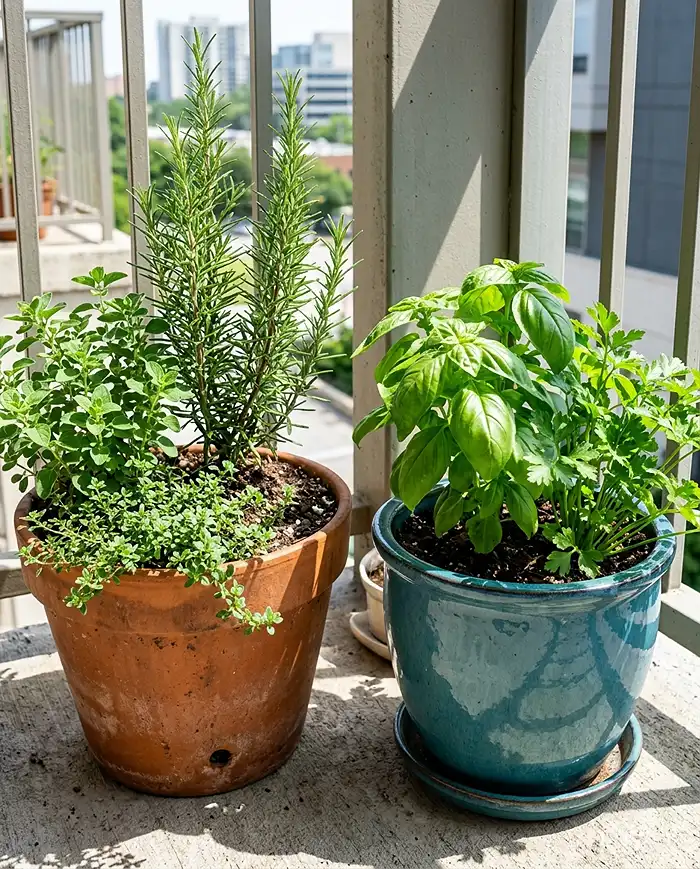
On a sunny balcony, dark plastic pots can heat up enough to damage roots by midsummer. I learned this after a black plastic pot of thyme wilted on a 95-degree day despite moist soil — the container itself was the problem, not the water.
| Herb Type | Minimum Pot Size | Best Material |
|---|---|---|
| Chives, thyme, small herbs | 6-8 inches | Terra cotta or light-colored plastic |
| Basil, parsley, oregano | 8-10 inches | Glazed ceramic or plastic |
| Rosemary, sage, bay | 12-14 inches | Terra cotta, unglazed |
Designing Your Layout for Maximum Sun and Space Efficiency
Tiered and Vertical Arrangements
Quick Answer: A 3-tier plant stand lets you stack herbs by height so shorter plants like thyme aren’t shaded out by taller rosemary or bay. Put the tallest herbs on the back or top tier and trailing types up front.
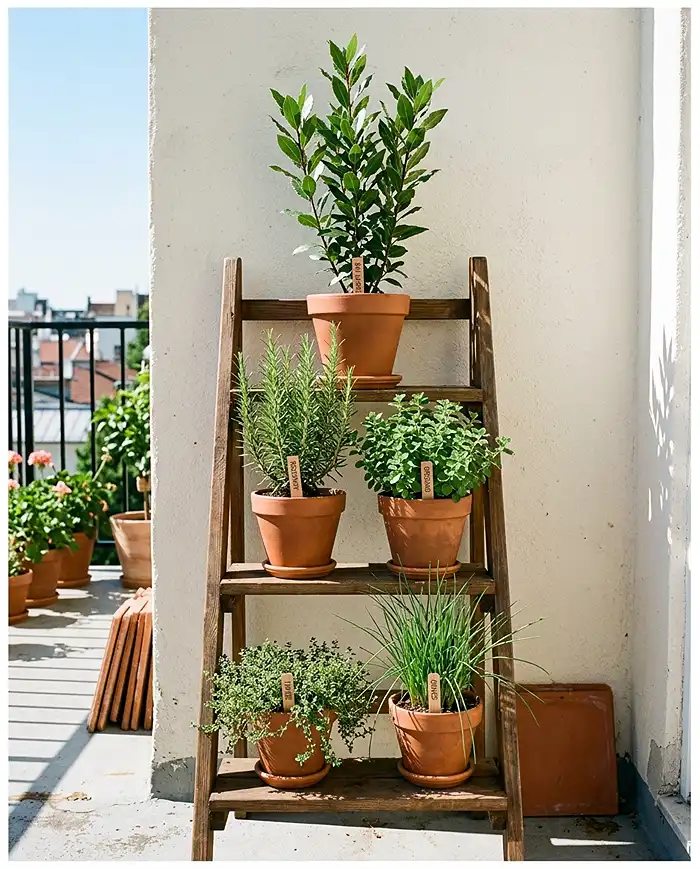
My tiered stand sits against the sunniest wall: bay on top, rosemary and oregano on the middle shelf, thyme and chives creeping along the bottom. Nothing shades anything else, and I can reach every pot without stepping over another one. For more layout inspiration, see these apartment balcony garden ideas.
Railing and Perimeter Placement
Quick Answer: Railing planters hold compact or trailing herbs like thyme, chives, and creeping rosemary, freeing up your floor space for larger pots and a chair. This is one of the highest-yield herb garden ideas for a genuinely small footprint.
My railing box runs the full length of the balcony and holds nothing but thyme and chives. It gets full sun all day and I never have to step around it, since it’s mounted a foot above the deck itself.
Grouping for Harvest Accessibility
Quick Answer: Put the herbs you cook with most, usually basil, chives, and parsley, in the pots closest to your door. Save the far corners for herbs you harvest less often, like bay or sage.
I use basil almost every night in summer, so it sits three steps from my kitchen. My bay tree, which I trim maybe once a month, lives in the back corner and I’ve never once minded the walk.
Materials and Tools Checklist for Your Balcony Herb Garden
- Assorted pots: 6-8 inch, 8-10 inch, and 12-14 inch sizes
- Well-draining potting mix (not garden soil)
- Saucers to catch runoff and protect flooring
- A 3-tier plant stand or railing brackets
- Sharp pruning snips for regular harvesting
- Slow-release fertilizer, applied at planting
- Plant labels or a simple sketch of your layout
Step-by-Step: Planting Your Sunny Balcony Herb Garden
Step 1: Finalize Your Layout Sketch
Quick Answer: Draw a rough diagram of your balcony and assign each herb to its sun/shade zone before you buy a single plant. This 10-minute step saves you from the container-shuffling I did my first year.
Step 2: Prep Containers and Soil
Quick Answer: Fill each pot with a well-draining, soilless potting mix and confirm every container has at least one drainage hole. Skip garden soil entirely — it compacts fast in containers and suffocates roots.
Step 3: Plant, Space, and Label
Quick Answer: Leave 6-8 inches between herbs sharing a container so roots have room to spread, and label each pot so you’re not guessing come August. A simple popsicle stick and marker works fine.
Full instructions and a printable version of this exact plan live on our herb garden layout for balcony guide.
Watering Strategy for Full-Sun Herb Containers
Quick Answer: Water in the early morning, before 9am, so plants have moisture reserves before peak heat hits. During heat waves above 90°F, check pots twice daily since containers dry out far faster than in-ground beds.
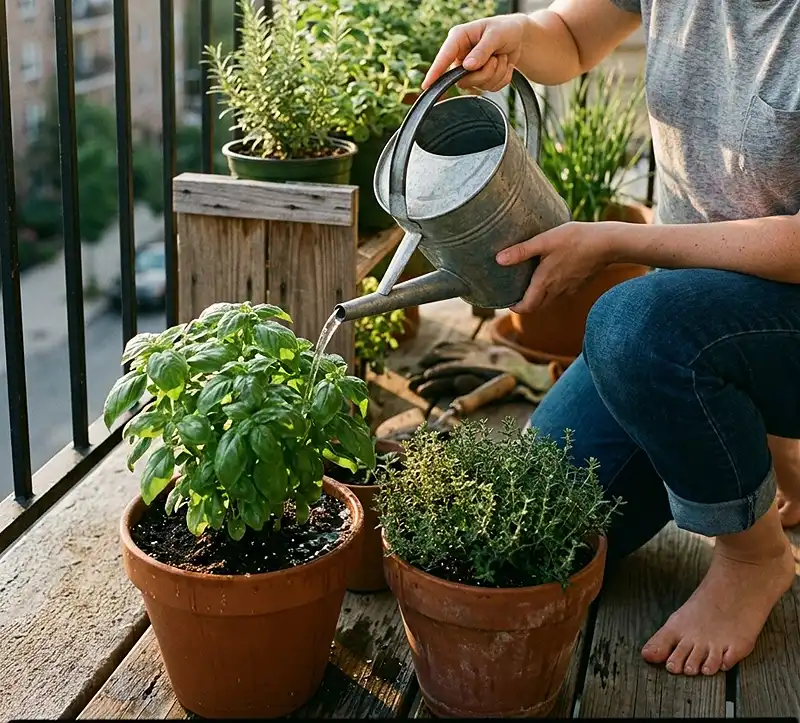
Signs of water stress on a sunny balcony show up fast: drooping by early afternoon, crispy leaf edges, and soil pulling away from the pot’s sides. If a plant droops but perks back up an hour after watering, it was just thirsty, not damaged.
As of the 2026 growing season, I’ve switched my thirstiest pots (basil and mint) to self-watering inserts, and it’s cut my daily watering checks roughly in half.
Seasonal Care and Rotation
Spring Planting and Summer Peak Growth
Quick Answer: Plant tender herbs like basil and cilantro after your last frost date, then harvest lightly but often through summer to keep plants bushy rather than leggy. Pinch basil above a leaf node every week or two.
Fall Transition and Bringing Tender Herbs Indoors
Quick Answer: Rosemary, bay, and oregano can often survive outdoors longer, but basil and cilantro should come inside or get replaced before the first frost. Mint and chives are hardy enough to leave outside in most zones.
Regional Considerations for Climate and Hardiness Zones
Quick Answer: Gardeners in hot Southern and Southwestern zones often need afternoon shade cloth to prevent bolting, while Northern gardeners can usually push herbs into full, unfiltered sun all season long. Check your USDA zone before finalizing your layout.
A gardener in Phoenix and a gardener in Minneapolis are both working with “full sun,” but those conditions aren’t remotely the same. If you’re in zone 8 or hotter, plan on 30-40% shade cloth for basil and cilantro during peak summer.
Common Problems and Solutions
Herbs Bolting or Turning Bitter in Intense Heat
Quick Answer: Intense heat pushes cilantro and basil to bolt, meaning they rush to flower and turn bitter, especially past 85°F. A simple 30% shade cloth over the hottest afternoon hours slows this down significantly.
Uneven Growth Due to Shading Between Pots
Quick Answer: If one side of a plant looks leggy or pale, another pot is probably blocking its light. Rotate containers a quarter turn every week or two, and periodically reshuffle which pots sit where.
Soil Drying Out Too Quickly in Full Sun
Quick Answer: A 1-inch layer of mulch, self-watering pot inserts, or simply grouping containers close together all reduce evaporation. Grouped pots also create a slightly more humid micro-zone around their leaves.
Frequently Asked Questions
How many hours of sun do balcony herbs need?
Most culinary herbs need at least 6 hours of direct sun daily. Mediterranean herbs like rosemary and thyme thrive with 6-8 hours, while basil, mint, and parsley do fine with 4-6 hours and a bit of afternoon shade.
What is the best layout for a small sunny balcony herb garden?
A tiered vertical arrangement grouped by water needs is the most space-efficient layout. Place drought-tolerant herbs like rosemary and thyme in the sunniest, driest spots, and moisture-loving herbs like basil and mint in slightly shadier pockets.
Can I grow all my herbs in one large container?
Yes, as long as you group herbs with similar water and sun needs together, such as rosemary, thyme, and oregano in one pot. Space plants 6-8 inches apart so roots have room to spread without competing.
How often should I water herbs in a sunny balcony spot?
Check containers daily during summer heat, watering in the morning before 9am when possible. During heat waves above 90 degrees Fahrenheit, small pots may need checking twice a day since containers dry out faster than garden beds.
Conclusion
A working herb garden layout for a sunny balcony comes down to three things: map your sun before you plant, group herbs by water needs instead of scattering them randomly, and put your most-used herbs within arm’s reach of the kitchen.
If you want to stretch the space even further, letting a few flowering herbs bolt on purpose turns your railing into a genuine pollinator container garden, drawing bees in right alongside your basil and oregano. For research-backed sun and watering guidelines by species, the University of Minnesota Extension’s herb growing guide is a solid reference to double-check against.
Start small, watch your sun for a week before buying pots, and adjust as you go — that’s really the whole system.
Key Takeaways
- Map your balcony’s sun exposure for a full day before finalizing your herb garden layout for a sunny balcony
- Group Mediterranean herbs (rosemary, thyme, oregano, sage) separately from moisture-loving herbs (basil, mint, cilantro, parsley)
- Use tiered stands and railing planters to maximize a small balcony garden’s limited floor space
- Place frequently harvested herbs closest to your kitchen door for daily convenience
- Water in the morning and check pots twice daily during heat waves above 90°F