
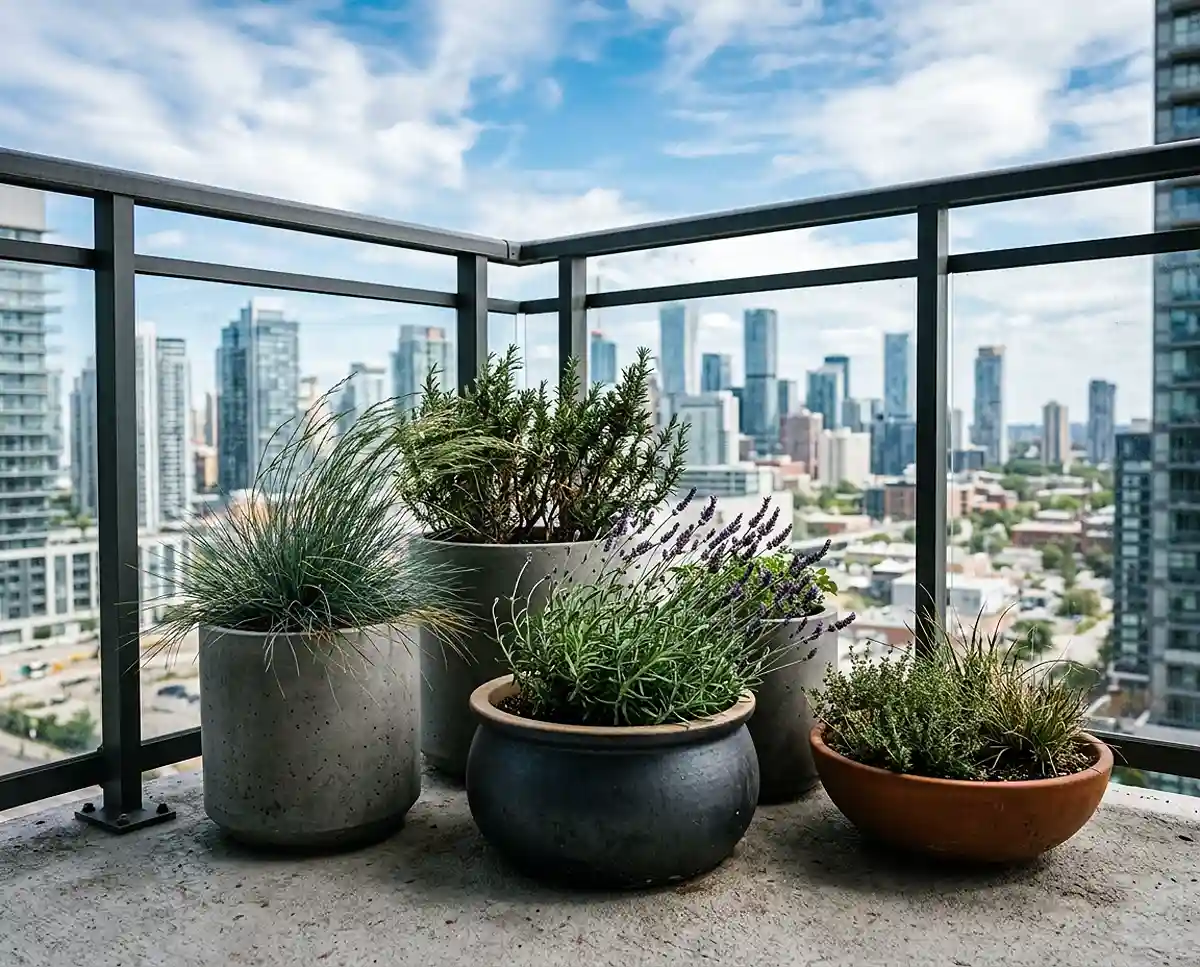
best planters for windy balcony
The best planters for windy balcony are heavy, wide-based containers like concrete or thick stoneware, not the lightweight plastic pots most apartment gardens start with. I learned this the hard way on my own 11th-floor balcony.
I garden on a north-facing, 11th-floor balcony in Chicago, zone 6a, where the wind funnels between two buildings hard enough to rattle the railing. My first season, I lost two tomato plants and a fiberglass planter to a single April gust. Since then, I’ve rebuilt my whole small balcony garden around wind, not just sun and drainage. Here’s everything I learned, including what still catches me off guard.
Table of Contents
Why Wind Is the Biggest Hidden Threat to Balcony Gardens
Ground-level gardens rarely deal with sustained wind the way balconies do. Up high, wind pulls moisture out of soil fast, snaps stems, shreds leaves, and tips lightweight pots without warning.
Most apartment gardening advice focuses on sun and container size. Wind gets one line, if that. But on an exposed balcony, wind damage happens faster than drought or pest problems, and it’s the thing most new container gardeners never plan for until they’ve already lost a plant.
Understanding Your Balcony’s Wind Exposure
High-Rise vs. Ground-Floor Wind Intensity
Quick Answer: Wind speed roughly doubles between ground level and the 20th floor in typical urban settings. A “calm” day at street level can feel like a steady breeze on a 10th-floor balcony.
Ground-floor patios are shielded by trees, fences, and neighboring buildings. Once you’re above the fourth or fifth floor, that shielding disappears and wind moves in a straight, unbroken line across your railing.
- Floors 1-3: mild exposure, standard planters usually fine
- Floors 4-10: moderate exposure, start weighting containers
- Floors 10+: high exposure, treat every pot like it’s on a rooftop
Pro Tip: Tie a light ribbon to your railing for a week and watch it. That tells you more about your real wind pattern than any weather app.
Identifying Wind Tunnels and Corner Gusts
Quick Answer: Corner balconies and gaps between buildings create wind tunnels where gusts accelerate and change direction unpredictably, hitting far harder than the forecast wind speed suggests.
My balcony sits at the corner of an L-shaped building, and I get gusts that don’t match the weather report at all. The building shape squeezes air through that corner and speeds it up, a phenomenon architects call the “Venturi effect.”
Walk your balcony’s perimeter on a windy day and note where gusts feel strongest, usually corners, open railings, and spots near gaps between buildings.
Best Planter Materials and Designs for Windy Conditions
Heavy Materials: Concrete, Stoneware, and Thick Ceramic
Quick Answer: Concrete, stoneware, and thick glazed ceramic resist tipping because their weight sits low and dense, giving wind far less leverage than it has on lightweight plastic or thin metal.
A 14-inch plastic pot full of soil might weigh 15 pounds. The same size in concrete can weigh 40-plus pounds empty. That extra mass is what keeps a gust from lifting one side off the ground.
| Material | Best For | Watch Out For |
|---|---|---|
| Concrete | High-wind, permanent placements | Very heavy to move, can crack in freeze-thaw |
| Stoneware | Mid-to-high wind, decorative use | Pricier, chips if dropped |
| Thick ceramic | Moderate wind, color and style | Thin glazes crack in winter cold |
| Fiberglass/plastic | Low wind only, easy moving | Tips easily once plants mature |
Real Example: After losing that fiberglass planter, I switched my rosemary and lavender to 16-inch stoneware pots. Two winters of 40 mph gusts later, they haven’t budged.
Low, Wide Planter Shapes vs. Tall Narrow Pots
Quick Answer: A wide, low planter is dramatically more stable than a tall, narrow one because its base-to-height ratio keeps the center of gravity close to the ground.
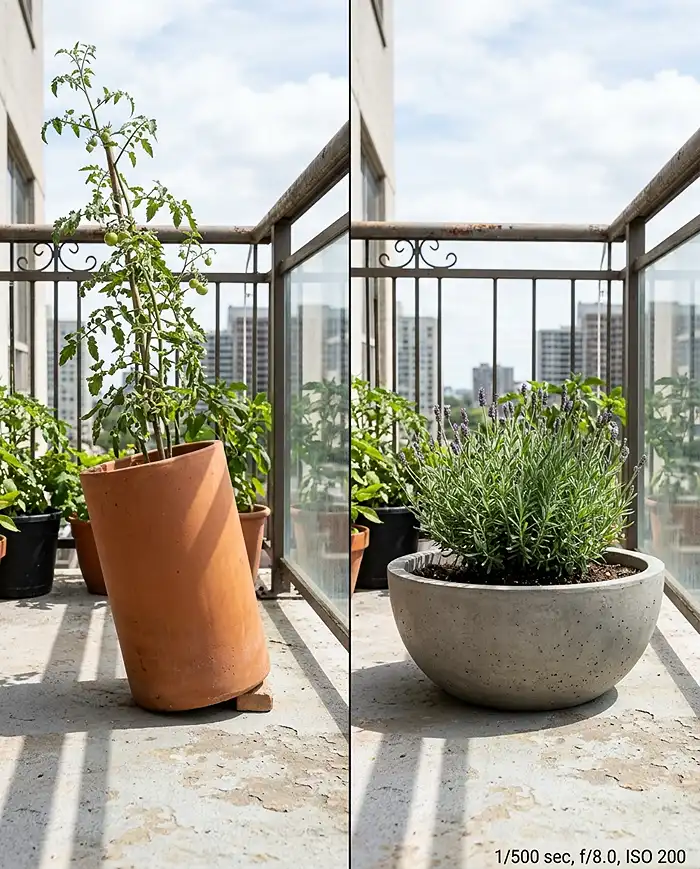
Think of it like a pyramid versus a pencil standing on end. Aim for a container where the base width is at least 60-70% of the pot’s height.
- Wide bowl planters: excellent stability, great for herbs and trailing plants
- Square or rectangular troughs: stable and space-efficient for rails
- Tall urns and narrow cylinders: avoid unless heavily weighted at the base
Pro Tip: If you love a tall pot’s look, set it inside a slightly wider, heavier “foot” tray to widen its effective footprint.
Railing Planters and Wall-Mounted Options
Quick Answer: Railing-mounted and wall-mounted planters remove tipping risk entirely for smaller plants by securing the container directly to a fixed structure instead of letting it rest freely on the floor.
These work best for herbs, small annuals, and trailing plants rather than anything top-heavy like a full-size tomato plant. Look for brackets rated for outdoor use with a locking mechanism, not just a hook-over lip.
For more small-space setups like this, I’ve written about apartment balcony garden ideas that work well even with limited floor space.
Stabilization Techniques for Existing Lightweight Planters
Quick Answer: You don’t have to replace every pot. Adding weight to the base, using planter weights, or anchoring with removable adhesive brackets can stabilize lightweight containers you already own.
Layer 2-3 inches of pea gravel or coarse sand at the bottom of a plastic pot before adding potting mix. It adds real weight low in the container without hurting drainage.
- Gravel or sand base layer: cheap, adds 5-10 lbs depending on pot size
- Cast iron or concrete planter weights: sold specifically for this, sit inside the pot
- Removable adhesive anchors (3M Command-style outdoor strips): rated for light-to-moderate wind, good for railing pots
- Zip-tying pots to railings: fast, ugly, but effective in a pinch before a storm
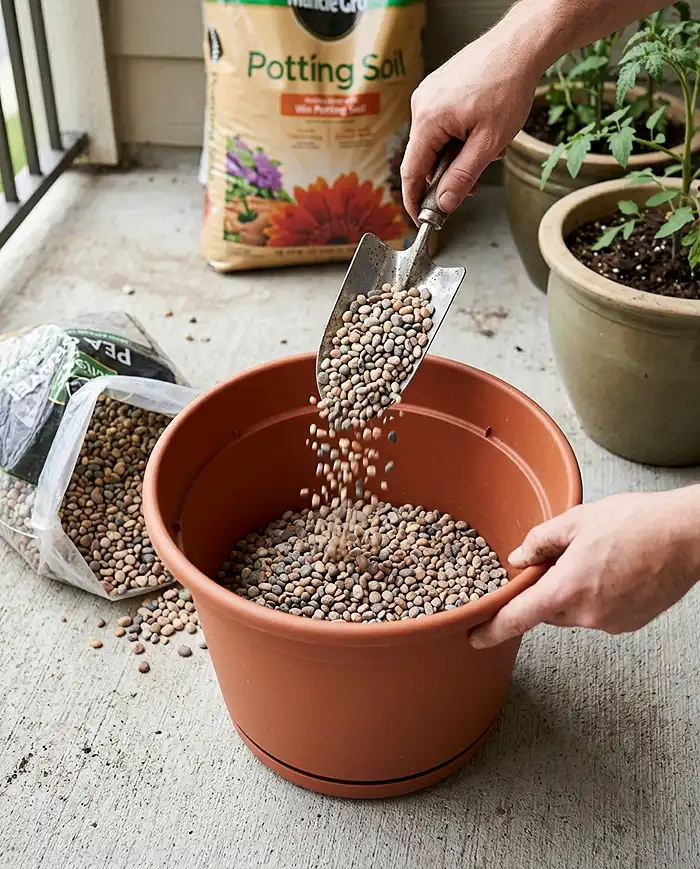
The NC State Extension Gardener Handbook notes that increasing the sand ratio in a potting mix adds bulk density specifically to reduce blow-down risk, which lines up with what I’ve found works.
Best Wind-Tolerant Plants for Exposed Balconies
Quick Answer: Compact, flexible-stemmed plants with small or leathery leaves handle wind best. Lavender, rosemary, dianthus, and ornamental grasses are reliable choices for a small balcony garden.
Plants with thin, needle-like, or leathery foliage lose less water to wind and bend instead of snapping. My ‘Munstead’ lavender has ridden out gusts that flattened a neighbor’s petunias.
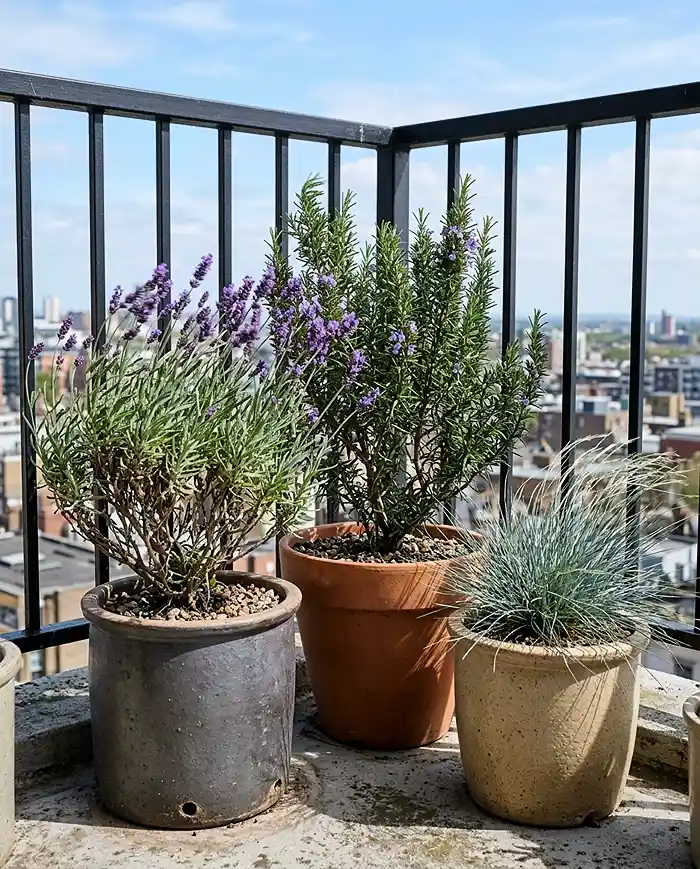
- Lavender (‘Munstead’ or ‘Hidcote’): woody stems, thrives in zones 5-9, low water needs
- Rosemary: leathery leaves, tolerates wind and heat, zones 7-10 outdoors year-round
- Dianthus: compact and low-growing, flexible stems resist snapping
- Ornamental grasses (blue fescue, dwarf pampas): bend with wind instead of breaking
- Sedum and other succulents: low profile, minimal wind resistance
If you’re planning color combinations around wind-tolerant picks, my post on balcony color palette ideas with plants covers pairings that hold up outdoors.
Plants and Container Combinations to Avoid in High Wind
Quick Answer: Avoid tall, top-heavy plants in narrow pots, large-leafed tropicals, and brittle-stemmed flowers. This combination is the single most common cause of balcony wind damage.
Large-leafed plants like banana or elephant ear act like sails, catching wind and either tipping their pot or shredding their own leaves. Brittle stemmed annuals like tall zinnias snap at the base within one bad storm.
I tried a dwarf banana plant my second summer, in a narrow ceramic pot no less. It went over in a spring storm and cracked the pot. Lesson learned: match plant shape to wind exposure, not just to what looks good in the store.
Materials and Tools Checklist for Wind-Proofing Your Balcony
Quick Answer: A basic wind-proofing kit includes heavy planter bases, sand or gravel fillers, anchors or brackets, a wind screen, stakes, and zip ties. Most of this costs under $50 total.
- Heavy planter bases or saucers (concrete or weighted plastic)
- Sand or pea gravel for base-layer weighting
- Planter weights or cast iron inserts
- Railing brackets rated for outdoor use
- Wind mesh screen or lattice panel
- Bamboo or metal plant stakes
- Outdoor-rated zip ties
Step-by-Step: Wind-Proofing Your Balcony Planters
Step 1: Assess Wind Direction and Vulnerable Zones
Quick Answer: Spend a few windy days observing which corners or edges of your balcony take the strongest gusts before you place a single container.
Note the direction gusts come from and whether they’re steady or sudden. That tells you where to put your heaviest, most wind-resistant plants versus your more delicate ones.
Step 2: Anchor and Weight Your Containers
Quick Answer: Add base weight to every pot and secure taller or top-heavy containers directly to railings or walls for real stability.
Start with your most exposed corner and work inward. Anything over 18 inches tall gets anchored, no exceptions, in my experience.
Step 3: Install a Wind Screen or Windbreak
Quick Answer: Mesh screens, lattice panels, or a dense row of sturdy plants diffuse wind force before it reaches your more vulnerable containers.
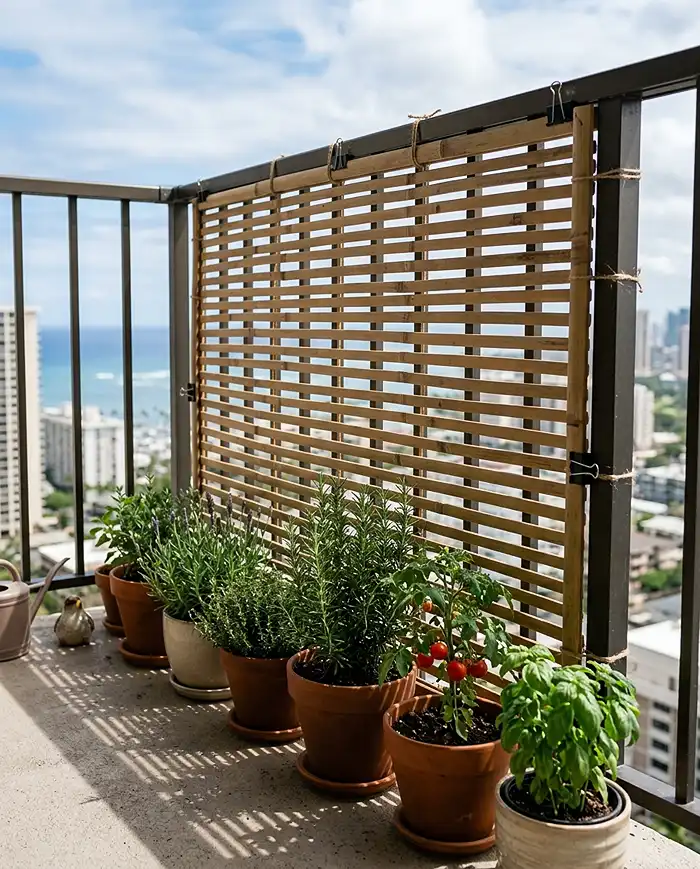
A windbreak doesn’t need to be solid. In fact, a screen that lets some air through, around 50% openness, reduces gust force better than a solid wall, which can create turbulence on the other side.
Watering Adjustments for Windy Conditions
Quick Answer: Wind pulls moisture from soil faster than sun alone, so windy balconies need more frequent watering checks than a typical container schedule assumes.
I check soil moisture every day during windy stretches, not every other day like I would in a sheltered spot. Stick a finger 2 inches into the soil; if it’s dry, water.
Mulching the soil surface with a half-inch of bark mulch or gravel cuts evaporation noticeably, especially in porous terracotta pots that already dry out fast.
Seasonal Considerations for Wind Exposure
Spring and Fall Storm Preparedness
Quick Answer: Move your most vulnerable pots against a wall or indoors whenever a high-wind forecast comes through, especially during spring and fall storm season.
I keep a mental “at-risk list” of my tallest and lightest pots. When a storm warning hits, those move first, everything else stays put.
Winter Wind and Cold Stress Combination
Quick Answer: Winter wind compounds cold damage by stripping heat and moisture from plants faster than cold alone, so insulating or relocating sensitive containers matters more in winter than people expect.
Wind chill affects plants the same way it affects skin. A rosemary that would survive 20°F in still air can suffer real damage at the same temperature with sustained wind.
Regional Considerations for Climate and Wind Patterns
Quick Answer: Coastal, high-altitude, and urban high-rise balconies each face distinct wind challenges that call for different planter and plant choices.
Coastal balconies deal with salt-laden, near-constant wind, so salt-tolerant plants like sedum and lavender do best. High-altitude balconies get thinner air and stronger UV alongside wind, which dries soil out even faster. Urban high-rises deal with the building-tunnel effect described earlier, often the most unpredictable of the three.
As of the 2026 growing season, more container manufacturers are producing weighted “wind-rated” planter lines specifically for these apartment conditions, worth checking if you’re buying new pots this year.
Common Problems and Solutions
Pots Tipping Over Despite Added Weight
Quick Answer: If a weighted pot still tips, the problem is usually center of gravity, not total weight. Switch to a wider-based container or add a permanent anchor point.
Weight alone doesn’t fix a top-heavy shape. A wide base does more for stability than raw pounds ever will.
Soil Drying Out Faster Than Expected
Quick Answer: Add a mulch layer or switch to a self-watering reservoir pot to counter the wind-accelerated evaporation that catches most container gardeners off guard.
Self-watering pots with a built-in reservoir have cut my watering frequency roughly in half on my windiest containers.
Plant Stems Snapping or Bending Permanently
Quick Answer: Stake tall or brittle plants early in the season and prune to reduce overall wind resistance rather than waiting until after damage happens.
Pruning back a third of a leggy plant’s growth reduces the “sail area” wind can grab, which matters more than people realize until they see it work.
Frequently Asked Questions
What is the best type of planter for a windy balcony?
Heavy, wide-based planters made from concrete or stoneware are the best choice for a windy balcony. Their low center of gravity and dense weight resist tipping far better than lightweight plastic or thin metal containers.
How do I keep my balcony pots from blowing over?
Add weight to the base with sand or gravel, and anchor taller or top-heavy pots directly to railings or walls. These two steps solve most tipping problems on exposed balconies.
What plants can survive strong wind on a balcony?
Compact, flexible-stemmed plants with small or leathery leaves handle wind best. Lavender, rosemary, dianthus, and ornamental grasses are reliable, wind-tolerant options for balcony gardens.
Do windbreaks actually help protect balcony plants?
Yes. Mesh screens or dense plantings that let some air pass through can reduce gust force by roughly 50 percent, which is more effective than a solid wall that creates turbulence on the other side.
How often should I water container plants on a windy balcony?
Check soil moisture daily during windy stretches rather than every few days, since wind pulls moisture from soil much faster than sun alone. A mulch layer helps slow that evaporation down.
Conclusion
Picking the best planters for a windy balcony comes down to weight, shape, and anchoring, not just style. Go heavy, go wide, and secure anything tall.
Start with your most exposed corner, weight or anchor those pots first, and build outward from there. Your plants, and your neighbors below, will thank you.
For more renter-friendly setups that hold up outdoors, check out these renter-friendly patio garden ideas.
Key Takeaways
- The best planters for a windy balcony are heavy, wide-based containers like concrete or stoneware, not lightweight plastic
- A wide base-to-height ratio matters more for stability than total weight alone
- Wind-tolerant plants like lavender, rosemary, and ornamental grasses hold up far better than large-leafed or brittle-stemmed varieties
- Windy balconies need more frequent watering checks since wind accelerates soil moisture loss
- Anchoring, weighting, and windbreaks work together, not as substitutes for each other, to wind-proof a small balcony garden