
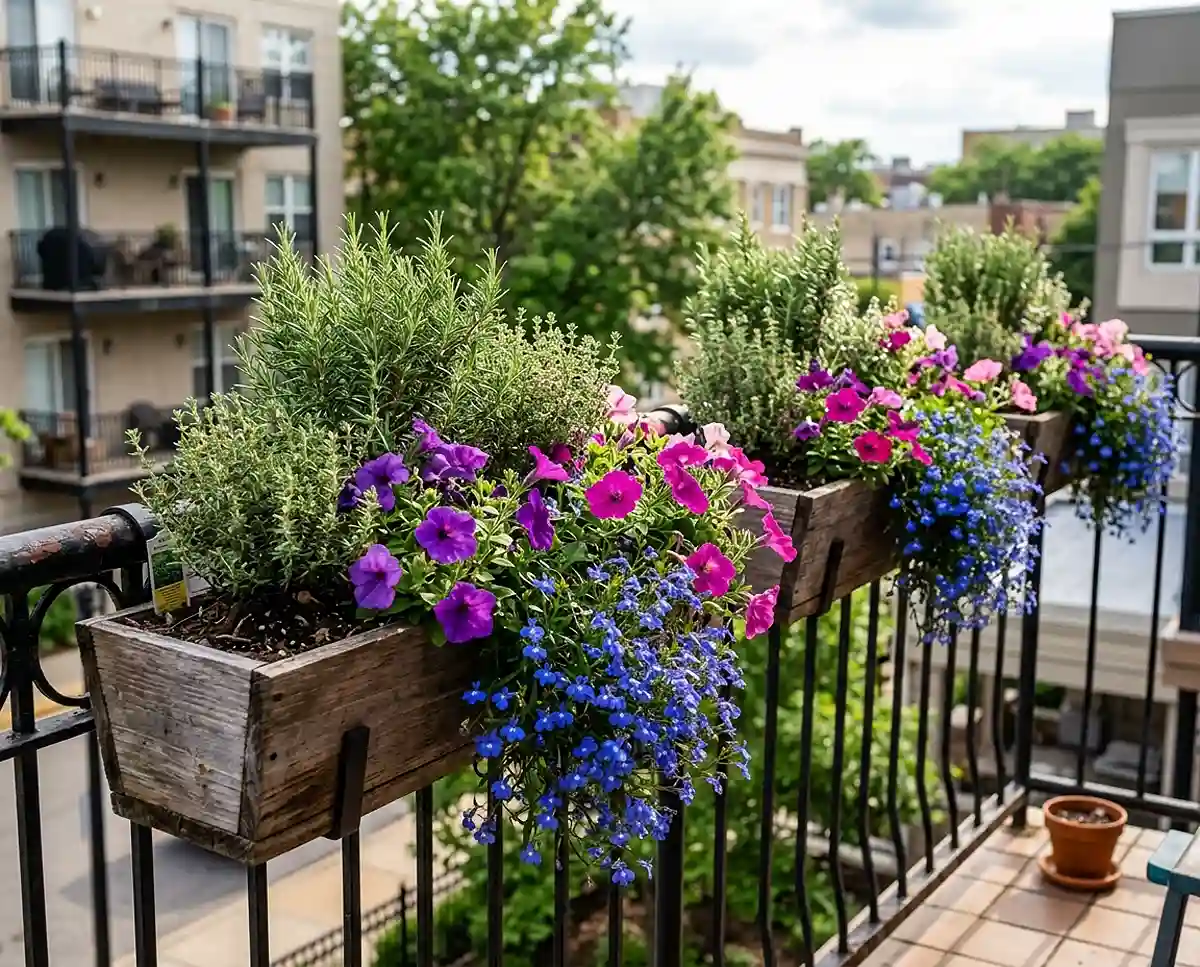
Railing Planter Ideas for Herbs and Flowers
Railing planter ideas for herbs and flowers turn a bare railing into a working herb garden and a cascade of balcony flowers with zero floor space lost. Here’s what actually survives wind, weight limits, and neglect.
I grow rosemary, thyme, and trailing petunias on a north-facing balcony railing in USDA zone 6b. After six seasons of trial and error, these are the setups that hold up.
Table of Contents
Why Railing Planters Are the Ultimate Small-Space Solution
A railing planter mounts on top of or over an existing railing, so it adds growing space without eating into your walkway. For a small balcony garden, that’s huge.
You get vertical real estate that’s usually wasted. Herbs like thyme and chives sit upright in back, while trailing flowers spill over the front edge, doubling as a privacy screen and a pollinator magnet.
Choosing the Right Railing Planter for Your Space
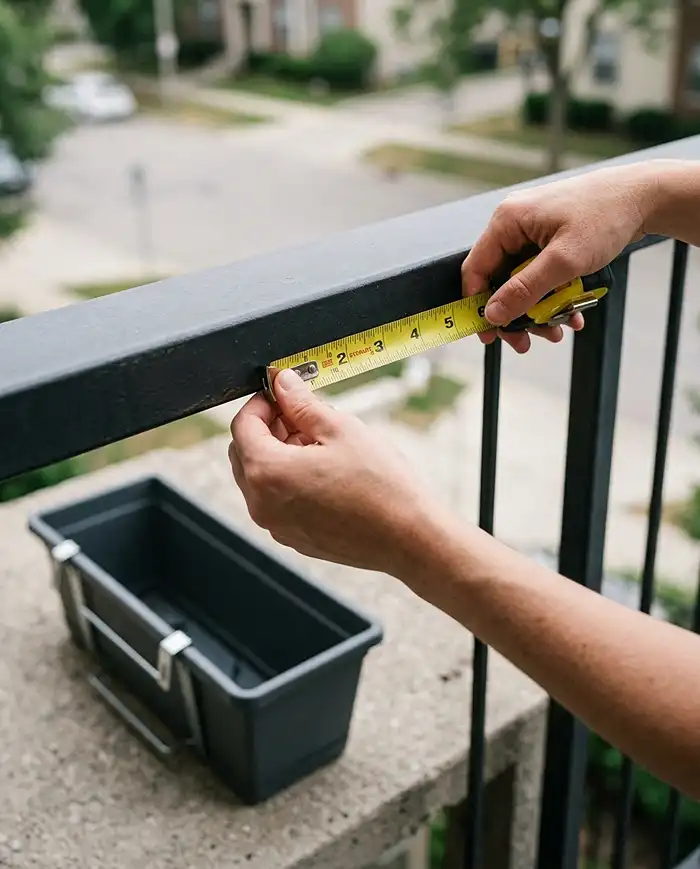
Measuring Your Railing Width and Depth
Quick Answer: Measure your railing’s top width, the gap between top rail and any lower rail, and confirm at least 8 inches of pot depth for herb roots. Most standard planters fit rails between 3.5 and 6 inches wide.
Bring a tape measure before you shop. I learned this the hard way my first year, buying a planter that clamped fine but left roots crammed in a 5-inch box by August.
- Measure top rail width at three points (rails aren’t always perfectly even)
- Check clearance below the rail if using hook-style mounts
- Confirm planter depth is 8 inches minimum, 10 to 12 inches for rosemary or parsley
Weight Limits and Mounting Compatibility
Quick Answer: Wet potting mix, plants, and a filled planter box can weigh 25 to 50 pounds per linear foot. Check your railing material and your building’s load guidance before mounting anything permanent.
Wood and metal railings generally handle bracket mounts well. Vinyl and thin aluminum rails can flex or crack under concentrated weight, so hook-over designs that distribute load evenly are usually safer.
| Railing Material | Best Mount Type | Watch Out For |
|---|---|---|
| Wood | Brackets or carriage bolts | Rot around drilled holes over time |
| Metal/wrought iron | Hook-over or clamp brackets | Rust at contact points |
| Vinyl | Lightweight hook-over only | Cracking under heavy loads |
| Composite/Trex-style | Hook-over or low-torque brackets | Compression marks if overtightened |
Types of Railing Planter Mounting Systems
Hook-Over Planters for Tool-Free Installation
Hook-over planters have adjustable arms that grip the top and inner face of the railing, no drilling required. This makes them the go-to for renters who can’t modify a balcony.
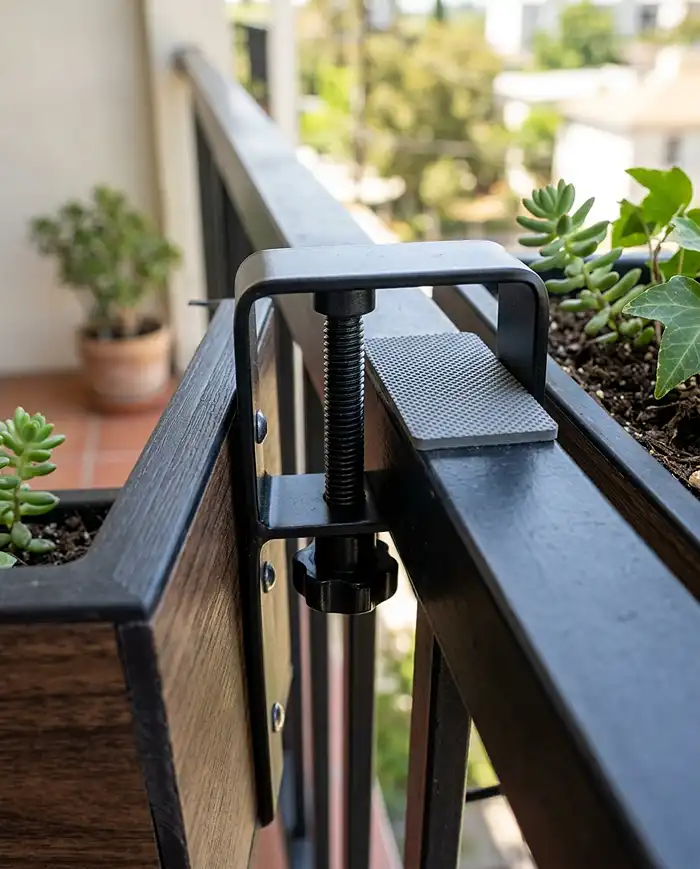
I use hook-over boxes on my own rental balcony. They’ve stayed put through two seasons of coastal wind gusts once I added a strip of grip tape under each hook.
Bracket-Mounted Planters for Permanent Stability
Quick Answer: Bracket-mounted planters use screws or carriage bolts driven through the railing, giving the most secure hold for heavy, deep boxes. They’re best if you own your space and want a fixed, wind-proof setup.
Choose brackets when you’re growing something top-heavy, like a full rosemary shrub, or when your railing faces open wind with nothing blocking gusts.
Self-Watering Railing Planters for Reduced Maintenance
Self-watering planters have a built-in reservoir beneath the soil that wicks moisture up as needed. On a railing, where wind dries soil faster than ground-level pots, this can stretch watering from daily to every 2 to 3 days.
Pro Tip: even self-watering boxes need an overflow check after heavy rain, or the reservoir backs up and roots sit in standing water.
Best Herb and Trailing Flower Combinations for Railing Planters
Sun-Loving Combo: Rosemary, Thyme, and Trailing Petunias
Quick Answer: Rosemary, thyme, and trailing petunias share the same drought tolerance and full-sun needs, making them a low-maintenance combo for south- or west-facing railings.
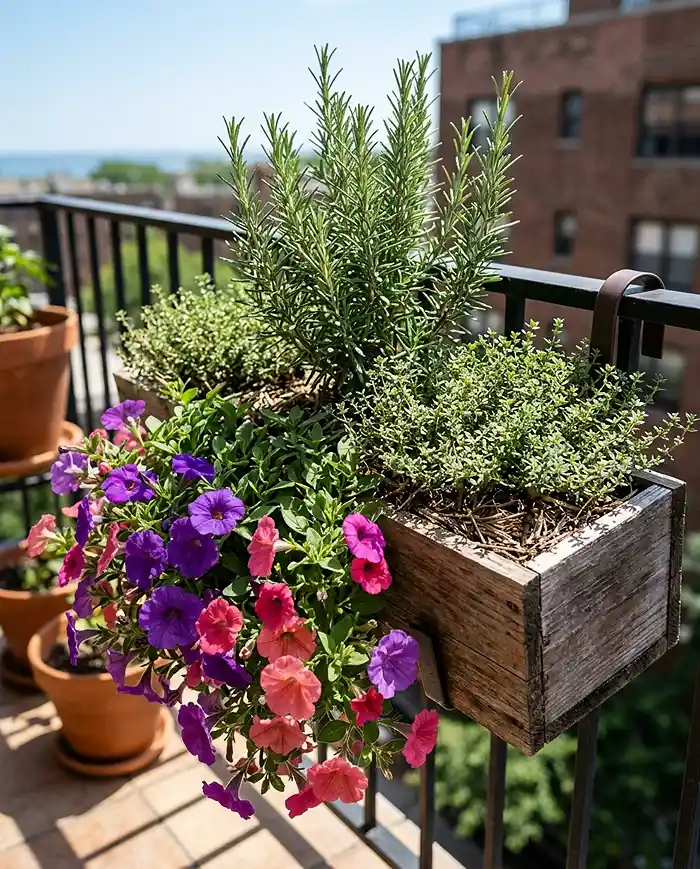
Plant rosemary center-back for height, thyme along the sides, and let petunias trail from the front. This is the exact mix I run on my sunniest railing segment, and it’s gone six weeks without deadheading and still bloomed well.
Partial Shade Combo: Parsley, Chives, and Trailing Lobelia
Quick Answer: Parsley, chives, and trailing lobelia tolerate 3 to 4 hours of morning sun or filtered light, ideal for east-facing or partially shaded railings where full-sun herbs struggle.
My north-facing railing gets weak morning light through a neighboring building. This trio has been the only combination that didn’t go leggy by midsummer, and lobelia’s blue blooms hold color even in lower light.
Cascading Color Combo: Calibrachoa, Sweet Alyssum, and Trailing Nasturtium
Quick Answer: Calibrachoa, sweet alyssum, and trailing nasturtium create a dense, all-season cascade of balcony flowers, and nasturtium’s blooms and leaves are edible, adding function to the display.
This is the boldest of the three pairings and pulls from the same palette ideas I cover in my balcony color palette guide. Nasturtium reseeds itself, so I get volunteer plants most springs.
Materials and Tools You’ll Need for Installation
Gather everything before you start so you’re not mid-install with wet soil on the ground.
- Railing planter boxes sized to your measured width and depth
- Mounting brackets or hook-over arms rated for your railing material
- Drill and appropriate bit, only if using bracket mounts
- Lightweight potting mix (not garden soil, which compacts and gets too heavy)
- Drainage liner or pre-drilled drainage holes plus a catch tray
- Measuring tape and a level for even mounting
Step-by-Step: Installing and Planting Your Railing Planter
Step 1: Measure and Select Mounting Hardware
Confirm your railing dimensions match the planter’s bracket or hook adjustability range before you buy. Most adjustable hooks flex between 3.5 and 6 inches, but always double-check against your own numbers first.
Step 2: Secure the Planter to the Railing
Attach hooks or brackets evenly across the planter’s length, tightening each one fully before moving to the next. Give the empty box a firm push test in both directions to confirm it won’t shift before adding any soil.
Step 3: Layer Plants for Cascading Effect
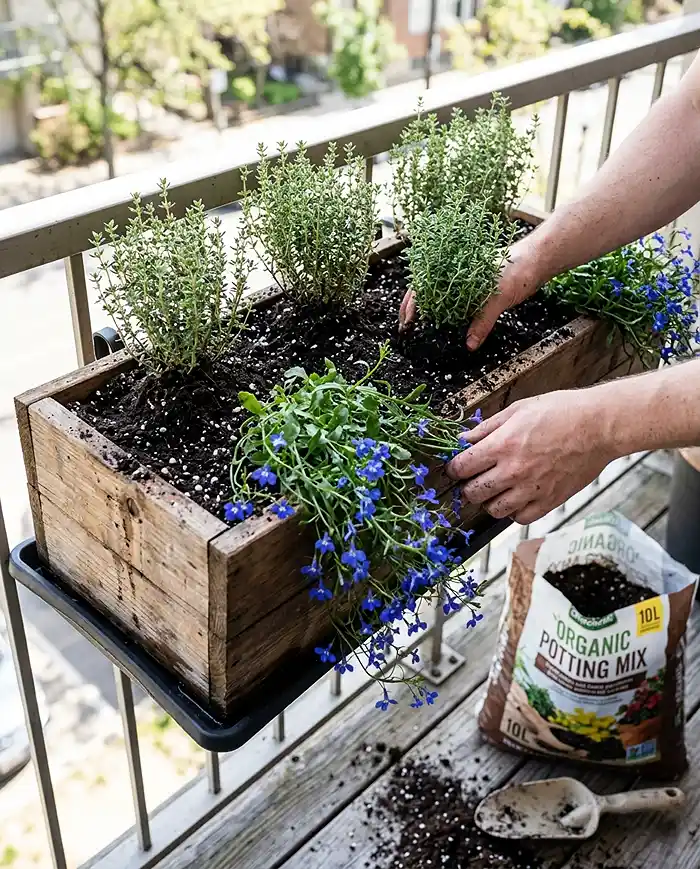
Set upright herbs like rosemary and thyme toward the back of the box, closer to the railing itself. Place trailing flowers along the front edge so they spill outward, creating the layered look that makes railing planter ideas for herbs and flowers so popular for curb appeal.
Watering and Drainage Management for Railing Planters
Railing height means more wind and sun exposure than ground-level containers get, so soil dries out faster. In peak summer, I water my sunniest box daily; the shaded one goes every other day.
Always use a drip tray or self-watering reservoir if your balcony sits above another unit. A neighbor below you will not appreciate runoff soil water landing on their patio furniture.
| Season | Typical Watering Frequency | Drainage Tip |
|---|---|---|
| Spring | Every 2 to 3 days | Check tray isn’t overflowing after rain |
| Summer | Daily in full sun | Add mulch layer to slow evaporation |
| Fall | Every 3 to 4 days | Reduce as growth slows |
Seasonal Care and Rotation
Spring and Summer Growth Maintenance
Pinch back petunias and calibrachoa every few weeks to keep them bushy instead of stringy. Harvest herbs regularly; frequent cutting of thyme and parsley encourages fuller, more productive growth through midsummer.
Fall Transition and Winter Storage
Once nights dip below 45°F, I pull tender annuals like petunias and bring rosemary indoors, since it’s not reliably hardy below zone 7. Clean planter boxes, and store brackets somewhere dry so they don’t seize up with rust over winter.
Regional Considerations for Climate and Wind Exposure
Your USDA hardiness zone shapes which perennial herbs survive winter outdoors, but railing height adds a second variable most guides skip: wind. A railing on an upper floor or an exposed corner dries soil noticeably faster than the same plant at ground level.
You can check your exact zone using the USDA Plant Hardiness Zone Map, then adjust watering frequency upward if your railing catches consistent wind.
As of the 2026 growing season, gardeners in windier coastal or high-rise settings are increasingly leaning on self-watering railing systems for exactly this reason.
Common Problems and Solutions
Planters Sagging or Loosening from the Railing
Check bracket and hook tightness every few weeks, especially after heavy rain adds weight. Redistribute plants if one end of the box has grown noticeably heavier than the other.
Water Dripping onto Neighbors or Lower Balconies
Add a drip tray under every planter, or switch to a self-watering reservoir system that eliminates runoff entirely. Watering in the early morning also gives excess moisture time to absorb before anyone’s below.
Uneven Growth Between Herbs and Flowers
If trailing flowers start shading out herbs, or vice versa, swap positions within the box or split them into separate planters. This is the fix I eventually used when petunias overran a struggling thyme plant in year two.
Frequently Asked Questions
How deep does a railing planter need to be for herbs?
A railing planter needs a minimum depth of 8 inches for healthy herb root development. Deeper-rooted herbs like rosemary and parsley do better with 10 to 12 inches of soil depth.
Can I mix herbs and flowers in the same railing planter?
Yes, as long as they share similar sun and water requirements. Pairing drought-tolerant herbs with heat-loving trailing flowers, or shade-tolerant herbs with shade-loving blooms, keeps both thriving together.
Do railing planters damage the railing or require drilling?
Not necessarily. Hook-over planters clamp onto the railing without any drilling, making them ideal for renters. Bracket-mounted planters do require screws or bolts but offer a more permanent, secure hold.
What trailing flowers work best for railing planters in full sun?
Calibrachoa, trailing petunias, and sweet alyssum are top choices for full-sun railings. All three tolerate heat, bloom continuously, and cascade well over a planter’s edge.
Conclusion
The best railing planter ideas for herbs and flowers come down to matching your mounting system, your railing material, and your sun exposure before you plant a single seedling. Measure twice, check your weight limits, and pick combinations suited to your light.
Whether you go with a hook-over box of rosemary and petunias or a self-watering system full of trailing nasturtium, you’ll get a working container edge display without giving up an inch of floor space.
Key Takeaways:
- Confirm 8-inch minimum planter depth and check your railing’s weight capacity before buying railing planter ideas for herbs and flowers online or in-store
- Hook-over mounts suit renters; bracket mounts suit permanent, heavier setups
- Match sun-loving herbs with sun-loving blooms, and shade-tolerant pairs with lower-light spots
- Wind at railing height dries soil faster than ground-level pots, so adjust watering accordingly
- Use a drip tray or self-watering reservoir any time you’re above another balcony or walkway