
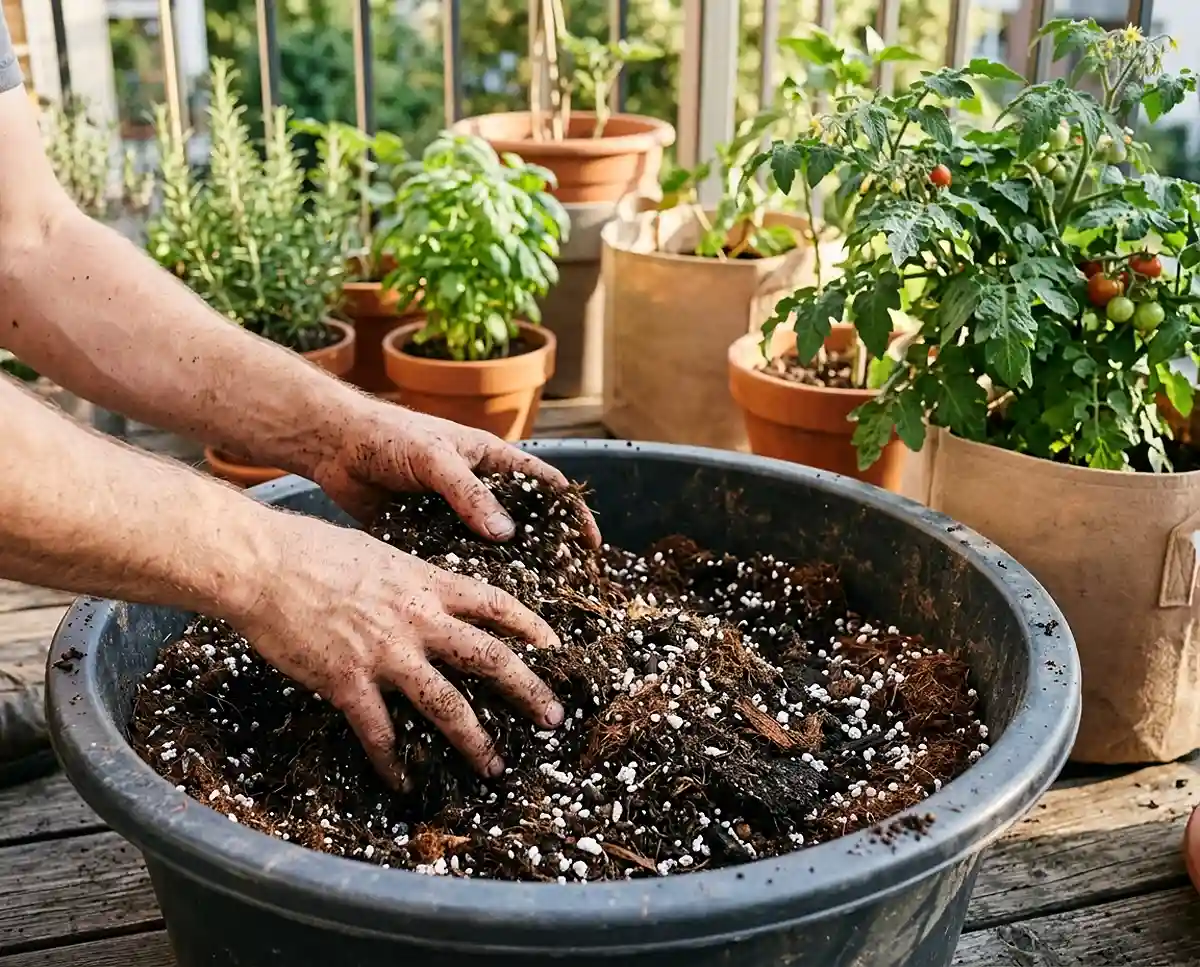
Best Soil Mix for Balcony Vegetables and Herbs
The best soil mix for balcony vegetables and herbs is a lightweight, fast-draining blend, not garden dirt. Get the ratio wrong and even a sunny spot won’t save your tomatoes.
I’ve grown food on a 6th-floor, north-east facing balcony in zone 7a for the past nine years. My first season, I filled three pots with soil dug straight from a friend’s yard.
Every single plant sat in soup after the first heavy rain. That mistake taught me more about container mixes than any bag label ever did.
Table of Contents
Why Container Soil Must Be Different from Garden Soil
Garden soil is built for open ground, where roots spread wide and water drains sideways as well as down. Trap that same soil in a pot and it compacts into something closer to clay. Roots suffocate, water pools, and pests that were harmless in a big backyard suddenly have nowhere to go but up into your container.
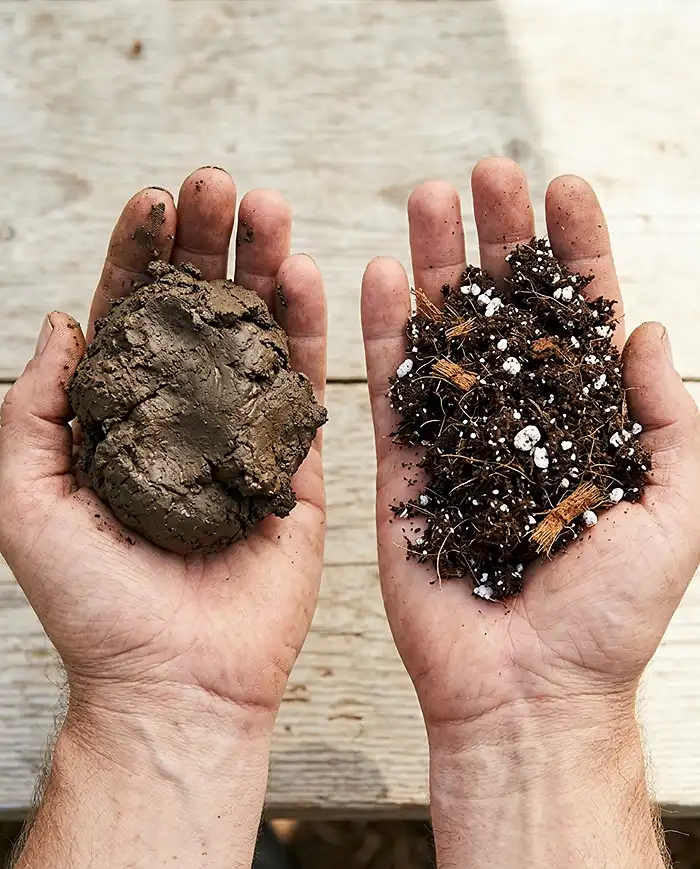
A proper small balcony garden needs a mix engineered for a small volume: light enough to lift, structured enough to hold air pockets, and clean enough that you’re not importing weed seeds or soil-borne disease from the ground.
The Core Components of a Great Balcony Potting Mix
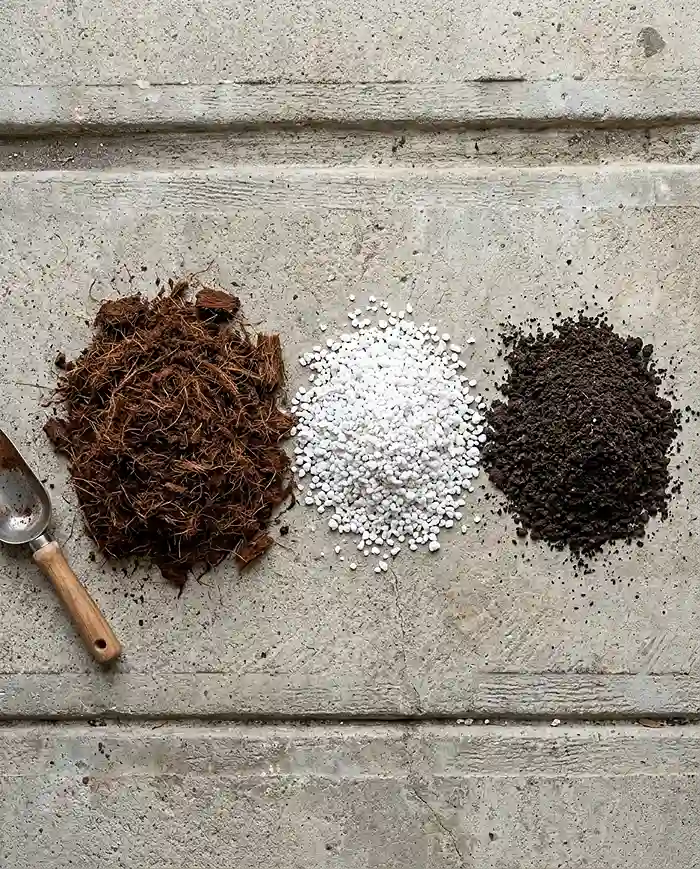
Peat Moss or Coco Coir for Moisture Retention
Quick Answer: Peat moss or coco coir forms the water-holding base of your mix. Both are organic, lightweight, and hold moisture around roots without turning heavy or dense.
I switched from peat moss to coco coir three summers ago, mostly for sustainability reasons, and honestly haven’t noticed a drop in performance. Coco coir also rewets faster after it dries out completely, which matters on a balcony where wind pulls moisture out of pots fast.
Pro Tip: Coir bricks look tiny dry but expand to roughly triple their size once soaked, so don’t buy more than you think you need.
Perlite or Vermiculite for Drainage and Aeration
Quick Answer: Perlite and vermiculite are lightweight volcanic minerals that create air pockets in your mix, preventing the compaction that suffocates container roots.
Perlite drains faster and suits vegetables that hate wet feet, like tomatoes and peppers. Vermiculite holds a bit more water, which works well for herbs that like consistent moisture, such as basil or mint.
Real Example: I once skipped perlite in a rush to repot a struggling pepper plant. Within two weeks the roots were mushy and the plant never fully recovered.
Compost or Worm Castings for Nutrition
Quick Answer: Compost or worm castings feed plants slowly over the season and improve soil structure, cutting down on how often you need to reach for bottled fertilizer.
Worm castings are gentler and less likely to burn young seedlings, so I lean on them for herb starts. Finished compost works better for heavy feeders like tomatoes that need a steady nutrient supply through summer.
The Best DIY Soil Mix Ratios for Vegetables vs. Herbs
All-Purpose Vegetable Container Mix Recipe
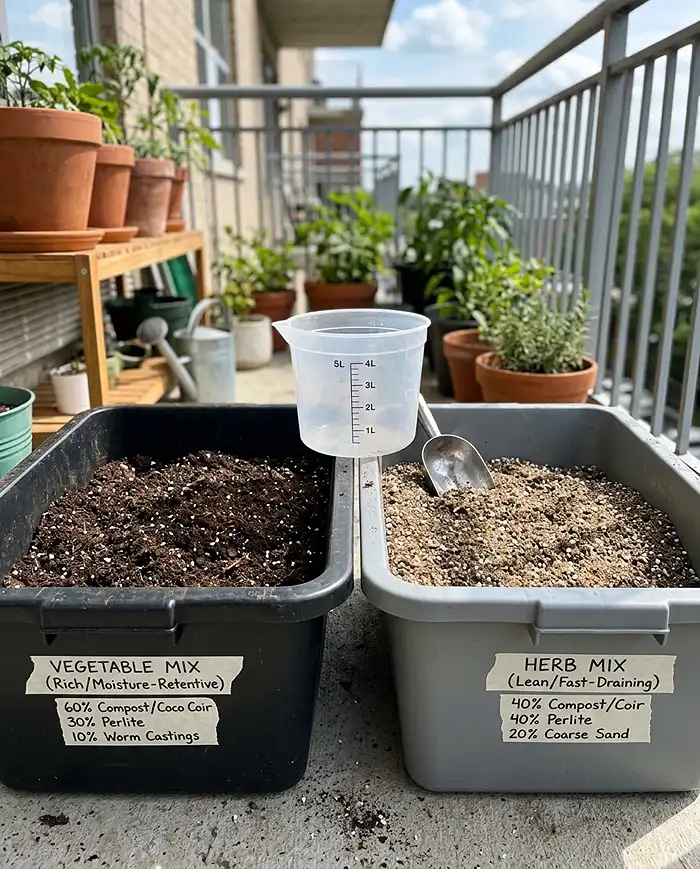
Quick Answer: For heavy-feeding vegetables like tomatoes, peppers, and cucumbers, use 40% coco coir, 30% compost, and 30% perlite by volume.
This ratio gives roots enough moisture to get through a hot afternoon on a south-facing balcony, plus enough nutrition from the compost to fuel fruit production without daily feeding. It’s the exact blend I use for every 5-gallon tomato pot I plant each May.
Pro Tip: If your balcony gets brutal afternoon sun, bump compost to 35% and drop perlite to 25% so the mix holds water a little longer between waterings.
Lean Herb Mix Recipe for Mediterranean Herbs
Quick Answer: Rosemary, thyme, oregano, and sage want a leaner mix: 50% coco coir or peat, 20% compost, and 30% perlite or coarse sand.
These herbs evolved in rocky, dry hillsides, so rich, moist soil actually works against them. I lost a rosemary plant two winters ago because I potted it in leftover vegetable mix. It rotted at the base within a month.
Basil and parsley are the exception among herbs. They prefer the richer vegetable ratio above since they’re leafy, fast-growing plants that appreciate steady moisture and nutrition.
If you’re just starting out, grouping herbs by their moisture needs is one of the simplest herb garden ideas for keeping a balcony collection healthy without babysitting every single pot.
Store-Bought vs. DIY Potting Mix: Which Is Right for You
Bagged potting mix is the faster, more consistent choice if you’re only filling one or two containers, and most quality brands already include starter fertilizer.
DIY mixing pays off once you’re filling five or more pots, since buying components in bulk cuts the cost per gallon significantly. Growing vegetables in pots at scale is where a homemade batch really starts to save money.
| Option | Best For | Watch Out For |
|---|---|---|
| Store-bought mix | 1-3 containers, beginners | Higher cost per gallon, inconsistent quality between brands |
| DIY blend | 4+ containers, repeat gardeners | Upfront time and a mixing space |
| Reused soil + fresh amendments | Budget-conscious, returning growers | Needs disease-free source soil |
Materials and Tools Needed to Mix Your Own Soil
Before you start, gather these basics. Most are one-time purchases you’ll reuse every season.
- Coco coir brick or compressed peat moss bale
- Perlite or vermiculite (a large bag covers several batches)
- Finished compost or bagged worm castings
- A large mixing tub, wheelbarrow, or tarp
- Gardening gloves
- A measuring bucket for consistent ratios
Step-by-Step: Mixing Your Own Balcony Container Soil
Step 1: Measure Your Base Ingredients
Pick one measuring unit, whether it’s a 2-quart bucket or a standard cup, and stick with it for the entire batch. Consistency here is what keeps your ratio accurate. I keep a dedicated scoop just for soil mixing so I never second-guess a measurement mid-batch.
Step 2: Combine and Moisten Thoroughly
Mix your dry ingredients first, working them together with gloved hands or a small trowel until the color looks even. Then add water gradually, a little at a time, until the mix feels like a wrung-out sponge, damp but not dripping.
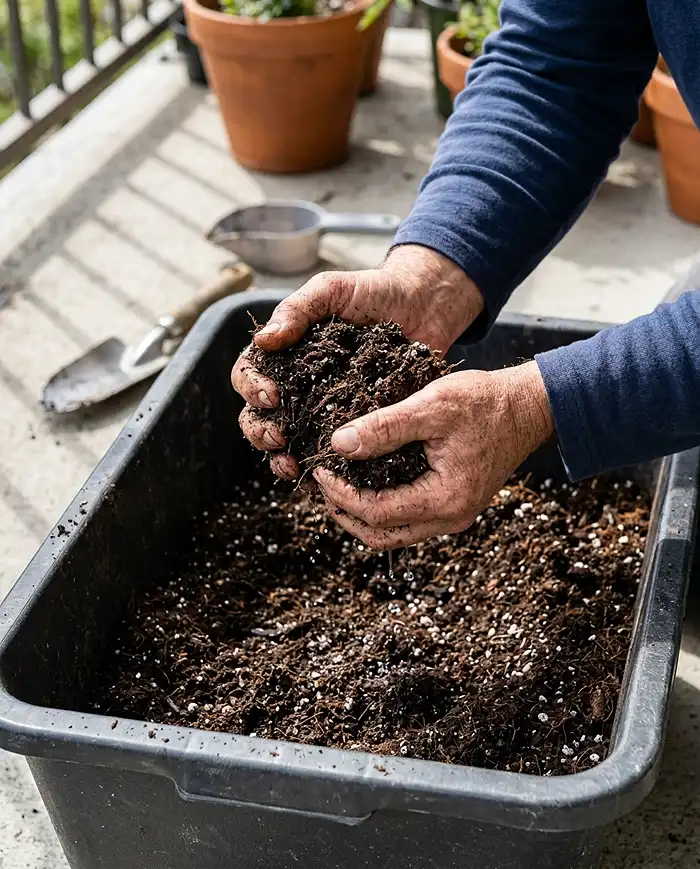
Step 3: Fill Containers and Settle the Mix
Fill pots loosely, never packing the soil down with force. Give the container a few gentle taps on the ground to settle air pockets naturally. Leave about an inch of space below the rim so water doesn’t overflow when you irrigate.
Feeding Schedule to Supplement Your Soil Mix
Container nutrients wash out fast every time you water, far faster than in an in-ground bed. Even a nutrient-rich mix needs backup by week four or five of active growth.
- Weeks 1-4: rely on nutrients already in the compost or castings
- Weeks 5 onward: liquid fertilizer every 2 weeks for vegetables
- Herbs: half-strength liquid feed monthly at most
- Slow-release granules: mix in at planting for season-long backup
Seasonal Soil Maintenance and Refresh Timing
Spring Soil Refresh Before Planting
Each spring, scrape off the top 2-3 inches of old soil and replace it with fresh compost-heavy mix. This restores nutrients and structure without the labor of a full container dump, and it’s the single habit that’s kept my perennial herbs productive for years.
End-of-Season Soil Reuse and Renewal
Healthy soil from disease-free plants can be reused. Mix it 50:50 with fresh mix before replanting. If a plant showed signs of root rot, wilt disease, or persistent pests, discard that soil entirely rather than risk carrying problems into next season.
Regional Considerations for Climate and Water Needs
Hot, dry climates need a moisture-retentive lean, favoring coco coir over peat and slightly less perlite so pots don’t dry out by midday. Humid or rainy regions benefit from the opposite: more perlite and coarser drainage material to prevent waterlogging during long wet stretches.
I’ve adjusted my own mix twice after moving between a dry inland apartment and a humid coastal one, and the difference in how fast pots dried out was dramatic, sometimes twice as fast in the drier climate.
Common Problems and Solutions
Soil Compacting and Draining Poorly Over Time
Organic matter breaks down over months, collapsing the air pockets that once kept your mix loose. Fix it by working in fresh perlite at the surface, or fully repot if compaction has gone on for more than a season.
Plants Showing Nutrient Deficiency Despite Good Soil
Frequent watering leaches nutrients out through drainage holes faster than most gardeners expect, even from a well-built mix. The fix is simple: add a diluted liquid fertilizer on a regular schedule rather than assuming the original soil will last all season.
Soil Drying Out Too Quickly in Containers
If pots dry out within a day of watering, your mix likely has too much perlite and not enough moisture-retentive coir. Rework the ratio toward more coir, or add a light mulch layer like straw to slow evaporation from the surface.
Bringing It All Together for Container Vegetable Gardening
Good container vegetable gardening comes down to matching your mix to your plant, your climate, and your container size, not chasing one perfect universal formula. Once you’ve nailed the base ratio, most other problems on a balcony trace back to watering and light, not soil.
If you’re still figuring out where everything fits on a tight balcony, our guide to balcony storage ideas for gardeners covers smart ways to store bags of coir, perlite, and tools without cluttering your space.
For more layout inspiration once your soil is sorted, check out these apartment balcony garden ideas for arranging pots by sun exposure and reach.
For a deeper technical breakdown of how growing media affects root health, the University of Maryland Extension’s guide to container growing media is a solid, research-backed reference.
Frequently Asked Questions
Can I use regular garden soil in balcony containers?
No. Garden soil compacts in pots, drains poorly, and can carry pests or disease into a confined space. Blend it with compost and perlite at most, or better, avoid it entirely and use a purpose-built container mix.
What is the best homemade soil mix for container vegetables?
A reliable starting formula is 40% coco coir, 30% compost, and 30% perlite by volume. This blend holds enough moisture for heavy feeders like tomatoes while still draining well.
How often should I replace potting soil in balcony containers?
Refresh the top few inches each spring and consider a full replacement every year or two, depending on the plant. Fast-growing vegetables deplete soil faster than slow-growing perennial herbs.
Do herbs and vegetables need different soil mixes?
Yes. Vegetables like tomatoes and peppers need richer, more moisture-retentive soil, while Mediterranean herbs like rosemary and thyme need a leaner, faster-draining mix to avoid root rot.
What size container works best with a DIY balcony soil mix?
Most vegetables need at least a 5-gallon container, while herbs can thrive in pots as small as 1-2 gallons. Larger containers hold moisture longer, which is useful on hot, exposed balconies.
Conclusion
Nailing the best soil mix for balcony vegetables and herbs isn’t complicated once you understand what each ingredient does. Start with the ratios above, adjust for your climate, and watch how your plants respond.
As you build out your space this season, our roundup of vegetables to plant in late summer in pots pairs well with a freshly refreshed batch of soil.
Key Takeaways
- The best soil mix for balcony vegetables and herbs is lightweight and soilless, never straight garden dirt
- Vegetables want a richer 40:30:30 coir-compost-perlite ratio; Mediterranean herbs want a leaner mix
- Refresh the top layer of soil each spring and supplement with liquid fertilizer starting week 4-5
- Adjust moisture retention up in hot, dry climates and down in humid ones
- Reuse healthy soil 50:50 with fresh mix, but discard anything touched by root disease