

vegetables to plant in july in pots
Wondering what vegetables to plant in July in pots? You’ve still got time. I grow container vegetables on a west-facing patio in zone 6b, and July is honestly my favorite planting month.
Table of Contents
Why July is a Secret Second Spring for Container Gardeners
Most gardeners write off July as “too late,” but container vegetable gardening flips that logic. A pot is a portable microclimate you control completely, which spring beds never let you do.
I learned this the hard way in 2022 when I gave up on my raised bed by mid-July but kept sowing into 5-gallon fabric grow bags on the patio. Those pots outproduced the bed through October.
Think of July as a reset button. Soil is already warm, days are long, and you’ve got a full autumn ahead if you plant the right crops in a small space food garden setup.
Understanding First Frost Dates and “Days to Maturity”
Late-season success comes down to one simple formula: your first frost date, minus the days to maturity listed on the seed packet, minus a buffer for slowing autumn light.
Get that math wrong and you’re harvesting frozen mush in October. Get it right, and containers on a patio can produce well past what an in-ground bed manages.
Calculating the Growing Window
Quick Answer: Find your average first fall frost date, count backward using the seed packet’s “days to maturity,” then add a two-week fall factor buffer for shorter, weaker autumn sunlight.
Here’s how I do it every July:
- Check your USDA Plant Hardiness Zone map and local first frost average (zone 6b near me is roughly October 10-15)
- Subtract the seed packet’s days to maturity (e.g., 50 days for bush beans)
- Add 10-14 days as a “fall factor” buffer, since shorter days slow growth compared to a spring sowing
For my zone, that means bush beans need to go in by August 20 at the latest, but earlier in July gives me a much bigger safety margin.
The Container Frost Advantage
This is where pots beat raised beds outright. When an early cold snap threatens, you can physically drag a container onto a covered porch or into a garage overnight.
I’ve saved a whole batch of ‘Bright Lights’ Swiss chard this way in late October, just by wheeling the pots against the house wall under an overhang for three cold nights in a row.
That mobility alone can add 2-4 weeks of harvest window compared to anything planted directly in the ground.
Best Fast-Maturing Vegetables for July Pots
Not every vegetable belongs in a July container. The winners fall into three groups: quick warm-season crops, sweetening autumn roots, and frost-tough leafy greens.
| Category | Best Picks | Days to Maturity | Container Size |
|---|---|---|---|
| Warm-weather quick crops | Bush beans, patio cucumbers | 50-55 days | 5-gallon minimum |
| Autumn root vegetables | Radishes, beets, carrots | 25-70 days | 10-gallon, 12 in deep |
| Hardy leafy greens | Kale, chard, arugula | 30-60 days | 5-gallon minimum |
Warm-Weather Quick Crops: Bush Beans and Cucumbers
Quick Answer: Determinate bush beans (ready in about 50 days) and compact, parthenocarpic cucumbers like ‘Patio Snacker’ are the fastest warm-season crops you can direct-sow into hot July soil.
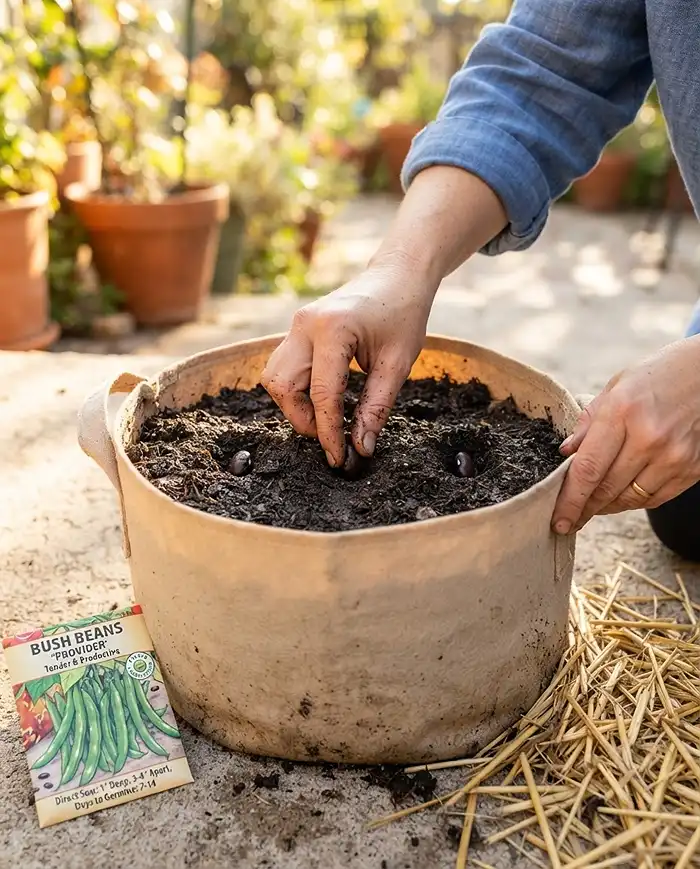
Bush beans don’t need trellising, which matters in a small space food garden where every vertical inch counts. Sow seeds 1 inch deep directly into warm soil.
Parthenocarpic cucumbers set fruit without pollination, which is a real advantage in July when bee activity can lag in extreme heat.
Real Example: I direct-sowed ‘Provider’ bush beans on July 8 last year in a 7-gallon container and had a full harvest by August 29, right on schedule.
Pro Tip: Soak bean seeds in water for 4-6 hours before sowing in July heat; it speeds germination by nearly 2 days compared to dry seed.
Autumn Root Vegetables: Radishes, Beets, and Carrots
Quick Answer: Sow radishes, beets, and carrots in deep 10-gallon containers in July so roots mature during cooler autumn weather, which naturally boosts their sugars for a sweeter harvest.
Roots need depth, not width. A container at least 12 inches deep prevents the stunted, forked roots that shallow pots almost guarantee with carrots.
- Radishes (‘Cherry Belle’): ready in 25-28 days, sow every 2 weeks through August
- Beets (‘Detroit Dark Red’): ready in 55-60 days, thin to 3 inches apart
- Carrots (‘Nantes’ or ‘Danvers’): ready in 65-70 days, needs loose soil free of rocks
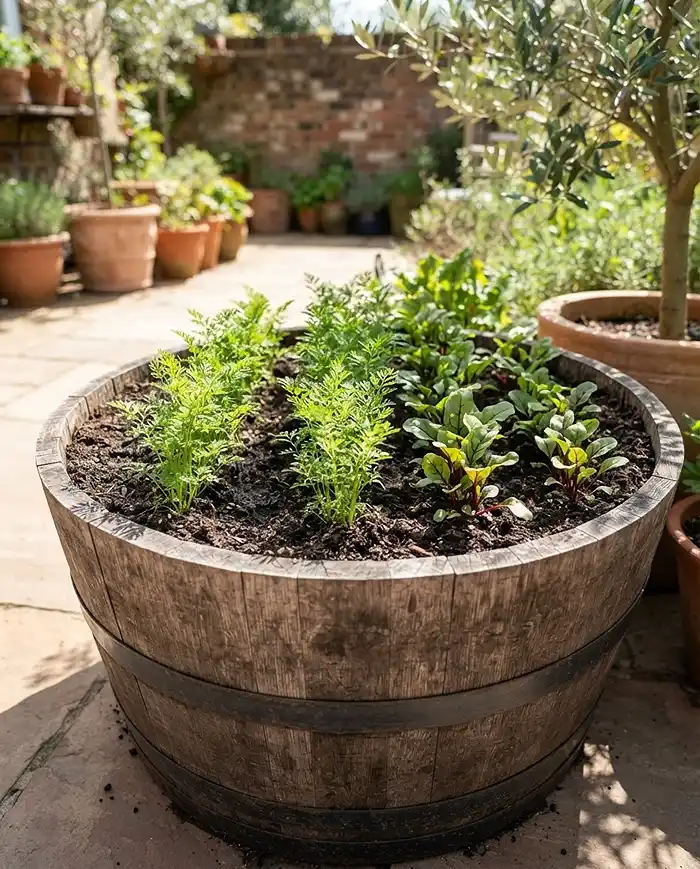
Real Example: My ‘Detroit Dark Red’ beets sown July 12 in a whiskey barrel planter came out noticeably sweeter than my June batch, thanks to cooler October finishing temps.
Pro Tip: A light frost actually improves root vegetable flavor, so don’t rush the harvest the moment temperatures dip.
Hardy Leafy Greens: Kale, Chard, and Arugula
Quick Answer: Cut-and-come-again greens like ‘Lacinato’ kale, Swiss chard, and arugula planted in July in 5-gallon pots will survive light frosts and keep producing into November.
These greens actually taste better after a frost, since cold temperatures trigger the plant to convert starches into sugars.
Sow arugula seed shallow, just a quarter-inch deep, and expect first baby leaves in as little as 21 days.
Real Example: My ‘Lacinato’ kale sown July 20 was still producing usable leaves on Thanksgiving, three weeks after our first hard freeze, once I threw a frost cloth over the pot at night.
Essential Supplies for Hot Weather Planting
July sowing needs gear that spring planting never requires. Heat, not cold, is the enemy at this stage, so your container and soil choices need to work against it.
Sizing and Material of the Containers
Quick Answer: Choose light-colored, thick resin containers or breathable fabric grow bags of at least 5 gallons to deflect UV rays and stop tender new roots from overheating.
- Dark plastic pots can hit 100°F+ at the root zone in direct July sun, which cooks emerging seedlings
- Fabric grow bags breathe and self-prune roots, keeping soil several degrees cooler than solid plastic
- Minimum 5-gallon size for greens and beans; 10-gallon for root crops needing depth
Check out our full pot size guide for vegetables if you’re unsure what size fits your space.
Formulating a Moisture-Retentive Potting Mix
Quick Answer: Mix premium organic potting soil with 30% coco coir and a handful of vermiculite to hold moisture through the rapid evaporation cycles of peak summer heat.
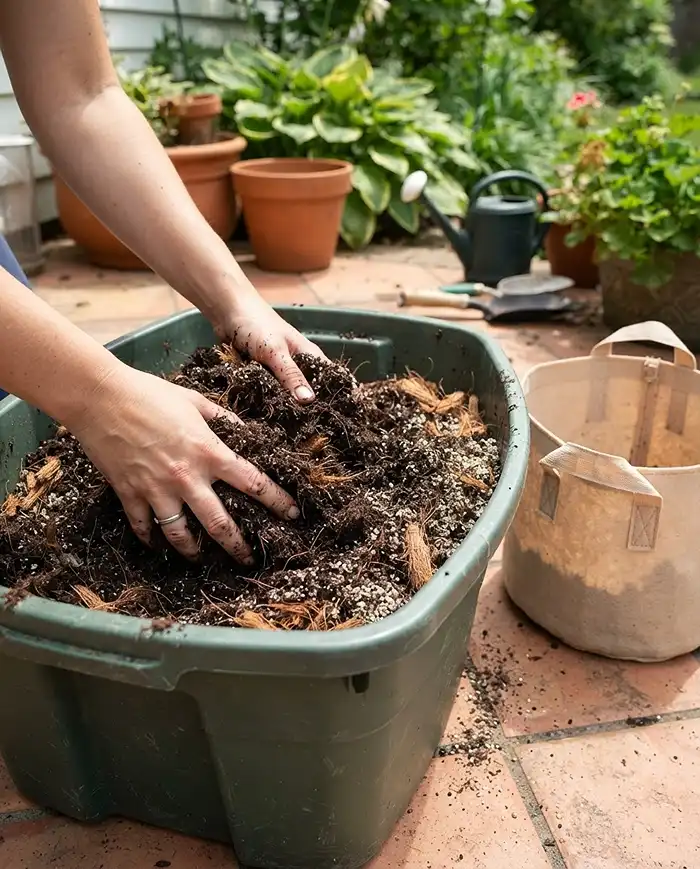
Straight potting soil alone dries out too fast in July sun, sometimes within hours in a black plastic pot.
Coco coir holds water like a sponge without compacting, and vermiculite adds extra water retention plus a bit of aeration for young roots.
Step-by-Step Guide to Sowing in July
Quick Answer: Plant seeds slightly deeper than spring depth to reach cooler, moister soil, then cover with a light straw mulch to stop a hard surface crust from forming.
- Water the container thoroughly the night before sowing so the soil is fully moist, not just surface-damp
- Sow seeds about 25% deeper than the spring depth on the packet (example: half-inch instead of quarter-inch for lettuce)
- Cover the seedbed with a thin layer of straw mulch, about a quarter-inch, to reduce evaporation and crusting
- Water gently right after sowing with a shower nozzle attachment, never a hard stream
This extra depth matters because the top half-inch of soil in a July container can swing 15-20 degrees hotter than an inch below the surface.
Maintenance and Care in Peak Summer
Established plants shrug off heat. Brand-new July seedlings don’t, and they need a noticeably different daily routine until they’re established.
Watering Protocols for Hot Roots
Quick Answer: Water twice daily, early morning and late evening, using a gentle shower nozzle to keep the top inch of soil consistently damp until seeds germinate and roots establish.
Skip a watering in peak July heat and a shallow-rooted seedling can wilt beyond recovery within a few hours.
Once true leaves appear and roots reach a few inches deep, you can typically drop back to once-daily watering.
Using Shade Cloth to Protect Seedlings
Quick Answer: Drape a 30% to 50% UV-blocking horticultural shade cloth over newly planted containers to stop harsh afternoon sun from scorching emerging cotyledons.
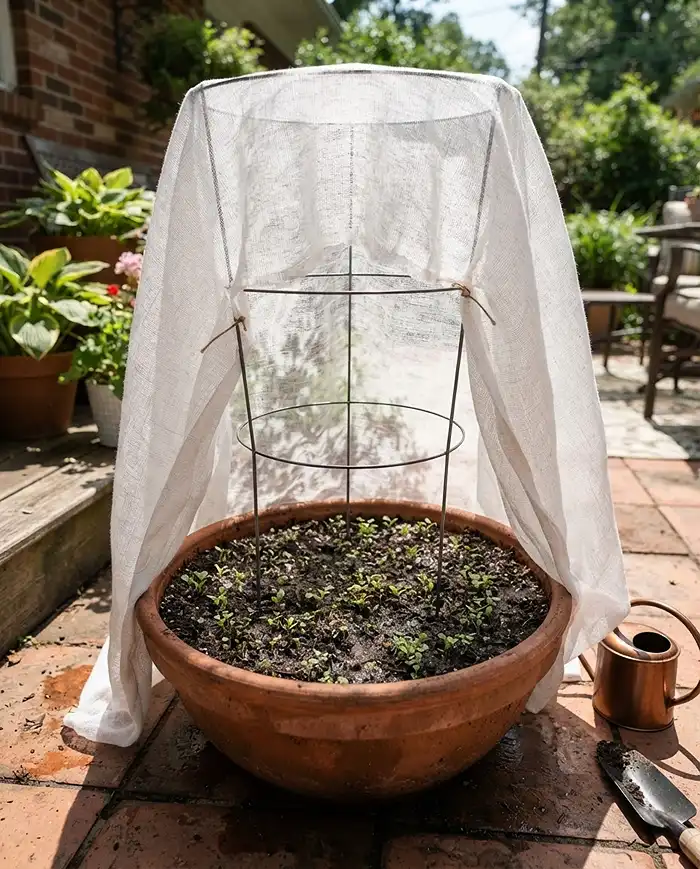
I clip mine to a simple tomato cage frame set over the pot, which keeps the fabric off the seedlings while still blocking peak afternoon sun from noon to 4 PM.
Remove the shade cloth once seedlings have 2-3 sets of true leaves; they’ll need full sun to grow strong from that point on.
Common Problems & Solutions
Mid-summer planting brings its own set of hurdles that spring gardeners never deal with. Here’s how to handle the two biggest ones.
Poor Germination in Hot Soil
Quick Answer: Cool-season crops like lettuce and spinach go dormant and won’t sprout once soil temperature exceeds 80°F, so germinate them indoors under grow lights first, then transplant outside in late August.
I learned this failing with lettuce two summers running before switching strategy. Direct-sown lettuce seed simply sat in the soil, doing nothing, through both attempts.
Now I start lettuce and spinach in small indoor trays under grow lights, where I control temperature, and transplant 3-4 week old seedlings outside once August temperatures ease.
Mid-Summer Pests
Quick Answer: Aphids and cabbage loopers target tender new growth in peak season; control them organically with floating row covers and targeted Bacillus thuringiensis (Bt) sprays.
Bt is a naturally occurring soil bacteria that specifically targets caterpillar pests like loopers without harming beneficial insects.
Row covers physically block egg-laying moths from reaching your kale and chard in the first place, which is easier than treating an infestation later.
For crops that also attract aphids nearby, pairing your containers with the right companion plants for containers can cut down on pest pressure naturally.
vegetables to plant in july in pots FAQs
Can I plant tomatoes in July?
Starting tomatoes from seed in July is too late for most zones, but planting an established, fast-maturing determinate nursery transplant like ‘Early Girl’ in a large pot can still produce a successful late-season harvest.
Should I fertilize late-season plantings?
Wait until July-sown seedlings develop their first set of true leaves, then apply a half-strength, water-soluble organic fertilizer weekly to push rapid vegetative growth before days shorten in September.
How do I cool down container soil for germination?
Move freshly sown containers into full shade, water with cool water, and lay a sheet of damp cardboard over the soil surface to dramatically lower soil temperature until seeds sprout.
What vegetables in pots handle July heat best?
Bush beans, parthenocarpic cucumbers, and heat-tolerant greens like Malabar spinach or amaranth handle July heat best, since they’re bred or naturally suited for warm-season direct sowing.
Is container vegetable gardening as productive as raised beds in late summer?
Yes, container vegetable gardening can match or exceed raised bed productivity in late summer, since pots warm and cool faster and can be moved to protect crops from early frost.
Conclusion
Figuring out what vegetables to plant in July in pots really comes down to matching fast-maturing crops to your frost date math, then giving them extra heat protection while they establish.
Bush beans, root vegetables, and hardy greens are your best bets this month. Once these establish, check our guide to vegetables to plant in late summer in pots to keep the harvest going into fall.
Key Takeaways
- July is prime time for vegetables to plant in July in pots, especially bush beans, root vegetables, and hardy greens
- Calculate your growing window using first frost date minus days to maturity, plus a 2-week fall factor buffer
- Use light-colored, minimum 5-gallon containers and a moisture-retentive soil mix to fight July heat
- Water twice daily until germination, and use shade cloth to protect tender seedlings from scorching
- Container vegetable gardening lets you move pots to protect crops from early frost, extending your harvest window