

vertical garden ideas for small spaces
I grow tomatoes, herbs, and trailing flowers on a 5×8-foot balcony in USDA zone 6b, and vertical garden ideas for small spaces are the only reason I have room left to sit down.
Once you stop thinking in square feet and start thinking in cubic feet, a cramped patio turns into a real growing space. This guide covers the hardware, the plants, and the mistakes I made getting there.
Table of Contents
Elevate Your Oasis: Saving Floor Space with Vertical Gardening
My balcony used to hold four sad pots and zero chairs. Switching to wall pockets, a hanging basket, and a railing planter freed up the entire floor.
That’s the core idea behind small space gardening: the walls, railings, and ceiling of a balcony or patio are unused real estate. A vertical setup can hold two to three times the plants of a floor-only layout without blocking a single walkway.
This shift matters most for renters and urban gardening setups, where the whole footprint might be 40 square feet total. Going up is often the only way to grow more than a few herbs.
Assessing Your Space for Off-the-Floor Gardens
Quick Answer: Before mounting anything, check your light exposure, wind patterns, wall structure, and lease terms. Elevated planters face harsher conditions and stricter rules than floor pots.
Hanging and wall-mounted setups dry out faster, catch more wind, and put real weight on hardware that wasn’t built for gardens. Skipping this step is how I lost a whole pocket planter of basil in one August heat wave.
Mapping Vertical Light and Wind Exposure
Quick Answer: Track sunlight on your walls every two hours for one day, and note which spots catch direct wind. Elevated planters dry out faster than anything sitting on the floor.
A south-facing wall in zone 6b can hit 95°F by 2 p.m. in July, even when the floor two feet below stays shaded. Wind tunnels between buildings also hit hanging baskets harder than sheltered floor pots.
- Check sun exposure at 9 a.m., noon, 3 p.m., and 6 p.m. for one full day
- Note any gap between buildings that funnels wind onto your wall
- Elevated spots typically run one USDA zone hotter and drier than ground level
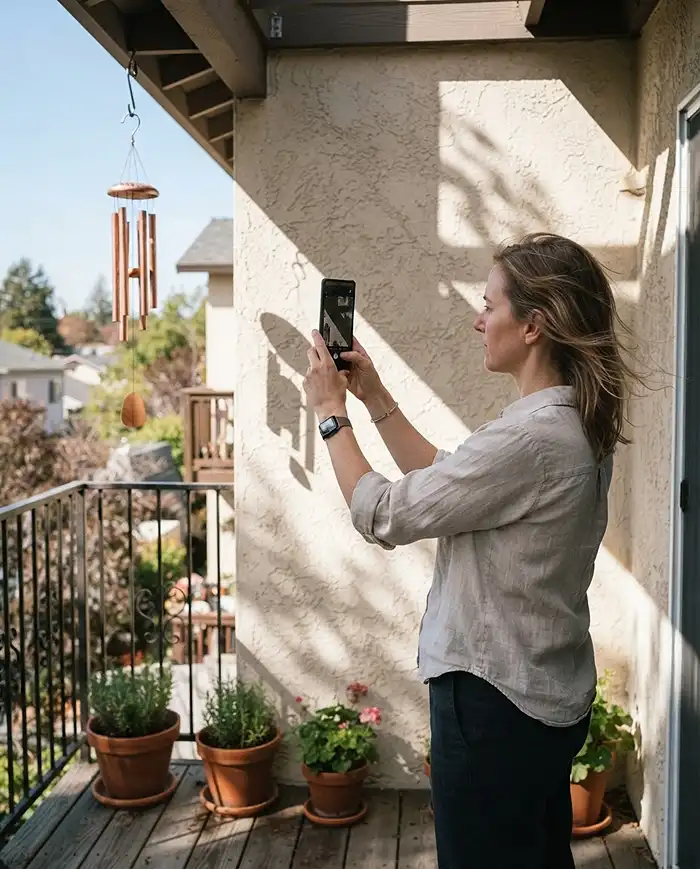
Pro Tip: A cheap wind chime tells you more about your microclimate in a week than any app.
Evaluating Wall Integrity and HOA Restrictions
Quick Answer: Check your lease or HOA rules before drilling into exterior masonry, and calculate the wet weight of your soil, not the dry weight. Wet potting mix can weigh 30% more than what’s on the bag.
My lease banned drilling into brick but allowed hooks on the existing railing, so I built my whole setup around saddle planters instead of a wall system.
- Wet soil in a 12-inch hanging basket can weigh 15 to 20 pounds
- A loaded 4-foot wall pocket system can exceed 60 pounds when saturated
- Call your HOA or re-read your lease before any drilling into siding or masonry
Top Space-Saving Garden Systems
Once you know your light, wind, and structural limits, pick hardware that fits them. Here’s how the main systems compare on installation difficulty and floor space used.
| System | Installation Difficulty | Floor Space Used |
|---|---|---|
| Wall pockets / green wall | Moderate (drilling required) | None |
| Hanging baskets | Easy (ceiling hook) | None |
| Tension pole shelves | Easy (no drilling) | 1 square foot |
| Over-the-railing saddle planters | Easy (no drilling) | None |
Wall-Mounted Planter Pockets and Green Walls
Quick Answer: Felt pocket planters or rigid plastic living wall frames bolt directly to siding, holding a dense wall of herbs or ferns using zero floor space.
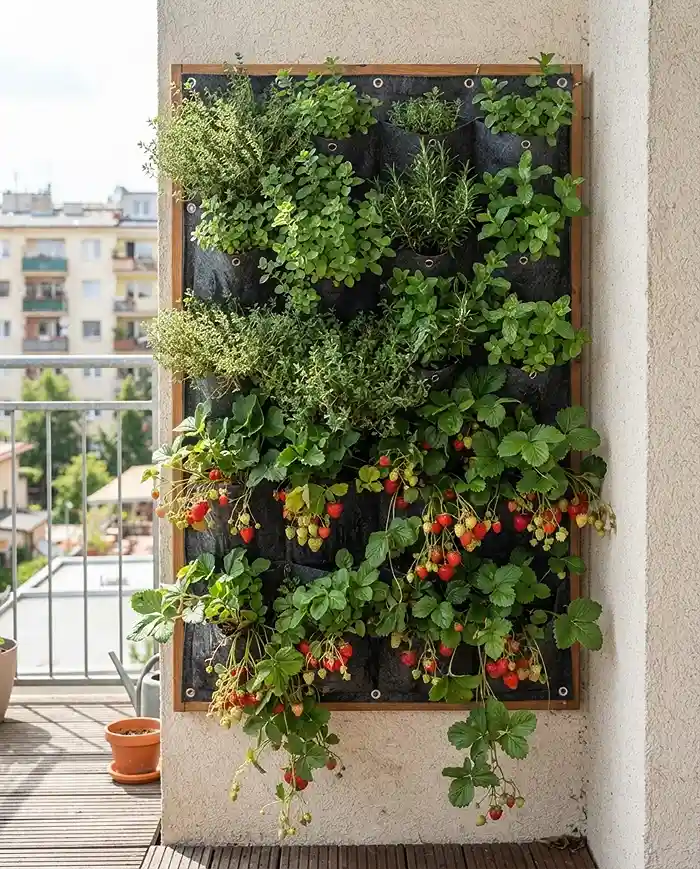
A single 4-foot-by-3-foot felt pocket panel can hold 12 to 18 small plants. I run mine with thyme, oregano, and strawberries and check it a lot more than my floor pots.
Real Example: I mounted a Woolly Pocket-style panel on my south wall in April 2025 and had a full herb wall by June, using a space that used to hold nothing but a broom.
Pro Tip: Screw a waterproof backing board behind felt pockets first, or you’ll stain the siding within a season.
Hanging Baskets and Upside-Down Planters
Quick Answer: Deep wire baskets lined with sphagnum moss and hung from ceiling hooks put your unused upper-air canopy to work above head height on a porch or balcony.
Use heavy-duty swivel hooks so you can rotate the basket a quarter turn each week for even sun exposure on all sides.
- Choose baskets at least 14 inches deep for anything beyond shallow annuals
- Line with sphagnum moss to slow moisture loss through the wire sides
- Rated ceiling hooks should hold at least 25 pounds for a loaded, wet basket
Real Example: My first hanging basket used a cheap plastic hook that bent within a month. I switched to a rated swivel hook and it’s held a fully-grown Boston fern for two seasons now.
Tiered Tension Poles and Ladder Shelves
Quick Answer: Tension-rod plant poles wedge between the floor and ceiling and hold multiple small pots in one vertical column, with no drilling required.
These are the best option for renters who can’t touch the walls at all. A single pole can hold four to six 6-inch pots stacked at different heights.
Pro Tip: Check the tension every few weeks, since temperature swings can loosen the rod’s grip on the ceiling over a season.
Over-the-Railing Saddle Planters
Quick Answer: Deep, heavy-duty saddle planters straddle a balcony railing on both sides, turning the entire perimeter of the space into a growing bed with no floor footprint at all.
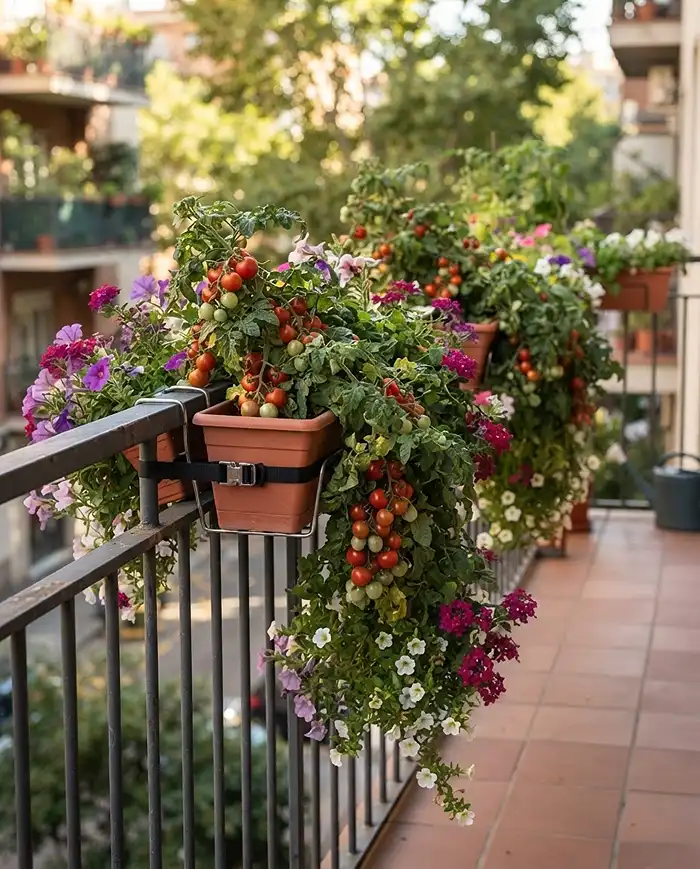
Look for saddle planters at least 8 inches deep with a locking strap, not just gravity holding them in place. A shallow, unsecured planter is how you end up explaining a broken pot to your downstairs neighbor.
Real Example: I lined my railing with three 24-inch saddle planters of cherry tomatoes last season and doubled my harvest without losing a single square foot of floor.
Best Plants for Elevated, Small-Space Gardens
Not every plant tolerates hanging or wall-mounted life. The best candidates are trailing, compact, or shallow-rooted, since deep taproots and heavy vines struggle in confined vertical containers.
Trailing Vines and Cascading Ornamentals
Quick Answer: Sweet Potato Vine, Creeping Jenny, and trailing Lobelia cascade downward naturally, hiding hardware and creating a green waterfall effect from wall pockets or baskets.
These “spillers” grow fast and forgive uneven watering better than most ornamentals, which matters when your basket dries out twice as fast as a floor pot.
- Sweet Potato Vine (Ipomoea batatas ‘Blackie’) trails 3 to 4 feet in one season
- Creeping Jenny handles partial shade better than most spillers
- Trailing Lobelia needs consistent moisture but rewards you with nonstop blue blooms
Compact Edibles: Strawberries, Herbs, and Micro-Greens
Quick Answer: Day-neutral strawberries, bush-variety cherry tomatoes, and shallow-rooted herbs like thyme and oregano are the highest-yield edibles for elevated containers.
Day-neutral strawberry varieties like ‘Seascape’ fruit all season instead of just once, which matters a lot when your total growing area is a few wall pockets.
- ‘Seascape’ strawberries fruit continuously from June through September in zone 6b
- Bush cherry tomatoes like ‘Tumbling Tom’ stay under 18 inches tall
- Thyme and oregano tolerate the drier conditions of elevated pots better than basil
Real Example: I lost a full tray of basil to wind and heat in my first summer of wall gardening. Oregano planted in the same spot the next year barely noticed the conditions.
Step-by-Step Installation of a Wall-Mounted Garden
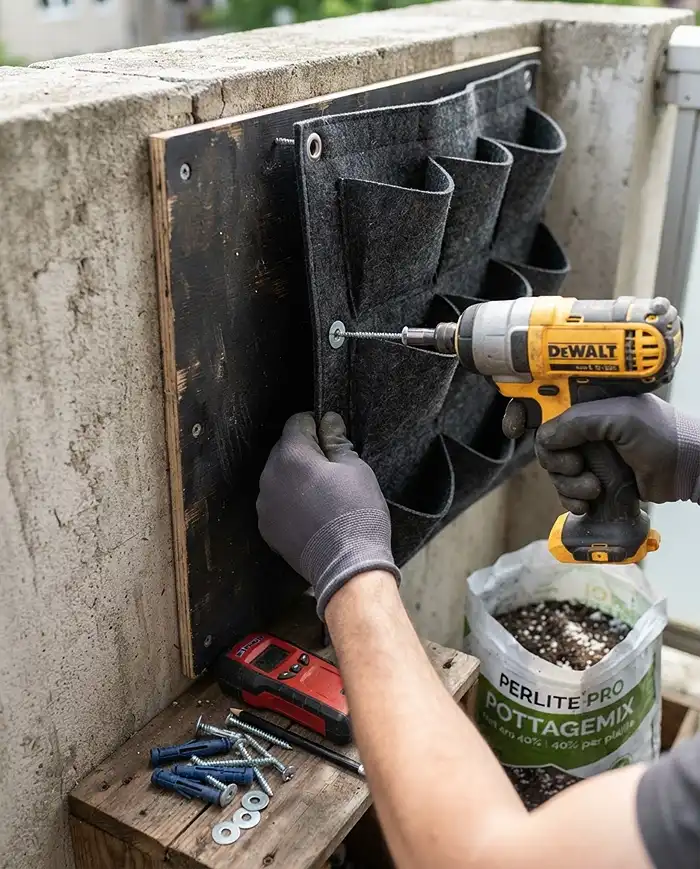
Here’s the exact order I follow every time I set up a felt pocket wall, learned the hard way after one panel pulled loose from drywall anchors alone.
- Locate the wall studs with a stud finder, or use masonry anchors rated for at least 40 pounds on brick or stucco
- Attach a waterproof backing board first to protect the siding from moisture and staining
- Mount the felt pocket panel or rigid frame directly to the backing board, not the siding itself
- Fill pockets with a lightweight, perlite-rich potting mix, not garden soil, which gets far too heavy when wet
- Tuck in starter plants at the same depth they were growing in their nursery pots
- Water thoroughly and check the mounting hardware again after the first watering, once the panel is at full weight
For more layout inspiration before you start drilling, this guide to space-saving small garden ideas covers floor and vertical combinations.
Specialized Watering and Maintenance for Elevated Gardens
Quick Answer: Elevated planters dry out roughly twice as fast as floor pots because of gravity, wind, and increased sun exposure, so daily manual checks or a micro-drip system are close to mandatory.
I run a simple micro-drip line on a timer for my wall pockets now, set to water for four minutes every morning at 7 a.m. in peak summer.
- Check soil moisture daily on anything hanging or wall-mounted during summer
- A micro-drip irrigation kit on a timer removes the guesswork entirely
- Fertilize slightly more often than floor pots, since frequent watering leaches nutrients faster
If you’re just starting out with elevated setups, our apartment gardening for beginners guide covers the basics of watering schedules in more depth.
Common Problems and Solutions
Two problems come up more than any other with off-the-floor gardens: soil drying out too fast, and dripping mud making a mess below.
Rapid Soil Dehydration in Hanging Baskets
Quick Answer: Line hanging baskets with perforated plastic sheeting to slow evaporation, and mix water-storing hydrogel crystals into the potting soil to extend time between waterings.
A thin layer of perforated plastic between the moss lining and the soil cuts evaporation noticeably without blocking drainage entirely.
Pro Tip: Hydrogel crystals swell with water and slowly release it, which stretched my hanging basket watering from daily to every other day last July.
Dripping Mud and Messy Balcony Floors
Quick Answer: Use bottom-sealed wall planters with built-in reservoirs and top-dress soil with sphagnum moss to stop muddy runoff from staining the floor below.
Nothing ends a good relationship with downstairs neighbors faster than dripping mud on their patio furniture. A sealed reservoir catches excess water instead of letting it run straight through.
For a full container layout that avoids drainage headaches entirely, check out this container garden layout with 5 pots.
Frequently Asked Questions
What is the most space-efficient way to grow vegetables on a balcony?
A vertical hydroponic tower or a stacking planter system like GreenStalk lets you grow up to 30 leafy green and fruiting vegetable plants in about two square feet of floor space, making it the most efficient option for tight balconies.
How do I attach planters to an apartment wall without drilling?
Use heavy-duty outdoor adhesive hooks for lightweight herbs, lean a tall wooden trellis securely against the wall, or hang planters from over-the-door hooks attached to a balcony privacy divider. All three avoid damaging masonry or siding.
Can I leave wall-mounted planters outside during the winter?
Wall planters lack the insulation of in-ground soil, so perennial roots freeze and die easily in cold climates. In most regions, empty the pockets for winter or treat the plants as single-season annuals.
How much weight can a balcony railing safely hold?
Most residential balcony railings are rated for a live load around 50 pounds per linear foot, but this varies by building age and material, so check with your building manager before adding heavy saddle planters.
Do vertical gardens need more fertilizer than floor pots?
Yes, elevated and hanging planters need watering more often, which leaches nutrients out of the soil faster. Feed vertical gardens every 7 to 10 days during the growing season instead of the usual monthly schedule.
Conclusion
As of the 2026 growing season, vertical garden ideas for small spaces remain the fastest way to turn a cramped balcony into a real garden without losing floor space.
Start with light and wind mapping, pick hardware that matches your lease restrictions, and choose trailing or shallow-rooted plants built for elevated life.
For general guidance on climate and frost dates when picking plants, the USDA’s official plant hardiness resources are worth bookmarking.
Key Takeaways
- Vertical garden ideas for small spaces can triple your growing area without using any extra floor space
- Map sun and wind exposure on your walls before mounting anything permanent
- Choose trailing spillers and shallow-rooted edibles suited to fast-drying elevated containers
- Elevated planters dry out roughly twice as fast as floor pots, so plan your watering routine accordingly
- Check your lease or HOA rules before drilling into any exterior wall or masonry