

Balcony Garden Storage Ideas for Pots and Tools
Balcony garden storage means keeping soil dry and tools sharp without turning your small balcony garden into a cluttered mess. Here’s my system after six years of trial, error, and one very moldy bag of Fox Farm.
Table of Contents
The Challenge of Balcony Garden Storage
I garden on a 5×9-foot east-facing balcony in Chicago, zone 6a, four floors up. There’s no shed, no garage, and no room to hide anything.
Every bag of soil, every trowel, and every half-used bottle of fish emulsion has to earn its spot. Urban gardening on a balcony means your storage decisions live in plain sight, exposed to rain, wind, and temperature swings your ground-level neighbors never deal with.
In my second year, I left a bag of Fox Farm Ocean Forest against the railing through a rainy October. The bag split, the soil turned to sludge, and I lost half of it to mold. That mistake is why I now treat storage as seriously as I treat planting.
Pre-Planning Your Balcony Storage Space
Before buying a single bin, walk your balcony and map what’s actually usable. Most small space gardening setups have dead zones nobody uses: the wall above the railing, the corner behind the door swing, the gap under a bench.
Sketch it out. Note which spots get direct sun, which stay shaded, and which catch wind off the building. That fifteen minutes of planning saves you from buying a cabinet that won’t fit through your door or blocks your only exit route.
Assessing Weather Exposure and HOA Limits
Stand on your balcony during a storm if you can, or check right after one. Note where rain pools, where wind funnels between buildings, and which walls get blasted with afternoon UV.
Before you buy anything, check your lease or HOA rules. Many buildings cap storage container height (often 36 inches) or ban anything visible from the street. I learned this after my property manager flagged a tall cabinet as a “fire escape obstruction.”
Decluttering and Essential Tool Selection
The fewer tools you own, the less you need to store. For a tiny garden ideas approach that actually works, I’ve cut my kit down to four pieces I actually use every week:
- Bypass pruners (Felco No. 2, sharpened every spring)
- A stainless steel soil scoop
- A hori-hori knife for weeding, dividing, and transplanting
- A collapsible watering can that folds flat when empty
Everything else, from extra pots to seed trays, gets donated or tossed. If a tool sits unused for a full season, it doesn’t earn balcony real estate.
How to Store Potting Soil Outside Safely
Potting mix isn’t inert dirt. Quality mixes like Espoma or FoxFarm contain living microbes and, in premium blends, mycorrhizal fungi that help roots absorb nutrients.
Store it wrong and you get anaerobic conditions (no oxygen, which kills beneficial microbes), nutrient leaching from repeated rain soaking, or a soil that’s essentially sterile by spring. None of that is disastrous, but it means paying for soil that’s now doing less work for your plants.
Preventing Moisture, Mold, and Pests in Soil
Here’s exactly what I do with every new bag of soil the day it arrives:
- Roll the top of the bag down tightly to push out excess air before sealing
- Clip or tie it shut with a heavy-duty zip tie, not the flimsy twist tie it ships with
- Set it on a wood pallet scrap or overturned crate, never directly on concrete
- Keep it under an eave or awning, away from direct rain exposure
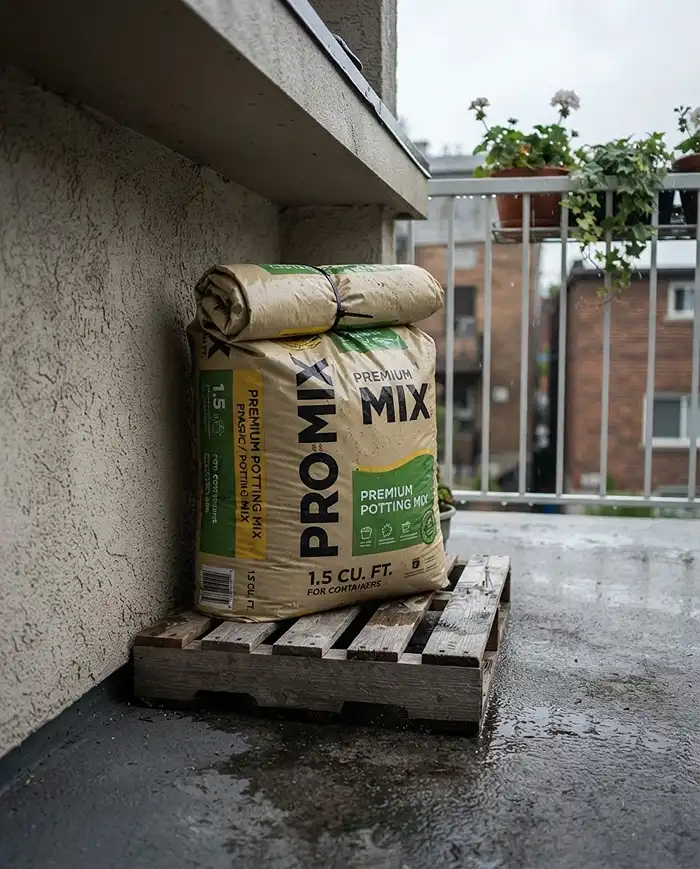
Elevating the bag matters more than people think. Concrete holds pooled rainwater long after a storm passes, and a bag sitting in that puddle will wick moisture upward for days.
Best Containers for Soil Storage: Bins vs. Bags
Original plastic bags work fine for short-term storage in shade, but thin commercial plastic breaks down fast under direct UV. Within one Chicago summer, mine turn brittle and start splitting at the seams.
Transferring soil into a proper bin costs more upfront but pays off if you’re storing soil for more than a few weeks.
| Storage Option | Best For | Watch Out For |
|---|---|---|
| Original plastic bag | Short-term, shaded, under 4 weeks | UV breakdown, splitting, no pest barrier |
| Galvanized steel bin | Long-term, sunny balconies | Can get hot inside in full summer sun |
| Heavy resin bin with locking lid | Year-round, rodent-prone areas | Costs more; check it’s actually opaque |
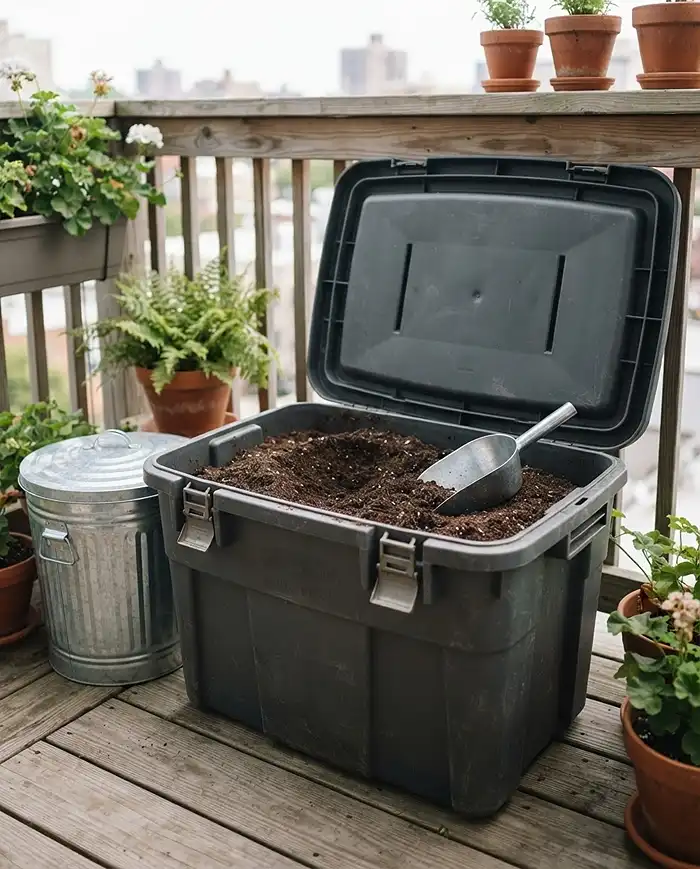
I switched to a 30-gallon resin bin with a locking lid three years ago after finding a mouse nest in a soil bag. Haven’t had a pest problem since.
Space-Saving Tool Storage Solutions
Once your soil is handled, tools are the easier problem. The trick for any small balcony garden is using vertical space and furniture that pulls double duty, instead of adding standalone storage that eats floor space.
Multi-Functional Storage Benches and Deck Boxes
My 45-gallon Suncast resin deck box does two jobs: it’s seating for guests, and it hides my watering can, a bag of perlite, and extra pots underneath the lid.
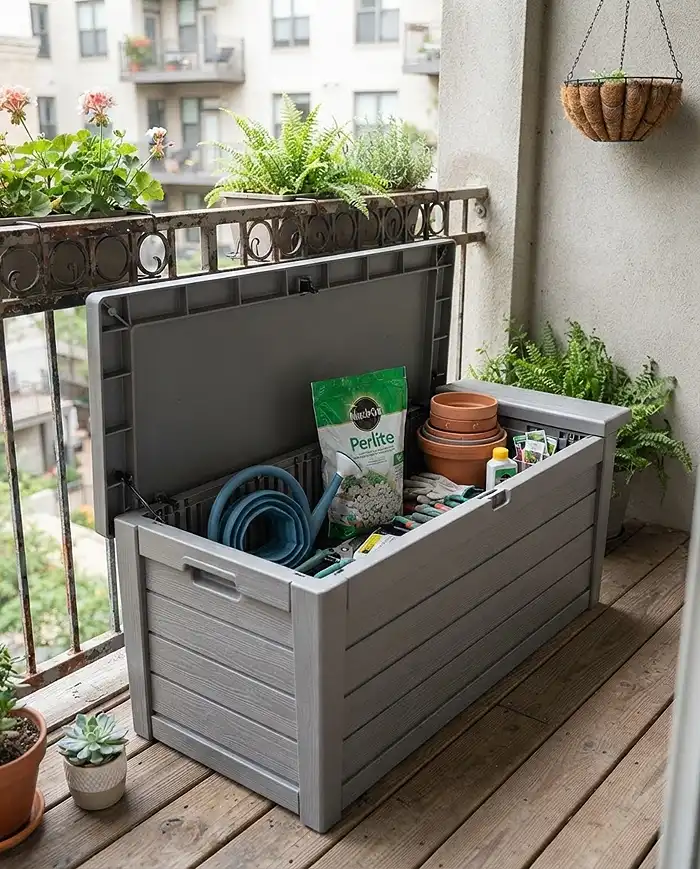
Look for acacia wood or resin, both of which shrug off rain without warping. Avoid untreated pine, which I tried first and watched swell and stick within one wet season.
As of this year, resin deck boxes in the 40 to 50-gallon range run $80 to $150, which is less than a matching cabinet and chair set would cost separately.
Vertical Wall Organizers and Pegboards
An exterior-grade, powder-coated pegboard mounted on a protected wall keeps pruners, gloves, and plant ties dry and within arm’s reach. Skip standard indoor pegboard; it swells and warps outdoors within a season.
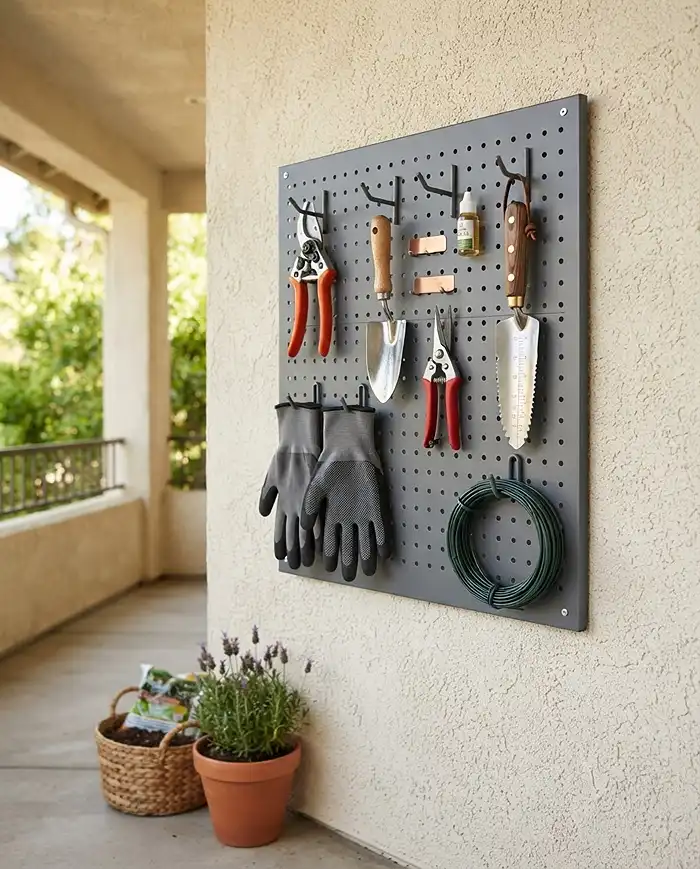
If drilling into a rental wall isn’t an option, a canvas tool roll hung from a single hook works nearly as well and rolls up small when not in use. I use one for anything that doesn’t need to be grabbed one-handed mid-task.
Organizing Fertilizers and Liquid Amendments
Liquid organic fertilizers like fish emulsion or kelp extract are temperature-sensitive in ways dry tools aren’t. Extreme heat can break down the biological compounds, and a hard freeze can do the same.
I keep mine in a small insulated tote just inside my balcony door rather than in the outdoor bin. Granular fertilizers tolerate outdoor storage better, but I still keep them sealed and off the ground to avoid moisture clumping.
Seasonal Storage Maintenance
Twice a year, spring and late autumn, I do a full check of every bin, bag, and tool. It takes maybe 40 minutes and saves me from mid-season surprises like a rusted-shut lid or a bin full of standing water.
Winterizing Tools and Soil
Before the first hard freeze, I brush every tool clean of dried soil and wipe the metal down. Then I oil the hinges and pivot points with 3-IN-ONE lubricant to keep winter rust from setting in.
Organic soil amendments and anything with live microbes come inside for winter. The mineral base of potting mix survives freezing fine, but added biological boosts often don’t.
Spring Cleaning and Tool Sharpening
Come March, I pull everything back out. Stored soil usually compacts over winter, so I fluff it with a hand cultivator and mix in a few cups of fresh compost before it goes back into pots.
Pruners get a pass with a carbide sharpening file along the beveled edge. A sharp blade makes cleaner cuts, which means less stress on your plants going into the growing season.
Common Problems & Solutions
Storing organic matter and metal tools outdoors year-round means you’ll eventually run into pests or rust. Here’s how I fix both.
Fungus Gnats Infesting Stored Soil
Two springs ago, a friend gave me a half-used bag of potting mix that had been sitting in her damp garage. Within a week, my pepper seedlings had fungus gnats swarming the soil surface.
My fix: spread the soil out in direct sun for a full day to dry and solarize it, then mixed in a layer of diatomaceous earth before replanting. For more detail on the biology behind these pests, the UC Statewide IPM Program’s fungus gnat guide is the most thorough resource I’ve found.
Rusted Hand Tools and Shears
If a tool gets left out in the rain, soak the rusted metal parts in white vinegar overnight. In the morning, scrub with steel wool until the rust flakes off.
Dry the tool completely, then wipe on a thin coat of linseed oil to protect the metal. I keep a small tin of linseed oil in my deck box specifically for this.
balcony garden storage FAQs
Does potting soil go bad if left outside freezing?
Freezing does not damage the mineral components like peat and perlite. It can, however, kill off beneficial mycorrhizal fungi in premium mixes, so reinvigorate thawed soil with fresh compost tea before planting in spring.
Can I store potting mix in its original plastic bag?
Original bags work fine for temporary storage in a shaded area. Thin commercial plastic degrades quickly under direct UV sunlight, eventually turning brittle and splitting, which exposes the soil to weed seeds and rain.
What is the best way to clean gardening tools before storing them?
Wipe away dirt with a stiff wire brush, then sanitize the blades with rubbing alcohol to prevent spreading plant diseases between pots. Dry the metal thoroughly before placing tools in a sealed container or tool roll.
Final Thoughts
Good balcony garden storage isn’t about buying more stuff. It’s about matching a few well-chosen containers to your actual space, weather exposure, and the handful of tools you truly use.
For more ideas on organizing a tight footprint, check out our guides on balcony storage ideas for gardeners, apartment balcony garden ideas, and space-saving small garden ideas.
- Elevate soil bags off concrete and seal them tightly to block moisture and pests
- Transfer soil to a locking resin or steel bin for anything stored longer than a month
- Use multi-functional deck boxes and wall-mounted pegboards to save floor space
- Bring liquid fertilizers and biological soil amendments indoors before hard freezes
- Do a full storage check each spring and autumn to catch rust and mold early