

How Often to Water Lettuce in Pots
Learn how often to water lettuce in pots, how heat changes the schedule, and the signs your lettuce is too dry or getting watered too often.
Most potted lettuce needs water every 1–2 days, but the right frequency depends on pot size, weather, and plant age. Use a simple moisture check instead of a fixed schedule: water when the top 1 inch (2.5 cm) of potting mix feels dry.
Why it matters: Lettuce (Lactuca sativa) is about 95% water by weight (varies by variety), so inconsistent watering can quickly lead to wilting, bitterness, or early bolting.
If you’re just getting started with container greens, my guide on how to grow salad greens in small planters covers the full setup from soil to harvest. Consider this post the deep dive on the watering piece specifically.
Most balcony gardeners fail before they even buy their first bag of soil—not because of a ‘black thumb,’ but because they are fighting their balcony’s natural light. Whether you have a sun-drenched South-facing oasis or a cool, shaded North-facing retreat, your garden’s destiny is determined by the compass.
How Often to Water Lettuce in Pots: The Short Answer
Starting schedule (with context): For lettuce grown in containers with drainage holes and a standard potting mix, a common starting point is watering every 1–2 days. That equals about 3–7 waterings per week, depending on temperature, sun, wind, pot size, and how fast the mix drains. In mild spring or fall weather, this commonly works out to about 4–5 waterings per week.
Best rule (Finger Test): Push a finger about 1 inch (2.5 cm) into the potting mix. If the mix feels dry at that depth, water the container. If it feels cool and moist, wait and recheck later.
Hot-weather adjustment: In extreme heat, direct sun, wind, or small pots, containers can dry fast enough that lettuce may need daily watering, and in some setups a second watering the same day may be needed to prevent repeated wilting and stress-related bitterness.
How to water each time: When you water, apply enough water to wet the full root zone. A practical indicator is to water until you see water draining from the bottom holes (not just dampening the surface).
Why this method matters: Small, surface-only waterings can leave deeper potting mix dry. Fully wetting the container helps keep moisture available through more of the soil volume between waterings.
Here’s a quick reference table to bookmark:
| Growth Stage | How Often to Water Lettuce in Pots | Method | What to Watch For |
|---|---|---|---|
| Germination (Days 0–14) | Daily | Mist with spray bottle | Don’t blast seeds out of the soil |
| Seedling (Weeks 2–4) | Every 1–2 days | Gentle soak at the base | Keep top inch moist, not soggy |
| Mature / Harvest (Week 4+) | Daily check; water when dry at 2″ | Full deep soak | Double-check in heat or wind |
Why Watering Lettuce in Pots Actually Matters (The Science Part, I Promise It’s Quick)
Turgor Pressure — Why Your Lettuce Goes Limp
Ever wonder what keeps a lettuce leaf crunchy? It’s something called turgor pressure — basically, water inside each cell pushing outward against the cell wall, keeping everything firm and crisp. Think of a water balloon. Full? Firm and bouncy. Half-empty? Sad and floppy.
When soil dries out, cells lose that internal pressure and the whole leaf collapses. And here’s the frustrating part: severe wilting causes texture damage that doesn’t fully bounce back, even after you water again. That’s right — you can’t always undo the damage.
Bitterness and Bolting — The Flavor Killers
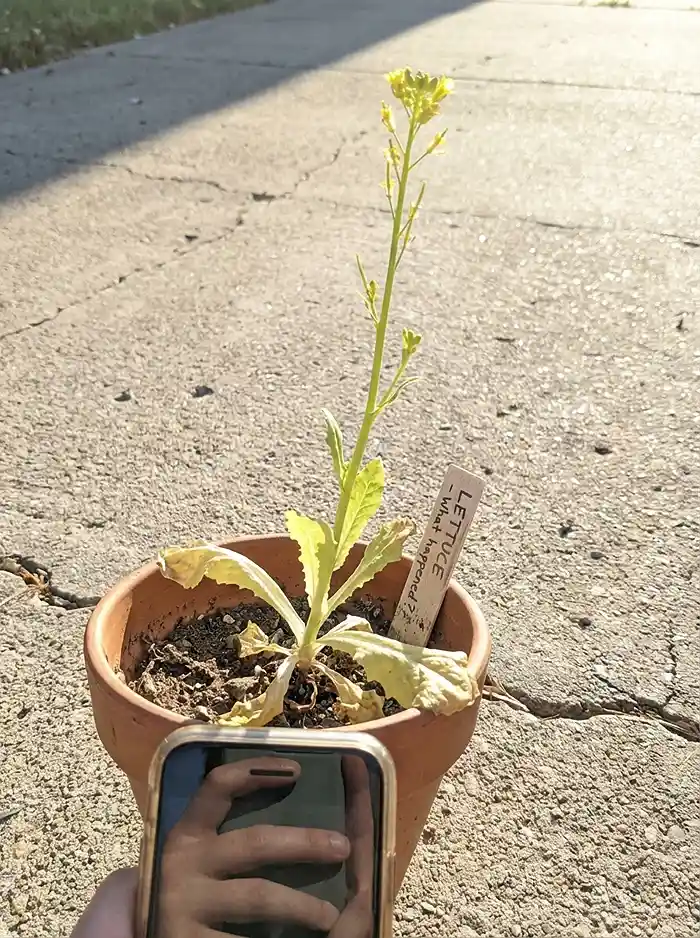
This is the part that really stings. When lettuce gets stressed from inconsistent moisture, it starts producing compounds called sesquiterpene lactones. Those are responsible for that harsh, bitter taste that ruins an otherwise beautiful salad.
Worse, prolonged stress tells the plant, “Winter’s coming, better reproduce NOW,” which triggers bolting — premature flowering that makes the entire crop inedible. According to University of Maryland Extension’s guide on growing lettuce, maintaining even soil moisture is one of the most critical factors in preventing both bitterness and early bolting.
The formula for bitter lettuce prevention is dead simple: keep moisture consistent, and your greens stay sweet.
Factors That Dry Out Your Pots (Faster Than You’d Expect)
Pot Material Makes a Bigger Difference Than You Think
Not all containers lose water at the same rate, and this trips up a lot of people:
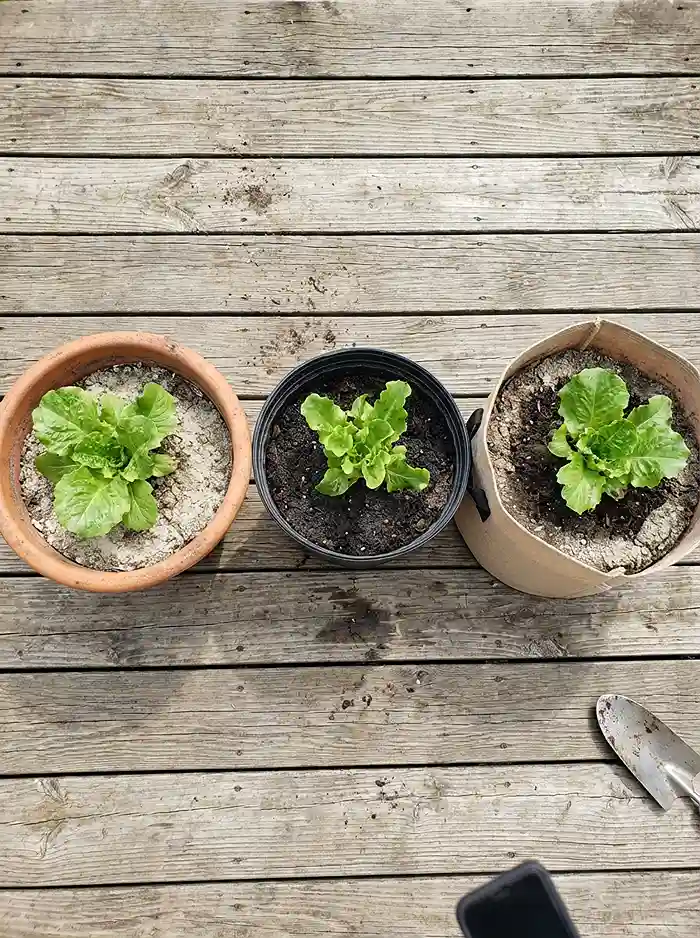
- Terra Cotta: Gorgeous to look at, but those porous clay walls wick moisture out constantly. You’ll water terra cotta pots roughly twice as often as plastic ones. They’re the “high-maintenance friend” of the container world.
- Plastic or Glazed Ceramic: These hold moisture the longest. Great for hot climates. Just make sure they have drainage holes — no drainage means waterlogged roots and a one-way ticket to rot city.
- Fabric Grow Bags: Air hits the soil from every direction, so evaporation is at maximum. You get amazing air-pruned roots, but you’ll be watering constantly. Fair trade? Depends on your patience.
How Often to Water Lettuce in Pots Based on Pot Size
This is where people really underestimate things. A tiny pot under 1.5 liters has essentially zero safety margin. On a hot day, it can dry out completely in hours.
| Pot Volume | Hot & Dry (30°C / 86°F+) | Mild (18–25°C / 65–77°F) | Cool & Overcast |
|---|---|---|---|
| Small (1–3 L) | Twice daily | Daily | Every 1–2 days |
| Medium (4–8 L) | Daily | Every 1–2 days | Every 2–3 days |
| Large (10+ L) | Daily check | Every 2 days | Every 2–3 days |
If you’re growing in small containers, you really need to factor pot volume into how often to water lettuce in pots. It changes everything.
Wind, Sun, and Humidity — The Invisible Moisture Thieves
- Wind strips that thin layer of humidity sitting on the soil surface and around your leaves. An exposed balcony might need double the water of a sheltered patio at the exact same temperature.
- Western exposures are sneaky. Afternoon sun baking a dark pot can spike soil temperature way beyond the ambient air, accelerating evaporation like crazy.
- Low humidity (under 40% RH) pulls water from the soil and the leaf surface simultaneously. It’s a double hit your lettuce can’t fight.
How Often to Water Lettuce in Pots at Every Growth Stage
Germination (Days 0–14)
Lettuce seeds sit only 1/8 to 1/4 inch deep. Hit them with a strong stream of water and you’ll wash them right out of the soil. During germination, daily misting with a fine spray bottle is the move. You want the surface consistently damp — not dry, not puddled.
Pro tip: Cover the pot with plastic wrap or a small humidity dome. It holds in moisture so you’re not misting every few hours.
Watering Lettuce Seedlings (Weeks 2–4)
Once you see true leaves, it’s time to graduate from misting. Switch to gentle soaking at the base every 1–2 days. The goal with watering lettuce seedlings is to let the top inch dry slightly between waterings. This nudges roots to grow downward looking for moisture, which is exactly what you want.
Just don’t let the whole pot dry out. Seedlings don’t have the reserves to bounce back from real dehydration.
The Mature Harvest Phase (Week 4+)
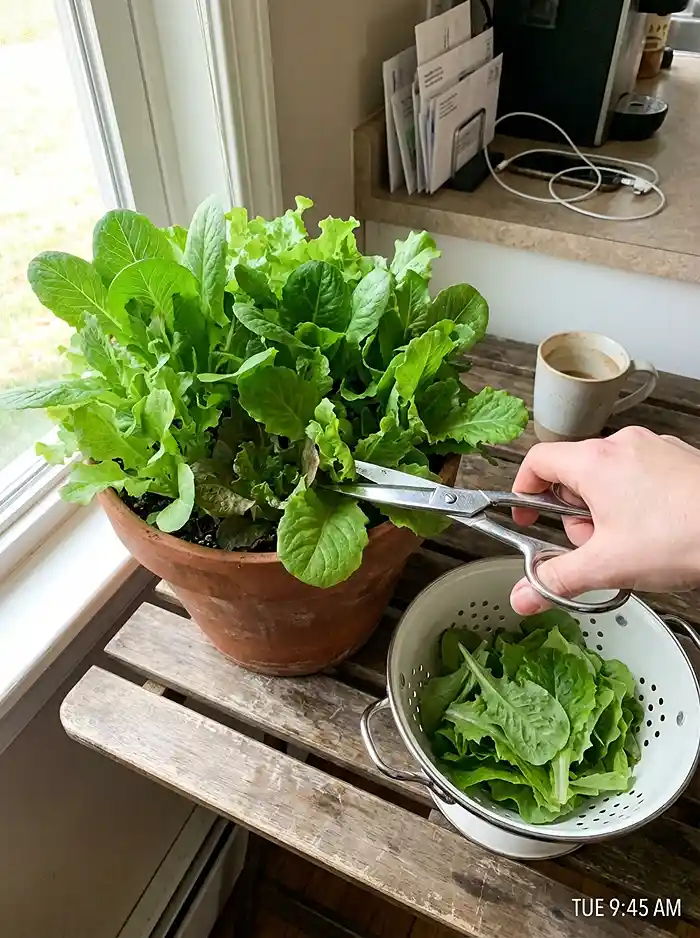
This is when your lettuce turns into a full-blown moisture pump. All those big, broad leaves are transpiring water like it’s their job (because it literally is). Daily soil checks become non-negotiable. In hot or windy weather, I check mine twice — morning and late afternoon.
One thing that catches people off guard: if you’re doing cut-and-come-again harvesting, the plant responds by aggressively pushing new growth. That regrowth flush spikes water demand for several days after each cut. Keep that in mind or you’ll wonder why your lettuce suddenly looks thirsty despite the same routine.
How to Check if Your Potted Lettuce Needs Water (Stop Guessing)
The Finger Test — Your Best Friend
Stick your finger into the soil up to the second knuckle. That’s about 2 inches deep. Dry? Water now. Still moist? Check again in 12 hours. Honestly, this one technique alone eliminates about 80% of all watering mistakes for container lettuce care.
The Weight Test
Right after a deep soak, pick up your pot and register how heavy it feels. That’s your baseline. Over the next day or two, lift it again. If it feels shockingly light — water it, regardless of what the surface looks like.
Visual Clues You Shouldn’t Ignore
When the soil starts pulling away from the inside edges of the pot, you’ve let things get critically dry. The growing medium may even resist reabsorbing water at that point and you’ll need a long, slow soak to rehydrate it.
Slight leaf droop in the heat of the afternoon? That can be normal transpiration lag. But if the droop is still there when evening cools things down — your lettuce is thirsty and you’re behind.
Troubleshooting: When Watering Lettuce in Pots Goes Wrong
How to Avoid White Mold (Sclerotinia)
Always water at the base of the plant, not over the leaves. And do it in the early morning. Any water that accidentally splashes on foliage needs time to dry before the cool, damp evening hours roll in. Wet leaves sitting overnight are basically an open invitation for fungal pathogens.
Signs of Overwatering Lettuce
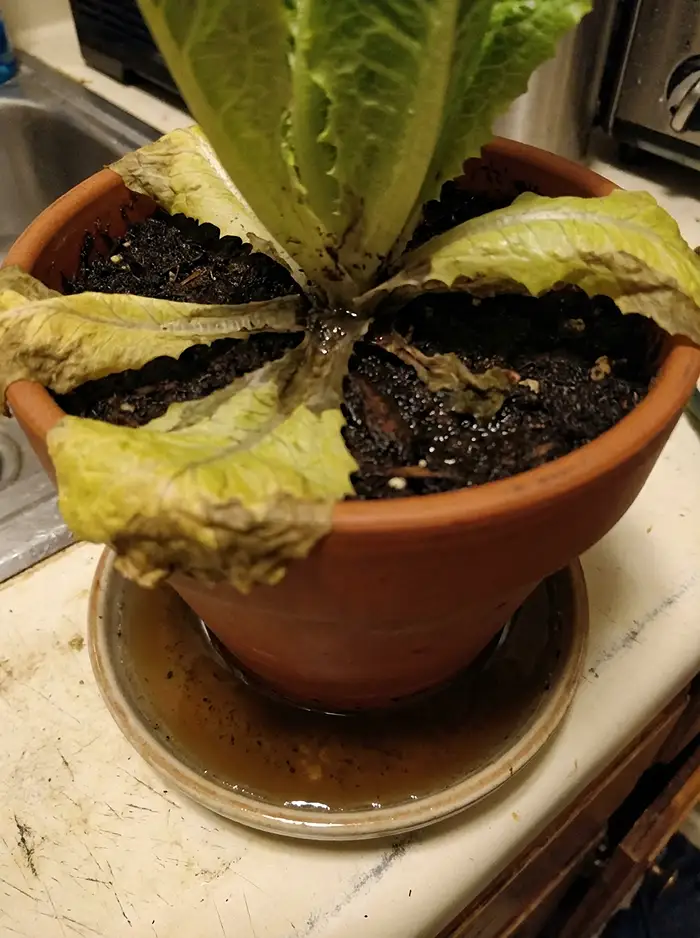
The signs of overwatering lettuce are pretty distinct once you know what to look for: yellowing lower leaves, mushy stems right at the soil line, and a sour smell coming from the root zone. That smell is anaerobic conditions — oxygen-starved soil where the good microbes die off and rot-causing organisms move in.
The fix: improve drainage, cut back on frequency, and make sure the drainage holes aren’t blocked by compacted soil or debris.
The “Soak and Thirst” Cycle
This is the professional technique that separates great container growers from everyone else. You deliver a complete deep saturation, then let the top layer of soil approach dryness before soaking again. It builds deep, resilient root systems that handle unexpected heat spikes without drama.
Living Soil — Your Secret Weapon
Here’s something most watering guides never mention: beneficial mycorrhizal fungi form networks in the soil that work like a secondary root system. These microscopic threads can increase the effective water-absorbing surface area of your plant’s roots by up to 10×.
To get this advantage, use a compost-based potting mix instead of sterilized, peat-only media. The microbial life in healthy soil does a huge chunk of the moisture-management work for you — for free.
Frequently Asked Questions About Watering Lettuce in Pots
Can you overwater lettuce in pots?
Absolutely. Soil that stays saturated with zero dry cycle causes root rot and anaerobic stress. Always make sure your container has working drainage holes, and let the top inch approach dryness between soaks.
How do I water lettuce indoors?
Indoor lettuce usually needs less frequent watering since there’s no wind and less light. But indoor air tends to be dry, so a pebble tray or humidifier nearby helps. Still use the finger test every time — indoor conditions can be deceptive.
Should I use a saucer under my lettuce pot?
In summer, a saucer works nicely as a bottom-watering reservoir during peak heat. In cool or humid seasons, take it away. Standing water beneath the pot is a fast track to root rot.
Does lettuce need more water than herbs in the same pot size?
Way more. That 94–96% water composition plus all that leaf surface area makes lettuce one of the thirstiest things you can grow in a container. It’ll drink circles around basil, rosemary, or thyme.
Your Daily Watering Routine: How Often to Water Lettuce in Pots, Simplified
Here’s the honest truth: how often to water lettuce in pots will never be a single number you set and forget. It’s a daily rhythm of three steps:
- Check — Finger test or weight test every morning.
- Soak — Water deeply at the base until liquid exits the drainage holes.
- Observe — Watch for stress signals (wilting, bitterness, soil pulling from edges) between waterings.
Adjust the rhythm as your weather shifts, your plants grow, and seasons change. The pot-size and climate tables above are your cheat sheet.
Start with the finger test tomorrow morning. Seriously — just that one habit. It’s the single biggest factor separating gardeners who harvest crisp, sweet salad greens from those who end up composting bitter disappointments. Your kitchen (and your taste buds) will thank you.