

How Deep Should a Planter Be for Salad Greens?
How deep should a planter be for salad greens? Most gardeners guess wrong and lose their crop. Get the exact depths for every variety and harvest all season. Grow now →
If you’ve ever wondered how deep a planter should be for salad greens, you’re already asking the right question — and honestly, most gardeners skip straight past it. Here’s the quick answer: at least 6 inches deep, but 10–12 inches is where the magic really happens.
Lettuce is the ideal container crop because of its shallow root system, requiring a minimum of 6 inches of depth, though 10–12 inches is recommended for heat protection and moisture stability. Nail the depth, and everything else — soil, variety selection, harvest rhythm — clicks into place. This is your complete, no-fluff guide to growing lettuce in containers, from the very first seed to a bowl of fresh greens every single week.
Why Containers Beat Garden Beds for Salad Greens
Let’s be honest — not everyone has a backyard. And even if you do, growing salad greens in containers might actually be the smarter move. Here’s why container gardening wins for lettuce specifically.
First, the convenience is hard to beat. Imagine walking out your back door, snipping a handful of fresh leaves, and tossing them straight into a bowl. No garden plot, no muddy boots, no drama. A pot of lettuce on your patio or balcony puts dinner within arm’s reach.
Second, containers give you a sneaky pest-control superpower. Slugs and rabbits are ground-level hunters. Raise your pots onto a table or an elevated stand, and you’ve just made your salad garden invisible to them — no chemicals, no wire fencing, no midnight slug patrols. This is what gardeners call “Elevation as Defense,” and it genuinely works because you’re changing the environment rather than fighting the pest directly.
Third, you get to cheat the seasons. Cold snap coming? Move the pot inside. Summer heatwave? Slide it into the shade. Container growers routinely squeeze four to six extra weeks of harvest out of both ends of the growing calendar simply by being able to relocate their plants. Try doing that with an in-ground bed.
Selecting the Perfect Container — Material & Depth Science
How Deep Should a Planter Be for Salad Greens? (The Right Depth for Each Variety)
This is the section you came for, so let’s get straight to it. Planter depth for salad greens isn’t one-size-fits-all — different varieties have very different root systems, and matching depth to variety is genuinely the most impactful decision you’ll make before you even buy soil.
| Salad Green | Minimum Depth | Optimal Depth | Notes |
|---|---|---|---|
| Leaf Lettuce (Black Seeded Simpson, Red Sails) | 6 inches | 8 inches | Shallow roots; ideal for window boxes |
| Butterhead (Buttercrunch) | 8 inches | 10 inches | Needs moisture stability to prevent tip burn |
| Romaine (Little Gem) | 8 inches | 10–12 inches | Deeper head formation requires more root room |
| Arugula | 6 inches | 8 inches | Fast taproot; responds well to deeper pots |
| Spinach | 6 inches | 8–10 inches | Deeper roots for heat tolerance |
| Asian Greens (Mizuna/Tatsoi) | 6 inches | 8 inches | Shallow feeders; great for dense planting |
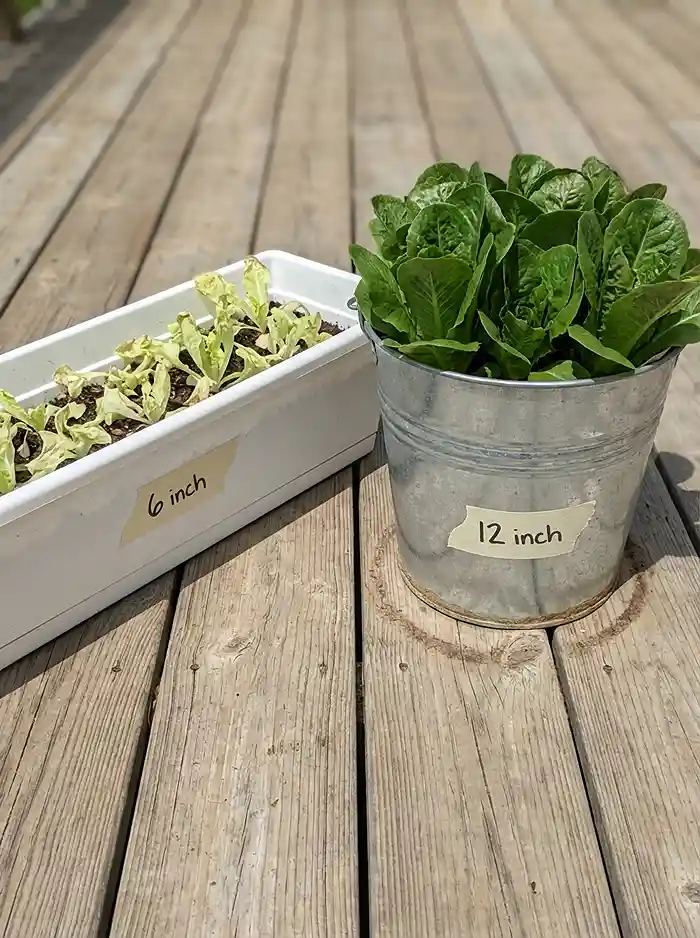
The 6-Inch Survival Benchmark: Think of 6 inches as the bare minimum — your plants can technically survive at this depth, but they’re running on fumes. The limited soil volume dries out fast, there’s no buffer against temperature spikes, and your lettuce will be constantly stressed. It works for window boxes and rail planters, but don’t expect peak performance.
The 12-Inch Optimal Threshold: This is the depth where growing lettuce in containers goes from “okay” to genuinely impressive. Here’s the science behind it: deeper soil creates a “moisture gradient” — the top layer dries out between waterings while the lower layer stays cool and moist. That cool root zone is exactly what stops your lettuce from bolting when summer temperatures start climbing. If you can only invest in one good container, make it 12 inches deep. You’ll thank yourself in July.
💡 Quick tip: If you’re just getting started and want a complete beginner-friendly walkthrough on small-space planting, check out our guide on how to grow salad greens in small planters — it pairs perfectly with everything in this post.
Container Material & Thermal Buffering — It Matters More Than You Think
Here’s something most gardening guides skip over entirely: the material your container is made from directly controls root-zone temperature, which feeds straight back into how deep your planter needs to be. Let’s break it down.
Cedar and Wood are the most forgiving options you can buy. Natural wood insulates against both summer heat and winter cold, keeping the soil inside much closer to the ideal 60–65°F root zone even when the weather swings dramatically. Wood containers are so thermally efficient that you can often get away with slightly less depth because the material itself is doing the buffering work for you.
Food-Grade Galvanized Steel looks incredible and lasts for decades, but here’s the catch — it conducts heat fast. On a hot summer afternoon, a shallow steel trough sitting in direct sun can push root-zone temperatures into plant-damaging territory within a few hours. The solution is simple: go at least 12 inches deep to create enough soil mass to absorb and spread that heat before it fries your roots.
And yes — before you ask — food-grade galvanized steel is completely safe for edible crops. Zinc is a naturally occurring plant micronutrient, and these containers are widely used in commercial food growing without any documented health concerns.
Fabric Grow Bags are honestly the secret weapon of serious container gardeners. When roots hit the air-permeable wall, they don’t circle and become root-bound the way they do in hard-sided pots. Instead, they self-terminate in a process called “air pruning,” which triggers the plant to branch out and form a denser, more efficient root mass. The trade-off? Fabric bags lose moisture faster through their walls, so you’ll need to water more frequently, especially during summer.
The Expert Container Garden Soil Mix — The 70/20/10 Ratio
Please, Never Use Garden Soil in a Container
Seriously, don’t do it. Garden soil fails in containers every single time, and for three very specific reasons. It compacts under repeated watering, crushing the air pockets that roots need to function. Its drainage is terrible in the confined container environment, and waterlogged soil kills shallow lettuce roots surprisingly quickly.
And it carries soil-borne pathogens — fusarium, pythium, and similar nasties — that in an open garden are diluted by the surrounding ecosystem but in a container have nowhere to go except straight through your root zone.
Start clean. Always.
The 70/20/10 Mix That Actually Works
This ratio has been field-tested specifically for container garden soil mix performance with salad greens, and it consistently outperforms anything you’ll buy pre-bagged off a garden center shelf:
- 70% Peat Moss or Coconut Coir — the moisture-retention backbone of the whole mix. Coconut coir is increasingly the preferred choice because it’s sustainable, pH-neutral, and doesn’t compact over time the way peat can.
- 20% Perlite or Vermiculite — the drainage and aeration layer. Perlite creates the air channels that prevent waterlogging at root level; vermiculite holds a touch more moisture if your climate tends to run dry.
- 10% Compost or Worm Castings — the fertility layer. Worm castings are particularly good here because they release nutrients slowly and gently, feeding lettuce roots without any risk of fertilizer burn.
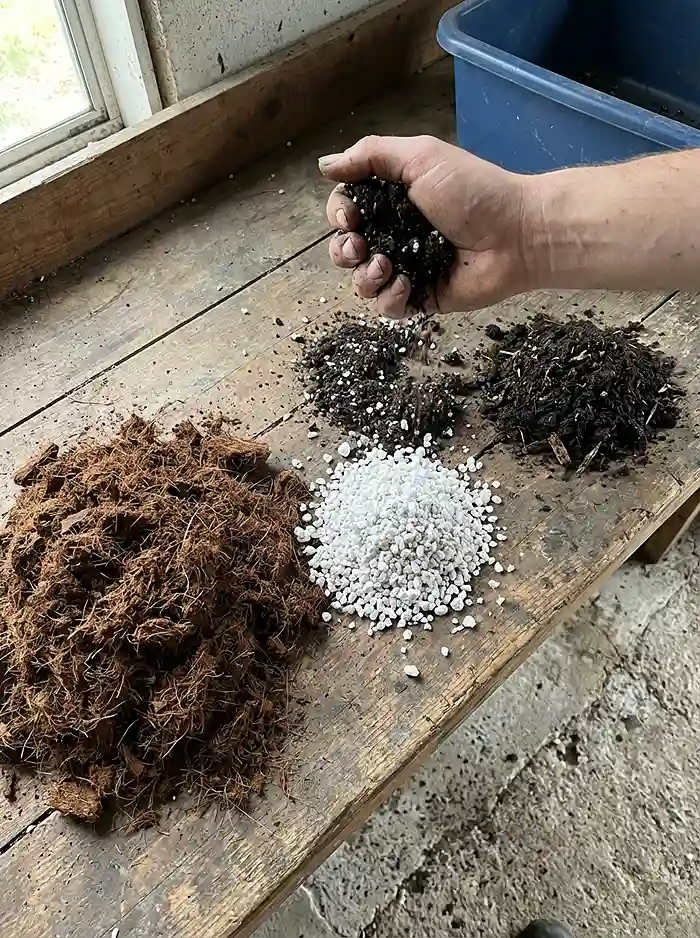
The Moisture Squeeze Test: Before you plant anything, grab a handful of your prepared mix and squeeze it firmly. It should hold its shape for a moment, then crumble apart cleanly when you nudge it. Water streaming out between your fingers? Add more perlite. Mix collapses immediately with zero cohesion? Add more coir.
This tactile test takes ten seconds and tells you everything you need to know about whether your mix is ready. According to the University of Minnesota Extension, proper soil structure is one of the most critical factors in container vegetable success — and this test nails it every time.
The Best Lettuce for Pots — Varieties That Actually Deliver
Leaf Lettuce — Start Here If You’re New to This
Black Seeded Simpson and Red Sails are the two varieties every first-time container gardener should grow. They mature in just 45–50 days, they’re reliable cut-and-come-again performers, and they handle the mild temperature fluctuations that come with container life without throwing a fit.
They’re also perfectly happy at the shallower end of the depth range, which makes them the go-to choice for window boxes and balcony rail planters.
Romaine & Butterhead — For When You’re Ready to Level Up
Little Gem and Buttercrunch are hands-down the best lettuce for pots when you have the depth to support them — and by depth, we mean 10–12 inches minimum. These varieties take a little longer and need more root room, but the payoff is real: superior texture, genuine flavor density, and a slower bolting timeline compared to loose-leaf types. Grow these once, and you’ll never go back to bagged romaine.
Arugula, Spinach & Asian Greens — The Underrated Companions
Here’s a move most beginner container gardeners don’t think of: interplant your lettuce with arugula, spinach, mizuna, or tatsoi. Their root depth requirements — 6–8 inches — line up almost perfectly with leaf lettuce, so they share soil space without competing. They also add real nutritional range and visual contrast to your mixed bowl.
A single 12-inch deep, 18-inch wide container planted with all four greens gives you a genuinely diverse salad harvest in a space about the size of a coffee table.
Precision Planting & Care — The Details That Actually Matter
The Crown Placement Rule (Don’t Skip This)
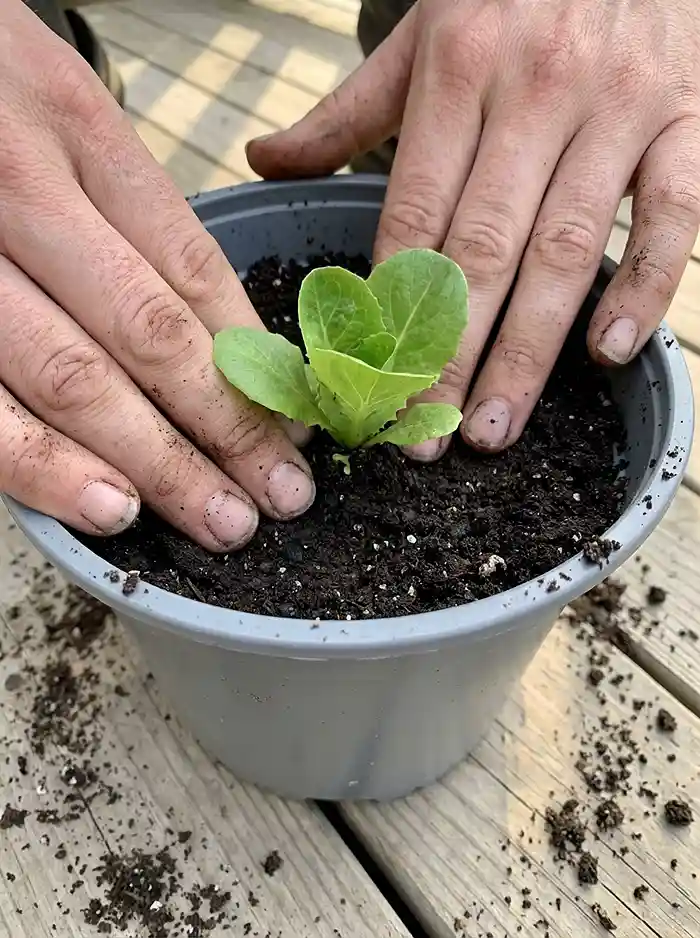
The crown — the junction point where leaves emerge from the root — must sit level with the soil surface. Never bury it. A buried crown in a moist container environment rots within days, and it’s one of the most common reasons beginner container lettuce dies without any obvious explanation.
Set your soil line about 1 inch below the container rim. This creates a natural “water well” that holds irrigation water long enough to soak down to the root zone rather than running straight off the surface. It’s a tiny detail, but it makes a measurable difference in how efficiently your plants actually absorb moisture.
Light & Temperature — Get This Wrong and Everything Else Is Pointless
- Sun requirement: 4–6 hours of direct sunlight daily is your baseline for healthy leaf production.
- Germination ceiling: Lettuce germination shuts down above 80°F (27°C). In warmer climates, start seeds somewhere cool and shaded, then move containers into full sun once seedlings are properly established.
- Bolting prevention: During summer, position containers to get morning sun and afternoon shade. Afternoon shade reduces the cumulative heat load on the root zone — which is the primary environmental trigger for bolting — and can extend your harvest window by two to three full weeks in warm climates.
The Endless Harvest Strategy — This Is the Fun Part
The Cut-and-Come-Again Method
This is the technique that transforms your container from a one-time harvest into a weeks-long salad production machine. Use clean, sharp scissors — not your hands, which bruise and tear plant tissue — and cut 2–3 inches above the soil surface. The critical detail is what you leave behind: the meristem, the central growing point at the base of the plant.
This tiny structure is the biological engine that drives regrowth, and as long as it stays intact and undamaged, your plant will come back. Under good light and consistent feeding, a second harvestable flush typically appears within 7–10 days. It never gets old.
Succession Sowing — Never Run Out of Lettuce Again
Even the most productive cut-and-come-again plant has a finite lifespan. Succession sowing is how you plug that gap. Every 2–3 weeks, sow a small new batch of seeds into a fresh section or a separate container.
This staggered schedule eliminates what experienced growers call “bitter gaps” — that frustrating stretch when your current plants have bolted and turned bitter, but your next batch isn’t ready yet. Run this system consistently from early spring through early fall, and your salad bowl stays full without interruption. It’s essentially a personal salad subscription, minus the monthly fee.
Troubleshooting & Pest Prevention — Common Mistakes and Easy Fixes
Common Mistakes — Quick Reference:
| Mistake | Symptom | Fix |
|---|---|---|
| Overcrowding | Leggy, pale, slow growth | Thin to 4–6 inches between plants |
| Overwatering | Yellow lower leaves, mushy stem base | Water only when top inch of soil is dry |
| Too-shallow container | Rapid wilting, early bolting | Upgrade to minimum 8–10 inch depth |
| Full afternoon sun in summer | Bitter flavor, premature bolting | Relocate container to afternoon shade |
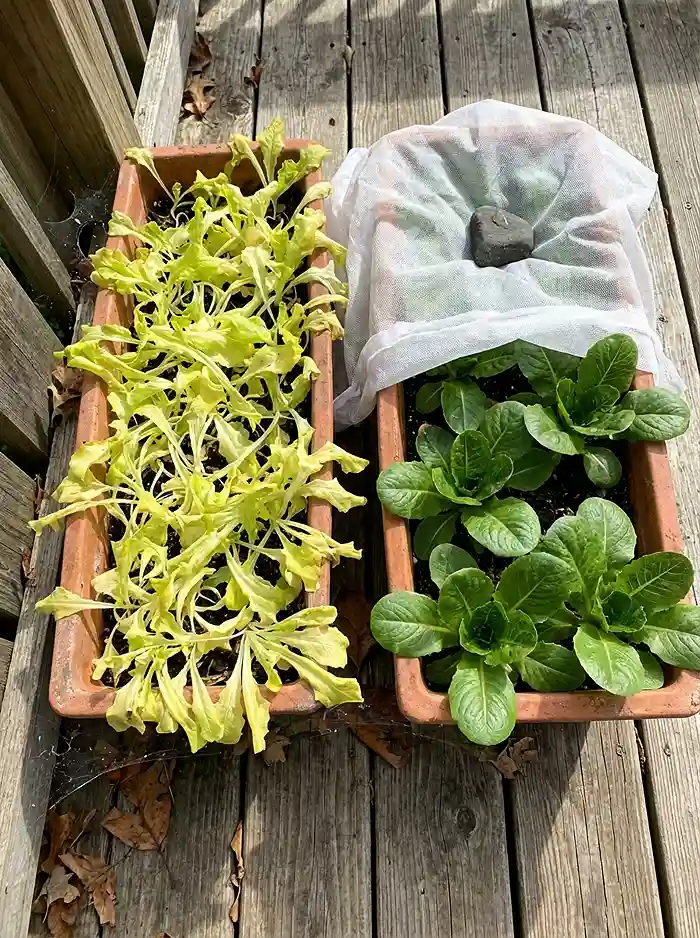
The simplest pest prevention that actually works? Drape horticultural mesh or fine tulle fabric loosely over your containers during peak aphid and flea beetle season. No chemicals. No significant heat buildup. Fully reusable year after year. It’s unglamorous, cheap, and incredibly effective — which is honestly how the best gardening solutions usually are.
Frequently Asked Questions
Can I grow lettuce indoors year-round?
Absolutely — and it’s easier than you’d think. Provide 12–14 hours of full-spectrum grow light daily, positioned 6–12 inches above the plant canopy, and your lettuce won’t even notice there’s no sun outside. A plug-in timer removes any guesswork.
How often should I fertilize container lettuce?
Container soil runs out of available nutrients faster than in-ground beds — there’s just less of it. Apply a high-nitrogen liquid fertilizer every 2–3 weeks, starting about one month after planting. Nitrogen is what drives leafy, lush growth, which is the whole point.
Is galvanized steel safe for growing food?
Yes, completely. Zinc — the coating element in galvanized steel — is a naturally occurring micronutrient that plants actually need in small quantities. Food-grade galvanized containers are used in commercial edible growing worldwide with no documented health concerns.
What’s the best container depth for a mixed salad bowl planting?
For a multi-variety mix of leaf lettuce, arugula, and Asian greens, 8–10 inches is your universal sweet spot — deep enough to support every variety in the mix, light enough to move without throwing your back out.