

How Often Should You Water Container Plants?
How often should you water container plants? No fixed schedule works. Get the 1-Inch Rule, soil tests, and seasonal fixes. Read the full guide →
Let’s get the uncomfortable truth out of the way first: there’s no magic number. No “water every Tuesday and Friday” schedule that works for every pot on your patio. If you’ve been Googling “how often should you water container plants” hoping for a simple answer, I get it — but the real answer is better than a simple one.
Here’s the thing. A container is basically a tiny, isolated world. Your plant can’t send roots deeper to find water like its in-ground cousins can. It can’t do anything except sit there and hope you show up with the watering can at the right time. That sounds dramatic, but it’s genuinely how container gardening works — your plant’s survival is entirely in your hands.
Table of Contents
Your Container Plant Watering Schedule: A Seasonal Cheat Sheet
Before we get into the “why,” here’s the “what” — a quick-reference table you can screenshot and stick on your fridge.
| Season | How Often to Water | Watch Out For |
|---|---|---|
| Peak Summer (85°F+) | 1–2× daily | Small pots and heavy drinkers like tomatoes may need water twice a day |
| Late Spring / Early Fall | Every 2–4 days | Windy days dry pots shockingly fast — don’t skip checking |
| Mild Winter (Evergreens) | Weekly checks; water when the top inch is dry | Skipping this causes winter burn |
| Dormant Winter (Deciduous) | Only if the soil is completely bone dry | Wet + cold + dormant roots = rot |
Now, you’ve probably heard the “2-inch rule” — stick your finger two inches deep, and if it’s dry, water. That rule’s fine for garden beds. But containers don’t have the luxury of deep soil reserves sitting underneath, so you need to use the 1-inch rule instead. When the top inch of your potting mix feels dry, water. Waiting for two inches of dryness in a 10-inch pot means roughly half the root zone is already stressed, and your plant’s just too polite to scream about it.
If you’re juggling multiple containers on a balcony or small patio, pairing this schedule with a monthly maintenance calendar for small-space gardens can help you stay on top of things without feeling overwhelmed.
Why Do Container Plants Get So Thirsty So Fast?
Every Surface Is Losing Water
Here’s something that doesn’t click until you think about it: a plant in the ground only loses moisture from one direction — the top. A container? It’s losing moisture from everywhere. The sun bakes the side walls. The deck radiates heat underneath. Wind pulls moisture from every exposed surface.
You know that insulating blanket of earth that keeps garden beds cool and moist six inches down? Your pot doesn’t have that. A dark container on a south-facing patio in July can hit 120°F at the outer wall. At that point, your potting mix isn’t just drying — it’s baking.
Your Plant’s Roots Have Nowhere to Go
In-ground roots are resourceful. When the top layer dries out, they push deeper or spread sideways to find water. Container roots? They hit a hard wall within inches and that’s it. There’s no plan B. No secret underground spring. Just whatever moisture you put in the pot that morning.
This is exactly why the 1-inch rule matters so much for containers. There’s no deep buffer zone to bail you out if you wait too long.
What Actually Controls How Often You Water Container Plants?
Heat, Wind, and Sun — The Trio That Drains Your Pots
Temperatures above 85°F combined with wind strip the thin layer of humidity right off your plant’s leaf surfaces, accelerating water loss dramatically. A pot in full sun and wind can dry out 3–4× faster than the exact same pot tucked into a sheltered, shady corner.
Quick rule of thumb: On windy days above 85°F, check your pots twice — morning and late afternoon. It sounds excessive until the first time you find a wilted tomato at 4pm that was fine at 8am.
Your Pot’s Material Matters More Than You Think
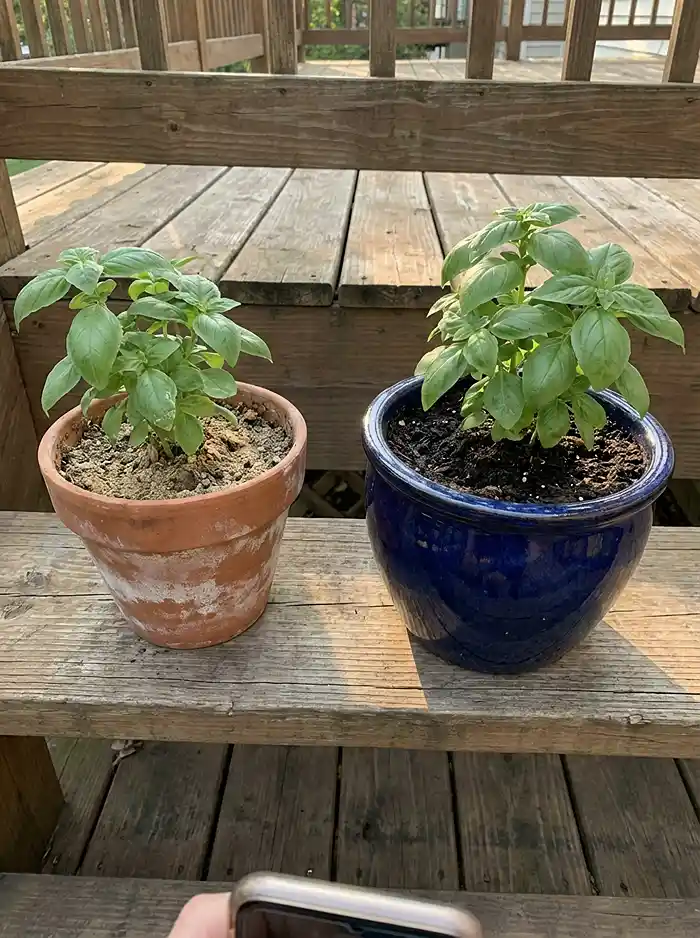
This one surprised me when I first started container gardening. Unglazed terracotta breathes from every surface — fantastic for lavender and succulents, but it dries out fast. Glazed ceramic and plastic hold moisture much longer.
Dark metal pots? They conduct heat like a frying pan and can literally cook roots on a scorching afternoon. Fabric grow bags promote great root health through air pruning, but they dry from all sides.
The takeaway: Match your pot material to your plant. Thirsty tropicals go in glazed or plastic. Drought-lovers go in terracotta. And maybe skip the black metal planter for your July patio setup.
Some Plants Drink Like Fish; Others Barely Sip
Tomatoes, hydrangeas, ferns, and impatiens are what I call “water pigs” — large leaves, high biomass, heavy transpiration. They need daily attention in summer, sometimes twice daily. Cacti, sedums, and snake plants? They’re the camels of the container world, happy on weekly or even monthly watering.
Pro tip that’ll simplify your life: Group your containers by water demand. Cluster the thirsty ones together and the drought-tolerant ones separately. This way, you’re not accidentally drowning a cactus just because it’s sitting next to a fern.
How to Actually Test Your Soil (Stop Guessing, Seriously)
The Finger Test and the Lift Test
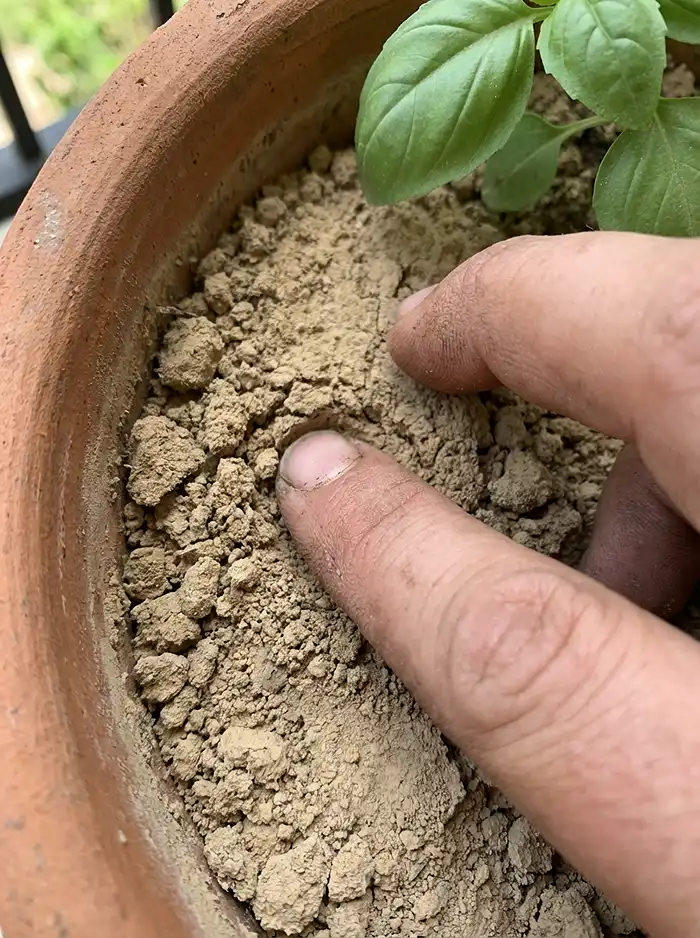
Stick your finger into the potting mix up to the first knuckle. Dry? Water. Still damp? Walk away. It’s unglamorous, but it works.
The lift test is even simpler once you get the hang of it. Pick up the pot. A well-watered 12-inch container is noticeably heavier than a dry one. After a few days of conscious lifting, you’ll develop a surprisingly accurate sense of when a pot needs water.
Here’s a visual shortcut: peat-based mixes (the most common type) are dark brown to black when wet. When they dry out, they fade to what I call “paper-bag brown” — the color of a grocery bag. If the surface looks like a lunch sack, it’s time to water.
Go Deeper: The Dowel Trick and Moisture Meters
Your finger only reaches so far. In deep pots — 14 inches or more — the top might feel fine while the root zone at the bottom is parched. Push an unpainted wooden dowel all the way to the bottom, leave it for 10 minutes, and pull it out. Damp? You’re good. Bone dry? The roots are thirsty even though the surface didn’t tell you.
Moisture meters are worth the small investment if you’ve got a large collection. They give a numeric reading and take the emotional guessing game out of watering. Just make sure to probe at multiple depths — the top and bottom of a deep pot can tell very different stories.
When Water Runs Right Through: Fixing Hydrophobic Potting Mix
The Sneaky Problem Nobody Warns You About
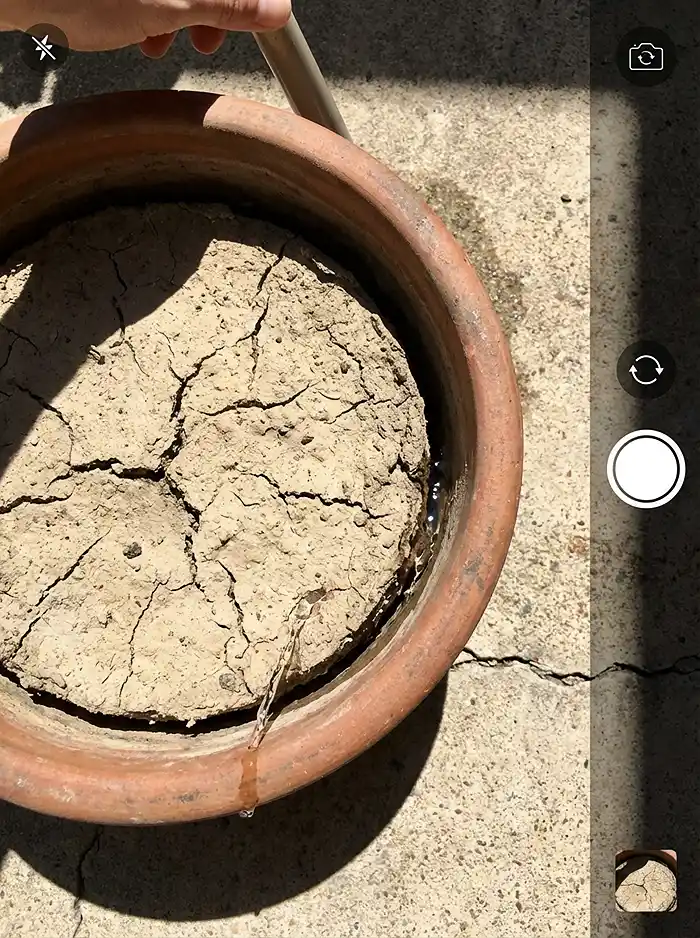
Ever poured water into a pot, watched it run out the drainage hole almost immediately, and figured the job was done? Yeah — the job wasn’t done. When peat-based potting mix dries out completely, it becomes water-repellent.
The soil shrinks, pulls away from the pot wall, and water takes the path of least resistance — straight down that gap and out the bottom. Your root ball stays dry while you walk away thinking everything’s fine.
This is called bypass flow, and according to University of California Master Gardeners, it’s one of the most common and overlooked causes of container plant stress.
How to Fix It: Pulse Watering and Full Immersion
Pulse Watering works for heavy pots you can’t easily move:
- Water slowly until the first trickle exits the drainage hole. Then stop.
- Walk away for 30 minutes. That small bit of moisture starts softening the surface.
- Come back and water again — you’ll notice more is actually soaking in this time. Wait another 30 minutes.
- Water a third time. By now, the soil should be accepting water normally again.
Full Immersion is faster if you can move the pot: set it in a tub of water up to the rim and leave it for 30–60 minutes. You’ll know it’s done when the soil has expanded and no longer has that visible gap at the edge. Pull it out, let it drain completely, and carry on as usual.
Emergency hack: a single drop of unscented dish soap in your watering can breaks surface tension and helps water penetrate stubborn hydrophobic soil. It’s not a permanent fix, but it works in a pinch.
Watering Solutions for People With Busy Lives
Self-Watering Planters and Reservoir Systems
Self-watering container systems use a built-in reservoir that feeds moisture upward through capillary action. The plant drinks what it needs, when it needs it. They’re perfect for herbs, lettuce, and tropicals that like consistently moist soil. Just don’t use them for succulents or anything that needs to dry out between waterings — that reservoir will keep things too wet.
Ollas: 4,000-Year-Old Tech That Still Works
Ollas (pronounced “OY-yahs”) are unglazed clay pots you bury in your soil and fill with water. They release moisture slowly through their porous walls, and here’s the clever part — the rate adjusts automatically based on how dry the surrounding soil is. They can reduce how often you water container plants by 50–70%. They work best in larger containers and raised beds.
Drip Lines and Hydrogel Crystals
A drip emitter on a battery-operated timer is about as close to “set and forget” as container gardening gets. Moisture-retaining gels mixed into your potting mix absorb and slowly release water, extending the time between waterings. Just use them sparingly — in cool weather with low evaporation, over-applied gels keep things too soggy.
The Overwatering Trap: When Caring Too Much Kills Your Plants
“Paradoxical Wilting” — The Mistake That Fools Everyone
This one’s important, so pay attention: a wilting plant sitting in wet soil is not thirsty. It’s drowning.
Saturated soil pushes out all the oxygen. Roots suffocate and die. Dead roots can’t absorb water, so the plant wilts — even though it’s surrounded by moisture. The well-meaning gardener sees wilting, reaches for the watering can, and makes everything worse. It’s a death spiral, and it’s the number one killer of container plants.
The signs of overwatering potted plants look like this: yellowing lower leaves, mushy or translucent stems, a sour smell from the soil, and tiny fungus gnats buzzing around the pot.
If your soil is wet and your plant is wilting, put the watering can DOWN. Remove the pot from any saucer, improve airflow, and if things look bad, unpot the plant and inspect the roots. Brown and mushy means root rot has set in.
Water in the Morning — This Is Non-Negotiable
Morning watering lets foliage dry completely before nightfall. Wet leaves sitting in the dark all night are basically a VIP lounge for powdery mildew, botrytis, and bacterial leaf spot.
If you can only water in the evening, aim at the soil line — never spray overhead. The one exception? A visibly wilting plant at 7pm should be watered immediately. Dehydration will kill it faster than any fungal disease.
How Often to Water Container Plants in Winter (Don’t Skip This)
The Evergreen Exception That Catches People Off Guard
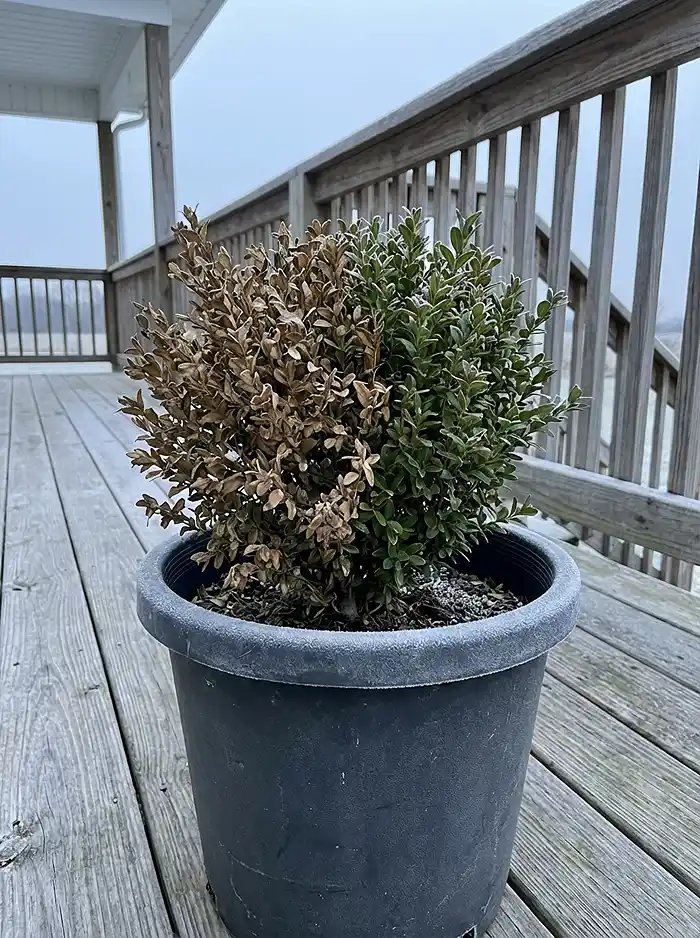
Most gardeners assume watering stops in winter. For deciduous plants in dormancy, that’s mostly true — keep them barely moist and leave them alone. But containerized evergreens — boxwood, juniper, arborvitae, holly — are still transpiring through their needles and leaves all winter long.
When the soil in the pot freezes solid, roots can’t replace the moisture that cold wind is stripping from the foliage. The result is winter burn: brown, crispy, desiccated leaves concentrated on the windward side. It’s not frost damage — it’s dehydration.
Watering evergreens in winter means checking them weekly and watering on mild days when temperatures climb above freezing. Insulating pots with burlap or bubble wrap delays soil freezing. Anti-desiccant sprays on broadleaf evergreens add another layer of protection.
Shifting Gears Between Seasons
In spring, ramp up watering gradually as temperatures rise and new growth appears. In fall, taper off as growth slows — but don’t just stop. Give every evergreen and late-season perennial a deep, thorough soak before the first hard freeze. That moisture bank is what carries them through winter.
How Often Should You Water Container Plants? FAQs
Can I use softened water on container plants?
Nope. Softened water swaps calcium and magnesium for sodium, which builds up in potting mix over time, damages roots, and wrecks soil structure. Stick with unsoftened tap water, collected rainwater, or filtered water.
Why does my container plant droop right after it rains?
Dense foliage acts like an umbrella, deflecting rain away from the pot. Your plant might not have received a single drop. Always check the soil after rain — never just assume it’s been watered.
How often should I replace my potting mix?
Every 12–18 months. The organic components break down, the mix compacts, drainage gets worse, and nutrients disappear. A yearly refresh keeps everything performing the way it should.
Does pot color really affect how often I water?
It does. Dark pots absorb significantly more heat, which raises soil temperature and speeds up evaporation. If you’re in a hot climate and tired of watering twice a day, switching to lighter-colored containers is one of the easiest fixes.
Should I put gravel in the bottom of my pots for better drainage?
Please don’t. This is one of gardening’s most persistent myths. Gravel creates a “perched water table” that actually keeps the root zone wetter, not drier. Use a quality, well-draining potting mix and make sure your pot has proper drainage holes. That’s all you need.