
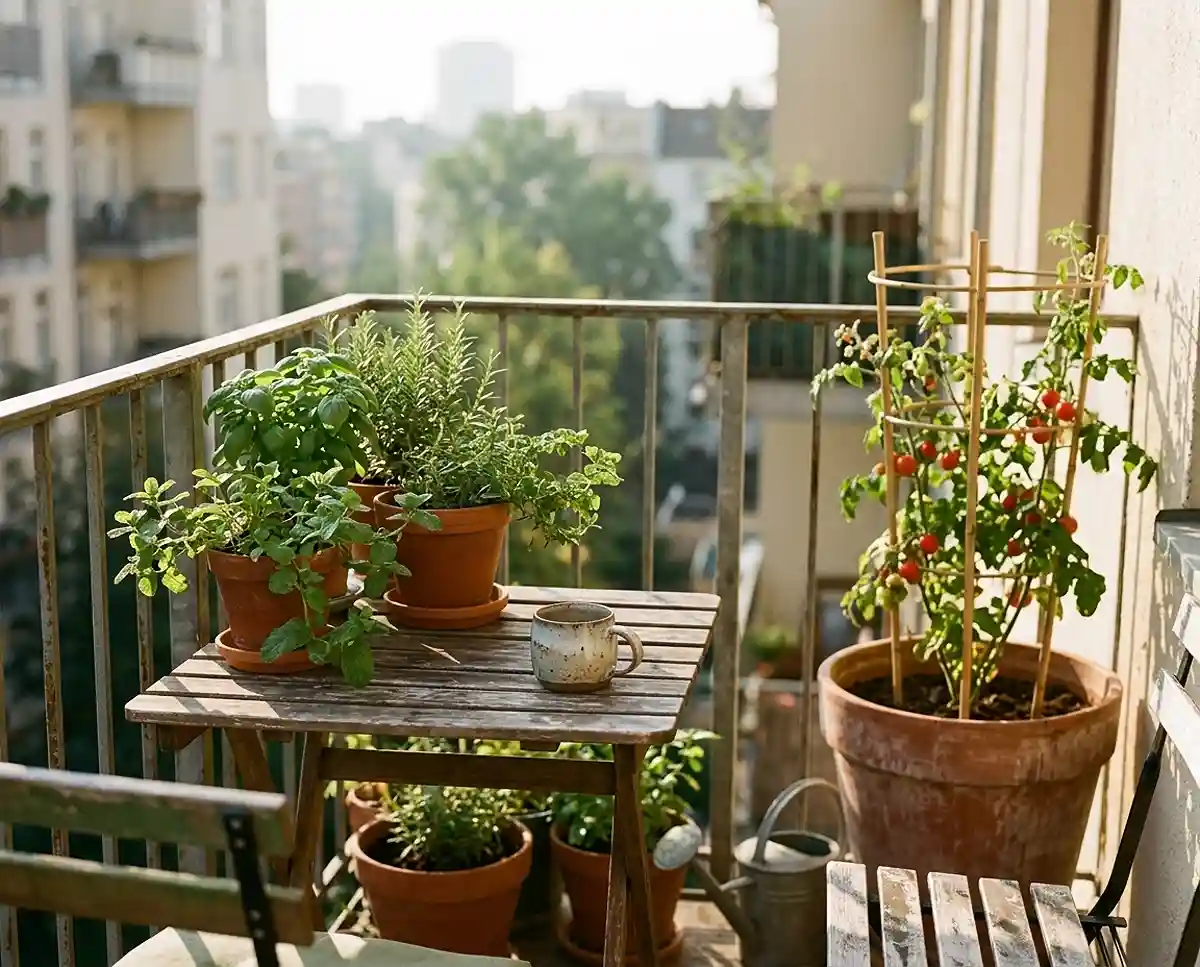
Your Cozy Balcony Kitchen Garden
Start a balcony kitchen garden with herbs and container veggies. See what to plant first, where to put it, and how to keep care simple.
Key Takeaways
- Sunlight: Fruiting crops like tomatoes, peppers, cucumbers, eggplant, and zucchini want 6 or more hours of direct sun. Leafy greens and mint cope with less.
- Containers: A full-size tomato wants a 5-gallon (about 19 L) pot. Compact varieties and most herbs are more forgiving.
- Temperatures: Frost arrives at 32°F (0°C) and hurts tender crops. Basil sulks when nights dip below about 50°F (10°C).
- Seasons: Lettuce, spinach, radishes, and peas like cool weather. Tomatoes, peppers, and basil go out once frost has passed.
- Starting size: Begin with 3 to 5 plants you actually cook with, then add more once watering feels easy.
The first thing I ever grew on my balcony was a supermarket basil plant I bought on impulse. I loved it so hard I drowned it. The leaves went yellow and droopy, the potting mix stayed soggy, and I stood there holding a heavy pot, wondering what I’d done wrong.
But that sad little plant is why I now have a balcony kitchen garden. I started paying attention to the warm terracotta, the smell of damp potting mix, and the bees that showed up the moment anything flowered. Coffee mornings out there became my favorite part of the day.
Here’s what I’ve learned since: you don’t need a big space, just a plan that fits the way you cook. Below you’ll find herbs, salad greens, container veggies, and a few fun extras. You’ll also meet the one herb that forgave every watering mistake I made, plus the layout my neighbors keep asking about.
Table of Contents
Choose Your First Edible Balcony Setup
Balcony herb garden ideas
Balcony herb garden ideas work best when you start with herbs you already cook with, then match them to the sun your balcony really gets. Basil for pasta, mint for drinks, chives for eggs. Keep the pots where you can reach them easily, and add more only once watering feels like a habit.
My first herb setup was a row of mismatched pots right by the door, close enough to snip a leaf while the kettle boiled. That detail mattered more than any fancy soil. The herbs I could reach in my slippers were the ones I actually used.
Quick facts: Basil and rosemary want 6 or more hours of sun, while mint and chives cope with less. Care difficulty: easy, as long as you water by feel.
The full Balcony Herb Garden Ideas guide helps you pick your first three herbs and set them up this weekend.
Beginner balcony vegetable gardening
Beginner balcony vegetable gardening starts with a short crop list of things you’ll actually eat, like salad greens, radishes, or a single tomato plant. Choose a small growing area, write down what you plant and when, and let those notes guide your next round. A tidy start beats a crowded balcony you can’t keep up with.
My first vegetable season, I bought seven seed packets because the pictures were gorgeous. I used about three. Now I keep a scrappy notes page on my phone with plant names and planting dates, and it keeps me from repeating the same silly mistakes.
Quick facts: Fruiting vegetables like tomatoes and peppers want 6 or more hours of direct sun, while leafy greens are more forgiving. Care difficulty: easy to moderate, depending on the crop.
The full Beginner Balcony Vegetable Gardening guide shows you how to choose a first crop list that fits your space.
A compact balcony kitchen garden layout

A compact balcony kitchen garden layout starts with a list of ingredients you want to cook with, then a quick sketch of where each container will sit. Put taller plants where they won’t shade shorter ones, and leave a clear path to every pot so harvesting never turns into an obstacle course.
This is the setup my neighbors always stop to ask about, and it isn’t fancy. Herbs cluster by the door, a tomato holds the sunniest corner, and salad greens live on a low shelf. I drew it on the back of an envelope first and moved pots around on paper before lifting a single one.
Quick facts: Map where the sun actually lands before you place anything. Care difficulty: easy, since it’s mostly planning.
The full Compact Balcony Kitchen Garden Layout article walks you through sketching your own, one pot at a time.
A vertical balcony herb garden
A vertical balcony herb garden stacks small herbs like thyme, oregano, and chives on shelves, rail planters, or tiered stands to save floor space. Before you buy anything, check that your building allows the support you have in mind. Then group the pots so every one is within arm’s reach for watering.
I love how vertical setups look, but the top row dries out faster than the bottom. So I put the thirstier herbs low and the toughest ones up high. One quick watering pass now covers everything.
Quick facts: Most culinary herbs like plenty of direct sun. Care difficulty: easy to moderate, because watering is the tricky part.
The full Vertical Balcony Herb Garden guide helps you arrange your herbs so they’re easy to water and easy to snip.
low light balcony vegetables
Leafy greens like lettuce, spinach, and arugula, plus herbs such as mint and chives, are the usual picks for a shadier balcony. Treat it as a small trial, because results vary from one balcony to the next. Watch how light actually moves across your space before you buy a single plant.
My balcony loses its direct sun early in the afternoon, so I spent a week just watching it with my coffee. The corner I’d been calling sunny was shaded most of the day. That week of looking saved me from buying all the wrong plants.
Quick facts: Tomatoes, peppers, and other fruiting crops want 6 or more hours of sun, so leave them off a shady list. Care difficulty: moderate, since results depend on your light.
The full Low Light Balcony Vegetables guide helps you compare options for your own shade.
balcony hydroponic garden
A balcony hydroponic garden grows plants in water and nutrient solution instead of soil, usually in a purpose-built system. That’s different from a soil planter with a water reservoir, which still uses potting mix. Compare system requirements and upkeep before you buy, and plan how to keep water contained on your balcony.
I’ll be honest: hydroponics is still on my wish list, not in my routine. I like getting my hands into potting mix too much. But I’ve admired friends’ tidy rows of greens, and these are the questions I’d ask before spending a cent.
Quick facts: Sunlight depends on the crops and the system, so check the maker’s guidance. Care difficulty: moderate, because the system needs regular attention.
The full Balcony Hydroponic Garden guide helps you decide whether a soil-free setup suits your space.
Choose Crops for Dedicated Containers
Growing tomatoes on a balcony
Growing tomatoes on a balcony works best with a sunny spot and a big pot. Compact bush and cherry types suit small spaces, while tall vining ones need stakes or cages. Pick the variety first, then plan the pot and support so the plant has what it needs.
Tomatoes were my “I’m a real balcony gardener now” plant. I still remember brushing past the leaves and catching that sharp, green, slightly peppery smell. That scent alone convinced me to give them the sunniest corner.
Quick facts: Sunlight: 6 to 8 hours of direct sun. Minimum pot size: about 5 gallons (19 L) for a full-size plant. Care difficulty: moderate.
The full Growing Tomatoes on a Balcony guide has everything you need to plant yours this weekend.
Growing strawberries on a balcony

Growing strawberries on a balcony is a sweet, fairly low-fuss project in hanging baskets, window boxes, or tiered planters. Pick a variety suited to your area, give the plants plenty of sun, and keep the fruit within easy reach. Strawberries are perennials, so they come back year after year with good care.
The first strawberry I ever picked from a pot barely made it back to the kitchen. I ate it standing next to the plant, still warm from the sun. I’ve kept a little note of each variety since, so I can compare next year.
Quick facts: Sunlight: 6 or more hours. Care difficulty: easy to moderate.
The full Growing Strawberries on a Balcony guide helps you choose a variety and a spot for your container.
A balcony lettuce and salad garden
A balcony lettuce and salad garden is a shallow-container project built around greens you’ll actually eat, like lettuce, arugula, and radishes. Greens like cooler weather and handle some shade, so sow a little at a time instead of filling every pot at once. Pick the outer leaves as you need them.
I used to plant a whole tray of lettuce at once and then drown in salad for a week, followed by nothing. Now I stagger small sowings. A bowl of fresh leaves shows up whenever I want one, and I’m not throwing any away.
Quick facts: Sunlight: part sun is fine. Season: cool weather. Care difficulty: easy.
The full Balcony Lettuce and Salad Garden guide helps you sketch a planting sequence you can manage.
Growing peppers on a balcony
Growing peppers on a balcony suits hot, sunny spots, and most varieties do fine in containers. Sweet and chili types behave differently, so compare candidate varieties with your season and balcony conditions. Keep notes on your container setup so next year’s pots get better.
Peppers taught me patience. My plants sat there looking unimpressed, and then one morning I spotted little white flowers. Tiny fruit followed, and I may have done a small happy dance in my pajamas.
Quick facts: Sunlight: 6 or more hours. Season: warm, and frost-tender. Care difficulty: moderate.
The full Growing Peppers on a Balcony guide helps you compare varieties and plan your containers.
Growing cucumbers on a balcony
Growing cucumbers on a balcony works best with a trellis or other support so the vines climb instead of sprawling. Check your chosen variety’s requirements first, since compact patio types suit pots better than long vining ones. Plan how you’ll reach the fruit before you give the plant balcony space.
I once let a cucumber vine ramble with no real plan. It tangled itself through the railing and my watering can, and harvesting felt like a puzzle. Now I decide exactly where it climbs before the plant goes in, and I check my building’s rules before attaching a trellis.
Quick facts: Sunlight: 6 or more hours. Season: warm, and frost-tender. Care difficulty: moderate.
The full Growing Cucumbers on a Balcony guide helps you review the whole container setup before you commit.
Dwarf vegetables for balcony containers
Dwarf vegetables for balcony containers are compact varieties that stay smaller than their full-size cousins, like bush beans or patio tomatoes. But “dwarf” alone isn’t a promise. Compare named varieties, read their mature size, and pick ones that fit both your container and your cooking habits.
I once bought a plant labeled “compact” that grew bigger than my balcony chair. Lesson learned. Now I read the variety name and the mature size on the tag, not just the cute label on the front.
Quick facts: Sunlight depends on the crop, so check each variety. Care difficulty: easy to moderate.
The full Dwarf Vegetables for Balcony Containers guide helps you compare compact varieties by name.
beans and peas balcony trellis
Beans and peas on a balcony trellis are climbers that turn a bare railing or wall into a leafy harvest. Pick a named variety, read what it needs, then choose a support that fits it. Peas prefer cooler weather, while beans like it warm.
Watching bean tendrils loop around string is oddly calming. I check on mine every morning like they might have moved overnight. I also keep a short note on how I trained them, so I can repeat what worked.
Quick facts: Sunlight: 6 or more hours for beans, and peas tolerate a little less. Season: peas cool, beans warm. Care difficulty: easy.
The full Beans and Peas on a Balcony Trellis guide helps you match a support to your chosen variety.
carrots radishes balcony grow bags
Carrots and radishes in balcony grow bags are root crops that grow down into loose soil, so choose varieties that suit the bag’s depth. Radishes are the speedy, forgiving starter, and carrots ask for more patience. Write down your planting dates and bag details so the next round goes smoother.
Radishes are my instant-gratification plant. I water them and peek at them far too often. The first crooked little carrot I pulled from a bag felt like a prize, even though it looked a bit silly.
Quick facts: Sunlight: part to full sun. Season: cool. Many radish varieties are ready in about 3 to 4 weeks. Care difficulty: easy for radishes, moderate for carrots.
The full Carrots and Radishes in Balcony Grow Bags guide helps you pick varieties and plan your bags.
growing potatoes on balcony
Growing potatoes on a balcony works in deep bags or containers. Check local planting guidance, choose a named variety, and review the complete container setup before you plant. Potatoes are a cool-season crop, planted in early spring in many areas.
Potatoes feel like buried treasure. Tipping a bag out onto a tarp to find little potatoes tucked in the soil is a childish thrill I never outgrew. I record the variety and planting date every time, since results change from balcony to balcony.
Quick facts: Sunlight: 6 or more hours. Season: cool start. Care difficulty: moderate.
The full Growing Potatoes on a Balcony guide helps you decide whether bags fit your space.
growing eggplant on balcony
Growing eggplant on a balcony suits a warm, sunny spot and a long enough growing season. Choose a named variety, read what it needs, and plan the whole container arrangement and harvest access before planting. Compact varieties tend to be easier to fit into pots.
Eggplants are the divas of my balcony. They sulk when it’s cool, then turn glossy and gorgeous once summer settles in. I never promise myself a big harvest, but a single shiny fruit feels like a win.
Quick facts: Sunlight: 6 or more hours. Season: warm, and frost-tender. Care difficulty: moderate.
The full Growing Eggplant on a Balcony guide helps you plan your container and your harvest access.
growing spinach on balcony
Growing spinach on a balcony works best in cool seasons, in a container that gets part sun. Check seasonal guidance for your area, because spinach tends to bolt when weather warms, which means it rushes to flower and turns bitter. Keep dated notes on your planting and your harvest.
Spinach is the plant that taught me about bolting. I got greedy waiting for bigger leaves, the weather warmed up, and my pot shot up flower stalks almost overnight. Now I pick young leaves early and often.
Quick facts: Sunlight: part sun. Season: cool. Care difficulty: easy.
The full Growing Spinach on a Balcony guide helps you plan seasonal timing for your container.
growing zucchini in containers
Growing zucchini in containers works when you choose a compact variety and give the plant plenty of room around the pot. Zucchini is big and sprawling, so sketch the full setup and check the variety’s needs before you give it balcony space.
Zucchini leaves are enormous for something that’s supposed to be a “little balcony plant.” I’d sketched the pot but forgot about the leaves, and they swallowed my path to the herbs. Now I draw the whole plant, not just the pot.
Quick facts: Sunlight: 6 or more hours. Season: warm, and frost-tender. Care difficulty: moderate.
The full Growing Zucchini in Containers guide helps you map out the complete setup before you plant.
Grow Individual Herbs for Your Kitchen
growing basil on balcony
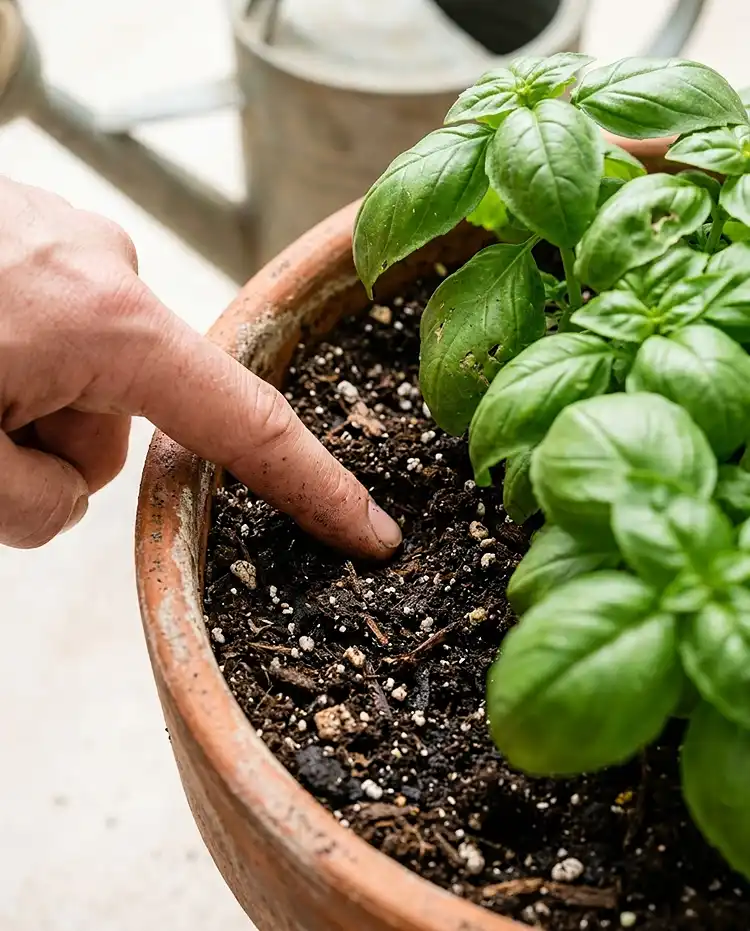
Growing basil on a balcony means giving a warm-weather herb lots of sun and steady, not soggy, moisture. Make sure you know which variety you bought, since sweet basil and Thai basil differ. Pinch off the top leaves as you harvest and the plant grows bushier.
This is the pot from my intro. After I loved my first basil to death, I learned to poke a finger into the mix before watering. Now the smell of crushed basil on my fingers is my favorite balcony perk.
Quick facts: Sunlight: 6 or more hours. Basil sulks below about 50°F (10°C). Care difficulty: easy to moderate.
The full Growing Basil on a Balcony guide helps you set up and harvest your first pot with confidence.
growing mint on balcony
Growing mint on a balcony is easy in its own pot, because mint spreads fast and crowds out its neighbors. Make sure you know which mint you bought, since there are many kinds. Give it a spot with some sun and keep the soil evenly moist.
Mint always gets its own pot. The first time I planted it beside basil, it muscled in like a roommate with too much stuff. Now I tear a few leaves for iced drinks and let it do its thing in peace.
Quick facts: Sunlight: part to full sun. Care difficulty: easy.
The full Growing Mint on a Balcony guide helps you pick the right mint and keep it contained.
growing rosemary on balcony
Growing rosemary on a balcony suits a sunny, well-draining pot, meaning water runs through freely instead of sitting around the roots. It’s a woody, needle-leaved herb that likes to dry out between waterings. Check your local winter conditions, since cold tolerance varies by area.
Here’s the herb I teased earlier: the one that forgave every watering mistake I made. I’ve forgotten it more than once, and it kept going, smelling piney and wonderful whenever I brushed past. If you’re nervous, start here.
Quick facts: Sunlight: 6 or more hours. Care difficulty: easy.
The full Growing Rosemary on a Balcony guide helps you match your plant to its spot and the seasons.
Plan Mixed Containers Thoughtfully
Companion planting in balcony containers
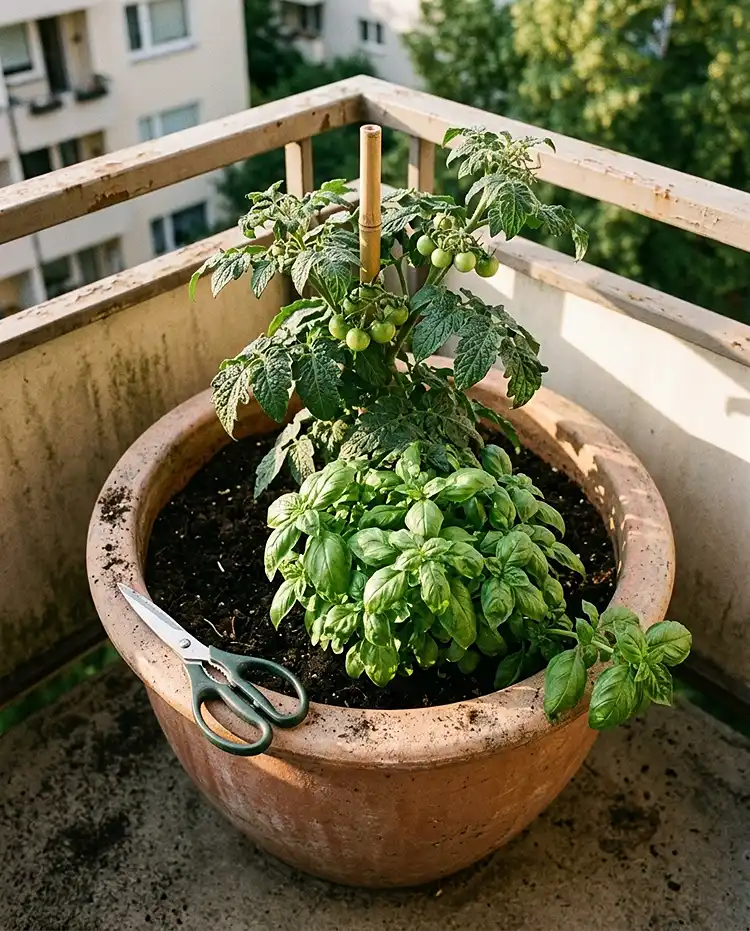
Companion planting in balcony containers means growing compatible plants together in one planter. Keep it practical: pair plants with similar light, water, and space needs. Be careful with claims about pest-repelling or growth-boosting pairings, since many lack strong horticultural evidence.
I like pairing a tomato with basil in one big pot because I’ll be cooking them together anyway, and both enjoy sun and regular watering. That’s about as scientific as I get. It’s convenient, and it keeps my watering routine simple.
Quick facts: Match the sunlight of every plant in the pot. Care difficulty: easy to moderate.
The full Companion Planting in Balcony Containers guide helps you compare needs before you combine crops.
Explore Fruit & Specialist Kitchen Gardens
Balcony fruit trees and citrus in pots
Balcony fruit trees and citrus in pots need a permanent home, so check the plant’s mature size, local growing guidance, and seasonal arrangements before you buy. Varieties sold for containers are made for pots, but still compare their final height with your space.
A fruit tree is a long-term roommate. I treat buying one like adopting a pet: I decide where it will live in every season before it comes home. That small bit of planning keeps me from moving a big pot around in a panic.
Quick facts: Sunlight: most fruit trees want 6 or more hours. Care difficulty: moderate to challenging.
The full Balcony Fruit Trees and Citrus in Pots guide helps you plan where your tree stays through the year.
A balcony herbal tea garden

A balcony herbal tea garden is a pot or two of culinary plants, like mint and lemon balm, grown for steeping in hot or iced drinks. Buy correctly labeled plants from a reputable nursery, and keep your focus on growing and preparing fresh leaves for flavor.
My tea corner is just two pots and a chair. On a quiet morning, I snip a few leaves, pour hot water over them, and sit there smelling warm mint. It’s the cheapest, coziest ritual on my whole balcony.
Quick facts: Sunlight: part to full sun for most tea herbs. Care difficulty: easy.
The full Balcony Herbal Tea Garden guide helps you choose culinary plants and prepare them for your cup.
balcony citrus garden
A balcony citrus garden centers on a lemon, lime, or similar tree in a large pot. Identify the exact variety, check local growing guidance, and plan where the pot sits in each season. Citrus is frost-tender, so it needs shelter well before temperatures reach 32°F (0°C).
I’ve admired citrus on balconies for years, and my own plan is still a work in progress. Before buying, I measured the corner where I’d keep it, then compared that space with how big the plant would eventually get. Measuring first saves heartache.
Quick facts: Sunlight: 6 or more hours. Care difficulty: moderate to challenging.
The full Balcony Citrus Garden guide helps you compare your actual space with the plant’s requirements.
Which Balcony Plants Go Well Together? A Quick Planting and Care Table
Plants at a Glance
| Plant | Sunlight Needs | Growing Season | Best For |
|---|---|---|---|
| Basil | 6+ hours | Warm | Pasta, salads, sauces |
| Mint | Part to full sun | Perennial | Drinks, fresh leaves |
| Rosemary | 6+ hours | Perennial | Roasts, breads, potatoes |
| Tomatoes | 6 to 8 hours | Warm | Salads, sauces, snacking |
| Peppers | 6+ hours | Warm | Cooking, grilling |
| Cucumbers | 6+ hours | Warm | Salads, snacking |
| Eggplant | 6+ hours | Warm | Roasting, stews |
| Zucchini | 6+ hours | Warm | Sauteing, baking |
| Beans | 6+ hours | Warm | Side dishes, stir-fries |
| Peas | Full to part sun | Cool | Fresh snacking, side dishes |
| Lettuce and salad greens | Part sun | Cool | Daily salads |
| Spinach | Part sun | Cool | Salads, sauteing |
| Radishes | Part to full sun | Cool | Quick snacks, salads |
| Carrots | Part to full sun | Cool | Snacking, soups |
| Potatoes | 6+ hours | Cool start | Roasting, mashing |
| Strawberries | 6+ hours | Perennial | Fresh snacking |
| Citrus | 6+ hours | Perennial, frost-tender | Drinks, cooking |
Setups at a Glance
| Setup | Best For | Main Thing to Plan |
|---|---|---|
| Balcony herb garden | Frequent cooks | Reachable pots and a watering routine |
| Compact kitchen garden layout | Mixed crops in a small space | Harvest access to every pot |
| Vertical herb garden | Tight floor space | A permitted support and easy watering |
| Low-light trial | Shadier balconies | Observing real light before buying |
| Hydroponic garden | Soil-free growing | System requirements and water containment |
| Herbal tea garden | Tea and iced-drink fans | Correctly labeled culinary plants |
Use the table to group pots with similar sun and watering needs, so one trip with the watering can covers them all. You can also pair two compatible plants in one big planter, like basil beside a tomato, as long as their light needs match.
What Are the Best Tips for a Balcony Kitchen Garden?
Small-Space Swaps
Swap full-size plants for compact varieties first. A bush tomato or a patio cucumber takes far less room than a sprawling vining one, and bush beans stay shorter than climbing beans. Read the variety name and mature size on the tag rather than trusting the word “dwarf” alone.
If floor space runs out, go up with a permitted shelf or rail planter, which is where a vertical balcony herb garden shines. Put thyme and oregano up high, and keep the thirstier plants low.
Soil and Watering Tweaks
Use potting mix made for containers instead of soil dug from the ground. It drains better and stays fluffy in a pot. Container plants also use up nutrients quickly, so follow the label instructions on whatever plant food you choose.
Poke a finger into the mix before you water. Rosemary likes to dry out between drinks, while mint and basil prefer steady moisture. That one habit would have saved my first basil.
Seasonal Prep Tips
Match crops to the season. Cool-season crops like lettuce, spinach, radishes, and peas do best in spring and fall, while warm-season crops like tomatoes, peppers, and eggplant go out after the last frost. Frost happens at 32°F (0°C), so check your local last frost date first.
Heat makes leafy greens bolt, which means they rush to flower and turn bitter. Moving pots into afternoon shade, or sowing a fresh batch when it cools, helps. Basil sulks when nights dip below about 50°F (10°C), so bring it inside or cover it on chilly evenings.
Keep a Simple Garden Log
Write down the variety, planting date, container, and what happened. Even a few lines in a notes app turn guesswork into your own balcony’s playbook. It also makes next season’s choices easier, because you’ll be working from your own results instead of memory.
Frequently Asked Questions
What can I grow in a balcony kitchen garden?
Most balconies can handle herbs like basil, mint, and rosemary, salad greens, radishes, and container-friendly vegetables such as tomatoes and peppers. Start with plants you cook with and match them to your light. A few well-chosen pots beat a crowded balcony, and you can always add more next season.
How much sun does a balcony kitchen garden need?
It depends on the crop. Fruiting vegetables like tomatoes, peppers, and cucumbers want 6 or more hours of direct sun, while leafy greens and herbs like mint cope with less. Watch your balcony through a full day before you buy plants, and match each crop to the light you actually see.
What is the easiest herb to grow on a balcony?
Rosemary, mint, and chives are among the most forgiving. Rosemary likes a sunny, well-draining pot and dries out between waterings, mint is nearly unstoppable in its own pot, and chives handle a little shade. Basil is rewarding but fussier about overwatering and cold nights.
Can you grow vegetables on a shady balcony?
Yes, but pick the right ones. Leafy greens like lettuce, spinach, and arugula tolerate part sun better than tomatoes or peppers, which want 6 or more hours of direct light. Start with a small trial of low light balcony vegetables and see how your space responds before expanding.
What’s the difference between a balcony hydroponic garden and a self-watering planter?
A balcony hydroponic garden grows plants in water and nutrients with no soil, using a purpose-built system. A self-watering planter still uses potting mix and simply stores water in a reservoir below. They need different upkeep, so compare each setup’s requirements before you buy.
Final Thoughts
If you’re itching to start, pick one plant and begin there. My vote is basil in a sunny pot. It taught me everything, including how not to overwater. Add a small pot of mint nearby, and you’ve got a balcony kitchen garden in the making.
Tell me in the comments what you’re growing on your balcony, or what you’re dreaming of planting first. And if this guide helped, save it to your Pinterest board and share it with a friend who’s staring at an empty balcony.