

12 DIY Vertical Balcony Herb Garden Projects
My best vertical balcony herb garden build held 15 herbs on 1 square foot of floor. Here are 12 DIY balcony herb garden projects that work, plus the rules that keep them alive.
I test on a south-facing concrete patio in USDA zone 8b (winter lows of 15 to 20°F). As of the 2026 season, I’m running 18 containers and six wall builds. Last frost lands near March 15. First frost lands near November 15.
Table of Contents
Planning Your Vertical Balcony Herb Garden: Light, Weight, and Companion Rules
Verdict: Map sun hours and wet-soil weight before you cut any wood. Group herbs by water need, not looks. Top shelves bake first, so they get the toughest plants.
Track light on one clear day. Mark every spot with 6+ hours of direct sun. That’s your top tier. Need layout inspiration? Browse more balcony herb garden ideas first.
Sun vs. Shade Herb Zoning for a Vertical Balcony Herb Garden
| Tier | Light | Herbs |
|---|---|---|
| Top | 6 to 8 hours | Rosemary, thyme, sage, oregano |
| Middle | 4 to 6 hours | Basil, parsley |
| Bottom | 3 to 4 hours | Cilantro, chives, mint |
Test note: In summer 2025, ‘Genovese’ basil on my top tier needed water daily. The same cultivar on the bottom tier needed it every second day.
Hydro-Grouping and Weight Limits for Wall and Railing Builds
Hydro-grouping (planting herbs with matching water needs together) prevents most dead plants. Basil and parsley want wet roots. Rosemary rots in them.
- Do this: Put rosemary, thyme, sage, and oregano in one gritty trough.
- Do this: Put basil, parsley, and cilantro in a richer mid-tier trough.
- Skip this: Sharing a trough between basil and rosemary.
- Skip this: Guessing weight. Wet potting mix runs 40 to 50 lb per cubic foot.
Do the math first. A 30-inch gutter holds about 0.2 cubic feet, or 9 lb of wet soil. Check your railing rating and lease before hanging anything.
Mistake to avoid: I planted mint in a shared trough in 2024. It smothered ‘Greek’ oregano in six weeks. Give mint a solo pot.
DIY Materials, Weatherproof Hardware, and Custom Herb Soil Mixes
Verdict: Untreated cedar, stainless hardware, and two soil mixes cover every build below. Skip pressure-treated lumber near food. Skip one-mix-fits-all soil.
Food-Safe Woods, Non-Toxic Sealers, and No-Drill Mounting Hardware
Use untreated western red cedar, redwood, or heat-treated (HT-stamped) pallets. Seal with raw linseed oil or beeswax. Reapply each spring.
- Lumber: 1×6 cedar boards, HT pallets
- Hardware: stainless S-hooks, pipe clamps, heavy-duty zip-ties
- Tools: drill, 1/4-inch bit, miter saw, staple gun
- Extras: non-woven geotextile (landscape fabric), 1/4-inch micro-drip tubing
Two Soil Recipes: Gritty Mediterranean Mix vs. Moisture-Rich Leafy Mix
| Mix | Bucket ratio | Best for | pH |
|---|---|---|---|
| Gritty Mediterranean | 6 potting mix, 2 perlite, 2 coarse grit (40% aggregate) | Lavender, thyme, rosemary, sage | 6.5 to 7.5 |
| Moisture-Rich Leafy | 4 coco coir, 4 potting mix, 2 worm castings | Basil, cilantro, dill, tarragon | 6.0 to 6.8 |
Test note: In winter 2025 to 2026, all four ‘Tuscan Blue’ rosemary plants in the gritty mix survived. One in plain potting mix rotted by January.
12 DIY Vertical Balcony Herb Garden Projects for Handy Home Cooks
Verdict: The pallet wall wins on density. Gutters win on cost. The tension pole wins for renters. Skip anything under 5 inches of soil in full afternoon sun. Want a full edible layout? Try this cozy balcony kitchen garden guide.
Project 1: Upcycled Heat-Treated Pallet Wall with Landscape Fabric Pockets
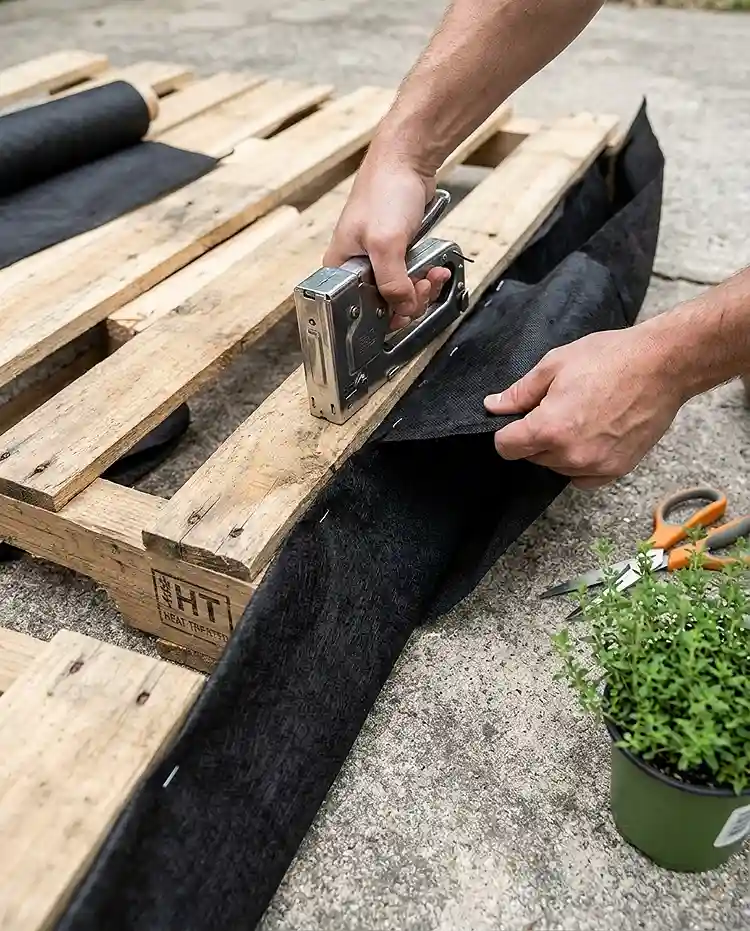
Staple heavy-duty geotextile behind the slats to make three tiers of 6-inch pockets. This holds 15+ herbs in under 1 square foot. These space saving herbs fit best: thyme and oregano up top, chives and parsley below.
Project 2: Cascading Vinyl Rain Gutter System on Adjustable Steel Cables
Cut 4-inch vinyl gutter into 30-inch lengths. Snap on end caps and drill staggered 1/4-inch drain holes. Hang tiers 10 inches apart so water drips downward. Plant chives, thyme, and oregano.

Project 3: Freestanding Stepped Cedar Ladder Planter with Lift-Out Troughs
Build an A-frame with four lift-out cedar window boxes, each 24 inches long and 8 inches deep. Angle the frame about 60 degrees so no tier shades the next. Fits sage, basil, and parsley.
Project 4: Renter-Friendly Tension Pole with Clip-On Herb Rings
Wedge an outdoor spring tension pole into a sunny corner. Add swivel iron ring brackets for 6-inch terracotta pots of basil, rosemary, and sage. Check the pole’s load rating, usually 30 to 50 lb.

Project 5: Over-the-Rail Slatted Screen with French Cleat Herb Boxes
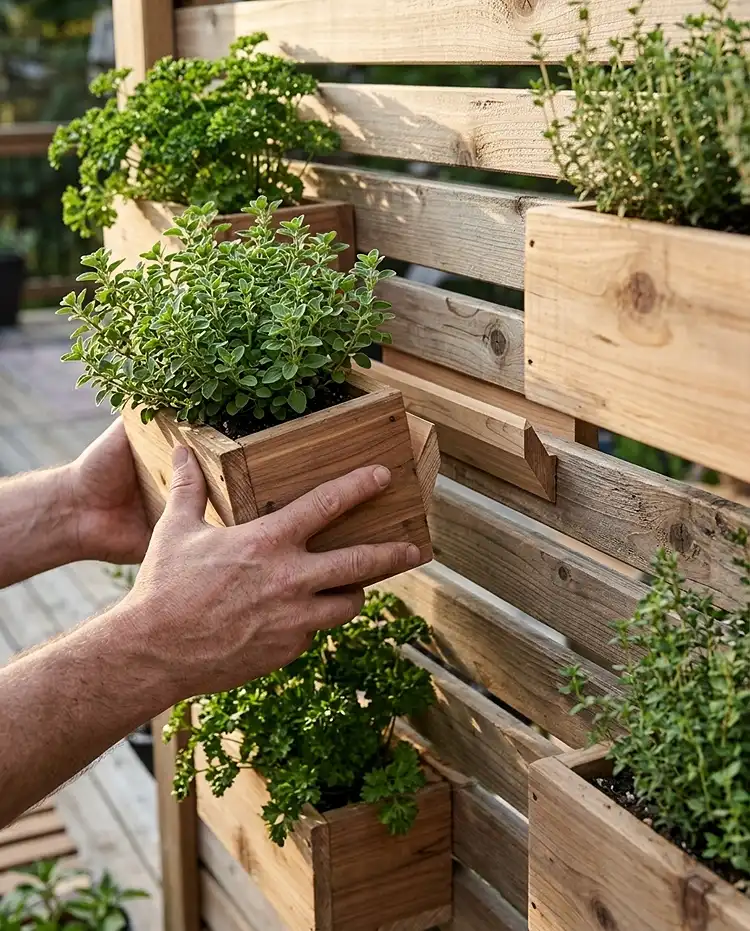
Screw a slatted cedar backing to the rail. Hang modular boxes on 45-degree French cleats (interlocking angled mounting strips). Rearrange as the sun shifts, or carry a box to the counter.
Project 6: Stacked Terracotta Herb Tower on a Central Steel Rod
Thread five graduated pots at alternating 45-degree tilts onto a galvanized rod. Anchor it in a 14-inch base pot. You get a 360-degree pillar for thyme, oregano, and marjoram.

Project 7: Hanging Copper-Pipe and Cedar Macramé Shelf
Drill the corners of three 24-inch cedar planks. Thread braided nylon rope through copper-pipe spacer sleeves. Hang it by the glass door for balcony kitchen garden snipping: chives, parsley, and basil.

Project 8: Exterior Pegboard Wall with S-Hook Olive-Oil Tin Planters
Seal exterior-grade pegboard and mount it on 3/4-inch furring strips for airflow. Hang drilled olive-oil tins of mint, lemon balm, and Thai basil. Clip harvest scissors on a hook.
Project 9: Vertical Wine-Crate Tower on Locking Casters
Stack three crates in an offset staircase with L-brackets. Set them on a dolly with four locking casters rated 100 lb each. The 12-inch root zones suit dill, fennel, and tall rosemary.
Project 10: PVC Hydro-Wicking Tower with a Hidden Bucket Reservoir
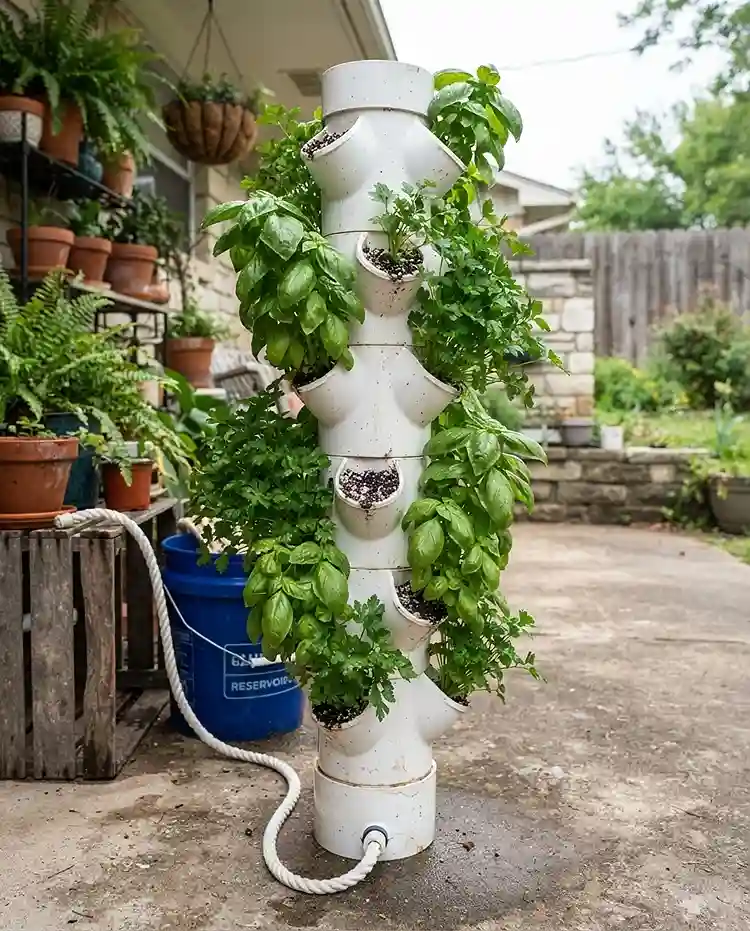
Heat-form planting pockets in a 4-inch food-safe PVC column. Do this outdoors; PVC fumes are nasty. Fill with perlite and coir, then run a rope wick to a 5-gallon bucket. Basil and parsley love it.
Project 11: Repurposed Wooden Shutter with Hose-Clamp Pot Holders
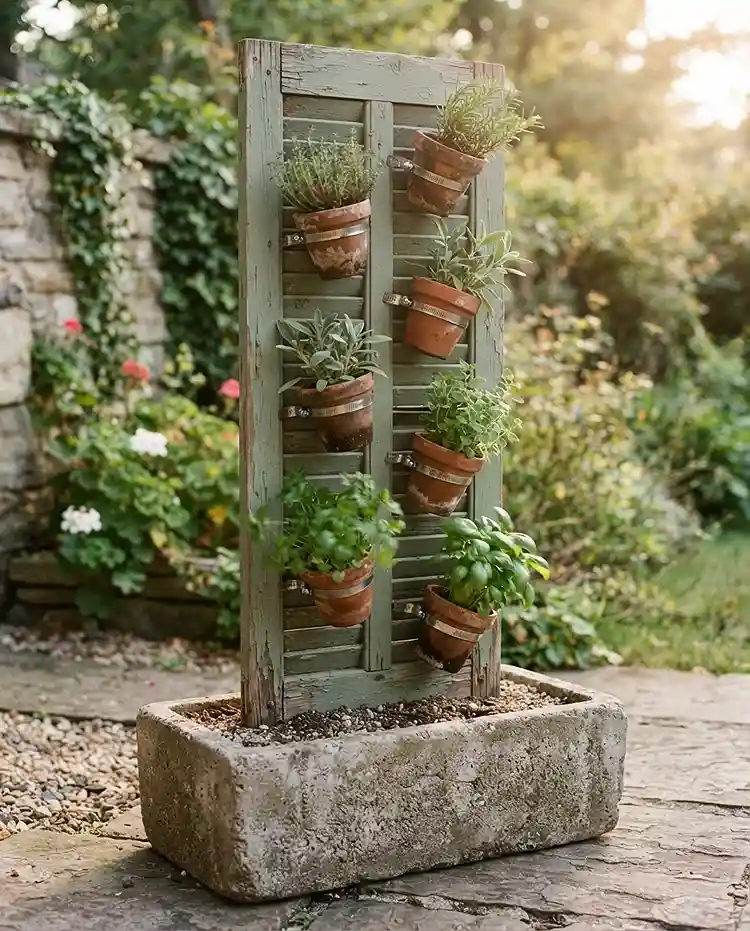
Wedge a louvered shutter upright in a heavy base planter. Screw stainless worm-gear hose clamps to the slats. They grip 4 to 6-inch clay pots through wind gusts.
Project 12: Fold-Down Railing Prep Bar with Recessed Herb Trough
Build a fold-out wooden ledge that clamps to the rail. Drop in a drilled stainless steam-table pan. Plant cocktail mint, lemon verbena, and basil. Keep total load under 25 lb.

Vertical Herb Maintenance, Pruning for Yield, and Overwintering
Verdict: Water the top tier first, feed lightly, and pinch often. Herbs that get trimmed stay leafy. Herbs that get ignored go woody by August.
Top-Down Drip Irrigation and Organic Liquid Feeding Timing
Top tiers dry about 40% faster than bottom tiers. Run 1/4-inch micro-drip line from a gravity bucket. Feed half-strength fish emulsion (5-1-1 NPK, meaning nitrogen, phosphorus, potassium) every 3 weeks. Extra nitrogen dulls aroma.
The Pinch-Above-the-Node Method and Winterizing Woody Perennials by Zone
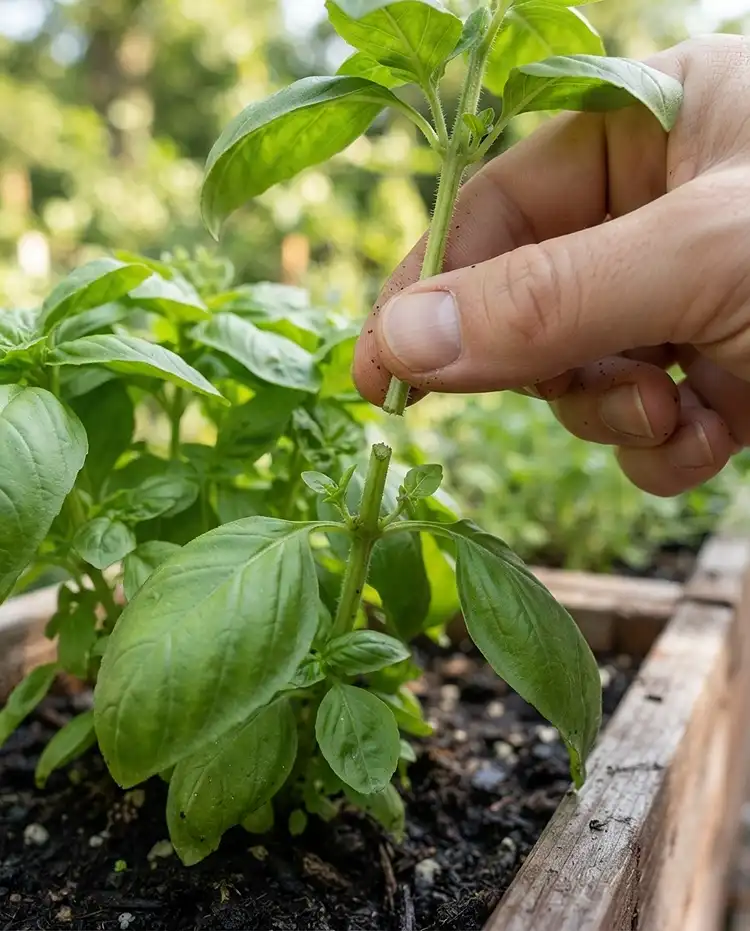
Cut the top third of each stem just above a leaf node pair. Each cut sends out two new branches. Hardy thyme, sage, chives, and oregano overwinter outdoors in zones 5 to 9. Move rosemary and bay laurel inside below zone 8.
Pair your herb tiers with tomatoes and peppers using these small balcony vegetable garden ideas.
Common Problems & Solutions
Verdict: Most vertical failures trace to three things: drip-down contamination, wall heat, and pockets too shallow to hold water.
Upper Pots Draining Dirty Water and Fertilizer Salts Onto Lower Herbs
Cascades splash soil and salts onto the leaves below. Offset pots in a zig-zag so drips miss the plants underneath. Line drain holes with coffee filters. Add micro-saucers under each pot.
Premature Bolting in Cilantro, Basil, and Dill on Hot Vertical Walls
Radiant heat off brick or stucco triggers bitter flower stalks. In June 2025, plain cilantro against stucco bolted at day 28. ‘Calypso’ with a 1-inch air-gap spacer lasted 49 days. Pinch buds daily.
Shallow Vertical Pockets Drying Out in Hours
This one failed hard. In July 2025, felt pockets baked in afternoon wind and I lost five of six thyme plants in 9 days. Line pockets with perforated plastic, mix in 15% vermiculite, and top-dress with fine pine bark.
People Also Ask
Which culinary herbs can be planted together in the same vertical trough?
Group herbs by water and light needs. Put rosemary, thyme, sage, oregano, and lavender in one gritty, sunny trough, and basil, parsley, cilantro, and chervil in a richer mid-tier trough. Keep mint in a solo pot, and limit each 24-inch trough to 3 or 4 plants.
How deep do containers need to be on a vertical herb wall?
Shallow-rooted creeping thyme, oregano, chives, and mint do fine in 5 to 6 inches of soil. Upright basil, parsley, sage, and rosemary need 8 to 10 inches. Taprooted dill and fennel need a 12-inch bottom tier.
Can I build a vertical balcony herb garden if my balcony is in the shade?
Yes. A north- or east-facing balcony with 3 to 4 hours of gentle morning light grows mint, flat-leaf parsley, chives, cilantro, lemon balm, chervil, and Vietnamese coriander. Skip rosemary and sage there, since they sulk below 6 hours of sun.
How do I secure a tall DIY vertical herb stand so it doesn’t blow over on a windy balcony?
Build an A-frame or wide-footprint base and load the bottom shelf with 12-inch pots for ballast. Tether the top frame to the railing spindles with stainless cable ties or pipe clamps. My ladder planter, tied at two points, held through 30 mph gusts in March 2026.
How often should I water a vertical balcony herb garden in summer?
At highs near 95°F, water top tiers daily and bottom tiers every second day. Check by pushing a finger 1 inch into the soil. A gravity-bucket drip line cuts the chore to a 10-minute run.
The Short Version
- Zone by sun and water first. A vertical balcony herb garden fails when thirsty and drought-loving herbs share soil.
- Match the build to the balcony: pallet wall for density, tension pole for renters, gutters for budget.
- Mix two soils: 40% grit for Mediterranean herbs, coco coir and worm castings for leafy ones.
- Pinch above the node, feed at half strength every 3 weeks, and keep mint solo.