
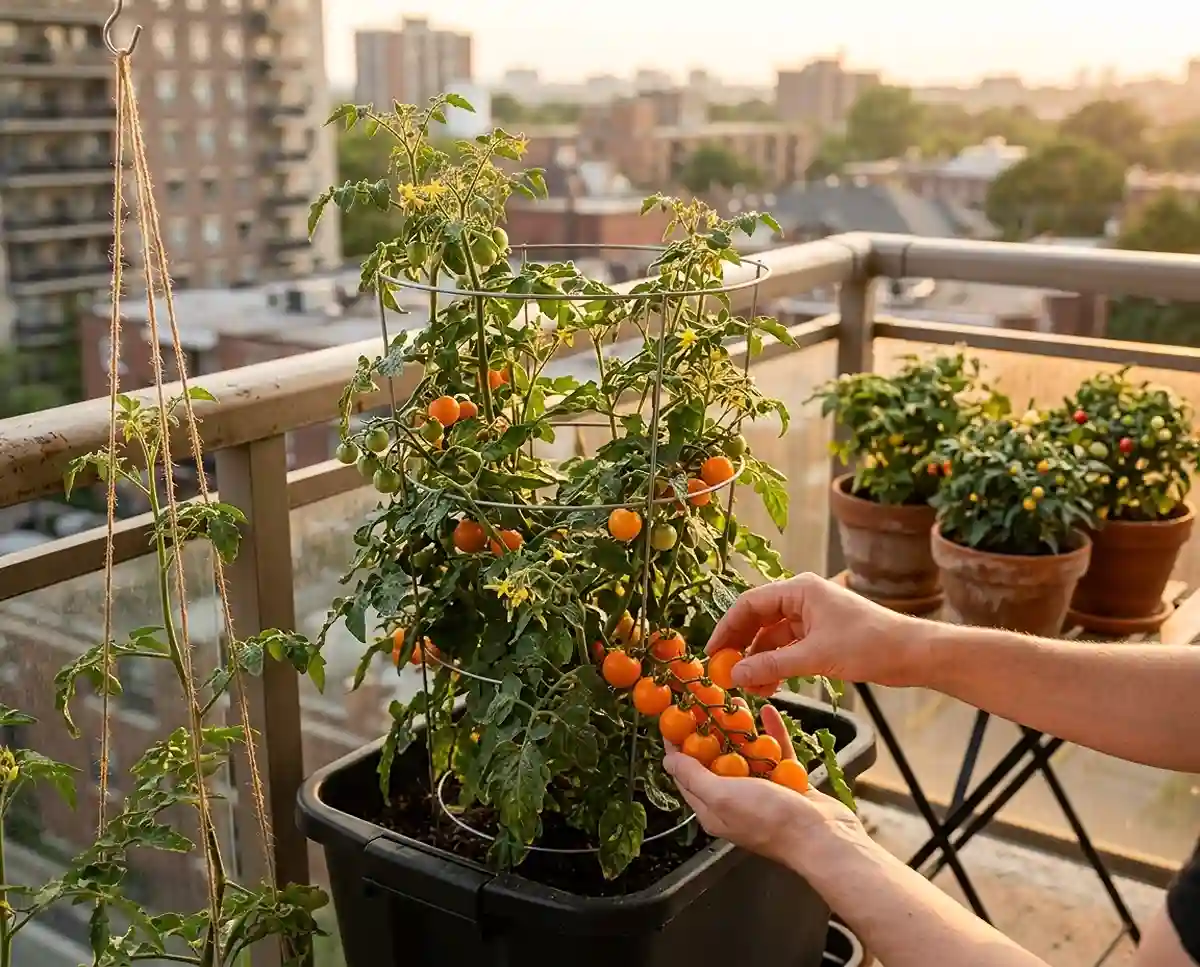
Growing Tomatoes on Balcony: 14 Pot and Support Ideas
Growing tomatoes on balcony space works when pot size, variety, and support match. Here’s the balcony tomato garden setup that gave me 40 pounds from six pots.
I garden on a west-facing fourth-floor balcony in zone 7b, roughly 5 by 12 feet. As of the 2026 season, I’ve run this setup for six summers. Some ideas below worked beautifully. A few flopped, and I’ll tell you which.
Table of Contents
Planning for Growing Tomatoes on Balcony: Sun, Wind, and Variety Types
Check three things before buying a single pot: sun, wind, and weight. Tomatoes need 6 to 8 hours of direct light, so note where sun lands every hour on a clear day.
A wet 10-gallon container can weigh 70 pounds or more. Confirm your balcony’s load limit with your landlord or building manager first.
Determinate (Bush) vs. Indeterminate (Vining) vs. Micro-Dwarf Tomatoes for Balconies
Quick Answer: Micro-dwarf tomatoes stay about 12 inches tall, determinate patio bushes reach 3 feet, and indeterminate vines climb 7 feet. Small balconies suit micro-dwarfs and determinates best. Vines need vertical support and bigger pots.
Determinate types ripen most fruit at once and need minimal staking. Indeterminate vines keep producing until frost. Micro-dwarfs like ‘Micro Tom’ need no support at all.
Mapping the 6-to-8-Hour Sun Zone and High-Rise Wind Protection
Park heavy pots against a sunlit interior wall. The masonry radiates stored heat in the evening, which ripens fruit faster.
Wind is the bigger threat on high floors. Gusts snap brittle stems in minutes. Shelter pots behind a solid railing panel or cluster them in a corner, and tie every stem to its support.
Essential Prep: Deep Containers, Calcium-Rich Soil Mix, and Staking Gear
Here’s the checklist I gather every spring before planting:
- Pots with drainage holes, sized to your variety (see the table below)
- A moisture-retentive soil mix with a calcium source
- Heavy-duty ties, like soft jute twine or stretch tape, never thin wire
- Container tomato support matched to the plant: cage, stake, or trellis
- A saucer or self-watering reservoir under every pot
Sizing Your Pots Right: 5-Gallon vs. 10-Gallon Containers and Self-Watering Totes
Quick Answer: Micro-dwarf tomatoes need 1 to 2 gallons, determinate bushes need 5 to 7 gallons at least 14 inches deep, and indeterminate slicers need 10 to 15 gallons at least 18 inches deep.
| Tomato Type | Pot Size | Minimum Depth | Example Cultivars |
|---|---|---|---|
| Micro-dwarf | 1 to 2 gallons | 6 to 8 inches | ‘Orange Hat’, ‘Micro Tom’ |
| Determinate patio | 5 to 7 gallons | 14 inches | ‘Tiny Tim’, ‘Bush Early Girl’ |
| Indeterminate | 10 to 15 gallons | 18+ inches | ‘Sungold’, ‘Cherokee Purple’ |
Self-watering totes earn their price, because small pots dry out fast. The Iowa State Extension container tomato guide backs this up: any container works if it drains.
The “Blossom-End-Rot-Resistant” Balcony Tomato Potting Soil Recipe
Here’s my mix, scaled for about 10 gallons of soil:
- 4 parts peat-free coco coir
- 2 parts screened compost
- 1 part perlite
- 1 part worm castings
- 1/2 cup garden gypsum (or 1 cup crushed, dried eggshell)
- 1/2 cup organic 4-6-3 tomato fertilizer
Gypsum supplies soluble calcium right away. Eggshell works too, but it breaks down slowly. Moisten the mix before planting so it doesn’t repel water.
14 Balcony Tomato Garden Ideas, From Pots to Vertical Supports
Each idea pairs a container, a support, and a cultivar that suits a small footprint. Pick two or three that fit your railing and floor space. For more layout inspiration, see this guide to a cozy balcony kitchen garden.
Idea 1: The Breathable 10-Gallon Fabric Grow Bag with a 3-Legged Bamboo Teepee
Plant ‘Bush Early Girl’ or ‘Roma VF’ in a handled felt grow bag. Lash three 5-foot bamboo canes into a teepee with jute twine. Fabric air-prunes roots so they don’t circle, and the whole setup stays light enough to shift around.
Idea 2: Cascading ‘Tumbling Tom’ in a Ceiling-Hung 12-Inch Moss or Resin Basket
Trailing cherries like ‘Tumbling Tom Red’, ‘Tumbling Tom Yellow’, or ‘Hundreds and Thousands’ spill about 24 inches over the rim. No stakes needed, and you free up all your floor space. Use a hook rated for 40 pounds.
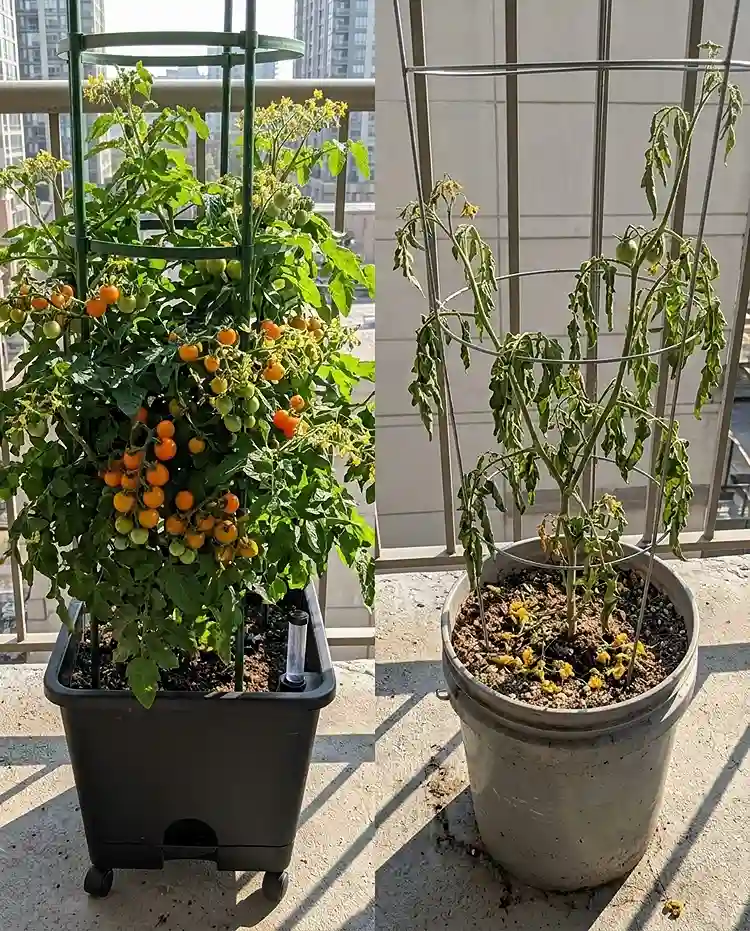
Idea 3: Sub-Irrigated Rolling Tomato Tote with an Integrated Expanding Tower Cage
A self-watering planter on wheels, like an EarthBox or City Picker, keeps ‘Sungold’ or ‘Sweet Million’ evenly hydrated. I added an expanding tower cage.
During a July heatwave, my tote-grown ‘Sungold’ kept setting fruit. The plain 5-gallon pot beside it dropped blossoms and sulked.
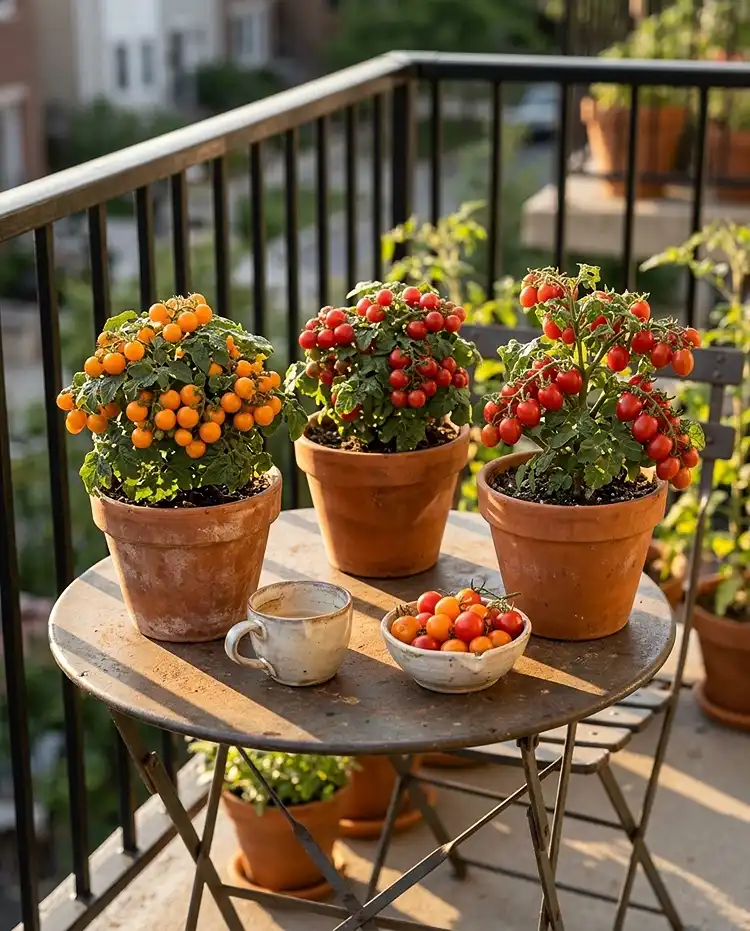
Idea 4: Bistro-Table Micro-Dwarf Tomato Trio (‘Orange Hat’, ‘Micro Tom’, and ‘Pinocchio’)
Cluster three 6-to-8-inch terracotta pots on a sunny bistro table. These stocky, 10-inch plants need zero staking and still give dozens of sweet cherries. Terracotta dries fast, so check moisture twice daily.
Idea 5: Overhead String-Trellis (“Single-Leader Roller Hook”) From the Balcony Ceiling
This is the greenhouse trick. Prune an indeterminate beefsteak like ‘Cherokee Purple’ or ‘Black Krim’ to one stem. Wind it around jute twine tied to an overhead beam hook, and clip it weekly. Test the hook with 50 pounds first.

Idea 6: The One-Pot “Caprese and Pizza” Companion Tub with Patio Tomatoes, Basil, and Alyssum
Plant a dwarf determinate like ‘Patio Choice Yellow’ or ‘Tiny Tim’ in the center of a 16-inch tub. Underplant with Genovese basil for caprese, plus sweet alyssum, which attracts hoverflies that eat aphids.
Idea 7: Balcony Railing Espalier Fan Using Flat Vinyl-Coated Wire Grid Panels
Zip-tie a flat grid panel to a sunny south or west railing. Fan out the lateral branches of ‘Juliet’ grape tomatoes horizontally. You get a living privacy screen and ripe fruit at arm’s reach. Check your building’s railing rules first.

Idea 8: Upcycled 5-Gallon Food-Grade Bucket with a Folding Square Concrete-Mesh Cage
Drill drainage holes 2 inches up the side of a BPA-free bucket. That leaves a small reservoir below. Wrap the bucket in burlap to hide the logo, then surround it with a sturdy, square folding wire tower.

Idea 9: Decorative Wooden Obelisk in a Glazed Ceramic Pot for Dwarf Project Tomatoes
Dwarf Tomato Project varieties like ‘Dwarf Tasmanian Chocolate’ or ‘Rosella Purple’ stay a tidy 3 to 4 feet tall. They give heirloom flavor inside a cedar obelisk that looks good even in winter.

Idea 10: Upside-Down Hanging Planter Bag with Top-Planted Marigolds and Culinary Herbs
Cherry tomatoes hang from a heavy-duty bracket while the open top holds French marigolds and trailing oregano. Honest warning: my 2023 bag dried out by noon in July and dropped half its flowers. Water morning and afternoon.
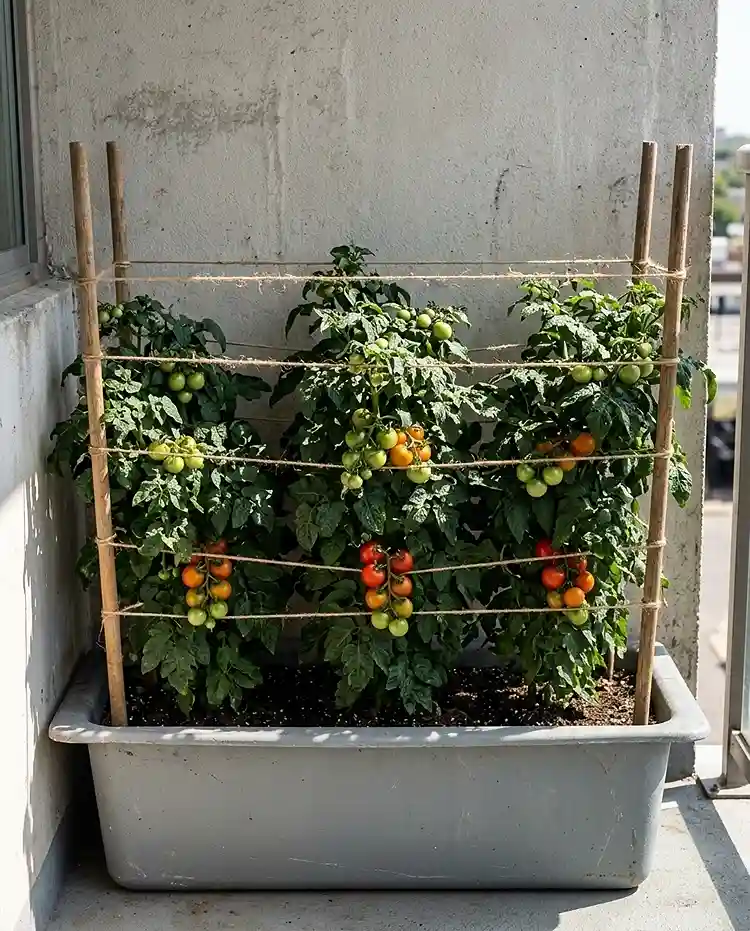
Idea 11: Rectangular Trough “Florida Weave” Between Two Heavy-Duty End Stakes
Plant three compact determinates in a 36-inch fiberglass trough. Set a T-post at each end. As plants grow, weave twine in a figure-eight between them every 8 inches or so, sandwiching the stems.
Idea 12: Spiral Steel Twister Stake Setup for Compact Patio Slicers (‘Celebrity’ or ‘Glacier’)
Twist a 5-foot corkscrew steel rod 14 inches deep into the pot. Guide the central stem up through the curls as it grows. No plastic clips, and no weekly retying.

Idea 13: Corner L-Shaped Cedar Planter Bench with Built-In Rear Slatted Trellis
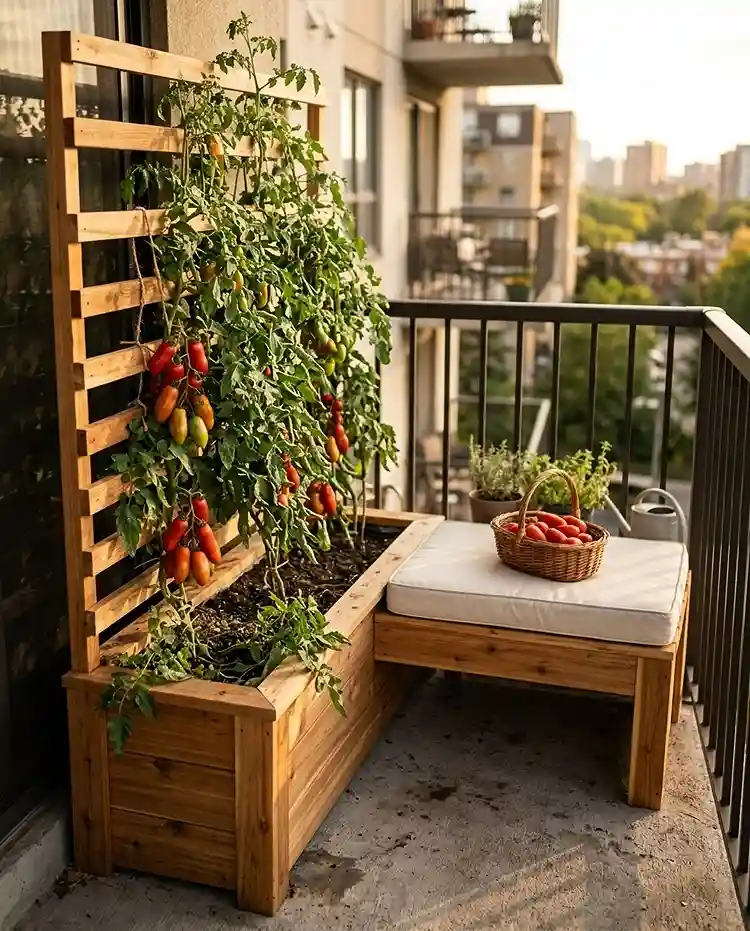
Combine seating with harvests. Train indeterminate ‘San Marzano’ paste tomatoes up the slatted backing of a corner planter box. Keep the soil at least 18 inches deep, and weigh the total load carefully.
Idea 14: Late-Summer Succession Pot of Cold-Tolerant ‘Sub-Arctic Plenty’ or ‘Stupice’
These ultra-early cultivars ripen in roughly 50 to 60 days. They set fruit even when nights hit 50°F (10°C). Sow one pot in early spring and another in midsummer for a late-autumn harvest on cool coastal or northern balconies.
Deep-Planting, Hand-Pollination, and Seasonal Care for Balcony Tomatoes
A few techniques turn leafy container vines into heavy clusters of ripe, crack-free fruit. None are hard, but skipping them costs you yield.
Deep-Trench Stem Planting, Pinching Suckers, and the Electric Toothbrush Pollination Trick

Bury the bottom two-thirds of a seedling’s fuzzy stem. Those hairs sprout roots, giving you a bigger root system. On indeterminates, pinch suckers (side shoots in the leaf joints) while they’re small.
At midday, touch an electric toothbrush to the flower stem for one to two seconds. High-rise balconies rarely see bees.

Morning Soaking, High-Potash Liquid Feeding Chart, and End-of-Season Topping
| Stage | Watering | Feeding |
|---|---|---|
| Transplant to first flowers | Deep morning soak | Balanced organic feed every 2 weeks |
| Yellow blossoms to harvest | Daily morning soak, plus a 4:00 PM check in heat | High-potassium 4-18-38 or comfrey/kelp every 7 to 10 days |
| 30 days before first frost | Keep steady | Stop feeding |
Cut off the top growing tip 30 days before first frost. The plant then sends its energy into ripening the fruit it already has.
Common Problems & Solutions
Three issues ruin most balcony tomatoes: black bottoms, yellow lower leaves, and dropped blossoms. Each has a simple fix.
Blossom End Rot (Black, Leathery Sunken Bottoms on Developing Fruit)
Quick Answer: Blossom end rot is rarely a soil calcium shortage. Erratic wet-dry cycles in small pots stop calcium from reaching the fruit. Water every morning, add 2 inches of bark mulch, and use sub-irrigated saucers.
In my first season, I lost six ‘Roma VF’ fruits to black bottoms because I watered every other day. The University of Minnesota Extension tomato disorders page covers the details.
Yellowing Lower Leaves and Early Blight from Soil Splash in Tight Containers
Overhead watering splashes soil-borne fungal spores onto low leaves. Prune every leaf on the bottom 8 inches of the main stem. Mulch bare soil with straw or pine bark, and water strictly at the base.
Blossom Drop During 90°F+ (32.2°C) Concrete Balcony Heatwaves
Daytime highs above 90°F (32.2°C) or night lows above 75°F (23.9°C) make tomato pollen sterile. Clip 30% shade cloth to the western railing. Mist the balcony floor at midday to cool the air around the plants.
Frequently Asked Questions
What is the smallest pot size I can use to grow tomatoes on a balcony?
Micro-dwarf varieties like ‘Orange Hat’ and ‘Micro Tom’ produce well in a 6-to-8-inch pot (1 gallon). Compact patio determinates like ‘Tiny Tim’ need at least a 12-inch pot (5 gallons). Full-sized indeterminate vines require a 16-to-18-inch pot (10+ gallons).
Why do my balcony tomato plants have lots of yellow flowers but no tomatoes?
The two main culprits are poor pollination and excess nitrogen. Without wind or bees, flowers can’t release pollen, so flick the stems daily or use an electric toothbrush. Too much nitrogen fertilizer also pushes leafy growth over fruit set.
Can I grow tomatoes on a balcony that only gets 4 to 5 hours of direct sun?
Yes, with small varieties. Giant beefsteaks will struggle. Cherry, grape, and early cold-set types like ‘Sungold’, ‘Sweet 100’, ‘Stupice’, and ‘Tiny Tim’ still give a generous harvest. Add bright reflected light to your 4 to 5 hours of direct sun.
How often do potted tomato plants on a sunny balcony need to be watered in summer?
Daily. Mature fruiting plants in 5-to-10-gallon pots can use up to a gallon of water a day in 85°F+ (29.4°C) weather. Give a deep morning soak every day, and check again at 4:00 PM during heatwaves.
Key Takeaways
- Growing tomatoes on balcony space starts with checking sun (6 to 8 hours), wind, and weight limits.
- Match pot size to type: 1 to 2 gallons for micro-dwarfs, 5 to 7 for determinates, 10 to 15 for indeterminates.
- Pair every pot with the right container tomato support, from teepees and cages to overhead twine.
- Water deeply every morning, since uneven watering causes most blossom end rot.
- Switch to high-potassium feed at first yellow blossoms, and top plants 30 days before frost.