

15 Small Balcony Vegetable Garden Ideas for Beginners
Your balcony is the size of a yoga mat, and you want tomatoes. These small balcony vegetable garden ideas make beginner balcony vegetables feel doable.
I’m a former community-garden coordinator, and I now grow on a sunny rooftop terrace in zone 7a. I get about eight hours of direct sun. I use fabric bags, buckets, and railing boxes. Twelve years of helping renters taught me this: tiny spaces work fine if you plan first.
Table of Contents
Planning Your First Balcony Vegetable Garden: Sun, Space, and Weight
Short Answer: Before buying anything, track your sun for one day, estimate container weight, and check your lease. Those three checks decide which crops will thrive on your balcony. Fruiting crops need six to eight hours of direct sun, while greens tolerate three to four. Skip this step and you’ll waste seeds.
Plants don’t care how pretty your balcony looks. They care about light and root room. A south-facing balcony fits tomatoes and peppers. A shady north-facing one still grows excellent salad.
Matching Vegetable Categories to Your Sunlight Hours
Step outside at 9 a.m., noon, and 3 p.m. and note where the sun lands. Count the hours of direct light, then use this chart.
| Direct Sun | Crop Type | Good Picks |
|---|---|---|
| 6-8 hours | Fruiting crops | Tomatoes, peppers, eggplant, cucumbers, zucchini |
| 4-6 hours | Part-sun crops | Bush beans, peas, chard, parsley, chives |
| 3-4 hours | Leafy greens and roots | Lettuce, spinach, bok choy, radishes, beets |
Weight Limits, Wind Exposure, and Landlord Rules
Wet soil is heavy. A 10-gallon bag of damp mix weighs roughly 50 to 60 pounds. Multiply that by your container count, then ask your landlord or building manager about load limits.
Wind dries pots fast and snaps stems. Park tall planters against an interior wall to buffer gusts. Slip a waterproof tray under every pot so runoff doesn’t stain floors or drip on neighbors. Also check your lease, since many buildings ban railing-mounted boxes.
Want a layout walkthrough? This cozy balcony kitchen garden guide shows how to arrange pots in tight corners.
Essential Starter Kit: Best Containers, Soil Mix, and Tools for Balcony Edibles
Short Answer: A beginner kit needs breathable containers with drainage holes and a lightweight potting mix. Add a trowel, pruning snips, and a watering can. Spend your money on pots and soil; everything else can be cheap. Good pots matter most for easy container vegetables.
- Three to five fabric grow bags, 5 to 10 gallons each
- One self-watering planter or sub-irrigated window box
- Two food-safe 5-gallon buckets, drilled for drainage
- Waterproof trays for every container
- Trowel, pruning snips, and a watering can with a rose head
Choosing Fabric Grow Bags, Self-Watering Planters, and Food-Safe Buckets
Fabric bags breathe, which prevents soggy roots, but they dry out fast in summer. Self-watering planters [sub-irrigated, meaning watered from a reservoir below] suit forgetful gardeners. BPA-free buckets are cheap. Drill six quarter-inch holes in the bottom.
My first summer, I planted three ‘Better Boy’ tomatoes in 2-gallon pots. By July I was watering twice a day and harvested just six tomatoes. The next summer I switched to 10-gallon bags with ‘Patio Choice’ and picked 41.
| Crop | Minimum Depth or Size |
|---|---|
| Lettuce, arugula, spinach, radishes | 6 inches deep |
| Bush beans, peas, bok choy | 8 inches deep |
| Carrots, beets, chard | 10 to 12 inches deep |
| Peppers, eggplant, potatoes | 5 gallons |
| Dwarf tomatoes | 10 gallons |
| Zucchini | 15 gallons |
A Lightweight, Nutrient-Rich Potting Soil Recipe
Never fill containers with garden soil. It compacts and drowns roots. Soak your coir brick first, then blend these parts by volume:
- 40% peat-free coco coir
- 25% perlite
- 25% screened compost
- 10% worm castings
- Organic slow-release 5-5-5 granular fertilizer, at the label’s container rate
15 Small Balcony Vegetable Garden Ideas You Can Start This Weekend
Short Answer: Each idea below pairs crops by sun, space, and container size, so you can copy it as written. Start with one or two. Easy container vegetables like lettuce, radishes, and cherry tomatoes forgive mistakes, while thirsty crops like zucchini ask for more attention.
Idea 1: The “Cut-and-Come-Again” Railing Box Salad Bar

Sow loose-leaf lettuce, arugula, and baby spinach thickly in a 6-inch-deep railing trough. Snip leaves an inch above the soil, and they regrow. Last April I sowed ‘Black Seeded Simpson’ in a 30-inch box. The first cut came at 28 days, then every 10 days for seven weeks.
Idea 2: The Single-Pot “Pizza Garden” with Patio Tomatoes, Basil, and Oregano
Plant one dwarf determinate [bush-type, with fruit ripening in a short window] cherry tomato in a 10-gallon grow bag. Try ‘Tiny Tim’ or ‘Patio Choice’. Tuck sweet basil and trailing Greek oregano around the edge. The herbs shade the soil, and you get pizza toppings from one pot.
Idea 3: Vertical Pocket Planter Wall of Culinary Herbs and Strawberries

Hang a felt or modular plastic pocket planter on a sunny wall. Fill it with chives, parsley, thyme, cilantro, and everbearing alpine strawberries. Water the top pockets first so runoff feeds the lower ones. For more pairings, see these balcony herb garden ideas.
Idea 4: 5-Gallon Bucket Potato and Green Onion Tower

Add 4 inches of mix to a food-grade 5-gallon bucket with drainage holes. Set two or three seed potatoes on top, then place scallion sets around the rim. As stems rise, mound in more soil [hilling] until the bucket is full. Harvest by tipping it out, with zero digging.
Idea 5: Balcony Rail Trellis of Sugar Snap Peas and Climbing Pole Beans
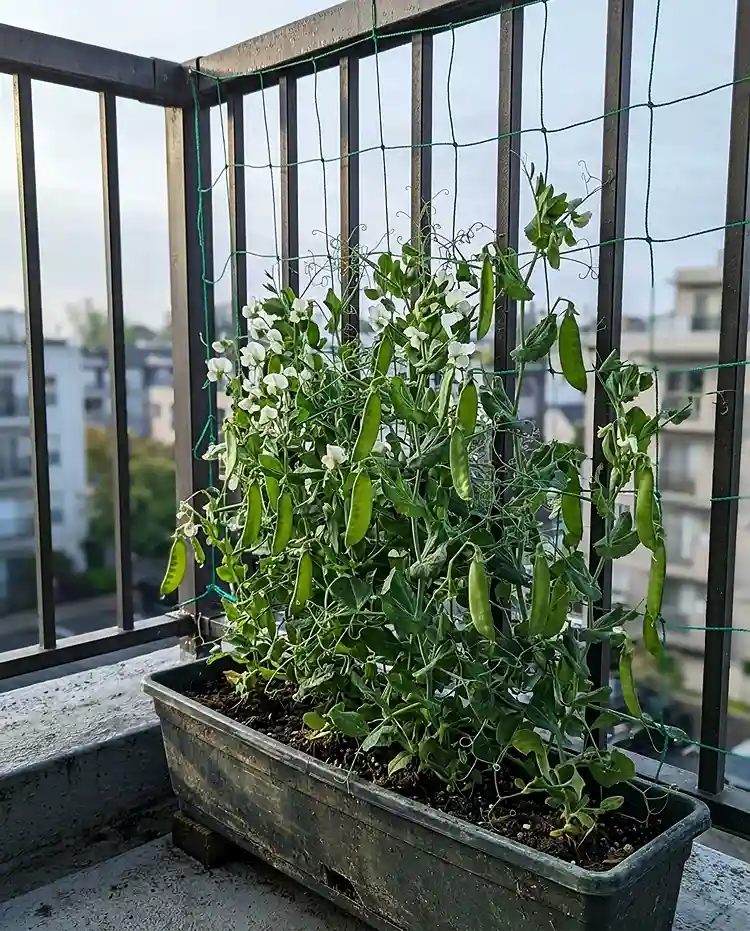
Set a narrow trough at the base of your railing and attach a nylon trellis net. Sow ‘Sugar Ann’ peas in early spring; they’re ready in about 56 days. When the peas fade, plant ‘Kentucky Wonder’ pole beans in the same trough for summer. Two crops, one footprint.
Idea 6: The Shady Corner Asian Greens Sanctuary with Bok Choy and Mizuna

No afternoon sun? Fill wide, shallow bowls with baby bok choy, tatsoi, and serrated mizuna mustard greens. These Asian greens are ready in roughly 30 to 40 days and tolerate three hours of light. Keep the soil evenly moist, and cut outer leaves first.
Idea 7: Tiered Ladder Shelf of Radishes, Baby Carrots, and Bush Cucumbers
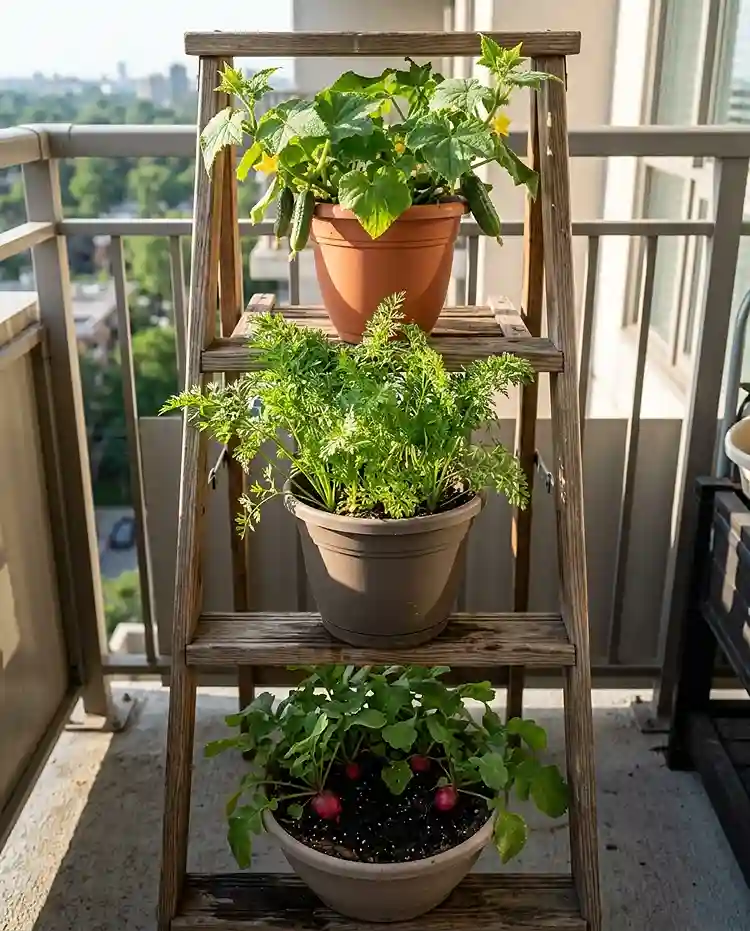
Stack a three-tier wooden plant stand with deep pots. Put round ‘Parisian’ carrots in the middle tier and 25-day ‘Cherry Belle’ radishes on the bottom. Give compact ‘Spacemaster’ bush cucumbers the top shelf, where sun is strongest. Carrot pots should be at least 10 inches deep.
Idea 8: The Salsa Fiesta Trio in Breathable Fabric Grow Bags
Fill three 5-gallon fabric bags: a ‘Jalapeño M’ pepper, a compact Roma tomato, and slow-bolt ‘Calypso’ cilantro with bunching onions. All love heat. Cilantro bolts [flowers and turns bitter] quickly, so shade its pot in the afternoon. Chop everything together for fresh salsa.
Idea 9: Over-the-Rail Cascading Tumbling Tom Tomatoes and Nasturtiums
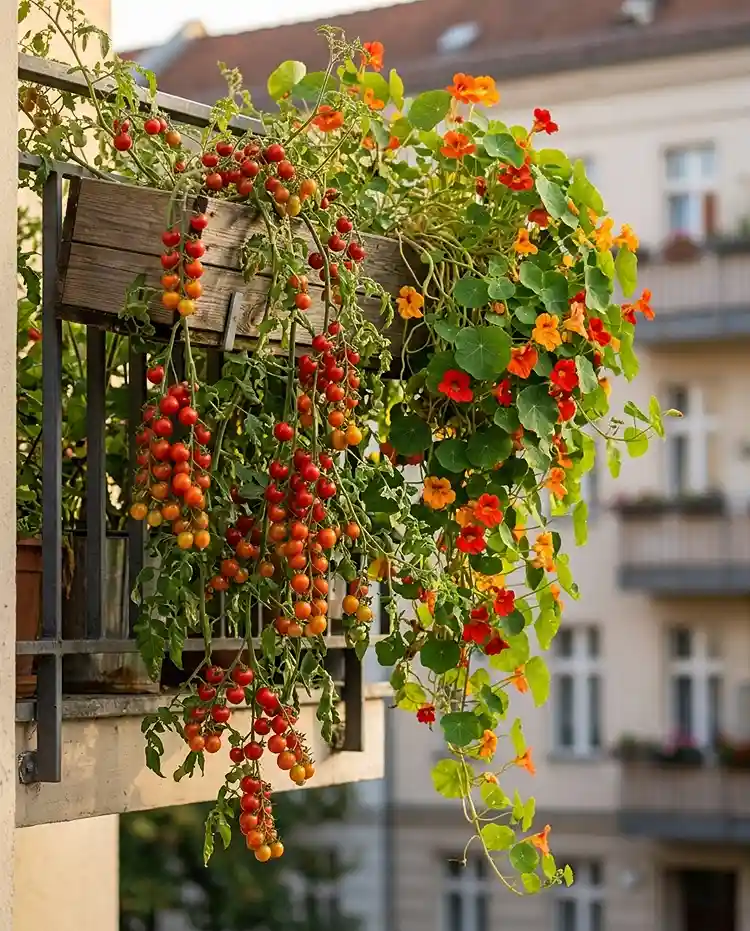
Skip the heavy cages. Plant trailing ‘Tumbling Tom’ cherry tomatoes in a hanging basket or high railing box, and add peppery nasturtiums. The flowers and leaves are edible. Vines spill over the edge, so you pick without bending. Water daily, because baskets dry out fast.
Idea 10: Deep Window Box Root Crop Duo of Golden Beets and Swiss Chard

Fill a 10-inch-deep trough with ‘Bright Lights’ Swiss chard and ‘Touchstone Gold’ beets. You eat the beet roots and tops, plus the chard stems and leaves. Both are ready around 55 days. Golden beets don’t stain your hands red, which beginners appreciate.
Idea 11: Self-Watering Mediterranean Vegetable Tote with Patio Eggplant and Peppers
Set up a self-watering planter with a hidden reservoir. Fill it with dwarf ‘Hansel’ or ‘Patio Baby’ eggplant and sweet mini bell peppers. Steady moisture reduces stress on the plants. Top up the reservoir every few days, and this one nearly runs itself.
Idea 12: Hanging Basket Micro-Dwarf Tomato and Sweet Alyssum Pollinator Magnet
Plant micro-dwarf tomatoes like ‘Orange Hat’ or ‘Micro Tom’, which stay compact, in small hanging pots. Edge each pot with sweet alyssum to attract pollinators. They look like toys, but they fruit. Water daily in summer, since small pots dry out in hours.
Idea 13: Upcycled Wooden Crate Herb & Garlic Greens Kitchen Station
Line a wooden crate with burlap and add drainage holes. Plant rosemary and sage, and sink mint in its own nursery pot so it can’t take over. Press sprouted grocery-store garlic cloves into the corners. You’ll snip mild garlic greens in about two weeks.
Idea 14: Compact Vertical Zucchini and Bush Squash Corner Obelisk
Grow ‘Astia’ container zucchini upward in one 15-gallon corner pot. Tie the central stem to a sturdy wooden stake with soft ties every 8 inches. Remove the lowest leaves as it climbs. This saves floor space, though the flowers will need hand-pollinating, as explained below.
Idea 15: Windowsill and Bistro Table Microgreens & Sprout Trays
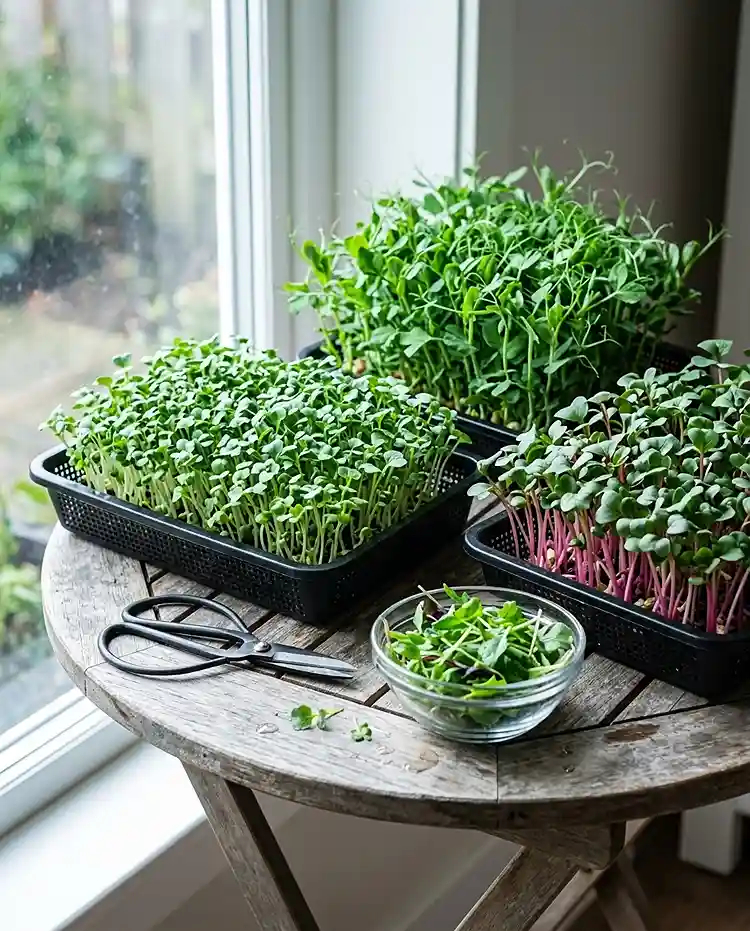
Use shallow mesh trays on a bistro table or windowsill. Sow broccoli, pea, and radish seeds densely, rinse them twice a day, and harvest the shoots in about 10 days. You get fresh greens even when the balcony is too cold for anything else.
Seasonal Planting Calendar, Watering, and Feeding for Balcony Veggies
Short Answer: Sow cool-season crops like peas, greens, and radishes before your last frost, and plant warm-season crops like tomatoes and peppers after it. Containers dry out fast. Water when the soil feels dry two inches down. Feed every 14 days with diluted organic fertilizer.
Cool-Season vs. Warm-Season Balcony Planting Timing Chart by Zone
Find your zone on the USDA Plant Hardiness Zone Map, which was updated in 2023, so recheck it as of 2026. In my zone 7a, the average last frost lands around April 15. Count from your own date.
| Crop Type | Examples | Timing (zone 7a example) |
|---|---|---|
| Frost-tolerant, cool-season | Peas, greens, radishes, bok choy | 4-6 weeks before last frost (early March), then again in late August |
| Frost-sensitive, warm-season | Tomatoes, peppers, eggplant | 1-2 weeks after last frost (late April to early May) |
| Frost-sensitive, direct-sown | Bush and pole beans, cucumbers | After last frost, once soil reaches 60°F |
The Knuckle Watering Test and Bi-Weekly Organic Feeding Routine
Every morning, push a finger two inches into the soil. If it’s dry to your second knuckle, water until it drains from the bottom. Then follow this feeding routine:
- Leafy greens: diluted liquid fish emulsion every 14 days
- Fruiting crops: high-potassium tomato feed every 14 days
- Always follow the dilution rate on the label
Common Problems & Solutions
Short Answer: Most first-year balcony problems come from three things: missing pollinators, heat stress, and sap-sucking pests. Hand-pollinate flowers with a soft brush, shade cool-season greens in the afternoon, and rinse pests off leaves with water. All three fixes are cheap and organic.
Poor Pollination and Dropping Blossoms on High-Rise Balconies

Bees are scarce above the fifth floor or so, so squash, cucumber, and tomato flowers may drop unpollinated. Touch an electric toothbrush to the back of each tomato flower for a few seconds. For squash and cucumbers, use a small paintbrush to move pollen from male flowers to female ones, mid-morning.
Bolting Lettuce and Bitter Greens During Sudden Heat Spikes
Last July, my ‘Buttercrunch’ lettuce bolted [rushed to flower] after just 19 days of cutting. Concrete bounced heat back at the pots, and the leaves turned bitter. I moved the pots into afternoon shade and switched to slow-bolt ‘Muir’. That lettuce gave me nine weeks of harvests.
Aphids, Spider Mites, and Whiteflies on Container Edibles
Check leaf undersides weekly for sap-sucking pests. Blast them off with a sharp spray of water. If they return, apply insecticidal soap [potassium salts of fatty acids] in the evening and repeat every five to seven days. Rinse edible leaves well before eating.
Frequently Asked Questions
What are the top 5 easiest vegetables to grow in pots for complete beginners?
Cherry tomatoes, loose-leaf lettuce, radishes, bush green beans, and green onions (scallions) are the easiest. They germinate quickly, have compact roots, and give high yield per square foot. These are classic easy container vegetables, and radishes can be ready in about 25 days.
Should I start my balcony vegetable garden from seeds or nursery starter plants?
Buy nursery transplants for slow-growing warm crops like tomatoes, peppers, eggplant, and rosemary. Direct-sow fast growers like radishes, lettuce, beans, peas, and spinach from cheap seed packets. This mix saves money and gets you harvesting sooner.
How often do container vegetables on a balcony need to be watered?
In mild spring weather, most pots need water every 2 to 3 days. In peak summer heat of 85°F and up, small containers and fabric grow bags need a thorough watering every morning. Use the two-inch knuckle test instead of a fixed schedule.
Can I reuse the potting soil in my balcony vegetable containers next year?
Yes, potting mix can be reused for two to three years. Each spring, remove old roots, replace the top 25% with fresh compost and worm castings, and mix in organic slow-release fertilizer. Discard soil from any plant that had a serious disease.
What vegetables can I grow on a shady balcony?
Leafy greens and quick roots handle three to four hours of sun. Try lettuce, spinach, bok choy, mizuna, radishes, and beets. Parsley, chives, and mint also tolerate part shade. Skip tomatoes and peppers, which need six or more hours.
How big should the pot be for a balcony tomato?
Use a 10-gallon container for dwarf determinate varieties like ‘Patio Choice’, and 15 gallons or more for vining types. Small 2-gallon pots dry out within hours in summer and stunt the plant. Always include drainage holes.
Quick Recap
- Track your sun hours first, then match crops to the light you actually have.
- Weigh wet containers, and put a tray under every pot.
- Fill 5- to 15-gallon containers with a light coir-and-compost mix.
- Pick one or two small balcony vegetable garden ideas from this list and plant this weekend.
- Water with the knuckle test, feed every 14 days, and hand-pollinate when blossoms drop.