
Winter Root Vegetables in Pots
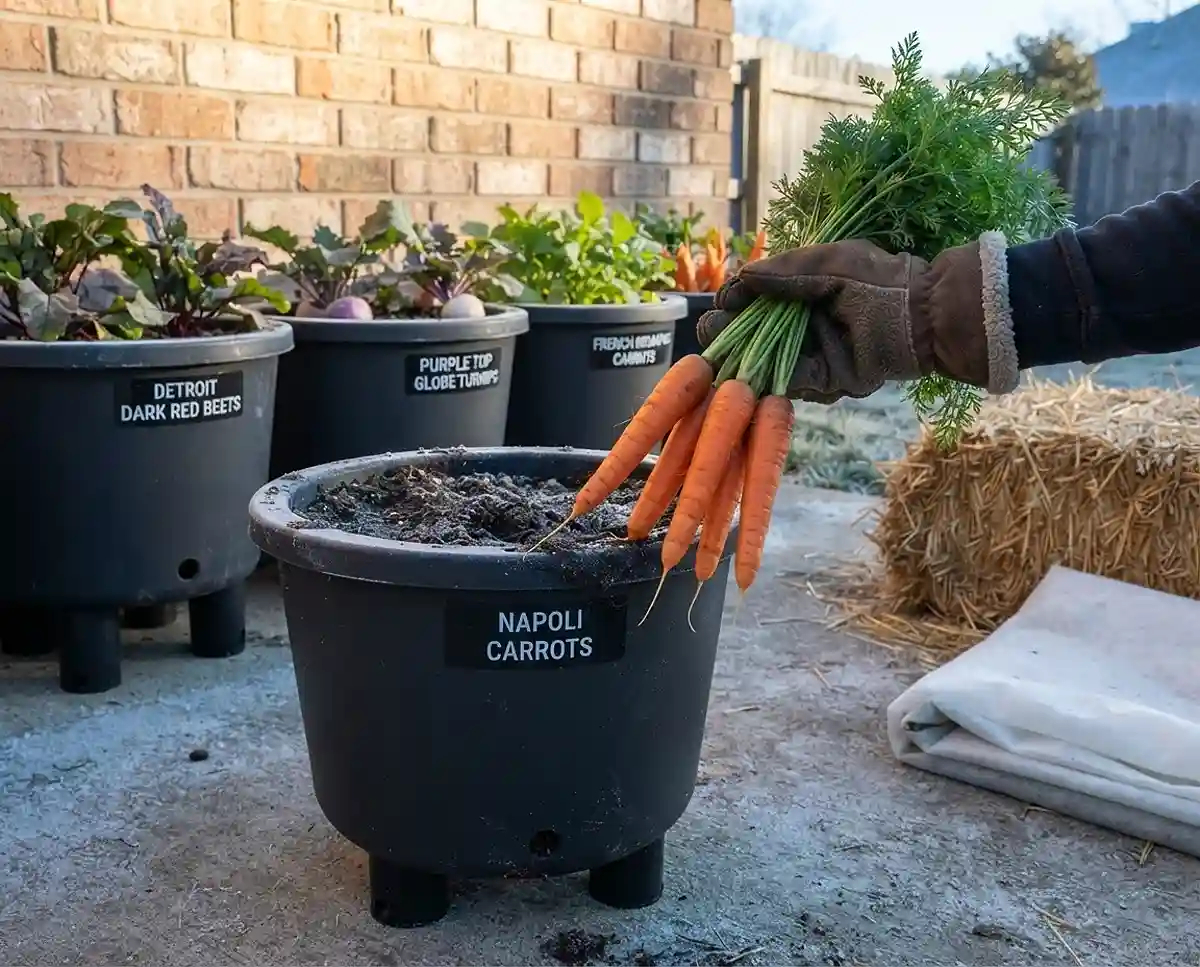
Winter root vegetables in pots worked best in 14-inch-deep containers, and ‘Napoli’ carrots won. Root vegetables in containers need depth, not fancy gear. Setup: 24 containers, a south-facing concrete patio, zone 8b, October 2025 to March 2026. Everything below is as of the 2026 season.
I logged every pot’s sow date, depth, and harvest weight. Some of it failed. I’ll say what and why.
Table of Contents
The Magic of Growing Winter Root Vegetables in Pots
Verdict: Cold makes roots sweeter. Carrots, parsnips, and beets turn starch into sugar near freezing, so winter harvests taste better than summer ones.
Plants do this as antifreeze. Sugar lowers the freezing point of cell sap. My ‘Napoli’ carrots tasted clearly sweeter after three nights near 28°F.
Pots add one more edge. You can move them to the best sun, and the soil stays clean. That’s the appeal of container vegetable gardening in winter.
Assessing Your Winter Patio and Microclimate
Verdict: Winter changes your patio. Sun angles drop, wind chills pots from every side, and potted soil freezes faster than ground. Map both before you sow.
Understanding Frost Hardiness and Freezing Temperatures
A light frost is 29–32°F. A hard freeze (28°F or lower for several hours) is the real test. Ground soil holds heat. A pot freezes from all sides, so roots feel it first.
My first frost lands near November 20 and the last near March 10. Look up yours on the USDA Plant Hardiness Zone Map.
Test notes: Pots against my south wall read about 5°F warmer at dawn than pots in the open. Move pots to the wall before the first hard freeze.
Sun Exposure for Winter Root Development
Photograph your patio every hour on a clear December day. Roots need 4–6 hours of direct sun to swell. Cold air is fine. Shade isn’t.
Mistake to avoid: I put six radish pots at the back of the patio. They got three hours of sun and made leaves with thread-thin roots. Moving them forward fixed the next batch.
Choosing the Right Deep Containers for Winter Roots
Verdict: Pick pots at least 12 inches deep, with real drainage holes, in a material that survives freezing. Shallow or brittle pots cost me crops.
- Do this: Use double-walled resin pots or fabric grow bags of 10 gallons or more.
- Do this: Lift pots on feet so water drains and doesn’t freeze underneath.
- Skip this: Unglazed terracotta, thin plastic, and anything under 12 inches deep.
Deep Pots for Vegetables: Why Depth Is Non-Negotiable
A taproot (the main downward root you eat) grows straight until it hits something. A hard pot bottom bends it. Give roots 12–18 inches, and 18 for parsnips.
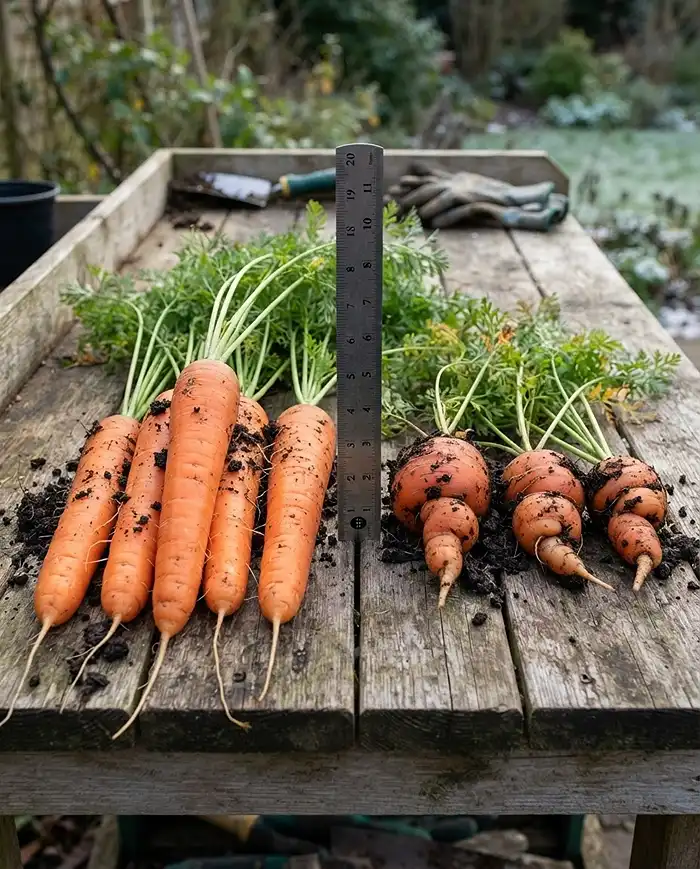
My 8-inch test pot gave stubby carrots about 3 inches long. The 14-inch pots gave 6.5-inch roots. This guide to deep versus shallow root vegetables sorts depth by crop.
Best Pot Materials for Winter Root Vegetables in Pots
Thick double-walled resin held up best. Fabric grow bags worked too, once I wrapped them in burlap for the cold snaps.
Unglazed terracotta failed. It soaks up water, freezes, and cracks. One 16-inch pot split on January 11, 2026 and dumped a parsnip trial onto the concrete. Frost heave (soil lifting as water freezes) did the rest.
Best Winter Container Vegetables: Roots That Hold Up
Verdict: Carrots, radishes, turnips, beets, and parsnips all took freezes in my pots. Sort them by depth and days to harvest, and sow the fast ones first.
| Crop | Cultivar tested | Min. pot depth | Sown | Days to harvest |
|---|---|---|---|---|
| Carrot | Napoli | 14 in | Oct 4 | 105 |
| Radish | French Breakfast | 8 in | Oct 10 | 30 |
| Turnip | Hakurei | 10 in | Oct 15 | 42 |
| Beet | Detroit Dark Red | 12 in | Oct 12 | 85 |
| Parsnip | Gladiator | 18 in | Sept 20 | 140 |
Carrots: Cold-Sweetened Winter Varieties
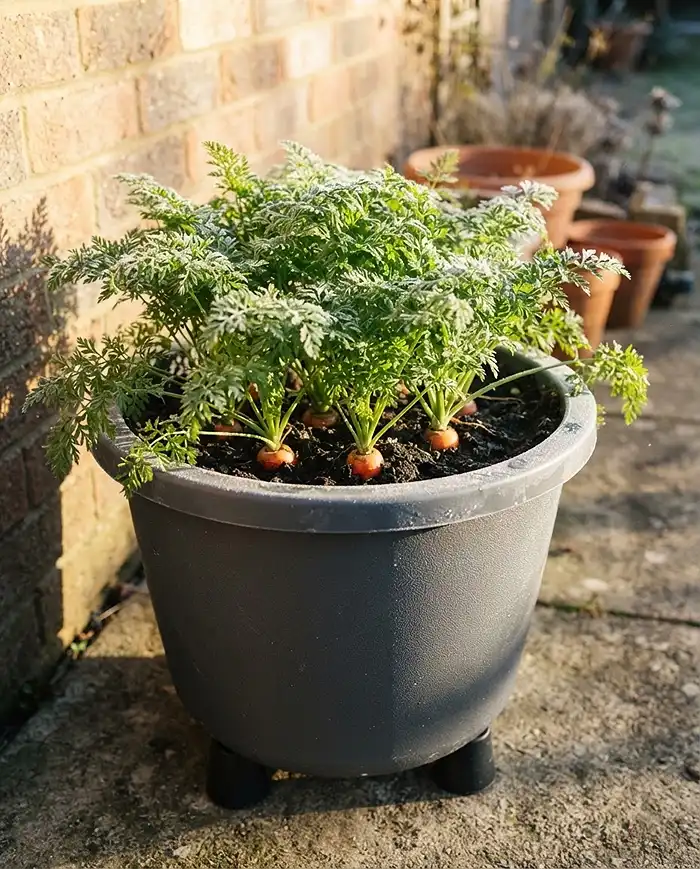
‘Napoli’ is a Nantes-type carrot that handles cool sowing. I sowed it October 4 in 14-inch-deep pots and thinned to 2 inches apart. I pulled 3 lb per pot on January 17.
‘Danvers’ worked too, but only at the full 14 inches. In 12-inch pots the roots ended blunt.
Radishes and Baby Turnips: Fast-Growing Foragers
‘French Breakfast’ radishes and ‘Hakurei’ turnips fit 8–10 inch pots. Sow every two weeks from early October to early December. That gave me three staggered harvests.
Radishes were ready in 30 days. ‘Hakurei’ took 42. Pull turnips at about 2 inches across, before they turn woody.
Beets and Parsnips: Dual-Harvest Cold Survivors
‘Detroit Dark Red’ beets gave two harvests. I cut outer leaves from week 5, then pulled roots at day 85 from 12-inch pots.
Parsnips need 18 inches and patience. ‘Gladiator’ took 140 days. My failure: two-year-old seed gave 30% germination. Buy fresh seed yearly. This season I only sowed packets packed for 2026.
Formulating the Perfect Winter Soil Mix
Verdict: Roots need loose, stone-free, low-nitrogen soil. Sift your mix, add perlite and sand, and feed phosphorus. Bark chips and heavy dirt cause forks and rot.
The best soil for root vegetables in containers comes down to texture first, food second. Aim for pH 6.2–6.8.
Loose, Stone-Free Soil for Straight Roots
- 3 parts premium potting mix, sifted through 1/2-inch hardware cloth.
- 1 part perlite (puffed volcanic glass that keeps soil airy).
- 1 part coarse sand, not play sand.
Mistake to avoid: Skipping the sift. In my unsifted batch, 9 of 24 ‘Danvers’ carrots forked around bark pieces. Sifted pots forked 2 of 24.
Amending with Phosphorus for Root Swelling
Nitrogen builds tops, not roots. Skip lawn-style feeds. Mix in bone meal (about 3-15-0) at roughly 1/2 cup per 5 gallons of soil before sowing.
Then feed nothing more. The tops stayed compact and the roots swelled all winter.
Step-by-Step Guide to Sowing Winter Roots
Verdict: Direct-sow (plant seed straight in its final pot) between early October and mid-November in zone 8b. Never transplant. Thin hard.
- Fill pots to 1 inch below the rim with damp, sifted mix.
- Sow seeds 1/2 inch deep in a staggered grid, about 1 inch apart.
- Cover, firm lightly, and water gently until the soil is damp.
- Keep the surface moist until sprouts show, about 10 to 14 days.
- Thin with scissors to 2–3 inches apart once seedlings reach 2 inches tall.
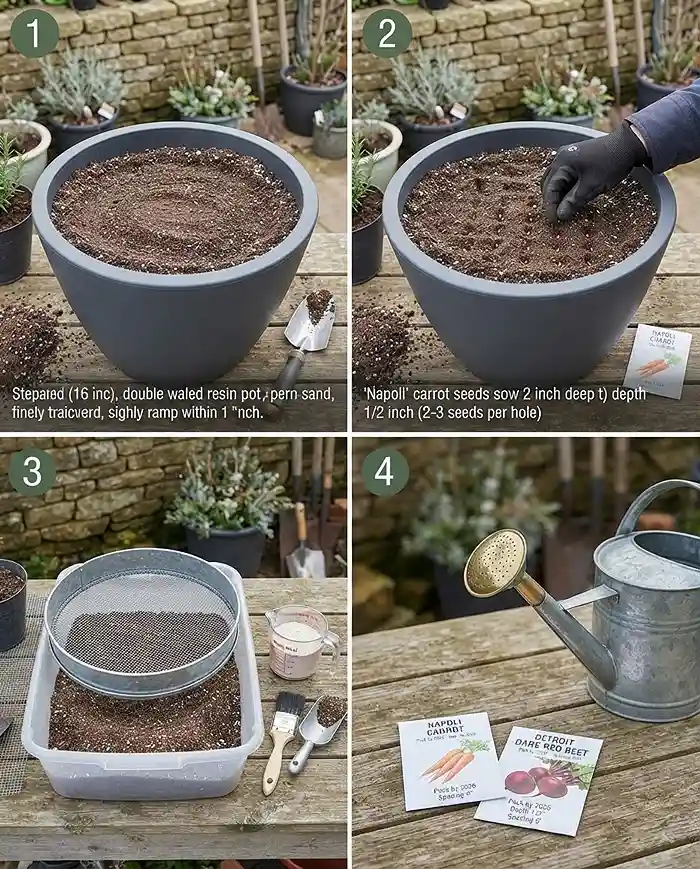
Snip, don’t pull. Pulling disturbs neighboring roots. This guide to growing root crops in pots and containers lists spacing by crop.
Winter Maintenance and Frost Protection
Verdict: Water less, mulch deep, and cover pots on nights below 25°F. Winter soil dries slowly, and wet soil freezes solid.
Modifying Winter Watering Routines
Water only on mild, sunny mornings above 40°F. Push a finger 2 inches into the soil first. If it’s damp, wait.
Test notes: Water use fell from about 1 gallon per pot weekly in October to 1 quart by January.
Mulching and Insulating the Containers
Lay 3 inches of clean straw over the soil. Drape horticultural fleece (a light frost blanket, about 1.5 oz per square yard) over pots when nights drop below 25°F. Pull it off by 10 a.m.
Mistake to avoid: Plastic sheeting. It traps moisture and rotted my first radish pot. Use breathable fleece.
Common Problems & Solutions
Verdict: Most winter failures trace to hard soil or uneven moisture. Fix the mix and the watering rhythm, and roots straighten out.
Stunted or Deformed Roots (Forking)
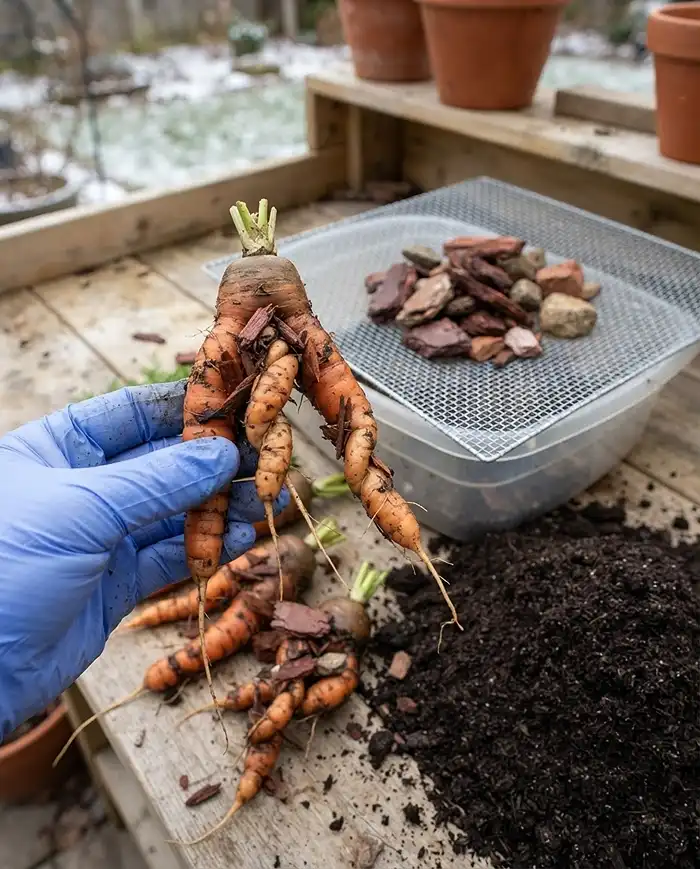
Forking comes from compacted soil, hidden bark or stones, or skipped thinning. Dump the pot, re-sift, and re-blend with perlite. Thin to 2–3 inches next round.
Frozen Soil and Splitting Roots
Roots split when dry soil gets a sudden soaking, or when freeze-thaw swings expand cells. I lost 4 carrots after a 60°F afternoon and a 21°F night. Keep moisture even and wrap pots in burlap.
People Also Ask
How deep should pots be for winter root vegetables?
Use 12 inches for beets, 14 for carrots, and 18 or more for parsnips. Radishes and baby turnips manage in 8 to 10 inches. Going shallower gave me stubby carrots about 3 inches long.
When should I sow winter root vegetables in zone 8b?
Sow carrots, beets, radishes, and turnips from early October to mid-November. Parsnips go in by late September because they need about 140 days. A first frost near November 20 slows growth but doesn’t stop it.
Can I transplant root vegetable seedlings into pots?
No. A taproot bends the moment it touches the bottom of a nursery cell, and the bend stays. You’ll get forked, stunted roots, so sow seed directly into the final pot instead.
Will freezing temperatures kill my potted carrots?
Carrots tolerate frost well. But potted soil freezes faster than ground, so below 20°F (-6°C) wrap the pot in burlap and add fleece. That keeps the soil from becoming an ice block.
How do I harvest root vegetables if the soil freezes solid?
Add 3 inches of straw beforehand so topsoil stays workable. If it freezes anyway, wait for a mild sunny afternoon above 40°F and let the surface thaw before pulling. Frozen roots snap.
The Short Version
- Winter root vegetables in pots need 12–18 inches of depth: 14 for carrots, 18 for parsnips.
- Sift the mix, add perlite and sand, and feed bone meal instead of nitrogen.
- Direct-sow from early October to mid-November in zone 8b, then thin to 2–3 inches.
- Water on mild mornings, mulch with 3 inches of straw, and add fleece below 25°F.