

Best Soil for Root Vegetables in Containers
Forked carrots? Stubby beets? Get the exact soil recipe and ratios that grow straight, fat roots every time. Two proven DIY mixes inside—try them today.
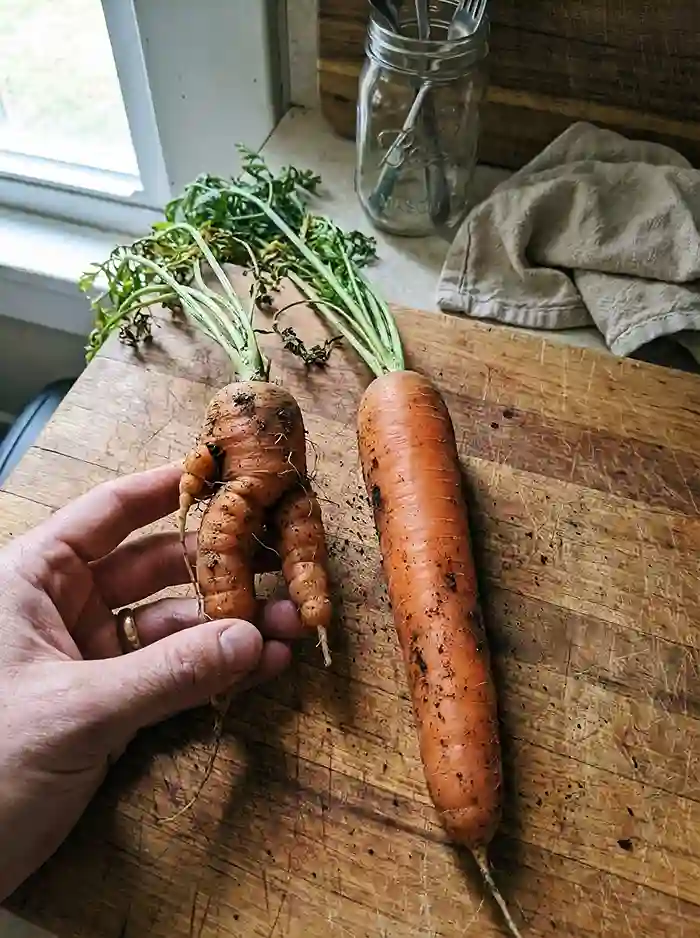
Let’s be honest — there’s nothing more heartbreaking in container gardening than pulling up a carrot that looks like it’s been through a wrestling match underground. Forked, twisted, hairy, stubby… and you have no idea what went wrong.
Here’s the thing: nine times out of ten, it’s the soil. Not your watering schedule, not the weather, not bad luck. The soil.
Finding the best soil for root vegetables in containers is the single biggest lever you can pull for straight, fat, gorgeous roots. And spoiler alert — it’s not actually “soil” at all. The best soil for root vegetables in containers is a soilless potting mix made from 70–80% moisture-retaining material (like peat or coir) and 20–30% aeration material (like perlite), dialed into a near-neutral pH of 6.0–7.0. That’s the formula. Everything below explains why it works and how to build it yourself.
Why Garden Dirt Is the Worst Soil for Root Vegetables in Containers
I know it’s tempting. You’ve got a yard full of dirt, and buying potting mix feels like paying for something you already own. But trust me — dumping garden soil into a pot is the fastest way to guarantee deformed roots. Here’s the science behind why.
Bulk Density: The Invisible Root Killer
Bulk density sounds fancy, but it just means how heavy your dry soil is per unit of volume. Think of it like this: garden soil is a packed suitcase, and your carrot roots are trying to squeeze in between the socks.
Native soil typically measures between 1.1 and 1.6 g/cm³. Root crops need something below 0.5 g/cm³ to stretch out freely. Every time you water a container filled with garden dirt, the particles settle tighter and tighter. Air pockets vanish. Root hairs — the tiny structures that actually absorb water and nutrients — get suffocated before they can do their job.
A lightweight, friable growing medium is completely non-negotiable for clean root formation. That’s the foundation every recipe in this guide is built on.
The Perched Water Table: Your Container’s Hidden “Swamp”
Here’s something most gardeners never learn: every single container develops a perched water table at the bottom. It’s a saturated zone where water clings to soil particles and simply will not drain out, no matter how many drainage holes you drill.
For tomatoes or peppers, this is a minor inconvenience. For root crops? It’s a disaster. Your carrot tip is literally growing down into that swamp zone, sitting in standing water, rotting from the bottom up.
And before you say “I’ll just add gravel to the bottom” — don’t. That old trick actually raises the perched water table higher into your root zone by creating a sharp textural boundary. According to research from Washington State University’s puyallup extension, the gravel layer myth has been thoroughly debunked.
The real fix? Use a taller container (12 inches minimum) and fill it with a coarse-particled soilless mix. Coarser particles mean a thinner saturated zone, which means more breathing room for your roots.
Best Soil Mix Components for Root Vegetables in Containers
Alright, let’s talk ingredients. A great container gardening soil recipe for root crops uses just two or three categories of materials. Each one pulls specific weight — there’s no filler here.
Organic Bases — Peat vs. Coir (The Great Debate)
Both peat moss and coconut coir serve as your mix’s lightweight, moisture-holding backbone. But they’re not interchangeable, and knowing the difference saves you headaches down the road.
| Factor | Sphagnum Peat | Coconut Coir |
|---|---|---|
| Raw pH | 3.5–4.5 (very acidic, needs lime) | 5.8–6.8 (near-neutral, easier) |
| Water Behavior | Holds tons of water, but turns hydrophobic if it dries out completely | Holds water well and re-wets like a champ |
| Sustainability | Takes centuries to renew | Renewable byproduct of coconut processing |
| Best For | Growers who don’t mind adding lime | Growers who want simplicity and eco-friendliness |
If you go with peat, you’ll need about 1/4 cup of dolomite lime per 6 gallons to bring the pH into root-crop territory. If you choose coir, always buy the buffered, pre-rinsed kind — cheap coir blocks can carry sodium salts that’ll burn tender seedlings.
Personally? I lean toward coir these days. The pH convenience alone makes it worth the slightly higher price.
Perlite and Vermiculite — The Secret to Straight Roots
This is where the magic happens for aeration for root crops. These inorganic amendments create the physical space that lets taproots grow straight and long.
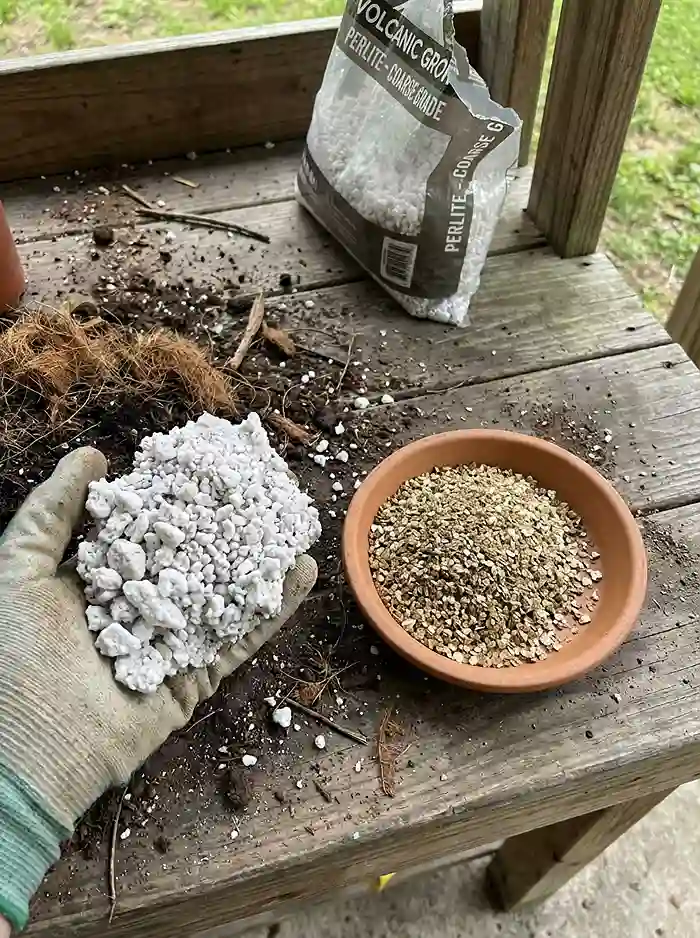
Perlite is expanded volcanic glass — those lightweight white pebbles you see in commercial potting mixes. It creates permanent air tunnels in your mix that don’t collapse over time. Think of them as little highways for your carrot’s taproot to cruise down without hitting a wall.
Vermiculite is expanded mica, and it pulls double duty: holds air and retains moisture. It’s the better choice for crops that like consistent dampness, like beets and turnips.
My rule of thumb: for carrots and parsnips, lean heavy on perlite. For beets and radishes, a 50/50 perlite-vermiculite blend gives you that sweet spot of drainage and moisture.
Horticultural Sand — The Optional (But Sometimes Essential) Add-In
Coarse, washed horticultural sand adds micro-drainage channels and — here’s a practical bonus — physical weight that keeps tall containers from blowing over in the wind. If you’ve ever chased a toppled pot across your patio, you know this matters.
Sand is especially useful for long-taprooted cultivars like Nantes (7–8 inches) and Imperator (9–10 inches). You can swap out 10–15% of your perlite portion with horticultural sand for these varieties.
One critical warning: never use play sand or builder’s sand. Play sand is too fine and compacts like cement. Builder’s sand often contains lime that’ll throw off your pH. Stick with the horticultural grade.
Best Soil Recipes for Root Vegetables in Containers (DIY & Store-Bought)
This is the part you’ve been scrolling for. Two proven container gardening soil recipes you can mix this weekend, plus the best commercial options if you’d rather just buy a bag.
Recipe #1: The Classic Peat-Based “Root & Veg” Mix
| Ingredient | % by Volume | What It Does |
|---|---|---|
| Sphagnum peat moss | 75% | Moisture retention and structure |
| Vermiculite (medium grade) | 20% | Aeration plus moisture buffering |
| Perlite (coarse grade) | 5% | Drainage and anti-compaction |
Amendments per 5 gallons: 1/4 cup dolomite lime (pH correction), 2 tablespoons bone meal (phosphorus for root initiation), 1 tablespoon kelp meal (trace minerals and potassium).
This is the workhorse potting mix for carrots, and it’s been my go-to for years. Dead simple, performs every time.
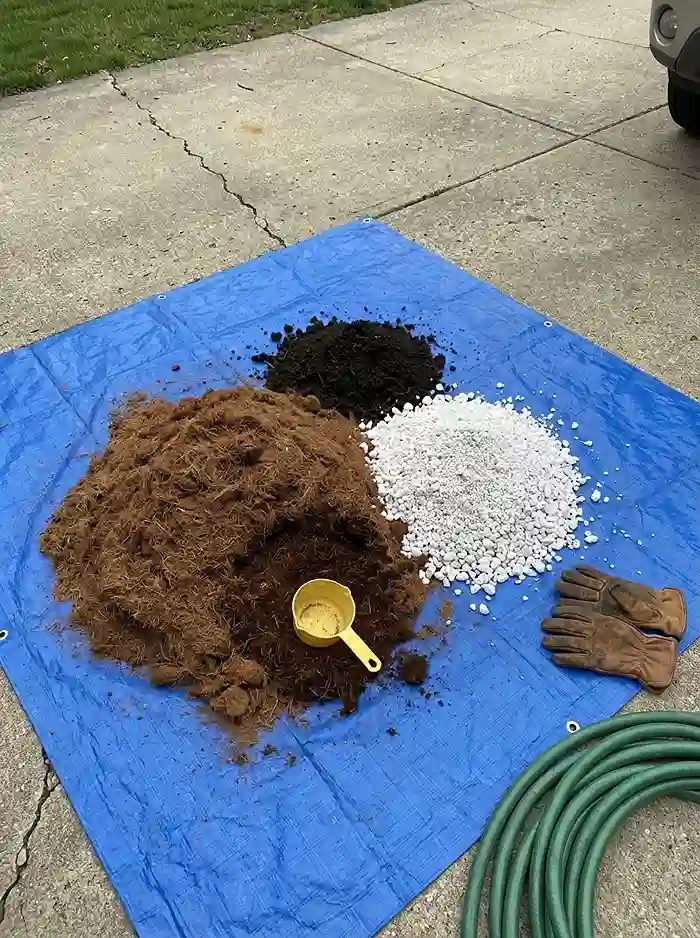
Recipe #2: The Sustainable “Living Soil” Coir Mix
| Ingredient | % by Volume | What It Does |
|---|---|---|
| Buffered coconut coir | 50% | Moisture retention at near-neutral pH |
| Sieved compost (1/4″ screen or finer) | 25% | Slow-release nutrients and microbial life |
| Coarse perlite | 15% | Air tunnels for taproot elongation |
| Worm castings | 10% | Gentle NPK and microbial inoculant |
Amendment per 5 gallons: 2 tablespoons glacial rock dust for minerals and silica.
One important note: sieve your compost through 1/4-inch mesh before mixing. Chunks of bark, twigs, or un-decomposed material physically deflect taproots and cause forking. If you’re already following our guide on how to grow root crops in pots and containers, this mix pairs perfectly with the planting techniques covered there.
Commercial Options: What to Buy (and What to Watch Out For)
Not everyone wants to mix their own, and that’s totally fine. Here are the best off-the-shelf options — with honest caveats.
- EarthBox Root & Veg Kit — The self-watering reservoir eliminates perched water table guesswork, and the ~14-inch depth is built for root crops. The catch: the proprietary fertilizer strip can deliver too much nitrogen for carrots. Cut it by 25%. Best for: beginners who want a plug-and-play setup.
- Kellogg Patio Plus — Budget-friendly and available at most Home Depot stores. However, it’s often heavy on wood chips that temporarily tie up nitrogen. Use it as 60% of your mix, then amend with 25% perlite and 15% coir. Best for: budget gardeners who don’t mind tweaking.
- FoxFarm Ocean Forest — Hugely popular and nutrient-rich, but it runs “hot” with high initial nitrogen. That’s great for leafy greens, not so great for root crops. Dilute it 50/50 with plain perlite and coir before using it for carrots or beets. Best for: experienced growers who know how to adjust.
Fertilizing for Roots, Not Leaves: The Best Soil Nutrients for Root Vegetables in Containers
Getting the soil structure right is only half the battle. Feed your root crops incorrectly, and you’ll grow beautiful tops attached to disappointing roots.
The Nitrogen Trap — Why Your Carrots Are All Fuzz and No Carrot
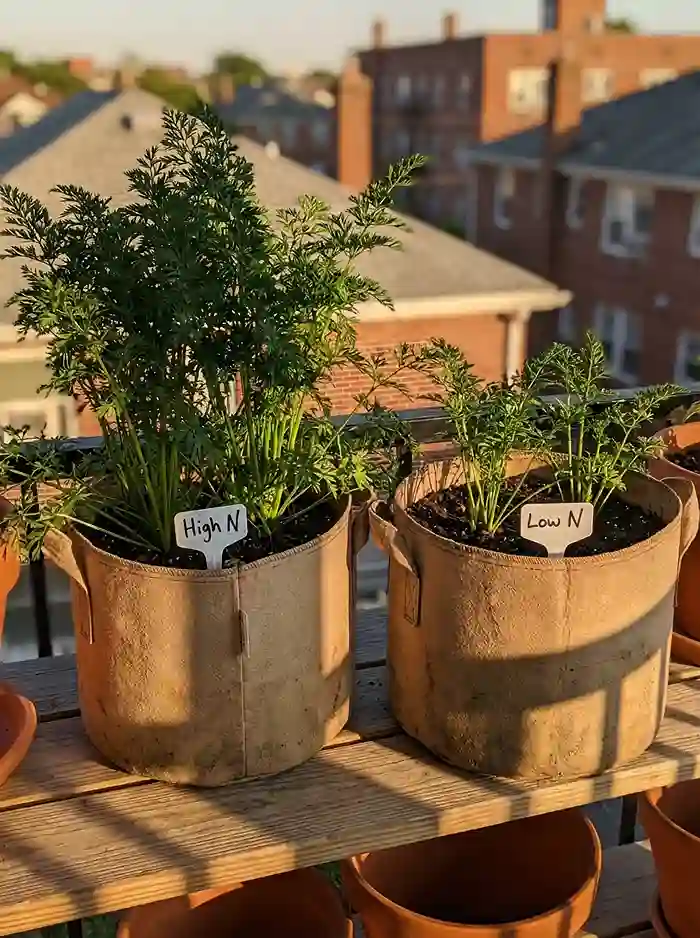
Here’s one of the most common mistakes I see: someone dumps a high-nitrogen fertilizer into their container because “plants need nitrogen, right?” and ends up with a gorgeous bushy top and a root that looks like a hairy twig.
Excess nitrogen — especially the fast-release synthetic kind — tells the plant to go all-in on leaves and forget about storing energy in the root. Fresh manure, blood meal, and standard Miracle-Gro All Purpose (24-8-16) are all culprits.
Your target N-P-K ratio for root crops should be something like 2-5-3 or 4-10-6 — low nitrogen, high phosphorus, moderate potassium. Basically, the opposite of what most all-purpose fertilizers offer.
Phosphorus and Potassium — The Actual Root Builders
Phosphorus (from bone meal or rock phosphate) drives root initiation and cell division in the storage root. It’s what tells the plant “hey, make a big root down there.” Since phosphorus barely moves through soil, you need to mix it into the medium at planting. Top-dressing bone meal on the surface is almost useless.
Potassium (from sulfate of potash, kelp meal, or wood ash) regulates water movement into root cells — which is what physically thickens the root. It becomes especially critical from mid-season onward when the root is actively bulking up.
Pro tip: one mid-season drench of diluted liquid kelp (0-0-8) at about six weeks post-germination gives roots a bulking signal at exactly the right moment.
pH Balancing: Don’t Skip This Step
If you’re using a peat-based mix, the raw pH starts around 3.5–4.5. Root crops need 6.0–7.0. That gap isn’t something you can just ignore and hope for the best.
Dolomite lime (CaMg(CO₃)₂) is your best friend here because it does triple duty: raises pH, supplies calcium, and delivers magnesium. Calcium deficiency leads to internal browning in carrots and hollow heart in beets — problems you won’t even see until harvest day.
Standard rate: 1/4 cup dolomite lime per 6 gallons of peat. Mix it in, wait seven days, and test the pH. Adjust if needed. If you’re using a coir-based mix, you probably won’t need lime, but test anyway. Your target is 6.2–6.8.
The “Soil Refresh” Protocol: Best Practices for Reusing Container Soil for Root Vegetables
Good potting mix isn’t cheap, and nobody wants to dump and replace 18 inches of media every season. Here’s how to know when to refresh versus replace.
Depth-Based Replacement Guide
| Container Depth | What to Do | Why |
|---|---|---|
| Under 12 inches | Full replacement every season | Shallow containers compact fast and root residues fill most of the volume |
| 12–18 inches | Replace the top 50%, amend the bottom half | The bottom retains structure longer; the top takes the worst compaction from watering |
| Over 18 inches | Replace the top 25%, fork deeply, and re-amend | Enough volume to handle a partial refresh without losing performance |
The 25% Rule
Each season, pull out roughly 25% of your old media by volume. Replace it with fresh mix, and re-apply your amendments (lime, bone meal, kelp meal) at full rates — but only on the new portion.
Two things to absolutely avoid: never add fresh manure or raw compost into old soil mid-season. It introduces pathogens and creates nitrogen spikes that fork roots. And before reblending old media, solarize it first — seal it in a black plastic bag and leave it in full sun for four to six weeks. That kills fungal spores and weed seeds without chemicals.
Troubleshooting: What Your Roots Are Telling You About Your Soil
When something goes wrong underground, the roots tell you exactly what happened — if you know how to read them.
| Symptom | What’s Probably Wrong | How to Fix It |
|---|---|---|
| Forking or multi-tipped roots | Physical obstructions (rocks, wood chips, un-sieved compost) or fresh manure | Sieve all components to 1/4 inch; no manure within 90 days of planting |
| Splitting or cracking | Erratic watering — dry-wet-dry cycles | Mulch the surface with vermiculite; use a self-watering container or a consistent schedule |
| Hairy, fibrous roots | Excess nitrogen or waterlogged soil | Switch to low-N fertilizer (2-5-3); add more perlite for drainage |
| Stubby, stunted roots | Compacted mix or container too shallow | Use soilless mix with bulk density under 0.5 g/cm³; minimum 12-inch depth |
| Bitter or woody flavor | Over-mature harvest or soil running too hot (high N, high temperature) | Harvest on time; shade containers during summer heat waves; reduce nitrogen |
| Pale, yellow tops (chlorosis) | pH too low causing iron or magnesium lockout | Test pH and add dolomite lime; foliar spray with Epsom salt if magnesium is deficient |
Frequently Asked Questions About the Best Soil for Root Vegetables in Containers
How deep should my container be for root vegetables?
Twelve inches minimum for radishes, round beets, and compact carrot varieties like Parisian and Thumbelina. Go with 18 inches or deeper for full-size Nantes, Imperator carrots, parsnips, and daikon. The extra depth also pushes the perched water table further away from your root zone.
Can I use compost in a wicking bed or self-watering container?
Not in the reservoir or wicking zone. Fine compost particles migrate downward over time and clog the aeration screen or wicking fabric, which kills the capillary action the whole system depends on. Keep compost in the top 4–6 inches of growing media only, above the wicking interface.
Is Miracle-Gro safe for root vegetables in containers?
Standard Miracle-Gro All Purpose (24-8-16) is a synthetic, high-nitrogen formula. It won’t make your vegetables toxic, but it’s counterproductive for root crops — you’ll get lush tops and hairy, underdeveloped roots. Scotts (the parent company) does offer an OMRI-listed organic line called Miracle-Gro Performance Organics (09-02-07), which is somewhat better but still nitrogen-heavy for roots. Honestly, for root vegetables you’re better off skipping both and using a dedicated low-N organic fertilizer like bone meal plus kelp meal, or a root-specific blend like Dr. Earth Root Zone (2-4-2).
Can I use garden soil in containers for carrots?
Nope. Garden soil compacts dramatically inside containers, suffocates root hairs, and brings along weed seeds, pathogens, and nematodes as uninvited guests. Always use a soilless potting mix for carrots — peat or coir-based with perlite for aeration for root crops.
Do I need to sterilize my potting mix before planting?
If you’re using a fresh bag of commercial potting mix, no. For reused or homemade mixes that contain compost, solarize the mix in a sealed black bag in full sun for four to six weeks. Alternatively, bake small batches at 180°F (82°C) for 30 minutes. Either method kills damping-off fungi like Pythium and Rhizoctonia that love to attack carrot seedlings.
Straight roots, fat bulbs, and zero forking — it all starts with what you put in the pot. Mix it right once, dial in your pH, keep nitrogen low, and let physics handle the rest. Your containers will thank you at harvest.