
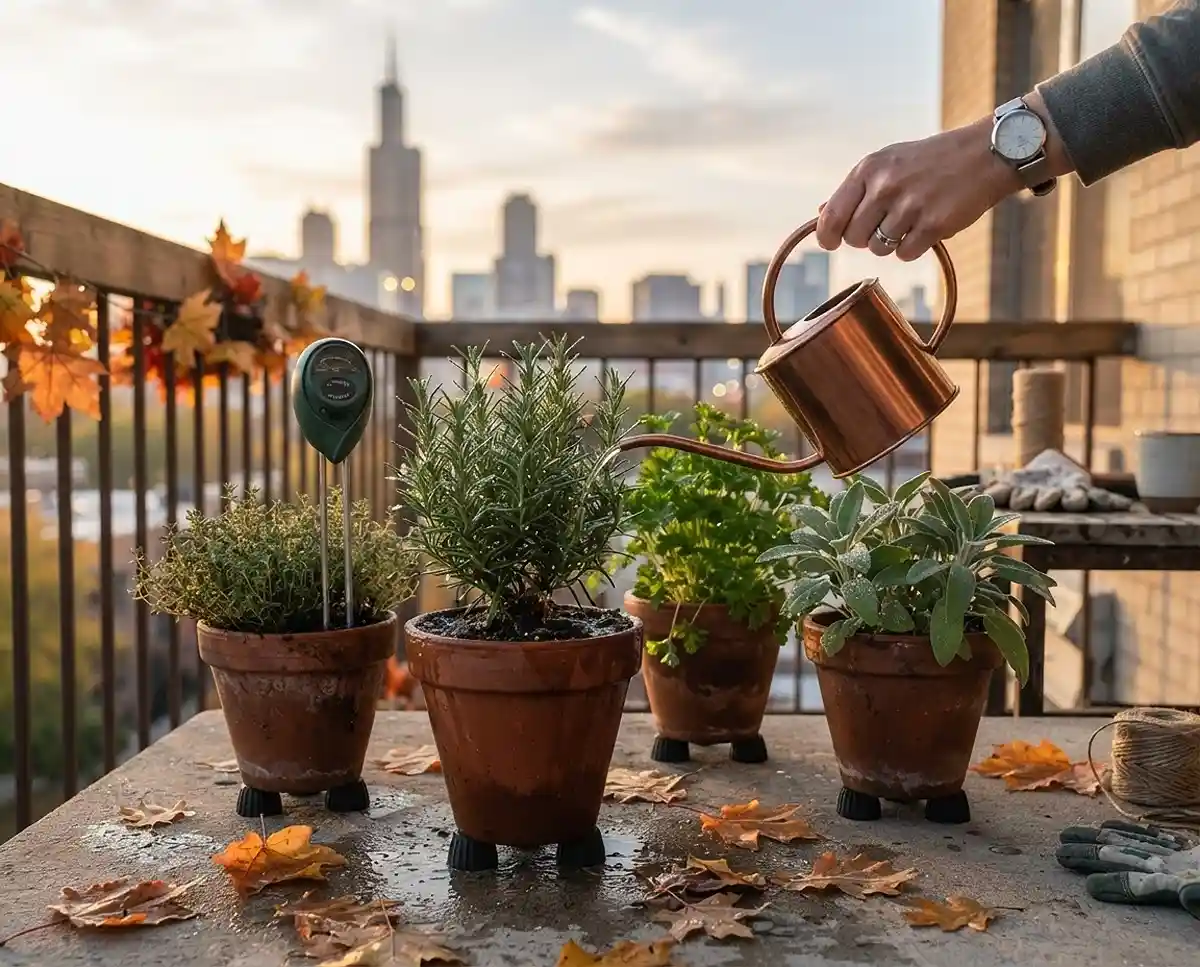
Watering Potted Herbs in Fall: Habits That Save Your Herbs
Watering potted herbs in fall the same way you did in July is the fastest way to kill them. Here’s how to adjust your container herb garden before root rot sets in.
Table of Contents
The Hidden Dangers of Fall Watering for Container Herbs
I grow rosemary, thyme, and parsley on a west-facing fourth-floor balcony in Chicago, zone 6b. Every October, I get messages from readers asking why their basil turned to mush overnight.
The answer is almost always the same: they kept watering on a summer schedule. A routine that kept plants alive in July’s heat will drown them in October’s cool, damp air.
Fall doesn’t just slow growth. It changes how water moves through your pots entirely. If you don’t adjust, you’re not extending your harvest, you’re rushing its end.
Understanding How Autumn Weather Changes Soil Moisture
Before you touch a watering can, it helps to know what’s actually happening inside the container. Two forces are working against your old summer habits at once.
Cooler air slows evaporation from the soil surface, and shorter days slow the plant’s own water use. Meanwhile, autumn rain and cold snaps push soil toward the opposite extreme: soggy and oxygen-starved.
Reduced Evaporation and Slower Plant Metabolism
Quick Answer: Lower temperatures and shorter daylight hours slow both soil evaporation and plant water uptake, so a pot that dried out daily in July can stay damp for a week in October.
Herb roots pull water to fuel growth, and growth is metabolism. As daylight drops below roughly 10 hours and nighttime temperatures dip into the 40s Fahrenheit, that metabolism idles way down.
Your plant simply isn’t thirsty the way it was in August.
Real Example: Last September, I kept watering my basil pots every other day out of habit. By week two, the soil in a 10-inch pot was still wet an inch down before each “scheduled” watering. I switched to checking moisture first, and the plants perked back up within days.
Pro Tip: Move your fingers past the top inch before every watering session in fall — surface soil lies to you far more than it does in summer.
The Threat of Cold Rain and Over-Saturation
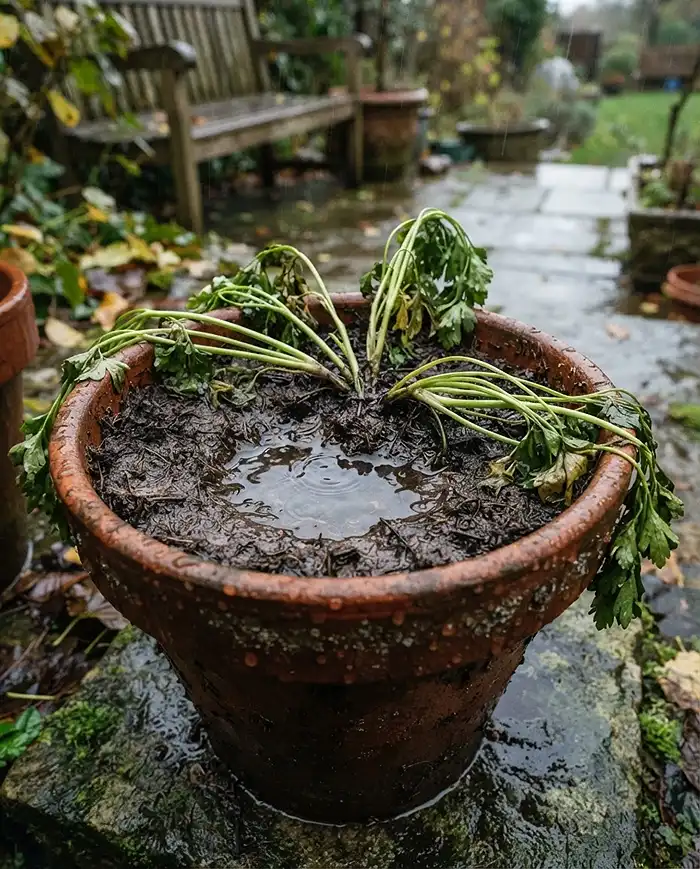
Quick Answer: Cold, continuous autumn rain combined with freezing nighttime temperatures can waterlog container soil, suffocating herb roots by cutting off their oxygen supply.
Unlike a quick summer thunderstorm, fall drizzle can last for days. Add near-freezing nights, and that water has nowhere to go and no warmth to help it evaporate.
Waterlogged soil pushes air out of the pore spaces roots need to breathe. Within 48 to 72 hours of sitting in saturated soil, fine root hairs on herbs like parsley and mint start to die back.
Pro Tip: Check the extended forecast every Sunday in fall. If three or more rainy days are coming, move unglazed terracotta pots under an eave before the system arrives.
Essential Tools for Precision Fall Watering
You don’t need anything fancy for a container herb garden this time of year. A short, cheap toolkit does the whole job.
- A digital soil moisture meter with an 8-to-10-inch probe for deep pots
- Rubber pot feet or wooden risers, about half an inch tall
- A narrow-spout metal watering can for targeted base watering
- A basic outdoor thermometer to track overnight lows
Soil Moisture Meters vs. The Finger Test
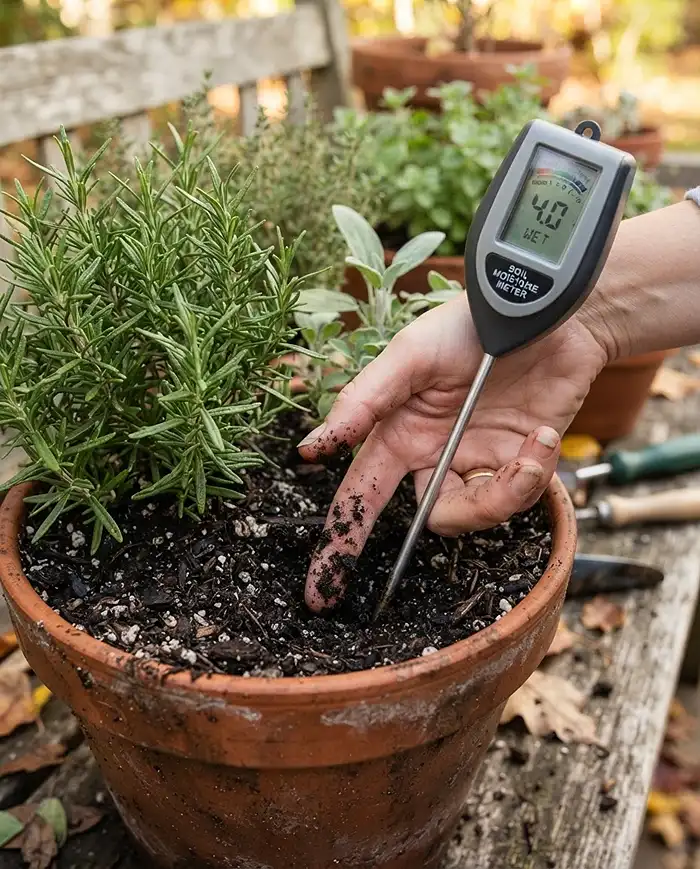
Quick Answer: A digital soil moisture meter gives you an exact reading in deep pots, while the two-inch finger test is a free, reliable backup for checking whether subsurface soil is actually dry.
For pots over 10 inches deep, push the meter probe in near the root ball, not against the container wall, where readings skew dry.
No meter handy? Push your index finger straight down to the second knuckle. If soil clings to your skin and feels cool, hold off. Bone dry and crumbly means it’s time to water.
Pro Tip: Test two or three spots per pot. Soil dries unevenly near the edges, so a single check point can trick you into watering too soon.
Elevating Pots: Pot Feet and Drainage Solutions
Quick Answer: Rubber pot feet or wooden slats under every container break the vacuum seal against concrete, so gravity can actually pull excess autumn rainwater out through the drainage holes.
A pot sitting flush on concrete or a balcony floor can trap water right at the drainage holes, effectively sealing them.
- Set pots on 1/2-inch rubber feet or cedar slats, not directly on pavement
- Check that every pot has at least three drainage holes, not just a center hole
- Empty any attached saucers within an hour of heavy rain
Real Example: I lost a healthy rosemary plant two Novembers ago because its saucer filled during a three-day rain and I didn’t check it. The roots went from woody and firm to mushy and dark in under a week.
Pro Tip: Ditch saucers entirely for fall and winter, or drill a small overflow hole in the side near the bottom.
The Best Fall Watering Habits for Herb Survival
Once your soil awareness and drainage setup are dialed in, the daily habits themselves are simple. Small, consistent shifts protect your herbs right through the first hard freeze.
Shifting to Morning-Only Watering Schedules
Quick Answer: Water potted herbs only in the early morning during fall so the soil surface has time to dry before nightfall, preventing the root ball from freezing solid when temperatures drop.
Watering in the evening leaves roots sitting in cold, wet soil right as overnight lows arrive. That combination is what causes frozen, split root balls after a surprise cold snap.
Morning watering, on the other hand, gives the sun and afternoon air several hours to pull excess moisture off before dusk.
Pro Tip: Set a recurring 8 a.m. reminder through late October — it’s easy to slip back into old evening habits without one.
Targeted Base Watering to Prevent Foliar Disease
Quick Answer: Use a narrow-spout watering can to apply water at the soil line only, since overhead watering leaves foliage damp overnight and invites fungal disease in cool fall air.
Summer sun dries wet leaves within an hour. Fall’s weaker light and higher humidity can leave them damp until midday, which is exactly when fungal spores take hold.
- Aim the spout directly at the soil, not the leaves
- Water slowly until it runs from the drainage holes
- Skip misting herbs like basil and mint entirely once nights drop below 55°F
Pro Tip: If rain has already wet the foliage, gently shake or brush off water droplets in the morning to speed drying.
Grouping Herbs by Autumn Thirst Levels (Hydrozoning)
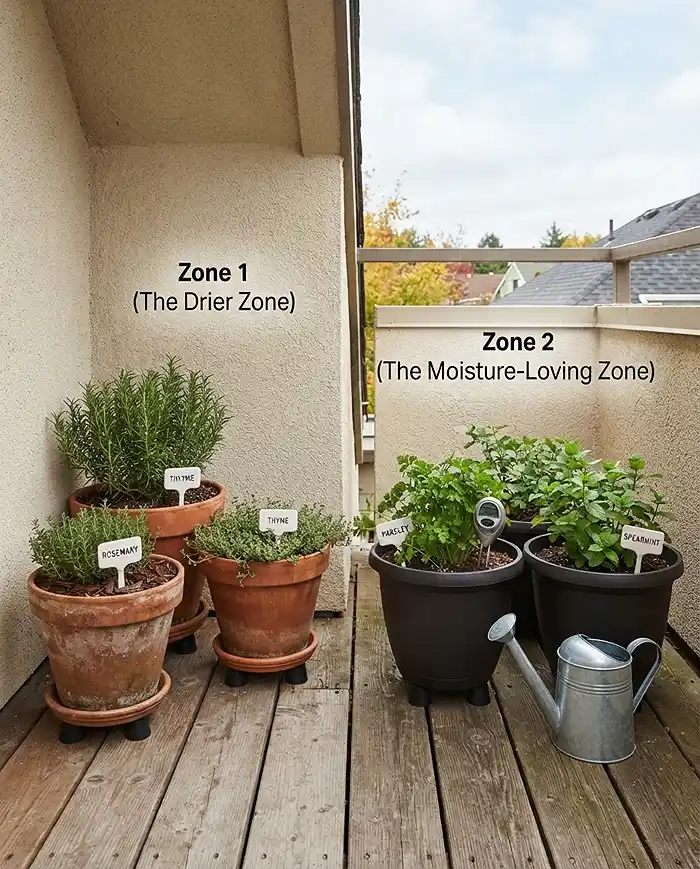
Quick Answer: Hydrozoning means clustering drought-tolerant herbs in covered, sheltered spots and moisture-loving herbs together elsewhere, so you’re never accidentally overwatering one group to satisfy another.
I keep my rosemary and thyme pots tucked against the building wall, under a slight overhang, away from parsley and mint, which sit further out where they still catch rain.
If you’re also growing fall container vegetables like lettuce or kale nearby, group them with your thirstier herbs since their watering needs are similar. For layout inspiration, our guide to fall pollinator planters shows how mixed groupings can work on a small balcony.
Pro Tip: Reassess your groupings every three to four weeks as light angles shift and shade patterns move across your balcony.
Adapting Watering Habits by Herb Type
Not every herb reads autumn the same way. Woody Mediterranean natives and tender leafy greens need almost opposite watering approaches once temperatures drop.
| Herb Type | Fall Watering Frequency | Watch For |
|---|---|---|
| Rosemary, thyme, sage | Every 10-14 days, only when bone-dry | Yellowing needles, soft base stems |
| Parsley, cilantro, mint | Every 3-5 days, sponge-moist soil | Wilting, crispy leaf edges |
| Basil (tender annual) | Every 4-6 days until first light frost | Blackened leaves after cold nights |
Watering Woody Mediterranean Herbs (Rosemary, Thyme, Sage)
Quick Answer: Withhold water from Mediterranean herbs until the container is almost completely dry, since their woody roots evolved for arid conditions and rot quickly in cold, damp fall soil.
My ‘Arp’ rosemary and French thyme actually thrive on neglect once September hits. I water them roughly every 10 to 14 days, and only after the finger test comes back bone-dry two inches down.
These herbs are far more likely to die from overwatering than from a dry week. For more picks suited to this stretch of the season, check our list of cool-weather herbs for pots.
Pro Tip: A slightly wilted look on rosemary in fall is often normal drought stress, not a sign to reach for the watering can.
Watering Tender Leafy Herbs (Parsley, Cilantro, Mint)
Quick Answer: Cool-season leafy herbs like parsley and cilantro need more frequent fall watering than woody herbs, with soil kept about as moist as a wrung-out sponge.
This is one of the most common questions I get about how often to water container plants in fall: leafy herbs are the exception to “water less.” They’re actively growing in cool weather and dry out faster than their woody neighbors.
I water my curly parsley and ‘Calypso’ cilantro every three to five days through October, checking moisture at just one inch down rather than two.
Pro Tip: Mint in a container will tell you when it’s thirsty with slightly droopy top leaves, hours before real damage sets in.
Common Problems & Solutions
Even with good habits, fall throws curveballs. Here’s how to spot and reverse the two most common watering failures fast.
Root Rot from Cold, Soggy Soil
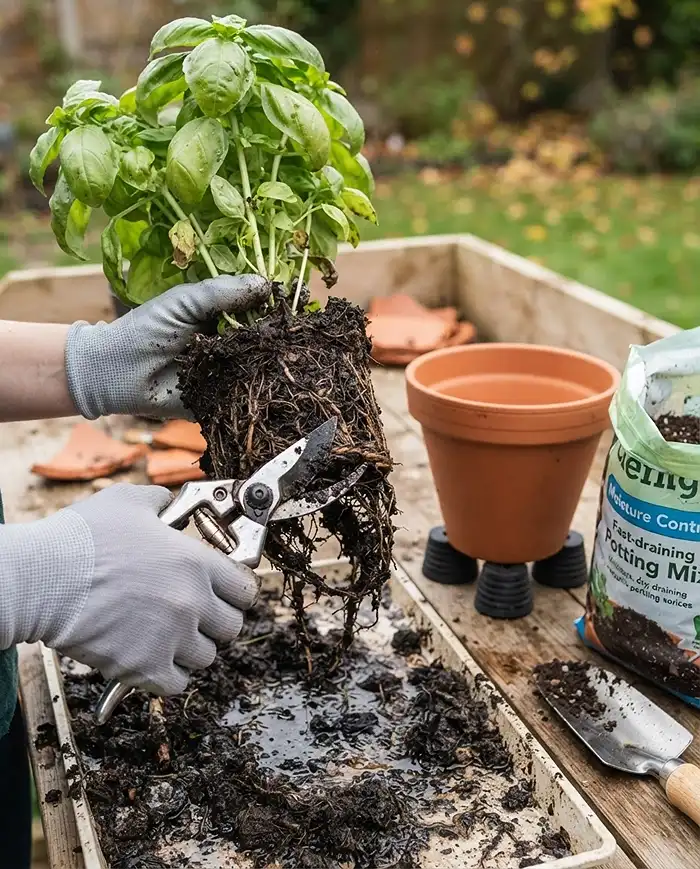
Quick Answer: Yellowing, drooping leaves and a sulfur-like smell from the soil signal root rot; stop watering immediately and move the pot somewhere bright and breezy to dry out.
If you catch it early, unpotting the root ball and trimming away black, mushy roots with clean shears can save the plant. According to University of Minnesota Extension, constantly wet soil is the leading cause of root rot in container herbs, especially heading into winter.
Repot into fresh, dry potting mix afterward rather than reusing the soggy soil.
Powdery Mildew and Damp Foliage
Quick Answer: White, dusty patches on leaves signal powdery mildew, which thrives in damp fall air; treat with a potassium bicarbonate spray and thin crowded foliage to improve airflow.
Mint and sage growing in tight clusters are especially prone to this once nights turn cool and humid.
Snip out the most crowded inner stems, even on otherwise healthy plants, to let air move through the canopy.
Frequently Asked Questions
Should I water my potted herbs before a fall frost?
Yes. Moist soil retains and radiates heat better than dry soil, which helps insulate roots overnight. Water deeply the morning before an expected light frost, not the evening of, so excess moisture can drain first.
Do I need to fertilize my potted herbs in the fall?
Skip high-nitrogen liquid fertilizers in autumn. They push tender new growth that cold weather quickly damages, and that soft new growth makes overwatering problems worse. If you fertilize at all, use a diluted, low-nitrogen feed no later than early September.
How do I protect my herb pots from heavy autumn rainstorms?
Slide smaller pots against a wall or under a balcony overhang during multi-day downpours. This prevents heavy rain from flushing soil out of the container or leaving roots sitting in standing water.
How often should I water container herbs in fall?
It depends on the herb. Woody herbs like rosemary and thyme need water every 10 to 14 days, while leafy herbs like parsley and mint need it every 3 to 5 days. Always check soil moisture before watering rather than following a fixed calendar.
Can I keep a container herb garden going all fall?
Yes, with the right herb garden ideas for the season. Cluster cold-tolerant herbs in sheltered spots, cut back on watering for woody herbs, and bring the most tender plants indoors before the first hard freeze.
Conclusion
Watering potted herbs in fall comes down to one shift: check before you pour, and match your habits to falling temperatures instead of the calendar.
Get the basics right — morning watering, base-only application, and herb-specific frequency — and your balcony harvest can run weeks past the first cool snap.
For more ways to round out your pots this season, browse our cool-season shade container combos.
Key Takeaways
- Watering potted herbs in fall means less frequency overall, but more attention to timing and technique
- Woody Mediterranean herbs want near-total dryness between waterings; leafy herbs want consistent, light moisture
- Morning, base-only watering prevents both root freeze and foliar disease
- Pot feet and quick drainage checks are the cheapest insurance against root rot after heavy rain
- Check soil with a moisture meter or the two-inch finger test before every watering, not on a fixed schedule