
Long Narrow Balcony Garden Ideas
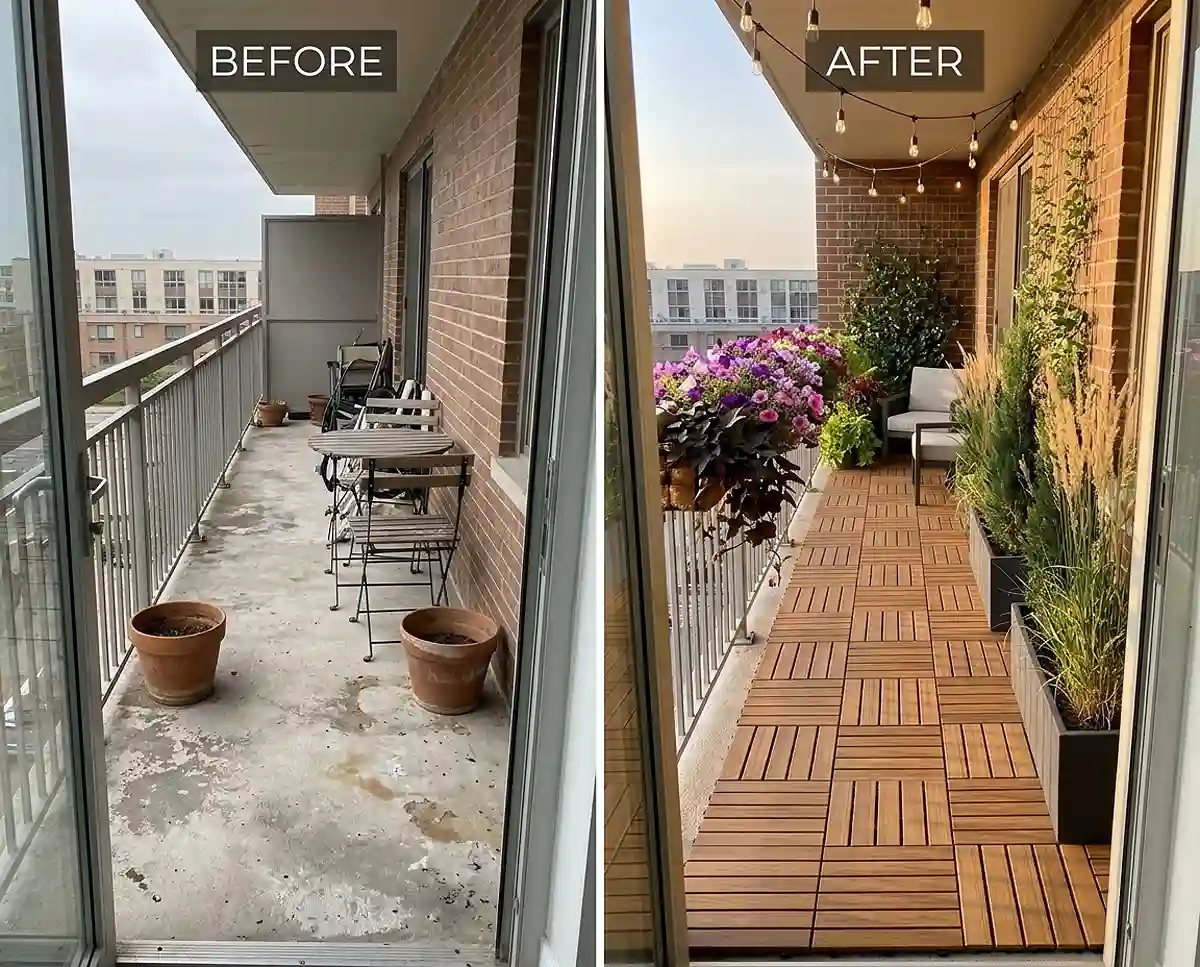
Sidestepping a pot just to reach your chair? These long narrow balcony garden ideas and a smart narrow balcony layout turn 3 feet of width into a garden. Here’s a real before and after, rule by rule.
I’m a former community-garden coordinator. Now I grow food and flowers on a sunny rooftop terrace in zone 7a [USDA zone, winter lows 0 to 5°F]. My setup: 5-gallon fabric pots, slim troughs, and railing boxes in about 8 hours of direct sun.
In spring 2026 I rebuilt a renter’s 36-inch-wide balcony from scratch. Not sure of your zone? Look it up on the USDA Plant Hardiness Zone Map before you shop for plants.
Table of Contents
The “Before” Diagnosis: Why Standard Pots and Furniture Choke a 3-Foot Balcony
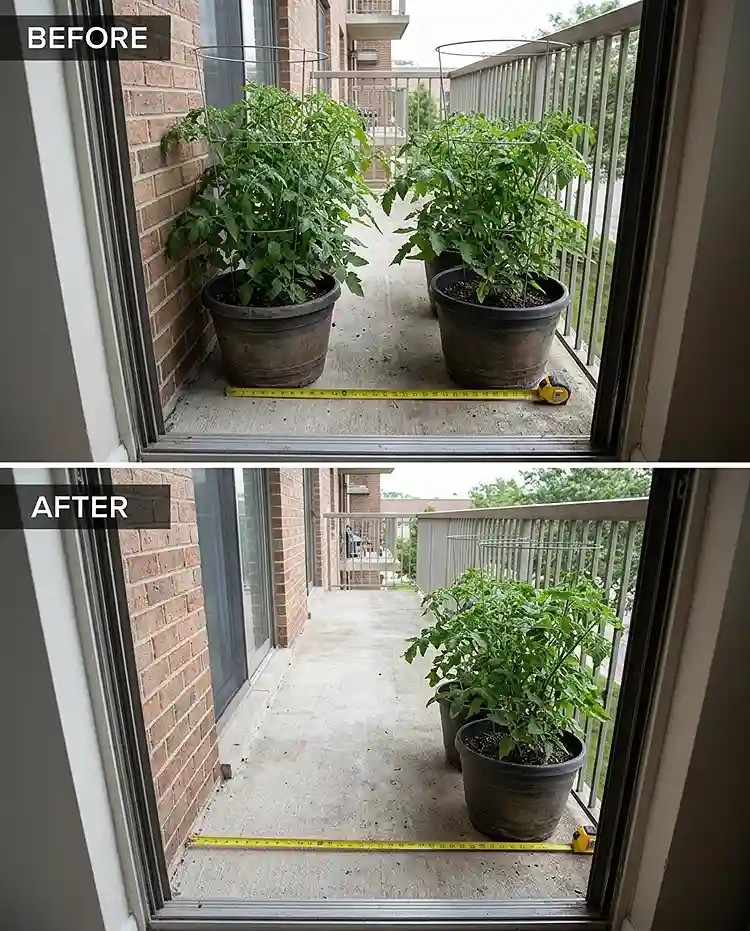
Short Answer: A 36-inch balcony fails when round pots and a centered bistro table eat the walking lane. Belly pots bulge 14 inches into the floor, tables trap your knees, and watering becomes an obstacle course. Fix the floor plan first, then pick the plants.
Here’s what’s actually happening. A round pot is widest at its belly, so it steals floor width while holding little soil. Add a 24-inch table in the middle, and your knees have nowhere to go.
I learned this the hard way in summer 2022. I put two 14-inch pots of ‘Big Boy’ tomatoes across from each other on a friend’s balcony. The lane shrank to 8 inches. I bruised my hip twice before July.
The fix was boring and effective. I moved everything to one wall, and the walkway jumped back to 20 inches.
The “18-Inch Walkway Rule” and Mapping Door Swing Clearance
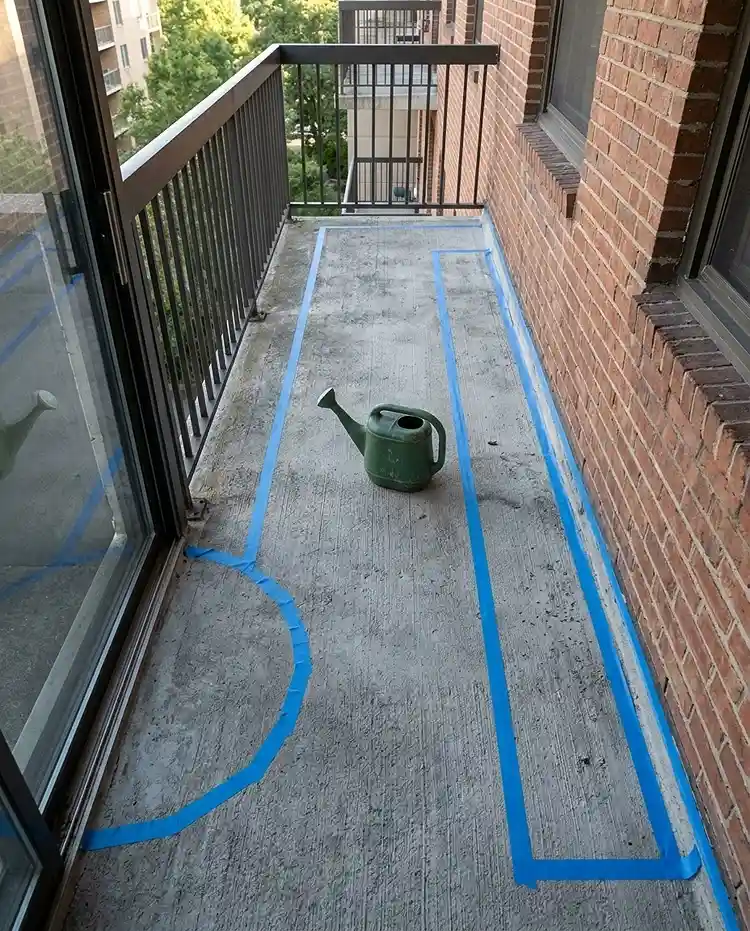
Mark an unobstructed 18-to-20-inch footpath from the door to the far corners. Planters get a strict 10-to-12-inch depth budget along one side wall or railing only. Painter’s tape lets you test it by walking.
- Tape an 18-to-20-inch lane from the door to the far corner
- Tape the door’s full swing arc so nothing lands there
- Mark a 10-to-12-inch planter strip on one side only
- Walk the lane carrying a full watering can
Auditing Sun Angles in a Deep, Narrow Canyon Microclimate
Solid side walls and recessed overhangs create a light slot. The outer railing gets scorching sun, while the inner floor sits in deep shade. Check the balcony at 9 a.m., noon, and 4 p.m., and sketch where light lands.
Weight matters too. An 8 x 30-inch trough holds about 1.1 cubic feet of mix, roughly 50 to 60 pounds when saturated. Keep heavy troughs along the load-bearing wall, and ask your landlord about the balcony’s load rating.
Long Narrow Balcony Garden Ideas: Slim Troughs, Folding Furniture, and Soil Prep
Short Answer: Choose gear that’s 6 to 8 inches deep or wall-mounted: slim troughs, railing saddle boxes, and felt pockets. Pair them with a clamp-on railing ledge instead of a table, and a light, moisture-holding mix. Everything here keeps the center floor free.
Here’s the shopping list from the transformation. As of 2026, slim fiberglass troughs run roughly $25 to $60 each at most garden centers.
- Two 8 x 30-inch fiberglass troughs for the inner wall
- One 6-inch-wide railing saddle box
- Felt wall pockets or a vertical felt grid
- A clamp-on folding railing ledge and one armless chair
- Interlocking slatted deck tiles
- 2-inch pot feet and a 24-inch curved watering wand
Renting? Check my renter-friendly balcony planter solutions before you drill anything.
Choosing 6-to-8-Inch Slim Rectangular Troughs, Saddle Planters, and Wall Pockets
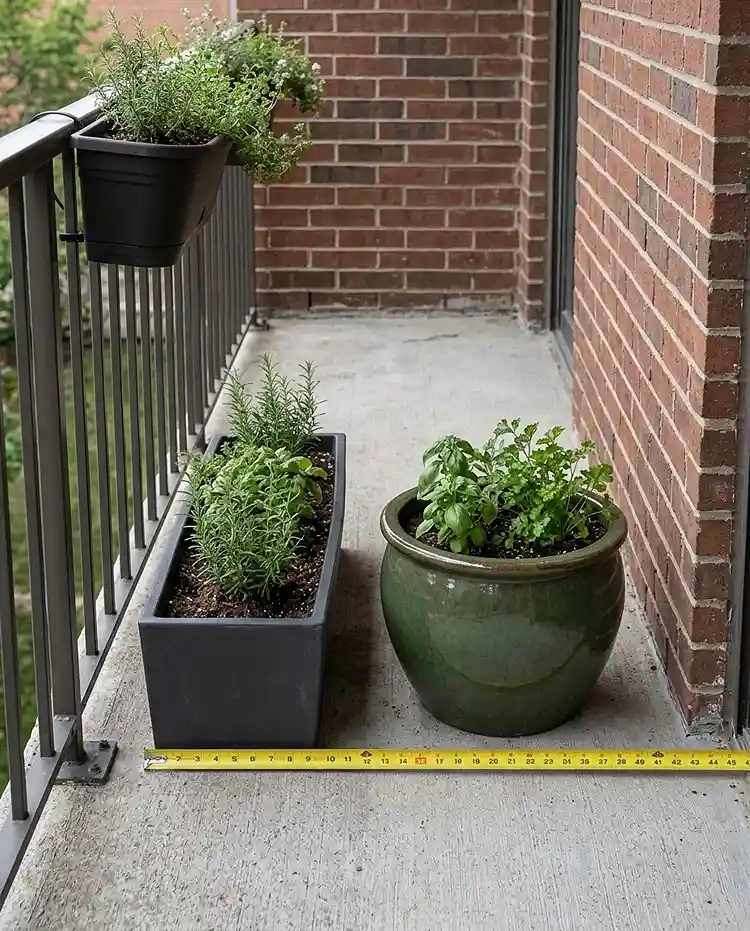
Narrow troughs hug the wall. Saddle planters are cantilevered [they project outward with no support below], so they use zero floor. Round pots eat twice the floor width.
| Container | Floor width used | Best for |
|---|---|---|
| Fiberglass trough, 8 in. deep x 30 in. long | 8 inches | Grasses, junipers, one cordon tomato |
| Railing saddle box | 0 inches | Trailing flowers, lettuce |
| Felt wall pockets or grid | 0 inches | Herbs, strawberries |
| Round 14-inch pot | 14 inches | Not on this balcony |
Railing-Hung Fold-Down Bars, Corner L-Benches, and Linear Deck Tiles
Swap the 24-inch round table for a clamp-on folding railing ledge. Then angle an armless chair into the far 90-degree corner. That one change reclaims 100% of the center floor.
Interlocking deck tiles snap together without tools, so they suit rentals. Pick low, slim furniture and let it double as part of the path.
The High-Retention Lightweight Potting Mix for Narrow Root Zones
Narrow 8-inch troughs bake dry in afternoon wind, so the mix must hold water without getting heavy. Here’s my exact formula, by volume.
| Ingredient | Share | Job |
|---|---|---|
| Rehydrated coco coir [coconut husk fiber] | 35% | Holds water |
| Fine vermiculite | 20% | Stores water and nutrients |
| Aged pine bark fines | 20% | Structure and drainage |
| Perlite | 15% | Air in the root zone |
| Worm castings | 10% | Slow-release nutrients |
Soak the coir brick first so it fully expands. Then blend everything in a tub before you fill the troughs.
Best Upright, Columnar, and Flat-Trained Plants for a 3-Foot Width
Short Answer: Pick plants that grow up or spill over the rail, never out. Columnar grasses and junipers, wall-trained vines, and trailing railing flowers all fit a 3-foot width. Skip sprawling bushes and thorny stems that snag your sleeves in a tight walkway.
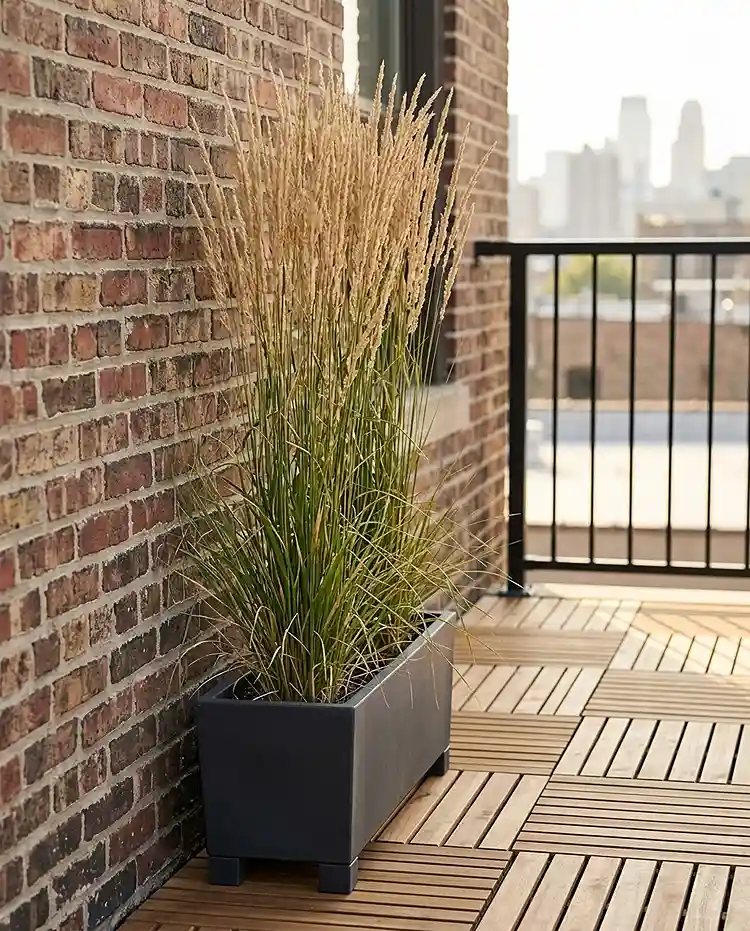
Columnar Sun Thrillers That Never Sprawl: Horsetail Reed, Karl Foerster Grass, and Skyrocket Juniper
Three plants rise 4 to 6 feet in an 8-inch footprint. They are horsetail reed (Equisetum hyemale), feather reed grass (Calamagrostis × acutiflora ‘Karl Foerster’), and Juniperus scopulorum ‘Skyrocket’. All three handle zone 7a winters.
In spring 2024 I potted a 1-gallon ‘Karl Foerster’ into an 8-inch trough. By August it stood 5 feet tall, still inside its 8-inch footprint. Keep horsetail in its pot, though. It spreads by underground runners.
Flat-Trained Espalier Trees and Zero-Depth Climbers: Star Jasmine, Patio Clematis, and Dwarf Figs
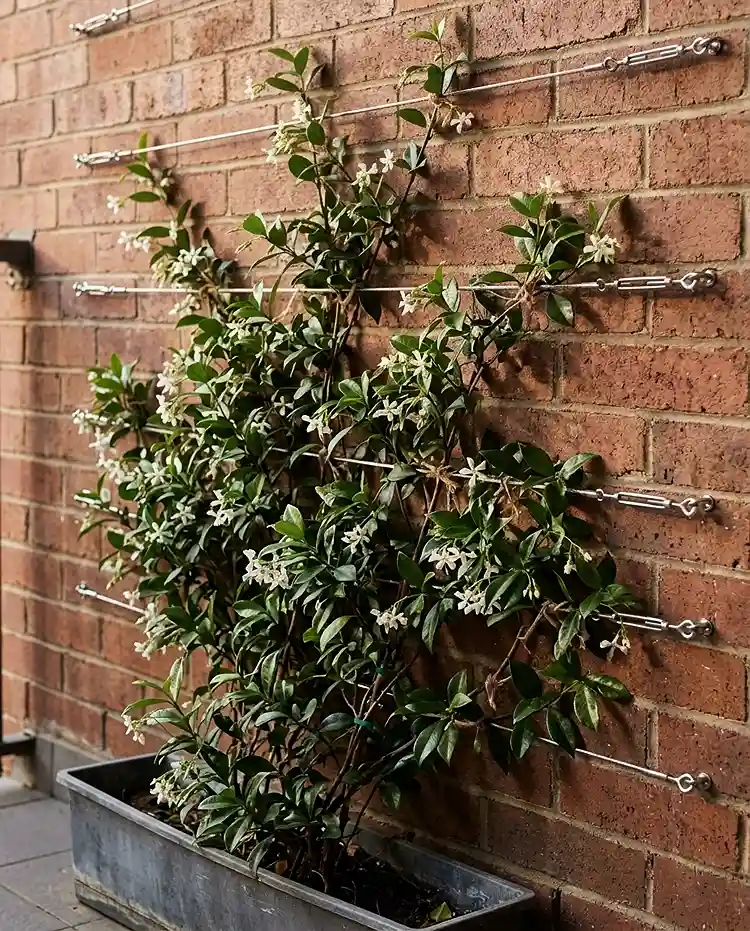
Espalier [training a plant flat against a wall] keeps foliage under 6 inches deep. Run tension wires across the brick, 12 inches apart. Then fan-train star jasmine (Trachelospermum jasminoides), compact ‘Bijou’ clematis, or a dwarf ‘Meyer’ lemon.
In zone 7a, star jasmine and Meyer lemon need winter shelter indoors, so keep them in movable pots. A ‘Chicago Hardy’ fig can stay outside all winter.
Outward-Spilling Railing Plants and Narrow Shade Performers: Sansevieria, Cast Iron Plants, and Supertunias
Trail Supertunia petunias, ‘Blackie’ sweet potato vine, and prostrate rosemary down the outside of the railing. Pinch tips monthly so they spill outward, never into your lane.
Shaded inner corners suit upright cast iron plant (Aspidistra elatior), snake plant (Sansevieria, now classed as Dracaena trifasciata), and compact ferns. As of 2026, Supertunias are still easy to find at big-box garden centers.
Step-by-Step “Before & After” Makeover: Transforming 3 Feet of Width in One Weekend
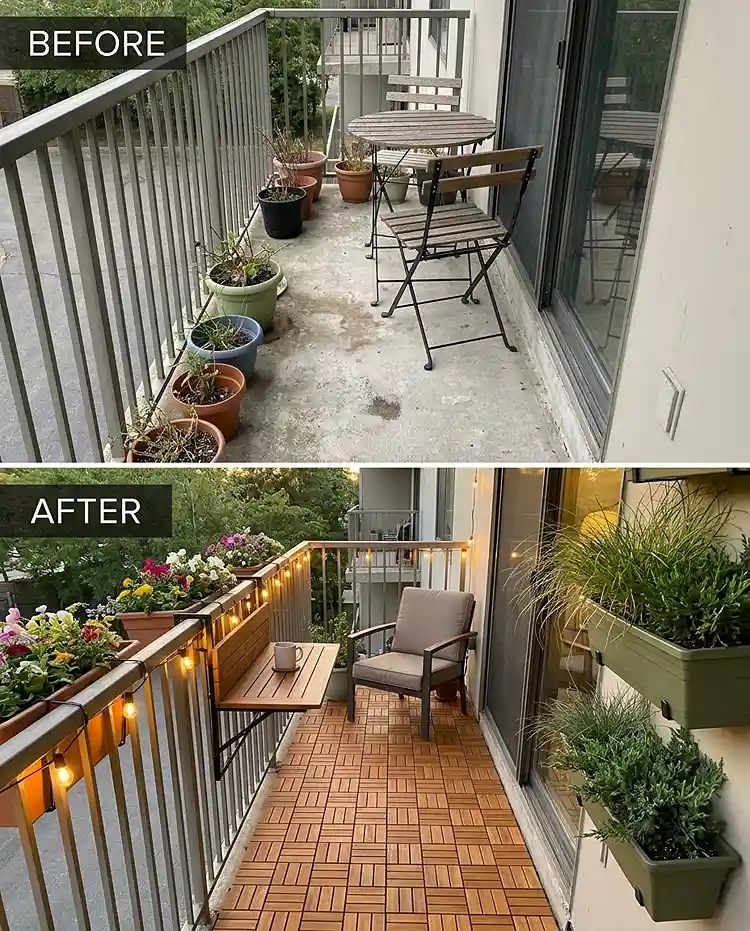
Short Answer: Transform a 36-inch balcony in four moves. Lay deck tiles width-wise, mount all planters on one plane, plant vertically, then add a railing bar and corner chair. A weekend is enough. Each step protects the 18-inch walking lane. Here’s the exact order I used.
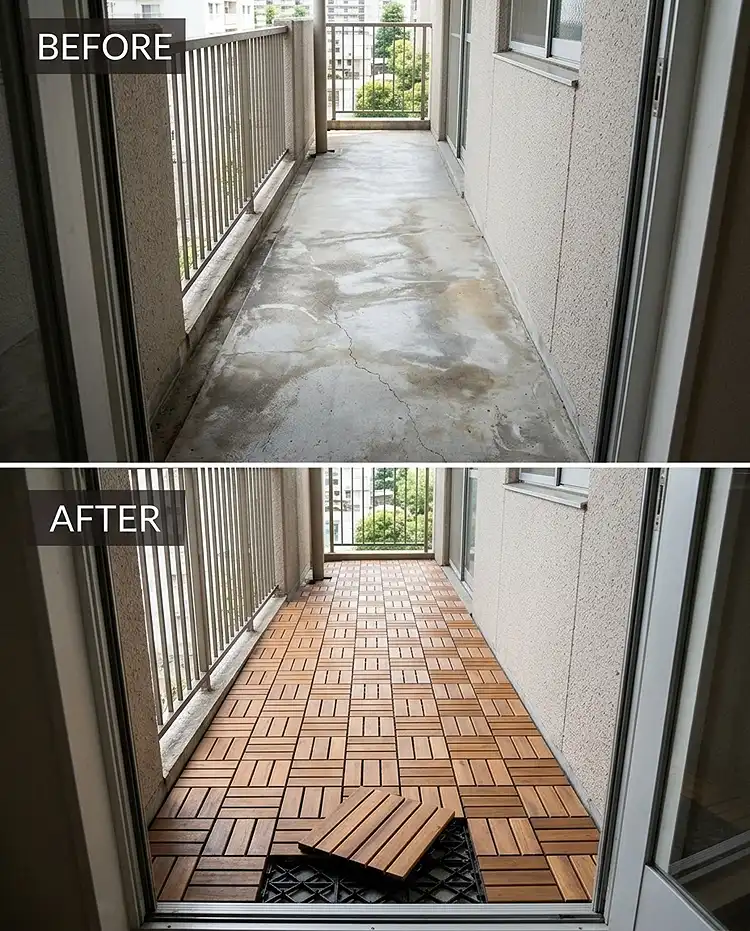
Step 1: Laying Deck Tiles Width-Wise and Establishing the “Three-Zone” Linear Floor Plan
Lay slatted wood deck tiles perpendicular to the long walls. The cross lines trick your eye into seeing a wider floor. Then divide the length into an Entry Zone, a Galley Passage, and an End-Cap Lounge.
That’s the heart of a good narrow balcony layout. Want more floor-plan sketches? See my small balcony garden layout post.
Step 2: Mounting Cantilevered Railing Boxes and Vertical Wall Trellises Along a Single Plane
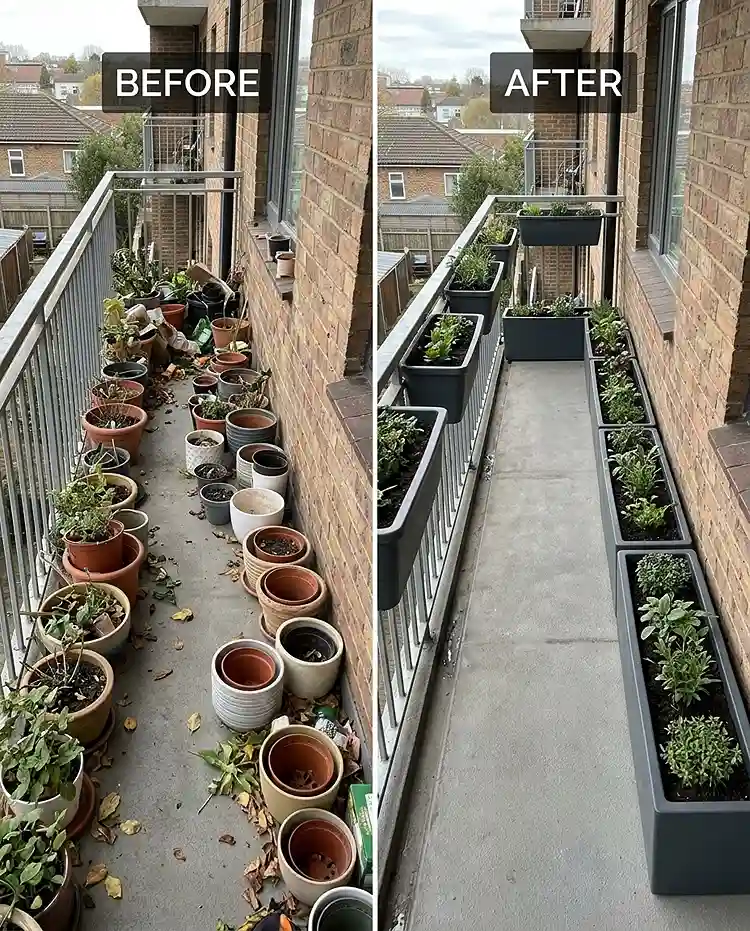
Avoid “pinball staggering,” where pots dot both walls and force you to zigzag. Align slim floor troughs against the inner wall instead. Then float cantilevered railing boxes up high on the opposite side, and add vertical trellises to the wall.
Step 3: Planting the Vertical Garden and Pruning Back Inward-Reaching Stems
Pot up the end-cap focal tree first, then fill the wall-hugging troughs. Angle trailing spillers outward toward the street. Weave vine leaders flat into the wall grid, and prune inward-reaching stems right away.
Step 4: Installing the Fold-Down Railing Bistro Bar, Corner Seating, and Overhead String Lights
Clamp the drop-leaf coffee bar to the railing. Tuck a low-profile chair into the lush terminal corner. Run LED café lights lengthwise to draw the eye outward.
The result: a 20-inch lane, a seat with a view, and greenery on both sides.
Mastering Narrow Balcony Maintenance, Pruning, and Seasonal Care
Short Answer: Prune monthly so foliage stays flat, water with a long wand so you never crouch, and rotate troughs to even out lean. Before winter freezes, slide planters flush against the warm building wall. A short calendar keeps all of this easy.
In zone 7a, my last frost lands around mid-April and my first frost around late October. Adjust the calendar below to your own dates.
| Season | Task |
|---|---|
| Spring | Refresh the top 2 inches of mix, string tension wires, plant spillers after frost |
| Summer | Prune monthly, water at 7:00 AM, rotate troughs |
| Fall | Pull spent annuals, trim grasses lightly |
| Winter | Slide troughs against the wall, move tender pots indoors |
The “Flat-Plane” Pruning Technique and Long-Wand Watering Logistics
Once a month, snip off any outward-pointing bud nodes [the little bumps where new stems start] that poke into the 18-inch walkway. Keep the ones facing the wall.
Water with a 24-inch curved wand attached to a kitchen faucet diverter or a pressure sprayer. You’ll never crouch in a narrow aisle again. New to watering routines? Start with my small balcony garden for beginners guide.
Rotating Narrow Troughs for Even Growth and Winterizing Against the Building Wall
Plants in narrow troughs lean toward the railing light. Trim the leaning side monthly, or turn each trough 180 degrees. Before winter freezes in zones 4 to 7, slide slim fiberglass planters flush against the heated apartment wall.
For more cold-season ideas, see my renter-friendly fall balcony ideas.
Common Problems & Solutions
Short Answer: Three problems hit 3-foot balconies hardest: foliage closing the walkway, slim troughs that bake dry, and stagnant air. Each has a cheap fix: single-stem training, foil-faced insulation board, and raised troughs watered early. Here’s how each one plays out in real life.
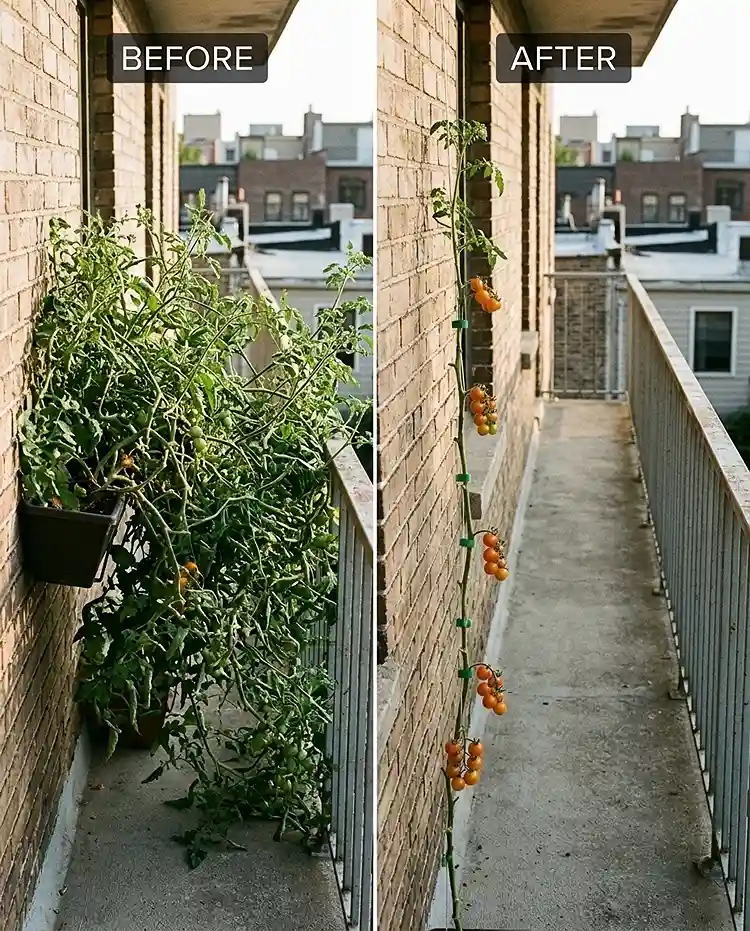
The “Green Tunnel” Effect: Overgrown Foliage Closing In and Blocking the Walkway
Fast summer annuals and bushy tomatoes can swallow a 36-inch width in weeks. The cure is training, not trimming. Swap bush cultivars for single-stem vertical cordon [one main stem trained up a string] vines, and pin strays flat with Velcro ties.
In summer 2025 I grew one ‘Sungold’ cherry tomato on a wall string in an 8-gallon trough. First ripe fruit came 62 days after transplant. By October I’d picked about 6 pounds, and the vine never stuck out more than 5 inches.
Rapid Root-Zone Heating and Drying in 6-to-8-Inch Slim Trough Planters
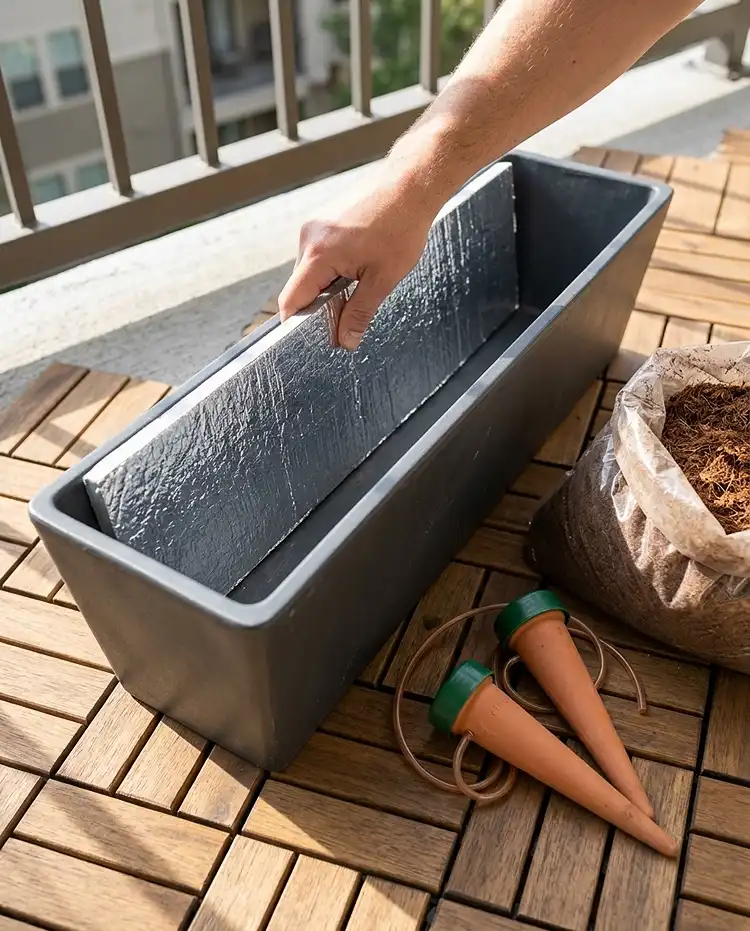
A narrow soil column heats up roughly twice as fast as a wide tub in afternoon sun. Line the sunny inner wall of the trough with 1/2-inch foil-faced foam insulation board before adding soil. Then install Blumat spikes [ceramic cones that feed water from a reservoir] for steady moisture.
Stagnant Airflow and Powdery Mildew in Deep, Recessed Narrow Balconies
Solid side walls block cross-breezes, so damp air lingers around lower leaves. That’s how powdery mildew [a white, dusty fungus on leaves] starts. Raise troughs on 2-inch pot feet, thin dense interior stems, and water strictly at 7:00 AM so leaves dry fast.
Frequently Asked Questions
How do you arrange plants and furniture on a 3-foot-wide balcony so it doesn’t feel cramped?
Follow the End-Cap and Vertical rule. Put your chair or small bench at the far short end, facing down the length, never in the middle. Keep floor planters under 8 inches deep against one wall, and lift everything else onto the railing and walls.
Should I put planters on the railing side or the apartment wall side of a narrow balcony?
Hang troughs on the railing side at waist height. Put slim floor troughs or flat trellises on the apartment wall side. This vertical staggering gives you greenery on both sides while the floor lane stays wide open.
What are the best vegetables and herbs to grow on a super narrow balcony?
Stick to flat or vertical edibles. Try single-leader indeterminate cherry tomatoes tied to wall strings, pole beans and snap peas on railing netting, and culinary herbs in felt pockets. A 6-inch railing box of cut-and-come-again lettuce or strawberries fits too.
Which plants should you never put on a narrow 3-foot balcony?
Skip thorny roses, spiny agaves and yuccas, and wide mounding shrubs like standard hydrangeas. Sprawling zucchini is out too. Also avoid bee-magnet bushes right by the doorway, where you’ll brush past them daily.
How much walking space do you need on a narrow balcony?
Plan for an 18-to-20-inch lane, measured from the door to the far corner. That’s wide enough to walk and carry a watering can. Planters then get a 10-to-12-inch strip along one side only.
What size planter fits on a 3-foot-wide balcony?
Choose rectangular troughs 6 to 8 inches wide, about 30 inches long, and 8 inches deep. That holds roughly 8 gallons, enough for a tall grass, a columnar juniper, or one cordon tomato. Round pots waste floor width.
Quick Recap
- Keep an 18-to-20-inch walking lane clear from the door to the far corner.
- Use these long narrow balcony garden ideas as your checklist: one planter wall, slim troughs, railing boxes.
- Choose upright, flat-trained, and spilling plants. Skip thorns and sprawlers.
- Swap the table for a clamp-on railing ledge and a corner chair.
- Prune monthly, water at 7:00 AM, and insulate the sunny trough wall.