

Renter Friendly Fall Balcony Ideas With Zero Drilling
Renter friendly fall balcony ideas can turn a small balcony garden into a cozy autumn nook without a single drill hole in the wall.
I’ve grown container plants on a north-facing rental balcony in Chicago (USDA zone 6a) for six years, and every October I redo the whole setup using tension hardware and gravity-anchored pots. Strict leases don’t mean you skip the season. Modern no-drill hardware paired with cold-hardy plants gets you the cozy fall look, and your security deposit stays untouched.
Table of Contents
Upgrading Your Rental Balcony for Autumn Without the Drill
My first fall in this apartment, I tried to hang a lantern with a suction hook and watched it crash onto the concrete the next morning. That failure taught me the difference between decor that looks secure and decor that actually is.
The fix is weight and tension, not adhesive. Tension poles wedge floor-to-ceiling, saddle planters hang by gravity over the railing, and heavy soil-filled boxes anchor trellises. None of it touches masonry, and all of it survives real wind.
Assessing Your Balcony’s Fall Microclimate and Lease Rules
Before you buy anything, read your lease’s balcony clause and check two things outside: how low the autumn sun sits, and where wind actually funnels once the trees drop their leaves. Both change fast between September and November.
Navigating Strict Rental Agreements and Weight Limits
Most leases ban drilling into masonry, but few mention weight limits on the balcony slab itself. Saturated fall potting soil is heavy. A 14-inch fiberglass pot filled with wet mix can run 25 to 35 pounds.
- Choose lightweight fiberglass or resin containers over ceramic or concrete.
- Confirm your building’s per-square-foot balcony load rating with your leasing office if you’re grouping more than 4-5 large pots.
- Skip wall anchors entirely; tension and gravity hardware satisfy almost every no-drill balcony garden clause.
Mapping Autumn Sunlight and Wind Patterns
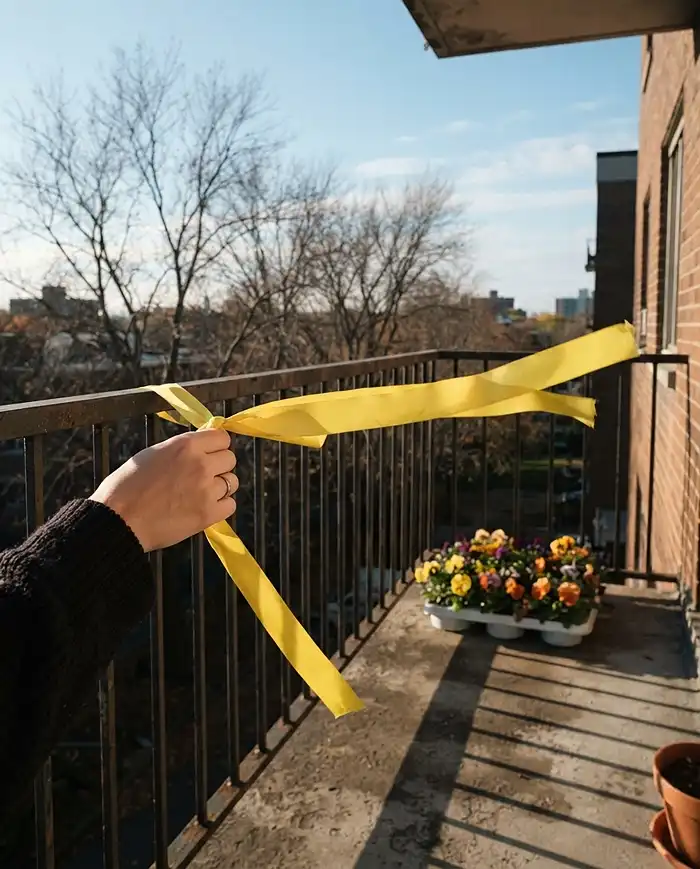
The sun’s arc drops noticeably by late September, so a spot that was shaded all summer might get four hours of direct light by October. Watch your balcony for a few days before placing bloomers like mums or violas.
Wind is the sneaky one. Once neighboring trees lose their leaves, gusts that never reached your balcony in July suddenly do. I lost a whole tray of pansies off a side table in year two before I switched to weighted, low-profile planters.
The Best No-Drill Hardware for Fall Containers and Decor
Three hardware types cover almost every renter friendly balcony garden setup: tension poles for vertical space, over-the-railing planters for horizontal space, and heavy freestanding boxes for privacy and structure.
Tension Rods and Floor-to-Ceiling Plant Poles
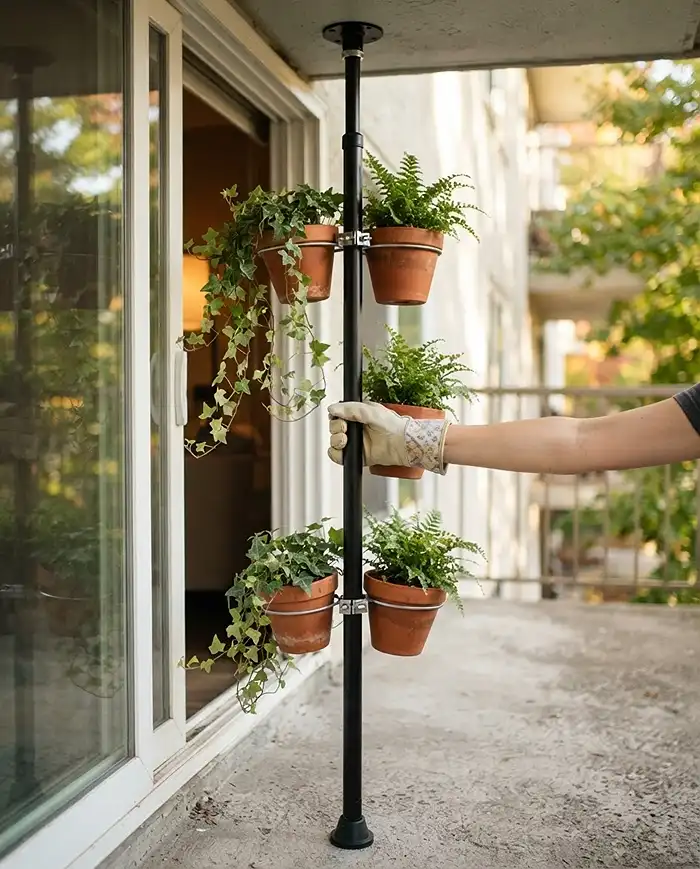
Quick Answer: Spring-loaded tension poles wedge between your balcony floor and ceiling, giving you vertical hanging space for tiered pots without a single screw.
I run two Stalk & Vine tension poles on either side of my sliding door. Each holds three 8-inch pots on adjustable rings, so I get nine plants in about two square feet of actual floor space. Twist the pole to extend it about an inch past the ceiling height, then crank the internal spring until it feels rigid, not just snug.
Pro Tip: Always test the pole with a firm downward tug before hanging anything on it; if it shifts more than a quarter inch, it’s not tight enough for wind.
Over-the-Railing Planters and Adjustable Brackets
Quick Answer: Deep saddle planters straddle the railing and stay put through their own weight, freeing your floor for a chair or a small bistro table.
My go-to is a 24-inch galvanized steel saddle planter filled with soil first, then hung — never the reverse, since an empty planter is light enough to catch wind and lift off. Adjustable window boxes with locking brackets work the same way and fit railings from 1 to 6 inches wide.
Pro Tip: Hang saddle planters on the inside of the railing in high-wind buildings; it’s a few inches less charming from the street but far more secure.
Heavy-Bottomed Freestanding Trellises
Quick Answer: A rectangular planter box with a built-in trellis, filled with wet soil, becomes its own anchor and doubles as a living privacy screen.
I run a 36-inch cedar trough with an attached lattice against the shared wall between my unit and my neighbor’s. Filled with soil it weighs close to 60 pounds, which has held firm through two seasons of lake-effect wind gusts. Train a fast fall vine up the lattice and you get privacy within a few weeks.
Real Example: The first year I used an empty trellis box “to save on soil,” and it tipped in a September storm. Fill it before you plant, not after.
Top Cold-Hardy Fall Plants for Rental Balconies
Skip anything that dies at the first light frost. These varieties shrug off temperatures into the high 20s and some actually look better the colder it gets.
| Plant | Cold Tolerance | Best Use |
|---|---|---|
| Chrysanthemum (hardy garden mum) | Down to 20°F once established | Bold color, focal pots |
| Viola / pansy | Down to 25°F, rebounds after freeze | Edges, small pots, window boxes |
| Ornamental cabbage/kale | Deepens color below 40°F | Texture and long-lasting centerpieces |
| Heuchera (Coral Bells) | Hardy to zone 4 | Shade pots, foliage contrast |
| Creeping wire vine / English ivy | Hardy to zone 5-6 | Trailing over railing planters |
| Rainbow chard or Redbor kale | Sweetens after light frost | Edible fall container vegetables |
Floral Centerpieces: Mums, Pansies, and Violas
Buy mums with tightly closed buds, not fully open blooms. Open flowers look great on the shelf but fade within a week or two on your balcony, while closed buds give you a steady show for over a month.
Violas outperform pansies in true cold snaps and will often bloom right through a light frost, then bounce back the next sunny afternoon.
Textural Foliage: Ornamental Cabbage and Heuchera
Ruffled ornamental kale actually turns a deeper purple as nights get colder, which is the opposite of how most plants behave. Pair it with Heuchera ‘Caramel’ for burgundy-and-amber contrast in a shaded corner.
If you’d rather harvest something, swap the ornamental kale for an edible variety like Redbor kale or rainbow chard. Both are reliable fall container vegetables that hold their color and keep producing into a light frost.
Trailing Spillers: Creeping Wire Vine and Ivy
Plant English ivy or creeping wire vine along the front lip of your railing planters. As it grows it spills over the edge and softens the look of the metal brackets underneath.
These vines are slow starters but nearly indestructible once established, and both survive well below freezing in most zone 6 and warmer climates.
Step-by-Step Guide to Your Autumn Balcony Makeover
Follow this order and you won’t be redoing steps you’ve already finished.
- Clear out dead summer annuals and sweep away debris and old soil crust.
- Install and lock your tension poles first, since they anchor your whole vertical layout.
- Position heavy freestanding planters in the corners to establish wind-blocking structure.
- Refresh old potting soil with fresh compost; don’t just reuse depleted summer mix.
- Plant your cold-hardy selections, then add zero-drill string lights or lanterns last.
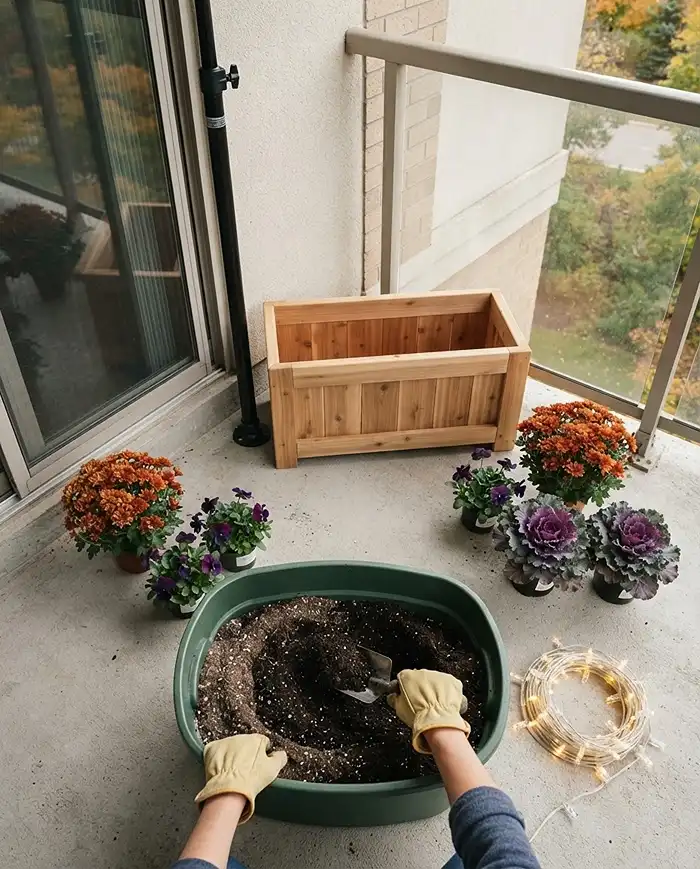
Maintaining Your Fall Container Garden in Cool Weather
Fall care isn’t summer care with a jacket on. Plants slow down, soil stays wet longer, and the mistakes that cost you a plant are different.
Adjusting Watering Routines for Dropping Temperatures
Quick Answer: Switch from scheduled watering to the finger-test method — water only when the top inch of soil is dry, since cooler temperatures slow evaporation dramatically.
In my own pots, watering twice a week in September turned into once a week by late October. Overwatering, not cold, is the top killer of fall containers because roots sit in cold, soggy soil and rot.
Protecting Plants from Early Frost Snaps
Quick Answer: Keep a lightweight horticultural fleece blanket on hand and drape it over railing pots overnight whenever the forecast dips near 32°F.
I check the forecast every evening starting in mid-October and keep the fleece folded by the door. It takes thirty seconds to toss over a planter and can save weeks of blooms from a single overnight freeze.
Common Problems & Solutions
Two issues show up on almost every no-drill fall balcony sooner or later.
Tension Rods Slipping in Freezing Weather
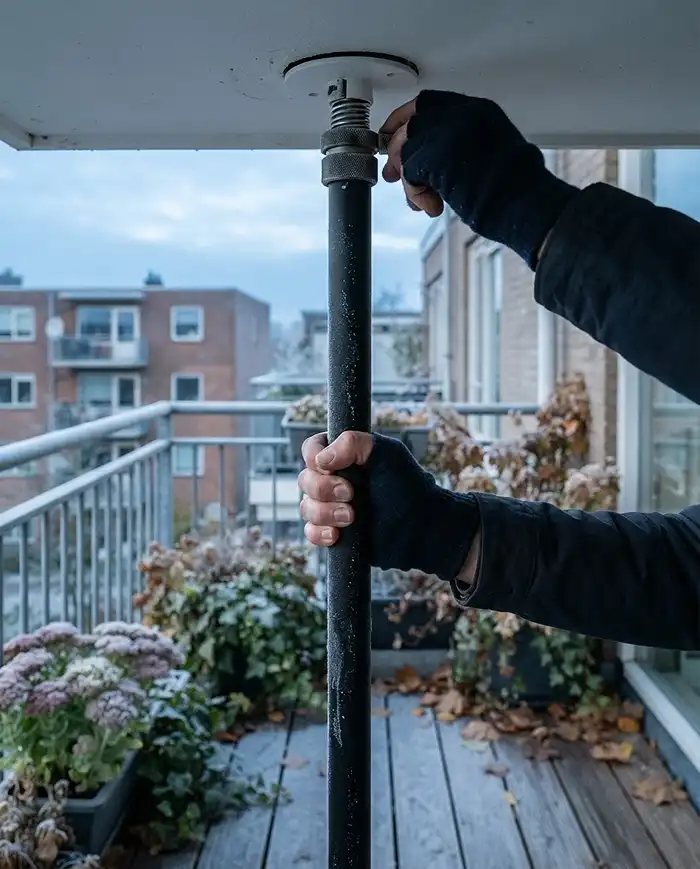
Metal poles contract as temperatures drop, which can loosen a spring-tension grip that felt rock-solid in September. Run a weekly “wiggle test” through November and retighten the central spring mechanism as needed.
Powdery Mildew in Damp Autumn Air
Cool temperatures plus fall rain create ideal conditions for powdery mildew, especially on crowded mums. Thin plants for airflow and treat early signs with a homemade potassium bicarbonate spray, diluted per label directions.
Frequently Asked Questions
How do I hang fall outdoor string lights without drilling?
Use specialized exterior clips designed to grip brick or stucco mortar lines, or apply outdoor-rated mounting tape such as Command Outdoor hooks after cleaning the surface with rubbing alcohol. Both hold through wind and rain without touching the masonry itself.
Can I leave my fall balcony plants outside all winter?
Heuchera and pansies tolerate cold, but roots in above-ground pots freeze solid faster than roots in the ground. In USDA zone 5 and below, treat these as seasonal annuals or wrap containers heavily in burlap for insulation.
What is the best way to secure a privacy screen without screws?
Set a freestanding bamboo or lattice screen inside a deep rectangular trough planter, then bury the base under 40 to 50 pounds of wet potting soil. The weight of the soil anchors the screen through normal wind without any hardware in the wall.
Conclusion
Renter friendly fall balcony ideas come down to weight, tension, and picking plants that actually like cool weather. None of it requires a drill or a maintenance request.
Start with your lease and your microclimate, add the right no-drill hardware, then layer in cold-hardy plants and edible fall container vegetables where you want them. For more setup specifics, check out our guides on fall balcony ideas for renters, building a no-drill balcony garden, and our full renter friendly balcony garden guide. You can also check your exact cold-hardiness zone on the USDA Plant Hardiness Zone Map before choosing plants.
Key Takeaways
- Renter friendly fall balcony ideas rely on tension and gravity hardware instead of drilled anchors.
- Fiberglass containers and weight-checked layouts keep a small balcony garden lease-safe.
- Cold-hardy picks like mums, violas, Heuchera, and ornamental kale carry color into November.
- Swap in fall container vegetables like Redbor kale or rainbow chard for an edible twist.
- Fleece covers and the finger-test watering method protect plants through early frost snaps.