
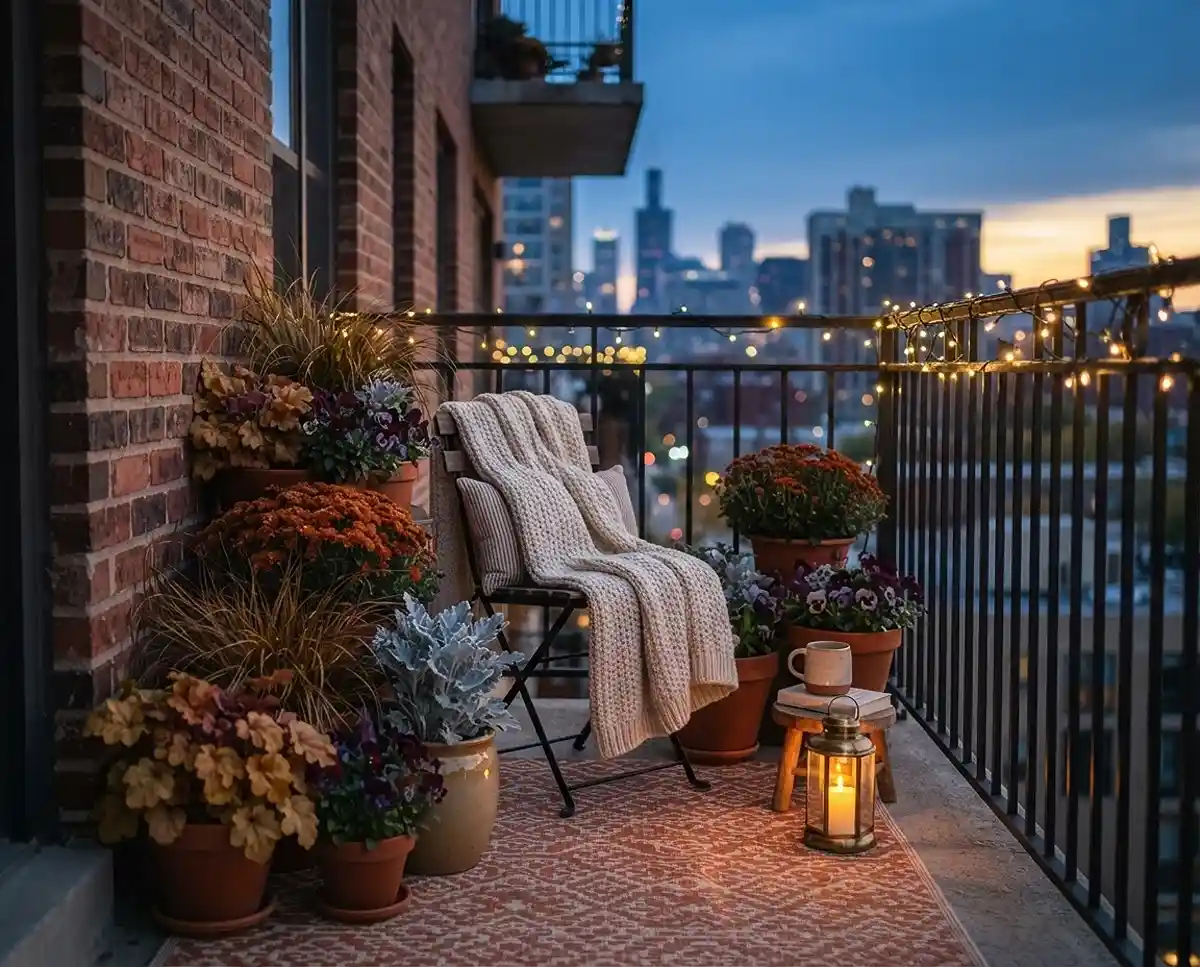
Cozy Fall Balcony Garden Ideas for Crisp Autumn Nights
A cozy fall balcony garden turns even a tight apartment balcony garden into a private autumn retreat, using frost-hardy plants, warm lighting, and cushions that shrug off the cold.
I’ve styled my own 6×10-foot, north-facing balcony in Chicago (zone 6a) for six autumns now. Some years it worked. One year I lost every mum to an early hard freeze because I got lazy about covering them. Here’s what actually holds up.
Table of Contents
Transforming Your Balcony into a Cozy Autumn Evening Retreat
Layer cold-hardy container plants with warm, ambient lighting and weatherproof textiles, and a sterile concrete balcony becomes a place you actually want to sit at 8 p.m. in October.
The trick isn’t buying more stuff. It’s picking a handful of pieces that each do double duty: a plant that looks good AND survives a frost, a rug that’s soft AND doesn’t grow mildew, lighting that’s cozy AND won’t scorch your foliage.
This kind of styling works whether you’ve got a 4×4 Juliet balcony or a full wraparound terrace. Small balcony garden setups actually benefit most from this approach, since every piece needs to earn its spot.
Assessing Your Autumn Balcony Microclimate
Before you buy a single mum, walk your balcony at 7 a.m. and again at 6 p.m. for a few days. Cooler temperatures and a lower sun angle change everything about what survives and what doesn’t in fall.
Skipping this step is the single biggest reason autumn balcony garden ideas fail by week three. You’re not gardening in September conditions anymore — you’re gardening for October and November.
Tracking Shifting Sun Angles and Dropping Temperatures
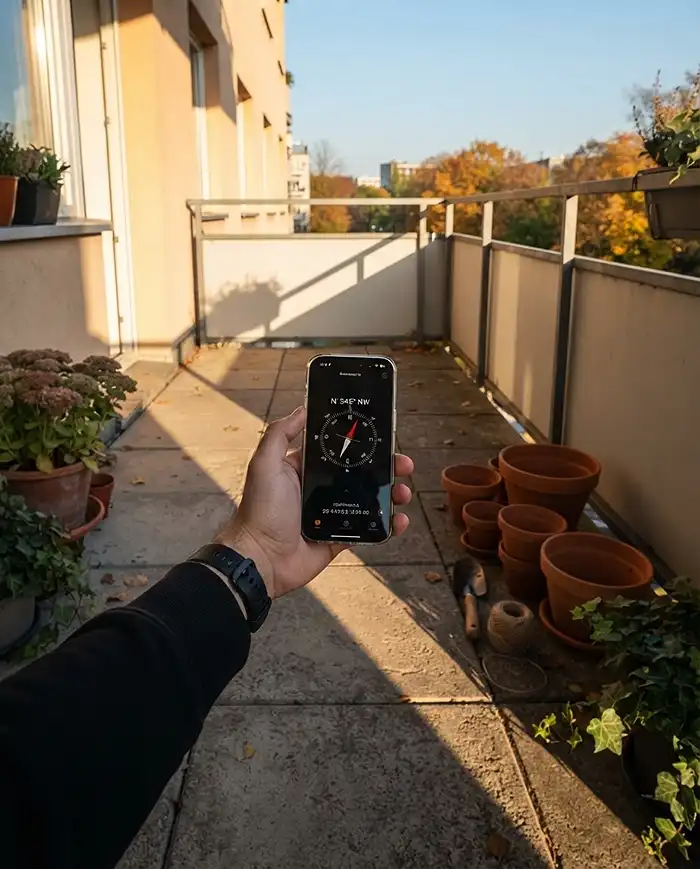
Quick Answer: The autumn sun sits 20-25 degrees lower than in July, so spots that were shaded all summer often get full sun by mid-October. Map your light before repositioning plants.
On my balcony, a corner that was deep shade in July gets four hours of direct afternoon sun by late October, because the building next door no longer blocks the lower sun angle.
- Check light exposure weekly from mid-September through November — it shifts fast
- Move sun-loving mums and violas toward the west or south railing as shade patterns change
- Note your first expected frost date (check your local extension office) and count backward two weeks to finish any repositioning
Pro Tip: Use your phone’s compass app once a week and snap a photo at the same time of day — it’s the fastest way to actually see the light shift instead of guessing.
Wind Corridors and Thermal Mass Protections
Apartment buildings create wind tunnels between units, and that wind dries out containers far faster than cold alone does. Use your building’s brick or concrete wall as a windbreak.
Real Example: My balcony backs onto a brick wall that stays warm from afternoon sun. I cluster pots within 18 inches of it, and they run 3-4°F warmer overnight than pots near the railing.
| Placement | Best For | Watch Out For |
|---|---|---|
| Against brick/concrete wall | Tender foliage, cyclamen, heuchera | Less airflow — watch for mildew |
| Near railing, open air | Hardy carex, ornamental kale | Faster drying, more wind stress |
| Corner nooks | Seating area, herbs | Can trap stagnant damp air |
Designing the Atmosphere: Lighting and Textiles
The cozy factor comes down to two things: safe, plant-friendly lighting and weather-resistant fabric. Get these right and the balcony reads as a retreat, not an afterthought.
Plant-Safe Ambient Lighting for Evenings
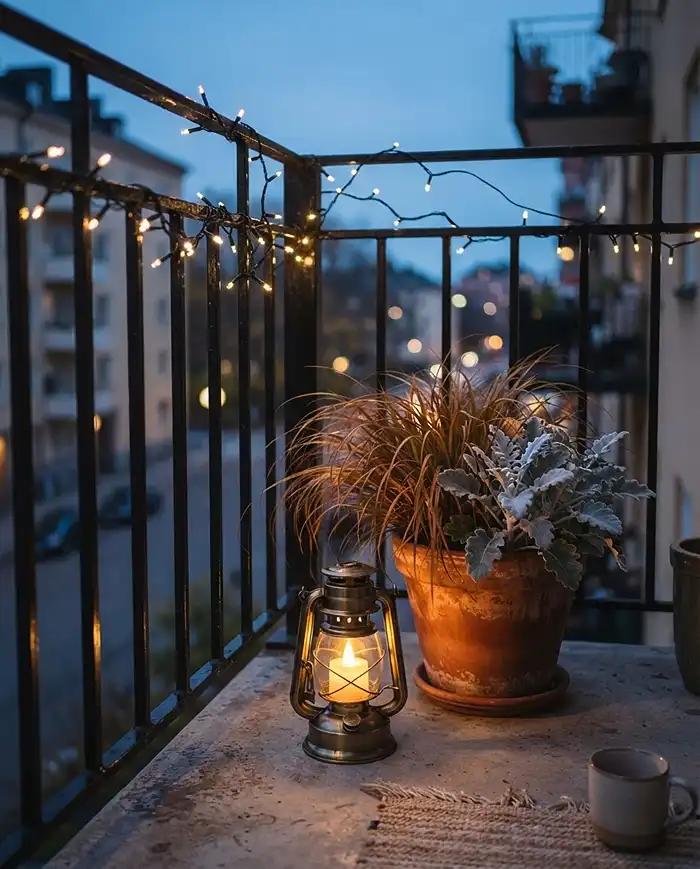
Quick Answer: Weave warm-white, waterproof LED fairy lights through the railings and use battery-operated brass or resin lanterns near pots. Skip halogen bulbs and open flames near dry autumn foliage entirely.
Halogen bulbs and candles throw real heat, and dry, papery autumn leaves — think ornamental grasses and dusty miller — scorch fast if a lantern sits too close overnight.
- Warm-white LED string lights, IP65-rated or higher, for railings and pergolas
- Battery or solar lanterns placed at least 8 inches from any foliage
- Timer plugs so lights come on automatically at dusk without you remembering
Pro Tip: Battery lanterns with a flicker setting read as “candlelight” from six feet away without any fire risk to your Heuchera.
Weather-Resistant Textiles and Rugs
Lay down a mildew-resistant polypropylene outdoor rug to soften the hard lines of concrete or composite decking. It handles dew and rain without trapping moisture like an indoor rug would.
Drape washable, heavy-knit throw blankets over space-saving bistro chairs so they’re ready to grab the second the temperature drops after sunset. Bring them in if rain is forecast overnight.
This combination is the backbone of most balcony garden ideas you’ll see for fall — the rug and throws do more visual work than any single plant.
Best Cold-Hardy Plants for an Evening Autumn Aesthetic
You want plants with genuine cold tolerance, not just plants that look autumnal. These hold their color and structure through light frosts without turning to mush overnight.
Textural Foliage: Heuchera, Carex, and Dusty Miller
Quick Answer: Heuchera ‘Caramel’, Carex comans ‘Bronze Form’, and Dusty Miller ‘Silver Dust’ deliver color and texture without relying on blooms, and all three tolerate light frost down to about 25°F.
Coral Bells (Heuchera ‘Caramel’) hold a deep amber-plum color right through late October in my zone 6a containers. Bronze Hair Sedge (Carex comans) adds movement — it sways in the wind corridor instead of fighting it.
Dusty Miller’s silvery, felted leaves catch lantern light beautifully in the evening, which is exactly why it earns a spot in almost every fall container I plant.
Evening Floral Accents: Violas, Mums, and Cyclamen
Jewel-toned Violas (try ‘Sorbet XP’ series), tightly-budded garden mums like the ‘Igloo’ series, and elegant hardy Cyclamen hederifolium create a dense, unbroken mound of color that reads as intentional, not leftover from summer.
Real Example: The autumn I lost my mums, I’d left three ‘Igloo’ pots uncovered during an unexpected 22°F night in early November. Everything else survived under a simple fleece cover. Now I check the forecast obsessively from late October on.
Pro Tip: Cyclamen actually prefers the cooler evening temperatures of a balcony over a warm indoor windowsill — don’t bring it in unless a hard freeze is coming.
Step-by-Step Guide to Styling Your Autumn Balcony
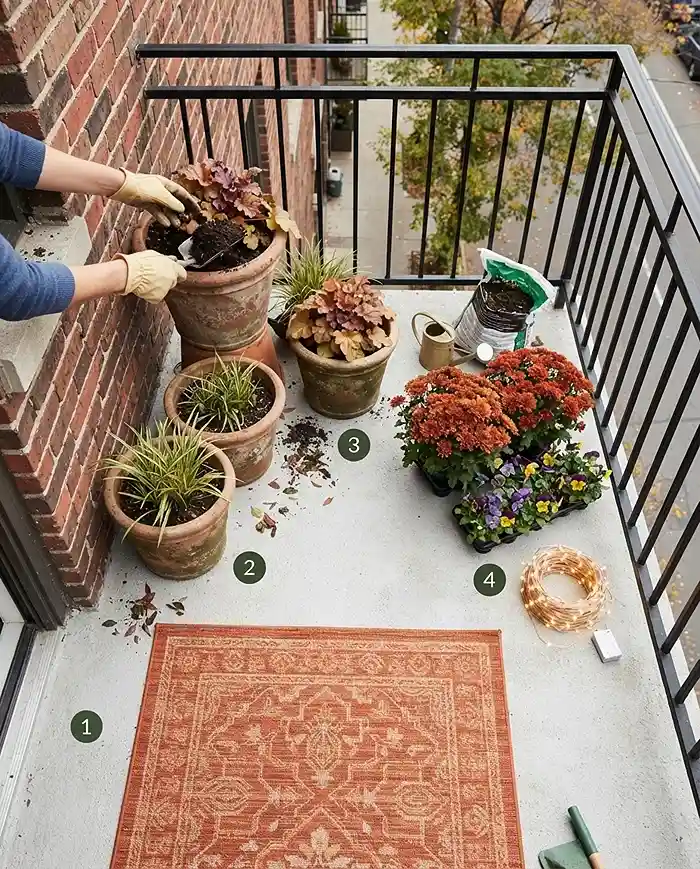
Here’s the exact order I follow every year, and it saves a lot of backtracking:
- Deep clean summer debris — dead annuals, dried soil crust, spider webs in corners
- Lay the outdoor rug first, before anything else goes down
- Position heavy anchor pots against the thermal wall you identified earlier
- Refresh the top third of potting soil with insulating, nutrient-rich compost
- Arrange textural foliage first, then floral accents, then string lighting
- Add textiles and lanterns last, once furniture placement is settled
- Step back and check sightlines from your seating spot, not just from the doorway
For a deeper dive into color palettes and layout ideas, our autumn balcony garden ideas guide walks through several full setups.
Seasonal Maintenance for Cool Weather Containers
Plants slow their metabolism as temperatures drop, and fall’s damp air changes your maintenance routine more than most people expect.
Adjusting Watering Routines for Plummeting Temperatures
Quick Answer: Switch from heavy summer soaking to a strict finger-test method — water only when the top inch of soil is dry, and only on mild mornings so roots don’t sit wet through a freezing night.
Lower ambient temperatures drastically slow evaporation. A container that needed daily water in July might go four or five days between waterings by late October.
- Water only in the morning, never in the evening once nights dip near freezing
- Check soil moisture with a finger 2 inches deep before watering, every time
- Skip watering entirely the day before an expected hard freeze
Deadheading and Mulching for Late-Season Vitality
Aggressively deadhead spent mum and viola blooms — removing dead flowers — to force continuous flowering right up until a killing frost. Don’t be gentle about it; cut back to the next healthy bud.
Apply a thick, two-inch layer of decorative bark mulch to the soil surface. It locks in geothermal warmth for delicate root systems and looks intentional rather than like leftover summer soil.
Common Problems & Solutions
Two issues show up in nearly every cozy container setup once the weather turns damp: mildew and late-season pests.
Powdery Mildew in Damp Autumn Air
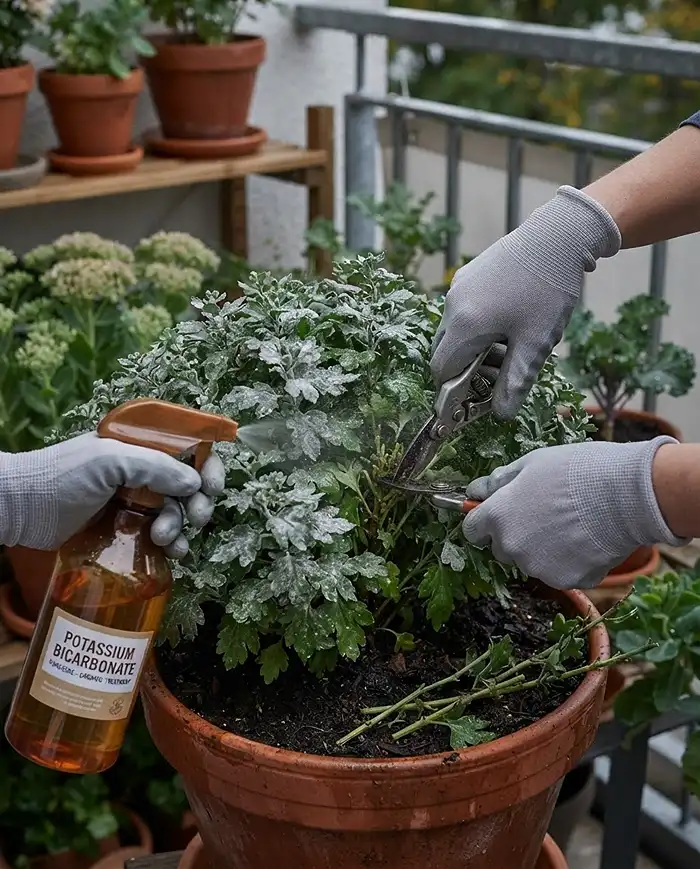
Cool temperatures, heavy evening dew, and densely styled plants create the perfect breeding ground for powdery mildew — that grayish-white coating on leaves.
Mix 1 tablespoon of potassium bicarbonate with a gallon of water and a few drops of dish soap, then spray affected foliage weekly. Thin out inner foliage on dense plants like mums to restore airflow between leaves.
Managing Late-Season Pests Around Seating
Nobody wants fungus gnats hovering over their evening tea. Place fragrant, pest-repelling herbs like thyme and rosemary right next to your seating chair — they double as a nice autumn scent.
Tuck yellow sticky traps behind pots, out of sight, to catch fungus gnats that breed in damp autumn soil. Check and replace them every couple of weeks through the season.
If a hard freeze is forecast and you can’t bring containers inside, the Iowa State Extension frost protection guide has solid, science-backed covering techniques worth bookmarking.
Frequently Asked Questions
Can I leave my autumn plants outside during a hard freeze?
Violas and Heuchera tolerate light frost, but exposed roots in above-ground pots will freeze solid once temperatures drop below 25 degrees Fahrenheit. Drape a horticultural fleece blanket over containers at night to trap radiant heat and protect the root zone.
Do I need to buy new soil for fall container plants?
Completely replacing the soil isn’t necessary unless the previous summer plant died of a soil-borne disease. Remove old root masses and amend the top third of the pot with fresh, nutrient-rich compost, which is enough to support new fall plantings.
How do I protect outdoor blankets and pillows from autumn rain?
Choose outdoor-grade acrylic fabrics like Sunbrella, which naturally resist mildew and staining even when damp. Keep a small, waterproof resin deck box tucked in a corner so you can quickly stash cushions and throws before a rainstorm hits.
What’s the best cold-hardy plant for a small balcony garden?
Heuchera ‘Caramel’ is one of the most reliable choices for a small balcony garden, since it holds color through light frost, needs little maintenance, and stays compact enough for tight container spacing.
How cold can it get before I need to bring plants indoors?
Most fall annuals like violas and mums handle light frost down to around 28 to 30 degrees Fahrenheit without protection. Once nightly lows are forecast below 25 degrees Fahrenheit, cover containers or move tender plants indoors overnight.
Conclusion
A cozy fall balcony garden isn’t about buying every seasonal item you see — it’s picking cold-hardy plants, safe lighting, and weatherproof textiles that work together through the first real frost.
Start with the microclimate audit, layer in Heuchera and Carex for structure, add mums and violas for color, then finish with lighting and textiles. If you’re renting, our fall balcony ideas for renters guide covers setups that need zero drilling.
For lighting layouts specifically, check out our balcony garden lighting ideas for more setups that work in tight apartment spaces, as of fall 2026.
Key Takeaways
- Map your balcony’s shifting fall sun and wind patterns before repositioning any containers
- Use warm LED string lights and battery lanterns instead of halogen bulbs or open flames near dry foliage
- Choose frost-tolerant plants like Heuchera, Carex, mums, violas, and Cyclamen for lasting color
- Switch to a finger-test watering method as temperatures drop to avoid overwatering cold soil
- A cozy fall balcony garden comes together through layering plants, lighting, and weatherproof textiles — not through buying more stuff