

Balcony Garden Lighting Ideas for Cozy Summer Nights
Good balcony garden lighting ideas turn a cramped concrete slab into an evening hangout without scorching your basil or ticking off the neighbors below.
I’ve grown container plants on a west-facing fourth-floor balcony in Chicago (zone 6a) for six seasons, and I’ve made every lighting mistake in the book so you don’t have to.
Table of Contents
The Magic of Balcony Garden Lighting on Summer Nights
There’s a specific hour on a July evening, right after the heat breaks, when a lit-up balcony garden stops being a place you water plants and starts being a place you actually want to sit.
String lights catching the edge of a tomato leaf, a soft glow along the railing planters, maybe a candle if your lease allows it. The right lighting stretches your usable outdoor hours by two or three hours a night, easily.
My own turning point was a $14 string of solar globe lights I wove through a trellis of Sweet Potato Vine in July 2023. Suddenly my 6-by-4-foot balcony felt like a room, not an afterthought.
Planning Your Balcony Illumination Layout
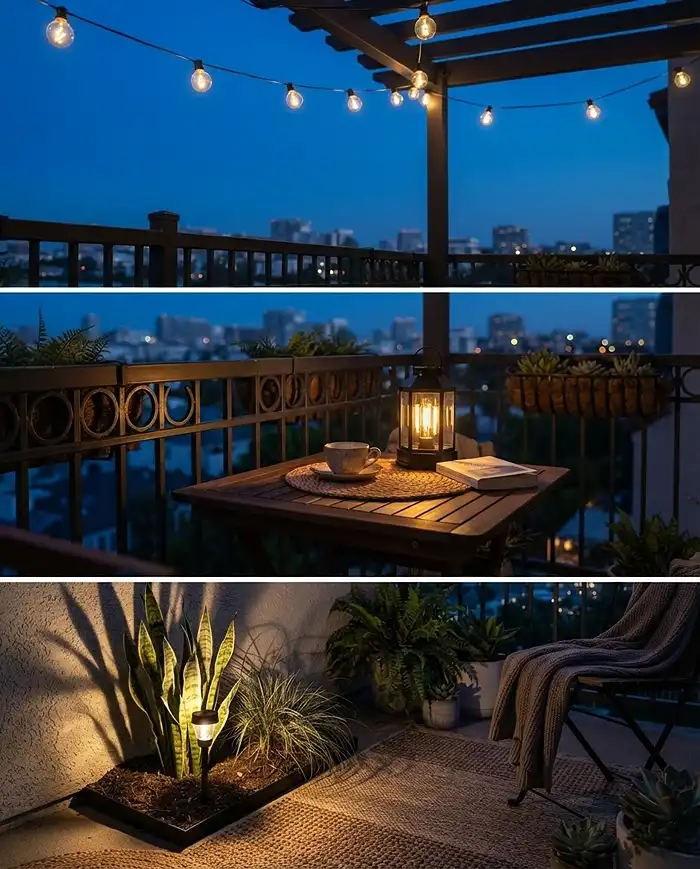
Before you buy a single string light, walk your balcony at dusk and sketch where you actually sit, where your best plants live, and where a bright neighbor’s window already spills light in.
A small balcony garden gets visually noisy fast if every corner is lit at the same intensity. Pick one or two focal points and let the rest stay dim.
Assessing Power Sources and Renter Restrictions
Quick Answer: Most apartment balconies have no outdoor GFCI outlet, so solar and battery-powered fixtures are your safest bet, both electrically and lease-wise.
Before you buy anything, check three things:
- Whether your lease bans drilling, permanent wiring, or attached fixtures
- Whether your building’s fire code restricts open flame or extension cords on balconies
- Whether your only indoor outlet is more than 15 feet from where you want light (extension cords through a door are a tripping and insurance hazard)
I once ran an indoor extension cord out my sliding door for a strand of incandescent lights. My landlord flagged it during a routine inspection within a month. Solar and battery fixtures avoid the whole conversation. For more setup basics, see our apartment balcony garden ideas guide.
Understanding Lighting Zones: Task, Ambient, and Accent
Quick Answer: Layer three types of light — soft ambient overhead glow, focused task light near seating, and dramatic accent light on your best plants — rather than one bright fixture doing everything.
| Zone | Purpose | Example Fixture |
|---|---|---|
| Ambient | General visibility, sets mood | Solar globe string, overhead fairy lights |
| Task | Reading, eating, pouring drinks | Small battery lantern on the table |
| Accent | Highlights a focal plant | Mini LED uplight staked in soil |
On my balcony, ambient light comes from globe strings along the top rail, task light from a $9 battery lantern I move to wherever I’m sitting, and accent light on a single potted Japanese maple in the corner. That last one gets the most compliments.
How Artificial Light Affects Plant Health
Plants read light the way we read a clock. Leave bright light on all night, every night, and you’re rewriting their internal calendar whether you meant to or not.
Careless lighting choices in a container garden don’t just look bad — they can actually stunt growth, delay flowering, or scorch foliage outright.
Photoperiodism: Do Lights Interrupt Plant Sleep?
Quick Answer: Yes. Most plants need several hours of uninterrupted darkness to trigger flowering and normal growth, so bright lights left on 24/7 can delay blooms and weaken new growth.
Photoperiodism [a plant’s response to day length and darkness] governs when many species flower, go dormant, or push new leaves. Short-day plants like mums and some petunias are especially sensitive to nighttime light pollution.
I learned this the hard way with a balcony full of short-day mums in fall 2022. A bright solar spotlight aimed at them from six feet away delayed flowering by nearly three weeks compared to a sibling plant in a darker corner.
Pro Tip: Put ambient and accent lights on a cheap mechanical or smart timer set to go fully dark by midnight, so your plants still get a real night.
Heat Emission: Protecting Delicate Foliage
Quick Answer: Skip incandescent and halogen bulbs near plants entirely — they radiate real heat and will scorch leaves. Use cool-touch LED fixtures for anything within a foot of foliage.
- Incandescent string lights can reach well over 100°F at the bulb surface
- Halogen spotlights run even hotter and are a common cause of crispy, browned leaf edges
- LEDs stay cool to the touch and are safe pressed right against a trellis or planter lip
I ruined a healthy Coleus in 2021 by resting an old incandescent clip light directly on its pot rim overnight. The leaves nearest the bulb went brown and brittle by morning — an expensive lesson in checking bulb type before checking price.
Top Lighting Ideas for Balcony Plants
These renter-friendly balcony garden ideas work with containers and trellises, need no drilling, and won’t stress your plants. For more inspiration on pairing light with foliage color, check our balcony color palette guide.
Solar-Powered Fairy Strings and Globe Lights
Quick Answer: Weave cool-toned solar fairy or globe lights through a sturdy trellis or along the railing for a starry backdrop with zero cords and zero outlets.
Look for warm-white (2700K to 3000K) LEDs rather than bright cool-white ones — they read as cozy rather than clinical against green foliage.
Real Example: I wove a 20-foot solar globe string through my climbing Mandevilla in summer 2023. By August the vine had grown right through the lights, and the effect looked intentional even though it wasn’t.
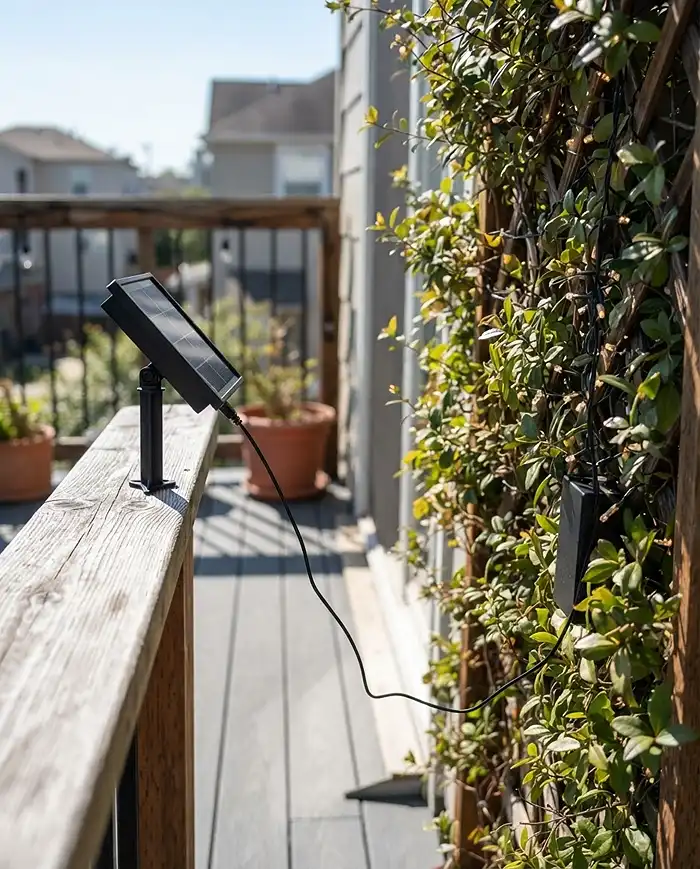
Pro Tip: Mount the solar panel on the sunniest edge of the railing, not tucked into the vine itself, or growth will shade it out by midsummer.
LED Uplighting for Architectural Plants
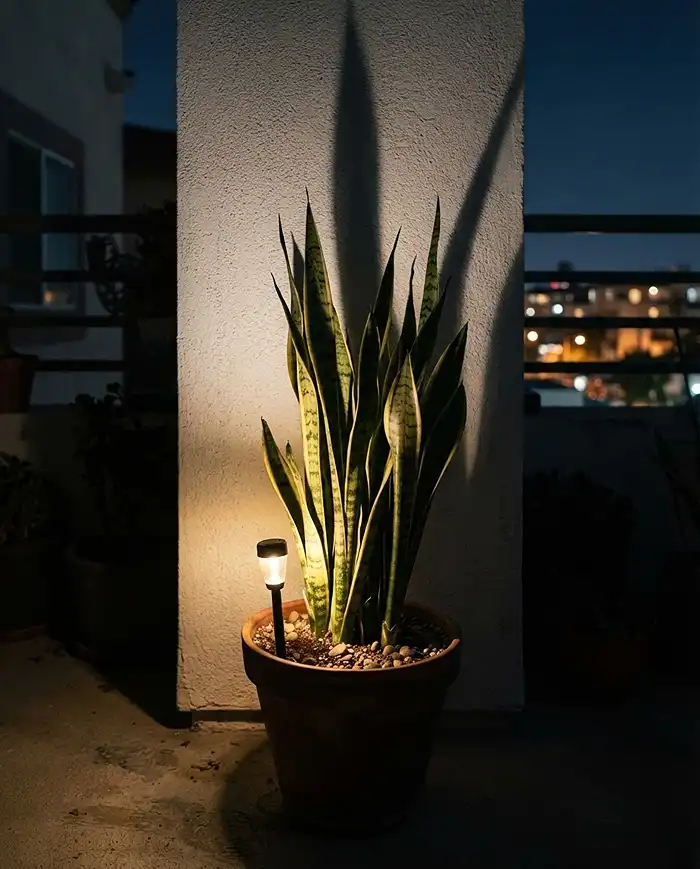
Quick Answer: Stake small battery-powered LED spotlights at soil level next to structural plants like potted olive trees, tall Sansevieria, or ornamental grasses to throw dramatic shadows up the wall.
This works best with plants that have a strong silhouette — strappy leaves, architectural branching, or tall upright form all cast the most interesting shadow shapes.
Real Example: A single $12 stake light under my Sansevieria threw a six-foot shadow across the wall behind it. It’s the cheapest “wow” moment on my whole balcony.
Hidden Strip Lights for Planter Edges and Railings
Quick Answer: Run waterproof LED strip lights under the outer lip of railing planters or along baseboards for a floating, indirect glow that lights the floor without glaring into anyone’s eyes.
Battery-powered strips with adhesive backing avoid any wiring through walls or doors, which matters if your lease bans permanent modifications.
Pro Tip: Choose strips rated at least IP65 (see our note on waterproof ratings below) since this spot catches runoff every time you water.
Step-by-Step Guide to Installing Plant-Safe Lighting
Follow this order to avoid redoing your work halfway through the season:
- Clean and dry any surface before applying adhesive-backed strip lights — dust and pollen ruin the bond within days
- Map your power sources first (solar panel placement, battery access points) before deciding fixture positions
- Route any cords behind large pots or planters rather than across walking paths
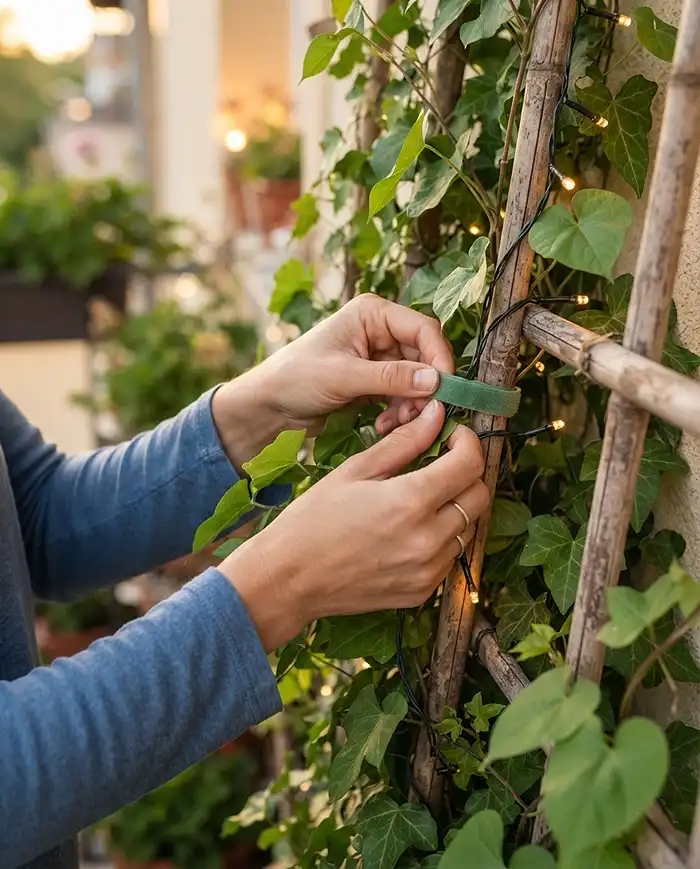
- Fasten string lights to trellises with UV-resistant zip ties or soft plant velcro, never wire ties that can bite into stems
- Test the full layout at dusk before committing to final placement — daylight hides gaps and overlaps
- Set timers last, once you know how long you actually want lights on each evening
Soft plant velcro is worth the extra dollar over zip ties. It won’t girdle a growing stem the way a tightened zip tie will by August.
Weatherproofing and Seasonal Maintenance
Solar lights lose efficiency fast if you skip basic upkeep. Build this into your regular watering routine so it doesn’t become a separate chore.
- Wipe hard water spots off solar panels monthly — mineral film cuts charging capacity noticeably
- Open battery compartments after heavy rain to check for moisture intrusion
- Bring decorative and non-weatherproof lights indoors before the first hard freeze, typically late October in zone 6a
I lost an entire strand of cheap fairy lights over one Chicago winter because I left them clipped to a dead vine through January. Now everything comes down the same weekend I do my fall cleanup.
Common Problems & Solutions
Two issues come up constantly once electronics and growing plants share the same six square feet.
Solar Lights Failing to Charge Around Tall Plants
Quick Answer: Fast summer growth shades out attached solar panels within weeks, so switch to remote-panel solar lights you can stake separately in full sun.
By late June, a healthy Morning Glory or Sweet Potato Vine can easily double in leaf coverage, which is exactly what happened to a string light I’d clipped directly onto a trellis in 2022 — dead by July.
Remote-panel kits solve this by letting you stake the actual solar panel at the sunniest outer railing edge, away from the leaf canopy entirely, while the light string still runs wherever you want it.
Cords Tangling in Climbing Vines
Quick Answer: Use rigid plastic cord-concealer channels to physically separate wiring from vining growth, and gently redirect vine tendrils rather than yanking them free.
Aggressive climbers like Morning Glory wrap tight and fast. Pulling a tangled cord free in one motion often snaps the stem.
Instead, unwind tendrils counter-clockwise by hand, one loop at a time, and reroute the cord through a concealer channel so the two don’t meet again. This is especially useful on trellised balconies, similar to the setups in our renter-friendly patio garden ideas post.
balcony garden lighting ideas FAQs
Can regular outdoor lights burn my plants?
Modern LEDs will not burn leaves. Traditional incandescent string lights or halogen spotlights emit significant radiant heat and will scorch plant tissue if placed within 12 inches of foliage, so stick to cool-touch LEDs near any plant.
Are solar lights bright enough for a balcony garden?
Solar lights lack the high lumens needed for reading or detailed tasks, but they provide a soft, ambient glow that’s perfect for relaxing outside in the evening without causing light stress to nearby container plants.
Do I need waterproof or just water-resistant lights?
Buy outdoor lighting rated IP65 or higher. That rating guarantees the fixture survives heavy summer thunderstorms and the inevitable splashes from your watering can, while lower ratings only handle light moisture.
Do I need my landlord’s permission to install balcony lights?
Always check your lease first. Most restrictions target drilling, permanent wiring, and open flame, not battery or solar fixtures that clip or stake into place without altering the structure.
How far should lights sit from plant leaves to avoid heat damage?
Keep any heat-emitting fixture at least 12 inches from foliage. Cool-touch LEDs remove this concern almost entirely and can safely sit flush against leaves or trellis wire.
Conclusion
The best balcony garden lighting ideas balance atmosphere with plant health: cool-touch LEDs, timers set for real darkness, and fixtures rated IP65 or higher.
Start with one focal point, layer in ambient and task light gradually, and let your small balcony garden earn its evening glow one season at a time.
- Choose solar or battery fixtures to sidestep lease restrictions and missing outdoor outlets
- Use cool-touch LEDs only — incandescent and halogen bulbs will scorch nearby foliage
- Set timers so lights go fully dark by midnight to protect natural photoperiod cycles
- Buy IP65-rated or higher fixtures for anything exposed to rain or watering splashback
- Layer ambient, task, and accent lighting rather than one bright fixture doing everything