
Sustainable Small Space Gardening
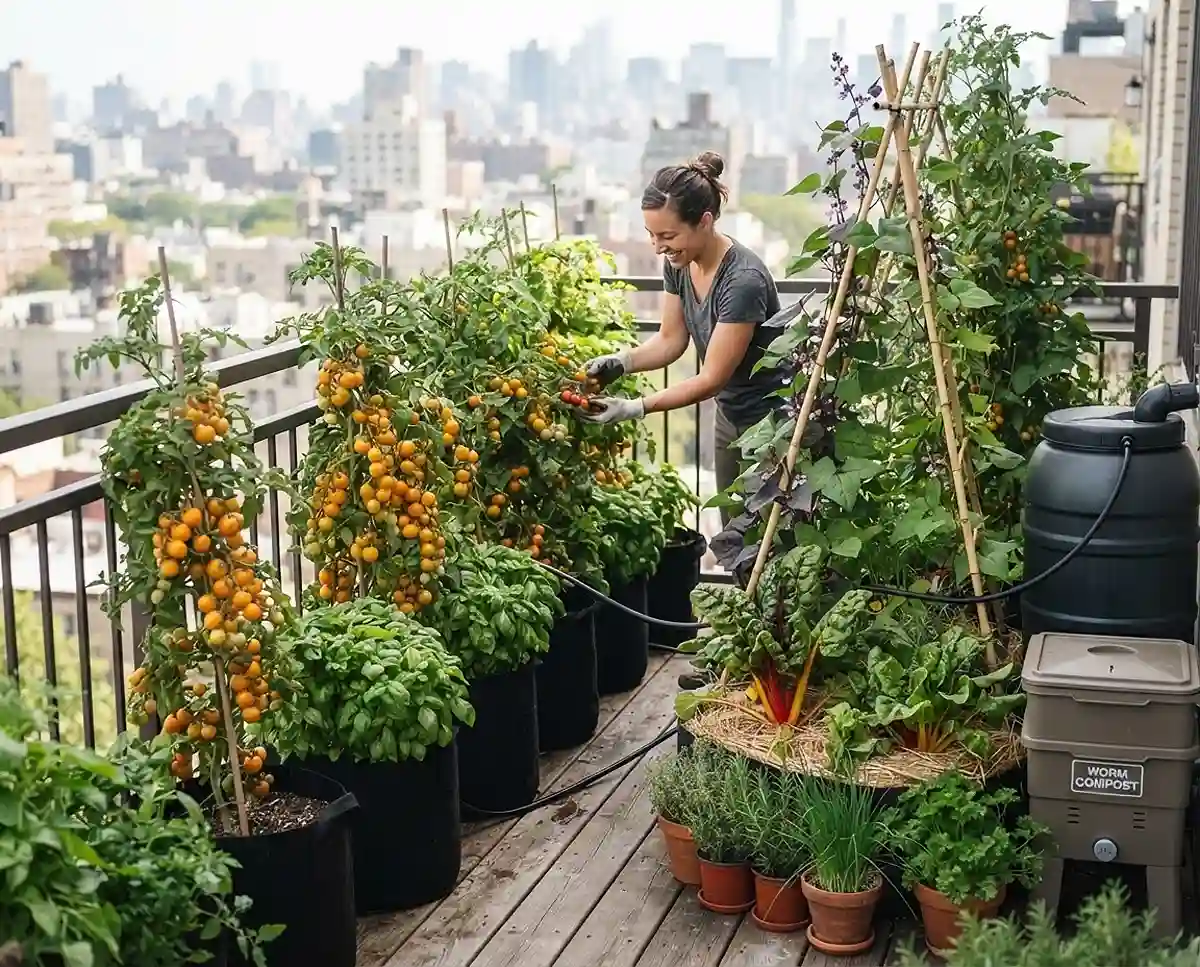
I’ve grown food on a 6×10-foot balcony in USDA zone 6b for eight seasons, and sustainable small space gardening really just comes down to daily habits, not luck or square footage.
Table of Contents
The Core Habits of Sustainable Small Space Gardening
Sustainable small space gardening isn’t just skipping synthetic pesticides. It’s building a closed-loop micro-ecosystem where nothing gets wasted — water, soil, or money.
On my balcony, that means kitchen scraps feed the worm bin, the worm bin feeds the containers, and the containers feed me. Every habit below plugs into that loop somewhere.
As of the 2026 growing season, I’m running twelve containers on 60 square feet and pulling roughly three pounds of produce a week from June through October. That’s the payoff of habit over hardware.
Planning Your Sustainable Micro-Farm
Sustainability starts before you buy a single seed packet. Map your space so plants use natural sun and wind instead of you compensating with grow lights, fans, or extra water later.
Ten minutes with a notebook now saves you a whole season of fighting your own balcony layout.
Mapping Sun and Wind for Maximum Efficiency
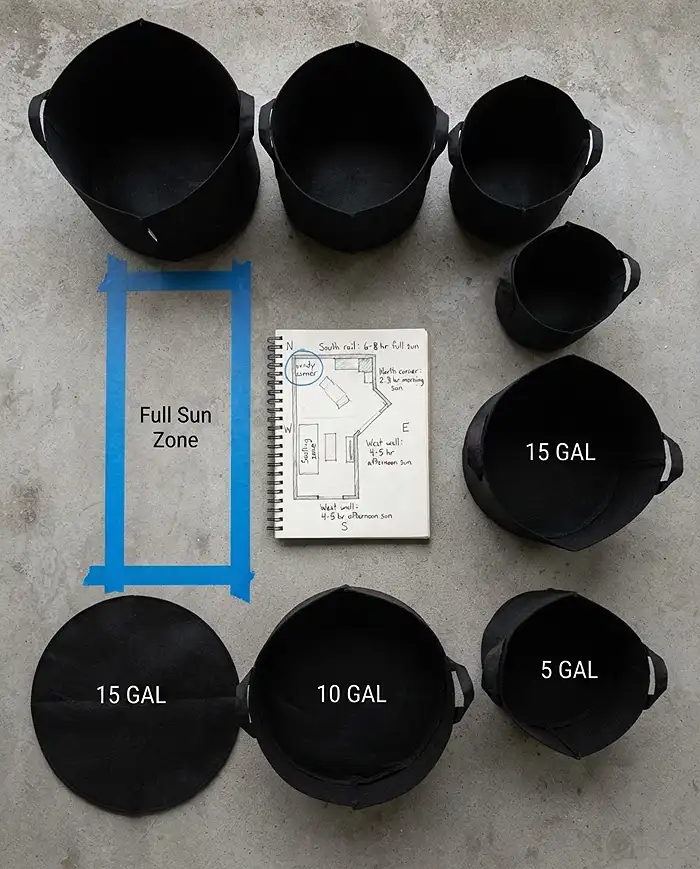
Quick Answer: Track sun hours for three days, then group fruiting crops in your brightest 6+ hour zone and use tall plants as windbreaks for shade-loving greens behind them.
On my south-facing rail, I get 7 hours of direct sun by late May. That’s exactly where my ‘Sungold’ cherry tomatoes and ‘Genovese’ basil live every year.
My north corner gets wind funneling between buildings, so I planted ‘Kentucky Wonder’ pole beans on a trellis there. The beans block the gusts and protect a tray of ‘Little Gem’ lettuce tucked behind them.
Pro Tip: Check sun angles again in early September — the trajectory shifts enough by late summer to shade a spot that was full sun in June.
Selecting Reusable, Eco-Friendly Containers
Quick Answer: Skip single-use plastic pots. Fabric grow bags, unglazed terracotta, and food-grade upcycled buckets last for years and won’t leach chemicals into your food.
I made the mistake early on of using cheap thin plastic nursery pots I found for free. They cracked within one season and I was back to buying more. Not exactly sustainable.
| Container | Best For | Watch Out For |
|---|---|---|
| Fabric grow bags | Tomatoes, potatoes, root crops | Dries out faster, needs mulch on top |
| Unglazed terracotta | Herbs like rosemary and thyme | Heavy, can crack in hard freezes |
| Upcycled food-grade buckets | Leafy greens, peppers | Must drill drainage holes before use |
Pro Tip: Buy 10-gallon fabric bags in a dark color if your space gets full sun — they warm the root zone faster in spring without needing black plastic mulch.
Foundational Habits for Continuous Harvests
These are the exact spatial and timing habits that get a small container garden producing three times what a single-planting layout ever will.
Succession Sowing for Uninterrupted Yields
Quick Answer: Sow a small batch of fast-maturing seeds like radishes or lettuce every two weeks instead of planting one big batch at once. You get steady harvests, not a glut followed by nothing.
- Sow ‘Cherry Belle’ radish seeds every 14 days from early spring through early summer
- Use a 2-week rotation for ‘Little Gem’ lettuce in a single 12-inch container
- Mark sowing dates on the pot rim with a grease pencil so you don’t lose track
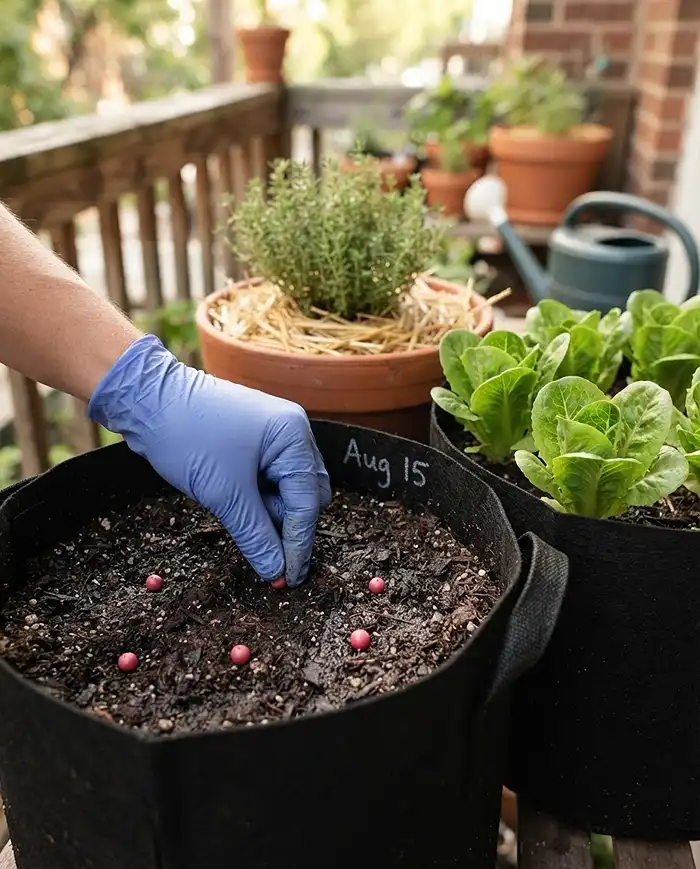
Real Example: My first year I direct-sowed all my radishes at once. I had 40 radishes ready the same week and gave most away. Now I sow six seeds every two weeks and eat fresh radishes for four months straight.
Maximizing Square Footage with Vertical Trellising
Quick Answer: Train vining crops like pole beans and indeterminate tomatoes up a sturdy A-frame trellis. You keep fruit off the ground and free up soil surface for a second crop below.
My A-frame is built from three 6-foot bamboo stakes lashed together, costing under $10. It holds two ‘Kentucky Wonder’ bean vines plus one indeterminate tomato without buckling in summer storms.
Pro Tip: Lean the trellis at a slight angle rather than straight up — it catches more sun on the lower leaves and makes harvesting easier without bending.
Intercropping to Reduce Resource Waste
Quick Answer: Plant shallow-rooted, shade-tolerant greens under deep-rooted, sun-loving plants in the same pot. You use every inch of soil and every drop of water twice.
I tuck ‘Bright Lights’ Swiss chard under my staked tomatoes every year. The chard’s shallow roots sit above the tomato’s deep taproot, so they aren’t competing for the same water.
Pro Tip: Water once at the base of the taller plant — both root zones benefit, cutting your watering trips roughly in half.
Sustainable Soil and Water Management
Tossing old dirt in the trash and running the hose on a timer are the two biggest habits that quietly wreck a sustainable urban gardening setup. Both are easy to fix.
Micro-Composting and Worm Bins
Quick Answer: A small vermiculture bin turns kitchen scraps into free, nutrient-dense compost and liquid fertilizer, and it doesn’t smell if you manage moisture and feeding right.
My worm bin is two stacked 10-gallon totes under the kitchen sink. Red wigglers process about a pound of scraps a week and I harvest castings every three months.
For the exact drilling and bedding setup, the Cornell Cooperative Extension guide on indoor vermicomposting is the resource I still reference.
Pro Tip: Bury scraps in a different corner of the bin each time — rotating the burial spot prevents the sour smell that sends most beginners back to the trash can.
Rejuvenating and Reusing Potting Soil
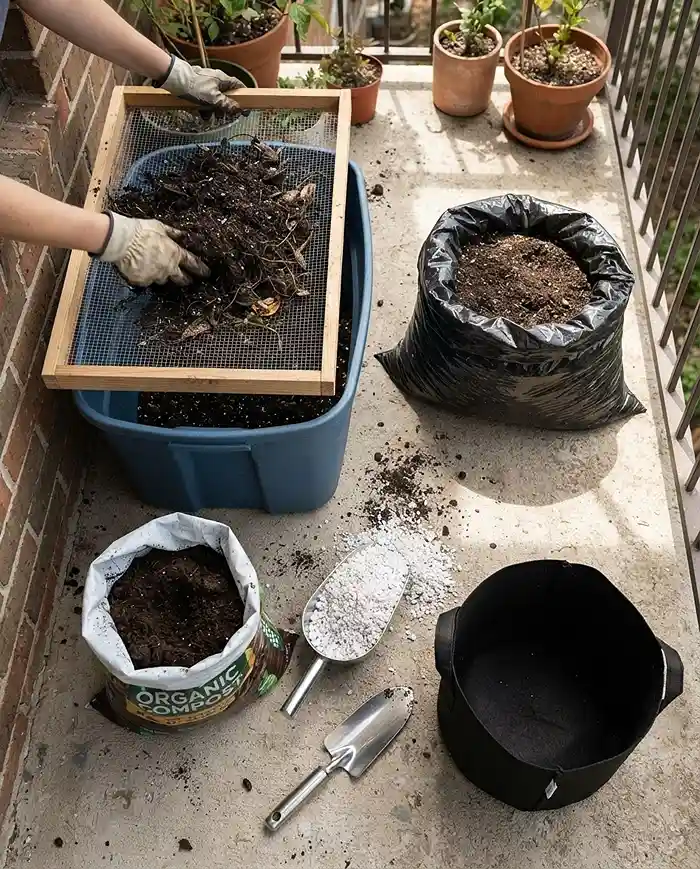
Quick Answer: Sift out old roots, solarize the soil in a black bag in full sun for two weeks, then amend heavily with fresh compost and perlite before reusing it.
- Sift soil through a half-inch mesh screen to remove dead roots and pests
- Solarize in a sealed black trash bag for 10-14 days during peak summer heat
- Amend with 25% fresh compost and 10% perlite by volume before replanting
If your containers keep underperforming season after season, our container gardening mistakes guide covers the soil errors I see most often.
Water Conservation and Drip Irrigation
Quick Answer: Top-dress every pot with 2 inches of straw mulch to slow evaporation, then run a gravity-fed micro-drip line straight to the root zones instead of hand-watering from above.
| Method | Water Saved | Setup Time |
|---|---|---|
| Straw mulch top-dressing | Up to 25% less evaporation | 5 minutes per pot |
| Gravity-fed drip line | Up to 40% less runoff waste | 1-2 hours initial setup |
| Overhead watering can | Baseline, no savings | None |
Real Example: Switching to a $30 gravity drip kit fed by a rain barrel cut my summer water use nearly in half, and my tomatoes stopped cracking from inconsistent watering.
Organic Pest Control Habits
Daily observation beats any spray bottle. These two habits keep pest pressure low without disrupting the small predators doing free pest control for you.
Daily Scouting and Manual Removal
Quick Answer: Spend five minutes every morning checking leaf undersides. Squish aphids or drop hornworms into soapy water before an infestation ever gets started.
Coffee in hand, I check every plant before I even get dressed. It sounds excessive until you catch your first aphid colony at 12 bugs instead of 1,200.
Pro Tip: Check the undersides of leaves near your trellis first — vining plants hide aphids and spider mites better than anything else in a tiny garden ideas layout.
Attracting Beneficial Insects to Small Spaces
Quick Answer: Plant nasturtiums as a trap crop and sweet alyssum for nectar in the same pots as your vegetables. They draw in ladybugs and predatory wasps that handle aphids for free.
I tuck ‘Alaska’ nasturtium at the base of my pepper containers. Aphids swarm the nasturtium instead of the peppers, and ladybugs show up within days to clean house.
Common Problems & Solutions
Even a well-planned sustainable setup hits snags. Here’s how to spot and fix the two issues that show up most in reused soil and dense plantings.
Nutrient Depletion in Reused Soil
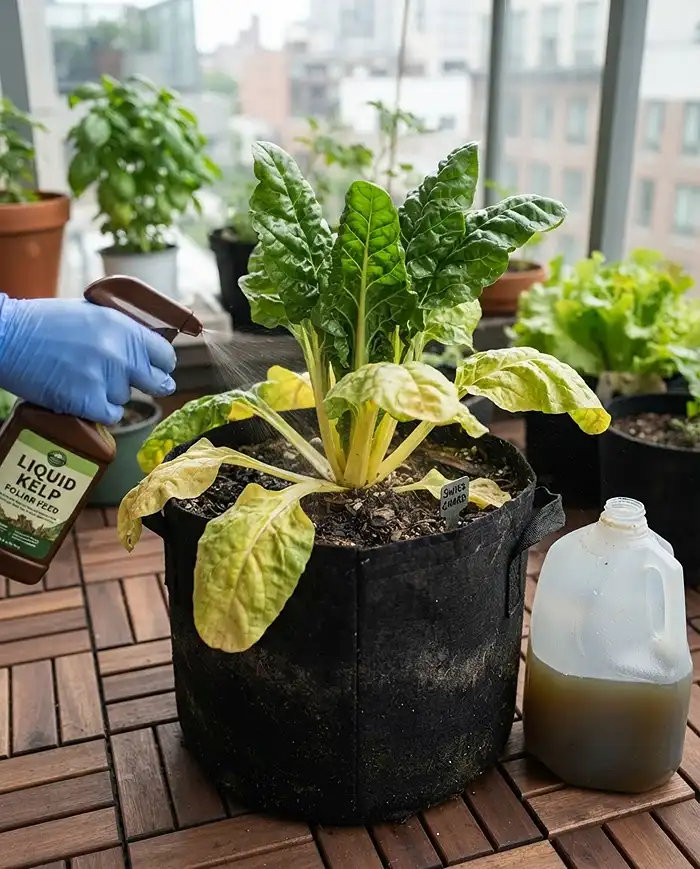
Quick Answer: Yellowing lower leaves usually mean nitrogen depletion from reused soil that wasn’t amended enough. A liquid kelp foliar spray gives plants a fast-absorbing rescue within days.
My second-year potting mix looked fine on top but my chard yellowed from the bottom up. A weekly kelp spray for three weeks brought the green back before I re-amended for the next season.
Powdery Mildew from Dense Plantings
Quick Answer: Dense intercropping blocks airflow and invites powdery mildew. Prune the bottom 12 inches of tall plants to open ventilation without losing your harvest.
Pro Tip: Prune in the morning so cut stems dry out before evening humidity settles in, which lowers the chance of new fungal spots forming.
sustainable small space gardening FAQs
Can I compost on a small apartment balcony?
Yes. An enclosed, tiered worm composter kept in a shaded spot processes vegetable scraps into fertilizer within weeks and produces no odor or pests when fed correctly.
How do I save seeds from my container crops?
Let one healthy, open-pollinated plant like basil or beans flower and dry fully on the vine at season’s end, then store the dried seeds in paper envelopes in a cool, dark closet.
What is the most sustainable crop for a tiny space?
Cut-and-come-again greens like Swiss chard and loose-leaf lettuce need little soil, sip minimal water, and keep producing for months from one planting.
How often should I water a small container garden?
Check soil moisture with a finger 2 inches deep daily in summer heat. Most 5-gallon containers with mulch need water every 2-3 days rather than every day.
Is urban gardening actually sustainable long-term?
Yes, when you close the loop with composting, reused soil, and water conservation habits. A balcony system can run for years without buying new soil or synthetic fertilizer.
Conclusion
Sustainable small space gardening isn’t one big purchase — it’s the daily five-minute habits stacked over a season. Map your sun, reuse your soil, and let worms do the fertilizing.
If you’re just starting out, our beginner small space gardening guide and our best herbs for small spaces guide are good next stops.
Key Takeaways
- Sustainable small space gardening depends on daily habits — sun mapping, scouting, and composting — more than any single product
- Reuse containers, soil, and kitchen scraps to close the resource loop instead of buying replacements each season
- Succession sow fast crops every two weeks for continuous harvests instead of one overwhelming batch
- Intercrop shallow and deep-rooted plants together to cut water use and double your usable soil space
- Daily five-minute pest scouting prevents most infestations before they ever need a spray