
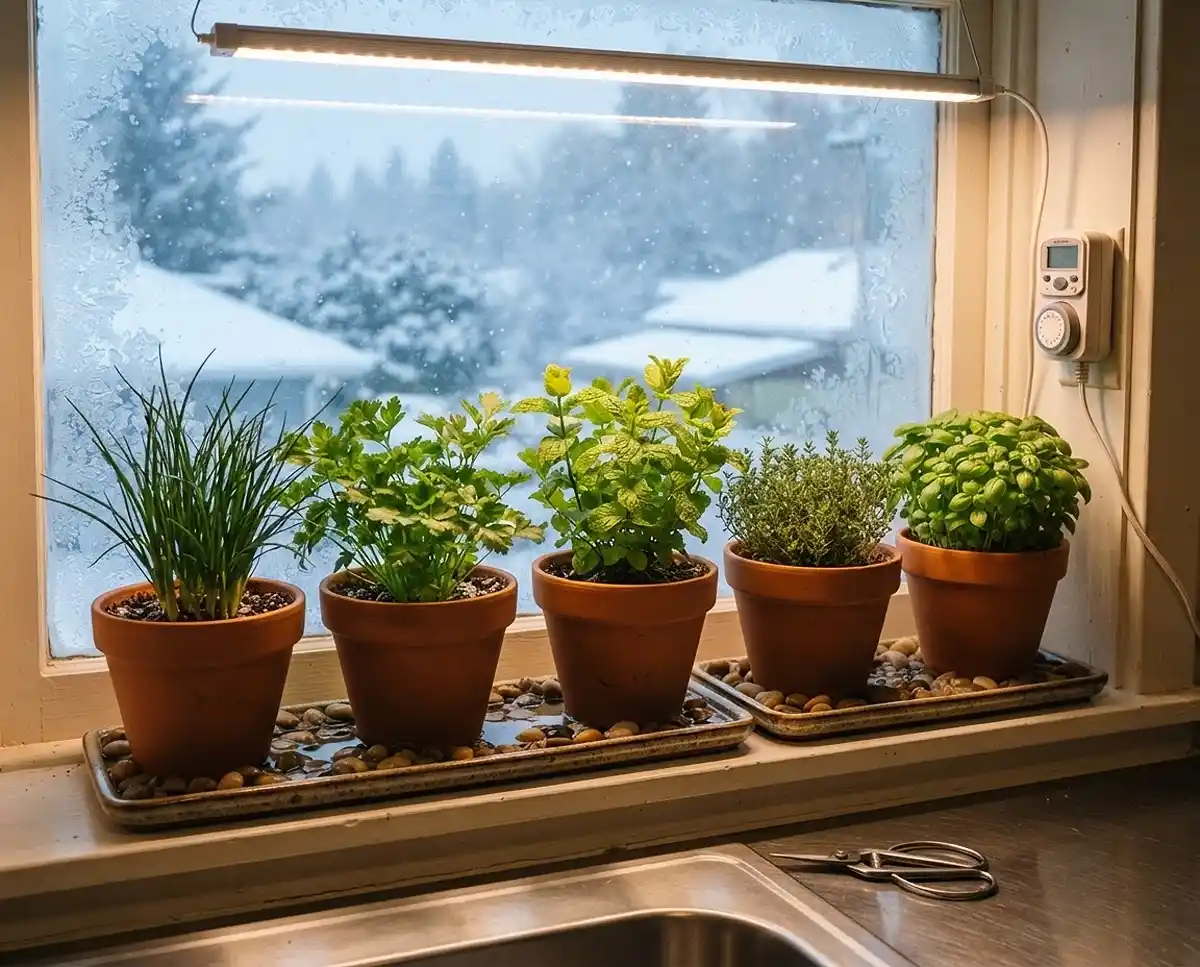
Indoor Winter Herb Garden Setup
An indoor winter herb garden keeps fresh thyme, parsley, and chives on your counter while it snows outside. Here’s my tested windowsill herb garden setup.
I grow herbs on a south-facing kitchen window in USDA zone 6b, where January light is thin and the radiator runs nonstop. I’ve killed plenty of basil learning what works, so you don’t have to.
Table of Contents
The Secret to a Thriving Indoor Winter Herb Garden
Winter outside means freezing nights and about nine hours of weak daylight. Inside, you control the conditions. That’s the whole trick.
A thriving indoor winter herb garden isn’t about a green thumb. It’s about building a small microclimate: enough light, a little humidity, and soil that drains fast.
Get those three right and you’ll be snipping rosemary into soup in February. As of winter 2026, my kitchen setup costs under $60 to start and takes about an hour to build.
Planning Your Winter Herb Garden Microclimate
Herbs evolved for open sun and moving air. Indoors, you’re faking that on a windowsill. Before buying anything, audit your light and your air.
This step matters even more in small space gardening, where one bad window is your only option. New to tight spaces? The beginner small space gardening guide covers the basics.
Assessing Natural Light and Window Placement
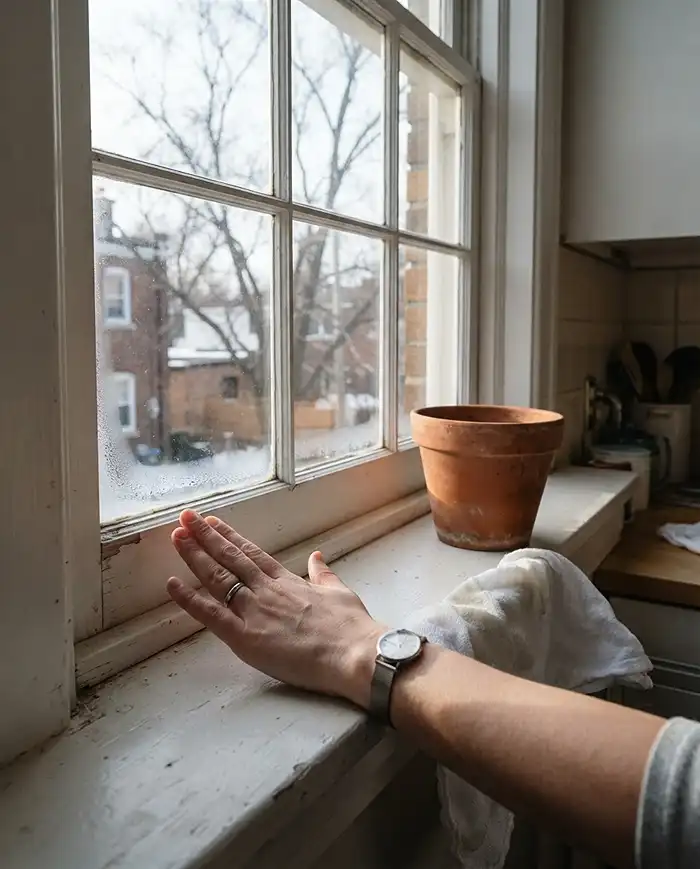
Quick Answer: Choose an unobstructed south-facing or west-facing window. Winter herbs need at least 6 hours of direct light daily, or they turn pale and floppy.
The winter sun sits low, so a tree or neighboring roof can block it completely. Stand at the window at noon and check for shadows.
East-facing windows work for shade-tolerant herbs only. North-facing windows are a no-go without a grow light. Wipe the glass too, because winter grime cuts light noticeably.
Combatting Indoor Heating and Dry Air
Two enemies hide near most windows. Cold drafts leak through old frames, and heating vents blast dry air across your plants.
Hold your hand at the sill on a windy night. If it feels icy, pull pots back a few inches or add a draft strip. Keep plants at least 3 feet from any vent.
Central heating drops indoor humidity to 20 percent or lower. Herbs prefer 40 to 50 percent, so you’ll need moisture-trapping tricks like pebble trays, covered below.
Essential Gear for an Indoor Winter Setup
You don’t need a fancy hydroponic rig. You need a short list of tools that stop roots from rotting and stop plants from starving for light.
- Full-spectrum LED grow light (10 to 20 watts for a windowsill)
- Automatic outlet timer or smart plug
- 6-inch pots with drainage holes, one per herb
- Exact-fit drip trays and a bag of pebbles
- Sterile indoor potting mix, perlite, and coarse horticultural sand
- Sharp snips and yellow sticky traps
Full-Spectrum LED Grow Lights
Don’t skip this one. Even a bright south window can’t deliver enough light from December through January at my latitude.
Buy a small full-spectrum LED, hang it 6 to 12 inches above the foliage, and plug it into a timer set for 12 to 14 hours. Relying on a gloomy sill alone gives you stretched, flavorless stems.
Real Example: In December 2024, I skipped the light and trusted my sill. By late January, my thyme had stems twice as long as normal and barely any flavor. A $25 clip-on LED fixed the next batch within three weeks.
Fast-Draining Pots and Humidity Trays
Unglazed terracotta breathes and dries faster, which protects against overwatering. Quality plastic works too if it has generous drainage holes.
Set each pot in a deep, exact-fit glazed drip tray. Fill the tray with pebbles and add water just below the pebble tops. The pot sits on stones, never in water, and evaporation creates a small humidity dome around the leaves.
The Ideal Indoor Potting Soil Mix
Here’s the recipe I use for every pot:
- 70 percent sterile indoor potting soil
- 30 percent perlite [small white volcanic glass pebbles that improve drainage]
- One handful of coarse horticultural sand per 6-inch pot
Never scoop dirt from your outdoor beds. It compacts in containers and often carries dormant pests. If you want more on pots and mixes, see this container gardening for beginners guide.
Best Herbs for Indoor Winter Growing
Not every herb tolerates dry air, low light, and cramped roots. The best winter herbs indoors share one trait: they handle container life without complaint.
| Herb | Light Needed | Watering | Difficulty |
|---|---|---|---|
| Chives | 4 to 5 hours, east window OK | Keep lightly moist | Easy |
| Flat-leaf parsley | 4 to 6 hours | Keep lightly moist | Easy |
| Mint | 4 to 5 hours | Moist, not soggy | Easy |
| Thyme and oregano | 6+ hours plus grow light | Let dry between waterings | Moderate |
| Rosemary | 8+ hours plus grow light | Let dry fully | Hard |
| Spicy Globe basil | 6+ hours, warm spot | Moist, never cold | Moderate |
Cold-Tolerant, Low-Light Survivors: Chives, Parsley, Mint
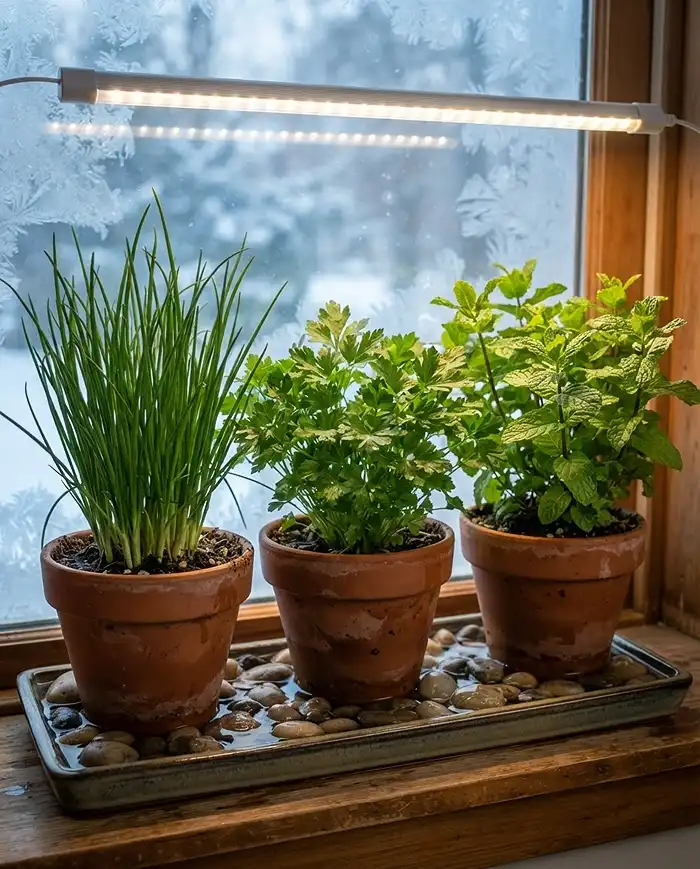
These three forgive beginners. Chives and flat-leaf parsley (try ‘Italian Flat Leaf’) keep growing in an east-facing window where sun-lovers would fade.
Mint roots aggressively, so pot it alone. My ‘Kentucky Colonel’ spearmint outgrew a shared planter in one autumn and strangled its neighbor.
Sun-Loving Mediterranean Herbs: Rosemary, Thyme, Oregano
These woody, drought-tolerant herbs want your brightest spot and sharply draining soil. Give them the grow light’s center position.
English thyme, Greek oregano, and ‘Tuscan Blue’ rosemary all rot quickly in soggy winter soil. Water only when the top inch is bone dry, and give rosemary a little airflow.
Pro Tip: Put a small clip-on fan on low for an hour daily. Moving air strengthens stems and helps soil dry between waterings.
The Basil Exception: Micro-Varieties
Standard sweet basil hates cold drafts and usually sulks by January. Choose compact micro-leaf types like ‘Spicy Globe’ instead.
It stays under 10 inches, fits a 6-inch pot, and tolerates tight quarters. I lost three sweet basil plants to one drafty sill before switching.
Step-by-Step Guide to Setting Up Your Indoor Garden
This is the exact order I follow when building a windowsill herb garden from scratch:
- Clean the windowsill and the glass, then check for drafts.
- Mix your soil: potting soil, 30 percent perlite, and a handful of sand.
- Fill each pot, leaving 1 inch of space below the rim.
- Plant nursery transplants or rooted cuttings at the same depth they grew before.
- Place pots on pebble-filled trays directly under the grow light.
- Water deeply until it drains from the bottom, then empty the tray after 15 minutes.
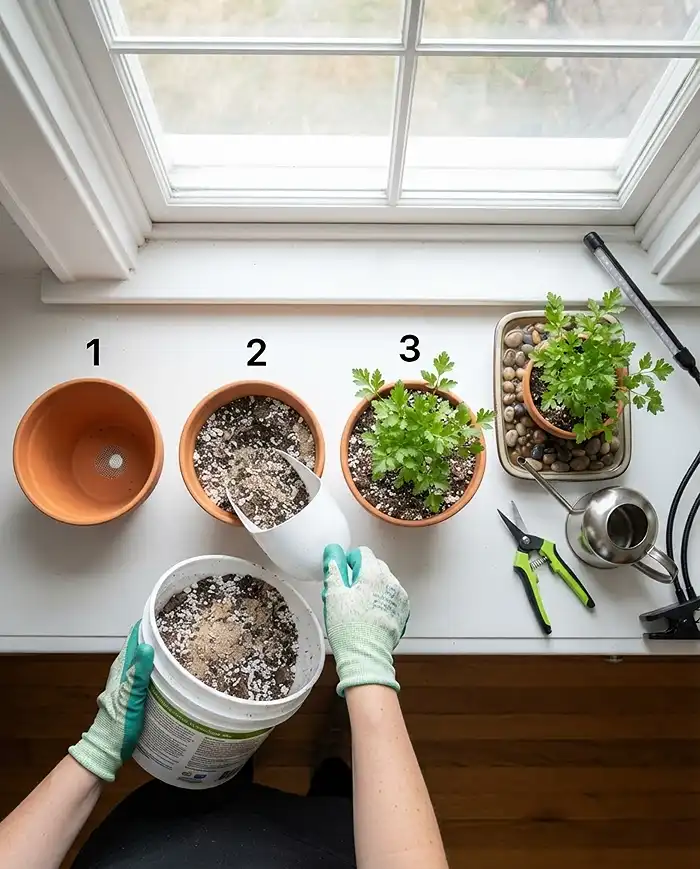
Set the timer for 12 to 14 hours and you’re done. Your indoor herb garden is now running.
Winter Maintenance for Maximum Harvests
Indoor herbs grow slowly in winter. Their metabolism drops, so they need less water and far less fuss than summer plants. Adjust your routine to match.
Modifying Your Watering Schedule
Use the finger test. Push a finger 1 inch into the soil, and water only if it feels dry. Without wind and with cooler air, soil evaporates far more slowly.
Overwatering is the leading cause of windowsill herb death. Mediterranean herbs might need water every 10 to 14 days, while parsley and mint may need it weekly.
Pruning and Harvesting to Prevent Legginess
Harvest by pinching just above a leaf pair or node [the joint where leaves meet the stem]. Take the top third of the plant, no more.
Pinching forces two new shoots from each cut, which builds a dense, bushy plant instead of one reaching for light. Harvesting for soup is really pruning in disguise.
Common Problems & Solutions
Two problems cause most winter failures. Both are fixable if you catch them early.
Eradicating Fungus Gnats
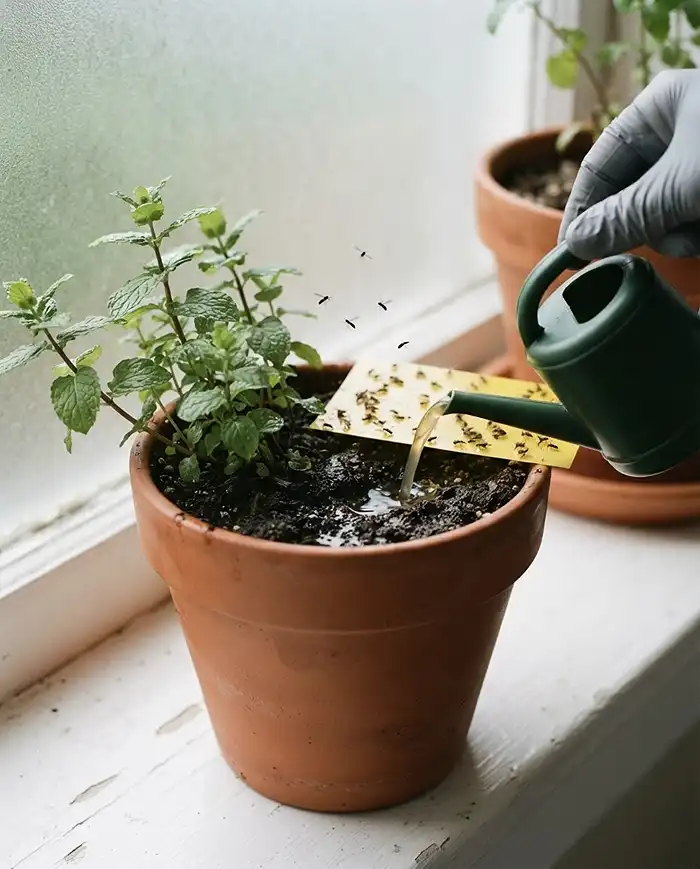
Damp topsoil plus central heating breeds fungus gnats, those tiny flies hovering around your pots. The larvae feed on roots, so act fast.
- Let the top 2 inches of soil dry out completely.
- Place yellow sticky traps at soil level.
- Steep a Bacillus thuringiensis israelensis (BTI) mosquito dunk in water for a few hours, then water plants with that tea.
Real Example: In November 2025, my mint pot swarmed with gnats. Two BTI waterings a week apart and a dry topsoil cleared them in about 10 days.
Root Rot and Yellowing Leaves
Yellow, mushy leaves at the base signal suffocating roots. The cause is usually overwatering or a pot with no drainage holes.
Unpot the plant right away. Trim black or slimy roots, repot into fresh dry soil in a pot with holes, and cut back your watering. Don’t water again for at least a week.
Frequently Asked Questions
Can I bring my outdoor potted herbs inside for winter?
Yes, mature herbs can move indoors, but quarantine them first. Keep them separate from other plants for two weeks and wash the foliage with neem oil to remove aphids and spider mites before they spread.
Do I need to fertilize my indoor herbs in winter?
No. Heavy nitrogen fertilizer forces weak, spindly growth on low-light plants. Only if you see severe deficiencies, apply a highly diluted liquid kelp spray.
How long should I leave my grow lights on?
Run LED grow lights 12 to 14 hours daily using a mechanical timer or smart plug. Turn them off at night so the plants can rest and respire.
What is the easiest herb to grow indoors in winter?
Chives, flat-leaf parsley, and mint are the easiest. They tolerate lower light and dry air, and they keep producing even in an east-facing window.
Why are my indoor herbs growing tall and thin?
Tall, thin stems mean the plant is reaching for light. Move it closer to a grow light, keep the light 6 to 12 inches above the leaves, and pinch back the tips.
Key Takeaways
- A successful indoor winter herb garden depends on three things: strong light, fast-draining soil, and modest watering.
- Use a full-spectrum LED on a 12 to 14 hour timer, even with a south-facing window.
- Start with chives, parsley, and mint, then add thyme, oregano, and ‘Spicy Globe’ basil.
- Water by the finger test and pinch back growth often to prevent legginess.
- Not sure of your climate? Check your zone on the USDA Plant Hardiness Zone Map, and read the balcony gardening for beginners guide for moving herbs outside in spring.