
Composting for Container Gardens
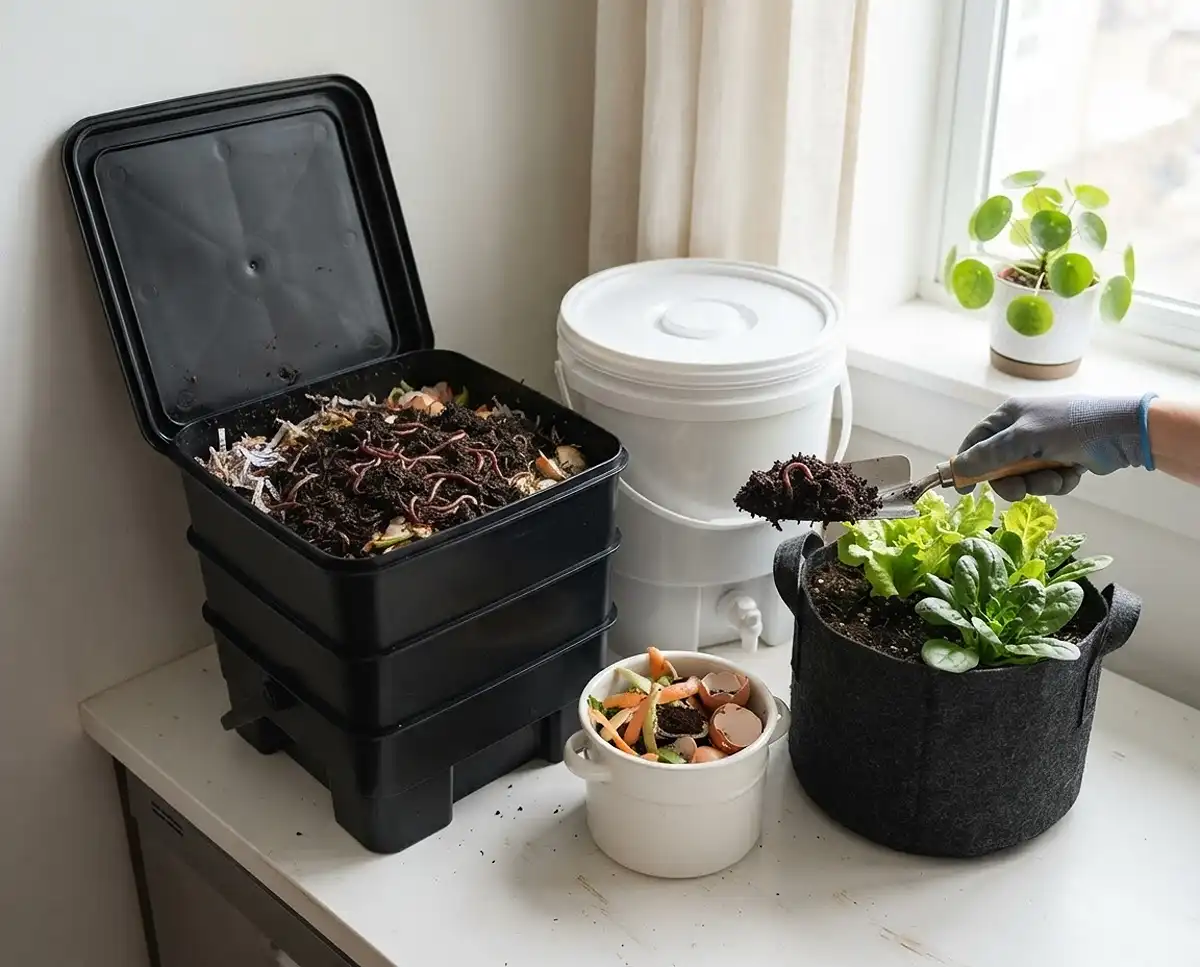
Composting for container gardens works in a bucket under your sink. Learn how to compost at home with worms or Bokashi and feed your pots for free. I’ve run both systems on a north-facing balcony in zone 6b, and neither smelled.
Table of Contents
The Magic of Composting for Container Gardens
You don’t need a backyard to make black gold. A small bin turns peels and coffee grounds into free fertilizer that revives tired, compacted potting mix.
Pots lose nutrients fast. Every watering flushes some out, and bagged mix runs thin after six to eight weeks. Homemade compost refills the tank and feeds the microbes that keep soil alive.
That’s the real payoff of small space gardening: one 5-gallon bin can supply finished compost for a handful of 12-inch pots each harvest. No garden center trips, no plastic bags.
If you’re brand new to growing in tight quarters, this beginner small-space gardening guide covers the basics before you start.
Understanding Small-Space Composting Methods
Pick your method first, because it decides your bin, your location, and what you can feed it. Two systems suit apartments and balconies: worm bins and Bokashi buckets. Both are sealed, compact, and nearly odor-free when managed properly.
Vermicomposting (Worm Bins) for Nutrient-Dense Castings
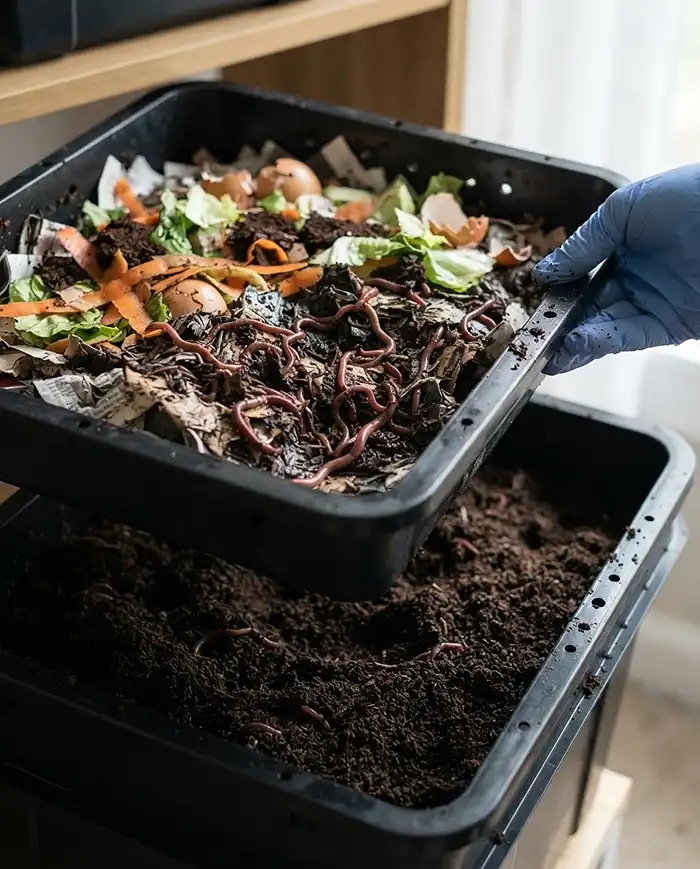
Quick Answer: Vermicomposting uses red wiggler worms (Eisenia fetida) to turn vegetable scraps into worm castings. Castings are a gentle, slow-release fertilizer that’s safe for potted plants, and they work well in a compact 5 to 10 gallon indoor bin.
Red wigglers eat roughly half their body weight daily. One pound of worms, about 1,000 of them, handles around half a pound of scraps a day.
Tiered bins let worms climb up to fresh food while castings collect below. Because nutrients release slowly, the risk of fertilizer burn is very low. That makes castings ideal compost for containers, where roots can’t escape.
Pro Tip: Freeze scraps overnight before feeding. Thawed scraps are softer, so worms eat them faster, and the cold kills stray fruit fly eggs.
Bokashi Bins for Indoor Fermentation
Quick Answer: Bokashi is a Japanese anaerobic fermentation method. You layer scraps with inoculated bran in a sealed bucket, and it pickles everything, including meat and dairy, in about two weeks. The smell stays mild and sweet-sour instead of rotten.
Press each layer flat to squeeze out air. Sprinkle about one tablespoon of bran per inch of scraps, then seal the lid. Drain the liquid through the spigot every two to three days.
The result isn’t finished compost. It’s pickled food that needs about a month buried in soil or a large tote before it’s safe around roots.
| Feature | Worm Bin | Bokashi Bucket |
|---|---|---|
| Handles | Vegetable scraps, coffee grounds, eggshells | All food waste, including meat and dairy |
| Time to usable | 3 to 4 months | 2 weeks ferment plus 4 weeks buried |
| Watch out for | Temperatures below 55°F or above 80°F | Needs a soil tote or bed for the final step |
Essential Gear and Setup for Home Composting
You only need a few basic supplies to build a thriving compost ecosystem without making a mess. Most of it costs less than a single bag of premium potting mix.
- Opaque bin of 5 to 10 gallons with a lid and ventilation holes, or a stackable worm bin
- One pound of red wiggler worms, or a Bokashi bucket with spigot and one pound of bran
- Shredded newspaper, torn cardboard, or a coco coir brick
- Spray bottle for adjusting moisture
- Hand trowel for turning the top layers
- Lidded countertop caddy for collecting scraps
Choosing the Right Bin Size and Location
Quick Answer: Choose an opaque, ventilated bin between 5 and 10 gallons for indoor use. Keep it at 55°F to 80°F, away from drafty windows and heating vents, so the microbes and worms stay active.
Opaque plastic matters because worms avoid light. Anything larger than 10 gallons is hard to lift and tends to sit half empty in an apartment.
Here’s where I went wrong. My first winter, I parked a worm bin by the balcony door. One 28°F night in January killed roughly half the colony.
It now lives in a hall closet that stays around 62°F, and the worms have thrived since.
Bedding Materials for Aeration and Moisture Control
Bedding is the carbon layer that keeps everything breathable. Shredded newspaper, torn cardboard, and rehydrated coco coir all work. They absorb extra moisture and create air pockets that decomposing microbes need.
Skip glossy or heavily colored paper. Soak your bedding until it feels like a wrung-out sponge, then fluff it so it sits loose. Packed bedding smothers the very oxygen pockets you’re trying to create.
The Step-by-Step Guide to Starting Your Compost
Setup takes about 20 minutes. Follow this order so the bin starts balanced and odor-free.
- Dampen your bedding until it feels like a wrung-out sponge, then fill the bin about two-thirds full.
- Add the red wigglers, or a one-inch layer of Bokashi bran if you’re fermenting.
- Chop your first batch of kitchen scraps into pieces about one inch across. Smaller pieces break down faster.
- Bury the scraps in a corner of the bedding rather than dumping them on top.
- Cover the food completely with a layer of dry carbon to block odors and pests.
- Close the lid. Feed lightly for the first two weeks while the bin settles.
The same clean-hands habits I use when growing sprouts safely at home apply here: wash up after handling scraps or castings.
Maintaining the Perfect Compost Balance
A healthy bin is a daily negotiation. Each scrap you add changes the moisture and nitrogen level, so small adjustments keep the breakdown steady and smell-free.
The Golden Ratio of Greens (Nitrogen) to Browns (Carbon)
The basic rule is three parts browns to one part greens by volume. Excess nitrogen causes foul-smelling rot. Excess carbon makes decomposition stall completely.
| Browns (Carbon) | Greens (Nitrogen) |
|---|---|
| Shredded newspaper | Vegetable peelings |
| Torn cardboard | Coffee grounds |
| Dry leaves | Fruit scraps |
| Coco coir | Tea leaves |
Coffee grounds are technically a green, even though they look brown. Count them that way and your ratio will stay on track.
Managing Moisture and Aeration in Small Bins
Aim for the consistency of a wrung-out sponge. If the bin turns soggy, mix in dry cardboard. If it dries out, mist it lightly with the spray bottle.
Once a week, gently turn the top layers with a hand trowel. This adds oxygen without disturbing worms living deeper down. Watch for moisture beads on the lid, which signal too much water.
Harvesting and Using Compost in Container Gardens
Compost for containers needs a different approach than ground soil. Roots in pots can’t spread out to escape strong material, so you must blend carefully to avoid burning fragile roots.
Extracting Finished Compost and Compost Tea
Quick Answer: Finished compost is dark, crumbly, and smells like forest soil, with no recognizable scraps. Separate it from unfinished material by moving it aside. To make compost tea, steep one handful in aerated water for 24 hours and use it the same day.
For worm bins, push finished castings to one side and add fresh bedding and food on the other. Worms migrate over in two to three weeks, leaving clean castings behind.
For tea, steep about one cup of compost in a gallon of dechlorinated water with an aquarium pump running. Use it as a foliar feed or soil drench.
Keep tea off edible leaves close to harvest, and rinse anything you’ll eat.
Amending Potting Soil Without Burning Roots
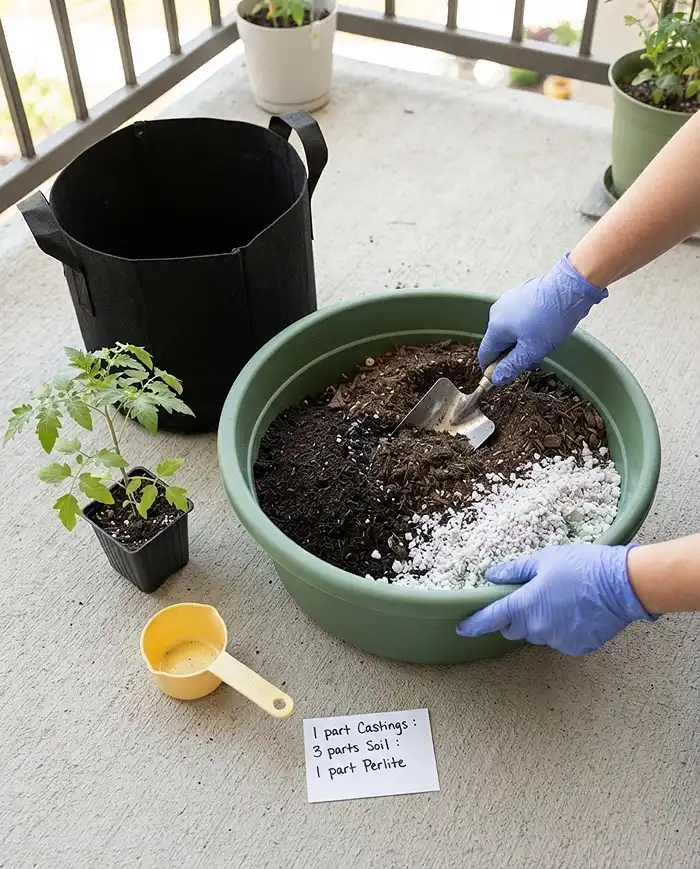
Blend finished compost into your potting mix at 20% to 30%. A good starting recipe for a 5-gallon pot is one gallon of compost, three gallons of potting soil, and one gallon of perlite.
Never plant into 100% pure compost. It compacts, holds too much water, and suffocates roots, which stunts growth.
Last June, I planted a ‘Sungold’ cherry tomato in a 15-gallon fabric pot using a 25% castings blend. It out-produced the plain-mix pot beside it all summer, with noticeably deeper green leaves by July.
If you grow greens indoors, the same kitchen counter can host a low-cost microgreens system at home alongside your bin.
Common Problems & Solutions
Nearly every bin failure comes from too much moisture, too much nitrogen, or exposed food. All three are fixable within days if you catch them early.
Foul Odors and Anaerobic Sludge
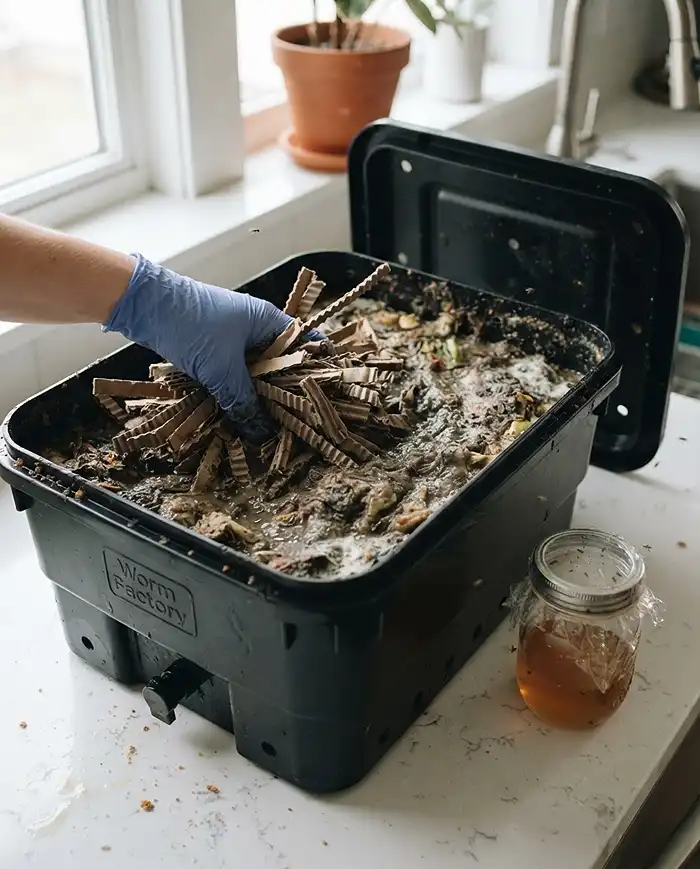
A rotten egg or ammonia smell means anaerobic decomposition, where oxygen-starved microbes take over. The bin turns slimy and sour.
Start the rescue right away:
- Mix in a large amount of shredded dry cardboard
- Stop adding wet food for two weeks
- Fluff the contents to restore air flow
Most bins recover within a week once the moisture balance returns.
Fruit Flies and Fungus Gnats Invading the Bin
Exposed scraps are a magnet for breeding insects. One August, I left banana peels on top of my bedding for a single weekend and had a cloud of fruit flies by Monday.
Here’s what fixed it:
- Set an apple cider vinegar trap with a drop of dish soap beside the bin
- Bury all new scraps under a thick layer of dry bedding
- Let the top inch dry out to stop fungus gnats breeding
The flies were gone in about ten days, and I’ve buried every scrap since.
Frequently Asked Questions
Can I compost meat, dairy, or citrus in a small indoor bin?
Traditional worm bins can’t handle meat, dairy, or large amounts of acidic citrus, which putrefy and harm the worms. Bokashi fermentation can safely break down all of these items without foul odors.
How long does it take to get usable compost for my pots?
A well-maintained worm bin typically yields harvestable castings every 3 to 4 months. A Bokashi bucket ferments in two weeks, then needs about one more month buried in a soil tote to fully integrate.
Will an indoor compost bin attract cockroaches or rodents?
A sealed, securely lidded bin with the right green-to-brown ratio won’t attract rodents or roaches. The carbon layer neutralizes odors, and the container walls physically block pests.
Does composting for container gardens smell bad indoors?
A balanced bin smells like damp earth, not garbage. Smells appear when you overfeed or the bedding gets soggy, and adding dry cardboard fixes it quickly.
Can I use compost for containers straight from the bin?
Not at full strength. Blend finished compost at 20% to 30% with potting soil and perlite, because pure compost compacts and can suffocate roots.
Key Takeaways
- Composting for container gardens works in a 5 to 10 gallon indoor bin, using worms or Bokashi.
- Keep bins at 55°F to 80°F and feed a 3:1 ratio of browns to greens.
- Aim for a wrung-out sponge moisture level, and bury scraps under dry bedding to stop pests.
- Blend finished compost at 20% to 30% with potting soil and perlite to protect roots.
- Use the EPA’s home composting guide for extra reference on what to compost and what to avoid.