
Companion Planting in Containers
Companion planting in containers isn’t garden-bed advice with a smaller pot swapped in. Get the pairings right and your container vegetable gardening setup produces more food in less space.
I grow vegetables in containers on a east-facing patio in zone 6b, and I’ve killed more plants through bad pairings than bad soil. Here’s what actually holds up when roots share one pot.
Table of Contents
Why Container Companion Planting Is Different from Garden Bed Rules
Garden beds give roots unlimited soil to spread into and avoid each other. A container gives every plant the same 3-5 gallons, so root competition starts immediately instead of after a few seasons.
Nutrients and water also disappear faster in a pot. A 16-inch container dries out in a single hot afternoon, while a garden bed holds moisture for days. That changes which “classic” pairings actually survive.
Some traditional combos, like the Three Sisters (corn, beans, squash), simply need more root room than any container gardening setup can offer. Others, like basil and tomato, translate perfectly because their needs already overlap.
The Real Principles Behind Smart Container Pairings
Matching Root Depth and Growth Habit
The strongest container pairings combine a deep-rooted anchor plant with a shallow-rooted companion, so roots occupy different soil layers instead of fighting for the same zone.
- Deep roots (12-18 inches): tomatoes, peppers, eggplant
- Shallow roots (4-8 inches): lettuce, chives, thyme, marigold
- Upright growers: tomato, pepper, dill
- Trailing or low spreaders: nasturtium, petunia, strawberry runners
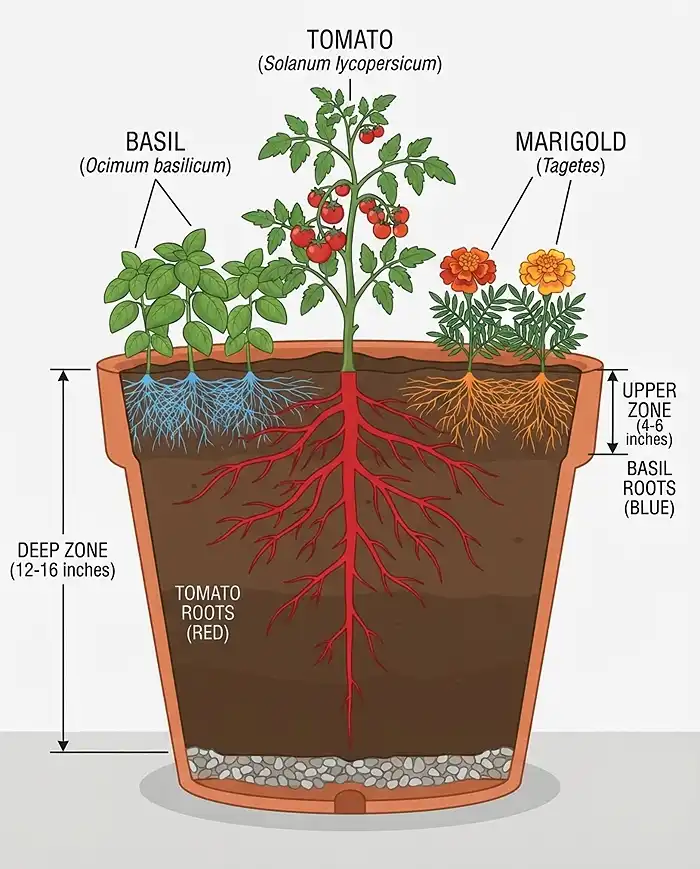
Pair one upright plant with one low spreader and you get full use of the container’s vertical space without anyone shading out anyone else.
Matching Sun, Water, and Soil pH Needs
Quick Answer: Plants sharing a container need the same sun exposure, similar watering frequency, and a compatible pH range. Mismatch any of those three and one plant slowly starves the other.
Tomatoes and basil both want 6-8 hours of full sun, daily watering in summer heat, and a pH between 6.0 and 6.8, which is exactly why that pairing is a container classic instead of a coincidence.
Compare that to rosemary, which wants dry soil and full sun, sharing a pot with lettuce, which wilts fast without consistent moisture. Same sun requirement, opposite water needs, so it fails.
Research from University of Minnesota Extension backs this up: shared growing conditions matter more than folklore pest-repelling claims when picking companions.
Container Size and Spacing Guidelines by Plant Combination
Undersized containers are the number one reason companion pairings fail. Here’s what I use as a baseline, adjusted after a few seasons of trial and error.
| Pairing | Minimum Diameter | Minimum Depth | Spacing Between Plants |
|---|---|---|---|
| Tomato + Basil | 18-20 in | 16-18 in | 10-12 in apart |
| Pepper + Marigold | 14-16 in | 12-14 in | 8-10 in apart |
| Lettuce + Chives | 12-14 in | 8-10 in | 6-8 in apart |
| Cucumber + Dill (trellised) | 16-18 in | 14-16 in | 10 in apart |
| Strawberry + Thyme | 14-16 in | 10-12 in | 6-8 in apart |
For a deeper breakdown by individual crop, our pot size guide for vegetables covers single-plant minimums too.
Proven Companion Combinations That Actually Work in Pots
Tomato, Basil, and Marigold
Quick Answer: Tomato, basil, and marigold share sun, water, and pH needs, and French marigold’s scent confuses egg-laying pests looking for tomato foliage.
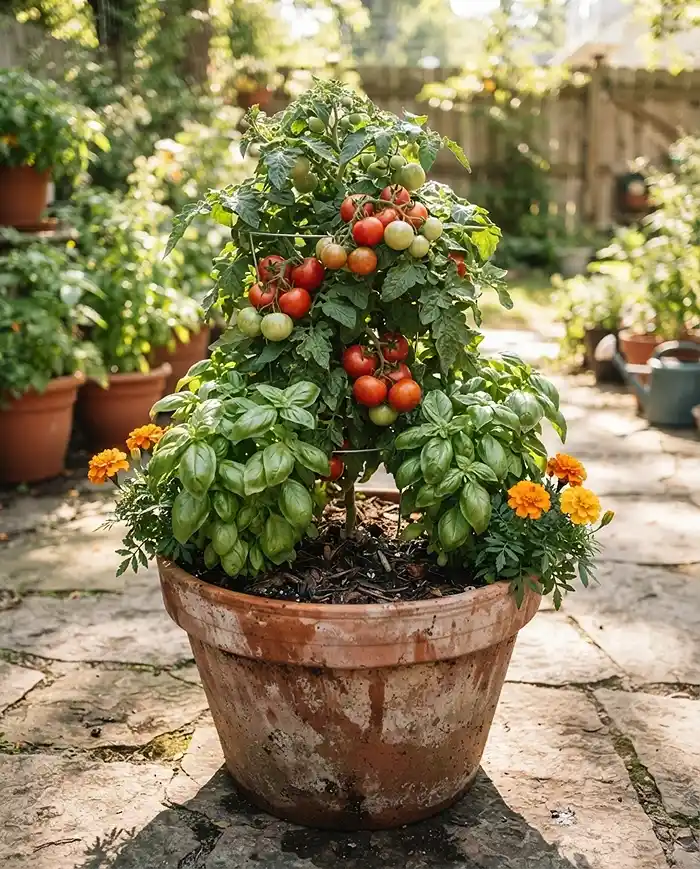
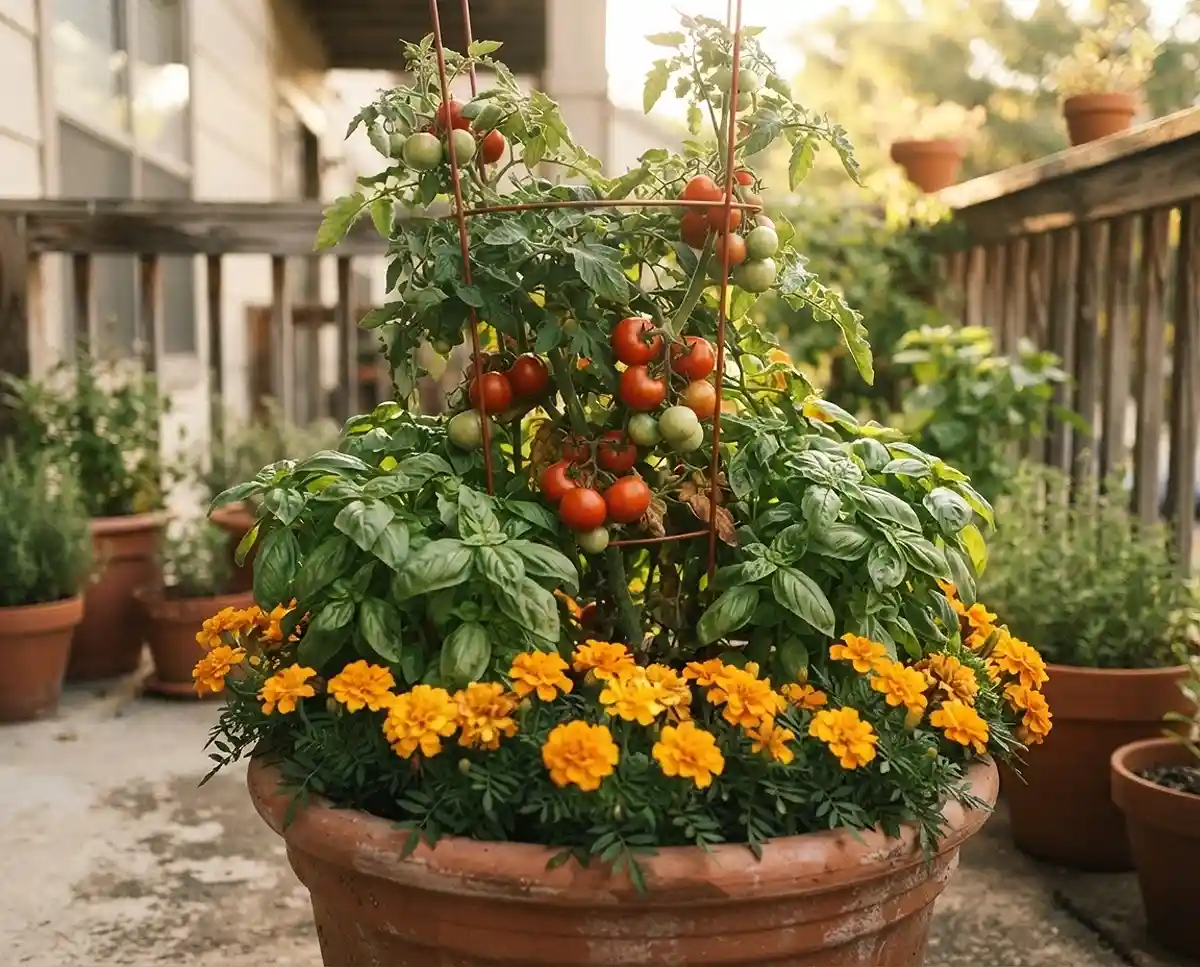
I run this trio every summer in a 20-inch pot: one ‘Bush Early Girl’ tomato, three ‘Genovese’ basil plants around the base, and two dwarf ‘Bonanza’ marigolds along the rim.
Real Example: Last July, aphid pressure on my neighbor’s unprotected tomatoes was bad. Mine, ringed with marigold, stayed nearly clean through August in zone 6b.
Pro Tip: Pinch basil flower spikes weekly. Once basil bolts, it stops producing leaves and starts competing harder for the tomato’s water instead of earning its space.
Pepper, Onion, and Petunia
Quick Answer: Onions planted around a pepper’s base deter aphids and thrips with their sulfur compounds, while trailing petunias fill gaps without stealing root room.
Use a 16-inch pot with one ‘Corno di Toro’ pepper in the center, four ‘Walla Walla’ onion sets around it, and two petunias trailing over the edge. Onions’ shallow, thin roots barely compete with the pepper.
Pro Tip: Harvest onions as scallions at 6-8 inches tall instead of letting them bulb up. That keeps root competition minimal through the pepper’s entire fruiting season.
Lettuce, Chives, and Nasturtium
Quick Answer: This shade-tolerant trio suits shallow containers and cool-season growing, with chives repelling aphids and nasturtium acting as a sacrificial trap crop for them.
A 12-inch-deep pot works fine here since none of the three need more than 8 inches of root depth. Plant lettuce in the center, ring it with chives, and let nasturtium spill over one side.
Pro Tip: If aphids show up, check the nasturtium leaves first. They’re drawing pests away from your lettuce and chives, exactly as intended.
Cucumber, Dill, and Nasturtium on a Trellis
Quick Answer: Growing cucumber vertically on a trellis frees up soil space for dill and nasturtium at the base, and dill’s flowers attract predatory wasps that eat cucumber beetle larvae.
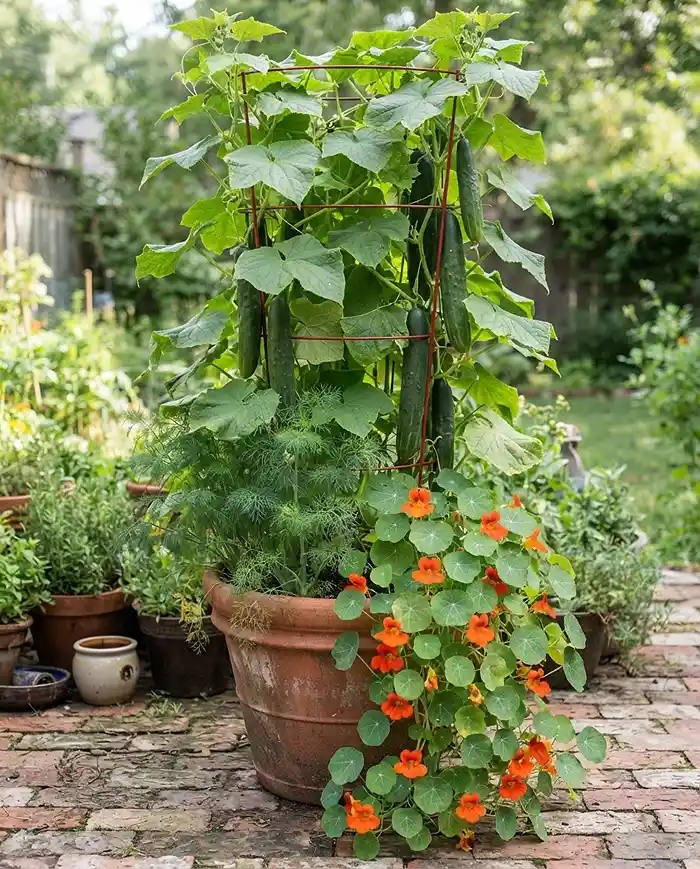
I use a 16-inch pot with a tomato cage repurposed as a trellis. One cucumber (I like ‘Spacemaster’ for containers) climbs it while dill and nasturtium share the ground space beneath.
Pro Tip: Let a couple of dill plants flower fully instead of harvesting all the foliage. Flowering dill is what actually pulls in the beneficial insects.
Strawberries with Thyme or Borage
Quick Answer: Low-growing thyme acts as living mulch that shades strawberry roots and suppresses weeds, while borage attracts pollinators that boost fruit set.
In a 14-inch shallow pot, I plant one ‘Tri-Star’ everbearing strawberry with creeping thyme tucked around its base. Both tolerate similar drought stretches without wilting.
Pro Tip: Skip borage if your container sits somewhere shaded. It gets leggy fast without at least 6 hours of direct sun and ends up shading the strawberry instead of helping it.
Combinations to Avoid in Containers
Some pairings that work fine in an open garden bed turn into a slow disaster once roots are confined to one pot.
- Mint with anything: Mint’s aggressive rhizomes will choke out any container companion within one season. Always grow it alone.
- Fennel with most vegetables: Fennel releases allelopathic compounds that stunt the growth of neighboring plants, especially tomatoes and beans.
- Tomatoes with corn: Both are heavy feeders competing for the same nutrients, and corn’s root system needs more depth than any container realistically provides.
- Beans with onions or garlic: Alliums suppress the nitrogen-fixing bacteria that beans rely on, which cancels out the main benefit of growing beans at all.
Step-by-Step: Planning and Planting a Companion Container
Step 1 – Choose Your Anchor Plant
Pick your main crop first, the one you actually want a harvest from, whether that’s a tomato, pepper, or cucumber. Every companion decision after this should serve the anchor’s light, water, and root needs.
Step 2 – Layer by Height and Root Zone
Borrow the “thriller, filler, spiller” structure from ornamental container design. Your anchor plant is the thriller, a mid-height herb is the filler, and a trailing plant is the spiller.
This layering isn’t just visual. It naturally spaces root zones at different depths and keeps taller plants from shading out lower ones as the season progresses.
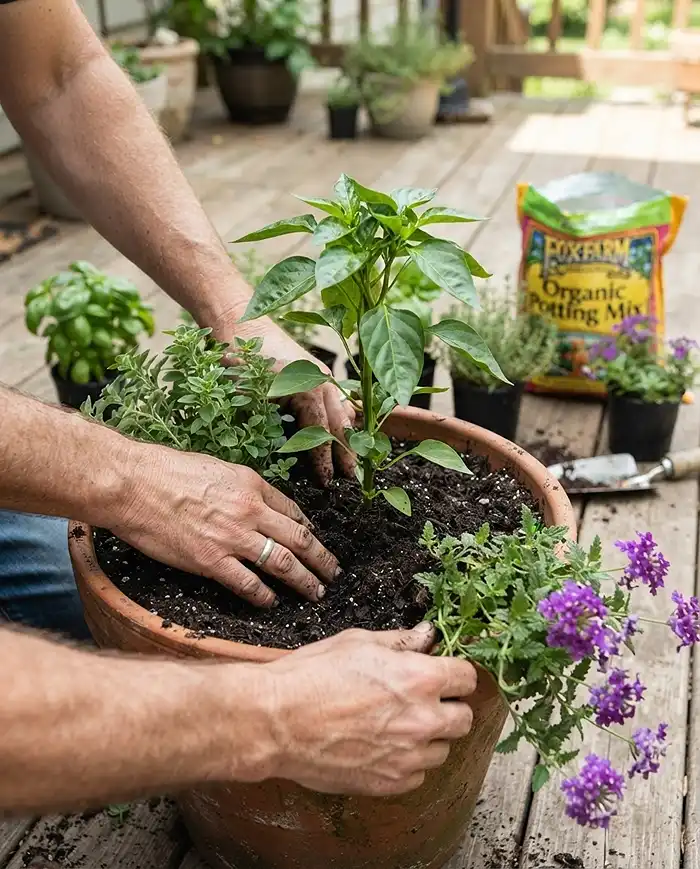
Step 3 – Plant and Space Correctly
Leave the spacing listed in the sizing chart above, even if the container looks empty on planting day. Small transplants fill in fast, and overcrowding on day one becomes a mildew problem by week six.
Mound soil slightly higher around the anchor plant’s base at planting time. As companions mature and roots compete, that extra soil buffer keeps the anchor from getting undercut.
Feeding and Watering Multi-Plant Containers
Multiple plants sharing one root zone deplete nutrients roughly twice as fast as a single-plant pot of the same size. I feed companion containers with a diluted liquid fertilizer every 10-14 days instead of the usual 3-4 weeks.
Water deeply until it runs from the drainage holes, rather than a quick surface splash. Shallow watering only reaches the top few inches, which starves whichever companion has deeper roots.
In peak summer heat, my tomato-basil-marigold combo needs water daily. The same container in cooler spring weather goes two to three days between waterings.
Seasonal Rotation and Succession Planting in Companion Pots
A container gardening setup doesn’t have to sit empty between seasons. Swap warm-season pairings like tomato-basil-marigold for cool-season ones like lettuce-chives-nasturtium once nighttime temps drop below 50°F.
I refresh the top 3-4 inches of soil and mix in fresh compost between rotations rather than replacing the whole container’s soil volume every time.
For a full list of what transitions well, check our guide to vegetables to plant in late summer in pots, which lines up closely with these cool-season companion combos.
Regional Considerations for Climate and Hardiness Zones
Hot, humid zones (8-10) push containers to dry out fast and raise disease pressure from poor airflow, so give pairings slightly more spacing than the chart above suggests.
Cool, arid zones (3-5) hold moisture longer in containers but shorten the growing window, which makes fast-maturing companions like lettuce and chives a better bet than slow ones like peppers.
As of the 2026 growing season, USDA zone shifts have pushed many gardeners half a zone warmer than older charts show, so double-check your zone before locking in a warm-season pairing.
Common Problems and Solutions
One Plant Outcompeting Its Companion
Watch for stunted growth or one plant wilting even when soil is moist. That’s usually a root-space fight, not a watering problem. Trim aggressive roots at the surface or move the weaker plant to its own pot.
Overcrowding Leading to Poor Air Circulation and Disease
Powdery mildew showing up on lower leaves is the classic overcrowding symptom. Thin foliage immediately and, if plants are still small enough, transplant one out to restore airflow.
Nutrient Deficiency from Shared Soil
Yellowing leaves and slowed growth by mid-season usually mean the shared soil is tapped out. Supplement with liquid fertilizer every 10 days, or top-dress with an inch of fresh compost.
companion planting in containers FAQs
Can you companion plant in the same pot or do they need separate containers?
True companion planting means sharing one container, not placing separate pots side by side. It works as long as the plants have compatible root depth, sun, water, and container size needs.
What vegetables should never be planted together in a container?
Avoid tomatoes with fennel, beans with onions or garlic, and anything paired with mint. These combinations compete for nutrients or actively suppress each other’s growth.
How big does a container need to be for companion planting?
Most multi-plant combinations need a container at least 14 inches deep and wide. Larger anchor plants like tomatoes or cucumbers do better in 16-20 inch containers.
Do herbs make good companion plants in vegetable containers?
Yes. Basil, chives, and thyme are among the best container companions because they deter pests, share similar water needs with common vegetables, and take up minimal root space.
Key Takeaways
- Companion planting in containers works when you match root depth, sun exposure, water needs, and pH, not just by copying garden-bed pairings.
- Give shared pots enough size: 14 inches minimum for small combos, 18-20 inches for tomato-based trios.
- Skip mint, fennel with vegetables, and tomato-corn pairings entirely in confined containers.
- Feed companion containers every 10-14 days since shared roots deplete soil nutrients faster than single-plant pots.
- Rotate warm- and cool-season companions to keep small space food garden containers productive across the whole year.