

Choosing the Right Containers for Small-Space Gardening
Choosing the right containers for small-space gardening stops plant failures! Discover 3 critical factors + container-to-plant chart. Start thriving today!
Here’s the deal with choosing the right containers for small-space gardening: it’s basically a controlled growing system perfect for balconies, patios, and rooftops. Your plant’s success comes down to three things: getting the right container size, picking the right material, and making sure there’s proper drainage. That’s it!
Mastering choosing the right containers for small-space gardening transforms tiny balconies into productive gardens.
If you’re diving into urban container gardening or dreaming of a balcony vegetable garden, trust me—understanding containers will save you from killing plants and wasting money on replacements. Been there, done that!
Table of Contents
Why Container Choice Determines Plant Health
Look, your container isn’t just a pretty pot sitting on your balcony—it’s literally your plant’s entire world.
Root architecture and oxygen access
Think of it this way: containers control how roots grow and breathe. Unlike those lucky in-ground plants that can spread out looking for nutrients, your container plants are stuck with whatever space you give them. Healthy roots need water AND oxygen. Mess up your container choice and you’ll end up with soggy, suffocated roots that’ll turn to mush.
The Volume-to-Maturity Rule
Here’s a rule I wish someone had told me earlier: your container should be at least twice the size of your plant’s root ball when it’s fully grown. That cute little tomato seedling in a 4-inch pot? Yeah, it’ll eventually need 5+ gallons if you actually want tomatoes. Cramming plants into tiny pots is like trying to grow up in a closet—not gonna work well.
Urban heat and root stress
Dark containers sitting in full sun can hit 120°F (49°C)—basically cooking your poor roots alive. City balconies create these crazy heat zones that make water evaporate super fast. Material matters big time here: clay pots breathe and stay cooler, while metal ones turn into little ovens.
Function over aesthetics
I know that gorgeous ceramic pot at the store is calling your name, but if it doesn’t have drainage holes, it’s a plant death trap. Seriously, I’ve killed more basil plants this way than I’d like to admit. Always pick what your plants need first. You can always stick a functional container inside a pretty one later!
Bottom line: choosing the right containers for small-space gardening starts with understanding your plant’s root needs.
Container Size Basics for Small Spaces
Size is honestly the biggest headache when you’re working with small space gardening tips.
Small containers create big problems
Tiny pots dry out faster than you can say “I forgot to water again.” We’re talking multiple waterings per day in summer heat. Plus, there’s barely any soil for nutrients, so you’re constantly fertilizing. And your plants? They’ll never get as big or productive as they should.
This is why choosing the right containers for small-space gardening means prioritizing size over aesthetics.
Size affects watering frequency and nutrient retention
A 1-gallon container might need watering twice a day in July, while a 5-gallon pot can chill for 2-3 days. Bigger soil volumes also handle temperature swings and pH changes way better—it’s like having a buffer zone for mistakes.
Minimum size guidelines by plant type
When choosing the right containers for small-space gardening, use these baseline measurements:
Herbs and leafy greens:
Basil, parsley, lettuce, and spinach are pretty chill in 6-12 inch containers (1-2 gallons). These guys have shallow roots and care more about making leaves than digging deep.
Fruiting plants:
Peppers, eggplants, and compact tomatoes need 12-18 inch pots (3-5 gallons minimum). Making fruit takes serious energy, and that means serious roots.
Root vegetables:
Carrots, beets, and radishes need DEPTH more than width. Go 12-18 inches deep so those taproots can actually develop. Potatoes? They need 5+ gallons if you want more than a sad handful at harvest.
Matching Plant Root Systems to Container Depth
Understanding how roots work prevents those “why is my plant dying?” moments in urban container gardening.
| Plant Category | Minimum Soil Depth | Root Type | Recommended Container |
|---|---|---|---|
| Herbs, Lettuce | 6–9 inches | Shallow / Fibrous | Window boxes, trays |
| Peppers, Beans | 12–18 inches | Moderate / Lateral | Plastic or ceramic pots |
| Tomatoes, Carrots | 18–24 inches | Deep / Taproot | Fabric grow bags, buckets |
This comparison makes choosing the right containers for small-space gardening straightforward and foolproof.
Fibrous roots spread out sideways and love wider, shallower containers. Taproots dig straight down and need depth. Match your container to how your plant actually grows and you’ll be amazed at the difference!
For more comprehensive advice on maximizing your limited space, check out our guide on Small-Space Gardening: The Complete Beginner Guide.
Types of Containers for Small-Space Gardening
Material choice isn’t just about looks—it affects everything from watering to whether your plants survive summer.
Choosing the right containers for small-space gardening means understanding how different materials affect plant health and your watering schedule.
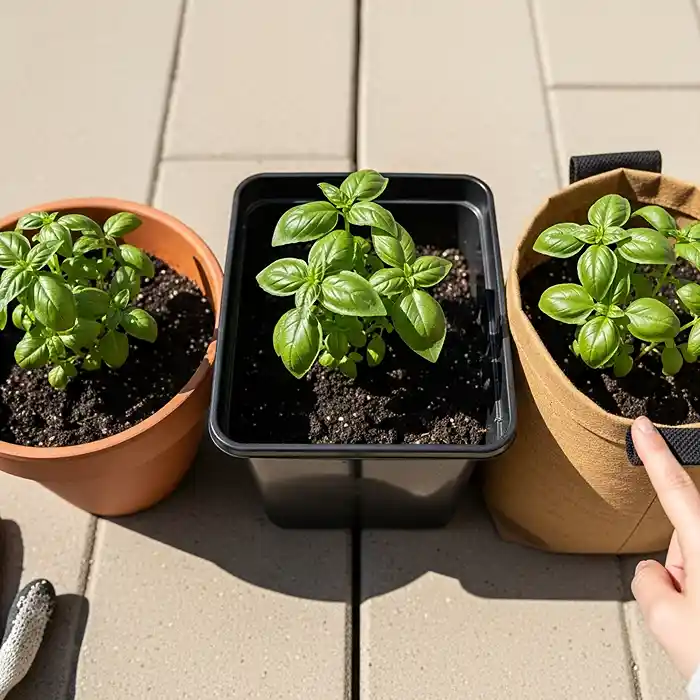
Terracotta & Clay Containers
Clay pots are the classic choice, and there’s good reasons they’ve been around forever.
Benefits:
- Those porous walls let roots breathe and prevent drowning
- Natural cooling through evaporation (your roots will thank you)
- Heavy enough to not blow over in wind
Drawbacks:
- They dry out 2-3x faster than plastic—get ready to water a LOT
- Super fragile and crack in freezing weather
- Heavy as heck, which isn’t great for balconies
Best uses:
Mediterranean herbs like rosemary, thyme, and oregano LOVE these. Basically anything that prefers to dry out between waterings.
Plastic & Resin Containers
The MVP of balcony vegetable gardens everywhere, honestly.
Benefits:
- Lightweight and perfect for balconies with weight limits
- Hold moisture way longer (less watering = happy you)
- Cheap and available in literally every size imaginable
- Good resin ones last 10+ years without cracking
Drawbacks:
- Don’t breathe, so you can accidentally drown plants
- Dark ones get HOT in the sun
- Let’s be real—they’re not winning beauty contests
Best uses:
Water-hungry plants like tomatoes, cucumbers, and greens. Perfect if you’re renting and need something affordable and portable.
Fabric Grow Bags
These things are kinda magical and have totally changed my container game.
Benefits:
- “Air pruning” prevents roots from going in circles and getting root-bound
- Amazing drainage and oxygen flow
- Fold them up when you’re not using them
- Seriously, you can’t overwater these even if you try
Drawbacks:
- Dry out faster than solid containers
- Need saucers unless you want stains on your patio
- Not exactly Instagram-worthy on their own
Best uses:
Tomatoes, potatoes, peppers—anything that grows like crazy. Perfect when you’re trying to max out your harvest in a tiny space.
Wood and Metal Containers
Natural and industrial vibes with some specific quirks.
Wood containers:
Cedar and redwood naturally resist rot and keep soil temps stable. Just make sure you use food-safe liners for anything edible—treated wood can leach chemicals. They’ve got that nice cottage garden look going on.
Metal containers:
Galvanized steel and aluminum look super cool but turn into hot plates in direct sun. Paint them light colors and definitely use liners. They work great for shallow-rooted flowers but watch out with vegetables that hate heat stress.
Drainage Essentials for Container Gardening
Real talk: bad drainage kills more container plants than bugs, diseases, or anything else combined.
Why drainage matters
Roots need to breathe just like they need water. When soil stays soggy, roots literally suffocate and rot. Even water-loving basil needs drainage—trust me on this one.
Every container needs holes
Minimum one hole for every 6 inches of diameter. Bigger is better—1-inch holes won’t clog as easily. If you bought a pot without holes, grab a drill. According to experts at Gardener’s Supply Company, proper drainage is the single most important factor in container success.
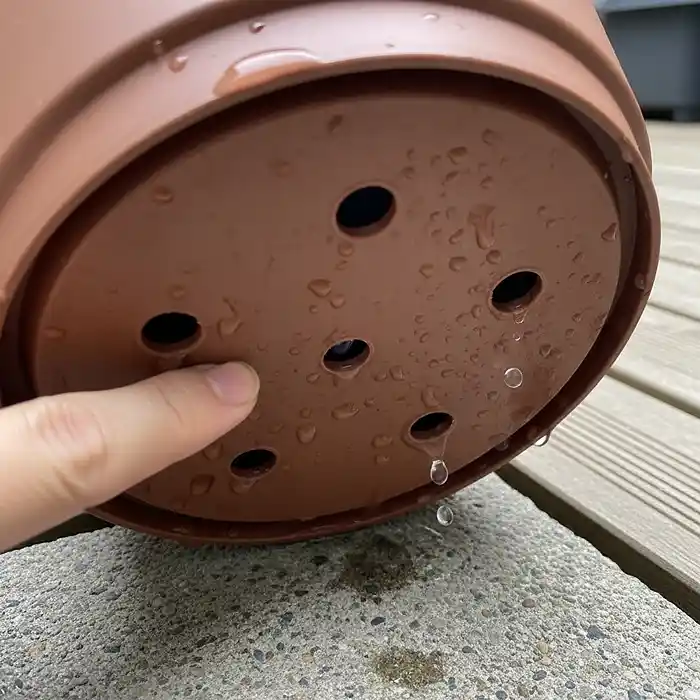
Improving drainage in decorative pots
Here’s my hack: use the double-pot method. Grow your plants in cheap nursery pots with drainage, then drop them inside your pretty decorative containers. Put some pebbles at the bottom to keep the inner pot elevated.
The gravel myth
PSA: putting gravel at the bottom of containers doesn’t help drainage—it actually keeps soil wetter longer. Skip the rocks and just use good potting mix.
Watering and Irrigation Solutions
Keeping plants consistently watered is honestly the trickiest part of choosing the right containers for small-space gardening.
Self-Watering Pots (SIPs)
Self-watering containers are like having a plant-sitter when you’re not around.
How they work:
There’s a water reservoir under your soil. Special wicking materials pull moisture up as the soil dries out. Plants drink what they need, when they need it—no more guessing games.
Best candidates for SIPs:
- Tomatoes, peppers, and eggplants (they’re so thirsty!)
- Leafy greens and herbs that hate drying out
- Anything in hot, sunny spots
Plants to avoid in SIPs:
Succulents, Mediterranean herbs, and anything that likes to dry out completely between waterings. They’ll hate being constantly moist.
Simple DIY Irrigation Options
Bottle drip systems:
Poke holes in a bottle cap, fill it with water, flip it upside down in the soil. Boom—slow, steady watering for 3-5 days. Perfect for long weekends away.
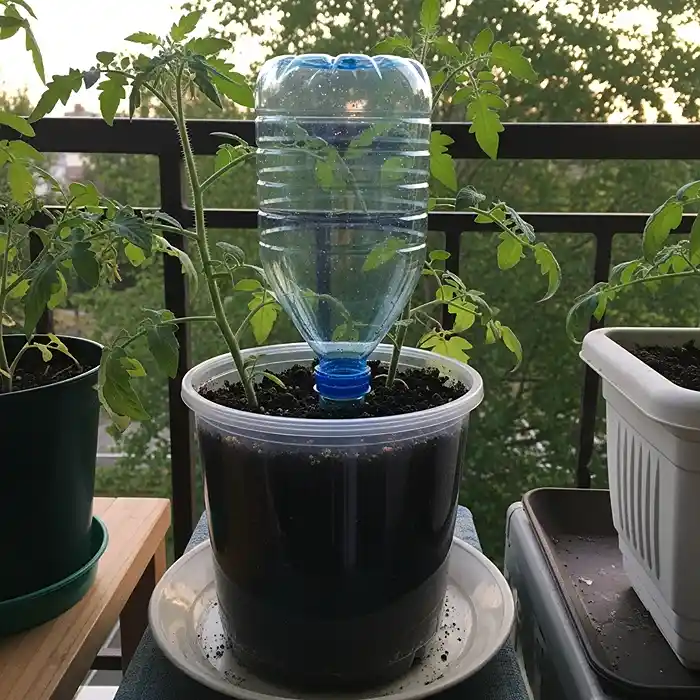
Bucket reservoirs:
Run cotton rope from a water bucket into your containers. Super low-tech but it works for vacation watering.
Hanging planter drainage:
Use drip trays or add little hose extensions so water doesn’t rain down on your neighbors. Nobody wants an angry downstairs neighbor!
Vertical and Railing Containers for Tiny Spaces
When you’re short on floor space, it’s time to think vertical.
Railing planters without drilling
Hook-over designs are genius—they just hang over your railing without any tools needed. But definitely check the weight capacity and make sure they’re secure against wind. Also, some cities have rules against containers hanging off balconies, so check first!
Hanging versus wall-mounted
Hanging baskets work great for trailing plants but they swing around in wind and dry out crazy fast. Wall-mounted systems stay put but you gotta anchor them properly into studs or brick.
Thriller-Filler-Spiller planting method
This is my favorite design trick for small containers:
- Thriller: One tall focal plant (like a pepper or cherry tomato)
- Filler: Mid-height companions (basil, marigolds)
- Spiller: Trailing stuff at the edges (nasturtium, oregano)
You get tons of visual impact AND production in one container!
Climbing plants for privacy
Pole beans, cucumbers, and peas grow straight up on trellises. Just remember they need 5+ gallon containers minimum—all that vertical growth needs serious roots to support it.
Common Beginner Mistakes in Container Gardening
Let’s talk about the mistakes I’ve definitely made (multiple times).
Choosing appearance over function
I get it—that gorgeous pot is calling your name. But if it doesn’t have drainage holes, you’re basically buying a plant coffin. Don’t be like past me.
Using garden soil
Garden soil turns into concrete in containers. Seriously, it compacts and suffocates roots. Always use actual potting mix made for containers.
Ignoring mature plant size
That adorable tomato seedling will turn into a 4-foot monster that needs staking. Do some quick research on how big stuff gets before picking containers.
Overcrowding containers
Those spacing recommendations on seed packets? They’re for in-ground gardens. Container plants actually need MORE space because their roots can’t spread out. Give ’em room!
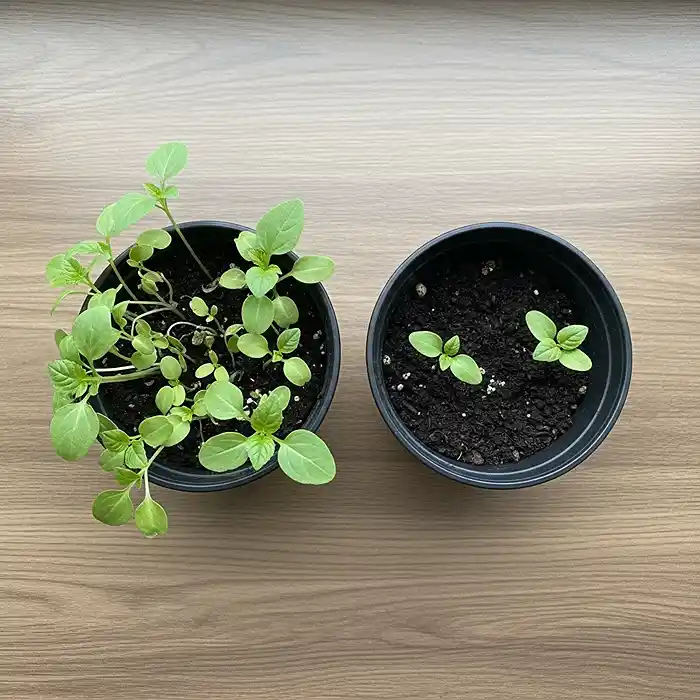
Blocking drainage holes
Put landscape fabric over holes to prevent clogging while still letting water escape. Never, ever completely block drainage.
Safety, Weight Limits, and Urban Rules
Let’s talk about something nobody thinks about until it’s too late: weight.
How heavy containers become
Wet soil weighs about 75 pounds per cubic foot. A 20-gallon container with wet soil and a plant can easily hit 150+ pounds. That’s… a lot.
Balcony load ratings
Most apartment balconies can handle 50-100 pounds per square foot. Keep heavy containers near walls and support beams, not hanging out at the edge. Physics is real, folks.
HOA and apartment compliance
Check your lease or HOA rules before going wild with containers. Some places are weirdly strict about:
- Containers visible from the street
- Drainage affecting units below yours
- Anything permanent
Get approval in writing for big projects.
Safe placement strategies
Spread the weight around. Use wheeled bases so you can move stuff easily. If you’re planning something massive on a rooftop, maybe get a structural engineer to check it out first.
Container Gardening Trends for 2025–2026
Container gardening keeps getting cooler with new tech and eco-friendly options.
Smart containers with moisture sensors
Bluetooth-enabled self-watering pots now monitor soil moisture, light levels, and nutrients. Apps tell you when to water and track your plants’ growth. It’s honestly kinda amazing (if a bit nerdy).
These innovations make choosing the right containers for small-space gardening easier and more successful than ever.
Sustainable materials
Biodegradable containers made from rice hulls, coconut coir, and recycled paper are everywhere now. You can literally plant the whole thing in the ground when you’re ready—no transplanting stress!
Pollinator-friendly container planting
Urban gardeners are creating little pollinator highways with containers full of native plants. Milkweed, coneflower, and salvia all grow great in pots and feed bees and butterflies.
Modular stackable systems
Interlocking containers that stack vertically without complicated setup? Yes please! Perfect for renters who can’t drill holes everywhere.
Frequently Asked Questions (FAQ)
What’s the best container material for beginners?
Go with plastic or resin containers. They’re affordable, hold moisture well (forgiving when you forget to water), and won’t break the bank or your back. Start here and experiment later.
How big should a container be for one plant?
At least 1 gallon for herbs, 3-5 gallons for peppers and small tomatoes, 5+ gallons for full-size tomatoes and root veggies. When in doubt, go bigger—your plants will thank you.
How often should I water container plants?
Stick your finger 2 inches into the soil daily. If the top 1-2 inches feel dry, it’s watering time. Frequency totally depends on container size, material, what you’re growing, and weather—could be twice daily or every 3-4 days.
Can I use random household containers for gardening?
Absolutely! Food-grade buckets, storage bins, whatever—just drill drainage holes. Avoid anything that held toxic stuff. And make sure plastic is UV-stable so it doesn’t fall apart outside.
What’s the most important factor in choosing the right containers for small-space gardening?
Drainage first, then size, then material. Get these three right and you’re 90% there.
Choosing the right containers for small-space gardening really does transform cramped spaces into productive little farms. Start with properly sized containers that drain well, match materials to your climate and how often you remember to water, and always put plant needs first. Your urban container gardening success literally starts from the ground up!
One Comment