
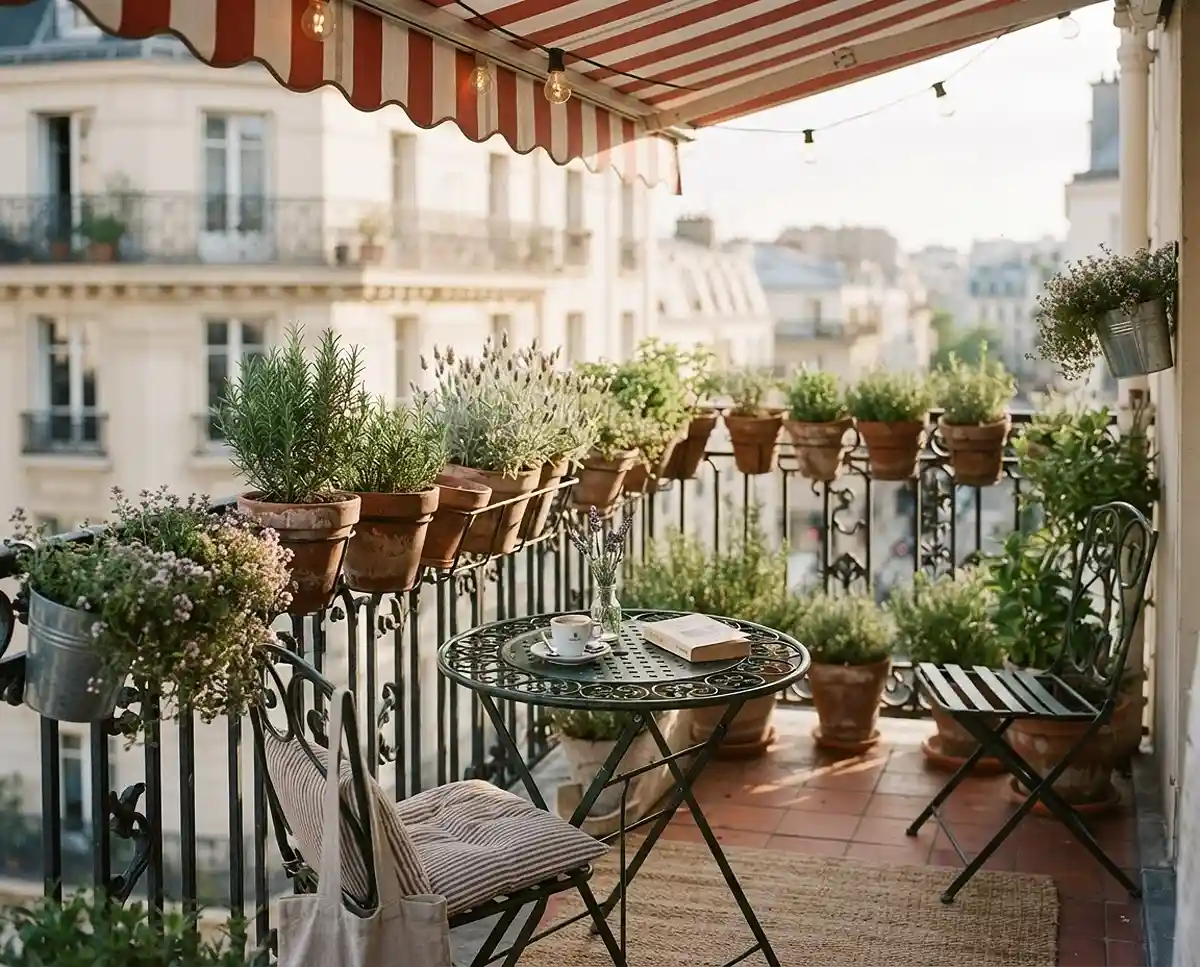
Cafe Style Balcony Garden
A cafe style balcony garden turns even the smallest apartment outdoor space into a fragrant, functional retreat — and fresh herb garden ideas make it genuinely useful, not just pretty.
Table of Contents
Designing a Cafe Style Balcony Garden with Fresh Herbs
Picture this: 7 a.m., a double espresso, the smell of rosemary warming in the sun. That’s the pull of a Parisian-inspired balcony, and it’s more achievable than you’d think.
I converted a 6×8-foot east-facing balcony in zone 7a into exactly this kind of space two summers ago. The secret wasn’t the furniture — it was treating culinary herbs as decor first and plants second.
When you choose herbs with architectural shapes and strong fragrance, the balcony earns its keep twice over. You get a chic small balcony garden that photographs beautifully and a working kitchen garden you’ll actually use.
This guide covers layout, container styling, the best herbs to grow, and the maintenance habits that keep everything looking sharp — not scraggly.
Planning Your Bistro Balcony Layout and Microclimate
Before you buy a single pot, spend 20 minutes auditing your space. The biggest mistake in apartment balcony garden ideas is skipping this step and ending up with furniture that blocks the light your herbs need.
You’re solving two problems at once: creating a comfortable seating area and keeping enough sun and airflow for plants to thrive. They’re not in conflict — but they do require a plan.
Sizing Bistro Furniture and Managing Traffic Flow
Quick Answer: On a balcony under 50 square feet, choose a foldable wrought-iron bistro set with a 24-inch round table. Leave a minimum 24-inch clearance path around the furniture for watering access.
Measure your balcony floor before ordering anything. A bistro set with chairs pulled out needs roughly 5×5 feet of clear floor space. On a narrow balcony, push the table flush against the wall on non-dining days.
Avoid placing furniture in front of railing planters — you’ll block sun to lower pots and make watering awkward. Keep floor-level containers in corners, where they stay out of the main traffic lane.
Pro Tip: Foldable Fermob-style chairs hang flat on the wall when not in use, freeing up 18 inches of floor space instantly.
Mapping Sun Exposure for Culinary Herbs
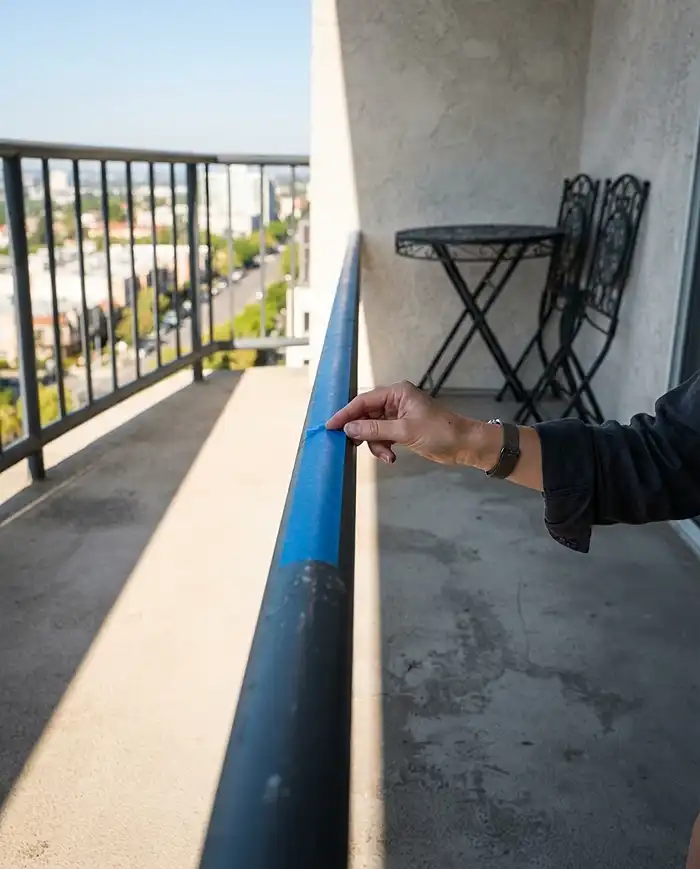
Quick Answer: Track your balcony’s sun for one full day before placing any herbs. Mediterranean herbs need 6+ hours of direct sun; shade-tolerant herbs like parsley and chervil manage with 3-4 hours.
Use painter’s tape to mark where sun hits your railing at 9 a.m., noon, and 3 p.m. That bright railing zone is prime real estate for rosemary, thyme, and lavender.
Shaded table surfaces under an awning work well for the fines herbes — chervil, tarragon, and parsley — which actually bolt faster in full afternoon sun.
South and west exposures give you the most flexibility. North-facing balconies are tougher; lean heavily on mint, lemon balm, and chives, which tolerate lower light.
Styling the Cafe Aesthetic: Containers and Decor
The authentic cafe vibe comes from cohesive materials, not matching sets. Mix aged terracotta, galvanized metal, and glazed ceramic — same color family, different textures. Then use vertical space to add the layered, abundant look of a European street-side garden.
Rustic Terracotta, Galvanized Zinc, and French Ceramic Pots
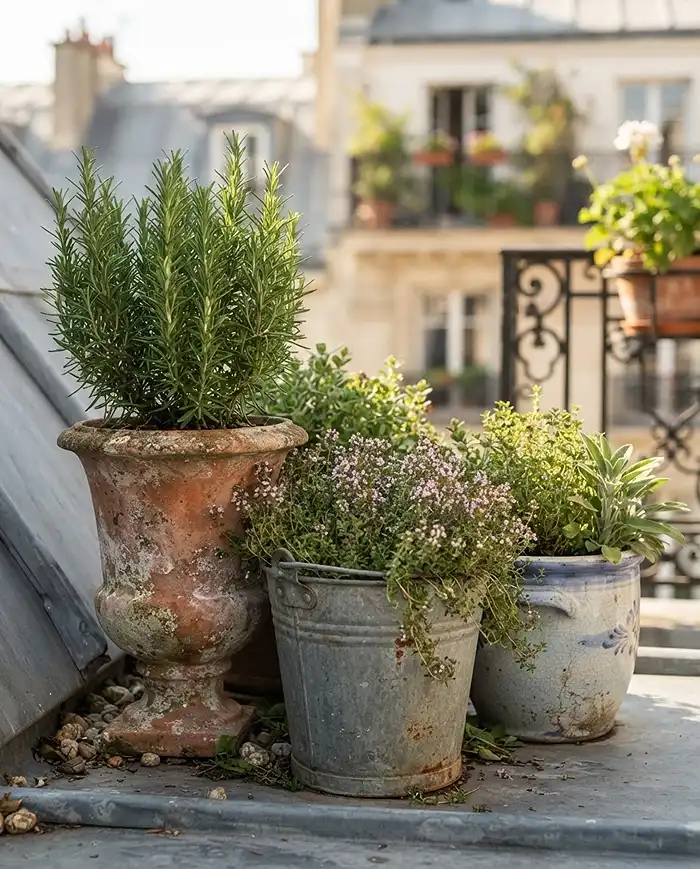
Quick Answer: For a European aesthetic, use breathable terracotta urns (10-14 inches) for Mediterranean herbs, galvanized zinc olive buckets for trailing thyme, and blue-and-white glazed ceramics as table centerpieces.
Aged terracotta is the workhorse of the cafe look. It wicks moisture away from roots, which drought-tolerant herbs like rosemary appreciate, and it develops a beautiful patina fast.
Galvanized metal buckets and olive tins nail the French market look. One non-negotiable: drill at least three drainage holes in the base of any vintage tin before planting. Standing water kills roots within days.
For glazed ceramics, stick to muted blue, cream, or sage tones. They read as “collected over time,” not “bought in a set.” Check out these balcony herb garden container ideas for more styling inspiration.
Vertical Space: Awnings, Trellises, and Hanging Baskets
Quick Answer: Hang a striped cotton awning or tension-mount a privacy trellis to create vertical structure. Use that framework to suspend macrame baskets of trailing herbs like creeping thyme or cascading mint.
A tension-mounted trellis between two balcony walls requires zero drilling and can support lightweight baskets up to 5 lbs each. Stripe patterns in black-and-white or navy-and-white are the most classically bistro.
Macrame plant hangers add warmth and texture. Fill them with creeping thyme (‘Elfin’ is a great compact variety), which spills over the sides beautifully and smells incredible when brushed.
Pro Tip: Stagger basket heights — one at 6 feet, one at 5 feet, one at 4 feet — to create the layered, abundant look of a well-loved Parisian terrace.
Ambient Lighting and Cafe Decor Elements
Quick Answer: Weave solar-powered warm-white Edison bulbs (2700K color temperature) through your balcony railing and place battery-operated outdoor lanterns near herb pots for safe, atmospheric evening light.
Warm Edison bulbs (not cool-white LEDs) make herb foliage glow gold at night. The 2700K temperature matches candlelight and gives that unmistakable bistro ambiance.
Place a lantern at floor level near your largest terracotta pot. It creates a pool of warm light at dining height and draws the eye to your best-looking plant.
For the table, a small hurricane lantern with a pillar candle beats any centerpiece plant for evening atmosphere. Use flameless candles if your building prohibits open flames on balconies.
Best Culinary Herbs for a Cafe-Style Balcony
The herbs that work hardest in a styled balcony garden pull double duty: they have strong architectural form or fragrance, and they’re genuinely useful in the kitchen. Here’s what earns a spot.
Mediterranean Staples (Rosemary, Thyme, Lavender)
Quick Answer: ‘Tuscan Blue’ rosemary, French lavender (‘Hidcote’ or ‘Phenomenal’), and common thyme are the structural anchors of a cafe-style balcony. Plant them in 12-14 inch terracotta pots in full sun.
I grow ‘Tuscan Blue’ rosemary in a 14-inch terracotta urn on my sunniest railing spot. By midsummer it reaches 24 inches tall — a genuine focal point with silvery-green needles and a piney fragrance that carries across the balcony.
French lavender is more compact than English lavender and better suited to container life. Plant it in gritty, well-draining soil — I do one part perlite to two parts potting mix — and it rewards you with blooms from May through September in zone 7.
Don’t skip thyme. It trails beautifully over pot edges and handles the heat and drought that balcony containers create. It also genuinely repels some flying insects near seating areas.
Explore our full guide to the best herbs to grow in pots for variety-specific tips.
Classic French Cafe Herbs (Tarragon, Chervil, Parsley)
Quick Answer: The classic fines herbes — French tarragon, chervil, and flat-leaf parsley — need consistently moist, rich potting soil and partial shade. They’re ideal for shaded table pots in 8-10 inch glazed ceramics.
French tarragon (not Russian tarragon, which is flavorless — buy transplants, not seeds) has delicate, fern-like foliage that looks elegant in a glazed pot. It needs moist, rich soil and goes dormant in winter. In zone 6 and below, treat it as a tender perennial.
Chervil is underused and underrated. Its lacy, anise-scented leaves are genuinely beautiful and it thrives in the shaded spots under an awning where other herbs struggle. Sow it directly in a pot in early spring; it bolts fast in summer heat.
Flat-leaf parsley is the workhorse of this trio. It grows full and lush in a medium ceramic pot, provides dense green texture, and you can harvest handfuls for weeks. Keep the soil consistently moist — it yellows fast if it dries out.
Aromatic Teas and Garnishes (Mint, Lemon Balm, Chamomile)
Quick Answer: Grow mint and lemon balm in isolated pots — never in shared containers — to stop root spreading. A 10-inch pot of peppermint within arm’s reach of your bistro chair gives you fresh garnish for every drink you pour.
Mint is famously aggressive. Even on a balcony, it’ll root into drainage holes and crowd out anything it’s planted with. Give it its own dedicated pot and it’s perfectly manageable.
Lemon balm has a gentler habit and smells extraordinary — a bright, clean lemon scent when the leaves are brushed. I keep a 10-inch pot of it right beside my chair for this reason.
German chamomile grows 18-24 inches and produces cheerful white daisy-like flowers all summer. It’s an annual, so plant fresh each spring. Harvest the flowers for tea the same evening you pick them.
Step-by-Step Planting Guide for Your Cafe Planters
Sequence matters here. Setting up furniture first sounds counterintuitive, but it’s how you identify the best sightlines and figure out exactly where large pots will live.
Here’s the process that works:
- Set up your bistro table and chairs first to lock in sightlines and traffic flow.
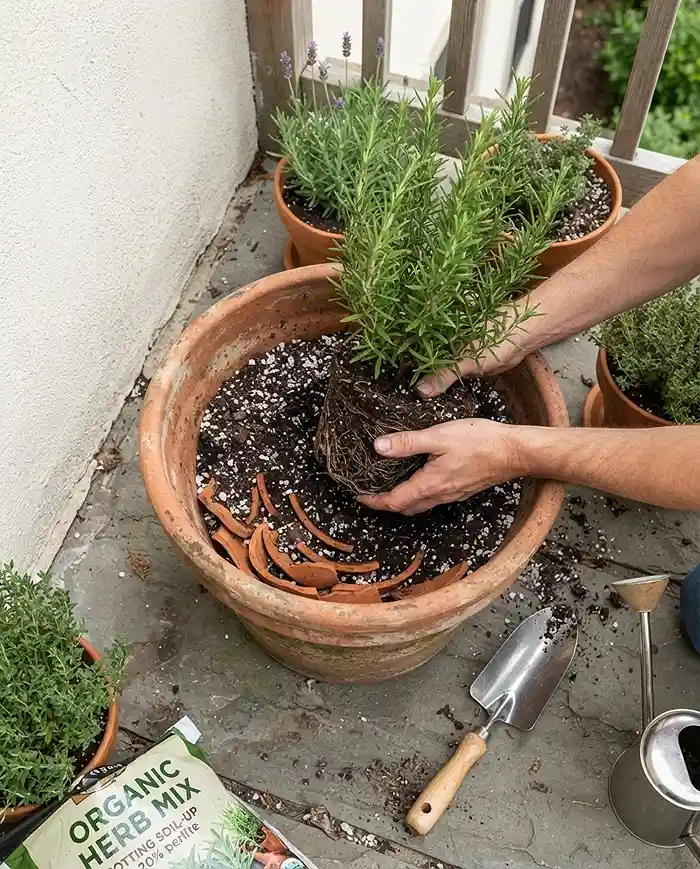
- Mix your potting soil: 2 parts quality organic potting mix to 1 part perlite for drainage.
- Stage your heaviest terracotta floor pots in corners before filling — moving a full 14-inch terracotta urn is a back injury waiting to happen.
- Add a layer of gravel or broken terracotta shards to the bottom of each pot before soil to improve drainage without blocking holes.
- Plant each herb at the same depth it sat in its nursery pot — burying the crown causes rot.
- Water thoroughly until water runs clear from drainage holes, then do not water again until the top inch of soil is dry.
For planting timing, spring after last frost is ideal for basil and chamomile. Mediterranean perennials can go in as soon as overnight temperatures stay above 40°F.
| Herb | Pot Size | Sun Needed | Best Zone |
|---|---|---|---|
| Rosemary ‘Tuscan Blue’ | 14 in. | 6+ hours | 7-11 |
| French Lavender ‘Hidcote’ | 12 in. | 6+ hours | 5-9 |
| French Tarragon | 10 in. | 3-4 hours | 4-9 |
| Chervil | 8 in. | 3-4 hours | 3-7 |
| Flat-Leaf Parsley | 10 in. | 4-6 hours | 5-9 |
| Peppermint | 10 in. | 3-6 hours | 3-11 |
| German Chamomile | 10 in. | 6+ hours | Annual |
Caring for Your Balcony Cafe Garden
The goal is herbs that look groomed and lush, not wild and weedy. Two habits — clean watering and regular pruning — make the biggest difference in a styled outdoor dining space.
Watering Routines to Prevent Patio Stains
Quick Answer: Use exact-fit glazed saucer trays under every pot and water with a narrow-spout indoor watering can. The “finger test” — soil dry 1 inch down — prevents both overwatering and muddy runoff on your balcony floor.
A glazed saucer (not terracotta, which stains concrete) under each pot catches all drainage. Check and empty saucers within an hour of watering — standing water breeds fungus gnats and root rot.
Avoid watering with a hose that has any pressure. A narrow-spout 1-liter watering can gives you precision. Direct water at the soil, not the foliage, and stop as soon as you see water reach the saucer.
Pro Tip: Outdoor rugs under your bistro set get ruined by muddy drips. Water before you lay the rug out for the day, not after.
Pruning and Harvesting for Bushy, Aesthetic Growth
Quick Answer: Pinch back the top 2-3 growth nodes of basil, mint, and tarragon just before meals. This triggers lateral branching, keeping plants compact and dense rather than tall and leggy.
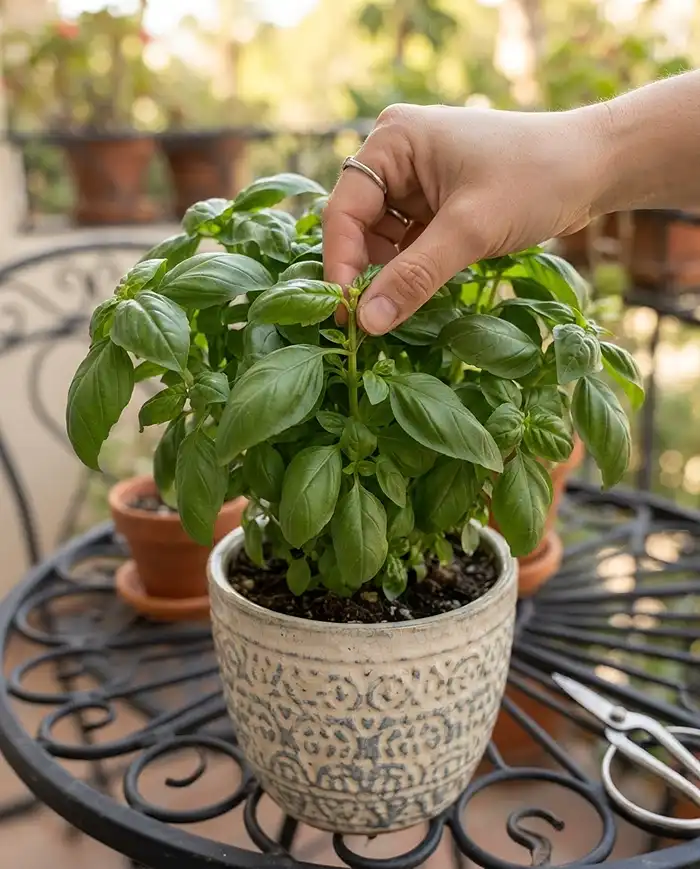
The most useful gardening habit I developed: harvesting right before I cook. It forces me to prune regularly, which keeps the plants full and productive.
For basil specifically, pinch any flower buds the moment they appear — a basil that bolts turns bitter and stops producing usable leaves within a week. I lost an entire ‘Genovese’ plant to bolting in August 2023 by ignoring it for two weeks.
Deadheading [removing spent flowers] on lavender after the first flush of blooms encourages a second flush in late summer. Use clean snips and cut back to just above a leaf node.
Common Problems and Solutions
Two problems account for most of the “my herbs look terrible” complaints in a styled balcony garden. Both are fixable, and neither requires starting over.
Leggy Herbs Ruining the Compact Aesthetic
Quick Answer: Leggy, stretched herbs signal insufficient light (a condition called etiolation). Implement a weekly pot-rotation schedule, moving shaded tabletop herbs to the sunniest railing position for 3-4 days at a time.
If basil or mint starts reaching for light and losing its compact shape, it’s telling you exactly what it needs. Move it to the brightest spot on the railing for a few days — most herbs recover their bushy habit within a week of better light.
The rotation schedule works on a balcony with mixed light zones. I rotate my parsley and chervil from the shaded table to the east railing every Sunday. They stay fuller longer.
Pest Invasions on Dining Tables
Quick Answer: For aphids or fungus gnats near seating areas, use yellow sticky traps hidden behind pots and apply organic insecticidal soap only on non-dining evenings. Never spray near food or open glasses.
Yellow sticky traps are the cleanest solution for a dining space. Tuck them vertically behind the pot, facing away from the table. They catch fungus gnats and aphids without any spray residue near food.
For an active aphid infestation, mix 1 teaspoon of castile soap in 1 liter of water and spray affected leaves on a weekday evening. By the weekend, the residue has dried and the plant is safe to use as a table centerpiece again.
The Royal Horticultural Society’s guide to organic pest control is the most thorough resource I’ve found for food-safe methods near edibles.
Frequently Asked Questions
How do I arrange herbs on a small bistro table?
Use a single shallow terracotta bowl planter in the center, combining three compact herbs — curly parsley, chives, and lemon thyme. Keep the total height under 10 inches so it doesn’t block eye contact across the table. A low, wide arrangement reads as intentional styling rather than a crowded mess.
Can I leave my bistro herb garden outside in winter?
Woody Mediterranean herbs like thyme and oregano can survive mild winters in large pots in zones 7 and above, provided the pot doesn’t freeze solid. Tender herbs like basil and chamomile will die at the first frost and must be treated as annuals or moved indoors to a bright south-facing windowsill before temperatures drop below 40°F.
What are the best pest-repelling herbs for outdoor seating areas?
Surround your bistro set with lemon balm, peppermint, and rosemary. These are among the most effective at deterring mosquitoes. Gently brush their foliage before you sit down — the physical contact releases essential oils that keep biting insects away for the duration of your meal.
What potting soil works best for balcony herb containers?
Mix 2 parts quality organic potting soil with 1 part perlite. This ratio gives Mediterranean herbs the drainage they need while retaining just enough moisture for fines herbes like parsley and chervil. Avoid garden soil, which compacts in containers and cuts off root oxygen.
How many herb pots can fit on a small balcony?
On a 6×8-foot balcony with a bistro set, you can comfortably fit 2-3 floor pots in corners, 2 railing planters, 1-2 hanging baskets, and 1 table centerpiece planter. That’s 7-8 containers total — enough for a full herb palette without overcrowding the seating area.
Key Takeaways
- A cafe style balcony garden works best when you audit sun exposure before buying furniture or plants — the sunniest railing spot belongs to Mediterranean herbs, not the bistro table.
- Cohesive container materials (aged terracotta, galvanized zinc, glazed ceramic) create the European aesthetic more effectively than any single decorative element.
- Pinch herbs regularly before meals — frequent harvesting forces lateral branching and keeps plants compact, dense, and styled rather than leggy.
- Mint and lemon balm belong in isolated pots; they spread aggressively and will crowd out companion plants within a single growing season.
- Explore more apartment balcony garden ideas to layer in seasonal color and extend your outdoor space into autumn.