

Best Vegetables for Balcony Container Gardening
Discover the best vegetables for balcony container gardening, including easy, productive crops for sunny spaces, pots, and beginner harvests.
Here’s something most people don’t realize until they try it: you absolutely don’t need a huge backyard to grow your own vegetables. Seriously, if you’ve got a balcony—even a tiny one—you’re already sitting on prime real estate for fresh tomatoes, crispy lettuce, and herbs that’ll make your cooking taste restaurant-quality.
The best vegetables for balcony container gardening are the ones that actually want to live in pots: compact tomatoes, peppers, leafy greens, climbing beans, and basically any herb you can think of. They’re low-maintenance, high-reward, and honestly? They’re kind of addictive once you get your first harvest.
Let me walk you through exactly how to turn your balcony into a legit food-producing space—without the guesswork or wasted money on plants that flop.
Table of Contents
Wait—Will Your Balcony Actually Hold All Those Pots?
Okay, this isn’t the sexy part, but it’s crucial. Before you go hauling 10 giant pots onto your balcony, let’s talk weight limits. Because wet soil? It’s shockingly heavy.
The Weight Reality Check
Here’s the thing: moist potting soil weighs around 80 pounds per cubic foot. A standard 10-gallon container holds about 1.34 cubic feet, which means you’re looking at roughly 107 pounds of wet soil alone—and that’s before the pot, the plant, or extra water.
Quick math breakdown:
- 10-gallon pot = 1.34 cubic feet
- 1.34 × 80 lbs = 107 lbs (just the soil)
- Add the container (5–10 lbs)
- Add the plant and water fluctuations
Golden rule: Don’t exceed 60% of your balcony’s rated capacity. If you’re not sure what that is, check with your landlord or building manager. Trust me, it’s worth the awkward email.
Pro move: Cluster your heaviest pots near the walls or corners—that’s where the structural support is strongest. Don’t pile everything in the middle or right at the edge.
The Soil Situation: Ditch the Garden Dirt
Regular garden soil is a terrible choice for balcony container gardening. It’s too heavy, it compacts like crazy, and drainage becomes a nightmare.
Instead, you want what’s called a soilless mix or engineered substrate. Sounds fancy, but it’s just a lighter, fluffier blend designed specifically for pots.
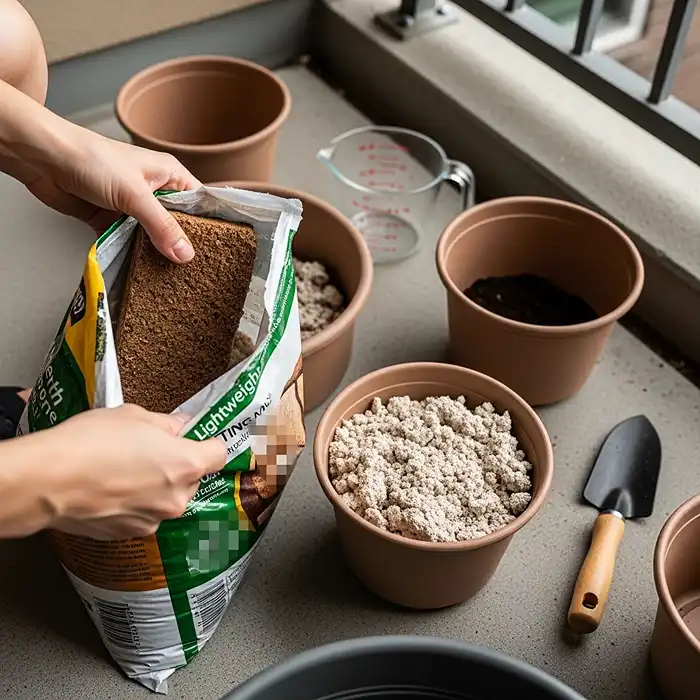
My go-to DIY mix:
- 40% coconut coir – holds moisture without being heavy
- 30% compost – feeds your plants naturally
- 20% perlite – creates air pockets for healthy roots
- 10% vermiculite – helps retain water between waterings
Or just grab a bag labeled “container mix” or “balcony potting soil” at any garden center. Way easier.
The Best Vegetables for Balcony Container Gardening (The Actual Stars)
Alright, let’s get to the good stuff—what should you actually grow?
Tomatoes and Peppers: The Crowd-Pleasers
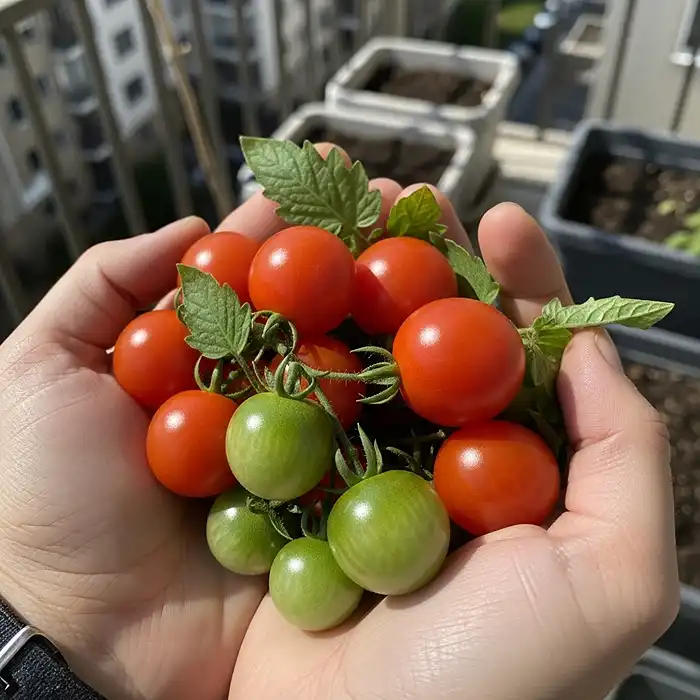
Tomatoes are hands-down the most popular choice for balcony vegetable garden ideas, and for good reason. Nothing beats a sun-warmed tomato you grew yourself.
But here’s the key: you need determinate varieties (also called “bush tomatoes”). These stay compact and don’t try to take over your entire balcony like their indeterminate cousins.
My favorite determinate varieties:
- ‘Tiny Tim’ – perfect for small pots, super cute
- ‘Patio Princess’ – compact but still gives you full-sized tomatoes
- ‘Sweet 100’ – cherry tomatoes that produce like crazy in a 5-gallon pot
Peppers are equally awesome. Try dwarf chili varieties or compact sweet peppers like ‘Lunchbox’ if you’re tight on space.
What they need:
- At least a 5-gallon pot each
- 6–8 hours of direct sun daily
- Weekly feeding (they’re hungry plants)
According to research from the University of Maryland Extension, tomatoes and peppers are among the most productive vegetables for small balcony container setups when given proper care.
Climbing Beans and Peas: Use That Vertical Space
Here’s where balcony gardening gets genius: when you’re short on floor space, grow up.
Pole beans and climbing peas are perfect vegetables for small balcony gardens because they’ll happily climb your railing, a trellis, or even a simple string system you rig up.
Why I love vertical crops:
- They produce way more per square foot than bush varieties
- Your balcony railing becomes a built-in trellis (free support!)
- They actually add nitrogen to the soil, which helps neighboring plants
Just make sure your containers are at least 10–12 inches deep, and you’re good to go.
Leafy Greens and Radishes: The Quick Wins
Want to see results fast? Radishes are your new best friend.
They mature in about 25 days—that’s less than a month from seed to salad. They only need 6 inches of soil depth, and you can keep planting new batches every two weeks for a constant supply.
Leafy greens are even better for beginners because they’re super forgiving:
- Lettuce (harvest outer leaves, center keeps producing)
- Spinach (loves cooler weather)
- Arugula (peppery kick, grows insanely fast)
- Kale (handles shade better than most)
- Swiss chard (those colorful stems are gorgeous)
Sun requirements:
- Fruiting crops like tomatoes and peppers: 6–8 hours
- Leafy greens: 3–5 hours (perfect for shadier balconies)
This flexibility makes greens ideal if your balcony doesn’t get blasted with sun all day.
Let’s Talk Money: The ROI of Balcony Container Gardening
Herbs Are Your Secret Profit Centers
If you want the absolute highest return on investment, grow herbs. Period.
One basil plant will give you 20+ harvests over a growing season. When fresh basil costs $3–4 per tiny package at the store, you’re looking at returns over 1,900%. That’s not a typo.
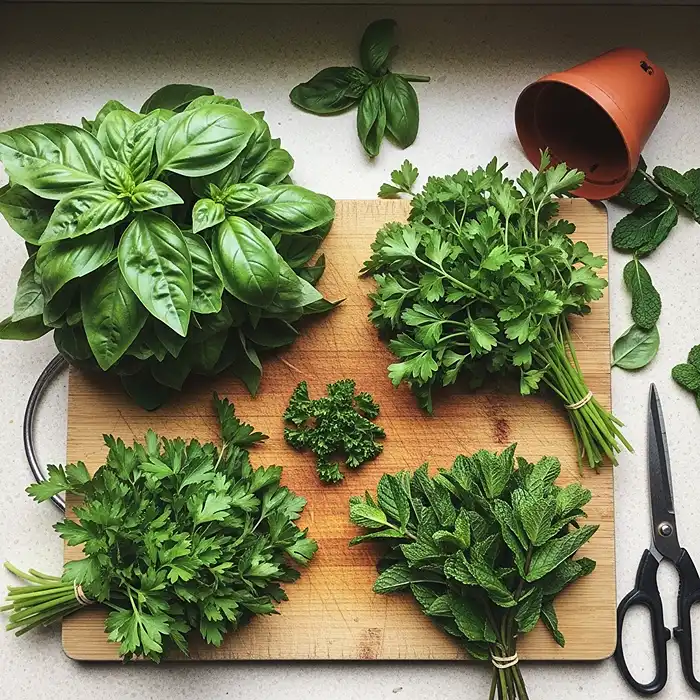
Best herbs for containers:
- Basil – needs warmth and sun, goes crazy in summer
- Mint – grows aggressively (keep it isolated or it’ll take over)
- Parsley – cut outer stems, center keeps regrowing
- Rosemary – perennial in warmer climates, basically immortal
- Cilantro – plant new seeds every 3–4 weeks
For more detailed guidance on container gardening vegetables and maximizing your balcony’s potential, check out this comprehensive resource on the best vegetables for container gardening—it’s packed with variety recommendations and growing tips.
Seed Saving: The Long Game
Once you’ve got the hang of balcony container gardening, start saving seeds from your best plants.
Choose heirloom or open-pollinated varieties (not hybrids). These will grow true from seed, meaning you can save seeds year after year without buying new packets.
Basic steps:
- Let a couple fruits fully mature on the plant
- Scoop out seeds and rinse them clean
- Dry thoroughly on paper plates (takes about a week)
- Store in envelopes or small jars in a cool, dark spot
Over time, your plants actually adapt to your specific balcony’s microclimate. Pretty cool, right?
Water Smarter, Not Harder
The Ancient Trick: Ollas
Ollas (pronounced “oy-yahs”) are unglazed clay pots you bury in soil that slowly seep water through their porous walls.
They’re genius for balcony gardening because:
- They reduce evaporation by 50–70%
- Water goes straight to the roots (no waste)
- You only refill them once a week instead of daily
Perfect for hot climates or if you travel a lot.
Drip Irrigation for the Win
If you’ve got 10+ pots, seriously consider a simple drip system. It sounds complicated, but it’s not.
What you need:
- A programmable timer
- Pressure regulator
- Main tubing
- Individual drip emitters for each pot
Set it up once, and your balcony waters itself. Game-changer for consistent growth and vacation peace of mind.
Get Techy with Your Balcony Garden
There are actually apps now that map out sun exposure on your balcony throughout the day and across seasons. Just input your location and balcony direction, and they’ll show you exactly where to put sun-loving tomatoes versus shade-tolerant greens.
Coming soon:
- Soil moisture sensors that auto-trigger watering
- App-controlled systems you can manage from your phone
- AI that predicts your yields based on conditions
We’re living in the future, folks.
Keep Pests Away Without Chemicals
The Companion Planting “Bouncer” Strategy
Some plants naturally repel pests when you grow them together. I call it the bouncer strategy—certain plants won’t let the bad guys in.
Power combinations for balcony container gardening:
- Basil near tomatoes – repels hornworms and aphids
- Chives around peppers – keeps aphids away
- Marigolds anywhere – suppresses nematodes and whiteflies
Try this layout in one large container:
- Center: Tomato plant
- Middle ring: 3–4 basil plants
- Outer edge: Chives
It’s like a pest-fighting fortress.
Why Containers Make Disease Control Easier
Here’s an underrated benefit: if one plant gets sick, you can isolate that pot immediately. You’re not dealing with soil contamination spreading through a whole garden bed.
Prevention basics:
- Clean your tools between plants
- Water at soil level (not from above)
- Give plants room to breathe
- Remove any diseased leaves ASAP
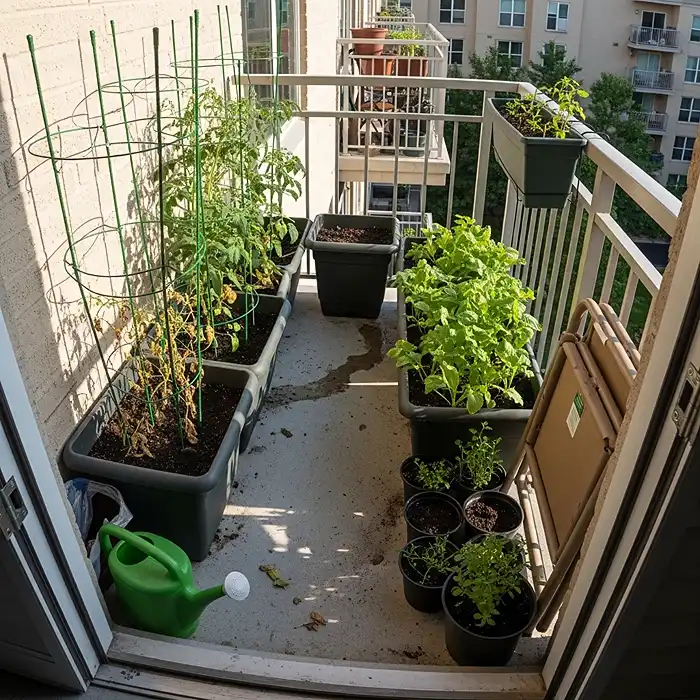
Strategic Layout: Squeezing Max Production from 6×3 Feet
Even a tiny balcony can pump out serious harvests if you plan it right.
My recommended zone setup:
Zone 1 (Sunniest Spot):
- 2 determinate tomato plants
- 1 pepper plant
- All in 5-gallon pots
Zone 2 (Vertical Railing):
- Pole beans on a DIY trellis
Zone 3 (Partial Shade Area):
- Lettuce, kale, spinach in shallow containers
Zone 4 (Corner—Your Herb Station):
- Basil, parsley, mint in 1-gallon pots
Bonus space hacks:
- Tiered plant stands create multiple levels
- Hanging baskets use overhead space
- Wall pockets add tons of extra planting spots
Your Questions, Answered
How much sun do I actually need for balcony container gardening?
Fruiting veggies (tomatoes, peppers, cucumbers) want 6–8 hours of direct sun. Leafy greens and most herbs are fine with 3–5 hours. So even north-facing balconies can grow plenty.
Can I grow vegetables in mostly shade?
Yep! Stick with kale, chard, spinach, lettuce, and herbs (except basil—it’s a sun worshipper). These crops actually prefer some shade in hot climates.
What’s the best fertilizer for vegetables for container gardening on balcony spaces?
Container plants need regular feeding because nutrients wash out with watering. Use water-soluble 20-20-20 fertilizer weekly, organic fish emulsion every 10 days, or mix slow-release granules into your soil at planting time.
Your Balcony’s About to Get a Lot More Productive
Look, balconies aren’t just for storing old bikes or drying laundry anymore. They’re legit micro-farms that can produce hundreds of dollars worth of fresh food every year.
The best vegetables for balcony container gardening combine high yields, compact growth, and container-friendly root systems. Start with determinate tomatoes, peppers, leafy greens, and high-value herbs. Once you nail those, expand from there.
With smart planning, lightweight soil, and the right crop choices, you’ll be harvesting fresh vegetables all season—and wondering why you didn’t start sooner.
Trust me, there’s nothing quite like making dinner with vegetables you grew 10 feet from your kitchen. Start small, grow vertically, and watch your balcony transform.
Now go get some pots and make it happen. 🌱