

Apartment Balcony Garden ideas
Your balcony garden ideas don’t need a big budget or a green thumb — just a plan. If your outdoor space is currently a sad concrete slab collecting dust, this summer transformation guide will show you exactly how to flip it into a lush, livable retreat you’ll actually use every day.
Table of Contents
Why a Balcony Garden Transformation Is Worth It
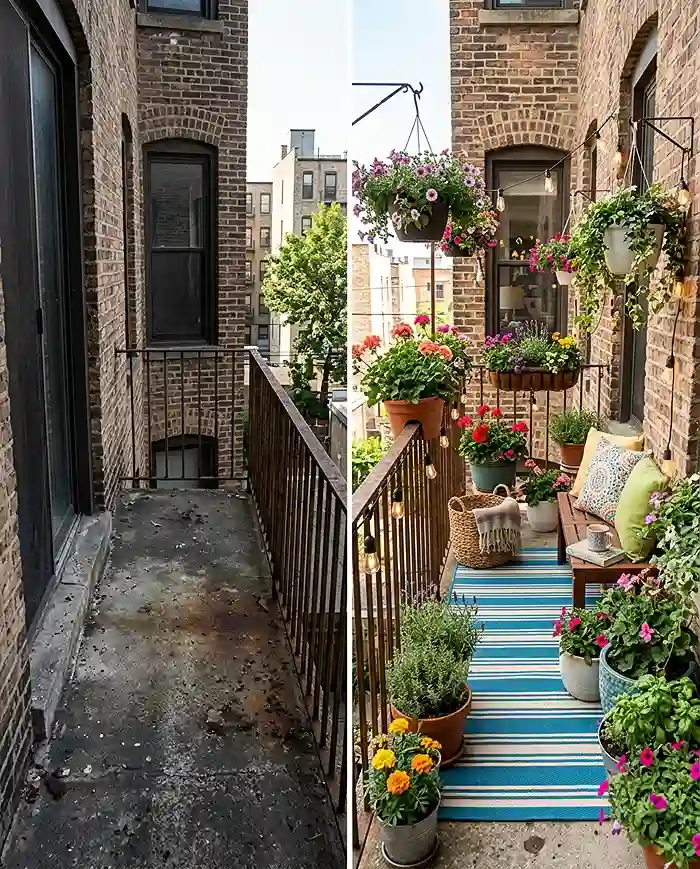
Small balcony garden makeovers deliver outsized results. You gain a private outdoor escape, fresh herbs steps from your kitchen, and noticeably cleaner air around your living space. That’s a lot of return for a few weekends of effort.
The emotional shift is real too. Turning dead square footage into something green and alive changes how you feel about your apartment. It becomes a space you protect, not just tolerate.
Dramatic before-and-after results are achievable on any budget. A $150 setup of a few containers, quality potting mix, and a tray of summer annuals can look genuinely stunning by mid-July.
Quick Answer: A summer balcony transformation is worth it because it adds usable living space, improves wellbeing, and produces real food — all within a tight footprint and almost any budget.
Assessing Your Balcony Before You Begin
Before you buy a single pot, spend 20 minutes evaluating what you’re actually working with. Measure the square footage. Note where the railing sits and whether it’s solid or open. Check if there’s a drain or if water pools in corners.
Most apartment balconies max out at 25–50 lbs per square foot for live load. Wet soil, heavy ceramic pots, and furniture add up fast. When in doubt, go lightweight — fabric grow bags and plastic containers are your best friends here.
Check your lease too. Many buildings allow container gardens but restrict drilling, permanent fixtures, or hanging planters over the railing edge.
Reading Your Light and Sun Exposure
Quick Answer: Track direct sun across your balcony for one full day. Mark where shade falls at 9am, noon, and 4pm. Most summer vegetables need 6+ hours of direct light to thrive.
- Full sun (6+ hours): South or west-facing — tomatoes, peppers, lantana, petunias all thrive
- Partial shade (3–6 hours): East-facing or partially blocked — herbs, salad greens, impatiens do well
- Full shade (under 3 hours): North-facing or heavily obstructed — stick to ferns, coleus, begonias
Pro Tip: A $10 clip-on light meter takes the guesswork out entirely — check it at three times across one sunny day for an accurate read.
Understanding Wind, Heat, and Microclimate
Quick Answer: High-rise balconies often sit in a totally different climate than ground level. Wind desiccates soil fast, and reflected heat from concrete walls can push temps 10–15°F above ambient air.
- Floors 5 and above: expect 2x faster soil drying than a ground-level garden
- West-facing walls: reflected heat is intense from 2–6pm in summer — choose heat-tolerant varieties
- Wind breaks: a simple lattice panel or tall ornamental grass in a corner container can cut wind exposure significantly
Pro Tip: Touch your balcony floor at 3pm on a hot day — if it’s scorching, elevate containers on pot feet or a slatted wood pallet to reduce heat transfer to roots.
Planning Your Before-and-After Vision
Grab a piece of graph paper or use a free app like RoomSketcher to sketch your balcony layout to scale. Mark fixed elements: door, railing, outlets, drain.
Decide on a primary purpose before choosing a single plant. A dining-focused balcony has different needs than a relaxation retreat or a food-growing setup. Trying to do all three on a 6×8 balcony leads to clutter, not charm.
Pick your layout goal, then work backward to plants, containers, and furniture that serve it. That sequence saves money and prevents the “I bought too much” regret that hits most first-timers.
Check out this guide on small space garden layouts for summer heat for layout ideas that actually work in hot conditions.
Choosing a Style and Color Palette
Quick Answer: Pick one visual theme and commit to it. Mixed styles look messy in small spaces. A cohesive palette across your pots, cushions, and blooms is what makes the after photo look intentional.
| Style | Key Plants | Container Vibe |
|---|---|---|
| Mediterranean | Lavender, rosemary, olive tree | Terracotta, rust tones |
| Tropical | Canna lily, coleus, elephant ears | Dark wicker, black plastic |
| Cottage | Petunias, sweet alyssum, snapdragons | White wood, soft pastels |
| Minimalist | Ornamental grasses, succulents | Concrete gray, clean lines |
Pro Tip: Repeat one container color at least three times across the space — it’s the fastest trick to make a chaotic balcony look designed.
Tools and Materials You’ll Need
Quick Answer: You don’t need much. A sturdy trowel, quality potting mix, and the right containers will handle 90% of your setup. Don’t skimp on soil — it’s the one place cheap costs you later.
| Item | Budget Pick | Premium Pick |
|---|---|---|
| Containers | Plastic nursery pots | Fabric grow bags or ceramic |
| Potting mix | Miracle-Gro Performance Organics | Fox Farm Ocean Forest |
| Watering | Basic watering can | Drip irrigation timer kit |
| Vertical structure | Zip-tied bamboo stakes | Wall-mounted planter pockets |
| Fertilizer | Slow-release granules | Liquid kelp + fish emulsion combo |
For a deeper breakdown of container options, the guide to best pots for balcony gardens covers weight, drainage, and material trade-offs in detail.
Best Plants for a Summer Balcony Garden
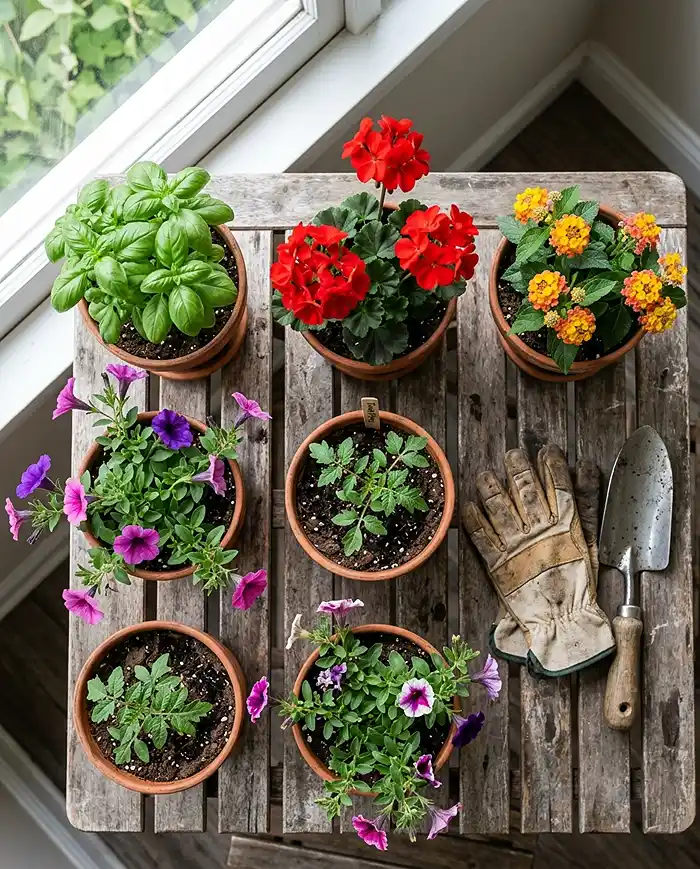
The right plant list is what separates a thriving summer container garden from a graveyard of dried-out stalks by August. Prioritize heat tolerance, container suitability, and honest sun match for your specific balcony.
Apartment gardening rewards plants that bounce back fast after heat stress. Avoid anything with high water needs unless you’ve got an irrigation timer set up — hand-watering twice a day gets old by week two.
Flowers and Foliage for Instant Impact
Quick Answer: For fast visual drama in your balcony garden ideas, lead with petunias, lantana, and geraniums. They bloom continuously all summer and handle container life better than almost anything else.
- Petunias (Wave series): Cascade beautifully over container edges, bloom June through frost, full sun
- Lantana: Nearly indestructible in heat, attracts butterflies, deadhead lightly to keep blooming
- Geraniums (Pelargonium): Classic balcony workhorse, available in every color, drought-tolerant once established
- Sweet potato vine: Fast trailing foliage in chartreuse or purple — perfect for filling gaps between bloomers
- Coleus: Spectacular in partial shade, leaf color rivals any flower
Real Example: Last summer I put three Wave petunias in a 14-inch window box on a west-facing railing. By mid-July they’d tripled in size and were cascading 18 inches down. Zero deadheading required — just weekly fertilizing.
Edibles That Thrive in Containers
Quick Answer: Cherry tomatoes, herbs, and peppers are the backbone of successful summer container gardening in small balcony spaces. They produce heavily, look great, and use vertical space efficiently.
- Cherry tomatoes (Tumbling Tom, Tiny Tim): Bred for containers, 5-gallon minimum, stake early
- Basil: Pinch flowers weekly to keep producing; grows fast in heat alongside tomatoes
- Peppers (mini bells, banana peppers): Handle reflected heat well, fewer pest issues than tomatoes
- Salad greens: Grow in partial shade to reduce bolting; harvest outer leaves for continuous production
- Mint, chives, parsley: Nearly impossible to kill, useful daily, spreads attractively in wide shallow pots
For more heat-specific plant choices, see this roundup of small balcony garden ideas for hot weather.
Step-by-Step Balcony Transformation
The makeover sequence matters as much as the plants you choose. Working out of order — buying plants before prepping the space, for example — leads to pots sitting in the sun while you scramble to finish cleaning. Do it in the right order and the whole thing goes faster.
Cleaning, Repairing, and Prepping the Space
Quick Answer: Start with a clean slate. Scrub the floor, fix anything broken, and cover what can’t be fixed before any plants come out. It takes a few hours and makes everything after look ten times better.
- Sweep, then scrub the floor with a stiff brush and diluted white vinegar — removes stains and mildew smell
- Ugly concrete: use an outdoor rug or interlocking wood/composite deck tiles (no drilling required)
- Rusty railing: wire brush, rust-converting primer, spray paint in a coordinating color
- Check drainage: pour a bucket of water and watch where it goes — address pooling spots before adding soil weight
Pro Tip: An outdoor rug instantly makes the space feel like a room — it’s the single highest-impact, lowest-cost move in any balcony makeover.
Layering Plants, Vertical Space, and Decor
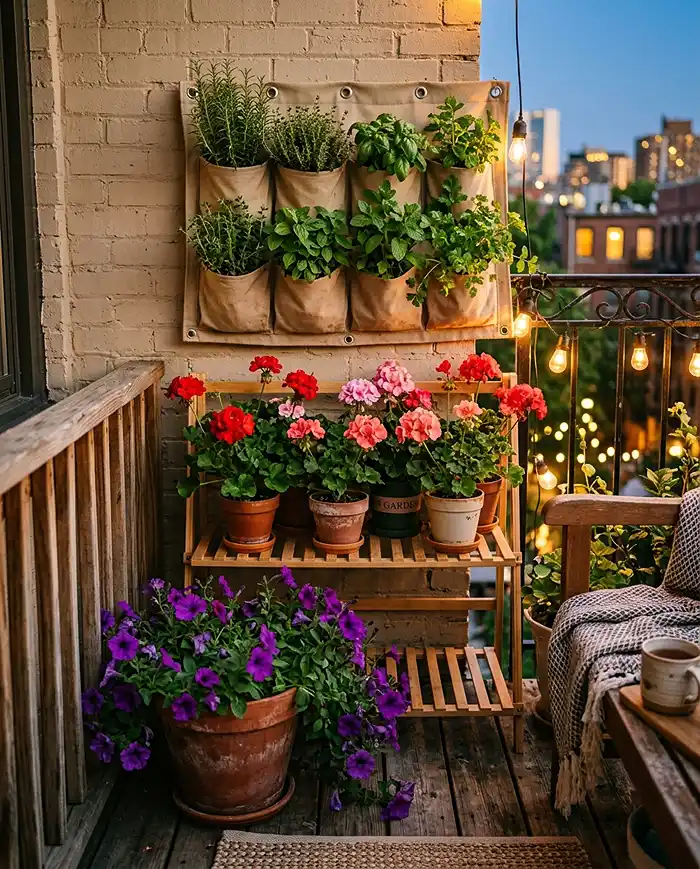
Quick Answer: Work in three layers — ground level, mid-height, and vertical. This fills the visual space, adds depth, and makes a small balcony garden look much bigger than it is.
- Ground level: Low herbs, trailing plants, a small seating rug + furniture
- Mid-height: Main container plants on stands or a plant shelf — tomatoes, geraniums, large foliage
- Vertical: Wall-mounted pocket planters, a trellis with climbing nasturtiums or morning glory, hanging baskets from the ceiling or railing hooks
Add string lights along the railing or ceiling — they cost under $20 and single-handedly transform the evening atmosphere. Finish with one or two throw pillows that pull from your color palette.
Real Example: On my 48 sq ft north-facing balcony, I added a $35 bamboo shelf, two pocket planters, and a string of warm LED lights. The space went from forgotten storage area to evening hangout in a weekend.
Watering and Maintenance Through Summer
Quick Answer: In summer heat, most balcony containers need water daily — sometimes twice daily. Build a 10-minute morning routine and your apartment garden will stay lush through August without drama.
- Watering frequency: Check soil moisture daily; water when the top inch is dry — more often in heat waves
- Fertilizing: Liquid feed every 1–2 weeks with balanced fertilizer (10-10-10) or tomato feed for edibles
- Deadheading [removing spent flowers]: Snap off faded blooms on petunias, geraniums, and lantana twice weekly to keep new flowers coming
- Weekly sweep: Remove yellowed leaves, check undersides for pests, rotate pots for even light exposure
Self-watering containers are a genuine game-changer if you travel or run hot and forgetful. The reservoir buys you 2–4 extra days between waterings, which is often the difference between a thriving pot and a dead one.
Pro Tip: Water in the early morning, not midday — morning watering reduces evaporation loss by up to 30% and prevents leaf scorch from water droplets magnifying sun.
Common Problems and Solutions
Even a well-planned small balcony garden runs into trouble. Here are the three issues that take down most container setups — and exactly how to fix them.
Plants Wilting or Drying Out Too Fast
Quick Answer: Wilting in morning heat before noon usually means a watering problem. Wilting only in the afternoon that bounces back by evening is normal heat stress — manageable with a few adjustments.
- Switch to self-watering pots with reservoirs for thirsty plants like tomatoes
- Top-dress soil with 1 inch of perlite or coconut coir mulch to slow evaporation
- Group containers together — clustered pots create a more humid microclimate
- Add temporary afternoon shade with a patio umbrella or shade cloth (30–40% density) from 1–5pm
Pests on a High-Rise Balcony
Quick Answer: Yes, pests reach high floors — wind carries aphids and spider mites, and whiteflies fly. Check the undersides of leaves weekly; catch infestations early and they’re easy to handle.
- Aphids: Knock off with a firm water stream; follow up with diluted neem oil spray (1 tbsp per quart)
- Spider mites: Thrive in hot dry conditions; increase humidity around plants and apply insecticidal soap
- Whiteflies: Yellow sticky traps placed near plants catch adults fast; neem oil handles larvae on leaf undersides
The RHS guide to container pest management covers organic treatment options with good detail on timing and frequency.
Limited Space and Overcrowding
Quick Answer: When balcony garden ideas get too ambitious for the space, overcrowding causes poor airflow, fungal problems, and stunted growth. Edit ruthlessly — fewer, well-chosen plants always beat a crowded mess.
- Audit your setup: remove any container that isn’t thriving or contributing visually
- Go vertical to reclaim floor space — a wall planter holds 6–8 plants in the footprint of one floor pot
- Prioritize multi-use plants: basil looks great, smells amazing, and feeds you — it earns its space twice over
balcony garden ideas FAQS
How much does a balcony garden makeover cost?
A basic summer setup with containers, potting mix, and plants runs $75–$150. A polished version with furniture, lighting, and premium containers lands at $300–$600. Splurge on soil and a self-watering reservoir system; save on plants by starting from seed or buying small starts.
What are the best low-maintenance plants for a balcony?
Lantana, geraniums, succulents, and drought-tolerant herbs like rosemary and thyme are the most forgiving choices. They handle heat, irregular watering, and container constraints without constant attention. All work well in apartment gardening setups with limited time.
How do I garden on a balcony with no direct sunlight?
Focus on shade-tolerant plants: ferns, begonias, coleus, impatiens, and most leafy herbs. Add a white or reflective back wall to bounce ambient light onto plants. Grow lights on a timer can supplement for edibles like lettuce if you’re willing to invest around $40–$60.
Can I have a balcony garden if I rent?
Yes. Use freestanding containers and no-drill hooks rated for your railing type. Keep total weight under your building’s load limit (check your lease or ask the super). Fabric grow bags and lightweight plastic pots keep things portable and damage-free when you move out.
Key Takeaways
- The best balcony garden ideas start with assessment — know your sun, wind, and weight limits before buying anything
- A cohesive style and color palette is what makes a small balcony garden look designed rather than accidental
- For summer container gardening, heat-tolerant picks like lantana, petunias, cherry tomatoes, and peppers consistently outperform generic selections
- Work in three layers (ground, mid-height, vertical) to maximize impact in any apartment gardening setup
- Daily morning watering, bi-weekly fertilizing, and weekly deadheading keeps your transformation looking fresh through the whole season