
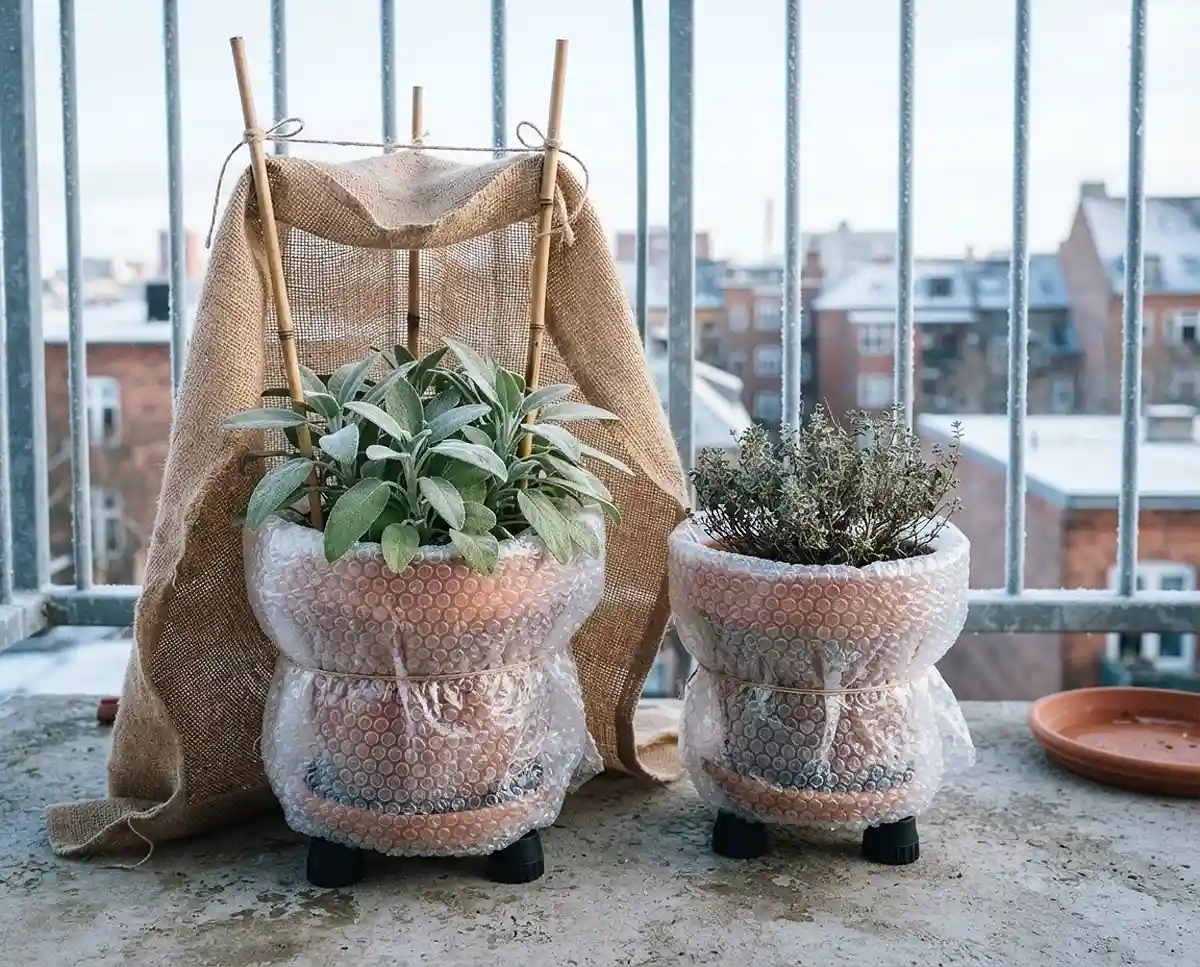
Overwintering Sage and Thyme in Pots
Overwintering sage and thyme in pots is easy to botch. Here’s how to shield these cold tolerant herbs for pots from freeze, wind, and rot.
I grow both on a windy, south-facing balcony in zone 6b. I’ve lost one pot to rot and saved another at -4°F, so this guide covers what actually worked. It’s the same routine I’m using this winter (2026-27).
Table of Contents
Understanding the Winter Biology of Mediterranean Herbs
Sage and thyme are woody Mediterranean perennials. They evolved on rocky, lean, fast-draining hillsides, so cold alone rarely kills them. Wet feet and wind do the damage.
In the ground, surrounding soil buffers roots from temperature swings. Container herbs get no such buffer. A pot’s roots sit behind a thin wall of soil, exposed to the air on every side, so a single hard night can freeze them solid.
That’s why these winter herbs thrive in a bed but struggle on a balcony. The plant is tough. The pot is the weak link.
Want more options? Browse our list of cold tolerant herbs for pots that handle similar conditions.
Evaluating Your Winter Microclimate and Container Safety
Start with your USDA zone, then look hard at your actual spot. Concrete floors, open railings, and rooftop gusts can make a balcony much colder than the map suggests. Note which direction the wind hits and where rain pools.
New to balconies? Our balcony gardening for beginners guide covers exposure basics.
The Two-Zone Hardiness Rule for Potted Herbs
Quick Answer: Treat potted plants as if you live two zones colder than your actual zone. Pots lose the insulation of surrounding soil, so roots feel air temperatures directly.
Find your zone on the USDA Plant Hardiness Zone Map (updated in 2023), then use this chart.
| Your Zone | Treat Pots As | Protection Needed |
|---|---|---|
| 8 | Zone 6 | Light: pot feet and mulch |
| 7 | Zone 5 | Moderate: wrap pot, block wind |
| 6 | Zone 4 | Full: wrap, fleece, overhang |
| 5 | Zone 3 | Heavy: unheated garage or sunk pots |
I’m in 6b, so my pots behave like zone 4b. English thyme (Thymus vulgaris) is hardy to zone 5, so mine always get wrapped.
The Threat of Wind Desiccation on Evergreen Leaves
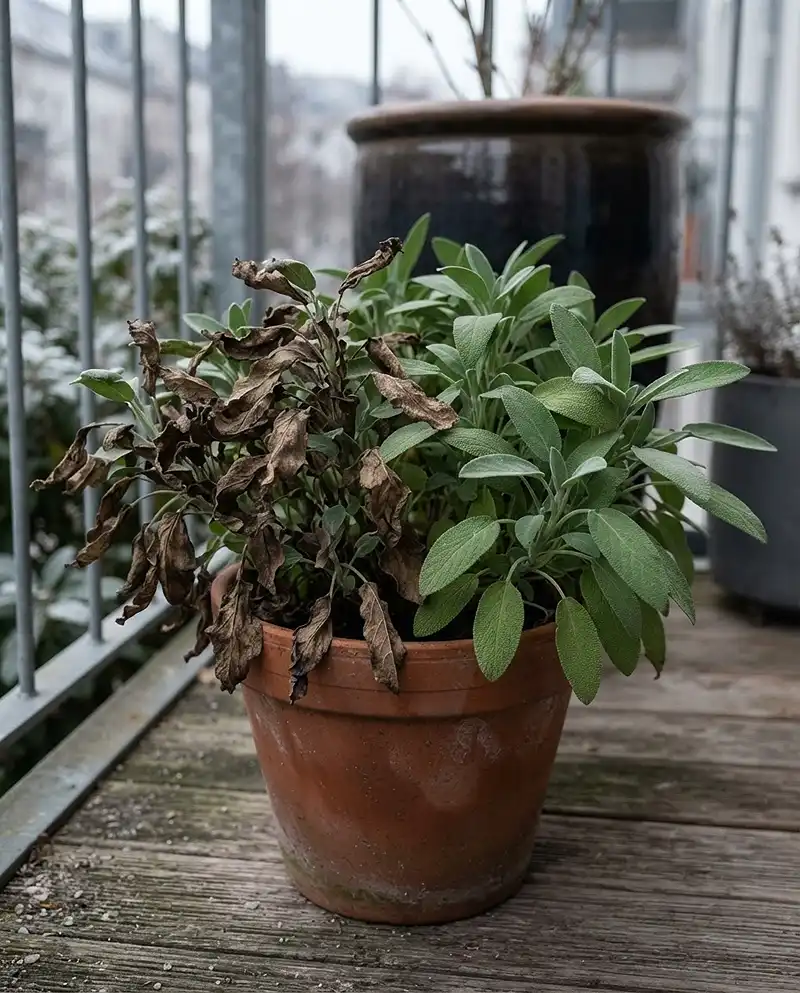
Quick Answer: Wind desiccation [moisture stripped from leaves by wind] kills evergreen herbs when frozen roots can’t replace lost water. Sage and thyme keep their leaves all winter, so they’re exposed.
In January 2022, my ‘Berggarten’ sage looked fine until a week of 30 mph gusts. By February, every windward leaf was brown and crisp. The roots lived, but I lost half the plant.
Pro Tip: Park a taller planter on the windward side as a cheap windbreak.
Pre-Winter Preparation: Pruning and Cleaning
Late fall is about restraint. You’re not shaping these plants. You’re letting them harden off. A few small chores now prevent most winter problems later.
Why You Must Stop Fertilizing and Pruning Early
Quick Answer: Stop fertilizing and deep pruning six to eight weeks before your first frost. Late feeding and cutting trigger tender new shoots that a hard freeze kills outright.
In zone 6b, my cutoff is mid-August. After that, I only pinch off flower stalks. Hardened, woody stems handle cold far better than soft green growth.
Removing Dead Foliage to Prevent Fungal Disease
Quick Answer: Clear fallen leaves and debris from the soil surface before winter. Decaying plant matter holds moisture and hides pests and fungal spores that cause rot.
- Fallen leaves and clippings sitting on the soil surface
- Weeds and stray seedlings competing for water
- Old, soggy mulch touching the stems
Use your fingers or a small hand rake. Leave the plant’s healthy foliage alone.
Essential Gear for Overwintering Containers
You don’t need fancy supplies. Everything below runs roughly $40 to $60 for several pots, and most of it lasts for years.
| Item | What It Does | Approx. Cost |
|---|---|---|
| Large-bubble wrap | Insulates the pot’s sides | $10-15 |
| Burlap or horticultural fleece | Shields foliage, lets it breathe | $8-15 |
| Pot feet (set of 6) | Lifts pots off cold concrete | $8-15 |
| Straw or bark mulch | Steadies root temperature | $6-10 |
| Bamboo stakes (24 inches) | Frames the canopy wrap | $6-8 |
Bubble Wrap, Burlap, and Pot Feet
Quick Answer: Bubble wrap traps heat around the pot’s sides, burlap shields foliage while letting it breathe, and pot feet lift the container off freezing concrete.
Choose bubble wrap with large bubbles, about 1/2 inch. Skip plastic sheeting on the foliage, since it traps moisture and invites mold. Three small feet under each pot are enough.
Protective Mulch (Straw or Wood Chips)
Quick Answer: Apply a 2-inch layer of straw or bark mulch over the soil. It steadies root temperature and prevents frost heave [freeze-thaw cycles pushing roots up out of the soil].
Keep mulch about an inch away from the stems. Piled against the crown, it holds moisture and invites rot. I use shredded cedar bark because it drains fast and doesn’t blow away.
Step-by-Step Guide to Overwintering Sage and Thyme in Pots
Do these three steps in order, ideally before your first hard freeze (28°F or below). In zone 6b, I finish by early November. Work on a dry day.
If this is your first winter, our beginner small-space gardening guide helps with setup.
Step 1: Insulating the Container and Roots
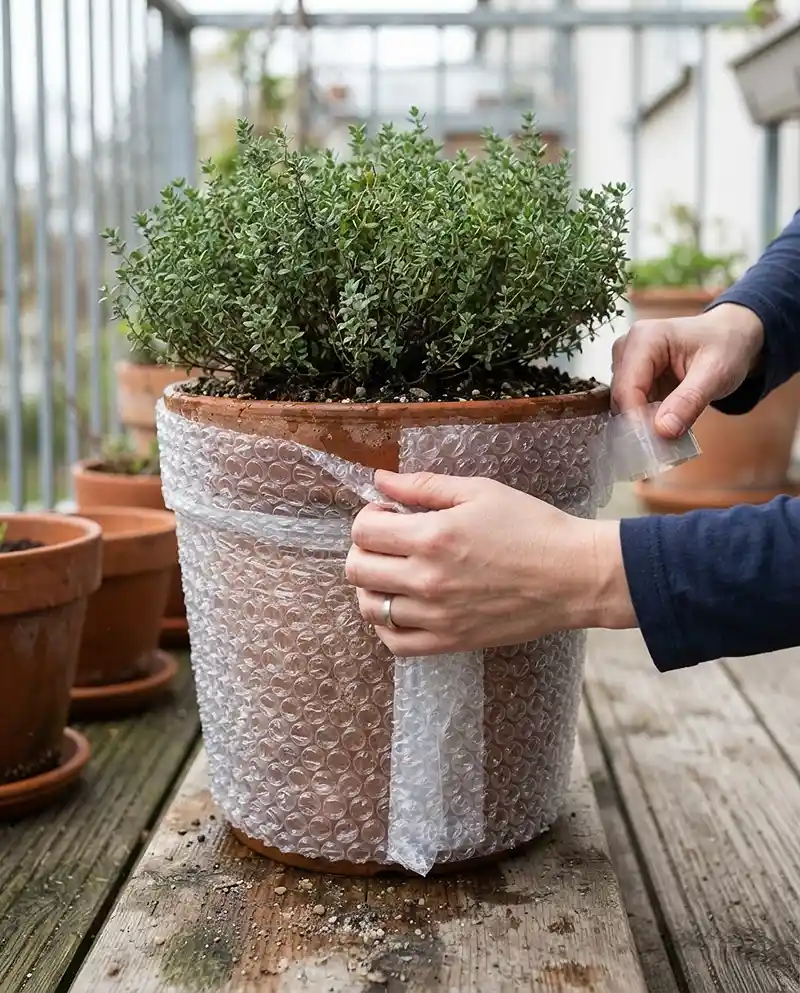
Quick Answer: Wrap the pot’s sides in two layers of bubble wrap, or set it inside a larger pot packed with packing peanuts. Either creates a thermal barrier around the roots.
Tape the wrap with the bubbles facing the pot. Leave the soil surface open. For a double-pot setup, leave a 2-inch gap and fill it fully.
Last winter, my wrapped 14-inch pot of English thyme stayed green through -4°F. An unwrapped 8-inch pot beside it didn’t make it.
Step 2: Elevating Pots to Ensure Winter Drainage
Quick Answer: Lift every pot at least 1 inch off the ground with pot feet or risers. Freezing rain must drain freely, or it becomes an ice block that crushes roots.
Check that drainage holes are open. Wrapping hides blocked holes, so peek underneath afterward. Bricks or wood slats work if you’ve got no feet.
Step 3: Sheltering the Canopy from Freezing Winds
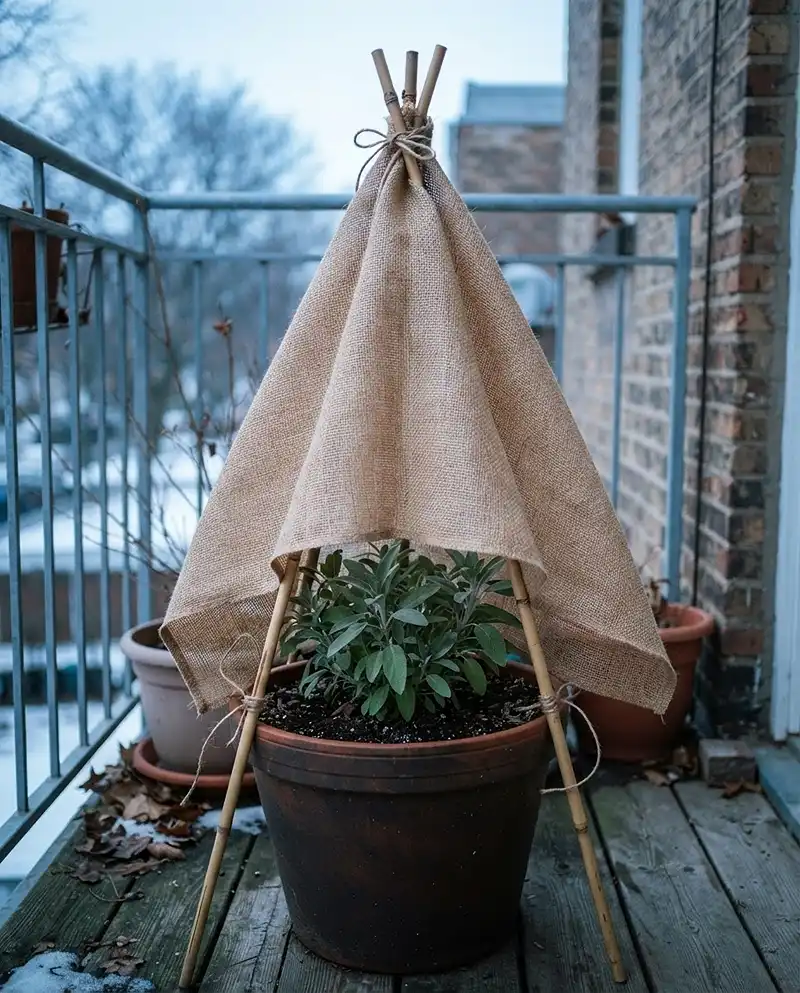
Quick Answer: Loosely wrap the foliage in horticultural fleece or burlap, tied to a bamboo stake frame. The frame keeps heavy snow off the plant, and the wrap blocks drying wind.
Push three 24-inch stakes into the soil around the plant and tie them at the top. Drape burlap over the frame and secure it with twine. Keep it loose, since tight wrapping flattens leaves and traps moisture.
Pro Tip: Leave the bottom 2 inches open so air can circulate.
Winter Maintenance for Dormant Herbs
Once wrapped, your job is mostly to leave them alone. Two checks matter: soil moisture during dry spells and the forecast during warm spells. Everything else can wait for spring.
Modifying Watering Schedules for Dormant Roots
Quick Answer: Water dormant sage and thyme only during mild, sunny thaws, when the soil is dry 2 inches down. Otherwise, skip it. Excess water freezes and rots roots.
Check every two to three weeks, mainly when temperatures climb above 40°F. About 1 cup is plenty for a 12-inch pot. Water in the morning so excess drains before night.
Managing Winter Thaws and Premature Sprouting
Quick Answer: During a mid-winter warm spell above 50°F, open the burlap for a few hours. This prevents overheating and trapped humidity. Close it again before nightfall.
One February, I forgot. A 58°F weekend left my thyme sprouting under the burlap, and the next cold snap killed the new growth. The plant itself survived.
Common Problems & Solutions
Even well-wrapped pots show stress by late winter. Most of it looks worse than it is. Here’s how to read the two most common warning signs.
Blackened, Frostbitten Foliage on Tips
Quick Answer: Blackened leaf tips are minor frostbite. Don’t prune them until spring. The dead tips insulate the living wood below from further cold.
Wait until you see new green growth, then cut back to just above it. Pruning early opens fresh wounds to the next freeze.
Crown Rot from Freezing, Waterlogged Soil
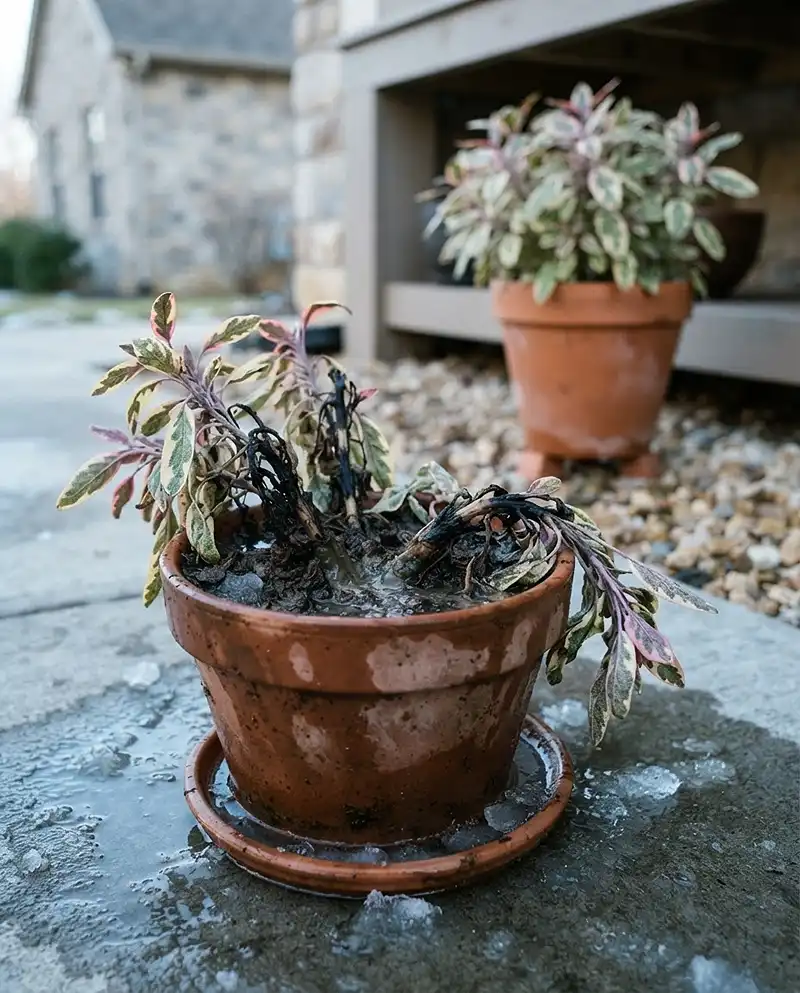
Quick Answer: Mushy, dark stems at the soil line signal crown rot, caused by poor drainage and trapped ice. Move the pot under an overhang to block heavy winter rain.
I lost a ‘Tricolor’ sage in winter 2022-23 after wrapping its pot in plastic with no feet. Rain pooled in the base and froze. By March, the stems pulled out like wet paper. Now every pot sits on feet under the eave.
Frequently Asked Questions
Should I bring my potted sage and thyme indoors for winter?
Usually no. Sage and thyme need a cold dormant period to stay healthy, so keep them outdoors or in an unheated garage. A dry, heated living room means low light and dry air, and they often decline by spring.
Can I still harvest sage and thyme leaves during the winter?
Yes, in small amounts. Snip a few leaves on mild days above 40°F. Avoid heavy cutting, because open stems are vulnerable to frost damage and the dormant plant can’t regrow quickly.
When should I unwrap and spring prune my herbs?
Unwrap gradually after the danger of hard frost passes, usually April in zone 6b. Wait until new green growth is visible, then prune away winter dieback just above the healthy buds.
Key Takeaways
- Overwintering sage and thyme in pots works best when you treat containers as two zones colder than your garden zone.
- Stop fertilizing and deep pruning by late summer, and clear debris from the soil before the first freeze.
- Insulate the pot, lift it on feet, and loosely wrap the canopy against wind.
- Water rarely, vent the wrap on warm days, and wait until spring to prune frost-damaged tips.