
How to Ripen Green Tomatoes Indoors After First Frost
Frost warning tonight, and your vines are loaded with hard green tomatoes. Here’s how to ripen green tomatoes indoors and save your whole tomato harvest. No fancy gear needed, just boxes, paper bags, and a little patience.
I garden on a sunny rooftop terrace in zone 7a, with about eight hours of direct sun. Most of my tomatoes in containers live in 15-gallon fabric pots, with a few in 5-gallon buckets.
Table of Contents
Rescuing Your Harvest: How to Ripen Green Tomatoes Indoors
Short Answer: You can save most of your late-season tomatoes by picking them before the first frost and finishing them indoors. Mature green fruit ripens in about two weeks at 65 to 70°F. Your homegrown tomato harvest can easily last into early winter.
As of fall 2026, the average first frost in much of zone 7a lands in late October. Rooftops run a little warmer than the ground, so I trust the forecast over the calendar.
Ripening is one of my favorite first frost garden tasks, because tomatoes don’t need the vine to finish the job. For a seasonal overview, see my guide to ripening green tomatoes in fall.
The Science of Tomato Ripening Explained
Short Answer: Tomatoes are climacteric fruits [fruits that keep ripening after picking]. Once mature, they release ethylene gas, a plant hormone that triggers color change, softening, and sweetness. Mimic that process indoors with trapped gas and steady warmth, and green tomatoes finish ripening without the vine.
The Role of Ethylene Gas and Temperature
Ethylene works best when it’s trapped in a small space and the room sits between 65°F and 70°F.
Inside the fruit, ethylene switches on enzymes that break down green chlorophyll and build lycopene [the red pigment]. In a closed bag or box, the gas builds up and speeds things along.
Temperature matters just as much. Below 55°F, those enzymes crawl. Above about 85°F, lycopene production stalls, and your tomatoes turn a washed-out yellow-orange instead of red.
Understanding the “Breaker” Stage
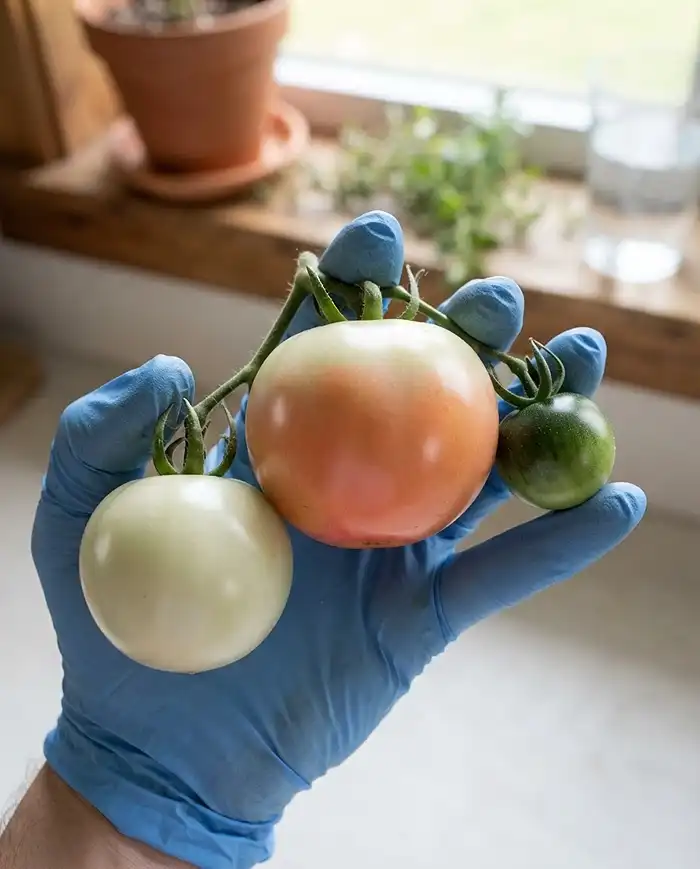
The breaker stage is a tomato’s first blush of pink, yellow, or orange at the blossom end [the bottom, opposite the stem].
Fruit picked at breaker or later has already sealed itself off from the vine. Its flavor develops almost exactly as it would outdoors.
Mature green fruit comes next: full-size, glossy, and whitish-green. Small, dark green, rock-hard fruit is the long shot.
Harvesting Green Tomatoes Before the Freeze
Short Answer: Pick every sound tomato just before temperatures drop below 32°F (0°C). Sort ruthlessly, because bruised, cracked, or diseased fruit rots before it ripens. Wash, dry completely, and box only the healthy ones. This is the most important of your first frost garden tasks.
Timing the Harvest and Sorting Fruit
Harvest the afternoon before the cold night, once the leaves are dry. Leave a short stub of stem on each fruit, but not so long it pokes its neighbors.
Then sort into three piles:
- Keep: firm, glossy, blemish-free fruit at the mature green or breaker stage.
- Eat soon: pink or blushing fruit that will finish on the counter.
- Toss or cook: cracked, bruised, or spotted fruit goes in the trash. Small, hard green ones become pickles.
Cleaning and Prepping for Indoor Storage
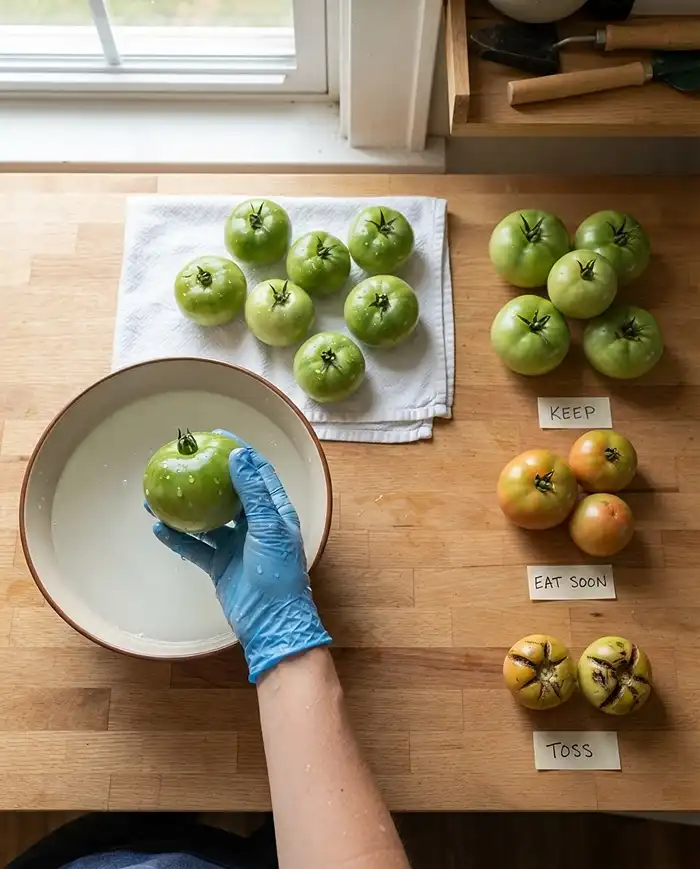
Late-season fruit can carry late-blight spores [microscopic fungal seeds] and other molds, so give your keepers a quick bath.
Dip them briefly in one part white vinegar to ten parts water, then rinse. Lay them on a clean towel for several hours. They must be bone-dry before boxing, or fungus will move in.
Top 3 Methods to Ripen Tomatoes Indoors
Short Answer: Three methods work best. A paper bag with a banana suits small batches. A lined cardboard box handles big harvests. Hanging the whole vine upside down suits roomy basements. All three trap ethylene, so pick the one that fits your space.
| Method | Best for | Batch size | Typical time to red |
|---|---|---|---|
| Paper bag and banana | Small batches, fast results | 3 to 4 tomatoes per bag | 5 to 10 days |
| Cardboard box and newspaper | Big harvests | 20 or more, single layer | 2 to 3 weeks |
| Hanging vine | Whole plants, cool basements | One plant per hook | 3 to 4 weeks |
The Paper Bag and Banana Trick
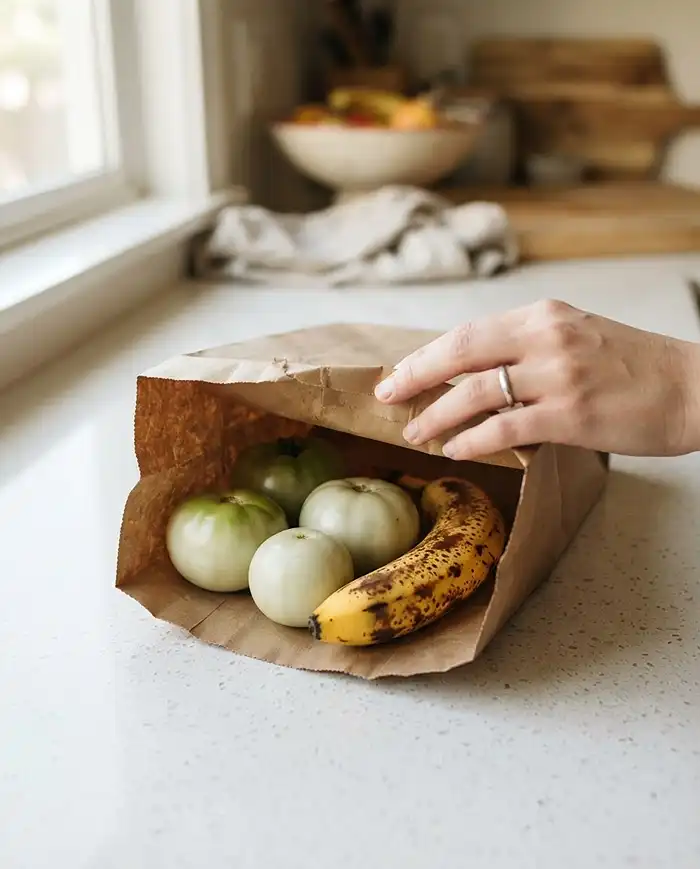
Place three to four green tomatoes in a brown paper bag with one ripening banana or apple. Fold the top over and keep the bag at room temperature.
The banana pumps out ethylene, and the bag holds it close. In October 2024, I bagged four mature green ‘Early Girl’ tomatoes [about 57 days to harvest] with one spotty banana. Six days later, all four were red.
Use paper, not plastic, so extra moisture escapes. Peek daily. ‘Early Girl’ is one of my favorite late-season tomatoes for containers.
The Cardboard Box and Newspaper Method
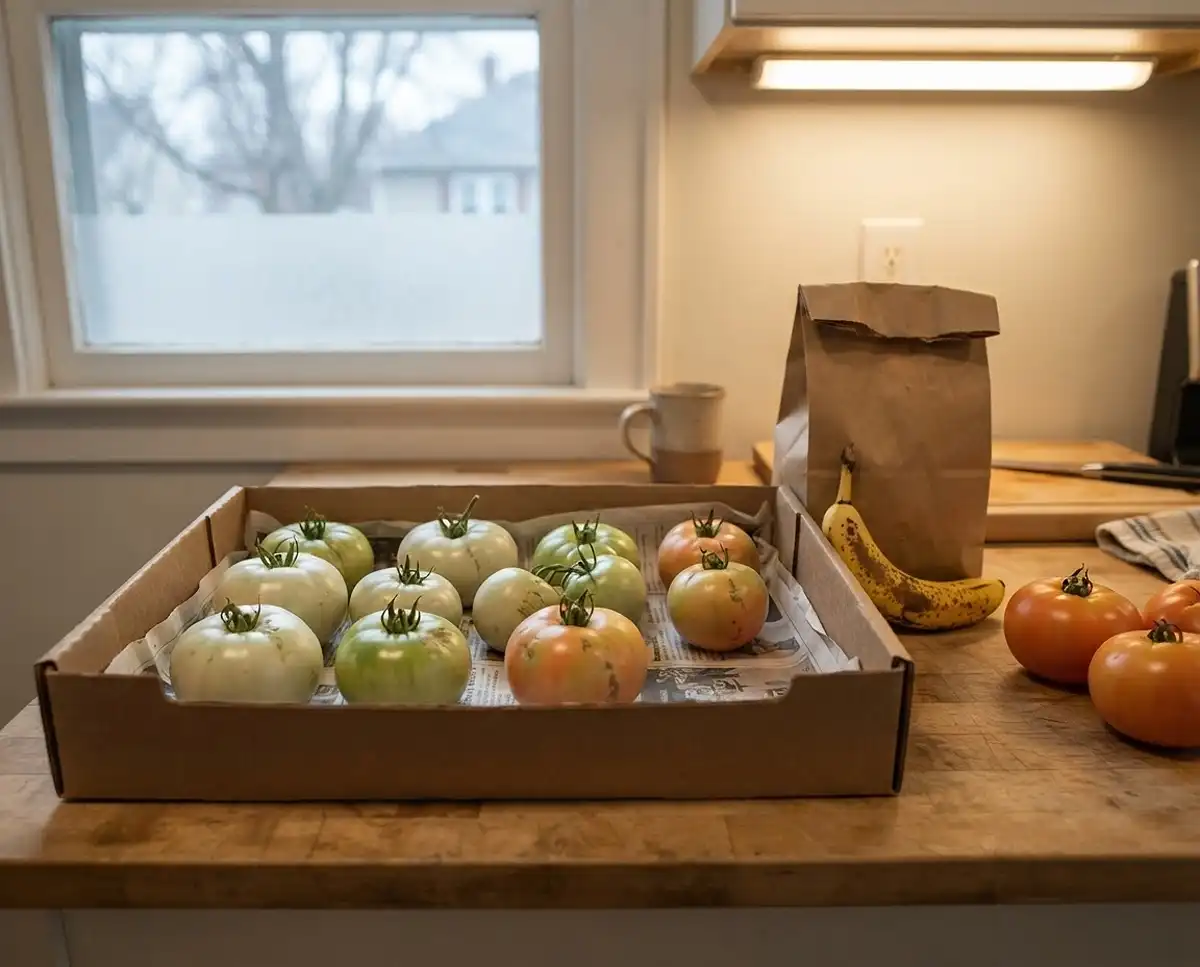
Line a shallow cardboard box with newspaper. Set the tomatoes in a single layer so they don’t touch. Cover them with a second sheet to trap ethylene and block light.
Last fall, I boxed 22 mature green ‘San Marzano’ tomatoes this way. Three weeks later, 19 had ripened. Gaps between fruit stop rot from spreading.
Extension horticulturists agree, and this Oklahoma State University Extension advice on ripening tomatoes indoors backs up the single-layer approach.
Hanging the Entire Vine Upside Down
Pull up the whole plant and shake off the soil. Hang it by the roots in a cool, dry basement above 50°F. The fruit slowly ripens as the vine’s leftover energy moves into it.
Container growers have it easy here, since the whole root ball lifts right out of the pot. My rooftop has no basement, though, so I skip this one. Dramatic, but it works.
Managing the Indoor Ripening Environment
Short Answer: Keep ripening tomatoes in a dry, well-ventilated room held steady at 65 to 70°F. Check them every two to three days. Cold garages and damp cellars halt lycopene production and invite mold, while steady warmth gives you even color and fewer losses.
Ideal Temperature and Humidity Zones
Aim for a dry, airy room at 65°F to 70°F. A spare bedroom, pantry shelf, or closet works well.
Keep boxes away from heating vents and radiators. Skip cold garages and damp cellars, which stall lycopene and grow mold faster than they grow red tomatoes.
Routine Inspection and Sorting Schedule
Every two to three days, run this quick check:
- Open each bag or box and look over every fruit.
- Pull fully red tomatoes for the kitchen.
- Move blushing fruit to the counter to finish.
- Throw out anything moldy or soft right away.
Common Problems & Solutions
Short Answer: Rot and wrinkled skins are the two big problems. Rot comes from cold, damp storage or damaged fruit, so keep boxes warm, dry, and airy. Wrinkles come from dry air or very immature fruit, so move the boxes to a slightly cooler room around 60°F.
Fruit Rotting Before Ripening
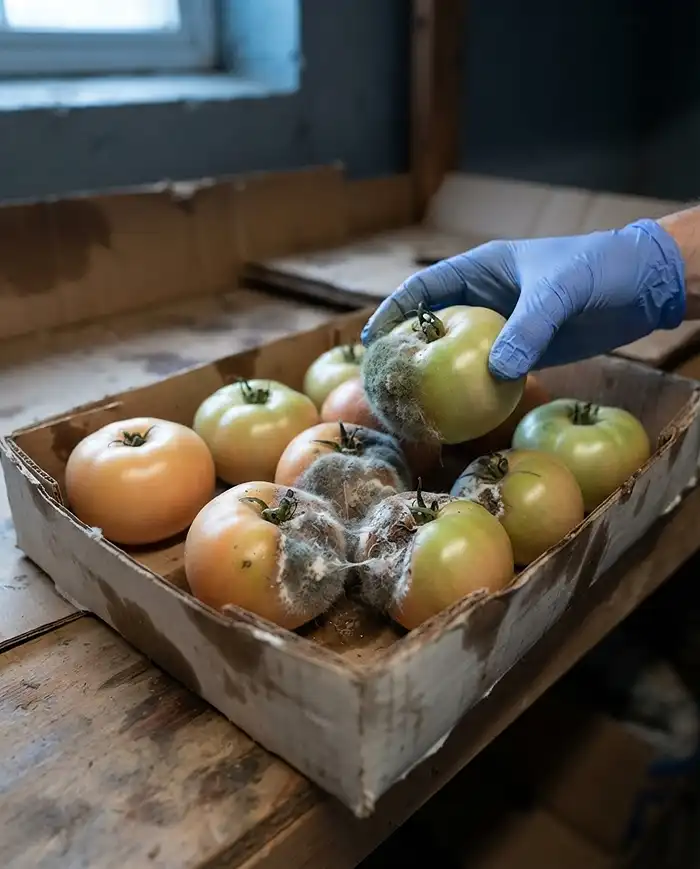
Here’s my flop. In October 2023, I stored 16 ‘Cherokee Purple’ tomatoes in a chilly stairwell closet, around 48°F and damp. After 18 days, none had colored, and 11 were moldy.
I moved the survivors to a bedroom shelf at 68°F. The next October, a fresh batch colored up in 12 days with just one loss.
Never refrigerate unripened tomatoes, and give every fruit airflow. Crowded, damp boxes grow mold fast.
Shriveled, Wrinkled Tomato Skins
Wrinkled skins mean dehydration. Dry indoor heat pulls moisture through the skin, and fruit picked too young never built enough reserves.
Move the box to a cooler room near 60°F to slow moisture loss. Eat wrinkled fruit quickly, in soups or sauces.
Frequently Asked Questions
Do green tomatoes need sunlight to ripen indoors?
No. Ethylene gas and gentle warmth drive ripening, not light. Direct sun can overheat the fruit and toughen the skin, so a dark spot like a paper bag or closed box works better than a sunny windowsill.
Will indoor-ripened tomatoes taste as good as vine-ripened?
Fruit picked at the breaker stage or later tastes very close to vine-ripened, since it has already sealed itself off from the vine. Mature green fruit is a bit less sweet and tangier. Expect the biggest flavor gap from fruit picked very early.
Can I ripen tomatoes that are completely solid green?
Often, yes, if they’re full-size, glossy mature green fruit. Use the paper bag method. Small, dark, rock-hard fruit may never color, so turn those into fried green tomatoes or tangy chutney.
How long does it take to ripen green tomatoes indoors?
Mature green tomatoes usually ripen in about two weeks at 65 to 70°F. At 55°F, expect three to four weeks. Adding a ripe banana to a paper bag can shorten the wait to about a week.
Can I put green tomatoes in the refrigerator?
No. Cold temperatures destroy the ripening enzymes, so the fruit stalls and turns mealy. Only chill tomatoes that are already fully ripe and that you can’t eat in time.
What’s the best way to ripen a lot of green tomatoes at once?
Use shallow cardboard boxes lined with newspaper, with one layer of tomatoes per box. Keep them in a dry room at 65 to 70°F. Check them every two to three days and remove the ripe ones.
Quick Recap
- Pick and sort before the freeze: that’s step one of how to ripen green tomatoes indoors.
- Wash briefly, dry completely, and box only healthy, blemish-free fruit.
- Choose your method: banana bag, newspaper box, or hanging vine.
- Store at 65 to 70°F in a dry room, and check every two to three days.
- Skip the fridge and the sunny windowsill.