

Late Season Tomatoes for Containers That Still Ripen
Planting late season tomatoes for containers in August isn’t a gamble if you pick fast varieties. Here’s how I get ripe tomatoes in pots before frost.
Table of Contents
The Secret to a Successful Late Season Tomato Harvest in Pots
I grow tomatoes in pots on a north-facing balcony in zone 6b, and every August I get the same question: isn’t it too late? It isn’t, as long as you stop thinking like an in-ground gardener.
Containers move. You can drag a pot into full sun, tuck it against a warm wall, or haul it indoors the night a frost warning pops up. Pair that mobility with genetics bred to finish fast, and a mid-summer planting can still hand you a real harvest.
The trick is matching variety to the calendar you actually have left, not the one you wish you had.
Understanding Your Autumn Growing Window
Late planting comes down to reverse math. You’re not counting forward from planting day, you’re counting backward from the date the cold shuts everything down.
Once nighttime temperatures dip into the 40s Fahrenheit, tomato metabolism stalls, and fruit that hasn’t started coloring by then largely stays green. Your entire strategy hinges on beating that date.
Calculating First Frost Dates and Days to Maturity
Quick Answer: Find your average first fall frost date, subtract the variety’s “days to maturity,” then subtract another 14 days as a buffer. That’s your last safe planting date.
- Look up your USDA zone’s average first frost date (a quick search of your county extension office site will have it)
- Subtract the days-to-maturity number printed on the seed packet or nursery tag
- Subtract 14 more days for what I call the “fall factor,” since shrinking daylight slows ripening even when temperatures look fine
- Whatever date is left is your true deadline for transplanting, not seeding
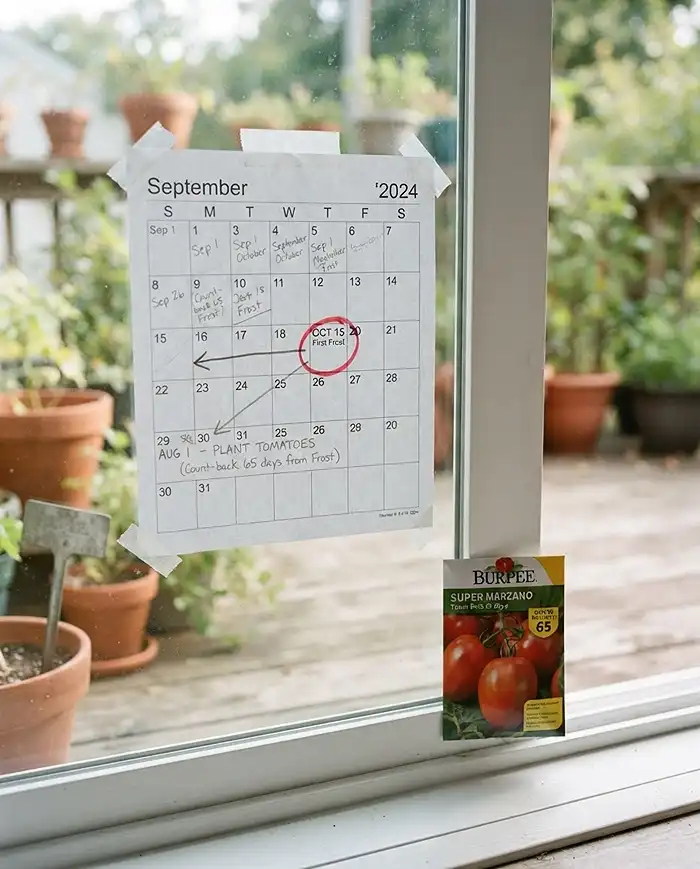
In zone 6b, my first frost lands around October 20. For a 55-day variety, that math puts my absolute latest transplant date in mid-August, not Labor Day.
The Microclimate Advantage of Balcony Containers
Concrete, brick, and stucco hold heat all day and release it slowly after sunset. A balcony surrounded by these materials runs several degrees warmer overnight than an open backyard bed.
I’ve watched my balcony-grown ‘Sungold’ keep ripening into late October while a friend’s in-ground plants two miles away had already stopped. Same zone, same week, very different result, purely because of the thermal mass around my pots.
If you garden on a patio or balcony, lean into that advantage instead of ignoring it.
Best Late Season Tomato Varieties for Containers
Not every tomato belongs in this conversation. You want genetics that set fruit fast and ripen it all at once, which is exactly what makes good tomato varieties for container gardening different from what you’d choose for a spring planting.
Fast-Maturing Determinate Bush Tomatoes
Quick Answer: Determinate bush types like ‘Early Girl Bush’ and ‘Glacier’ set their whole fruit load in one flush and ripen in under 65 days, making them ideal for a race against frost.
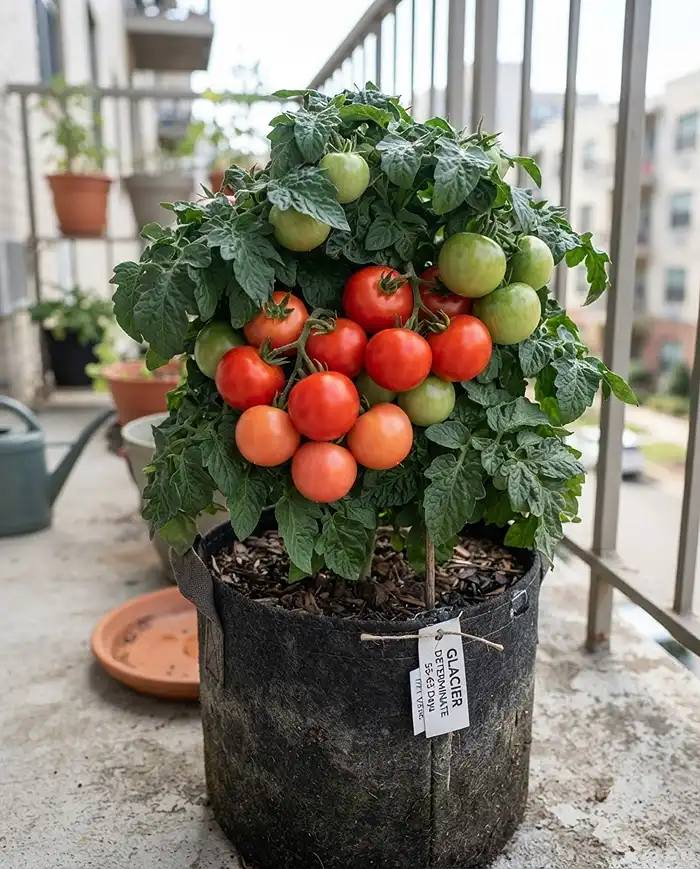
Determinate varieties stop growing taller once they set a certain number of flower clusters, then pour their energy into ripening rather than producing new vines.
Real Example: I transplanted ‘Glacier’ starts into 5-gallon pots on August 10 one year in zone 6b, half expecting a wasted season. By October 5, I’d picked over 30 fruit, all ripened within a two-week window.
Pro Tip: Skip indeterminate slicers for late planting entirely. Their sprawling, keep-growing habit wastes energy on vine instead of fruit when time is short.
Cold-Tolerant Cherry Tomatoes for Quick Yields
Quick Answer: Cherry varieties such as ‘Sungold’ and ‘Sub Arctic Plenty’ keep ripening small fruit even as September nights drop into the 40s, when full-size slicers have already given up.
Small fruit needs less time and fewer warm hours to finish coloring, so cherry types simply outlast everything else in the pot next to them.
Real Example: My honest failure was assuming a beefsteak could keep pace with ‘Sungold’ in the same September planting. The beefsteak never got past golf-ball size before frost; the ‘Sungold’ produced steadily for six more weeks.
Dwarf and Micro-Tomatoes for Instant Gratification
Quick Answer: Micro cultivars like ‘Micro Tom’ and ‘Tiny Tim’ mature in as little as 45 days and fit in 1-to-3-gallon pots, so you can carry the whole plant indoors the moment frost threatens.
Their tiny root systems mean they never need the larger footprint covered in this pot size guide for vegetables, which makes them the lowest-risk option for a very late start.
| Variety | Days to Maturity | Minimum Pot Size | Best For |
|---|---|---|---|
| ‘Early Girl Bush’ | 54 days | 10 gallons | Reliable slicing tomatoes |
| ‘Glacier’ | 56 days | 7 gallons | Cool-climate flavor |
| ‘Sungold’ | 57 days | 10 gallons | Continuous snacking harvest |
| ‘Sub Arctic Plenty’ | 45 days | 5 gallons | Extreme cold tolerance |
| ‘Micro Tom’ | 45 days | 1 gallon | Windowsill backup plan |
Essential Supplies for Late Summer Container Planting
Late-season transplants face brutal August heat while trying to build roots fast, which calls for different setup choices than a spring planting would need. Good container vegetable gardening habits shift with the calendar.
Retentive Soil Mixes for Hot August Starts
Mix a premium potting soil with 30 percent coco coir by volume, then work in a generous handful of worm castings per gallon of mix. Coco coir holds moisture without waterlogging roots, which matters when August sun can dry a pot out twice a day.
Worm castings give young roots a gentle, steady nutrient supply without the risk of burning tender transplants the way a strong synthetic fertilizer can.
Thermal Containers and Frost Blankets
Choose dark-colored, thick-walled resin pots over thin plastic or light-colored ceramic. Dark resin absorbs solar heat during the day and releases it slowly overnight, buying your plants a few extra degrees exactly when they need it.
Keep a horticultural fleece frost blanket on hand starting in mid-September. Drape it loosely over the plant before an unexpected cold snap, and you can often push your harvest window another one to two weeks.
Step-by-Step Guide to Planting Late Season Tomatoes
- Plant deep: Bury two-thirds of the stem, stripping off the lower leaves first. The buried stem grows adventitious roots, which means a bigger root system in less time than a shallow planting gives you.
- Cage immediately: Install a sturdy tomato cage the same day you transplant. Waiting even a week risks damaging roots later, right when the plant can least afford the setback.
- Mulch heavily: Add 2 to 3 inches of straw mulch around the base. It buffers erratic swings between hot August afternoons and increasingly cool nights, keeping root temperature steadier.
- Water deeply, then back off: Soak thoroughly at planting, then settle into a normal watering rhythm until fruit sets.
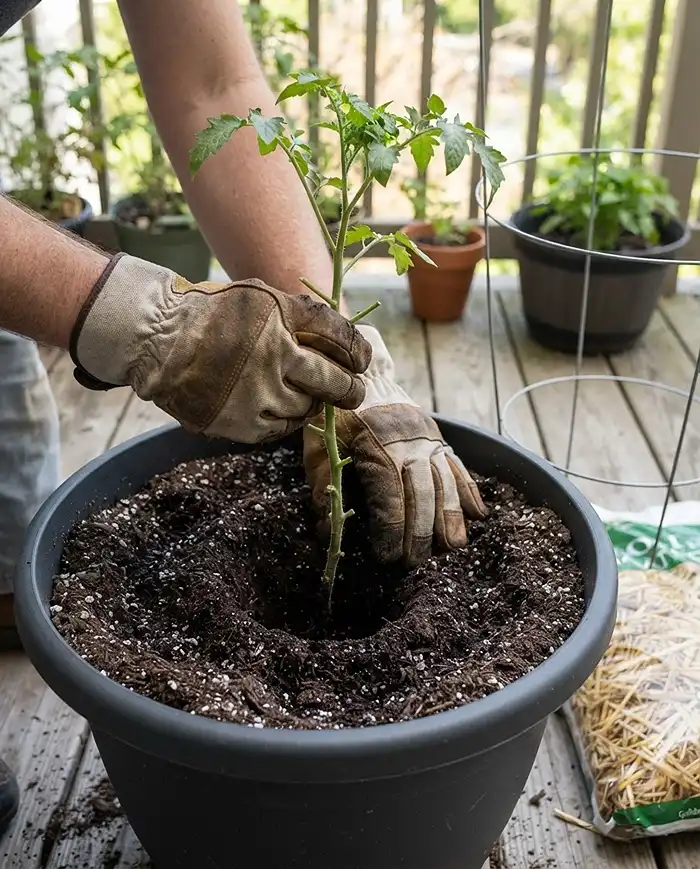
This approach is standard practice in container vegetable gardening once you’re working against a hard deadline instead of a full season.
Maintenance and Hacks to Speed Up Autumn Ripening
Once fruit is set, your job flips from encouraging growth to actively shutting it down. Every bit of energy the plant would spend on new leaves or flowers needs to go into the tomatoes already hanging.
Pruning Flowers (Topping) to Force Fruit Maturation
Quick Answer: Four weeks before your first expected frost, snip off every new flower and the growing tip of each main stem. This is called topping, and it forces the plant to ripen existing fruit instead of starting more it can’t finish.
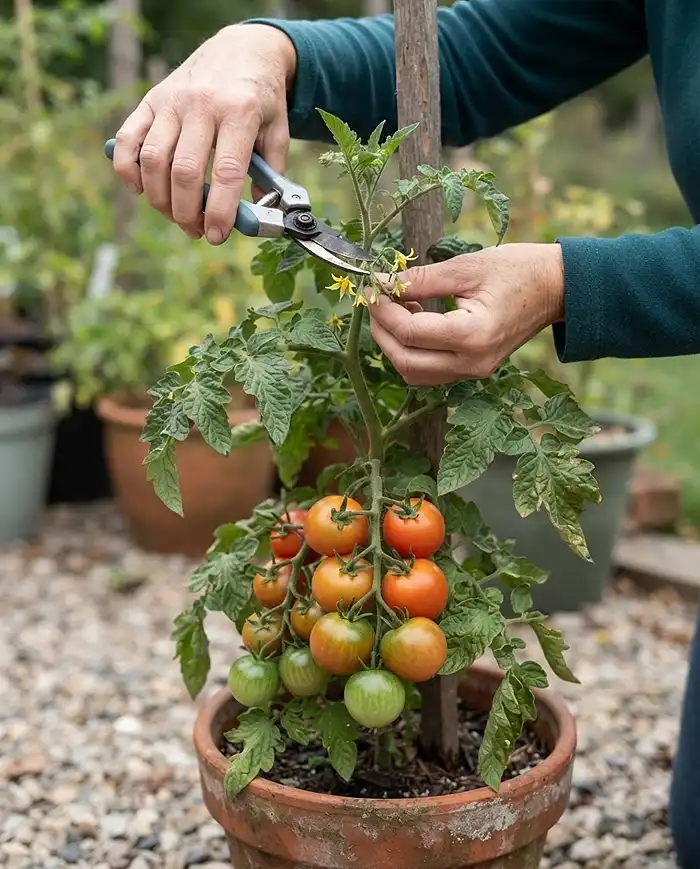
Any flower that blooms this late has no realistic chance of becoming a ripe tomato before cold sets in, so it’s just competing for resources with fruit you can actually harvest.
Pro Tip: Mark your calendar the day you transplant, and set a reminder for the topping date. It’s easy to forget until frost is already in the forecast.
Adjusting Water and Fertilizer as Temperatures Drop
Cut back from daily summer soaking to watering only when the top 2 inches of soil feel dry, usually every 3 to 4 days once nights cool. Mild water stress signals the plant to prioritize ripening over vegetative growth.
Stop nitrogen fertilizer entirely once fruit is set. Slightly stressed, lightly fed plants concentrate sugars in the fruit, which is part of why late-season tomatoes often taste more intense than midsummer ones.
Common Problems & Solutions
Two issues show up almost every fall: stalled ripening and fungal disease moving in with the damp, cool air.
Green Tomatoes Refusing to Ripen in the Cold
Quick Answer: Tomatoes stop producing lycopene, the pigment that turns them red, once temperatures fall below about 50°F (10°C). Move pots against a warm, south-facing wall or bring them indoors overnight to restart ripening.
According to Purdue University’s Consumer Horticulture program, ripening slows the further temperatures stray from the optimal 68 to 77°F range, and can stall out almost completely outside it.
Pro Tip: A south-facing brick wall can run 5 to 8°F warmer at night than open air, which is often the difference between a ripe tomato and a wasted green one.
Late Blight and Cold-Weather Fungal Issues
Watch for dark, water-soaked lesions on leaves and stems, which spread fast in the cool, damp air common to early fall mornings. Late blight thrives exactly in the conditions your plants are sitting in right now.
- Prune away infected lower leaves immediately to slow the spread
- Increase airflow by spacing containers further apart
- Apply a preventative organic copper fungicide spray every 7 to 10 days once cool, damp weather sets in
- Water at the base of the plant, never overhead, to keep foliage dry
Frequently Asked Questions
Can I bring my potted tomato plant indoors to finish ripening?
Yes. Before the first freeze, move the pot to a sunny, south-facing window indoors. The plant will safely finish ripening its mature green fruit in the ambient warmth of the house, even without direct outdoor sun.
What is the absolute latest date I can plant tomatoes in pots?
You can safely plant fast-maturing, 45-to-55-day transplants up to 8 weeks before your region’s first frost date. Starting from seed that late won’t leave enough time to reach fruit production, so buy nursery starts instead.
Should I pick my tomatoes green before the first frost?
If a hard freeze is coming and the pots can’t be moved indoors, harvest every full-sized green tomato right away. Place them in a breathable paper bag with a ripe banana or apple to trigger ethylene-induced ripening indoors.
Do container tomatoes ripen faster than in-ground tomatoes?
Not inherently, but containers let you exploit warm microclimates like patios and brick walls, and you can move them to catch more sun or shelter them from cold snaps, which often speeds up ripening in practice.
How many tomato plants fit in one large container?
Stick to one tomato plant per container, even in a large pot. Crowding roots competes for the same limited soil volume, which slows fruit development right when you need speed most.
Conclusion
Late season tomatoes for containers aren’t a long shot once you match fast genetics to the calendar and use your pots’ mobility to your advantage. As of the 2026 growing season, this is exactly the approach I use on my own balcony every fall.
Choose short-season varieties, calculate your true planting deadline, and shift your maintenance routine as nights cool. That combination is what actually separates a ripe harvest from a frost-killed one.
- Subtract days-to-maturity plus a 14-day buffer from your first frost date before you plant anything
- Determinate, cherry, and micro varieties consistently outperform slicers for late season tomatoes in containers
- Topping flowers 4 weeks before frost and easing off water are the two highest-impact container garden tips for autumn ripening
- Vegetables in pots give you one advantage in-ground gardeners don’t have: you can simply carry the whole plant indoors when frost threatens