
How to Prune Herbs in Fall
Wondering how to prune herbs in fall without killing them? This pruning herbs guide covers safe cuts for rosemary, thyme, and sage before the first frost.
I grow herbs in containers on a north-facing balcony in zone 6b, and I’ve lost more rosemary to bad fall timing than to any pest. Here’s what actually works, as of fall 2026.
Table of Contents
The Importance of Pruning Woody Herbs Before Winter
Skip the autumn haircut and your rosemary, thyme, and sage turn leggy. Stems stretch, the center goes brittle, and spring growth comes in thin and sparse.
A light trim also protects the crown [the base where stems meet roots] from trapped moisture and snow load. Open, airy plants shed wet weather instead of rotting under it.
One caution up front: “pruning” here means a light, early-fall shaping. Heavy cuts belong in spring. Good fall herb care is about timing and restraint, not a buzz cut.
New to growing in tight spaces? Our beginner small space gardening guide covers the basics.
Understanding Woody Herb Biology and Fall Dormancy
Mediterranean herbs evolved on dry, sunny slopes, not in freezing winters. As days shorten and nights dip toward 45°F, they slow down and shift energy into roots and stems.
That’s dormancy [a rest period with minimal growth]. Spring harvesting encourages growth. Fall pruning has to do the opposite: shape the plant without waking it up.
Distinguishing New Green Growth from Old Wood
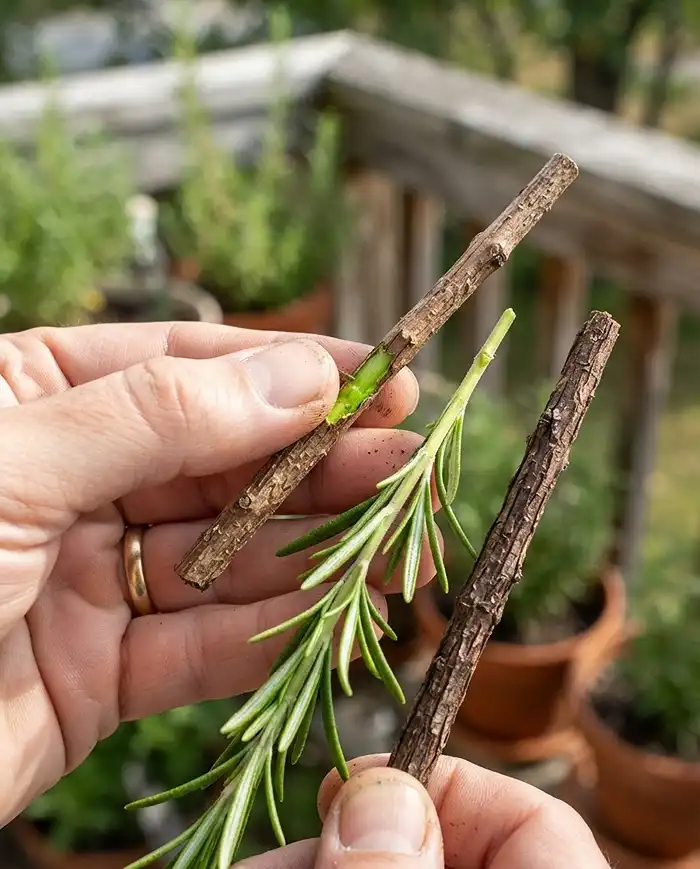
Quick Answer: Green, flexible stems with leaves are new growth and safe to cut. Brown, bark-like stems without leaves are old wood. Cut only into green growth, because old wood rarely regrows.
- New growth: bends without snapping and carries leaves or buds along the stem.
- Old wood: stiff, brown or gray, often with peeling bark and no leaves.
- Scratch test: nick a stem with your fingernail. Green underneath means it’s alive.
Pro Tip: Always leave at least two sets of leaves on every stem you trim.
The Danger of Pushing Late-Season Growth
Prune too late and the plant reads the cut as a signal to grow. It pushes out tender, watery shoots that can’t harden off.
The first hard frost blackens those shoots, and the damaged tissue can introduce rot into the main stem. Extension experts advise stopping woody herb pruning 6 to 8 weeks before a severe freeze.
Inside that window? Harvest a few tips for the kitchen and wait until spring for real cuts.
Last October I trimmed my ‘Arp’ rosemary on the 28th after a warm week. A hard freeze hit on November 6, and the new shoots turned black and mushy. I lost about a third of the top growth.
Essential Tools for Sanitary Herb Pruning
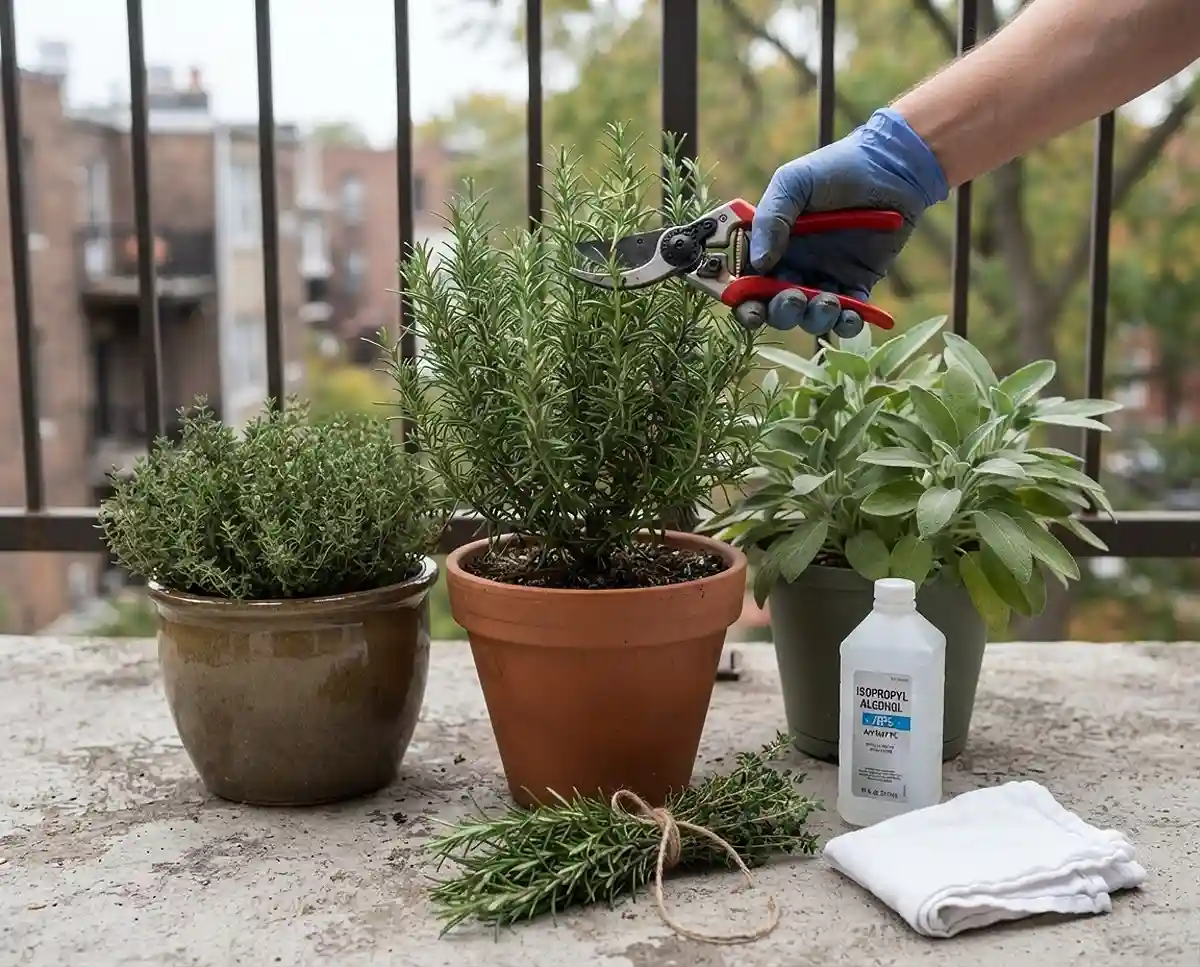
You need very little, but each item matters. Gather everything before you start so you don’t grab kitchen scissors halfway through.
- Sharp bypass pruners
- 70% isopropyl alcohol or a 10% bleach solution
- A clean rag
- Twine for bundling clippings
Choosing the Right Shears for Woody Stems
Quick Answer: Use sharp bypass pruners, not kitchen scissors. Bypass blades pass each other like scissors and slice woody stems cleanly, while dull blades crush them.
Crushed stems tear the vascular tissue [the tubes that carry water and nutrients], leaving ragged wounds that heal slowly. A pair with a 1/2-inch cutting capacity handles every herb stem you’ll meet. I use a Felco No. 6.
Sterilizing Tools to Prevent Disease Transmission
Wipe your blades with rubbing alcohol or a 10% bleach solution (1 part bleach to 9 parts water) between every plant. Damp autumn weather spreads fungal blights and bacterial wilts, and dirty blades carry them straight into fresh cuts.
Bleach corrodes steel, so rinse and dry the blades afterward. The whole routine takes about 10 seconds per plant.
How to Prune Herbs in Fall: Step-by-Step Guide to Popular Woody Herbs
Rosemary, thyme, and sage are the three woody herbs most container gardeners grow. Each needs a slightly different cut.
| Herb | How Much to Cut | Where to Cut | Main Goal |
|---|---|---|---|
| Rosemary | Top 2 to 3 inches only | Above a leaf node on green growth | Airflow, less powdery mildew |
| Thyme | One-third of the plant | Just above healthy green leaves | Tight mound, no center dieback |
| Sage | Longest stems, up to half | Above a pair of healthy leaves | Stems that survive snow and ice |
Pruning Rosemary for Structure and Airflow
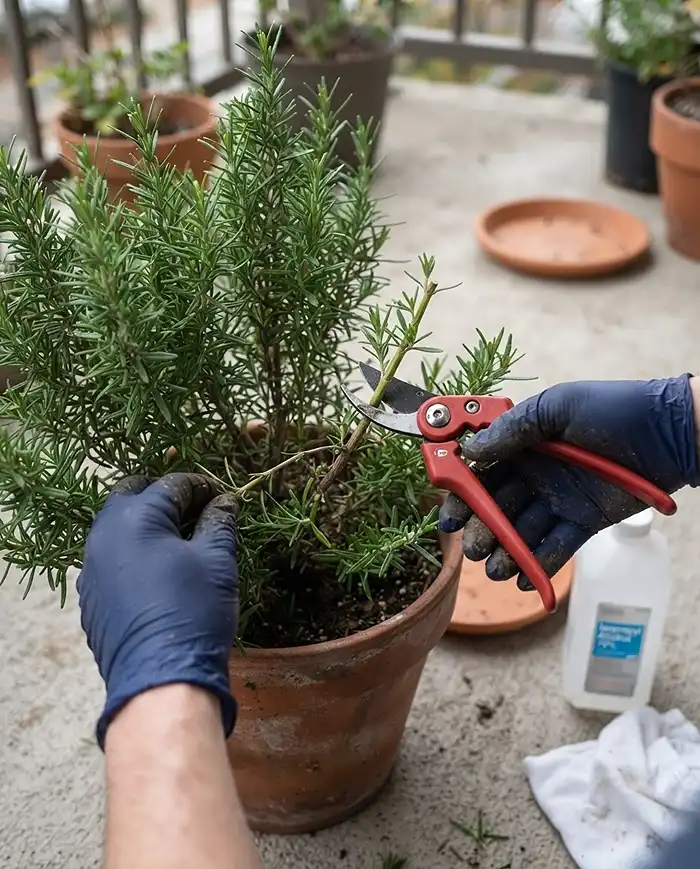
Quick Answer: Remove no more than the top 2 to 3 inches of green growth. Then thin crossing interior branches so air can move through the plant and mildew has less to grab onto.
Rosemary care in fall is mostly about airflow. Crowded interior stems stay damp all winter, and that’s where powdery mildew starts. Cut crossing branches back to their base.
Never cut into bare wood, because rosemary rarely resprouts from it. Rosemary is reliably hardy outdoors in zones 7 to 10. In zone 6, I move pots against a south-facing wall after pruning.
Trimming Thyme to Prevent Center Dieback
Both creeping and upright thyme develop a dead, woody center as they age. Thyme care in fall fixes that by shearing the whole plant back by one-third, cutting just above a healthy set of green leaves.
The cut forces a tight, bushy mound that insulates the crown. On September 12, I trimmed my English thyme in a 14-inch pot this way. By April it had filled in completely, with no bare patch in the middle.
Shaping Sage for a Robust Spring Flush
Sage has big, heavy leaves that catch wet snow like a sail. Cut the longest, floppiest stems back by up to half, but never remove more than one-third of the total plant.
I learned this the hard way. In December 2021, wet snow snapped a long ‘Berggarten’ stem right at the base and tore at the roots. Shorter stems would have survived.
Pro Tip: Trim the tallest stems first, then step back and look before you cut anything else.
What to Do With Your Final Fall Harvest
Don’t toss that pile of clippings into the compost. Late-season rosemary, thyme, and sage still pack plenty of flavor, and they preserve well.
Air Drying and Freezing Essential Oils
Both methods lock in the flavor compounds [the aromatic oils] that make these herbs worth growing.
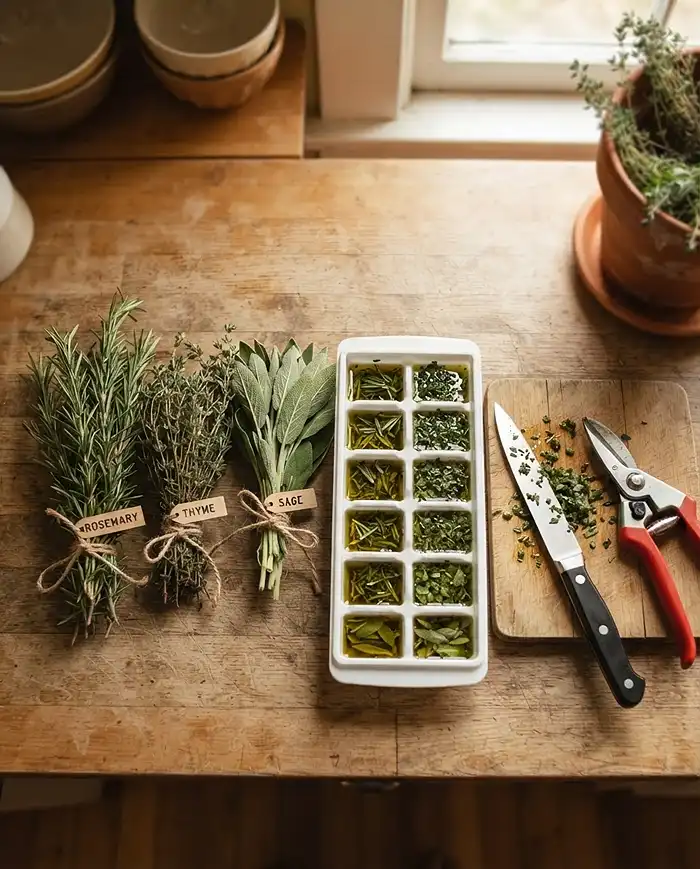
- Air dry: Bundle 5 to 8 stems with twine and hang them upside down in a dark, dry pantry for 1 to 2 weeks, until the leaves crumble.
- Freeze: Chop the leaves, fill ice cube trays halfway, top with olive oil, and freeze. Bag the cubes once solid. They keep about six months.
Post-Pruning Maintenance and Winterization
A fresh cut is a wound. What you do over the next two weeks decides whether the plant sails through winter or sulks until spring.
Mulching the Crown to Prevent Root Heave
Wait until after the first hard freeze, then spread a 2-inch layer of dry straw or shredded bark around the base. Keep it about an inch away from the stems so moisture doesn’t collect there.
The mulch protects against root heave [freeze-thaw cycles pushing roots out of the soil]. For pots, see our container gardening for beginners guide on insulating containers.
Halting Fertilization and Reducing Watering
A dormant plant needs almost nothing. Stop all nitrogen fertilizer now, because it pushes soft growth that frost will kill.
Rely on the finger test: push a finger 2 inches into the soil and water only if it’s bone dry. My balcony pots get water about every two to three weeks in winter. Wind dries them faster, so see our balcony gardening for beginners tips.
Common Problems & Solutions
Mistakes happen, especially with late-season cuts. These are the two I see most often, and both are fixable.
Accidentally Cutting Into Old Wood
If you cut a branch down to hard brown wood with no green buds, it won’t resprout. Don’t leave an ugly dead stub.
Trace the branch back to the main trunk and remove it entirely with one clean cut. If your first frost is under six weeks away, make that cut in spring instead.
Blackened Tips After an Early Frost
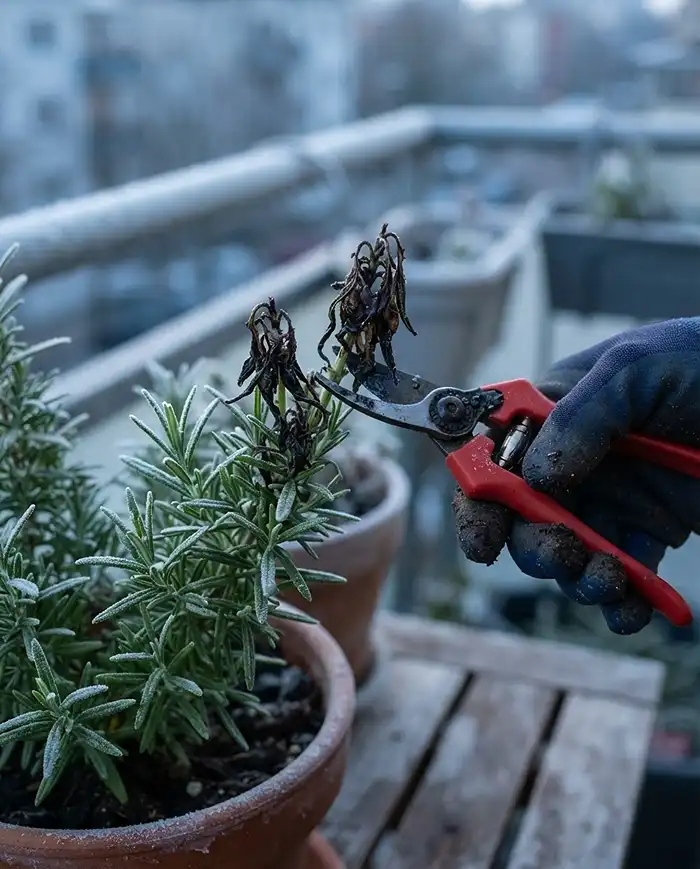
Frost-bitten growth looks black, limp, and mushy. It usually means you pruned slightly too late.
Resist the urge to cut it off. Those damaged tips act as a shield for the living tissue below. In spring, once new green buds appear, trim just above the first healthy bud.
Frequently Asked Questions
When exactly is the deadline for fall pruning?
Finish all woody herb pruning at least 6 to 8 weeks before your region’s average first frost date. That gives the plant time to scar over its cuts and harden off before freezing temperatures arrive. If you’ve missed the window, wait until spring.
Should I prune soft-stemmed herbs like basil and cilantro in the fall?
No. Basil, cilantro, and dill are annuals that won’t survive winter, so pruning won’t save them. Harvest the whole plant down to the soil line before frost, then compost the roots.
Do I need to cover my pruned herbs if it snows?
Not for light, fluffy snow, which insulates cold-hardy herbs like a blanket. Heavy, wet snow or ice storms can crush pruned branches, so cover plants with horticultural fleece when a severe ice warning is in the forecast.
Key Takeaways
- Knowing how to prune herbs in fall comes down to timing: finish 6 to 8 weeks before your first frost.
- Cut only green growth, and never remove more than one-third of the plant at once.
- Use sharp bypass pruners and sanitize blades between plants.
- Mulch the crown, skip the nitrogen, and water only when the top 2 inches are dry.