
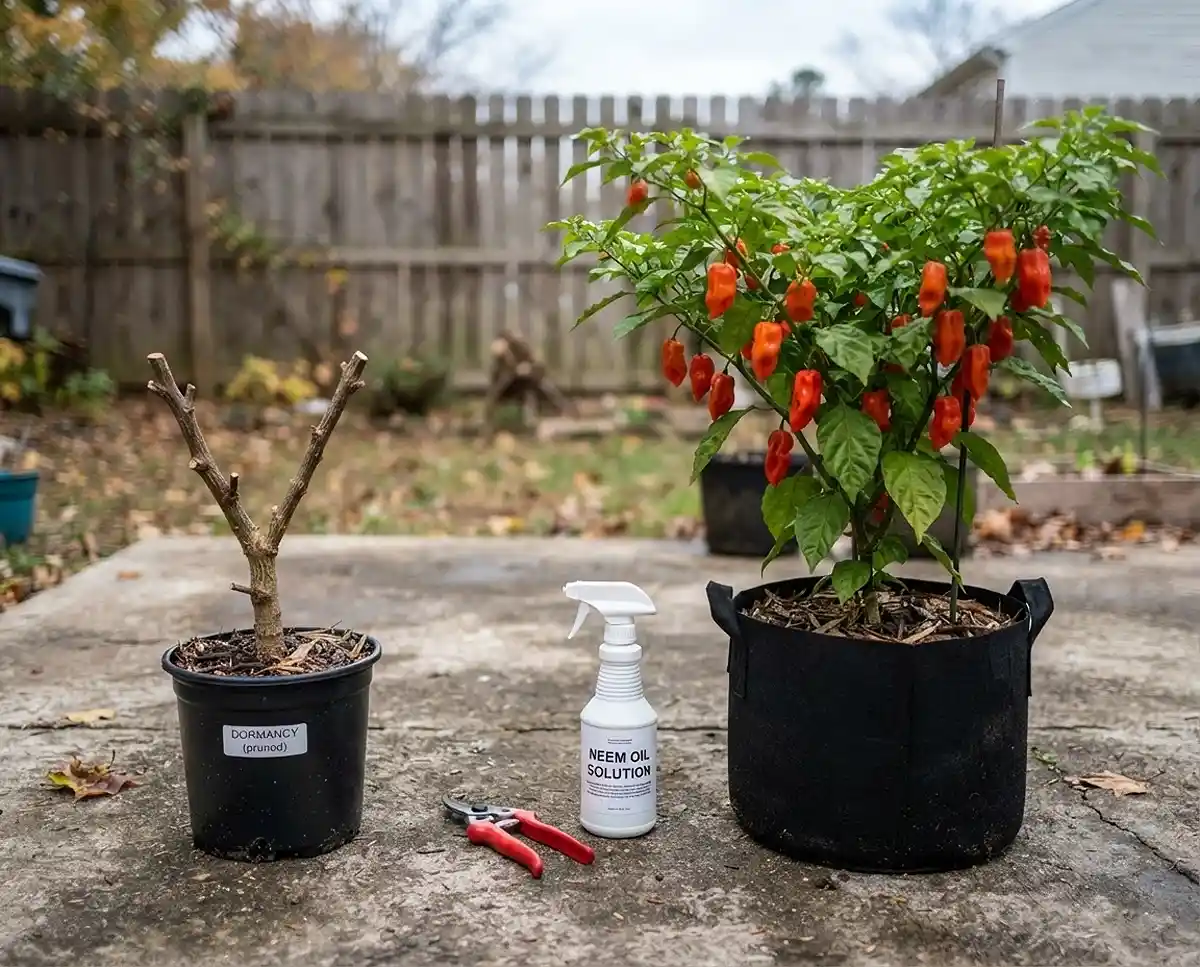
Overwintering Pepper Plants in Pots
Overwintering pepper plants gave me ripe habaneros five weeks before seed-started ones. Here’s my dormancy method for peppers in containers, numbers included.
My test setup: a south-facing concrete patio, zone 8b, 12 containers, October 2025 through June 2026. First frost lands around November 20 here. Last frost is around March 15. These are my notes as of the 2026 season.
Table of Contents
The Secret to a Head Start: Overwintering Pepper Plants
Verdict: Peppers are tender perennials (plants that live for years but die in frost). Save a mature plant and it beats any February seedling.
Overwintering peppers works because the plant keeps its thick stem and root mass. Seedlings rebuild both from scratch. Container vegetable gardening makes this easy, since pots simply move indoors.
Trial note, 2026 season: Five overwintered ‘Caribbean Red’ habaneros ripened their first pods on June 14. Seed-started plants of the same cultivar ripened July 22. By September 1, the overwintered plants averaged 2.4 lb each. The seed-started ones gave 1.1 lb.
Start with a variety that suits pots. This list of the best peppers for balcony containers is a good filter.
Understanding Pepper Biology and Winter Needs
Verdict: Cold kills peppers, not age. Winter plant care means faking a rest period: cool, dim, and nearly dry.
Perennials in Disguise: The Lifespan of a Capsicum
In the tropics, Capsicum (the pepper genus) lives and fruits for several years. Ours die in fall because of freezing nights. Age has nothing to do with it.
Below 50°F (10°C), pepper cells get damaged, and the harm doesn’t reverse. That’s why timing matters more than any other step.
Active Growth or Dormancy for Overwintering Pepper Plants
You have two options. Keep the plant growing under lights, or force dormancy (a rest period with no growth). I tried both. Dormancy won on effort every time.
| Factor | Active growth under lights | Dormancy (bare stem) |
|---|---|---|
| Light | 12+ hours of full-spectrum LED | Ambient light from one small window |
| Temperature | 65°F to 75°F | 50°F to 65°F |
| Space per plant | About 4 sq ft | About 1 sq ft |
| Watering | Weekly | Every 2 to 4 weeks |
| Pest risk | High | Low |
Skip the lights unless you want winter pods. I don’t.
Pre-Move Preparation: Getting Plants from Patio to House
Verdict: Move plants in when nights hit 55°F, then flush and wash them. A dirty plant carries its pests inside with it.
Don’t drag a patio plant straight into a 72°F living room. Leaf drop and pest blooms follow fast.
Timing the Transition Before the First Frost
Watch the 10-day forecast. When lows settle near 55°F (12°C), start the move. In 2025, that was October 28, about three weeks before frost.
Failure, fall 2025: I left three ‘California Wonder’ bells out one night at 46°F. Leaves went gray within a week. Two plants died by January. Likely cause: chilling injury, then rot in a damp garage.
Mistake to avoid: waiting for the frost warning. Move at 55°F, not 32°F.
The Mandatory Pest Flush and Quarantine
Do this before the plant touches your house.
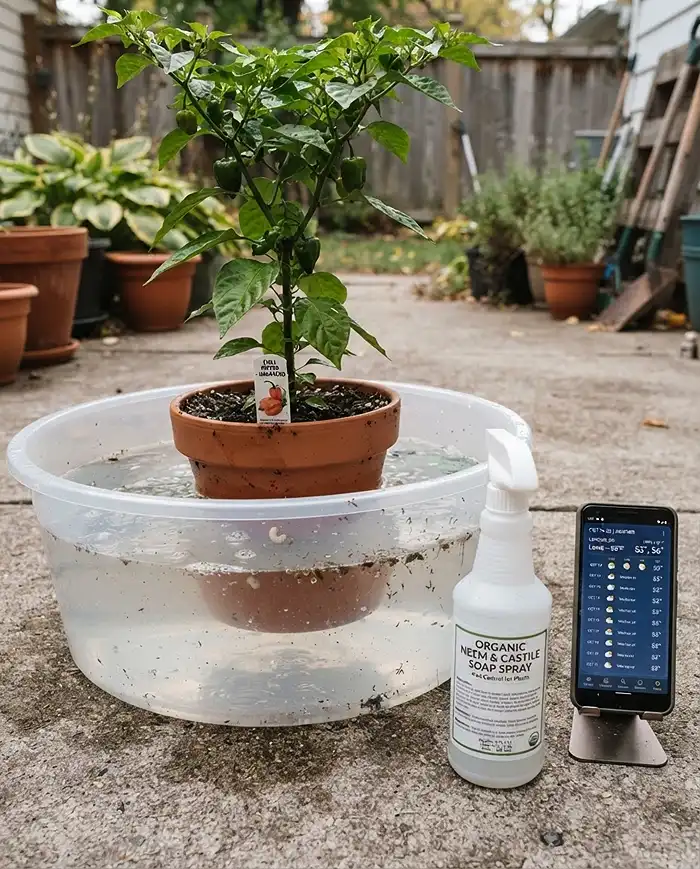
- Submerge the pot to the rim in lukewarm water (about 75°F) for 20 minutes. Soil grubs float out.
- Mix 1 tsp neem oil and 1/2 tsp Castile soap per quart of warm water. Spray every leaf, top and underside.
- Repeat the spray every 3 days, three rounds total.
- Quarantine the plant for 10 days, away from other houseplants.
I ran this on all 12 plants. No pests reached my houseplants.
Step-by-Step Guide to Inducing Winter Dormancy
Verdict: Strip the plant, trim the roots by a third, and pot it small. That order shuts down its metabolism safely.
Aggressively Pruning the Canopy
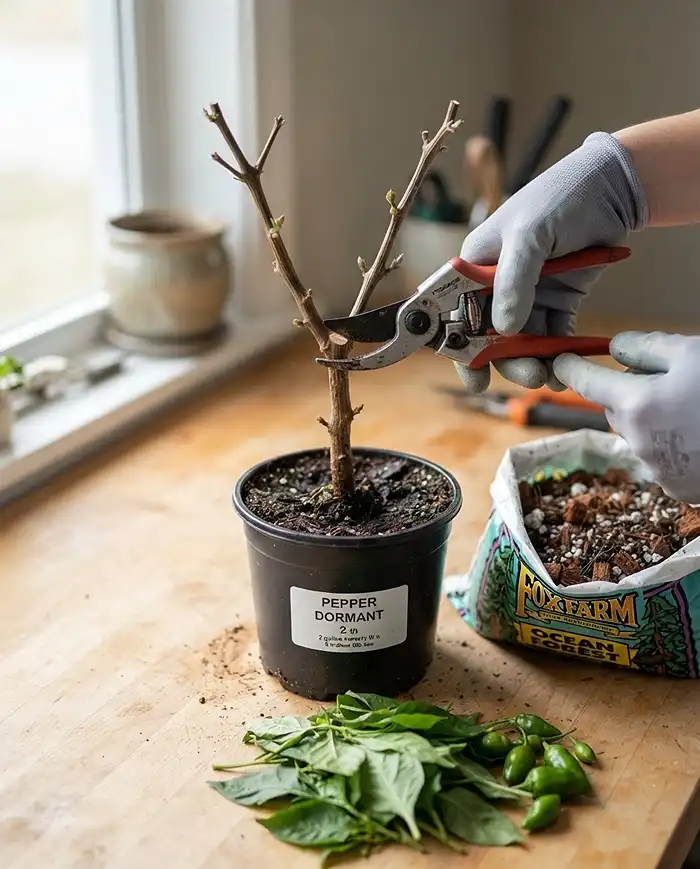
Sterilize bypass pruners (scissor-action blades) with 70% isopropyl alcohol. Cut each main stem back to a Y joint (where the stem forks). Leave 6 to 8 inches of bare stem.
Strip every leaf and unripe pod. Leaves and fruit keep burning energy. Bare stems rest.
Root Pruning and Repotting
Slide the plant out of its 7-gallon summer pot. Trim the outer third of the root mass with clean shears. Repot into a 2-gallon plastic nursery pot.
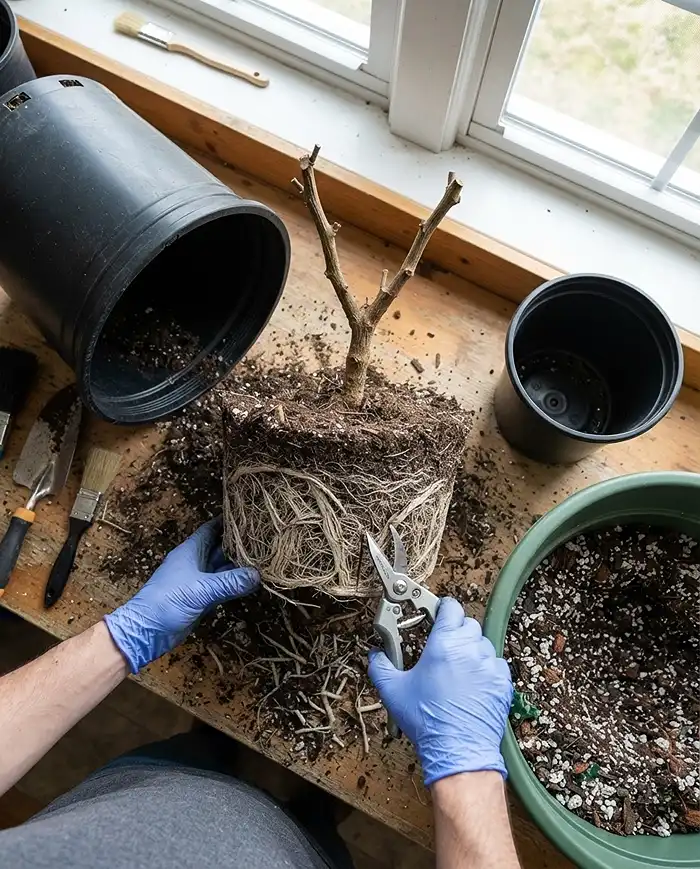
Use fresh, fast-draining mix: about 60% coco coir or peat, 30% perlite, 10% compost, at pH 6.2 to 6.5. Water once to settle it, then leave it alone.
Summer pots stay at 5 to 7 gallons. This chart of the best pot size for tomatoes, peppers and cucumbers explains why.
Trial note, winter 2025-26: Four ‘Mucho Nacho’ jalapeños and five habaneros all survived this treatment. Pruned stems showed green buds by mid-February.
Indoor Winter Maintenance for Dormant Peppers
Verdict: A dormant pepper needs a cool room, dim light, and almost no water. Treat it like a stick in a pot, because that’s what it is.
Temperature and Light Requirements for Dormancy
- Temperature: 50°F to 65°F. My garage averaged 58°F.
- Light: ambient light from one small window is enough.
- Spacing: keep pots 12 inches apart for airflow.
- Skip: heated rooms. They wake plants early and leggy.
Strict Winter Watering Protocols
Dormant roots drink slowly. Water only when the soil is bone-dry 3 inches down. For a 2-gallon pot, that’s roughly 16 oz every two to four weeks.
Trial note: My jalapeños got five waterings in 14 weeks. None rotted.
Mistake to avoid: watering on a calendar. Check with a finger or a wooden skewer first. Wet soil in a cold room rots roots.
Waking Up Your Peppers in Spring
Verdict: Start four weeks before your last frost. Give warmth, bright light, and a half-strength feed. New buds show in about two weeks.
Breaking Dormancy with Light and Fertilizer
Around February 15, I move pots to a warm, south-facing window. Water deeply until it drains. Then feed once a week with 20-10-10 liquid fertilizer at half strength.
As of the 2026 season, I use full-spectrum LED strips, not fluorescent tubes. They run cooler, so they sit 6 inches above the buds. Feeding habits carry over from this guide to growing peppers and eggplant in containers.
Hardening Off Before the Summer Move
Hardening off means slowly exposing indoor leaves to sun, wind, and temperature swings. Skip it and the leaves scorch white. Use this 10-day schedule.
| Days | Outdoor exposure |
|---|---|
| 1 to 2 | 1 to 2 hours in shade |
| 3 to 4 | 3 to 4 hours of morning sun |
| 5 to 7 | Half a day of sun, with wind |
| 8 to 10 | Full days outside. Overnight only if lows stay at 50°F or above |
Repot into a 5 to 7 gallon container right before the final move out.
Common Problems & Solutions
Verdict: Aphids and stem rot cause most winter losses. Catch both early and you’ll rarely lose a plant.
Aphid Explosions Indoors
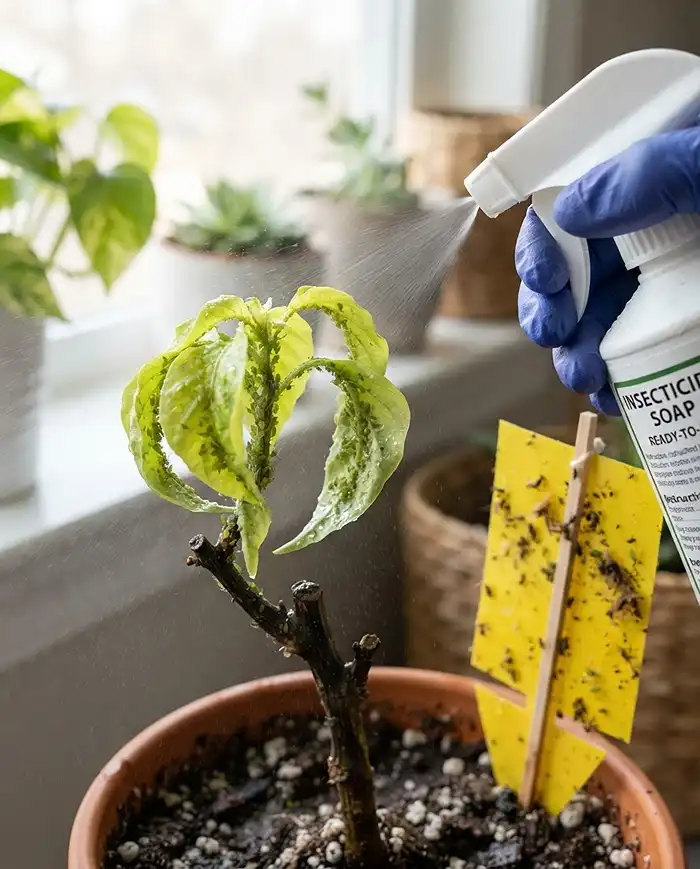
Nothing eats aphids indoors. One survivor can become a few hundred in under two weeks. Hang a yellow sticky trap near each plant.
Spray insecticidal soap daily for seven days, then every third day. Test one leaf first. Hit the undersides, where aphids hide.
Shriveling and Blackening Stems
Black, shriveled stems mean fungal rot or severe dryness. Scratch the bark with a thumbnail. Green underneath means the stem is alive.
Cut with sterilized shears down to green tissue. Do it fast, before rot reaches the main root crown. Then recheck your watering.
People Also Ask
Can I overwinter sweet bell peppers as well as hot peppers?
Yes. Bells (Capsicum annuum) and habaneros (Capsicum chinense) can both go dormant. In my 2025-26 trial, all nine hot plants survived, while only one of three ‘California Wonder’ bells did.
Should I leave any leaves on the plant when pruning for winter?
Strip it bare. In 2025, the one plant I left with six leaves grew gray mold by week five. Leaves in a cool, dim room invite fungus and feed pests.
Why are the new spring leaves tiny and pale?
The plant is waking up but can’t photosynthesize in weak late-winter light. Add a full-spectrum LED grow light 6 inches above the plant for 12 to 14 hours a day. Color usually recovers within 10 days.
How often should I water a dormant pepper plant in a pot?
Water every two to four weeks, and only when the soil is bone-dry 3 inches down. A 2-gallon pot takes roughly 16 oz. Overwatering kills more dormant plants than cold does.
How cold is too cold for overwintering peppers?
Anything below 50°F (10°C) damages pepper cells. Bring pots indoors when nights reach 55°F (12°C). Store dormant plants in a room that stays between 50°F and 65°F.
The Short Version
- Overwintering pepper plants works best as dormancy: cut to 6 to 8 inches, repot into 2 gallons, store at 50°F to 65°F.
- Move pots in at 55°F nights. Flush the roots, wash the leaves, and quarantine for 10 days.
- Water every two to four weeks, only when bone-dry. Wet roots kill more dormant plants than cold.
- Wake plants four weeks before last frost, then harden off for 7 to 10 days.