
Growing Garlic in Containers
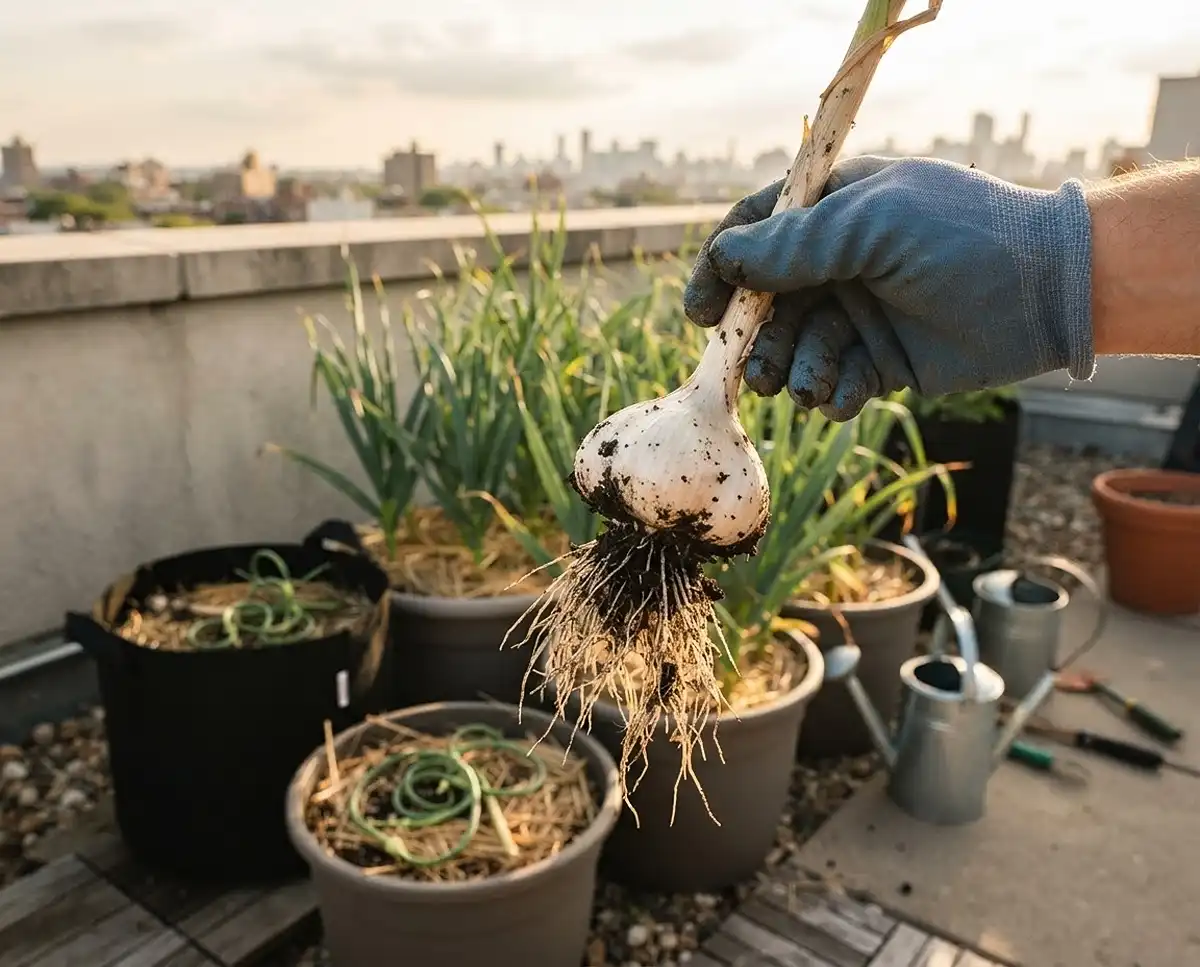
An empty pot in late October feels pointless. But growing garlic in containers now means fat bulbs by July, and you can grow garlic in pots on any balcony. I do it on my zone 7a rooftop, and it’s the easiest container vegetable gardening win I know.
My terrace gets about eight hours of direct sun. I run 5-gallon resin pots and 10-gallon fabric grow bags, all anchored against wind. Garlic loves that setup. It just wants cold, drainage, and patience.
Table of Contents
Why Fall Is the Best Time for Growing Garlic in Containers
Short Answer: Garlic needs six to eight weeks of cold dormancy [a winter rest period, called vernalization] to split into individual cloves. Planting in autumn gives roots time to settle before frost, then lets the plant surge in spring. Skip the cold, and you’ll harvest one lonely round bulb instead of a full head.
Roots grow all autumn while soil stays above 40°F, even though nothing shows on top. By December, each clove has anchored itself with a thick tangle of white roots. In spring, that head start fuels fast leaf growth, and the leaves feed the bulb.
As of fall 2026, my zone 7a planting window runs from mid-October to mid-November. I wait until soil temperatures drop below 60°F. Aim for about four weeks before the ground freezes, so roots settle without sending up tall shoots.
Pots chill faster than ground soil, which is why this timing works so well for containers. A cold rooftop gives garlic exactly the winter it needs.
Garlic also makes a friendly neighbor for other crops, as my guide to companion planting in containers explains.
Choosing the Right Garlic Varieties for Container Growth
Your climate and your kitchen decide the variety. Pick the wrong type for your zone, and your balcony garlic sulks all season.
Hardneck vs. Softneck Garlic
Short Answer: Hardneck garlic handles cold winters and sends up edible scapes [curly flower stalks]. Softneck has no woody stalk, tolerates milder, hotter climates, and braids beautifully. Choose hardneck in zones 3 to 7 and softneck in zones 8 and warmer. In zone 7a, I grow hardneck.
| Trait | Hardneck | Softneck |
|---|---|---|
| Cold hardiness | Excellent | Moderate |
| Scapes | Yes, edible | No |
| Storage life | 4 to 6 months | 9 to 12 months |
| Zones | 3 to 7 | 8 to 10 |
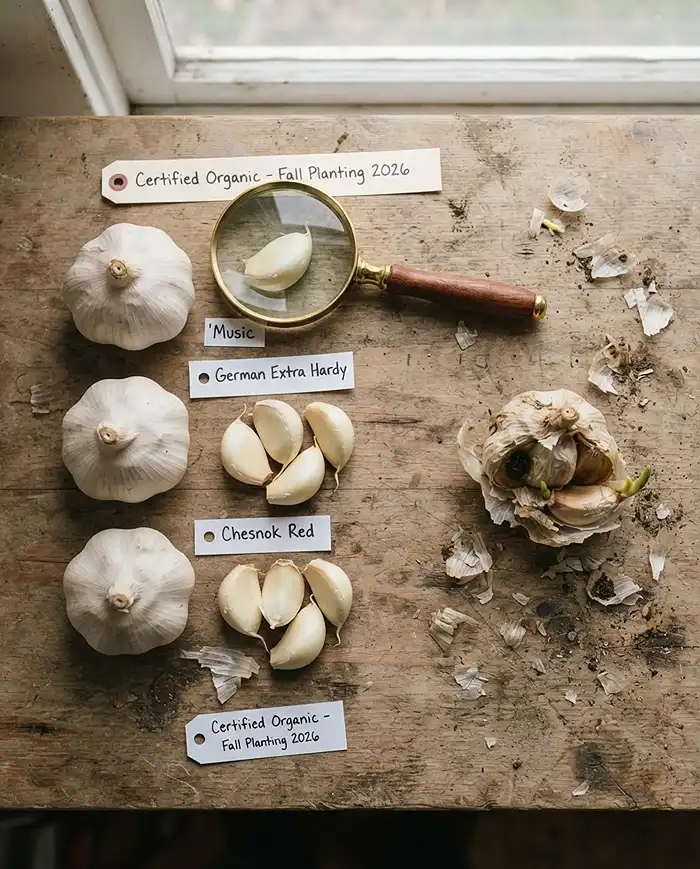
| Cultivars to try | Music, German Extra Hardy, Chesnok Red | Inchelium Red, Silverskin |
What Happened to Me: In fall 2024, I planted five ‘German Extra Hardy’ cloves in a 12-inch fabric bag on October 24. I lifted them on July 8. The bulbs averaged 2.5 inches across, and every clove was fat and tight.
Sourcing High-Quality Seed Garlic
Short Answer: Buy certified seed garlic from a nursery, a seed company, or a local farmer. Grocery store bulbs are often sprayed with sprout inhibitors and may carry disease. Seed garlic is grown for planting, so it sprouts reliably. As of fall 2026, order by September, because popular cultivars sell out early.
- Pick plump bulbs with tight, dry skins.
- Check for soft spots, mold, or blue-green fuzz.
- Save the largest cloves for planting, since bigger cloves make bigger bulbs.
Essential Gear for Potted Garlic Success
Your garlic will live in its pot for about nine months. Give it room, drainage, and a soil mix that never turns to soup.
Selecting the Right Container Depth and Width
Short Answer: Choose a container at least 10 to 12 inches deep and 12 inches wide. Fabric grow bags and thick resin pots both work. Depth lets roots plunge downward instead of pushing the swelling bulb upward, and drainage holes keep winter rain from drowning the cloves.
Good fall planting containers share three traits: depth, drainage, and heft. Thin terracotta cracks in freeze-thaw weather, so skip it. On windy rooftops, weigh pots down or bolt them in place.
My roundup of the best containers for windy balconies covers sturdy options that won’t tip.
Formulating a Fast-Draining, Nutrient-Dense Soil Mix
Short Answer: Blend organic potting soil with 30 percent perlite [puffed volcanic rock for drainage] and a generous scoop of slow-release compost. This mix drains fast, holds just enough moisture, and feeds roots for months. Soggy soil is the number one killer of overwintering cloves, so never fill pots with heavy garden dirt.
My recipe for one 5-gallon pot:
- 50 percent organic potting soil (about 2.5 gallons)
- 30 percent perlite (about 1.5 gallons)
- 20 percent finished compost (about 1 gallon)
Step-by-Step Guide to Planting Garlic in Autumn
Planting takes about twenty minutes per pot. The rules are simple, but the details decide your bulb size.
Preparing and Spacing the Cloves
Short Answer: Break the bulb into individual cloves a day or two before planting, and keep the papery husk intact. Space cloves 4 to 6 inches apart in a grid across the surface. Proper spacing keeps neighbors from stealing nutrients, so every clove can swell into a full bulb.
| Container | Width | Cloves |
|---|---|---|
| 3-gallon pot | 10 inches | 3 |
| 5-gallon pot or bag | 12 inches | 5 |
| 10-gallon bag | 16 inches | 9 |
Planting Depth and Orientation
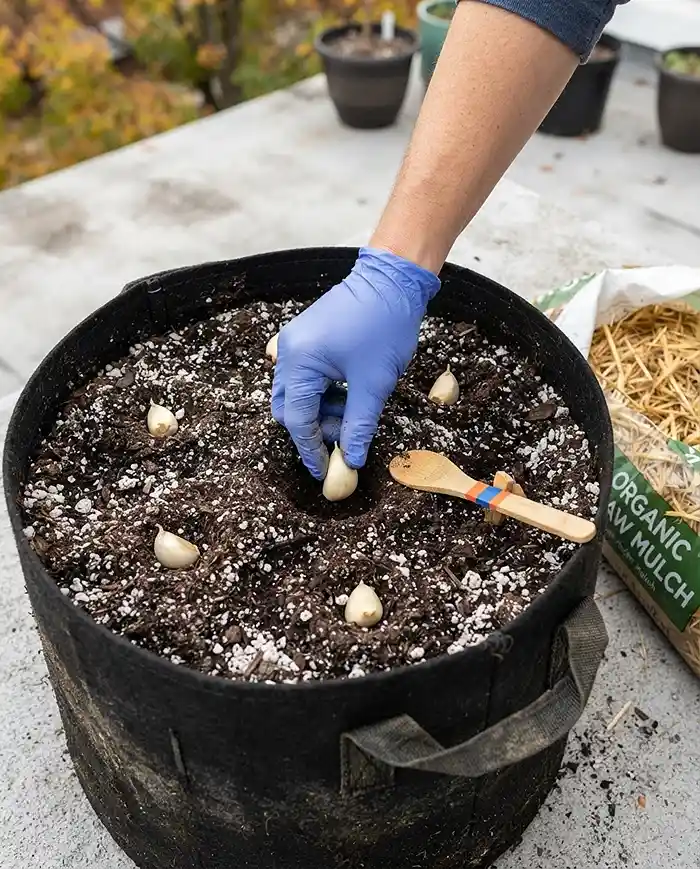
Short Answer: Push each clove 2 to 3 inches deep, with the flat, blunt root end down. The pointed tip faces straight up. Cover with soil and water well. Correct orientation lets the green shoot emerge without wasting energy twisting toward the surface.
Wrap tape around a wooden spoon handle at the 2-inch mark. It makes a handy depth gauge.
The Critical Role of Winter Mulch
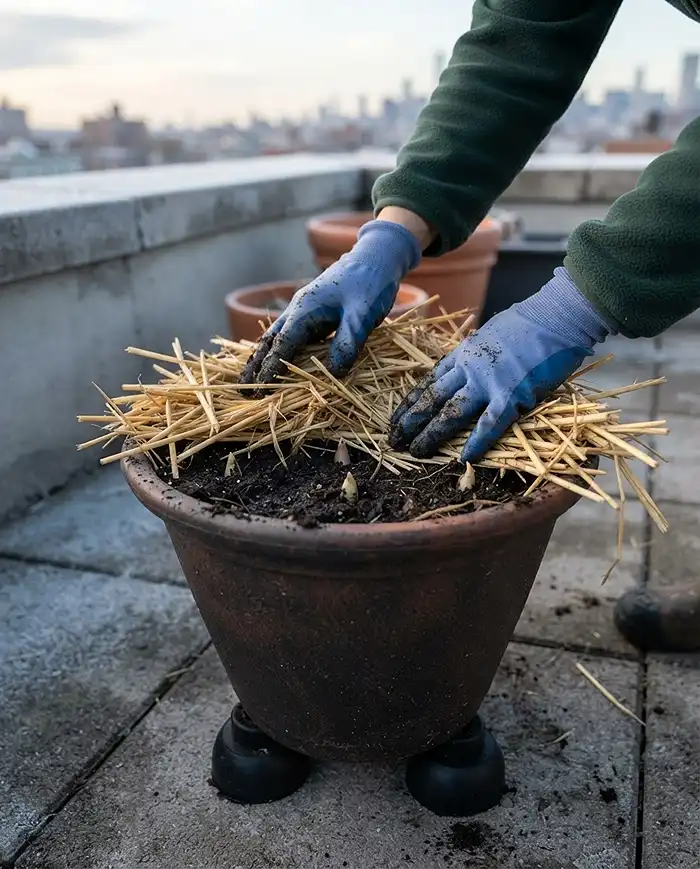
Short Answer: Cover the freshly planted pot with 3 inches of clean straw or shredded autumn leaves. Mulch insulates the shallow cloves from freeze-thaw cycles, which cause frost heave [soil expanding and pushing cloves upward]. Without it, cloves can pop out of the pot and dry out by January.
Straw traps air, which buffers temperature swings. Shredded leaves work too, as long as they’re dry and disease-free.
Winter and Spring Maintenance for Potted Garlic
Garlic runs on a long calendar. Your routine should shift with it, from near-neglect in winter to steady feeding in spring.
Managing Moisture During Freezing Winter Months
Short Answer: Water very little in winter. Let rain and snow do most of the work. Check the soil on mild, sunny mornings, and give a light drink only if it’s bone dry two inches down. Frozen, soggy soil is far more dangerous to garlic than dry soil.
Spring Awakening and Nitrogen Fertilization
Short Answer: When temperatures warm in early spring, green shoots race upward. Feed every two weeks with a high-nitrogen liquid fertilizer such as fish emulsion [fermented fish fertilizer]. Nitrogen builds the big leafy canopy that fuels summer bulb swelling. Stop feeding in late May.
In my zone 7a, shoots break the surface in late February or early March. Water whenever the top inch dries out, because spring growth is thirsty.
Harvesting Garlic Scapes for Larger Bulbs
Short Answer: Snap off hardneck scapes when they curl into a loop, usually in late May or early June. Removing them redirects the plant’s energy into the bulb underground, so you get a bigger harvest. Bonus: scapes taste like mild garlic and are delicious sauteed.
What Happened to Me: On June 4, I snapped the scapes off my ‘Music’ pots but left one bag untouched as a test. At harvest, the snapped plants gave 2.5-inch bulbs. The untouched bag topped out near 1.75 inches.
Pots freed up in July can host a second crop. Refresh the soil first, then try one of the best cucumbers for containers.
Common Problems & Solutions
Most garlic trouble in pots comes down to two things: too much water and too little elbow room.
Rotting Cloves from Winter Waterlogging
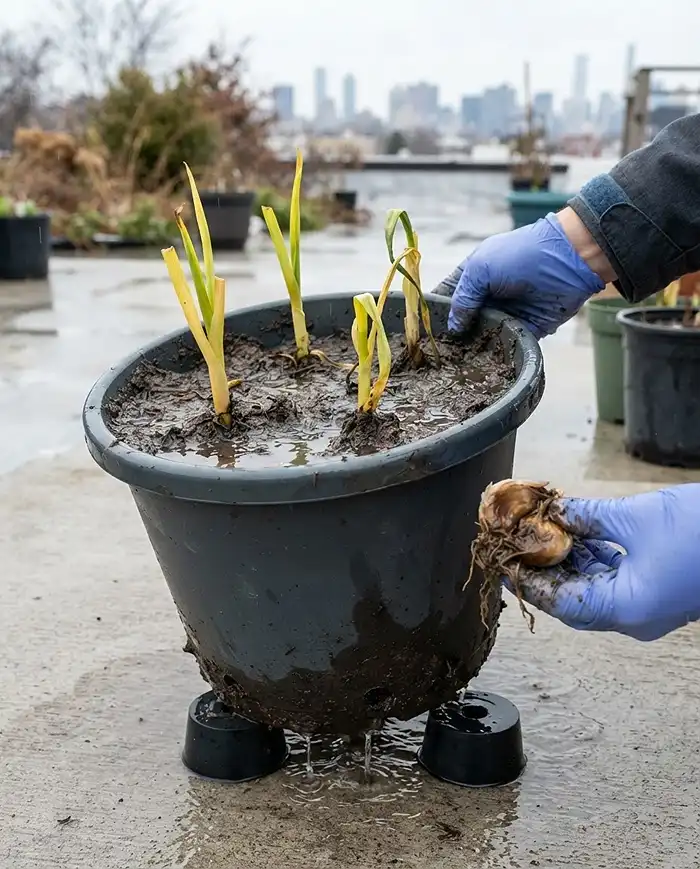
Short Answer: Root rot gives off a foul, sulfurous smell, and shoots turn yellow. The cause is almost always poor drainage. Lift every winter container onto rubber pot feet so gravity pulls freezing water out of the drainage holes. Rescue firm cloves by repotting them in fresh mix on a mild day.
Stunted Bulbs from Overcrowding
Short Answer: Crowded garlic fights for water and nutrients, and the result is tiny bulbs that never split into cloves. Stick to the 4-inch minimum spacing. If shoots already look crowded in early spring, snip the weakest ones at soil level with scissors to save the rest.
What Happened to Me: I learned this the hard way in fall 2021. I crammed 14 ‘Chesnok Red’ cloves, spaced 2 inches apart, into one 12-inch pot. In July, I pulled bulbs the size of golf balls, about 1.25 inches. The next fall, I planted five per pot, and those bulbs hit 2.5 inches.
Frequently Asked Questions
Can I plant grocery store garlic in my containers?
I’d skip it. Supermarket garlic is often treated with sprout inhibitors, so cloves may rot in the soil instead of growing. It’s also usually a softneck variety adapted to warm regions, so it struggles through cold northern winters. Buy certified seed garlic instead.
How do I know when my container garlic is ready to harvest?
Stop watering once the lower leaves start to brown. Harvest when the bottom three to four leaves are completely brown and crispy and the top five or six remain green. In zone 7a, that usually lands in early to mid July.
Does potted garlic need to stay outside all winter?
Yes. Garlic needs the cold of an outdoor winter to divide into cloves. Indoors in a heated apartment, garlic usually forms a single onion-like bulb called a round. A sheltered balcony or rooftop is the perfect spot.
How many garlic cloves can I plant in one pot?
It depends on width. A 10-inch pot holds about three cloves, a 12-inch pot holds five, and a 16-inch pot holds nine. Keep 4 to 6 inches between cloves so each bulb has room to swell.
When should I plant garlic in pots in fall?
In zone 7a, plant from mid-October to mid-November, once soil temperatures drop below 60°F. Aim for about four weeks before the ground freezes. In colder zones, plant earlier, and in warmer zones, plant later.
What small vegetable garden ideas work after garlic comes out?
Once you lift garlic in July, refresh the pot with new compost and plant a fast crop like bush beans. Avoid replanting onions or garlic in the same soil. Small vegetable garden ideas like this keep every container working year-round.
Quick Recap
- Plant certified hardneck seed garlic from mid-October to mid-November, once soil drops below 60°F.
- Use containers 10 to 12 inches deep, filled with a mix of 50 percent potting soil, 30 percent perlite, and 20 percent compost.
- Set cloves 2 to 3 inches deep, pointed end up, 4 to 6 inches apart, then mulch with 3 inches of straw.
- Water lightly in winter, feed with fish emulsion every two weeks in spring, and snap the scapes in early June.
- Harvest in early to mid July, because growing garlic in containers rewards patience.