
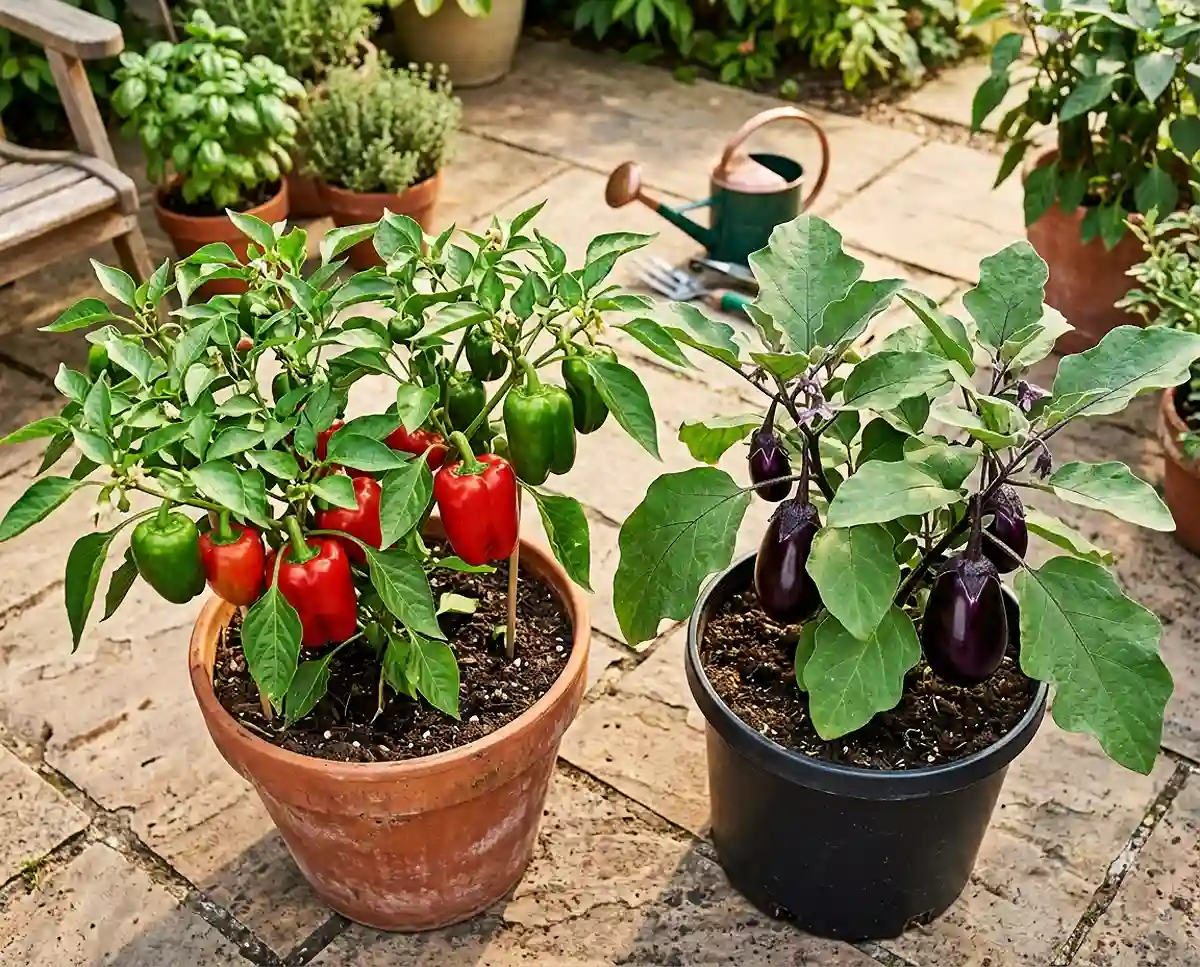
growing Peppers and Eggplant in Containers
Growing peppers and eggplant in containers is one of the smartest moves you can make for summer container gardening. These heat-loving crops thrive in pots, produce heavily, and fit any space.
If you’ve struggled with peppers in the ground, a container might be exactly what they need. You control the soil, drainage, and placement — and that changes everything.
Table of Contents
Why Peppers and Eggplant Thrive in Summer Containers
Both crops are warm-season plants that want heat — and containers give you that in spades. Dark pots absorb warmth, soil heats up faster, and you can chase the sun across a patio or balcony.
Container vegetable gardening also means no soil-borne diseases from previous seasons, better drainage control, and the ability to start earlier by moving plants indoors on cold nights.
This guide covers everything: pot size, soil, varieties, planting steps, watering, feeding, and troubleshooting. Whether you’re on a edible balcony garden or a small patio, this setup works.
Choosing the Right Container Size and Type
Container size is the number one mistake new growers make with peppers and eggplant. Too small and you’ll get stressed plants, poor fruit set, and constant watering battles.
Both crops have deep root systems. They need room to spread out, access consistent moisture, and anchor themselves when they get top-heavy with fruit.
Best Container Sizes for Peppers vs. Eggplant
Quick Answer: Peppers need at least 3–5 gallons. Eggplant wants 5–7 gallons minimum. Bigger is always better for fruiting crops.
| Crop | Minimum Size | Ideal Size | Plants Per Pot |
|---|---|---|---|
| Sweet peppers | 3 gallons | 5 gallons | 1 |
| Hot peppers | 3 gallons | 5 gallons | 1 |
| Standard eggplant | 5 gallons | 7–10 gallons | 1 |
| Compact eggplant | 3 gallons | 5 gallons | 1 |
Pro Tip: A 10-gallon pot for eggplant cuts your watering frequency nearly in half during peak summer heat.
Material and Drainage Considerations
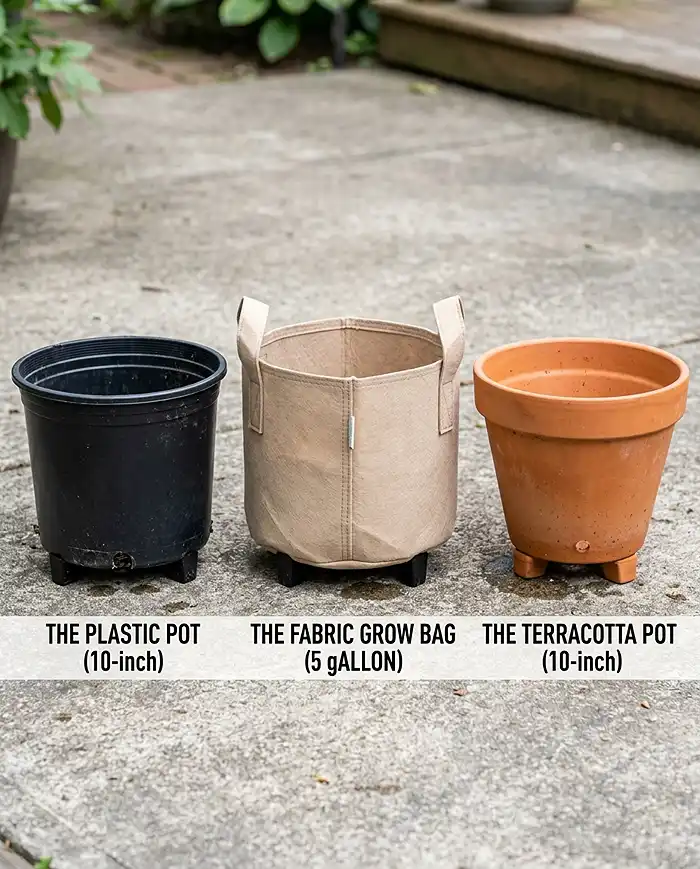
Quick Answer: Any material works if drainage is solid. Avoid glazed ceramic with small holes — it traps moisture and causes root rot.
| Material | Best For | Watch Out For |
|---|---|---|
| Black plastic | Heat-loving crops, budget setups | Can overheat roots in extreme heat |
| Fabric grow bags | Air pruning roots, good drainage | Dries out faster, needs more watering |
| Terra cotta | Breathability, classic look | Heavy, dries out quickly |
| Glazed ceramic | Decorative containers | Poor drainage if holes are small |
Always drill extra drainage holes if you’re unsure. At least 4–6 holes per pot, each around half an inch wide.
Pro Tip: Elevate pots on feet or bricks so holes stay clear and air circulates under the base.
Best Soil Mix for Peppers and Eggplant
Regular garden soil is a hard no for containers. It compacts, drains poorly, and suffocates roots within a season.
Peppers and eggplant are heavy feeders that need rich, well-draining mix. The goal is soil that holds moisture without staying soggy and delivers steady nutrients throughout summer.
A good container mix feels almost fluffy when dry. It should drain within a few seconds of watering and never pool at the surface.
Recommended Soil Recipe and Amendments
Quick Answer: Start with a quality potting mix as your base, then improve structure and fertility with a few targeted amendments.
- 60% premium potting mix (avoid anything labeled “moisture control” — it stays too wet)
- 20% compost or worm castings for slow-release nutrients
- 10% perlite for drainage and aeration
- 10% coco coir to retain moisture without compacting
- Add a slow-release granular fertilizer at planting per label rates
Real Example: I mixed this ratio for a 7-gallon eggplant pot last July in USDA Zone 7. By August the plant had 8 fruits on it at once — no amendments mid-season needed until week 6.
Pro Tip: Mix in a tablespoon of kelp meal at planting. It supports root development during transplant stress.
Choosing the Right Varieties for Containers
Standard-sized pepper and eggplant varieties can work in containers, but compact and bush types make everything easier. They stay manageable, fruit earlier, and don’t need as much staking.
For summer container gardening success, look for words like “compact,” “bush,” “dwarf,” or “patio” on seed packets and plant tags.
Variety choice also affects flavor and harvest timing. Some compact types actually outperform full-size varieties in pots because they direct energy into fruit instead of sprawling stems.
Best Compact Pepper and Eggplant Varieties
Quick Answer: These varieties are proven performers in pots, chosen for compact size, productivity, and heat tolerance.
- Peppers: ‘Lunchbox’ (sweet, compact, prolific), ‘Shishito’ (light shade tolerant), ‘Cayenne’ (hot, upright habit), ‘Mini Bell’ mix
- Eggplant: ‘Patio Baby’ (AAS winner, 3-gallon friendly), ‘Hansel’ (slender, early), ‘Fairy Tale’ (striped, compact), ‘Little Prince’
- All above are suitable for USDA Zones 5–10 as annuals
- For hot climates (Zones 9–11), look for heat-set varieties that fruit above 90°F
Pro Tip: ‘Patio Baby’ eggplant doesn’t need staking and produces dozens of 2–3 inch fruits all summer — perfect for small-space container vegetable gardening.
Tools and Materials Checklist
Get everything ready before planting day. Scrambling mid-project usually means skipped steps or rushed soil prep.
- Containers (5–10 gallon per plant)
- Premium potting mix, compost, perlite, coco coir
- Slow-release granular fertilizer (balanced, like 5-5-5)
- Liquid tomato or vegetable fertilizer (for mid-season feeding)
- Bamboo stakes or small tomato cages
- Soft plant ties or jute twine
- Watering can with a gentle rose head or drip system
- Pot feet or bricks for drainage elevation
- Trowel and gardening gloves
Step-by-Step: Planting Peppers and Eggplant in Containers
Planting correctly from day one sets you up for a full season of production. Rush this stage and you’ll deal with root problems, instability, and poor fruit set all summer.
Planting Depth, Spacing, and Timing
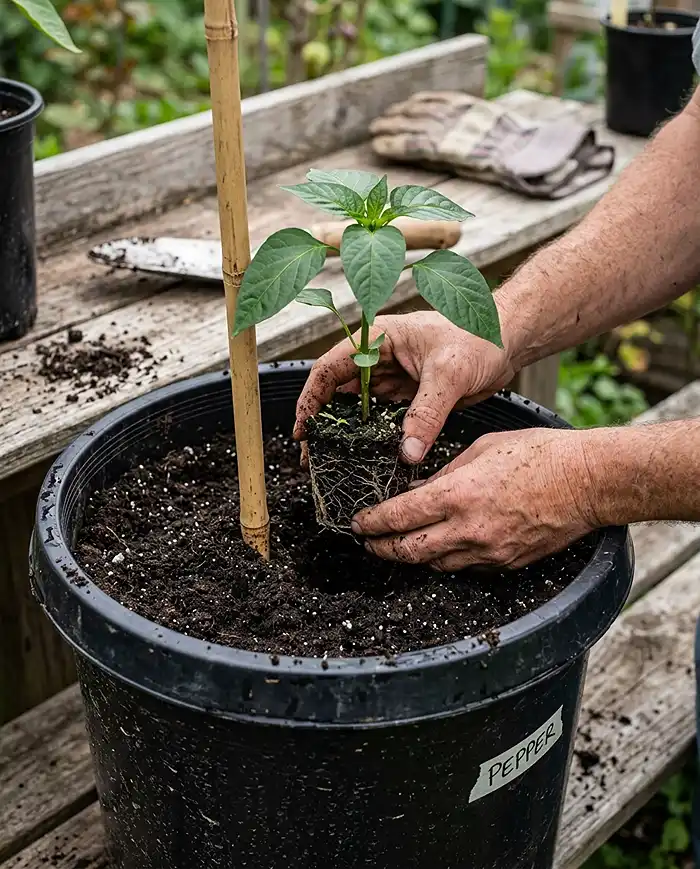
Quick Answer: Plant after your last frost date, one plant per pot, at the same depth as the transplant’s nursery pot.
- Timing: 2–3 weeks after last frost, when nighttime temps stay above 55°F
- Depth: Match the nursery pot depth — don’t bury stems like tomatoes
- One plant per container, no exceptions for fruiting crops
- In USDA Zones 5–6: plant late May to early June
- In USDA Zones 7–9: plant mid-April to early May
Real Example: I planted a ‘Lunchbox’ pepper transplant in a 5-gallon pot on May 20th (Zone 7). By July 4th I had 14 peppers already sizing up — timing it right made a huge difference.
Pro Tip: Let transplants sit outdoors in a sheltered spot for 5–7 days before planting (hardening off) to prevent transplant shock.
Adding Support Early
Quick Answer: Stake or cage at planting, not after the plant tips over. It’s much harder to add support without damaging roots or stems later.
- Use a bamboo stake (12–18 inches for peppers, 24 inches for eggplant) placed near the stem at planting
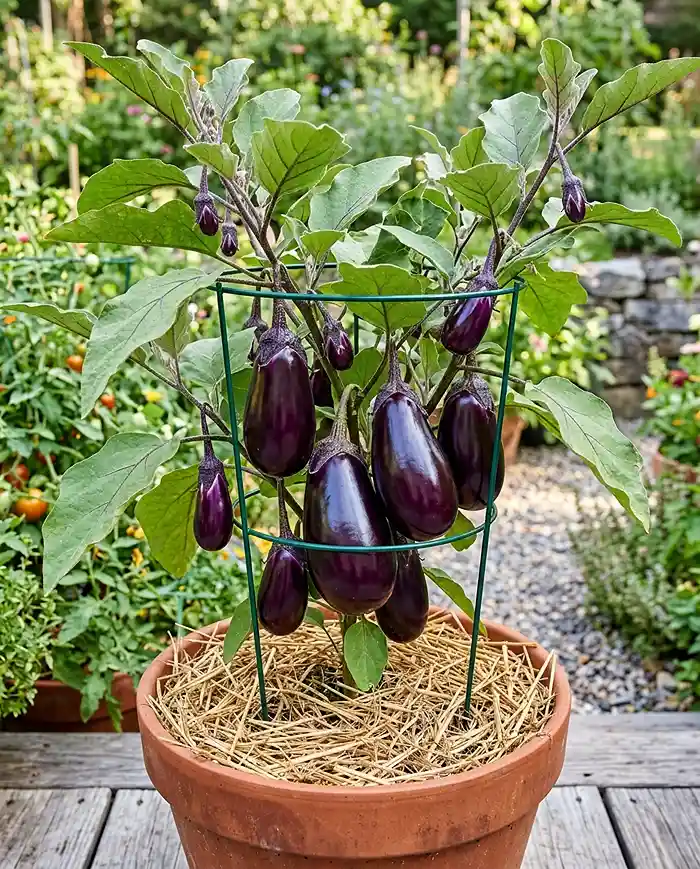
- Small tomato cages work great for eggplant in 7+ gallon pots
- Tie loosely with soft twine — never wire or tight bands
- Eggplant branches can snap under fruit weight; check ties weekly
You can see a full guide to container plant support methods for more staking options that work well for both peppers and eggplant.
Pro Tip: Push the stake in at a slight angle toward the prevailing wind direction. It anchors the plant better than perfectly vertical staking.
Watering, Feeding, and Sunlight Needs
These are not low-maintenance crops. Peppers and eggplant are heavy feeders and drinkers, especially once they start setting fruit in the heat of summer.
The good news: once you nail the routine, it takes about 10 minutes a day. And the harvests are absolutely worth it.
Watering Without Stressing Plants
Quick Answer: Water deeply and consistently. Inconsistent moisture is the top cause of blossom drop and bitter eggplant.
- Water when the top inch of soil is dry — typically daily in summer heat
- Water deeply: until water drains freely from the bottom holes
- Morning watering is ideal — reduces fungal risk and heat stress
- Check fabric pots twice daily in temperatures above 90°F
- Mulch the soil surface with straw to slow moisture loss
According to the University of Maryland Extension, inconsistent watering is a leading cause of blossom drop in peppers — more so than heat or pests.
Pro Tip: Lift the pot before and after watering a few times to learn what “dry” vs “hydrated” feels like. It becomes second nature fast.
Feeding Schedule for Heavy Feeders
Quick Answer: Start with slow-release at planting, then switch to liquid feeding once flowering begins.
| Stage | Fertilizer Type | Frequency |
|---|---|---|
| At planting | Slow-release granular (balanced) | Once |
| Weeks 3–5 | Balanced liquid (e.g. 10-10-10) | Every 2 weeks |
| Flowering starts | Low-nitrogen, high-potassium | Weekly |
| Heavy fruiting | Tomato fertilizer or liquid kelp | Every 7–10 days |
Pro Tip: Too much nitrogen after flowering starts gives you huge leafy plants with almost no fruit. Shift to a bloom-focused formula once you see the first buds.
Seasonal Care and Harvesting
Once your plants are established, summer care is mostly about consistency — and knowing when to harvest for continued production.
- If temps exceed 95°F for multiple days, move pots to afternoon shade or use shade cloth
- Pinch off early flower buds on new transplants for the first 2 weeks to encourage root growth
- Remove any yellowing or damaged leaves promptly to improve airflow
- Harvest peppers when they reach full size — color is optional, flavor improves with ripening
- Harvest eggplant when skin is glossy and flesh springs back when pressed
- Never let eggplant go dull or seedy — it triggers the plant to slow production
If you want ideas for growing more from your containers all season, check out how to grow more food in less space for succession planting strategies.
Common Problems and Solutions
Flowers Dropping Without Fruit
Quick Answer: Blossom drop in peppers and eggplant usually comes down to temperature stress or inconsistent watering. Both are fixable.
- Temps above 90°F or below 55°F at night cause drop — provide shade or move pots
- Inconsistent watering stresses the plant into dropping buds — water on a schedule
- Too much nitrogen pushes leafy growth at the expense of flowers — reduce feeding
- Low humidity can also affect pollination — mist lightly in the morning
Pro Tip: Gently shake flowering branches daily to simulate wind pollination and improve fruit set on container crops.
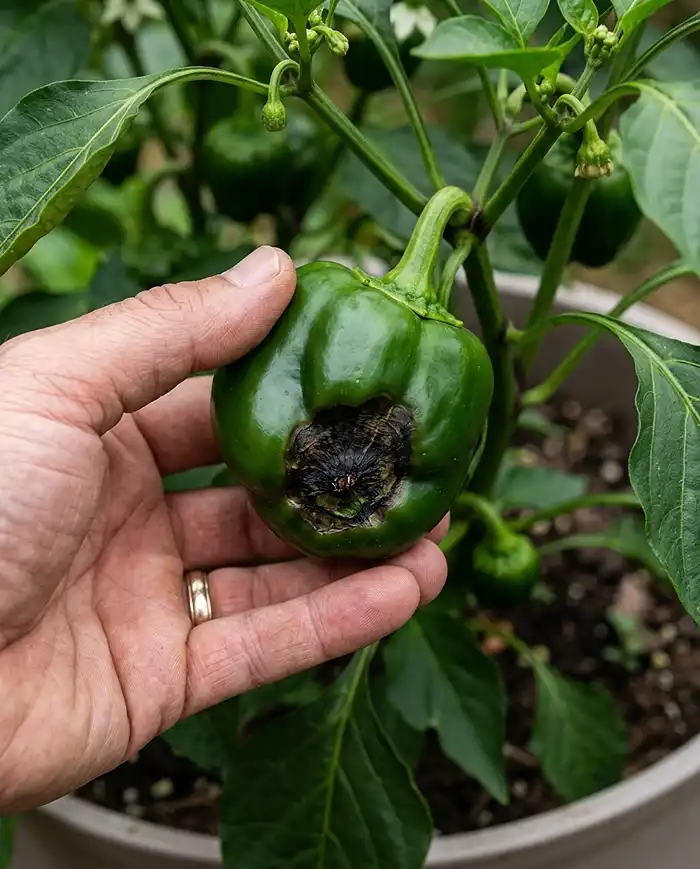
Blossom End Rot on Peppers and Eggplant
Quick Answer: That black sunken patch on the bottom of fruit is blossom end rot. It’s a calcium uptake issue, almost always triggered by uneven watering.
- Calcium is present in most soils — the problem is usually inconsistent moisture blocking uptake
- Fix: water deeply and consistently, and mulch to retain moisture
- Foliar calcium sprays can help mid-season but won’t fix affected fruit
- Remove affected fruits so the plant redirects energy to new ones
Pests Like Aphids and Flea Beetles
Quick Answer: Both pests are common on container peppers and eggplant. Catch them early and organic control is straightforward.
- Aphids: blast off with water, then apply insecticidal soap spray (1 tsp soap per quart of water)
- Flea beetles: look for tiny shotgun-hole damage on leaves — use row cover or kaolin clay
- Spider mites: increase humidity around plants and use neem oil spray
- Check leaf undersides weekly — early detection is the best pest control
Frequently Asked Questions
What size container is best for peppers and eggplant?
Peppers do well in 3 to 5-gallon pots with one plant per container. Eggplant needs at least 5 gallons, with 7 to 10 gallons ideal for standard varieties. Compact eggplant types like Patio Baby can manage in 3 to 5 gallons. Always prioritize drainage holes and pot depth over width.
How much sun do peppers and eggplant need in containers?
Both crops need full sun — at least 6 to 8 hours of direct sunlight daily for good fruit production. Less than 6 hours will give you leafy plants with few peppers or eggplants. One big advantage of container gardening is being able to reposition pots to chase the best sun exposure throughout the day.
Why are my container peppers not producing fruit?
The most common reasons are too much nitrogen fertilizer, temperature extremes above 90F or below 55F at night, inconsistent watering, or insufficient sunlight. Switch to a low-nitrogen bloom fertilizer, water on a consistent schedule, and make sure plants get at least 6 hours of direct sun daily. Gently shaking plants also helps with pollination.
How often should I water peppers and eggplant in summer?
In summer heat, container peppers and eggplant typically need watering once daily, sometimes twice for fabric pots or during heat waves above 90F. Check soil moisture daily by pressing your finger an inch into the soil. Water deeply each time until it drains freely from the bottom — shallow watering causes more problems than drought.
Key Takeaways
- Growing peppers and eggplant in containers works best with 5–10 gallon pots, one plant each, and excellent drainage
- Use a rich, fluffy potting mix with compost and perlite — never garden soil
- Consistent deep watering is the single biggest factor in fruit production and avoiding blossom drop
- Switch fertilizer to a low-nitrogen, high-potassium formula once flowering begins
- Compact varieties like ‘Lunchbox’ pepper and ‘Patio Baby’ eggplant are your best bets for summer container gardening success