
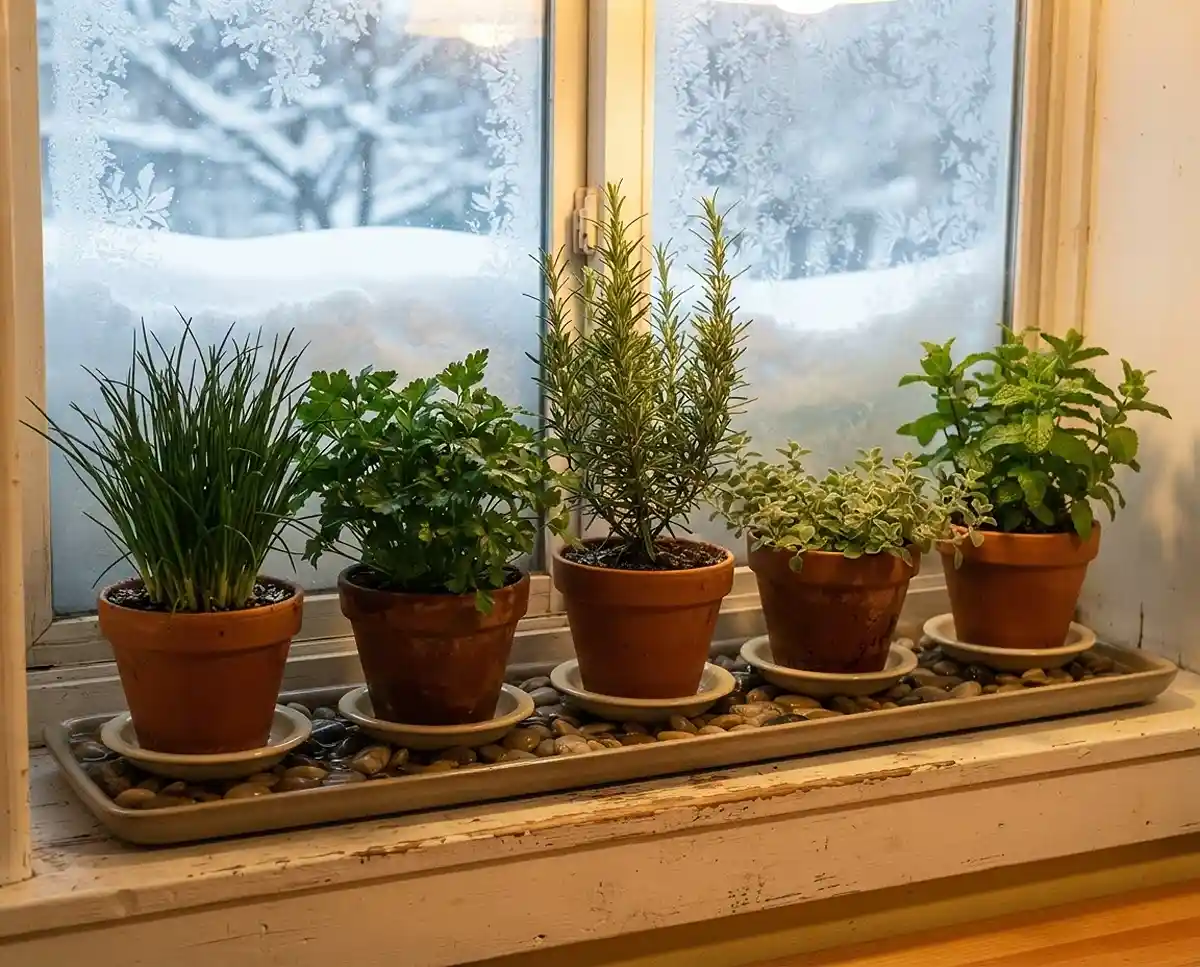
Best Indoor Herbs for Winter
The best indoor herbs for winter keep your kitchen herb garden going while snow falls. Here’s which to grow, where to put them, and how to keep them alive.
I grow herbs on a south-facing kitchen window in USDA zone 6b, and I’ve snipped fresh thyme into January soup for six winters straight. Not sure of your zone? Look it up on the USDA Plant Hardiness Zone Map.
Table of Contents
Bringing the Harvest Indoors: Your Winter Windowsill Herb Garden
When the last outdoor tomato is gone, you don’t have to give up fresh flavor. A dedicated windowsill setup gives you fragrant, resilient herbs for months, even with snow piled against the glass.
Winter indoors is its own growing season. Light is weak, air is dry, and plants grow slowly. Work with those limits and a few pots will keep your soups, roasts, and teas stocked until spring.
Here’s the whole process: pick the right window, set up pots and soil, choose tough herbs, plant them correctly, and adjust your care for the season.
Evaluating Your Winter Windowsill Microclimate
Glass changes everything. It filters light, leaks cold at night, and often sits right above a radiator or vent. Spend a weekend learning what your window actually does before you buy a single plant. That check decides which herbs survive.
Measuring Light and Choosing the Right Window
Quick Answer: Choose an unobstructed south-facing window that gets 5 to 6 hours of direct winter sun. East and west windows suit cool-season herbs. North-facing windows don’t deliver enough light to keep edible herbs alive in winter.
Check the sill at 9 a.m., noon, and 3 p.m. on a sunny day. Direct sun should land on the sill itself, not just brighten the room. Bare trees, neighboring buildings, and sheer curtains can cut winter light in half.
North-facing sills simply lack the solar energy to support herbs. Skip them, or plan on a grow light doing all the work.
Managing Freezing Drafts and Dry Radiator Heat
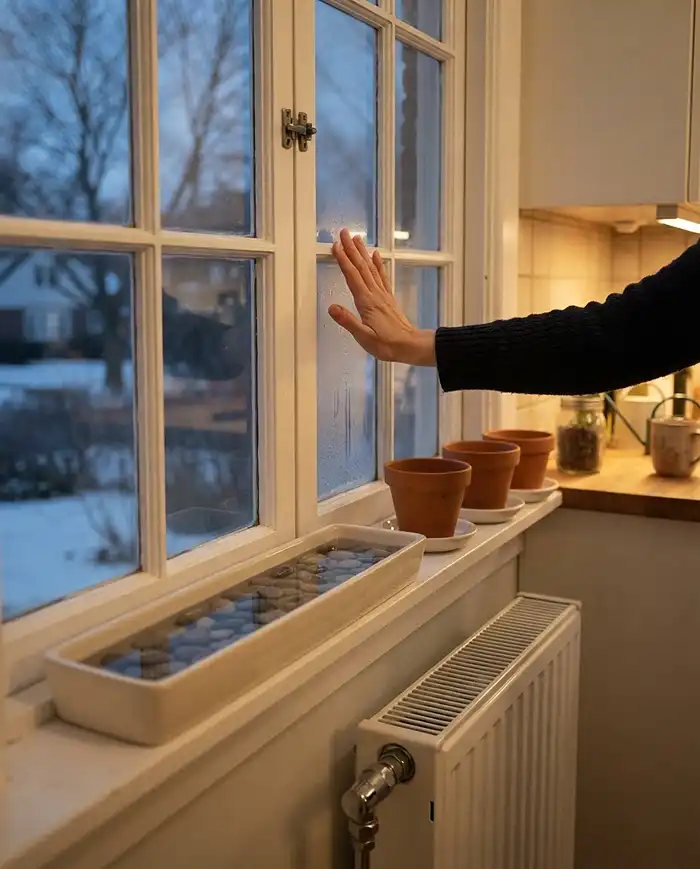
Hold your hand against the glass on a cold night. If it feels icy, leaves touching the pane can chill and brown. Keep foliage at least 2 inches from the glass, or slide a piece of cardboard between plants and window after dark.
Next, check for heat. A radiator or HVAC vent under the sill blasts hot, dry air upward and can push humidity below 20 percent. Most herbs prefer 40 to 60 percent humidity and temperatures of 60 to 70°F (16 to 21°C).
The fix is cheap. Set each pot on a pebble humidity tray, which is a shallow tray filled with pebbles and water. Keep the water just below the pebble tops so roots never sit in it. As the water evaporates, it raises humidity around the leaves and keeps foliage crisp.
Essential Gear for Indoor Herb Success
Indoor containers behave nothing like garden beds. Water has nowhere to go, and cold, wet roots rot fast. If you also want ideas for outdoor sills, see this guide to a balcony and windowsill herb garden.
Here’s the shopping list for a healthy indoor herb garden:
- 4 to 6-inch unglazed terracotta pots, each with a drainage hole
- Glazed saucers that fit each pot exactly
- Sterile indoor potting mix, perlite, and coarse horticultural sand
- A shallow tray and pebbles for humidity
- A small full-spectrum LED bulb and a few yellow sticky traps
Sizing Pots and Perfecting Drainage
Quick Answer: Use 4 to 6-inch unglazed terracotta pots with a drainage hole and an exact-fit glazed saucer. The porous clay lets roots breathe and dries soil faster, while the saucer protects your window ledge from water damage.
Herbs in pots dry out unevenly, so match pot size to plant. A 4-inch pot suits thyme, oregano, and chives. Rosemary, parsley, and mint do better in 6-inch pots. Bigger isn’t better, because extra soil holds extra water.
Pro Tip: Empty each saucer within 30 minutes of watering, since standing water defeats the point of terracotta.
Formulating a Fast-Draining Indoor Soil Mix
Quick Answer: Blend 70% sterile indoor potting mix with 30% perlite, then add a handful of coarse horticultural sand per pot. This mix drains fast and stays loose, so roots get air even in a cold winter window.
My recipe: 7 cups potting mix, 3 cups perlite, and one handful of sand. That fills roughly two 6-inch pots. Mix it in a bucket and dampen it slightly before planting.
Never scoop soil from the garden. Outdoor dirt compacts in containers, and it can carry dormant pests, weed seeds, and fungal spores that wake up in your warm kitchen.
The Best Indoor Herbs for Winter
These are the best windowsill herbs for winter, chosen because they tolerate low light, dry air, and cramped roots. For more picks, my 10 best herbs for a sunny windowsill list goes further.
| Herb | Best Window | Ideal Temperature | Watering Style |
|---|---|---|---|
| Chives | East or south | 55 to 70°F | Top inch dry |
| Flat-leaf parsley | East or south | 55 to 70°F | Top inch dry |
| Cilantro | East | 50 to 65°F | Evenly moist |
| Rosemary | Brightest south | 55 to 65°F | Top 2 inches dry |
| Thyme and oregano | South | 60 to 70°F | Top 2 inches dry |
| Spearmint or peppermint | South or east | 55 to 70°F | Top inch dry |
Cool-Tolerant Survivors: Chives, Parsley, and Cilantro
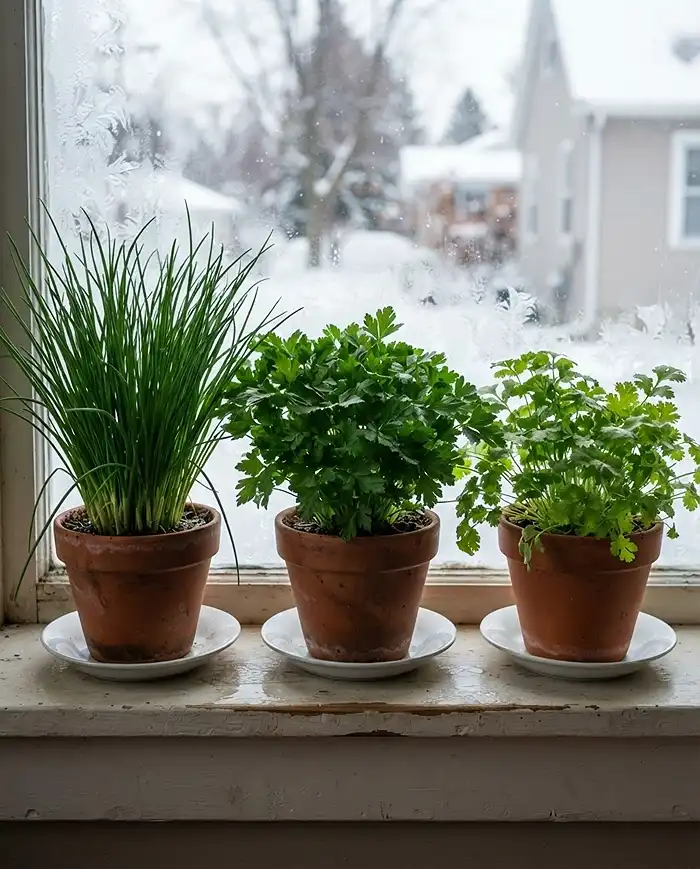
Quick Answer: Chives, flat-leaf parsley, and cilantro are the most forgiving winter herbs. They prefer cool windowsills around 55 to 65°F and tolerate less light, so an east-facing window works. Keep cilantro away from radiators, or it bolts (flowers and turns bitter).
Chives are nearly foolproof in a 6-inch pot. Flat-leaf parsley such as ‘Giant of Italy’ germinates slowly, so I buy nursery plants instead of sowing seed.
Cilantro ‘Calypso’ resists bolting, but it still fades after 6 to 8 weeks indoors. Sow a fresh pot every three weeks for a steady supply.
Pro Tip: Cut parsley and cilantro from the outer stems first, and the center keeps producing.
Sun-Loving Mediterranean Herbs: Rosemary, Thyme, and Oregano
Quick Answer: Rosemary, thyme, and oregano need your brightest, warmest window and sharply draining soil. Without about 6 hours of strong light, they turn weak and lose the concentrated essential oils that give them flavor. Let the soil dry between waterings.
Try ‘Arp’ rosemary, English thyme, and Greek oregano (Origanum vulgare subsp. hirtum). Park them on the south-facing sill, close to the glass but not touching it.
These plants evolved on dry Mediterranean hillsides. Slightly tight, underwatered roots actually concentrate their flavor.
Pro Tip: Run a small fan on low for an hour a day. Rosemary hates stagnant air and gets powdery mildew without it.
The Vigorous Spreader: Growing Mint Indoors
Peppermint and spearmint are the toughest herbs on this list. Even in December, my 6-inch pot of ‘Kentucky Colonel’ spearmint pushes out new leaves every week.
That vigor is also the risk. Mint sends out runners (aggressive underground stems) that choke neighboring plants, so give it its own container.
Keep the mint pot from touching others, too. Roots will escape through the drainage hole into the next saucer. Pinch it weekly and it stays compact and sweet.
Step-by-Step Guide to Planting Your Windowsill Garden
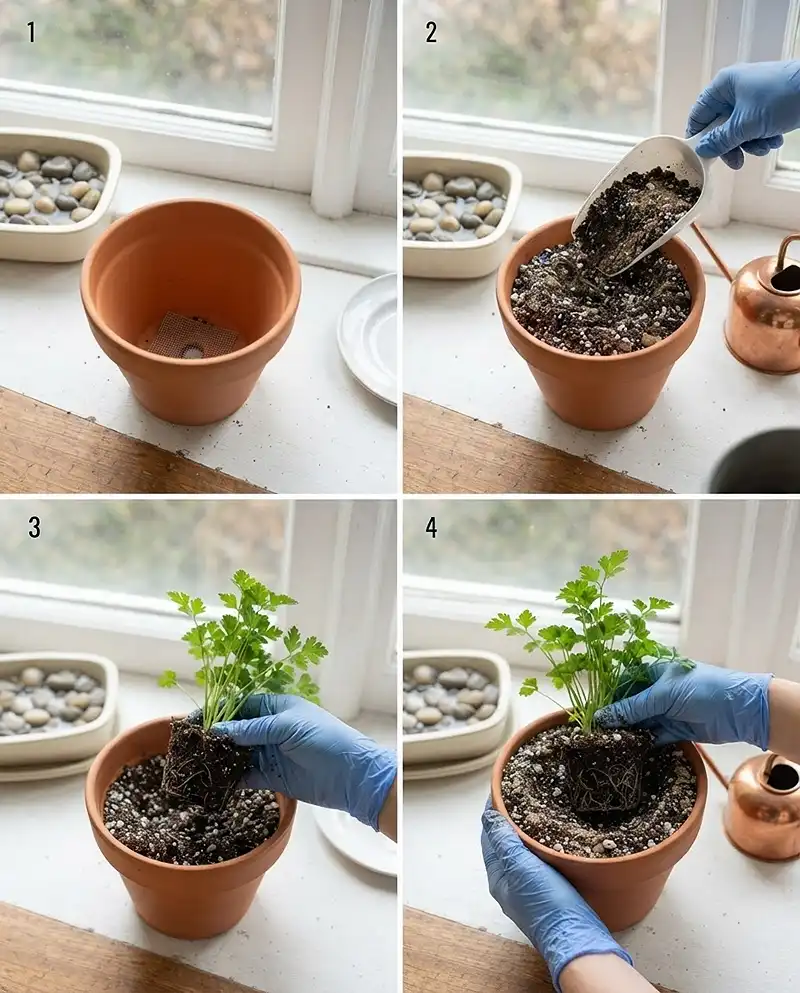
Planting takes about 30 minutes for four pots. If you’re still choosing plants, this roundup of the best indoor herbs to grow on a windowsill can help. Then follow these steps in order:
- Blend your sterile soil mix and dampen it lightly so it clumps slightly in your hand.
- Fill each terracotta pot to about 1 inch below the rim.
- Slide the nursery plug or rooted cutting out of its container and loosen the outer roots gently.
- Set the plant at the exact depth it grew before, then fill gaps with mix and press lightly.
- Carry the pots to the kitchen sink and water deeply until it runs out the drainage holes.
- Let the pots drain for 10 minutes, then place them on the pebble humidity tray in your window.
Winter Maintenance for Maximum Indoor Harvests
Indoor herbs run on a slower metabolism in winter. They drink less, grow less, and need far less feeding than in July. Adjusting your routine now separates a productive windowsill from a graveyard of pots.
Adjusting Watering for Slow Winter Evaporation
Quick Answer: Use the finger test: push a finger 1 inch into the soil and water only if it feels dry. Short days and still indoor air slow evaporation, so overwatering is the top killer of windowsill herbs.
Water in the morning with room-temperature water. Soak until it drains, then dump the saucer. For rosemary, thyme, and oregano, wait until the top 2 inches are dry.
I killed a $6 ‘Arp’ rosemary in January 2022 by watering every Sunday, like clockwork. The soil stayed wet for ten days and the roots turned brown and mushy. Now I go by my finger, not the calendar.
Harvesting Techniques to Force Bushy Growth
Quick Answer: Pinch each stem just above a pair of leaves. That spot sends out two new shoots, giving you a bushy plant instead of a tall, leggy one. Never take more than one-third of the plant at once.
Use clean fingernails or small scissors. Start harvesting once a stem has at least six leaves, and pinch the tallest stems first.
Last winter (2025-26), I pinched my Greek oregano back to a leaf pair every 10 days. It went from four stems to nearly a dozen by February, and I never bought dried oregano.
Common Problems & Solutions
Even careful gardeners hit two problems in winter: tiny flies in the soil and stems stretching toward the glass. Both come from the indoor environment, not bad gardening, and both are fixable within a few weeks.
Eradicating Fungus Gnats in the Kitchen
Quick Answer: Fungus gnats breed in damp, stagnant topsoil. Stop them by letting the top 2 inches dry between waterings, trapping adults with yellow sticky traps, and watering with BTI mosquito dunk tea, which kills the larvae.
Central heating plus constantly damp soil makes a perfect nursery for gnat larvae. Here’s the protocol:
- Place one yellow sticky trap at soil level in each pot.
- Soak a quarter of a BTI (Bacillus thuringiensis israelensis) mosquito dunk in 1 gallon of water for at least 30 minutes.
- Water every pot with that tea, then repeat weekly for three weeks.
- Let the top 2 inches of soil dry out between waterings.
Pro Tip: Add a half-inch layer of coarse sand on top of the soil. Adult gnats struggle to lay eggs in a dry, gritty surface.
Pale, Leggy Stems Stretching for Light (Etiolation)
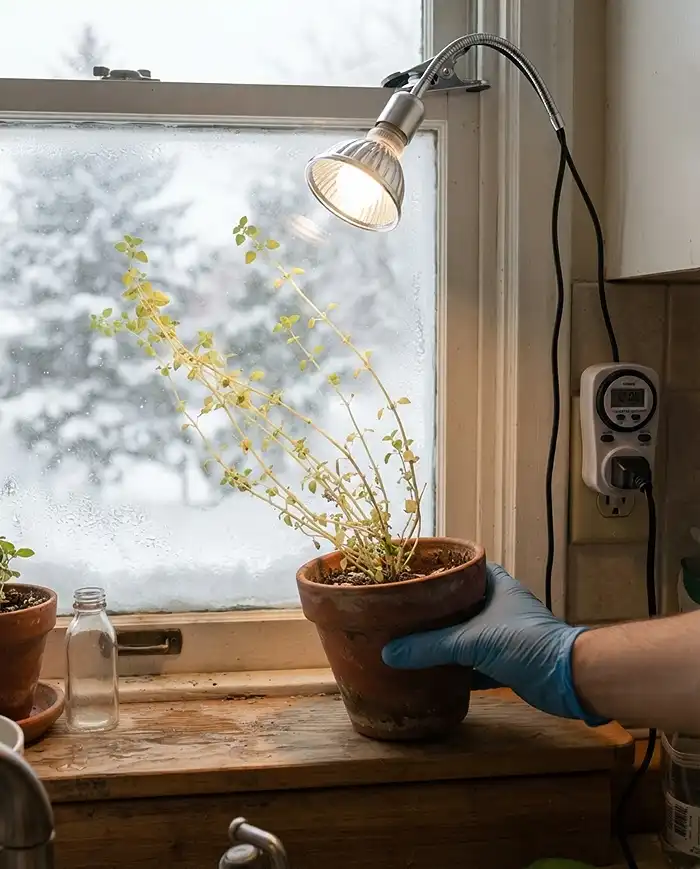
Quick Answer: Etiolation is when plants grow pale, thin, stretched stems reaching toward light. Rotate pots 90 degrees every three days, and add a small full-spectrum LED bulb 6 to 12 inches above the plants for 10 to 12 hours a day.
Spot it early. Gaps between leaf pairs widen, color fades to yellow-green, and stems lean toward the glass.
Once light improves, pinch back the stretched growth. Those weak stems won’t thicken on their own.
Pro Tip: Plug your LED into an outlet timer so the light turns on and off without you thinking about it.
Frequently Asked Questions
Why did my indoor basil plant turn black and die on the windowsill?
Sweet basil is a tropical plant that suffers cold damage once window drafts dip below 50°F (10°C), turning leaves black. I lost a Genovese basil this way in December. Keep basil away from the glass or under a warm grow light, and try compact micro-leaf types like ‘Spicy Globe’.
Should I fertilize my windowsill herbs during the winter?
No, skip heavy nitrogen fertilizer in winter. Low-light plants grow slowly, and feeding them forces weak, spindly growth. If you see clear deficiency in late February, such as yellowing older leaves, spray a highly diluted liquid kelp.
Can I dig up my outdoor herbs and bring them inside?
Yes, but quarantine them first. Keep dug-up herbs away from your other plants for two weeks and wash the foliage with organic insecticidal soap to remove aphids and spider mites. For rosemary and thyme, root cuttings instead of digging.
How much light do winter windowsill herbs need?
Most winter herbs need 5 to 6 hours of direct sun from a south-facing window, or 10 to 12 hours under a full-spectrum LED bulb. Less light causes pale, leggy growth and weak flavor.
What is the easiest herb to grow indoors in winter?
Chives and mint are the easiest herbs to keep alive on a winter windowsill. Both tolerate cool temperatures and lower light, and they regrow quickly after cutting.
Key Takeaways
- The best indoor herbs for winter are chives, parsley, cilantro, thyme, oregano, rosemary, and mint.
- Give them a south-facing window with 5 to 6 hours of direct sun, and add an LED bulb if light runs short.
- Use 4 to 6-inch terracotta pots and a mix with 30% perlite so roots never sit in water.
- Water by the finger test, pinch above leaf pairs, and hold off on fertilizer until late February.