

Boho Balcony Garden Ideas With Cozy Baskets & Textiles
Want boho balcony garden ideas that actually hold up outdoors? Layering woven baskets, trailing plants, and weather-resistant textiles turns even a tiny concrete slab into a warm, jungle-like escape.
Table of Contents
Crafting an Aesthetic Balcony Corner with Botanical Charm
Most apartment balconies look like an afterthought — bare concrete, a plastic chair, maybe a dead succulent. But the right combination of greenery, natural textures, and soft fabrics changes that completely.
I’ve been styling small balcony garden spaces for years, including a north-facing, fifth-floor apartment balcony that got zero direct sun before noon. The trick isn’t just adding plants. It’s layering them with materials that feel warm and lived-in.
Woven rattan, jute macrame, and linen-look outdoor cushions speak the same visual language as trailing Pothos and broad-leafed Monstera. Together, they read as intentional — cozy, not cluttered.
This guide covers everything from microclimate prep to plant selection and textile layering, so your apartment balcony garden ideas actually survive the season.
Assessing Your Balcony Microclimate for Decor and Plants
Before you buy a single basket, spend a week watching your balcony. The biggest mistake I see with small balcony garden styling is treating it like an indoor space. It isn’t.
Wind, rain, and UV exposure will destroy natural fibers and fade fabrics fast if you haven’t planned for them. Know your exposure first — then shop.
Mapping Sunlight in Deep Balcony Corners
Corners are tricky. The deepest point of a covered balcony might get two hours of indirect light while the railing edge gets six hours of direct afternoon sun.
Spend three days tracking shadows at 9am, 12pm, and 4pm. Mark the zones: bright edge, mid-balcony, and deep corner. Sun-hungry plants like succulents go at the edge. Shade-tolerant foliage — ferns, ZZ plants, Cast Iron — belongs in that back corner.
Getting this wrong is expensive. I killed a Majesty Palm in one summer by putting it in a corner that only got reflected light off a neighboring wall. It looked great for three weeks, then slowly collapsed.
Protecting Textiles and Baskets from Rain and Wind
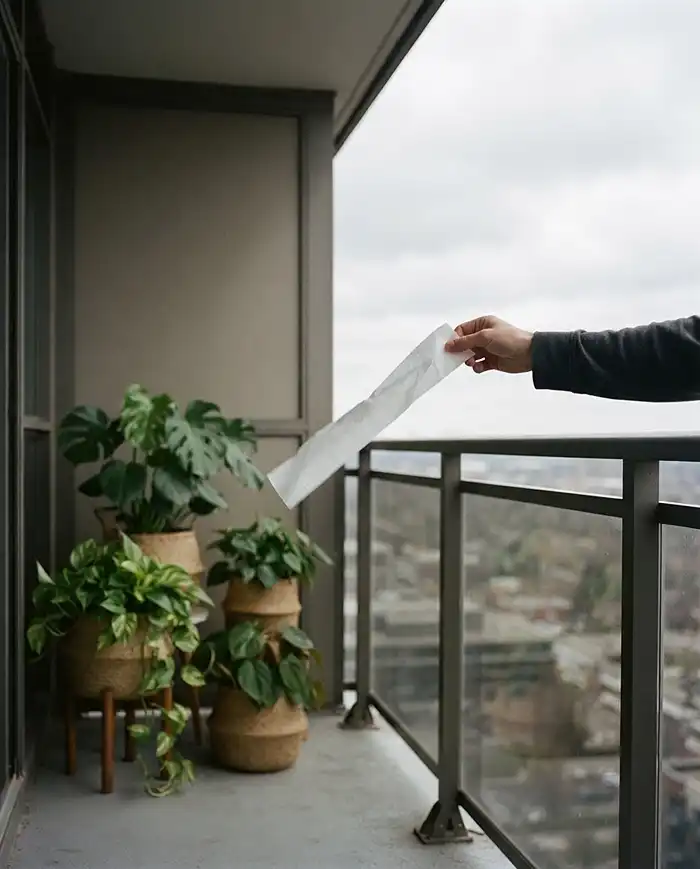
Identify your wind tunnels before positioning anything. Hold a ribbon or piece of tissue at different spots — if it snaps sideways, that spot will destroy a jute basket in one season.
Natural fiber baskets and woven textiles need to live in covered, low-wind zones. If your balcony is fully exposed, use them as purely decorative elements for dry seasons and bring them inside during storms.
Rain + jute = mold. Wind + macrame = fraying. Plan around it, not against it.
Choosing the Right Baskets for Plant Containers
Not all woven baskets are equal when it comes to plant use. Material, weight capacity, and water resistance vary a lot. Here’s how to pick the right one without sacrificing the look you’re going for.
Rattan, Jute, and Seagrass Material Differences
Rattan is the most durable of the three. It’s tightly woven, holds its shape under heavy pots, and resists warping better than looser fibers. Use it for floor plants in large nursery pots.
Seagrass is mid-range in durability — a good belly basket choice for tabletop displays or lightweight trailing plants. It does mold if it stays wet, so drainage management matters.
Jute is the most delicate. It looks gorgeous in macrame hanging planters but deteriorates quickly if it gets repeatedly soaked. Reserve it for covered zones and lightweight plants only.
| Material | Best For | Watch Out For |
|---|---|---|
| Rattan | Heavy floor plants, large cachepots | Cracking in extreme cold |
| Seagrass | Tabletop and medium belly baskets | Mold if bottom stays wet |
| Jute | Hanging macrame, lightweight displays | Rapid rot in rain exposure |
The “Cachepot” Method and Waterproof Liners
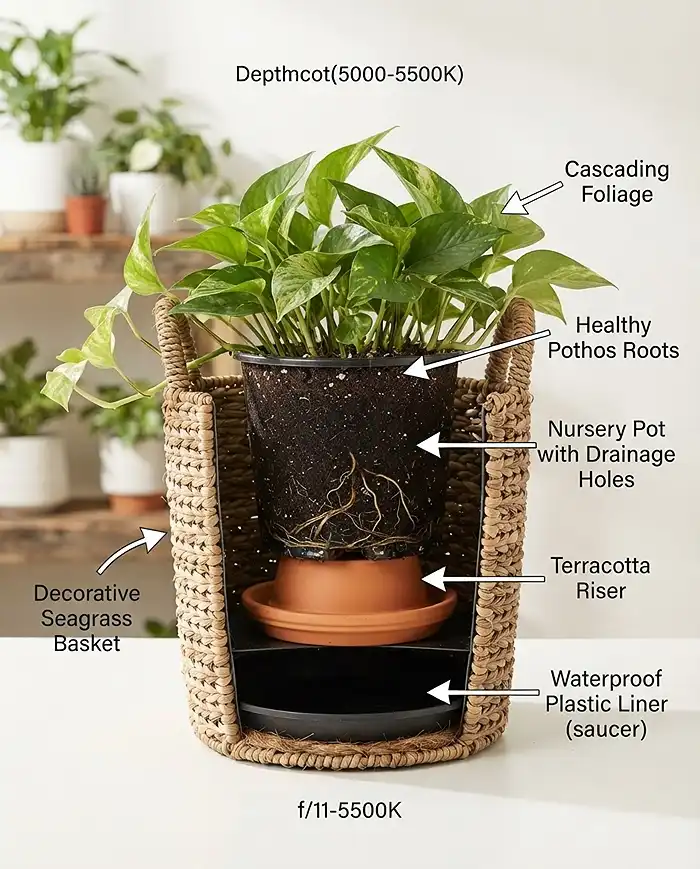
The cachepot method is non-negotiable for keeping woven baskets alive. Keep your plant in its original plastic nursery pot with drainage holes. Slip that pot inside a heavy-duty plastic liner, then place the whole thing inside the decorative basket.
When you water, the drainage flows into the liner — not the basket fibers. Every week or two, pull the nursery pot out and tip the liner to discard standing water.
I use thick black plastic sheeting cut to size for custom-shaped baskets. It costs almost nothing and doubles basket lifespan. Pre-made basket liners work too, but the fit is rarely perfect on artisan baskets with irregular shapes.
Pro tip: Elevate the nursery pot inside the basket on a small upturned saucer so it never sits directly in pooled water.
Curating the Perfect Aesthetic Plant Palette
A cohesive plant palette isn’t about matching colors — it’s about contrasting textures, scales, and growth habits. Think: one dramatic tall plant, one medium textural filler, one cascading trailer. That trio works in almost any balcony garden corner.
Structural Foliage and Palms for a Tropical Vibe
Every boho corner needs a “thriller” — the tall, architectural plant that sets the scale and draws the eye upward. Good options for balcony garden ideas include Majesty Palms, Ficus Audrey, or Monstera Deliciosa.
Monstera Deliciosa in a large rattan cachepot is one of the most effective anchor plants I’ve used. In zone 7b conditions on a sheltered balcony, it pushed three new leaves over a summer and gave the whole corner a lush, tropical feel.
For sunnier spots, a Bird of Paradise (Strelitzia reginae) makes a dramatic structural plant that handles direct afternoon exposure far better than most tropicals.
Cascading Vines to Soften Basket Edges
Trailing vines do the visual work of connecting your baskets to the space. They spill over woven edges and soften the line between plant and decor — it’s what makes a styled corner look lush rather than staged.
My go-to choices for small balcony garden trailing plants:
- Golden Pothos — near-indestructible, trails fast, tolerates low light and irregular watering
- Philodendron Micans — velvety bronze-green leaves that look incredible against natural rattan
- String of Hearts (Ceropegia woodii) — delicate trailing vines perfect for small hanging seagrass baskets
- Tradescantia Zebrina — purple-silver foliage that adds unexpected color contrast to earthy baskets
Place trailing plants in hanging baskets or on raised plant stands so the vines can drape naturally downward over the woven sides.
Layering Textiles for Ultimate Cozy Comfort
Textiles are what make a balcony garden corner feel like a room rather than an outdoor space. The key is choosing fabrics that mirror the organic warmth of your plants and baskets while actually surviving outside.
Weather-Resistant Outdoor Rugs and Floor Cushions
Start with the rug — it’s the foundation of the whole setup. Polypropylene outdoor rugs in warm neutrals (sand, terracotta, oat) anchor the space and visually unite the plant groupings with the seating area.
Look for rugs labeled “mold-resistant” and “UV-stabilized.” Brands like Ruggable and Chilewich make flatweave outdoor options that look high-end and wash easily when plant debris or bird droppings land on them.
For floor cushions and poufs, choose water-repellent covers filled with quick-dry foam inserts. Moroccan-style leather poufs add to the boho feel but need to be brought in during rain — faux leather versions hold up much better outdoors.
Throws, Pillows, and Ambient Lighting
Layer washable throw blankets over outdoor chairs or a low bench in textures like chunky knit or waffle weave. Look for acrylic-cotton blends that dry fast and resist mildew — 100% cotton throws will go musty outdoors within weeks.
For pillows, choose outdoor-rated covers (look for “Sunbrella fabric” or equivalent) in earthy prints. Geometric patterns or botanical prints work well against the natural basket tones.
Finish the evening look with warm solar fairy lights woven through plant leaves and draped along balcony railings. Pair this with strategic balcony garden lighting for a setup that looks just as good at night as during the day.
Step-by-Step Guide to Styling Your Balcony Corner
Getting the layering order right matters. Set things up in the wrong sequence and you’ll be moving heavy planters over your rug constantly. Here’s the process I use every time:
- Lay the rug first — position it to define the corner zone before anything else goes down
- Place the tallest floor basket in the back corner — this sets the scale and anchors the whole composition
- Add medium-height plants in a loose arc in front of and beside the tall anchor plant
- Position small tabletop baskets on side tables or stacked crates to add height variation at the mid-level
- Hang macrame or jute wall baskets at varying heights to fill vertical space above the plants
- Bring in seating — a low chair, floor cushion, or bench — so it sits within the green arc, not outside it
- Layer textiles last — throw, pillows, and lighting get added once the plants and furniture are locked in
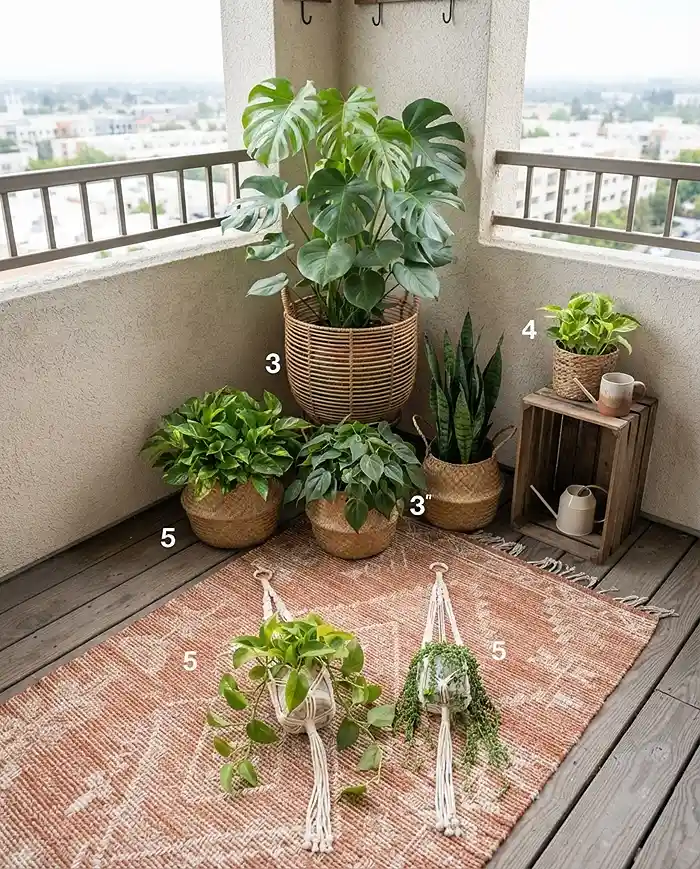
Step back and look from the balcony door before committing to anything. The corner should feel enveloping, not cluttered. If it reads as too dense, remove the smallest plant grouping first.
For more layout inspiration, see how this approach works across different space sizes in this cafe-style balcony garden guide.
Routine Maintenance for a Pristine Aesthetic
A styled balcony garden corner needs a slightly different maintenance rhythm than a regular container garden. The close proximity of wet plants to dry fabrics and natural fibers creates real risk if you’re not deliberate about it.
- Water carefully and early — morning watering gives pots time to drain before evening when humidity rises and mold risk increases
- Check cachepot liners weekly — tip out any standing water that’s collected under the nursery pots
- Rotate plants monthly — this keeps growth even and lets you spot the early signs of pest activity or root crowding
- Shake out or spot-clean the rug every two weeks — soil dust and debris accumulate fast near plant groupings
- Bring textiles in before any extended rain — even “outdoor” fabrics benefit from not sitting through multiple wet days in a row
Common Problems and Solutions
Two problems ruin the aesthetic of a styled balcony corner faster than anything else: mold on baskets and UV damage on textiles and plants. Both are preventable with the right setup.
Mold and Mildew on Natural Baskets
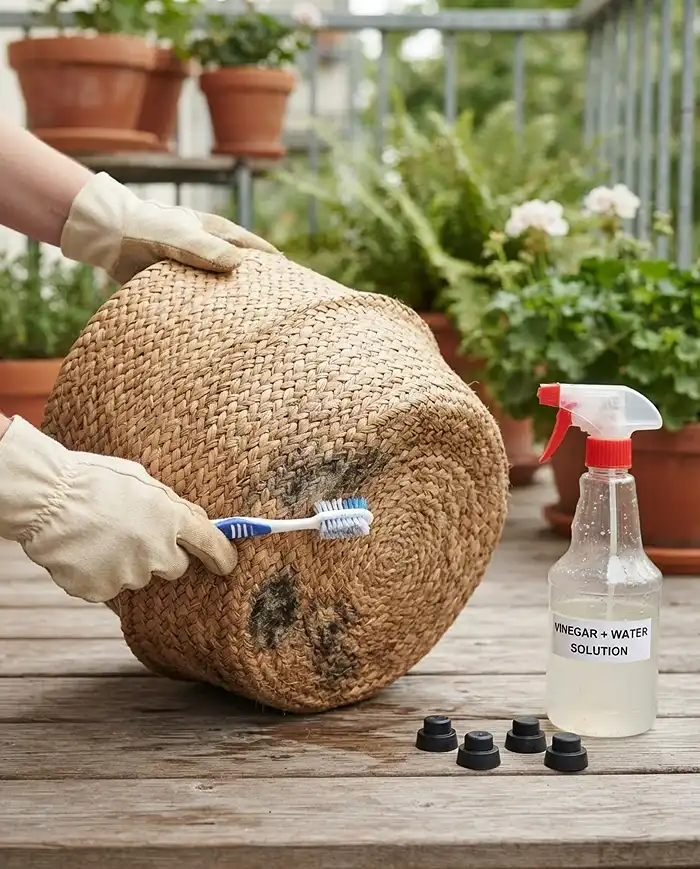
Mold on seagrass and jute baskets shows up as dark gray or black patches, usually on the base where moisture pools. It’s caused by a combination of humidity and sloppy watering that lets moisture soak into the fibers.
Fix it by spot-cleaning affected areas with a solution of 1 part white vinegar to 2 parts water. Scrub gently with an old toothbrush and let the basket dry completely in the sun before returning it to position.
Prevention is better: place baskets on hidden rubber furniture feet (the kind you stick under chair legs) to lift them a centimeter off the ground. That small gap dramatically improves airflow under the basket and reduces mold risk.
Sun-Faded Textiles and Sunburned Leaves
Afternoon UV on a south or west-facing balcony is brutal. Outdoor fabrics rated for UV exposure will still fade over time — typically you get 2-3 seasons before colors dull noticeably on a sun-drenched balcony.
Apply a UV-protectant fabric spray (like 303 Fabric Guard) at the start of each season to slow fading and maintain water repellency. Reapply after heavy rain or cleaning.
For plants, watch for pale, bleached-looking patches on leaves — that’s sun scorch. During heat waves, temporarily reposition delicate tropicals behind taller, sun-tolerant plants like ornamental grasses or succulents to create natural shade.
boho balcony garden ideas FAQs
Can I plant directly into a wicker or seagrass basket?
No. Planting directly into natural baskets is a reliable way to destroy them within one season. Wet potting soil holds moisture against the organic fibers continuously, causing the base to rot and eventually fall out. Always use the cachepot method: keep the plant in a plastic nursery pot with drainage, then slip it inside the basket with a waterproof liner between them.
How do I water plants in baskets without ruining my rug?
For small and medium plants, carry them to the kitchen sink or bathtub for a thorough deep watering. Let them drain completely for at least an hour before returning them to their baskets on the balcony. For large floor plants that are too heavy to move, water slowly and in small amounts directly over the nursery pot, and check the liner for standing water within 30 minutes.
What are the best aesthetic plants for a fully shaded corner?
Deeply shaded corners are ideal for Boston Ferns, ZZ Plants (Zamioculcas zamiifolia), and Cast Iron Plants (Aspidistra elatior). All three provide lush, deep green texture without needing any direct sunlight. Boston Ferns add a soft, cascading texture that looks beautiful against natural baskets, while ZZ Plants offer glossy, architectural foliage that photographs well in styled corners.
How do I keep a boho balcony garden looking good through summer heat?
Increase watering frequency as temperatures rise — most tropical foliage plants need water every 2-3 days in summer heat versus once a week in spring. Group plants together so they create a microclimate of shared humidity. Move the most heat-sensitive plants (ferns, Philodendrons) to the shadiest corner during heat waves, and water early morning so leaves dry before the hottest part of the day.
What weight limit should I check before adding large floor planters?
Check your balcony’s load rating before adding multiple large planters — most apartment balconies are rated for 40-60 lbs per square foot, but older buildings may be lower. A large Monstera in a rattan basket with moist soil can easily weigh 30-40 lbs. Distribute weight by spreading planters across the balcony rather than clustering them all in one corner, and consult your building management if you’re uncertain.
Key Takeaways
- The best boho balcony garden ideas start with a microclimate assessment — know your sun zones, wind tunnels, and rain exposure before placing any baskets or textiles.
- Always use the cachepot method: plant in plastic nursery pots with drainage, then slip them into lined decorative baskets to prevent fiber rot.
- Choose rattan for heavy floor plants, seagrass for tabletop displays, and jute only for covered hanging arrangements in low-wind spots.
- Layer the setup in order — rug first, anchor plant second, medium plants third, seating and textiles last — so nothing has to be moved over a finished floor.
- Prevent mold on baskets by elevating them on rubber feet for airflow, and slow textile fading with a UV-protectant fabric spray applied at the start of each season.