
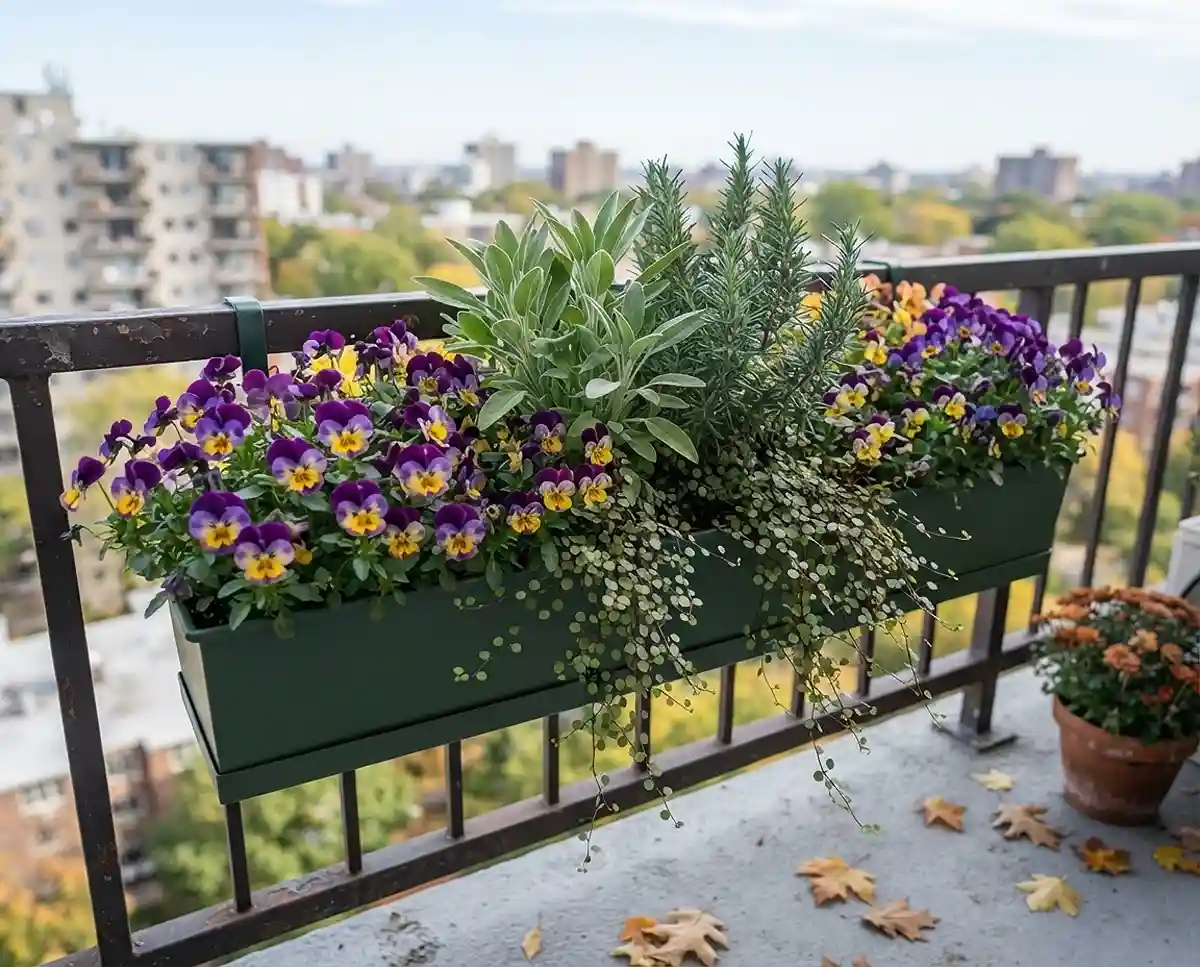
Fall Railing Planters: Cozy Herbs and Pansy Ideas
Fall railing planters turn a tired summer balcony into a moody little herb-and-flower display that lasts through the first hard freeze. I’ve been doing this on my own zone 6b balcony for six years now.
By late September, my petunias look scraggly and half the basil has bolted. Swapping them for pansies and cold-hardy herbs is honestly the easiest seasonal reset I do all year. You get color that holds up to frost and fresh sage for roast chicken at the same time.
Table of Contents
Why Fall Railing Planters Revitalize Your Balcony Space
Summer annuals give out around the same time your patience with them does. Petunias get leggy, coleus turns to mush after the first cool snap, and the whole railing starts looking neglected.
Fall railing planters fix that fast. Pansies shrug off temperatures that would kill a begonia overnight, and herbs like thyme and rosemary actually look better as the weather cools. As of fall 2026, this combo is one of the most requested swaps I get asked about, probably because it stretches balcony gardening season by a solid two months in most zones.
Planning Your Autumn Railing Garden
Before you buy a single plant, walk your balcony at the time of day you’re usually out there. Autumn light and wind behave differently than summer, and railing planters are exposed on all sides, so a little planning upfront saves you a dead planter box by November.
Assessing Balcony Wind and Sun in Autumn
Quick Answer: The sun sits lower in fall, so shadows from adjacent buildings and railings shift dramatically compared to summer. Recheck your light exposure in October rather than trusting your summer notes.
On my north-facing balcony, I lose almost two hours of afternoon light between August and late October as a neighboring building’s shadow creeps in. Herbs like rosemary want at least four to six hours of direct sun, so if your railing drops below that, lean harder on shade-tolerant pansies and violas instead.
- Track sun exposure over a full day, not just a quick glance in the morning
- Autumn crosswinds hit railing planters harder than ground-level pots because there’s nothing to block them
- Corner units and higher floors typically see the worst gusts, so anchor those boxes extra securely
Pro Tip: Wind desiccates soil faster than sun does in fall, so exposed corner planters often need water sooner than sheltered ones even though it’s cooler out.
Choosing the Right Brackets and Boxes
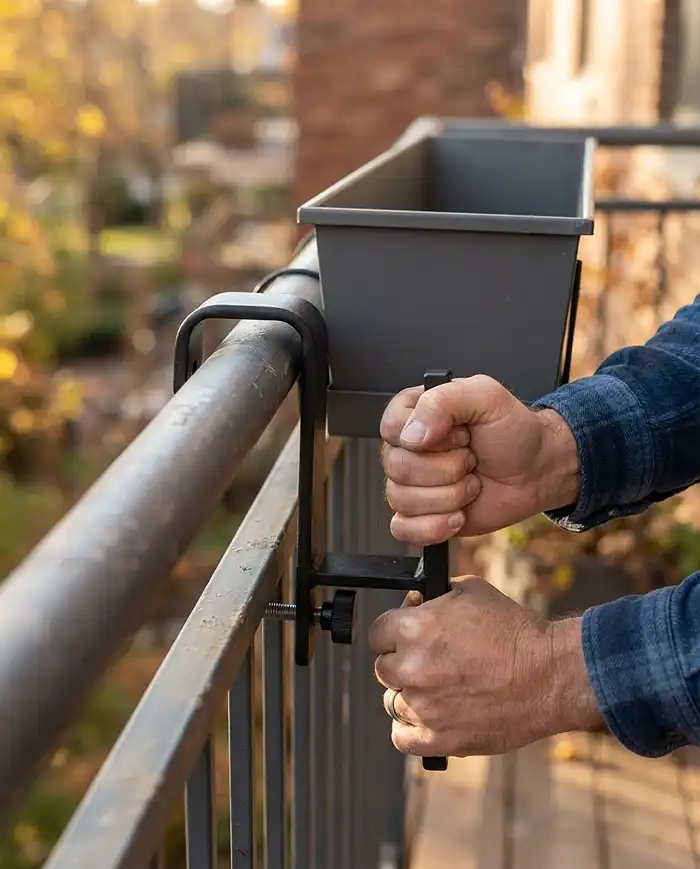
Quick Answer: Use heavy-duty, adjustable steel brackets rated for at least 40 pounds per box, and always confirm your lease allows railing-mounted planters before installing anything.
I learned this one the hard way. My first apartment’s lease technically banned exterior railing attachments, and I found out after already drilling brackets into a shared railing. Most buildings are fine with saddle-style planters that hook over the rail without hardware, so check that option first if you’re renting.
| Bracket Type | Best For | Watch Out For |
|---|---|---|
| Saddle/hook-over | Renters, no drilling needed | Can shift in high wind if not weighted |
| Adjustable steel clamp | Uneven or thick railings | Needs periodic tightening as wood expands |
| Bolt-through bracket | Permanent, high-wind balconies | Requires owner permission on rentals |
Pro Tip: Wet, waterlogged soil after fall storms can add several pounds per box, so size your brackets for the soaked weight, not the dry weight.
The Best Plants for a Fall Railing Display
The winning formula for fall railing planter ideas is simple: cold-hardy flowers for color, structural herbs for texture and scent, and something trailing to soften the hard lines of the railing itself.
Pansies and Violas for Unstoppable Fall Color
Quick Answer: Pansies and violas are the most frost-tolerant flowering annuals you can plant, easily bouncing back from temperatures down to 28°F (-2°C) and often blooming straight through light snow.
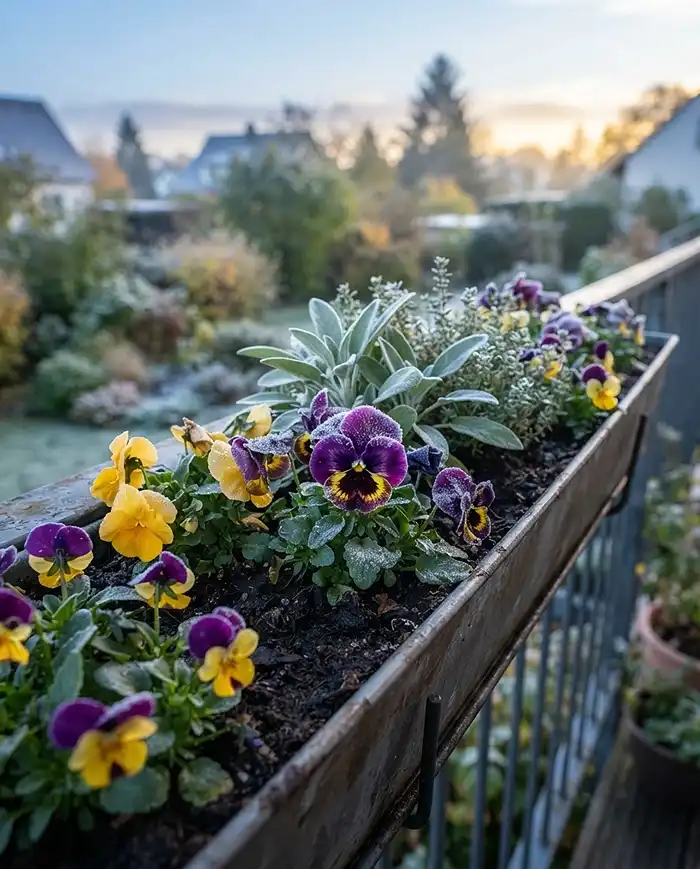
I grow ‘Colossus Yellow Blotch’ pansies alongside violas most years because the color contrast reads well from the street. Two Octobers ago, we had an unexpected 24°F night that flattened my neighbor’s mums. My pansies drooped by morning, looked half-dead, and were fully perked up again by noon once the sun hit them.
- Pansies (Viola x wittrockiana) work as the “thriller” or filler depending on your layout
- Violas are smaller and denser, good for tucking into gaps between herbs
- Both rebloom after light frost without any intervention from you
Real Example: That same October, I nearly panicked and covered the planter with a towel at 11pm. Turns out I didn’t need to. Established pansies handle a single cold night just fine on their own.
Cold-Hardy Herbs for Texture and Scent
Herbs are what separate a fall railing planter idea from a generic mum display, and they earn their space by being genuinely useful in the kitchen.
Sage, rosemary, and thyme are my go-to trio. Their silvery, textured foliage plays beautifully against pansy blooms, and none of them mind a cold snap the way basil does. I plant ‘Berggarten’ sage for its broad leaves and ‘Arp’ rosemary specifically because it’s one of the more cold-tolerant rosemary cultivars, rated to zone 6 with decent winter protection.
- Sage: upright, silvery, holds up through light frost and adds structure
- Rosemary: woody and fragrant, best in the sunniest spot in the box
- Thyme: low and mounding, good for the front edge where it catches afternoon light
Pro Tip: Harvest herbs regularly through fall rather than letting them get leggy. Regular trimming keeps them compact and gives you a steady supply for soups and roasts right through Thanksgiving.
Trailing Spillers to Soften the Planter Edges
Quick Answer: Creeping wire vine (Muehlenbeckia axillaris) and trailing English ivy both tolerate cold well and cascade nicely over a railing box’s edge, softening the hard metal line of the railing itself.
I’ve used both. Wire vine has tiny round leaves that look almost ferny and holds its color into December on my balcony. Ivy is tougher and cheaper but can look a little heavy if you don’t trim it back every few weeks.
Pro Tip: Plant spillers at the very front edge of the box, angled slightly outward, so they drape over the railing instead of just flopping onto the soil surface.
Essential Supplies for Cold-Weather Containers
Railing planters sit above ground with no soil mass around them for insulation, which means roots are far more exposed to temperature swings than anything planted in a garden bed.
Insulating Soil Mixes to Protect Fall Roots
Quick Answer: Blend premium organic potting soil with 30% perlite and a generous scoop of worm castings. This fluffy, well-draining mix prevents cold autumn rains from waterlogging roots and causing rot.
The first fall I tried this, I skipped the perlite to save money and used straight bagged potting soil. A rainy October turned it into a dense, soggy brick, and I lost half a thyme plant to root rot by mid-November. Never again.
| Mix Component | Ratio | Why It Matters |
|---|---|---|
| Organic potting soil | 65% | Base nutrition and structure |
| Perlite | 30% | Drainage, prevents cold waterlogging |
| Worm castings | 5% | Slow-release nutrients for herbs and blooms |
Pro Tip: Elevate your railing box slightly off any flat saddle tray so excess water can drain freely instead of pooling under the container.
Mulch and Frost-Protection Gear
A one-inch layer of finely shredded bark mulch on top of the soil locks in warmth and slows moisture loss between waterings. It’s a small step that makes a noticeable difference once nighttime temperatures start dipping into the 30s.
Keep a lightweight horticultural fleece on hand for unexpected deep freezes. I keep mine folded in a bin by the balcony door so I can drape it over the boxes in under a minute when a surprise cold snap shows up in the forecast.
Step-by-Step Planting Guide for Fall Railings
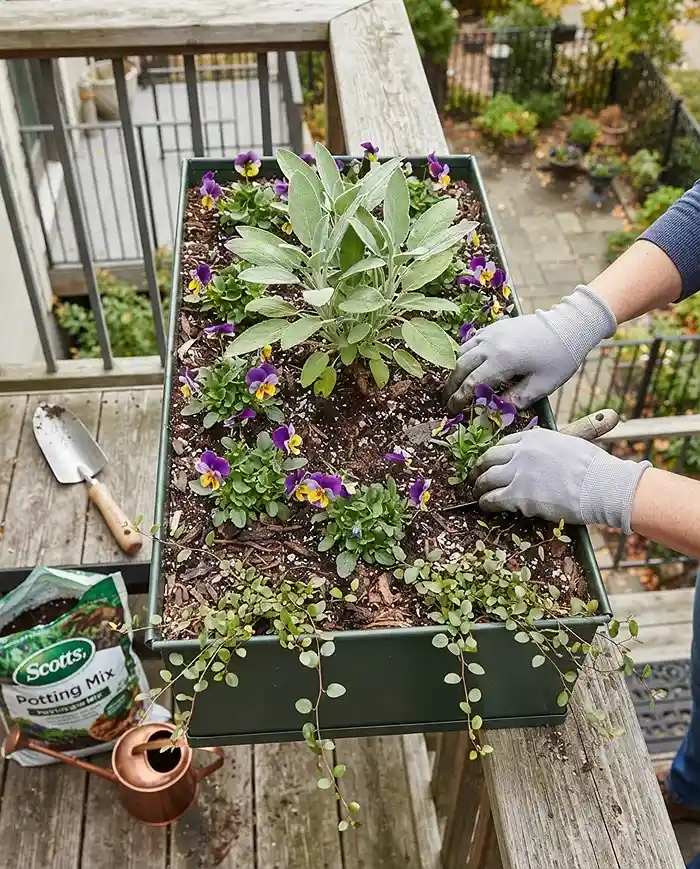
Once your hardware and soil mix are sorted, planting the actual box takes about twenty minutes per container.
- Mount the empty railing box securely first, and give the bracket a firm tug test before adding anything to it
- Fill with your aerated soil mix, leaving about an inch of headspace below the rim
- Plant herbs in the center or back for height and structure
- Surround with a dense border of pansies or violas, spacing them close for that lush, full look
- Tuck trailing spillers along the front edge, angled outward over the rim
- Water gently and thoroughly to settle roots, checking that drainage holes aren’t blocked
For more layout inspiration, my railing planter ideas for herbs and flowers post has several combinations that work well for different balcony orientations.
Autumn Maintenance for Continuous Blooms
Your care routine needs to shift as summer’s heat gives way to fall’s cooler, damper, shorter days. What worked in July will actively hurt your plants by late October.
Adjusting Watering Routines as Temperatures Drop
Quick Answer: Switch from heavy summer soaking to the finger-test method. Water only when the top inch of soil feels dry, and stick to mild mornings so the soil isn’t wet going into a cold night.
Lower temperatures slow evaporation dramatically, so a schedule that made sense in August will drown your plants by November. I water maybe once a week by late October on my balcony, down from every other day in summer.
Pro Tip: Avoid watering in the evening once nights dip below 40°F. Wet soil that freezes overnight can damage tender roots.
Deadheading Pansies and Harvesting Herbs
Deadheading, which just means pinching off spent blooms, keeps pansies pushing out new flowers instead of putting energy into seed production. I do this every few days with a quick pinch between my fingers, no tools needed.
Herbs need regular trimming too, both to keep them compact in a tight container and to give you a steady harvest. I snip sage and thyme weekly once they’re established, which keeps the whole box looking tidy instead of overgrown.
Common Problems and Solutions
Elevated, cold-weather containers face a specific set of issues that ground-level garden beds mostly avoid. Here’s how to spot and fix the two most common ones.
Freezing Roots in Exposed Railing Planters
Quick Answer: Railing planters lack the geothermal insulation that in-ground beds get from surrounding soil, so roots near the container’s outer edges are most vulnerable to wind-chill damage.
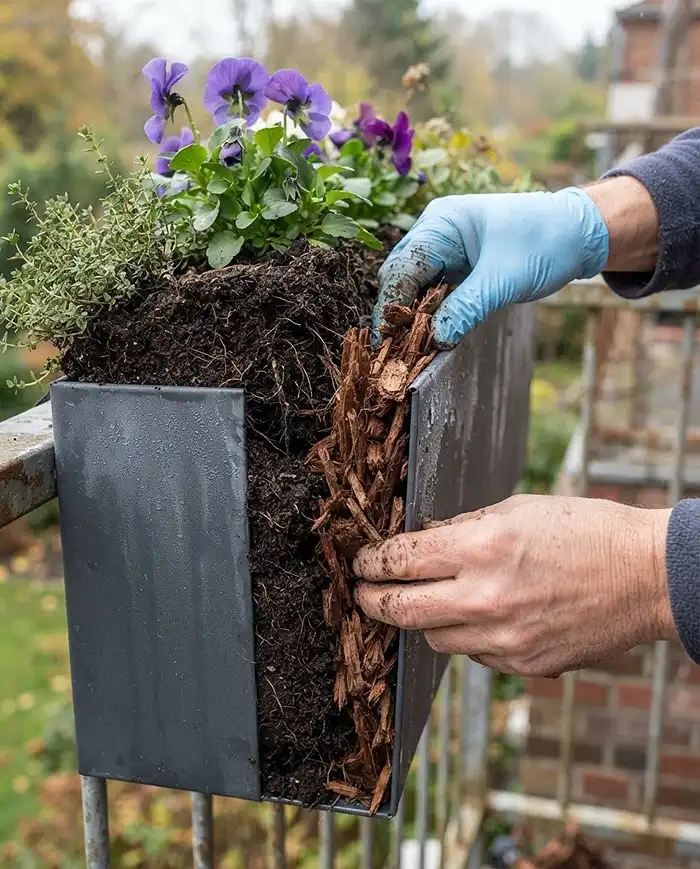
Push soil slightly away from the plastic or metal edges of the box and heavily mulch that exposed perimeter. This buffer protects the delicate root hairs closest to the container wall, which are the first to suffer when a cold wind hits.
Aphids and Mildew in Cool, Damp Fall Weather
Quick Answer: Cool nights combined with fall rain create ideal conditions for powdery mildew and late-season aphids, especially in dense herb foliage with poor airflow.
An organic potassium bicarbonate spray handles powdery mildew effectively without harming beneficial insects. For aphids, a strong spray of water followed by aggressive thinning of crowded herb foliage usually solves the problem within a week or two.
For more on general seasonal balcony upkeep, check out my late summer balcony garden ideas for the transition period before frost hits.
Frequently Asked Questions
Can pansies survive a frost in railing planters?
Yes. Pansies are remarkably frost-hardy and easily survive light freezes down to 28°F (-2°C). They may look wilted and droopy at dawn after a cold night, but they perk back up within hours once the morning sun warms the balcony.
Which herbs grow best with pansies in the fall?
Woody, Mediterranean herbs like thyme, oregano, and sage pair best with pansies because they share the same needs: cool weather, excellent drainage, and tolerance for the drier soil that comes with reduced fall watering.
How late in the year can I plant fall railing boxes?
Plant your fall railing boxes at least four to six weeks before the first hard freeze in your USDA zone. This gives pansies and herbs enough time to establish roots while the soil is still relatively warm.
Do railing planters need extra winterizing compared to ground pots?
Yes. Because railing planters are elevated and exposed on all sides, they lose heat faster than ground-level containers. A one-inch mulch layer and horticultural fleece on hand for cold snaps helps close that gap.
Can I mix pansies and violas in the same railing box?
Absolutely. Violas are smaller and denser, so they work well tucked between larger pansy blooms or along the edges, adding extra color without crowding out your herbs.
Conclusion
Fall railing planters give you months of extra color and fresh herbs for the cost of an afternoon’s work. Secure your brackets, mix your soil right, and pick cold-hardy plants, and the rest mostly takes care of itself.
For more small-space setups, browse my balcony railing herb garden guide, and see the University of Georgia Extension pansy winter guide for more region-specific frost data.
Key Takeaways
- Fall railing planters combine frost-hardy pansies with cold-tolerant herbs like sage, rosemary, and thyme for months of color and fresh harvests
- Check your lease and use brackets rated for at least 40 pounds before mounting anything to a shared railing
- A soil mix with 30% perlite and worm castings prevents fall rain from causing root rot in elevated containers
- Switch to the finger-test watering method as temperatures drop to avoid overwatering in cooler weather
- Plant at least four to six weeks before your first hard freeze so roots have time to establish