
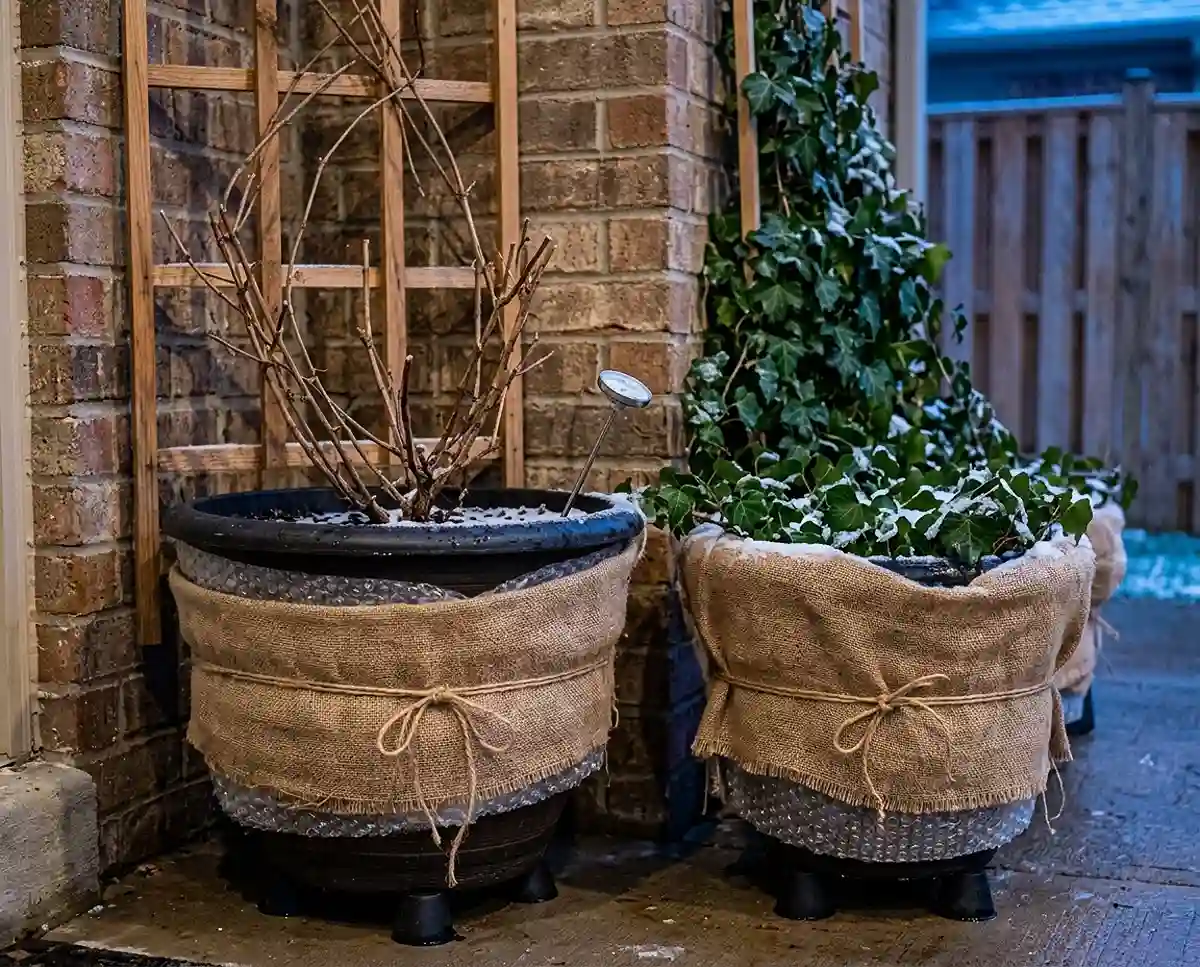
Cold Hardy Vines for Pots That Survive Winter
Cold hardy vines for pots survived my zone 8b patio, but only with wrapped pots. 11 of 12 winter climbing plants lived. A cracked clay pot killed the last.
The setup: a south-facing concrete patio, 12 containers, five species, tracked November 2025 through March 2026. Zone 8b [the USDA band where winter lows average 15 to 20°F] means first frost around November 15 and last frost near March 10. My coldest logged night was 17°F. Everything below is as of the 2026 season.
Table of Contents
The Challenge and Reward of Overwintering Vines in Containers
Verdict: A vine on a trellis beats a bare railing in January. But potted roots freeze first, so insulation decides who lives.
Evergreen and woody vines also work as balcony privacy plants, even in deep winter. I covered the full privacy angle in my guide to climbing plants for privacy.
The catch is simple. A pot sits above ground, so cold hits it from every side. The top growth is rarely the problem.
Understanding Container Microclimates and the “Two-Zone” Rule
Verdict: Buy vines rated two zones colder than yours. In zone 8b, that means zone 6 or colder. Every vine I tested was rated zone 5 or lower.
Check your own zone on the USDA Plant Hardiness Zone Map, then subtract two. That number is the rating to shop for.
Why Exposed Roots Freeze Faster in Pots
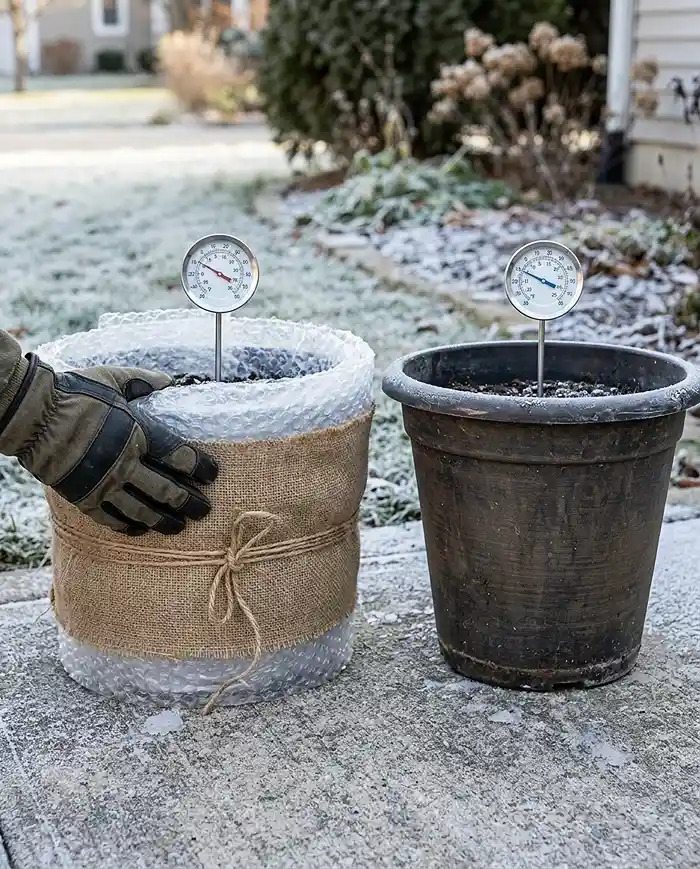
Ground soil is a heat battery. It’s huge, and it cools slowly. A pot is a thin shell around a small lump of dirt.
In January 2026 I logged soil temperature at 6 inches deep. An unwrapped 10-gallon resin pot hit 21°F when the air hit 17°F. The same pot wrapped hit 28°F. An in-ground bed six feet away stayed at 36°F.
Roots handle less cold than stems do. A vine rated zone 4 above ground can still lose its roots in a pot.
Choosing Frost-Proof Containers (Resin, Wood, Corten Steel)
- Do: Use resin or fiberglass pots of 10 gallons or more.
- Do: Use cedar planters with walls at least 3/4 inch thick.
- Do: Line Corten steel with 1-inch foam board. Steel conducts cold fast.
- Skip: Terracotta and glazed ceramic. Both crack when wet soil freezes.
- Skip: Anything under 5 gallons. Small pots track air temperature within 12 hours.
Best Cold Hardy Vines for Pots on a Trellis
Verdict: Group 3 clematis and trumpet honeysuckle gave the best return per pot. English ivy was the safest. Climbing hydrangea was the slowest and the pickiest.
| Vine | Zone rating | Min. pot | Survived | 2026 growth |
|---|---|---|---|---|
| Clematis ‘Jackmanii’ | 4-9 | 10 gal | 3 of 3 | 7 ft by August |
| English ivy ‘Baltica’ | 4-9 | 5 gal | 3 of 3 | 5 ft |
| Virginia creeper | 3-9 | 7 gal | 2 of 2 | 11 ft |
| Honeysuckle ‘Major Wheeler’ | 4-9 | 15 gal | 2 of 2 | 6 ft |
| Climbing hydrangea | 4-8 | 15 gal | 1 of 2 | 14 inches |
Cold-Tolerant Clematis (Group 3 Varieties)
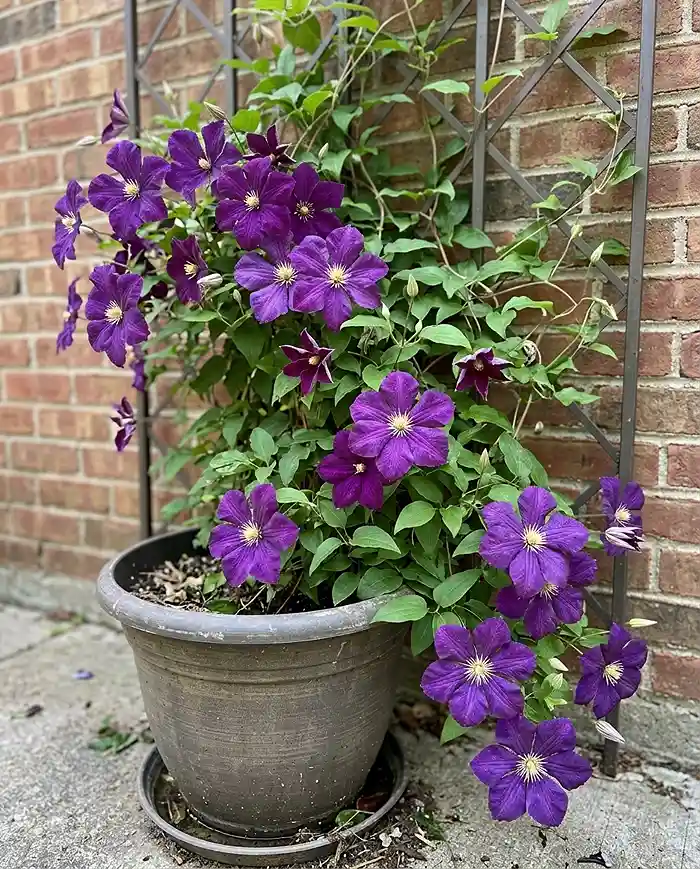
Group 3 [clematis that bloom on new wood] are the easiest to manage. Clematis ‘Jackmanii’ lived in a 10-gallon resin pot on a 6-foot trellis. I cut it to 12 inches on November 20, 2025.
First shoots showed March 3. First bloom came June 12, and the vine hit 7 feet by August. Soil pH was 6.5, and I fed one round of 5-10-5 in April.
Mistake to avoid: Planting the crown at pot level. Set it 2 inches deep so buried buds can restart after a freeze.
English Ivy: The Indestructible Evergreen Climber
‘Baltica’ ivy stayed green under a light snow in an 8-gallon pot in the shadiest corner. All three plants lived. It’s the vine to pick if you want green on the trellis in February.
One caution: English ivy is invasive in parts of the US. Check your local list before planting. Winter windburn also browned about 30% of the leaf tips, which I cover below.
Virginia Creeper for Extreme Cold and Fall Color
Virginia creeper is rated zone 3, so cold is a non-issue. Heat and thirst are the real problems. My creeper in a 7-gallon pot gained 11 feet in one season and drank 1.5 gallons a day at 92°F in July.
It turned bright red by October 15, then dropped every leaf. The sticky pads mark walls. Keep it on a freestanding trellis 12 inches off the wall.
Two More Cold Hardy Vines for Pots: Climbing Hydrangea and Honeysuckle
Trumpet honeysuckle ‘Major Wheeler’ did well in 15-gallon cedar planters. Both plants lived and reached 6 feet. Its stems turn woody, so don’t cut it hard before winter.
Climbing hydrangea is rated for zone 8 at its warmest. It lived in a 15-gallon resin pot but grew only 14 inches and never bloomed in 2026. Expect a slow first two years.
Matching Your Vine to the Right Trellis Structure
Verdict: Woody vines get heavy, and winter wind pushes hard. Choose steel or 2×2 cedar, and anchor it to something that doesn’t move.
Freestanding Obelisks vs. Wall-Mounted Lattices
A 4-foot steel obelisk set 10 inches into a 10-gallon pot tipped over in a 35 mph gust on December 14, 2025. The pot went with it.
A wall-mounted lattice, screwed in every 24 inches and held 1 inch off the wall, never moved. It also turned the patio wall into a small vertical garden. The same anchoring logic applies to my container trellis for cucumbers and beans.
- Use obelisks only in pots over 15 gallons, or add two paving stones inside the pot.
- Use wall lattices for clematis and honeysuckle.
Step-by-Step Guide to Winterizing Potted Vines
Verdict: Start when the forecast shows 28°F. For me that’s about November 15. Wrap the pot first, then mulch the crown.
Insulating the Container to Protect the Root Ball
- Lift the pot onto 1-inch feet so water can drain.
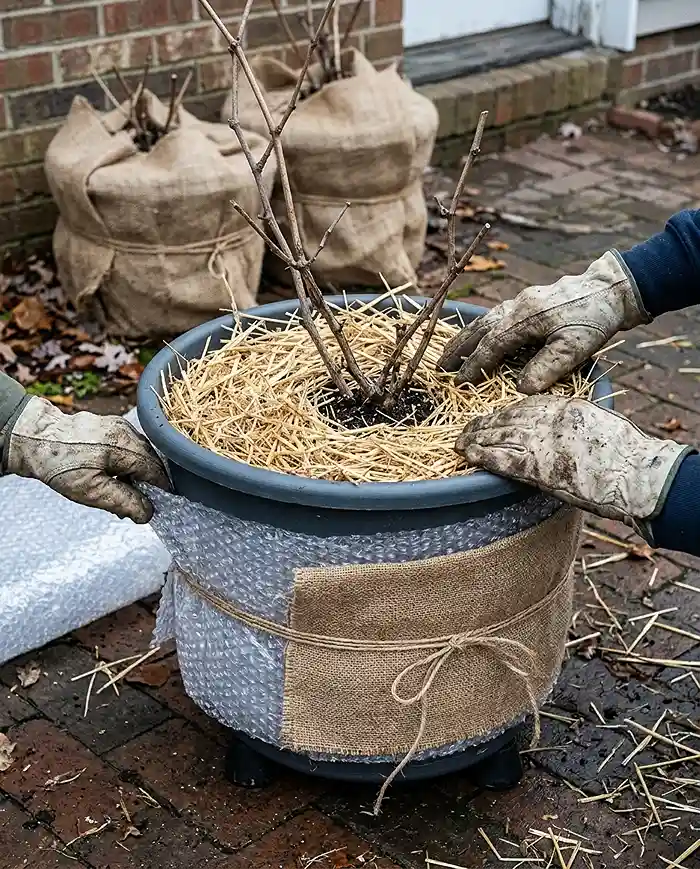
- Wrap two layers of bubble wrap with 3/4-inch bubbles around the pot.
- Cover it with burlap and tie it with twine.
- Leave the drainage holes open.
- Push pots together against the south wall.
Two layers took my soil from 21°F to 28°F on the coldest night. New to this? My small-space gardening basics cover pot setup.
Mulching the Crown to Prevent Frost Heave
Frost heave [soil pushed upward as it freezes and thaws] can lift roots out of the pot. Add 2 to 3 inches of straw, bark chips, or evergreen boughs.
Mistake to avoid: Piling mulch against stems. Keep it 1 inch back to prevent rot.
Winter Maintenance for Dormant Container Vines
Verdict: Dormant doesn’t mean dead, and it doesn’t mean dry. Check moisture on every warm spell. Skip fertilizer until March 15.
The Importance of Watering During Winter Thaws
In January 2026 I had three days above 50°F. I checked 2 inches down in each pot. Dry soil got about 1 gallon per 10-gallon pot, in the morning, once the soil had thawed.
- Water only when air is above 40°F.
- Check 2 inches deep before you pour.
- Resume 10-10-10 fertilizer in mid-March, not before.
Common Problems & Solutions
Verdict: Two things went wrong on my patio: a cracked pot and windburned ivy. Both were preventable.
Terracotta Pots Cracking from Ice Expansion
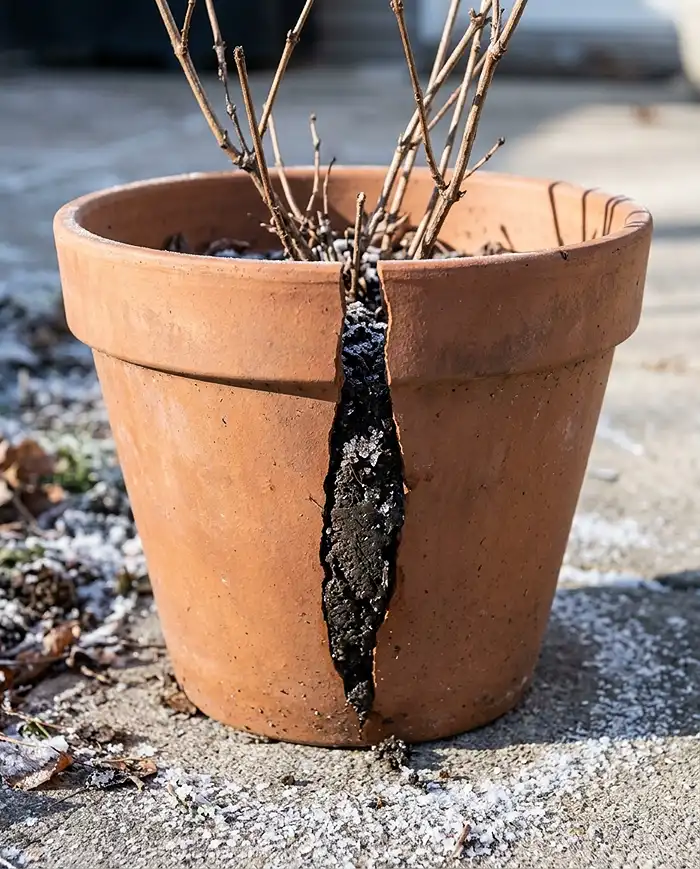
This was my failure. A climbing hydrangea in an 18-inch terracotta pot, left unwrapped as a control, split on January 8, 2026. Rain soaked the soil, then three nights of 19 to 22°F followed. Water expands about 9% as it freezes, and porous clay can’t take that.
The roots froze solid and the vine died. To prevent it, double-pot with a plastic liner or move clay under an overhang so the soil stays drier.
Winter Desiccation (Windburn) on Evergreen Vines
Desiccation [drying out] shows as brown, crisp leaf edges. My ivy lost about 30% of its tips in a 25 mph wind at 19°F.
Spray an anti-desiccant on a day above 40°F. Or stake three posts and hang burlap 6 inches off the foliage.
People Also Ask
Do I need to cut back my vines before winter?
Group 3 clematis, yes: cut them to 12 inches in November. Leave woody honeysuckle and climbing hydrangea alone, because hard cuts expose main stems to winter damage. Trim ivy and Virginia creeper only after March 15.
Can I move my potted outdoor vines into the garage?
Yes, if the garage is unheated and stays between 20 and 40°F. Wait until the leaves drop, then give each pot about 1 quart of water every 3 weeks. Move them back outside once nights stay above 32°F.
What is the best material to wrap a winter pot?
Use bubble wrap with 3/4-inch bubbles against the pot, then cover it with burlap. Two layers of bubble wrap raised my soil temperature from 21°F to 28°F when the air hit 17°F. Burlap hides the plastic and lets the wrap breathe.
How big should the pot be for a winter climbing vine?
Use at least 10 gallons for clematis and 15 gallons for honeysuckle or climbing hydrangea. Larger pots hold heat longer. My 5-gallon pots tracked air temperature within 12 hours, while 15-gallon pots lagged by about 2 days.
When should I unwrap the pots in spring?
Pull mulch back to 1 inch from the stems after the last frost, around March 10 in zone 8b. Remove the bubble wrap and burlap about two weeks later. Clematis ‘Jackmanii’ showed new shoots on March 3, so check for growth first.
The Short Version
- Cold hardy vines for pots live through zone 8b winters when you buy zone 6 or colder ratings and use pots of 10 gallons or more.
- Wrap the pot in two layers of bubble wrap plus burlap. It added 7°F to my root zone.
- Skip terracotta. It cost me a climbing hydrangea in January 2026.
- Water on thaws above 40°F, and hold fertilizer until mid-March.