
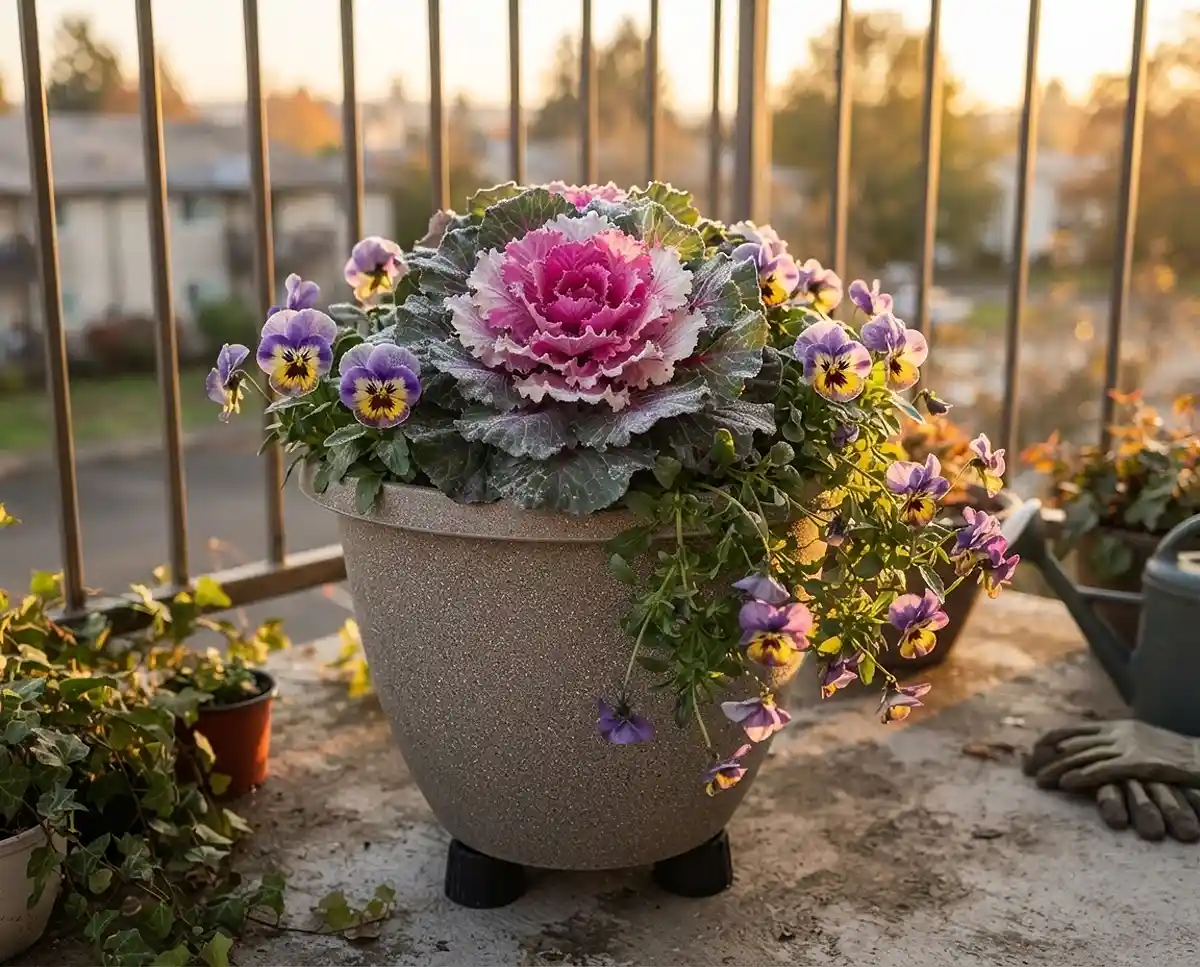
Ornamental Cabbage and Pansy Pots
Ornamental cabbage and pansy pots keep fall balcony plants glowing long after the mums quit. Here’s the exact planting recipe I use to hold color through frost.
I garden on a west-facing balcony in zone 6b, and this duo has carried my containers through every first frost for years. Cold weather actually makes them look better. Here’s how to build, plant, and maintain yours.
Table of Contents
The Brilliant Pairing of Ornamental Cabbage and Pansies for Fall
Ruffled ornamental cabbage and cheerful pansies are the toughest color duo you can put in a pot once nights turn cold. The cabbage supplies bold, sculptural rosettes. The pansies add flowers in yellow, purple, and blue.
Both are cool-season plants that sulk in summer heat and wake up when temperatures drop. Of all the autumn balcony ideas I’ve tried, this pairing is the one I replant every year. It keeps going while marigolds turn to mush.
Understanding the Cold-Hardy Microclimate of Late Fall
Cold sounds like the enemy, but for these plants it’s the trigger that makes them shine. A frosty patio or balcony isn’t a hazard here. It’s the reason the colors finally pop.
How Frost Deepens the Colors of Cabbage and Pansies
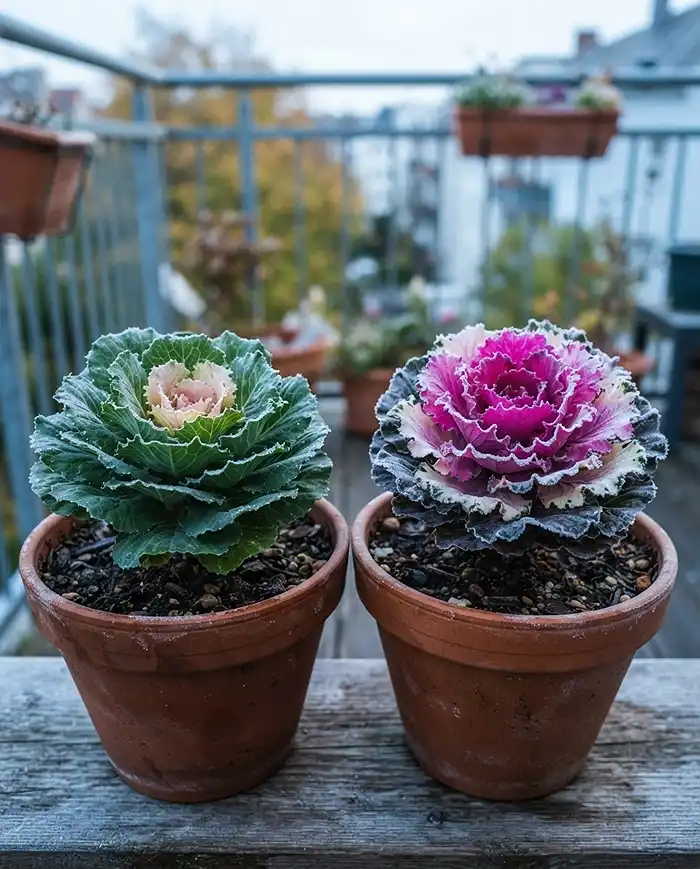
Quick Answer: Nighttime temperatures below 50°F (10°C) make ornamental cabbage produce anthocyanin [a red-purple pigment], turning leaf centers vivid pink, purple, and white. The colder it gets, the stronger the color.
Fresh from the nursery, many cabbages look mostly green. Give them two or three chilly weeks and the centers blush. Pansies respond too, with richer petal tones as days shorten.
Pro Tip: Skip high-nitrogen fertilizer in fall. It pushes green leaf growth and mutes the color you’re waiting for.
Maximizing Sun Exposure in Shortening Autumn Days
Quick Answer: Move your containers to a south-facing or west-facing spot with at least 5 to 6 hours of direct sun. Autumn sun is weak, and pansies need that light to keep blooming.
The sun sits lower every week, so a spot that was bright in September can be shaded by November. Check your light weekly and shift pots as needed.
Real Example: In 2022 I parked a pot at my balcony’s shaded north end. By mid-November the pansies had stretched leggy and stopped blooming. Moving it to the west corner brought flowers back within two weeks.
Essential Materials for Late Fall Containers
You don’t need much, but the right pot and mix make or break a late planting. Here’s the short checklist:
- One 14 to 16-inch pot with drainage holes (holds about 4 gallons of mix)
- Quality potting mix plus perlite [white volcanic granules that improve drainage]
- Slow-release fertilizer, such as 14-14-14
- Pot feet or bricks to lift the pot off the floor
- Small snips for deadheading [removing spent flowers]
- Bt spray and insecticidal soap for pests
Selecting Frost-Resistant Pots and Planters
Quick Answer: Choose insulated resin, fiberglass, or thick wooden barrels. Skip untreated terracotta, which absorbs water and cracks when it freezes.
| Material | Frost Performance | Watch Out For |
|---|---|---|
| Insulated resin or fiberglass | Excellent, light, and crack-resistant | Can tip over in wind if the pot is empty |
| Thick wooden barrel | Very good insulation for roots | Heavy, so check your balcony’s load limit |
| Thin plastic | Survives freezing, but roots get cold fast | Cracks if it’s brittle or old |
| Untreated terracotta | Poor | Absorbs water, then splits in a hard freeze |
Real Example: I lost a favorite terracotta pot in December 2021 when a night dropped to 18°F. It split clean down the side with the cabbage still inside. I’ve used fiberglass ever since.
If you’re planting a rail, look at fall railing planters made of resin or lined wood. Wind-exposed boxes freeze through faster than floor pots.
Formulating a Fast-Draining Soil Mix for Cool Weather
Cold, soggy soil is what kills pansies, not frost. Waterlogged roots can’t breathe, and the crown [the base where stems meet roots] turns to mush. Here’s the mix I use:
- 2 parts quality potting mix
- 1 part perlite for rapid drainage
- 1 handful of compost per pot for steady nutrients
- 1 tablespoon of slow-release fertilizer mixed in at planting
Never fill a pot with heavy garden soil. It compacts in cold rain and holds water for days.
Best Varieties for a Stunning Fall Display
Not every cultivar holds up to freezing rain. These are the ones I trust, chosen for contrast and for keeping their shape through cold snaps.
| Variety | Role in the Pot | Why It Works |
|---|---|---|
| Ornamental cabbage ‘Pigeon’ series | Center focal point | Compact, tight rosettes in white and red |
| Ornamental cabbage ‘Osaka’ series | Bold centerpiece | Frilly, wavy leaves in pink and white |
| Pansy ‘Matrix’ series | Mounding filler | Large blooms on 6 to 8 inch plants |
| Pansy ‘Cool Wave’ series | Trailing spiller | Spreads 18 to 24 inches over the rim |
Top Ornamental Cabbages for Textural Thrill
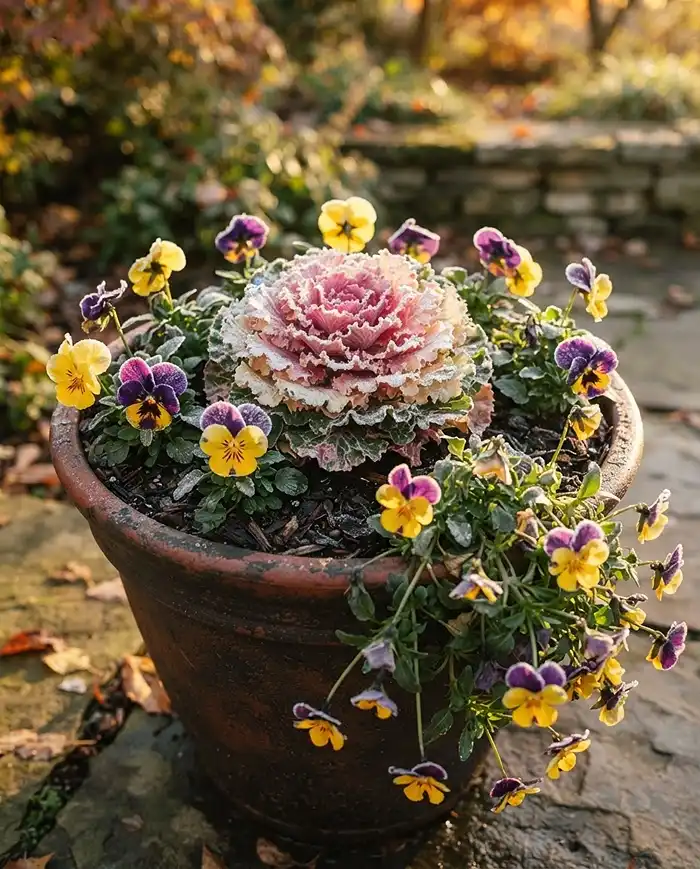
The ‘Pigeon’ series stays tight and rounded, so it keeps its good looks even after weeks of wet weather. ‘Osaka’ brings frilly, wavy edges that catch frost beautifully.
Buy plants that are large, compact, and already showing color at the center. Skip any with yellowing lower leaves.
Trailing and Mounding Pansies for Vibrant Fillers
‘Matrix’ pansies form tidy mounds and bloom hard in cool weather. Try bright yellow or deep purple against a white cabbage for maximum pop.
‘Cool Wave’ pansies trail over the edge and keep flowering when it’s chilly. They’re perfect for the front of a rail-side pot.
Step-by-Step Guide to Ornamental Cabbage and Pansy Pots
Planting is quick, and it’s one of the easiest balcony garden ideas for a weekend afternoon. Here’s the order I follow:
- Fill the pot two-thirds full with your perlite-amended mix.
- Set the cabbage in its nursery pot to test the height.
- Plant the cabbage in the center or back, then add pansies and trailing plants.
- Top off with mix, firm gently, and water until it drains out the bottom.
The Thriller-Filler-Spiller Layout Strategy
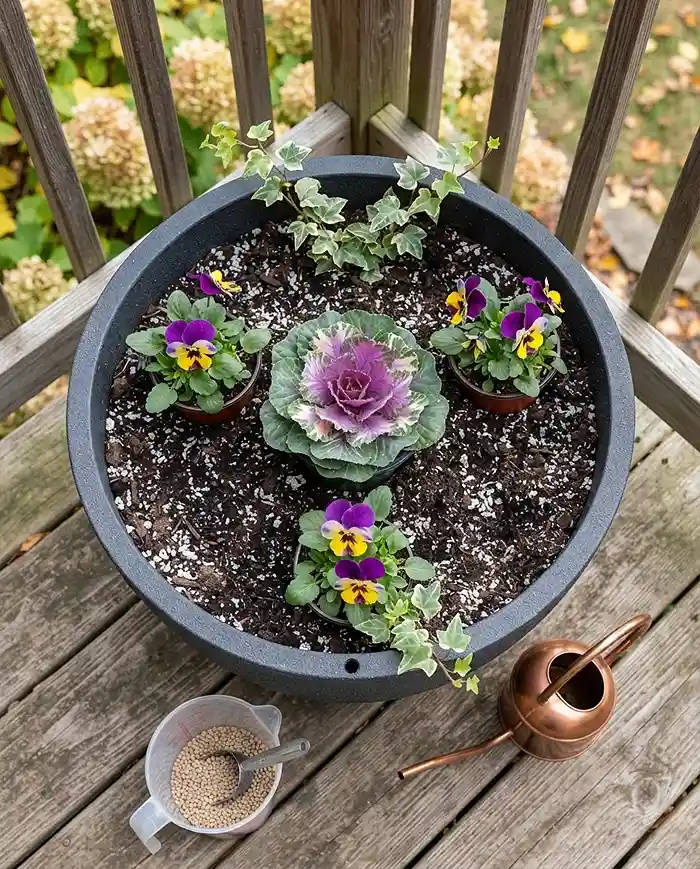
Think of the pot in three parts. The cabbage is the thriller, the star placed center or back. Upright pansies are the filler around it. Ivy or trailing pansies at the rim are the spiller.
Last November I planted an ‘Osaka’ cabbage with three ‘Matrix’ pansies and two English ivy cuttings in a 16-inch fiberglass pot. It looked great through a 14°F night in January. Clemson Extension’s guide to fall and winter containers shows more plant pairings.
Proper Root Settle and Spacing to Prevent Mildew
Pack plants closer than you would in spring, because fall growth is slow. In a 16-inch pot, I use one cabbage, three or four pansies spaced about 4 inches apart, and two ivy.
Plant the cabbage so its lowest leaves sit above the soil. Leaves resting on wet mix invite rot and mildew. Good airflow is the best prevention.
Late Fall Maintenance for Continuous Color
Once planted, these pots need very little. A few simple chores keep them fresh as winter gets closer.
Modifying Watering Habits as Temperatures Drop
Quick Answer: Water only when the top 2 inches of soil are completely dry, and do it early in the day. Evaporation slows sharply in fall, so overwatering is the bigger risk.
Use the finger test: push a finger two inches into the mix. If it feels damp, wait. Morning watering lets foliage dry before the night freeze.
Deadheading Pansies to Encourage Late Blooms
Pinch off each spent bloom at the base of its stem, not just the petals. This redirects energy from seed production back into new flowers.
I do a quick pass every three to four days. It takes two minutes per pot and keeps flowers coming until the hardest freezes.
Common Problems & Solutions
Cool weather means fewer pests, but not zero. Here are the two issues I see most often and how I fix them.
Cabbage Worms and Aphids Hiding in Foliage
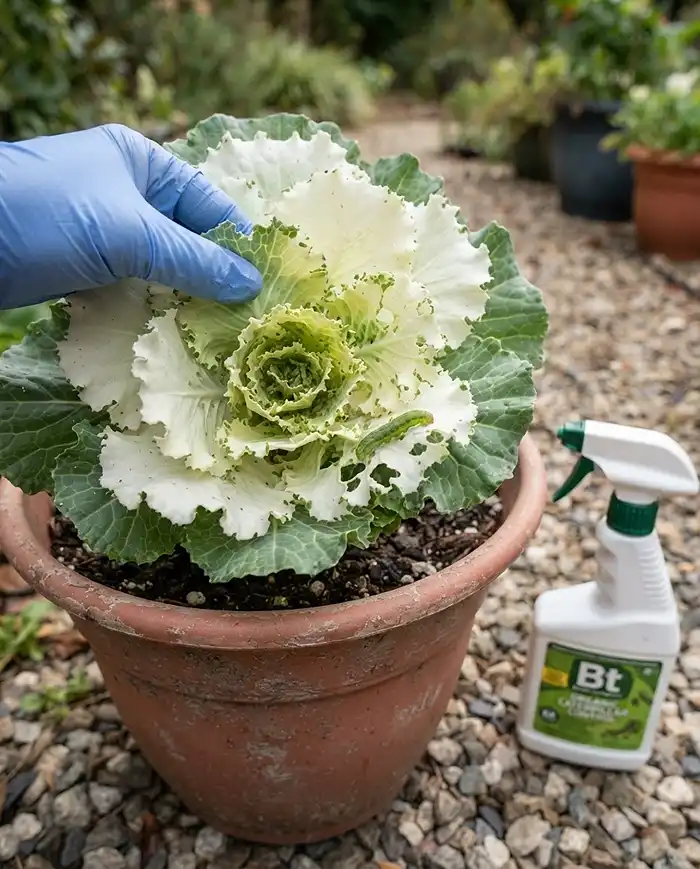
Look for small green caterpillars and ragged holes in leaves. Check the undersides and the center of the rosette, where aphids cluster.
Spray with Bacillus thuringiensis (Bt), a natural bacteria that targets caterpillars, or use insecticidal soap for aphids. Both are safe organic options.
Powdery Mildew and Crown Rot from Cold Rain
Powdery mildew looks like white fungal dust on leaves. Crown rot shows up as mushy, dark plant bases.
Remove affected leaves and move pots under an overhang during heavy rain. Hanging a few pots on hanging planters for balcony railing also helps, since airflow is better.
Frequently Asked Questions
How cold can ornamental cabbage and pansies tolerate?
Once acclimated, both plants survive hard frosts and temperatures down to 15°F (-9°C). Pansy blooms may pause in the deepest cold and resume when it warms.
Do I need to fertilize my fall pots?
One application of slow-release fertilizer at planting time is enough. Plant metabolism slows drastically in cold weather, so avoid liquid feeding.
Can I eat ornamental cabbage?
Ornamental cabbage and kale are technically edible and safe. They are bred for looks rather than flavor, so they tend to taste bitter and tough.
When should I plant ornamental cabbage and pansies?
Plant them when daytime temperatures settle into the 50s to 60s°F, typically six to eight weeks before your hardest freeze. Cool soil helps roots establish.
Can I use these plants in railing planters?
Yes. Choose a railing box at least 8 inches deep with drainage holes, and use fall railing planters made of resin or lined wood to protect roots from freezing wind.
Key Takeaways
- Ornamental cabbage and pansy pots thrive in cold: temperatures below 50°F (10°C) deepen cabbage color, and both survive down to about 15°F (-9°C).
- Use frost-safe containers like fiberglass or resin, and skip untreated terracotta.
- Mix 2 parts potting mix with 1 part perlite so roots never sit in cold, soggy soil.
- Place pots in south or west light, plant tightly, and keep cabbage leaves off the soil.
- Water only when the top 2 inches are dry, deadhead pansies every few days, and skip liquid feed.