

Cool Season Shade Container Combos for North Balconies
Cool season shade container combos turn a light-starved, north-facing balcony into the prettiest spot on the block from October through March, no direct sun required.
I garden on a north-facing balcony in Kansas City, Missouri (zone 6a), and for years I assumed winter meant an empty railing. Then I planted my first Hellebore in a fiberglass pot and realized shade isn’t a limitation here, it’s a design feature.
Cool, filtered light is exactly what woodland plants evolved for, and a north exposure holds moisture and stays a few degrees warmer than an open, wind-scoured south wall in a hard freeze.
Table of Contents
The Challenge and Charm of North-Facing Balconies in the Cool Season
A north-facing balcony gets zero direct sun from fall through winter, but that’s not bad news. This shaded, cool microclimate is actually ideal for evergreen and woodland-style containers that would scorch or fade in full sun. Think glossy foliage, frosted textures, and blooms that last for weeks instead of days.
The trade-off is real: slower drying soil, colder root zones, and wind that funnels between buildings. Once you understand those three factors, you can build combos that look intentional, not accidental, all winter long.
Analyzing Your North-Facing Microclimate
Before buying a single plant, spend a week watching your balcony. North exposures vary wildly depending on how open or recessed they are, and that audit determines your entire plant list.
Understanding Ambient Light vs. Deep Shade
Quick Answer: An open north-facing balcony still gets bright, reflected ambient light, enough to sustain winter bloomers like Hellebores. A deeply recessed balcony under an overhang gets true deep shade and needs foliage-only plants.
Stand on your balcony at midday. If you can read a book comfortably without a lamp, you have ambient bright shade. If it feels dim even at noon, you’re in deep shade territory, and flowering plants will sulk no matter how well you feed them.
- Open north balconies (no overhang above): bright indirect light, good for Hellebores and Violas
- Partially recessed balconies: moderate shade, best for ferns and Heuchera
- Deeply recessed balconies: near-total shade, stick to evergreen foliage like ivy and boxwood
Managing Winter Wind Tunnels and Temperature Drops
Quick Answer: North corridors between buildings often funnel cold wind, which desiccates evergreen foliage faster than the actual temperature would suggest. Heavy, low-profile pots and a physical windbreak are non-negotiable.
Walk your balcony on a breezy day and note where a scarf or paper napkin gets yanked around. That’s your wind corridor. Plants sited there lose moisture through their leaves faster than cold roots can replace it, which browns evergreen tips even when nothing froze.
- Use pots at least 14 inches wide and heavy enough to resist tipping in gusts
- Install a slatted trellis or bamboo screen on the windward side
- Group containers together so they buffer each other, a classic small space gardening trick that also saves floor space
Pro Tip: Wind damage almost always looks like browning leaf edges, not wilting, so if your evergreens crisp up on a cold-but-sunny day, suspect wind before you suspect frost.
Essential Materials for Shade Container Success
With zero solar evaporation, a sunless winter pot behaves completely differently than a summer container. The two things that make or break it are the pot itself and what’s inside it.
Choosing Frost-Proof, Insulating Planters
Quick Answer: Skip terracotta entirely for winter shade pots. Porous clay absorbs moisture and cracks when it freezes. Double-walled fiberglass or insulated resin planters protect root balls and won’t shatter overnight.
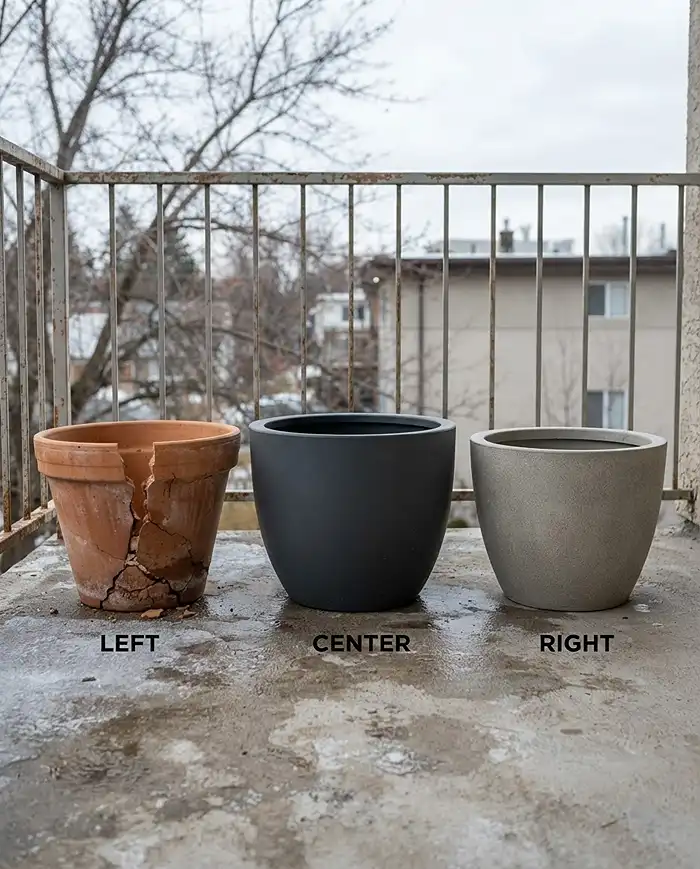
I learned this the hard way. My first winter, I left a $40 terracotta pot of Carex out through a January cold snap in Kansas City. It split clean down the side by February, roots and all. I replaced everything with double-walled resin and haven’t lost a pot since.
| Material | Best For | Watch Out For |
|---|---|---|
| Terracotta | Warm-season only | Cracks below freezing, dries fast |
| Double-walled resin | Year-round balconies | Higher upfront cost |
| Fiberglass | Lightweight urban gardening setups | Can blow over if too small |
| Glazed ceramic | Mild zones (8+) | Still cracks in hard freezes |
Blending a Fast-Draining Soil Mix
Quick Answer: Combine a premium potting mix with 40% coarse perlite or pumice. Without sun to evaporate excess moisture, soggy winter soil is the number one killer of cool-season containers.
Mix it right in the bag: dump in your perlite, fold it through with a trowel, and check that water runs clear out the drainage holes within seconds of pouring. If it pools on top, add more perlite before you plant.
The Best Cool-Season Shade Plants
Once your pots and soil are sorted, build your plant list around three roles: structural thrillers, colorful fillers, and trailing spillers. This layering approach is the backbone of good tiny garden ideas, since one pot can carry all three jobs.
Structural Evergreens and Thrillers (Ferns, Hellebores)
Quick Answer: Hellebores (Christmas Rose), dwarf Boxwood, and Japanese Painted Ferns hold a permanent, elegant silhouette in a container, even dusted in frost, because their foliage persists all winter instead of dying back.
My centerpiece Hellebore ‘Ivory Prince’ has bloomed every February for three years straight on that same north balcony, pushing up buds through actual snow cover.
Colorful Foliage Fillers (Heuchera and Carex)
Quick Answer: Heuchera (Coral Bells) in deep plum or lime green, paired with the sweeping blades of Carex sedge grass, delivers color without depending on a single flower, which matters when winter light is scarce.
| Plant | Role | USDA Zone |
|---|---|---|
| Hellebore ‘Ivory Prince’ | Thriller | 4–9 |
| Heuchera ‘Plum Pudding’ | Filler | 4–9 |
| Carex ‘Blue Zinger’ | Filler | 5–9 |
| Autumn Fern | Thriller | 5–9 |
| Variegated English Ivy | Spiller | 4–9 |
Trailing Spillers (Creeping Jenny, Variegated Ivy)
Quick Answer: Vigorous, cold-hardy trailers like English Ivy and Creeping Jenny soften a container’s hard edges and pull the eye downward, which makes a small pot read as fuller than it actually is.
Drape two or three ivy stems over the rim before you even finish planting the center. Read more about matching plant scale to pot size in our guide on choosing the right containers for small space gardening.
3 Stunning Cool Season Container Combinations
These three recipes balance texture, color, and biological compatibility, meaning every plant in the pot wants the same light, water, and soil, so nothing outcompetes the others by January.
Combo 1: The Woodland Elegance (Hellebore, Fern, Ivy)
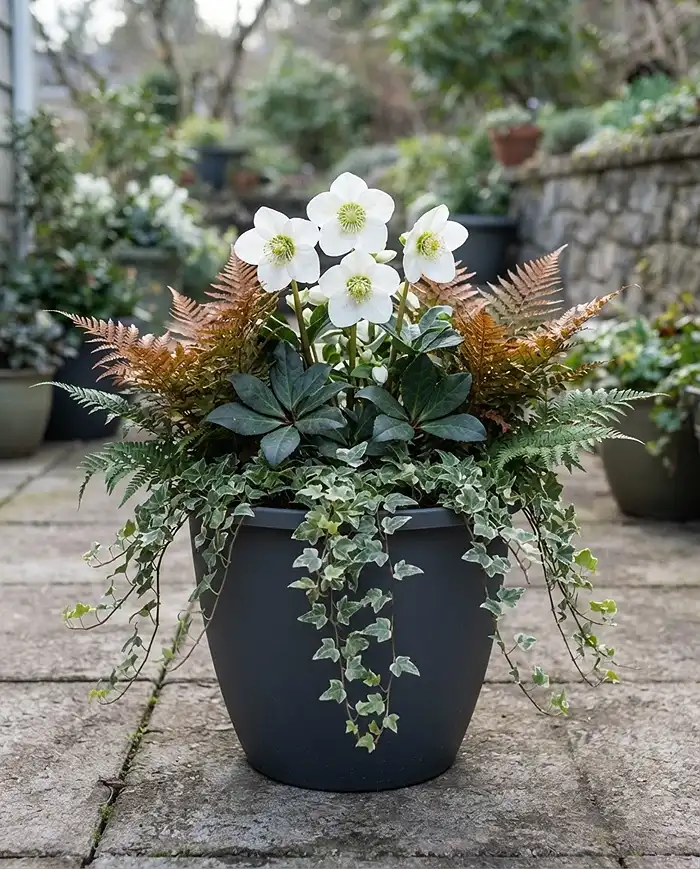
Center a white-blooming Hellebore like ‘Jacob’ in an 18-inch resin pot. Surround it with two Autumn Ferns for textural contrast against the smooth Hellebore leaves. Tuck in variegated white-and-green English Ivy at the rim, letting it trail 12 to 18 inches over the edge.
The ivy’s white variegation genuinely reflects what little ambient light reaches a dark corner, which is a trick I use on the darkest end of my own balcony where nothing else has thrived.
Combo 2: The Frosty Foliage Bowl (Heuchera, Carex)
Pair deep purple Heuchera ‘Plum Pudding’ against the icy, silver-blue blades of Carex ‘Blue Zinger’ in a low, wide bowl planter. Skip flowers entirely here, the contrast comes from color and blade texture instead.
This combo requires zero deadheading (removing spent flowers) or pruning all season, which makes it the lowest-maintenance option on this list for anyone juggling urban gardening around a busy work schedule.
Combo 3: The Edible Winter Shade Pot (Mint, Parsley, Swiss Chard)
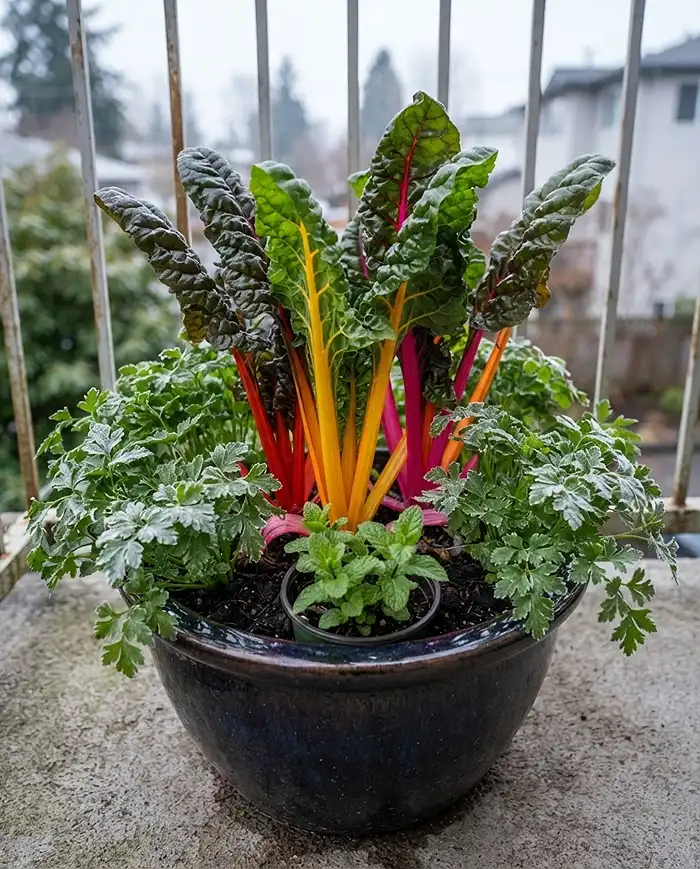
Plant architectural ‘Bright Lights’ Swiss chard as your center thriller, its stems glow red, gold, and pink even in low light. Border it with frost-sweetened flat-leaf parsley (cold actually improves its flavor) and a contained pot of mint for a steady winter garnish.
Keep mint in its own inner nursery pot sunk into the container, since it spreads aggressively even in shade and will crowd out the chard by midwinter if left unchecked.
Planting and Maintenance for Shady Winter Pots
Winter plants barely grow, so you have to plant your combo dense and full from day one. Space root balls close, almost touching, because you won’t get the summer fill-in growth to hide gaps later.
Adjusting Watering for Zero Direct Sun
Quick Answer: Use the two-inch finger test: push a finger two inches into the soil, and only water if it’s dry at that depth. Cold, shaded soil can stay wet for weeks with no sun to pull moisture out.
Water sparingly, only on mild mornings above freezing, so roots aren’t sitting in ice water overnight. For context on how exposure affects this, see our comparison of south vs. north-facing balconies.
Halting Fertilizer During Cold Weather Dormancy
Quick Answer: Stop all synthetic liquid fertilizer between November and March. Pushing tender new growth during cold dormancy leaves that growth vulnerable to instant frost kill.
If a plant looks hungry in January, resist the urge to feed it. Wait until the USDA’s average last frost date for your area has passed; the USDA Plant Hardiness Zone Map is a reliable free tool for checking that timing by zip code.
Common Problems & Solutions
Two issues account for most cool-season container failures, and both are fast to diagnose once you know what to look for.
Root Rot in Freezing, Damp Soil
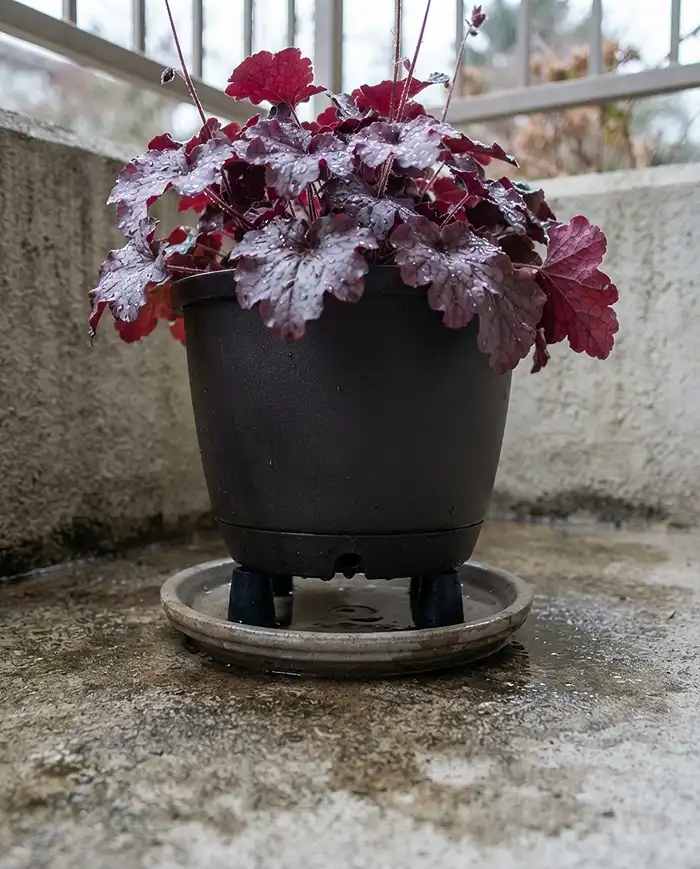
Quick Answer: Yellowing, mushy leaves signal root rot from soggy, cold soil. Elevate every planter on rubber pot feet immediately to restore drainage and airflow underneath.
Pot feet cost a few dollars and solve this in an afternoon, no repotting required in mild cases.
Powdery Mildew and Poor Air Circulation
Quick Answer: White, dusty fungal spores on leaves mean powdery mildew, which thrives in damp, windless shade. Spray with an organic potassium bicarbonate solution and thin out crowded inner foliage to restore airflow.
My Heuchera got hit with this its first winter when I planted it too close to a fern. Thinning both plants back by a third cleared it up within two weeks.
cool season shade container combos FAQs
Can I grow flowers on a north-facing balcony in winter?
Yes. Hellebores (Lenten Roses) and shade-tolerant winter Pansies or Violas will bloom in northern exposure, as long as they are shielded from the harshest freezing winds with a screen or nearby wall.
How do I keep my shade pots from freezing solid?
Push containers flush against your building’s heated exterior wall, wrap pots in burlap or bubble wrap, and add a three-inch layer of straw mulch on the soil surface to insulate the roots.
Why are my Heuchera leaves losing their color?
Heuchera loves shade, but total darkness fades its purple or red pigment to dull green. Move the pot to the brightest, outermost edge of the balcony where it still gets ambient light.
Do cool-season shade container combos need drainage holes?
Yes, always. Without drainage holes, winter soil stays saturated with no sun to evaporate excess water, which quickly leads to root rot in cold weather.
How often should I water a north-facing winter container?
Check every few days using the two-inch finger test, but expect to water only every one to two weeks in cold, shaded conditions, and only on mild mornings above freezing.
Conclusion
Cool season shade container combos prove that a north-facing balcony isn’t a consolation prize, it’s a genuine advantage for anyone into small space gardening. As of the 2025-2026 winter season, insulated resin pots and a solid perlite mix remain your two best defenses against the cold.
Start with one Woodland Elegance pot near your door, add a Frosty Foliage Bowl once you’re confident, and you’ll have year-round color in even the tightest urban gardening footprint.
For more on reading your specific light conditions before you buy plants, revisit our guide on light and space for small space gardening.
- North-facing balconies get ambient, not direct, light, which suits evergreen and woodland plants perfectly
- Use double-walled resin pots and a 40% perlite soil mix to prevent freeze cracking and root rot
- Layer thrillers, fillers, and spillers like Hellebore, Heuchera, and Ivy for instant, dense fullness
- Stop fertilizing from November through March to avoid tender growth that frost will kill
- Cool season shade container combos need less water than summer pots, so check soil before every watering