

DIY No Drill Balcony Garden Ideas for Renters
Building a no drill balcony garden means using tension, weight, and clamps instead of screws to grow a lush small balcony garden. I’ve kept my rental deposit intact for four years doing exactly this.
Table of Contents
The Renter’s Guide to a Damage-Free Balcony Garden
Strict lease agreements feel like they’re designed to kill your green thumb. No holes in brick, no screws in railings, no exceptions from the property manager.
Here’s the good news: tension-based and freestanding structures let you build a genuine apartment gardening setup without touching a drill. I’ve turned a bare 6×4 foot concrete slab into a productive, layered garden using nothing but gravity, spring tension, and smart plant choices. This guide walks through exactly how.
Assessing Your Balcony’s Structure and Microclimate
Before you buy a single tension pole, spend one weekend auditing your space. Rushing this step is how gardeners end up with gear that doesn’t fit or plants that die in week two.
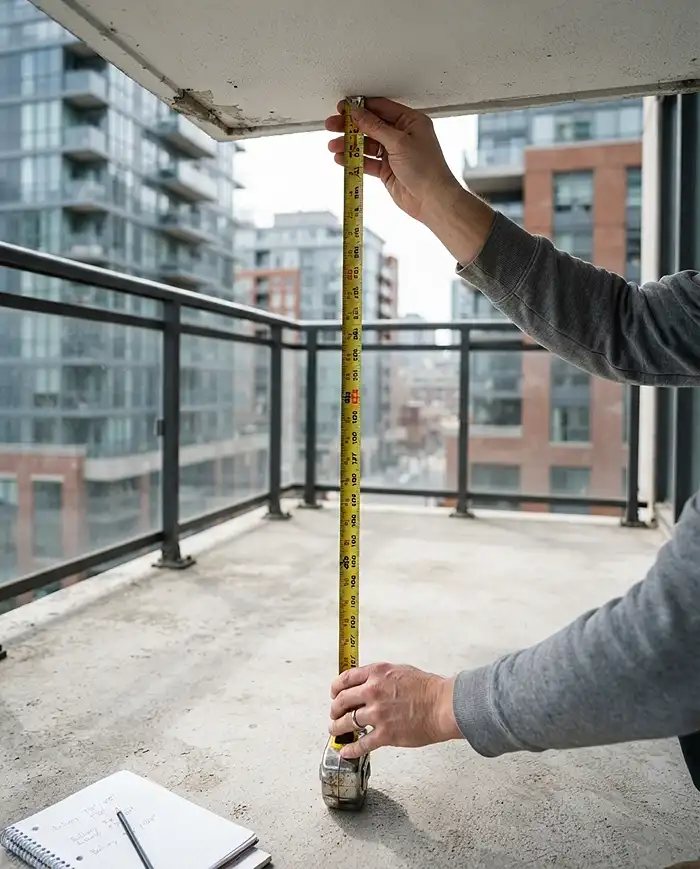
You need two things: accurate measurements of your physical constraints, and a week of honest observation of sun, wind, and drainage patterns.
Evaluating Railings, Ceilings, and Floor Space
Measure your ceiling height in at least two spots before ordering tension poles — many balconies aren’t perfectly level, and a pole that’s a half-inch too short won’t wedge properly.
Check your railing thickness too. Most saddle planters fit rails between 1 and 6 inches wide, but older buildings sometimes have oversized or oddly shaped railings that need a different bracket size.
Walk the full floor space and confirm nothing you plan to add blocks a fire escape route, a drainage scupper, or the door swing. Building code compliance isn’t optional just because the garden is temporary.
Mapping Sun Exposure and Wind Corridors
Track sunlight in two-hour intervals for a full week, morning to evening. My east-facing balcony in Chicago (USDA zone 6a) gets strong direct sun until about 1 p.m., then bright shade — that single detail decided every plant choice I made.
Wind matters just as much as sun on a balcony garden ideas list, especially above the third floor. High-rise units sit in wind corridors that ground-level yards never experience.
An unsecured no-drill trellis or tension pole is far more vulnerable to tipping in a crosswind than a screwed-in structure, so note which corner of your balcony catches the worst gusts before you commit to a layout.
Top No-Drill Vertical Gardening Systems
Three hardware categories cover almost every no-drill scenario: tension poles that brace floor-to-ceiling, freestanding trellises that rely on their own weight, and saddle brackets that straddle the railing using gravity.
| System | Best For | Watch Out For |
|---|---|---|
| Tension rod poles | Vertical growing in under 1 sq ft of floor space | Metal contracts in cold, loosening the grip |
| Freestanding trellis/ladder | Privacy screening and climbing vines | Needs a heavy, wide base to resist tipping |
| Railing saddle planters | Herbs and shallow edibles along the rail | Drip trays are mandatory to protect neighbors below |
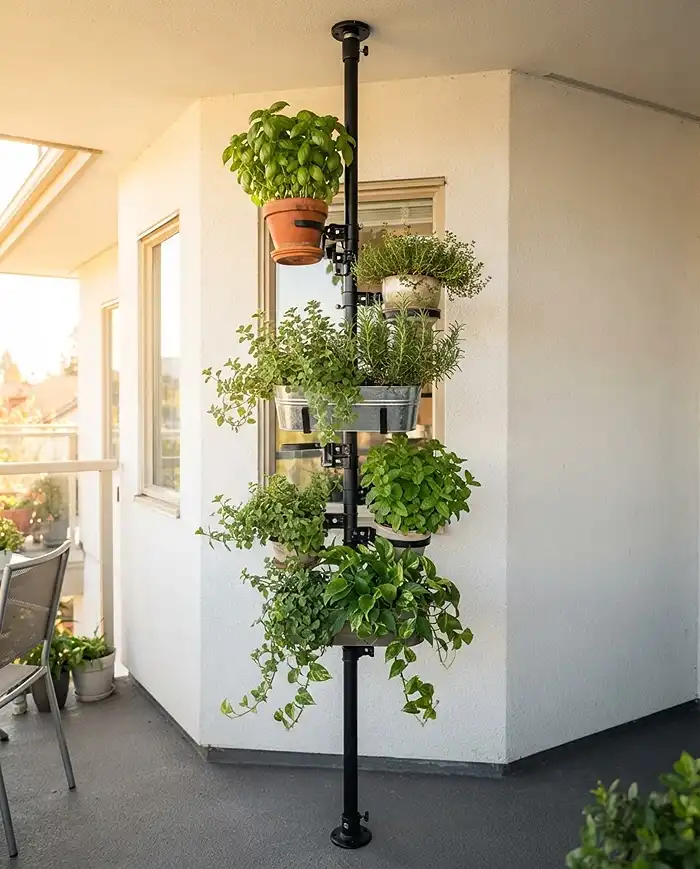
Tension Rod Planters and Floor-to-Ceiling Poles
Heavy-duty spring-loaded tension poles wedge between your concrete floor and ceiling using pressure alone, no fasteners involved. Look for poles rated for at least 30 pounds of total load and a ceiling range that matches your measured height, with an inch or two of adjustment room.
Once locked in, these poles hold tiered pot brackets that let you grow four or five plants in under a square foot of floor footprint — genuinely one of the best small balcony garden tricks I know.
Always press down firmly on the pole after installing and do a hard shake test before hanging anything.
Freestanding Trellises and Leaning Ladder Shelves
Heavy-bottomed rectangular planter boxes with an integrated trellis frame are one of the most stable renter friendly garden options because the weight lives at the base, not the wall.
Leaning ladder shelves work the same way, provided you add rubber anti-slip feet to both the floor contact points and the top lean point against the wall.
I use a 24-inch-wide planter-trellis combo along my north corner as a living privacy screen — it hasn’t budged in two full growing seasons, including a 40 mph wind event last August.
Over-the-Railing Planters and Saddle Brackets
Deep saddle planters straddle the railing and use their own weight, plus adjustable locking brackets, to stay put — no screws touch the rail at all.
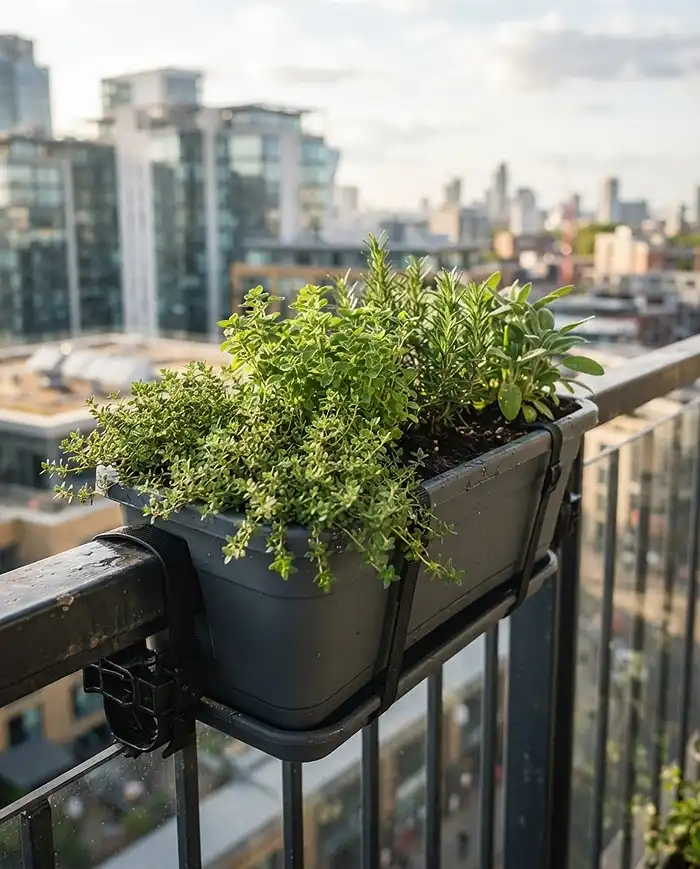
Choose planters at least 8 inches deep so roots have room, and confirm the bracket’s weight rating covers the planter fully loaded with wet soil, not just empty.
During a rough thunderstorm last June, my saddle-mounted thyme and oregano planter held firm while a neighbor’s screwed-in box actually came loose — gravity-based systems can outperform hardware when they’re properly weighted.
Selecting the Best Lightweight Plants for Renters
Every pound you save on plant weight is a pound less stress on your tension poles and railing brackets. Shallow-rooted, fast-growing varieties are the safest match for temporary structures.
Shallow-Rooted Edibles and Culinary Herbs
These crops thrive in the restricted soil depth of railing planters and tension-pole pots:
- Cut-and-come-again lettuce like Black-Seeded Simpson, harvestable in 30 days
- Radishes such as Cherry Belle, ready in 21 to 28 days
- Genovese basil, thyme, and cilantro, all comfortable in 6-inch pots
My first radish crop in a 6-inch railing pot came up in 24 days flat — proof you don’t need deep soil to eat something you grew yourself within a month.
Trailing Vines to Hide Ugly Masonry
Fast, cascading vines cover unattractive brick or stucco without the wall damage that clinging ivy causes over a season or two.
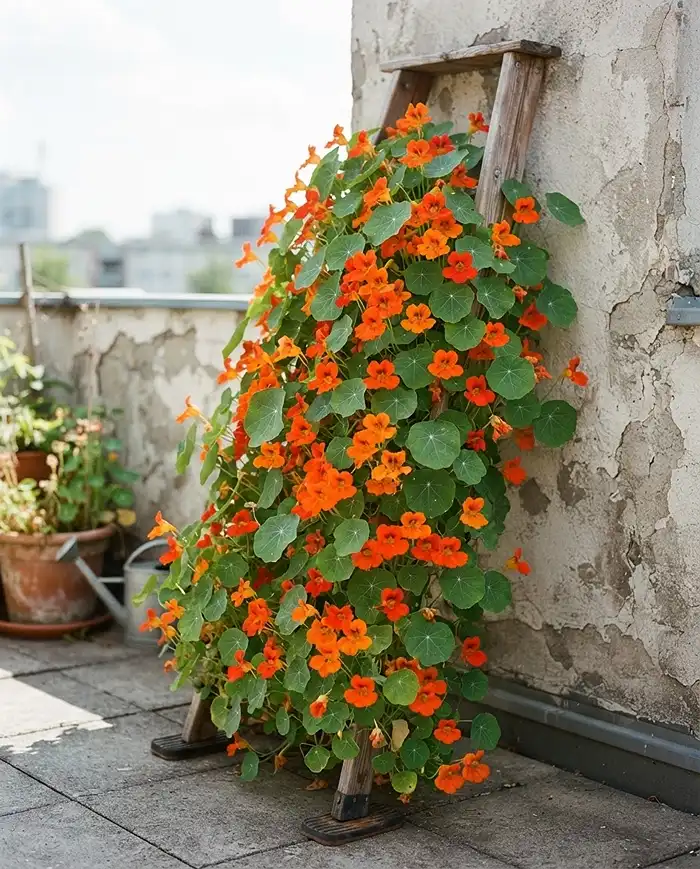
Sweet Potato Vine (Ipomoea batatas ‘Blackie’), Creeping Jenny, and climbing Nasturtiums all trail beautifully off a freestanding trellis or tiered tension pole.
I trained Nasturtiums up my leaning ladder shelf last spring specifically to hide a chipped concrete wall — by July it was a solid curtain of orange blooms, and the wall underneath stayed completely untouched.
Essential Supplies for a Secure No-Drill Setup
A handful of specific tools separate a garden that survives a windy September from one that ends up on the sidewalk below.
Outdoor Adhesives, Zip Ties, and C-Clamps
UV-resistant zip ties rated for outdoor use secure lightweight trellis panels to railings without a single screw. Replace them yearly since sun exposure degrades the plastic.
Adjustable metal C-clamps work well for hanging string lights or light shelving off railings and grip far more reliably than most adhesive products in direct sun.
Exterior-grade removable adhesive hooks are fine for genuinely lightweight items only — think fairy lights, not planters.
Lightweight Containers and Aerated Soil Mix
Skip heavy terracotta and regular garden topsoil entirely on any tension or railing structure — both add unnecessary, unpredictable weight.
Blend premium organic potting soil with about 40 percent perlite by volume for a mix that drains well and stays light enough for elevated systems. The University of Maryland Extension’s container soil guide is a solid reference if you want the science behind why soilless mixes outperform garden soil in pots.
Stick with plastic or resin containers rather than glazed ceramic or stone — the weight difference across a dozen pots adds up fast on a tension system.
Step-by-Step Assembling Your Freestanding Garden
Sweep the floor first and lay down rubber grip pads wherever a tension pole or leaning shelf will sit — grip matters more than most people expect.
Assemble and lock your tension poles first, since they define the vertical layout everything else builds around. Do the wiggle test before moving on.
Position base-weighted trellises and railing saddle planters next, checking that nothing blocks the door swing or a drainage path. Finally, add your pre-potted, lightweight plants once the structural pieces are confirmed stable.
For more layout inspiration once your hardware is in, our apartment balcony garden ideas guide has full setup examples by balcony size.
Maintenance and Seasonal Care for Temporary Setups
Tension rods contract slightly as temperatures drop, which loosens their grip exactly when winter wind is at its worst. Check and re-tighten every pole monthly through fall and winter.
A drip irrigation system on a timer keeps soil evenly moist without the extra weight of hand-watering large volumes at once, which matters on any elevated or railing-mounted structure.
If you want a broader seasonal maintenance routine for a rented outdoor space, see our renter-friendly patio garden ideas post.
Common Problems & Solutions
Two issues come up more than any others with no-drill balcony hardware: rods slipping in wind, and railing planters dripping on the balcony below.
Tension Rods Slipping in High Winds
Cold weather contracts metal poles, which is usually the real cause of a rod suddenly feeling loose during a windy cold snap, not a manufacturing defect.
Run a monthly wiggle test on every pole, and add a strip of rubber shelf-liner at both the floor and ceiling contact points for extra friction.
Railing Planters Leaking on Neighbors
Muddy runoff dripping onto a downstairs balcony is the fastest way to get a noise-complaint-style call from a neighbor, so this one’s worth solving before you plant.
Choose railing planters with attached, sealed drip trays, or switch to a self-watering closed-reservoir design that doesn’t drain externally at all.
DIY No-Drill Balcony Garden Ideas FAQs
How much weight can a tension rod plant pole hold?
Most commercial floor-to-ceiling plant poles are rated to hold 10 to 15 pounds per arm. Stick strictly to the manufacturer’s limit and use featherweight plastic pots, since exceeding the rating can cause a sudden, catastrophic collapse.
Are adhesive hooks safe for outdoor balcony walls?
Exterior-grade adhesive hooks work well on smooth glass or metal siding for very light items like fairy lights. They fail quickly on porous brick or stucco, especially in intense summer UV heat, so don’t rely on them for anything with weight.
How do I secure a freestanding trellis without screws?
Choose a trellis that’s permanently attached to a deep, heavy planter box base. Once filled, 50-plus pounds of wet potting soil inside the container acts as a gravity anchor that resists tipping even in strong wind.
Conclusion
A no drill balcony garden comes down to three things: honest pre-planning, weight-based hardware instead of fasteners, and lightweight plants matched to your structure.
Start small — one tension pole or one saddle planter — before scaling up to a full layered layout. For color and design inspiration once your structure is in place, check our balcony color palette ideas guide.
Key Takeaways
- Audit ceiling height, railing thickness, and wind exposure before buying any hardware for your no drill balcony garden
- Tension poles, weighted trellises, and saddle brackets each solve a different layout challenge without a single screw
- Choose shallow-rooted herbs, lettuce, and radishes to keep total load light on temporary structures
- Re-tighten tension rods monthly, especially through cold weather when metal contracts
- Sealed drip trays are non-negotiable on railing planters to protect the balcony below yours