

Best Grow Bags for Vegetables in Small Spaces
The best grow bags for vegetables turn a cramped balcony into a real container vegetable gardening setup. I’ve run 20+ bags on a 90-square-foot patio in zone 7a for six seasons now, and fabric beats plastic every time.
Table of Contents
The Advantages of Grow Bags for Small Space Vegetable Gardens
Fabric grow bags work because of something called air-pruning. When a root tip hits the breathable fabric wall, it dries out slightly and stops growing longer. Instead of circling the pot in a tangled mass like roots do in plastic, the plant responds by branching into dozens of smaller feeder roots.
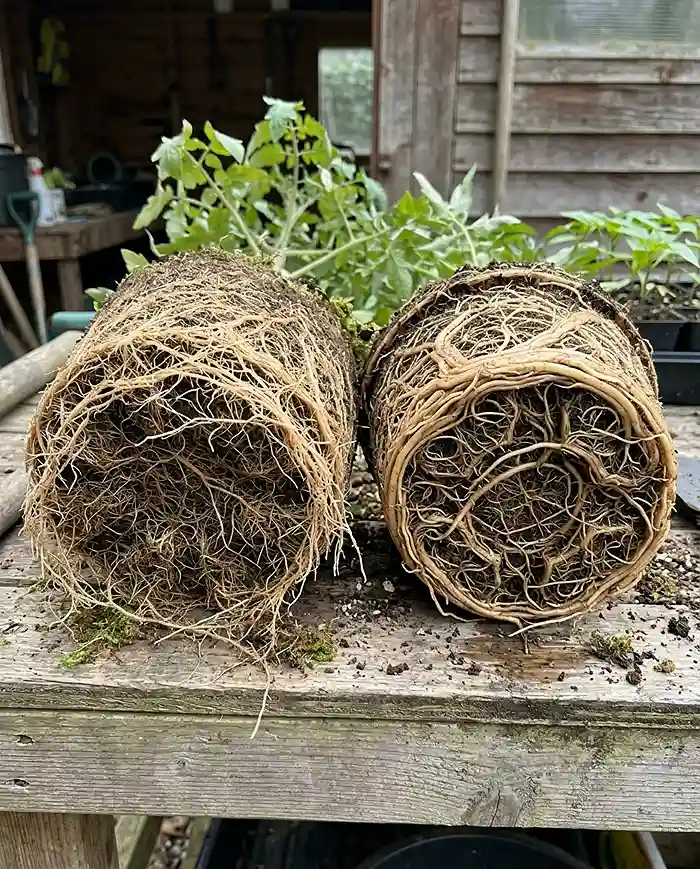
That dense, fibrous root system is exactly what you want for high-yield growing in a small space food garden. More root surface area means better nutrient and water uptake, which translates to sturdier plants and bigger harvests from the same footprint.
My first season, I ran identical ‘Celebrity’ tomato plants side by side, one in a plastic 15-gallon pot and one in a fabric 15-gallon grow bag. The bagged plant finished the season with roughly 30% more fruit and never showed the yellowing lower leaves the potted one did by August.
What to Look for When Choosing the Best Grow Bags
Not every fabric pot on the market is worth your money. Cheap ones split at the seams by midsummer or shed plastic fibers into your soil. For anything you’re going to eat, material safety and build quality matter more than price.
Fabric Weight and Breathability
Quick Answer: Look for BPA-free, non-woven geotextile fabric in the 260g to 300g range. That thickness holds its shape under wet soil while still letting oxygen reach the roots.
Thinner fabric (under 200g) sags badly once watered and tends to tear within a season or two. Anything heavier than 300g starts to trap too much moisture and cuts down on the air-pruning effect that makes grow bags worth using in the first place.
I switched from a big-box 150g bag to a 300g Smart Pot brand bag for my peppers in year two, and the difference in how the bag held its shape by August was obvious — no more leaning, no more splitting seams.
Handle Construction and Stitching Durability
Quick Answer: Handles should be reinforced nylon, double-stitched, and sewn as one continuous loop that runs underneath the bag’s bottom, not just tacked to the sides.
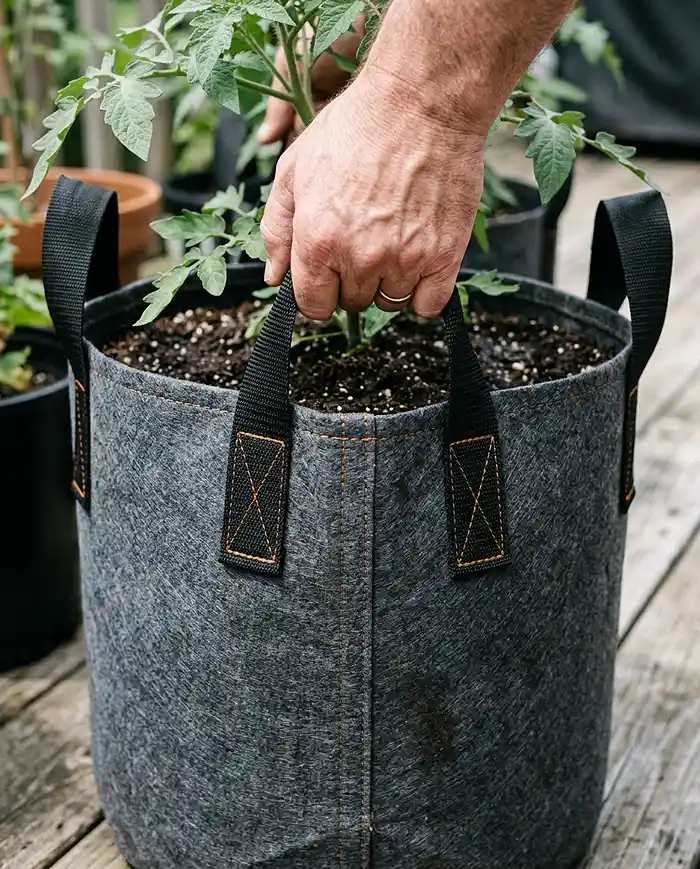
A wet 10-gallon bag of soil easily weighs 50+ pounds. I learned this the hard way when a cheap side-stitched handle tore off a 20-gallon potato bag mid-move, dumping soil and a half-grown ‘Yukon Gold’ crop across my deck in early July.
Grow Bag Sizing Guide: Matching Gallons to Vegetable Types
Matching bag volume to a crop’s mature root depth is the single biggest factor in whether you get a real harvest or a stunted disappointment. Undersize the bag and even healthy-looking plants will stall out right when they should be fruiting.
| Bag Size | Best For | Watch Out For |
|---|---|---|
| 5-7 gallon | Lettuce, spinach, radishes, bush beans, herbs | Dries out fast in heat, needs daily checks |
| 10-15 gallon | Tomatoes, peppers, eggplant | Needs a sturdy stake or trellis anchored inside |
| 20+ gallon | Potatoes, carrots, parsnips | Heavy when full, plan its final spot first |
Small 5 to 7-Gallon Bags (Greens, Radishes, Herbs)
Quick Answer: Reserve 5-7 gallon bags for shallow-rooted crops only — cut-and-come-again lettuce, spinach, bush beans, and culinary herbs like basil and thyme.
These smaller bags dry out fast because they hold so little volume relative to their surface area. During a July heat wave in my zone 7a garden, my 6-gallon lettuce bags needed water twice a day just to keep the ‘Black Seeded Simmon’ from bolting early.
Medium 10 to 15-Gallon Bags (Tomatoes, Peppers)
Quick Answer: This is the gold standard size for indeterminate tomatoes, bell peppers, and eggplant — big enough for the root mass, small enough to stay manageable on a balcony.
Stake or trellis before you plant, not after. I’ve snapped roots twice trying to jam a stake into an established 12-gallon bag, and both times the plant sulked for two weeks before recovering.
For help figuring out exactly which vegetables fit which container, our pot size guide for vegetables breaks it down crop by crop.
Large 20+ Gallon Bags (Potatoes, Root Crops)
Quick Answer: Go with 20-gallon or larger bags for potatoes using the hilling method, and for straight carrots or parsnips that need uncompacted depth to develop properly.
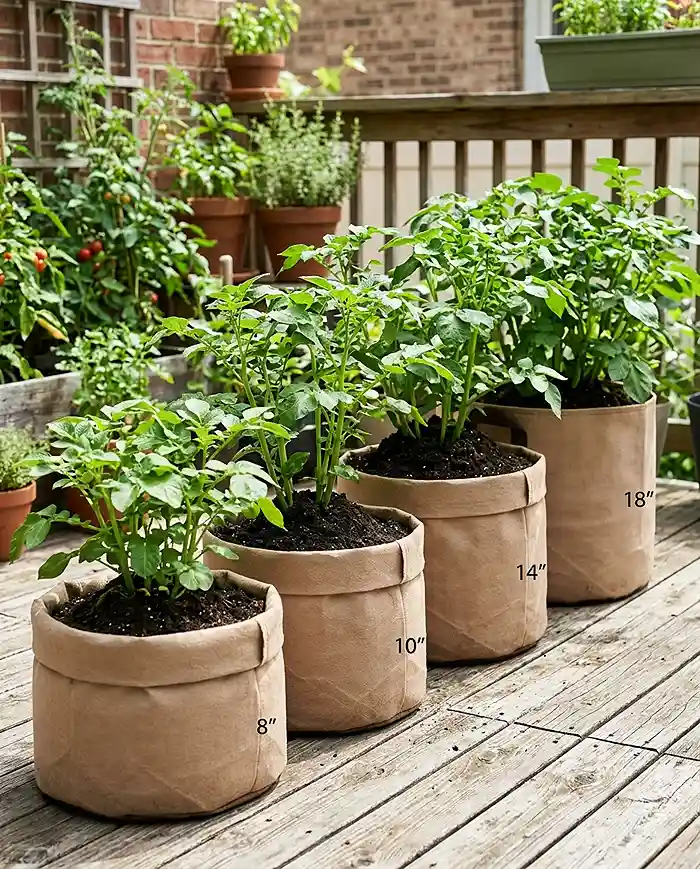
Hilling means you start with 4 inches of soil, plant your seed potatoes, then add more soil as the vines grow, burying most of the stem each time. A 20-gallon bag gives you the roughly 18 inches of depth this technique needs to produce a real harvest instead of a handful of golf-ball-sized tubers.
Preparing Your Grow Bags for Planting
Because fabric bags breathe so efficiently, heavy topsoil straight from a bag of “garden soil” turns into a compacted, waterlogged brick within weeks. Container vegetable gardening needs a different approach to the growing medium than in-ground beds do.
The Ultimate Moisture-Retentive Soil Mix
Quick Answer: Blend high-quality potting soil with 30% coco coir and a generous amount of finished compost. The coir counteracts the rapid evaporation that comes with porous fabric walls.
- 60% quality potting soil (not garden topsoil)
- 30% coco coir, pre-moistened before mixing
- 10% finished compost for slow-release nutrients
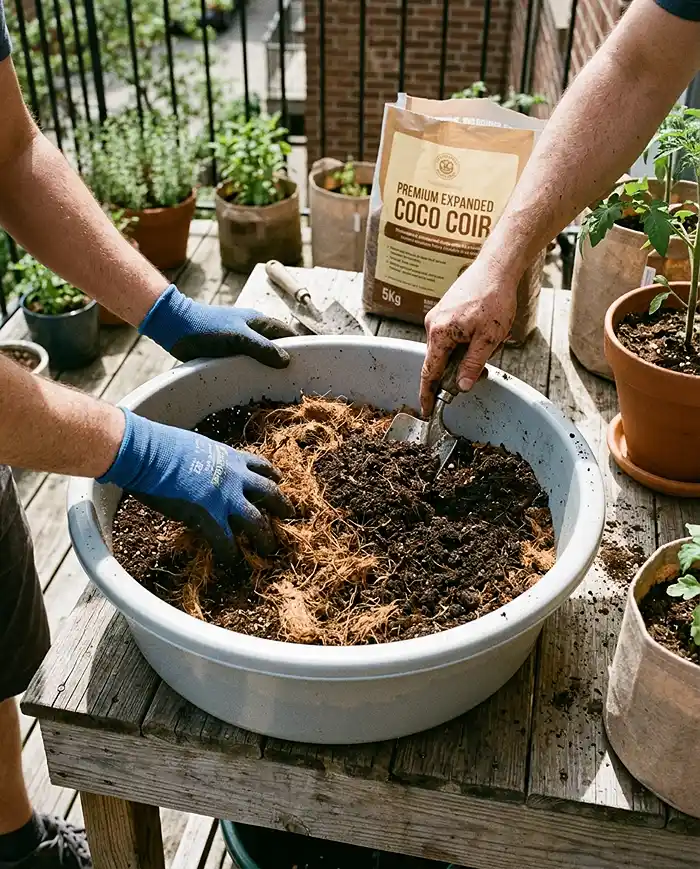
I switched to this exact ratio after my first season of tomatoes in straight potting soil wilted every single afternoon in August. The coir addition cut my watering frequency almost in half the following year.
Surface Protection and Drainage Solutions
Quick Answer: Set bags on heavy-duty plastic drip trays raised on pot feet or wooden slats to keep moisture and soil stains off wood decks or apartment balcony floors.
Raising the bag even half an inch lets air circulate underneath, which stops the dark, damp ring that forms on deck boards left in direct contact with a wet fabric bottom.
Step-by-Step Planting Process for Fabric Pots
Pre-moisten your soil mix in a wheelbarrow or large tub before it ever goes in the bag — dry mix is nearly impossible to wet evenly once it’s packed in. Fill the bag about three-quarters full, then roll the top fabric lip down by 2-3 inches for structural stability.
Plant at the same depth as the nursery pot (tomatoes are the exception — bury them deeper, up to the first set of true leaves). Leave a 2-inch gap between the soil surface and the bag’s rim so watering doesn’t wash soil over the sides.
Finish with a thick layer of straw mulch, at least 2 inches deep. This one step does more to slow evaporation than almost anything else you can do to a fabric pot.
Maintenance: Watering and Feeding Fabric Pots
Grow bags need close to double the watering frequency of plastic pots because the whole surface area is losing moisture, not just the top. Plan on slow, deep soakings rather than quick splashes — a quick splash just wets the top inch and runs straight through.
Feed weekly with a liquid organic fertilizer. Nutrients wash out through the breathable sides faster than they would in a sealed plastic container, so a monthly granular feed just isn’t enough here.
Common Problems and Solutions
Fabric containers come with a couple of quirks plastic pots don’t. Neither of the two below is a sign you’re doing something wrong.
Soil Drying Out Too Quickly
Quick Answer: Bottom-water using a deep saucer, cluster your bags close together to build a humid microclimate, or run a simple drip line to each bag.
Once soil in a fabric bag goes bone dry, it can turn hydrophobic and shed water right off the surface instead of absorbing it. When that happens, set the whole bag in a few inches of water for 20-30 minutes so it can rehydrate from the bottom up.
White Mold or Algae on Bag Exteriors
Quick Answer: White mineral crust or green algae on the outside of a bag is cosmetic and harmless. Scrub it off with a diluted vinegar-water solution if it bothers you.
Both are just mineral deposits from tap water and surface moisture, not a sign of root rot or disease inside the bag. I leave mine alone most seasons and only scrub the ones visible from the street.
For a deeper look at what pairs well together once your bags are planted, check our guide to companion plants for containers, and for late-season swaps, see what to plant in late summer pots. The University of Illinois Extension also has a solid rundown of minimum container sizes by vegetable worth cross-checking against your own setup.
best grow bags for vegetables FAQs
How many years do fabric grow bags last?
High-quality, heavy-duty grow bags generally last 3 to 5 growing seasons. Lifespan depends on UV exposure and whether you empty, wash, and store them indoors over winter rather than leaving them outside year-round.
Can I reuse grow bag soil the following year?
Yes, as long as the previous crop was disease-free. Amend it heavily with fresh compost, worm castings, and a slow-release organic fertilizer to replace the nutrients the last crop used up.
Do I need to punch drainage holes in fabric bags?
No, never puncture a fabric grow bag. The entire porous surface already acts as one large drainage system, which makes overwatering almost impossible compared to a solid plastic pot.
Conclusion
The best grow bags for vegetables come down to three things: heavy 260-300g breathable fabric, reinforced handles, and a size matched to what you’re growing. Get those right and vegetables in pots can genuinely outperform in-ground beds.
Start with one or two bags sized for what you actually eat most, dial in your soil mix, and expand from there once you’ve got a season of results under your belt.
Key Takeaways
- The best grow bags for vegetables use 260-300g non-woven, BPA-free fabric with double-stitched, continuous-loop handles.
- Match bag size to root depth: 5-7 gallon for greens, 10-15 gallon for tomatoes and peppers, 20+ gallon for potatoes and root crops.
- Fill bags with a 60% potting soil, 30% coco coir, 10% compost blend to fight the rapid drying that comes with breathable fabric.
- Water deeply and often — grow bags need close to double the frequency of plastic pots — and feed weekly with a liquid organic fertilizer.
- Never punch drainage holes in a fabric bag; the whole surface already handles that job.