
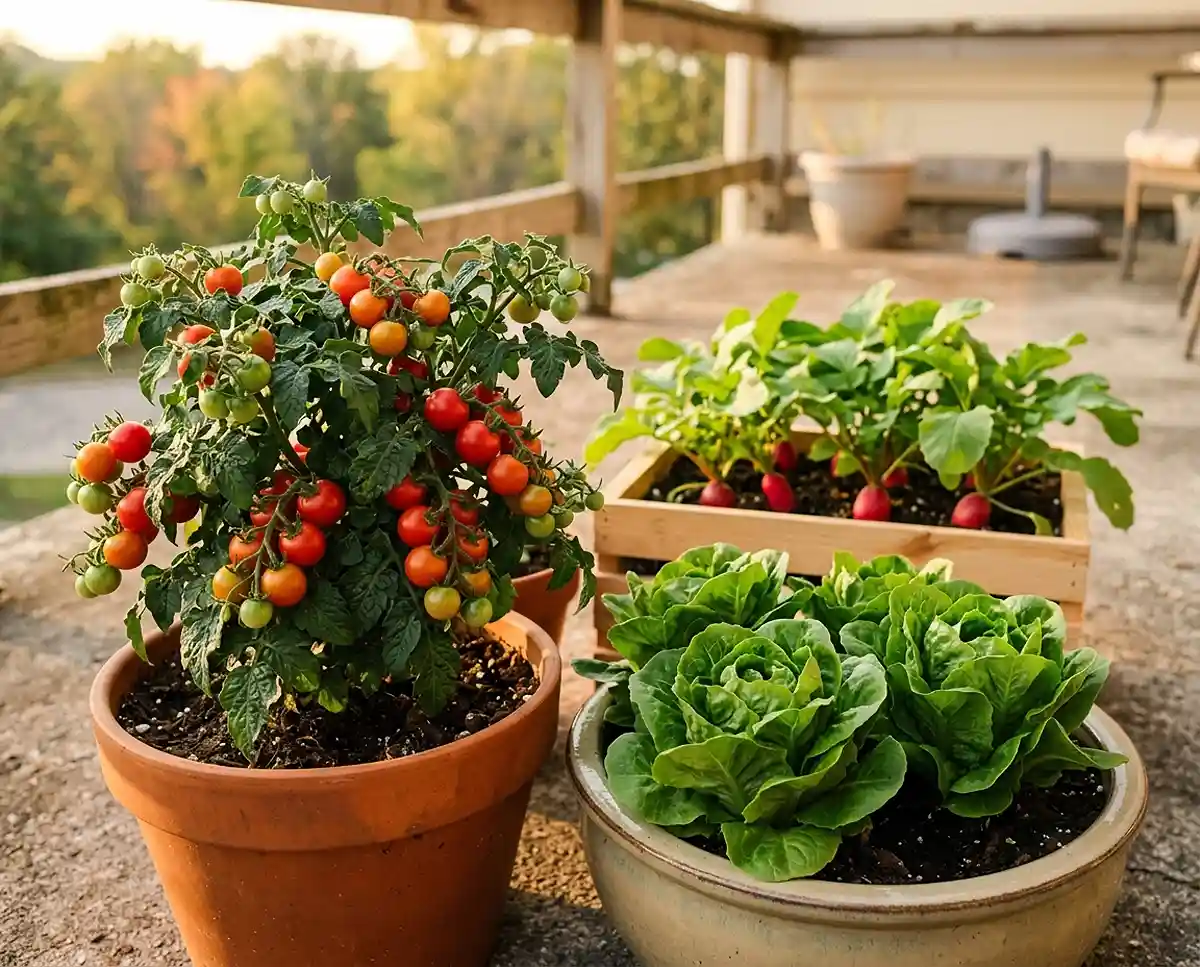
Best dwarf vegetables for pots in late summer
Think your growing season’s over? It’s not. Dwarf vegetables for pots in late summer can still deliver a real harvest before frost hits your containers.
I grow vegetables in pots on a north-facing patio in zone 6b, and late August is one of my favorite planting windows. Everyone thinks it’s too late. It isn’t.
Table of Contents
Why Late Summer Is a Prime Window for Dwarf Container Vegetables
Cooling nights and shorter days actually help fast-maturing crops. Lettuce stops bolting, radishes size up sweeter, and beans set pods without the stress of July heat.
Dwarf varieties finish in 45-65 days, which lines up perfectly with a September planting and an October or early November harvest in most zones.
Last year I direct-sowed Cherry Belle radishes on August 20th in zone 6b and pulled a full crop by September 25th, right on schedule.
What Makes a Vegetable “Dwarf” and Container-Ready
A true container-ready dwarf has three traits: a compact root system under 8-10 inches deep, a bush habit instead of a vine, and a short days-to-maturity window.
- Compact roots that thrive in 5-10 gallon pots without circling or stunting
- Bush or determinate growth habit, so no trellising is needed
- Days-to-maturity under 65 days, ideal for late-season container vegetable gardening
Skip anything labeled “indeterminate” or “vining” this late in the season. Those varieties need more time and space than a late summer container can give.
Best Dwarf Vegetables to Plant in Late Summer Pots
Here’s my go-to lineup for late summer vegetables to plant, based on what’s actually worked in my own pots over the past several seasons.
Dwarf Tomatoes: Tiny Tim and Patio Varieties
Quick Answer: Tiny Tim and Patio Choice Yellow are the fastest dwarf tomatoes, maturing in 45-55 days in a 3-5 gallon pot.
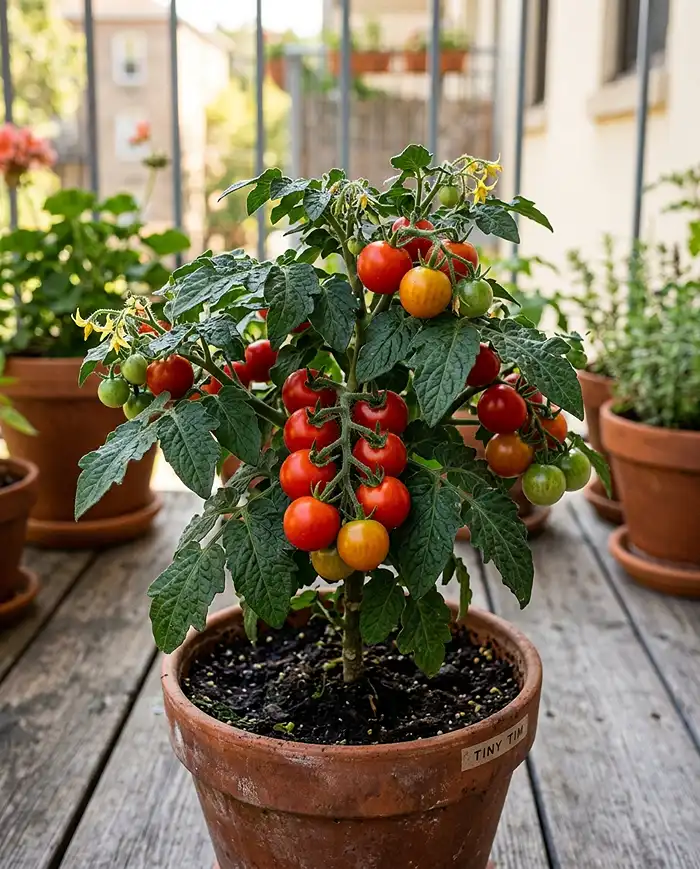
Both stay under 18 inches tall, need no staking, and handle the wobble of wind on a balcony rail better than full-size cherry tomatoes ever did for me.
Real Example: I started Tiny Tim from a nursery start on August 15th, zone 6b, and picked my first ripe fruit by October 1st.
Pro Tip: Pinch off any new flower clusters after mid-September so the plant puts energy into ripening existing fruit instead of setting new ones.
Bush Beans for Quick Late-Season Yield
Quick Answer: Bush bean varieties like Mascotte and Bush Blue Lake 274 mature in 50-60 days and fill container gaps fast.
Mascotte is bred specifically for containers, stays under 15 inches, and holds its pods upright above the foliage for easy picking.
Pro Tip: Sow beans directly into the pot. They dislike root disturbance, so skip starts here even if your window feels tight.
Dwarf Peppers for Continued Warm-Season Harvest
Quick Answer: Redskin and Cayennetta peppers are compact, heat-tolerant, and keep producing into early fall in containers as small as 3 gallons.
These stay under 12 inches tall. If you already have a start going from earlier in the summer, it can often push through to a second flush.
Real Example: My Redskin pepper, planted in June, kept setting fruit through mid-October once I moved the pot to catch full afternoon sun.
Baby Carrots and Radishes for Fast Root Crops
Quick Answer: Thumbelina carrots and Cherry Belle radishes mature in 22-60 days and thrive in pots as shallow as 8-10 inches.
- Cherry Belle radish: 22-24 days, ideal for a quick confidence-boosting harvest
- French Breakfast radish: 25-28 days, milder and slightly elongated
- Thumbelina carrot: 55-60 days, round-rooted and shallow, perfect for pots
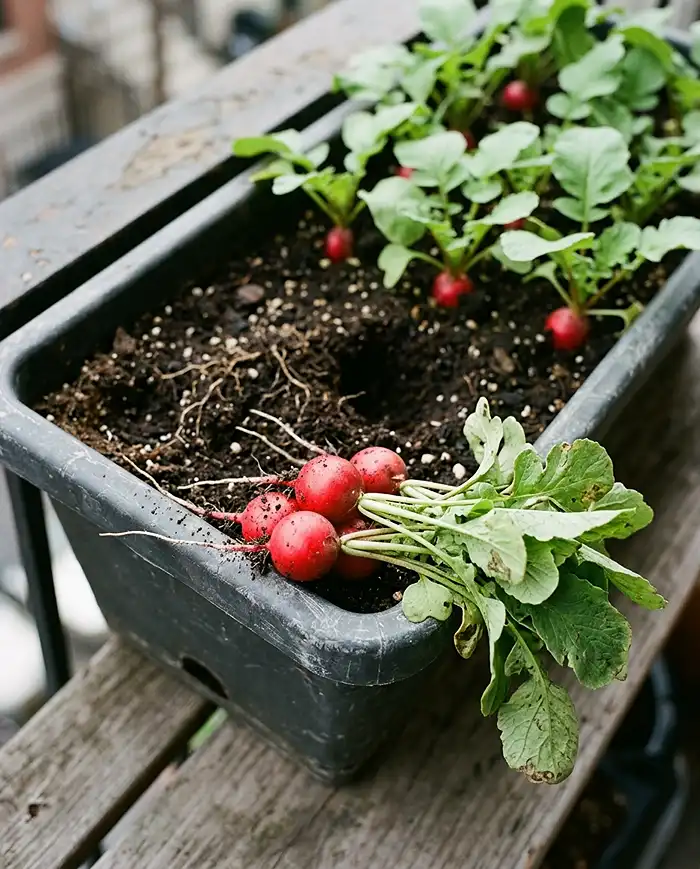
Pro Tip: Thin carrot seedlings to 2 inches apart. Crowded roots stay stubby and misshapen, especially in a container’s tighter soil volume.
Compact Lettuce and Leafy Greens for Cool-Down Harvests
Quick Answer: Tom Thumb lettuce and baby spinach mature in 28-45 days and actually improve in flavor as late summer temperatures drop.
These greens are a cornerstone of any small space food garden because you can cut-and-come-again from a single 6-inch pot for weeks.
Real Example: My Tom Thumb lettuce, sown September 5th, gave me three separate cuttings before a hard frost finally ended it in mid-November.
Bush Cucumbers for Space-Efficient Late Crops
Quick Answer: Bush Champion and Spacemaster 80 cucumbers mature in 55-60 days and stay compact enough for a 5-gallon pot.
Both varieties produce full-size fruit on vines that only reach 2-3 feet, so no trellis is required even on a small patio.
Pro Tip: Give bush cucumbers consistent water. A single dry afternoon in early fall can turn fruit bitter fast.
Timing Your Late Summer Planting for Success
Work backward from your average first frost date. Add a 1-2 week buffer, since container soil cools faster than ground soil once fall arrives.
| Vegetable | Days to Maturity | Latest Sow Date (Zone 6b, Oct 15 frost) |
|---|---|---|
| Cherry Belle Radish | 22-24 days | September 20 |
| Tom Thumb Lettuce | 28-45 days | September 1 |
| Mascotte Bush Bean | 50-60 days | August 15 |
| Tiny Tim Tomato (start) | 45-55 days | August 20 |
| Bush Champion Cucumber | 55-60 days | August 15 |
Container Size and Soil Prep for Late-Season Planting
Match pot size to root depth: 6-8 inches for radishes and lettuce, 3-5 gallons for tomatoes and peppers, 5 gallons for beans and cucumbers.
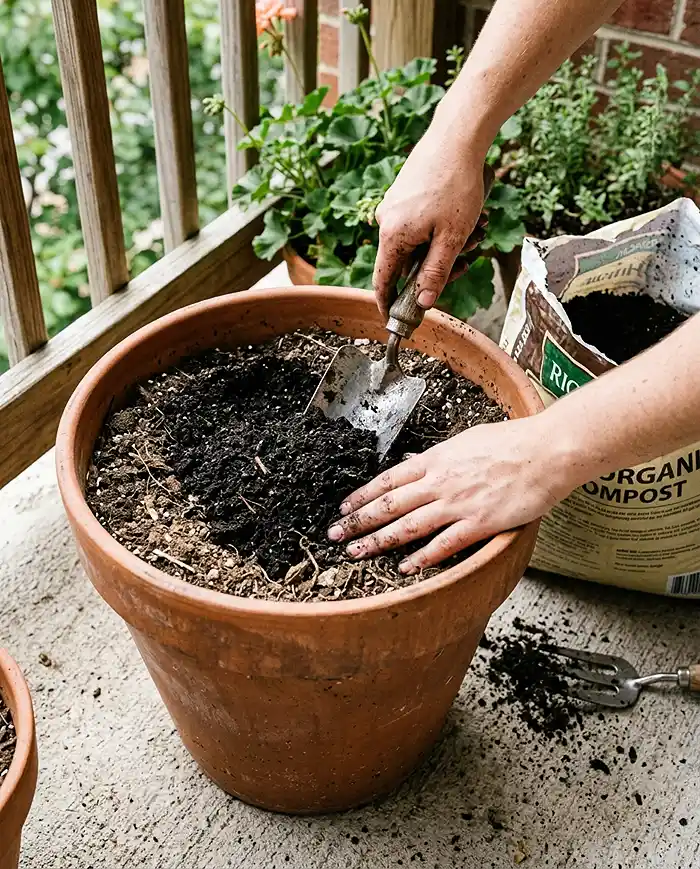
Before this second planting round, refresh the top third of soil with fresh compost. Summer crops have already pulled most available nitrogen and potassium.
Check our full pot size guide for vegetables if you’re unsure what container fits which crop.
Materials and Tools Checklist for Late Summer Container Planting
- Appropriately sized pots with drainage holes (6-8 inches for greens, 3-5 gallons for larger crops)
- Fresh potting mix or compost amendment to replace depleted summer soil
- Seeds or nursery starts, depending on your remaining frost-free window
- Shade cloth (30-40 percent) for the first week if daytime heat is still intense
- Balanced, slow-release fertilizer to fuel this second growth cycle
Step-by-Step: Planting Dwarf Vegetables in Late Summer
Step 1 – Refresh or Replace Container Soil
Pull any spent summer plants, roots and all. Loosen the remaining soil and mix in 2-3 inches of fresh compost before planting anything new.
Step 2 – Choose Starts Over Seeds When Time Is Short
If you have fewer than 8 weeks before frost, buy nursery starts for tomatoes and peppers. Seeds work fine for beans, radishes, and greens.
Step 3 – Plant and Provide Transitional Care
Water deeply right after planting, then daily for the first week if temperatures are still above 80°F. Shade cloth helps new roots establish without wilting.
Protecting Late-Season Containers as Temperatures Drop
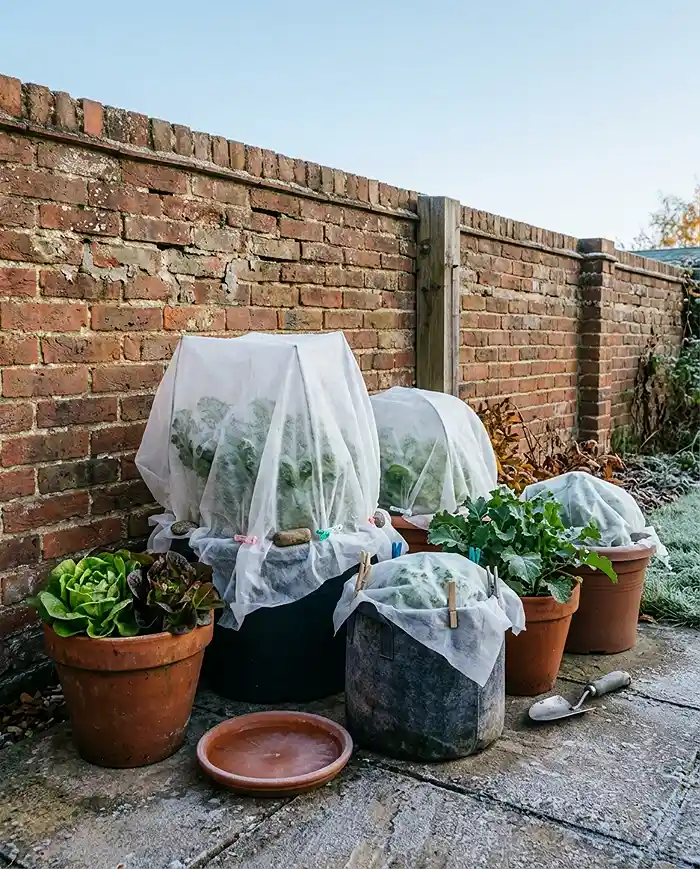
As nights cool into the 40s, move pots to a sheltered spot near a south-facing wall, which can buy you an extra 5-7 degrees of protection.
Row covers or simple cloches work well for a light frost. For anything below 28°F, bring containers indoors overnight or into an unheated garage.
Regional Considerations for Frost Dates and Hardiness Zones
First frost timing swings widely by zone. Zone 5 gardeners may see frost by late September, while zone 8 gardeners often have until mid-November.
To find your latest safe planting date, subtract each vegetable’s days-to-maturity, plus a 10-day buffer, from your zone’s average first frost date.
Common Problems & Solutions
Plants Not Maturing Before First Frost
Count backward from your frost date immediately. If a variety won’t finish in time, swap it for a faster one, like radishes instead of carrots.
Heat Stress During the Late Summer Establishment Period
Use 30-40 percent shade cloth for the first 5-7 days after transplanting, and water every morning until nighttime temperatures consistently drop below 75°F.
Poor Germination in Warm, Dry Late-Summer Soil
Keep soil consistently moist, not soggy, by watering lightly twice a day. Starting seeds in trays indoors first can also boost germination rates significantly.
For crops that pair well together in the same pot, see our companion plants for containers guide.
Frequently Asked Questions
What vegetables can I still plant in pots in late summer?
Bush beans, radishes, dwarf tomatoes, compact lettuce, and bush cucumbers are all strong choices. Each matures in under 65 days, which fits comfortably into most late summer container vegetable gardening windows before frost.
How do I know if I have enough time before frost?
Subtract the vegetable’s days-to-maturity, plus a 7-10 day buffer, from your area’s average first frost date. If the resulting date has already passed, choose a faster-maturing variety instead.
Do dwarf vegetables taste different from full-size varieties?
No, flavor is generally comparable to standard varieties. The main differences are plant size, root depth, and total yield per plant, not taste.
Can I start dwarf vegetables from seed in late summer or should I buy starts?
Buy nursery starts if you have fewer than 8 weeks before frost, especially for tomatoes and peppers. Seeds work well for beans, radishes, and leafy greens with 8 or more weeks remaining.
What size pot do dwarf vegetables need?
Radishes and lettuce do fine in 6-8 inch pots, while tomatoes, peppers, beans, and cucumbers need 3-5 gallon containers for healthy root development.
Conclusion
Dwarf vegetables for pots in late summer turn a “season’s over” moment into one more solid harvest, no garden bed required.
Pick your fastest-maturing varieties, refresh your soil, and count backward from your frost date. That’s really all it takes.
For more crop ideas this time of year, check our guide on vegetables to plant in late summer in pots.
Key Takeaways
- Dwarf vegetables for pots in late summer thrive because cooler nights and shorter days suit fast-maturing, compact crops.
- Count backward from your first frost date, adding a 7-10 day buffer, before choosing seeds or starts.
- Refresh container soil with compost between summer and late-season plantings to replace depleted nutrients.
- Bush beans, radishes, dwarf tomatoes, and compact lettuce offer the fastest, most reliable late-season yields.
- Protect containers with row covers or by relocating them as nighttime temperatures approach freezing.