
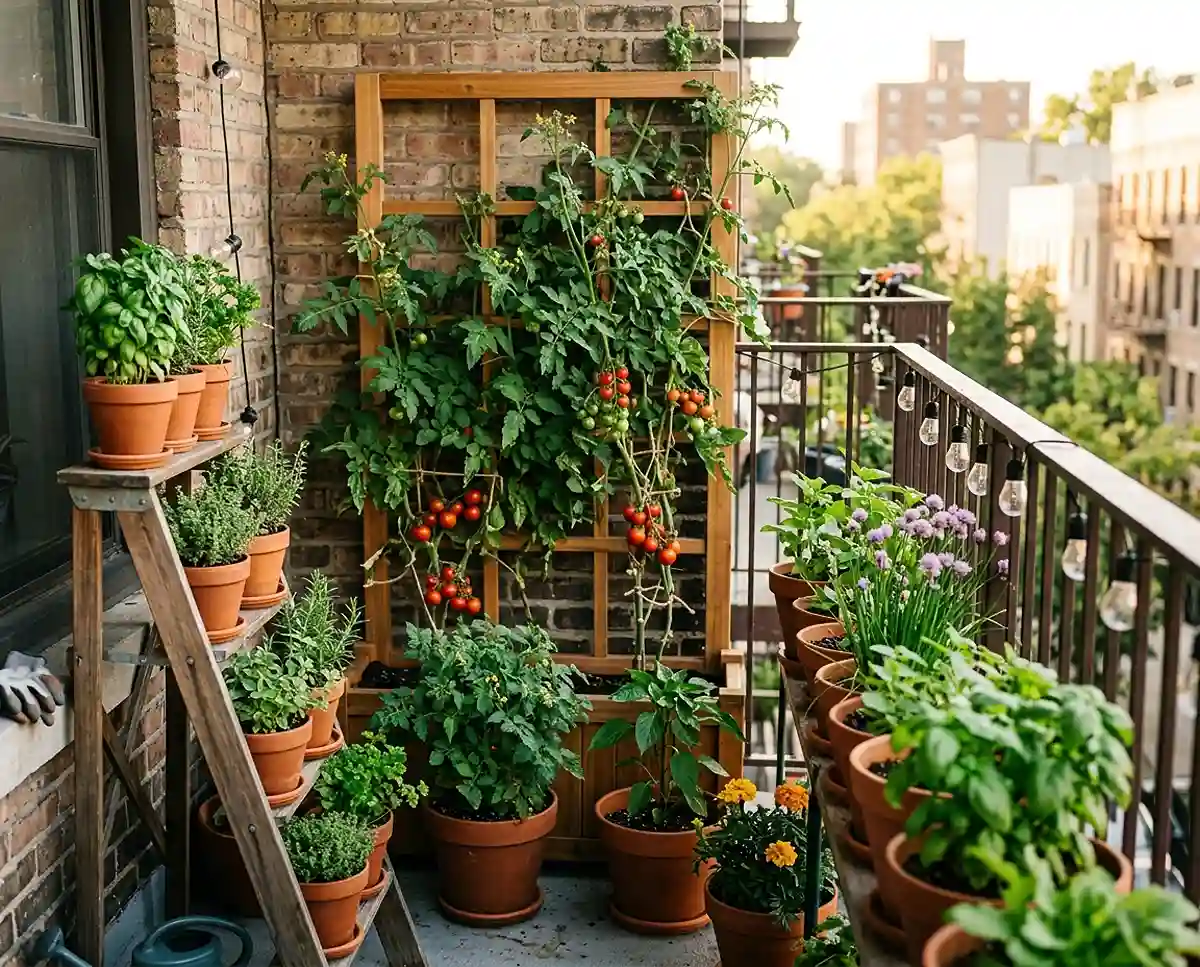
Small Patio Garden Layout With Herbs and Vegetables
Want a small patio garden layout with herbs and vegetables that actually produces? Here’s the zoning system I use on my own 8×10 balcony to fit both without anyone starving for sun.
Table of Contents
Why Combining Herbs and Vegetables Makes Sense on a Small Patio
Growing herbs and vegetables together isn’t just space-saving, it’s smart small space gardening. Basil planted near tomatoes repels aphids and hornworm moths, while chives around lettuce deter slugs.
You also cut kitchen trips in half. I grow oregano two feet from my grill, which means dinner prep doesn’t require a shopping trip mid-recipe.
On a patio under 100 square feet, separating edibles into “herb section” and “vegetable section” wastes precious real estate you don’t have.
Assessing Your Patio Before Designing the Layout
Mapping Sunlight Hours Across the Space
Before buying a single pot, track sun exposure hourly for one full day. Snap a phone photo every hour from 8am to 6pm and note shadow lines.
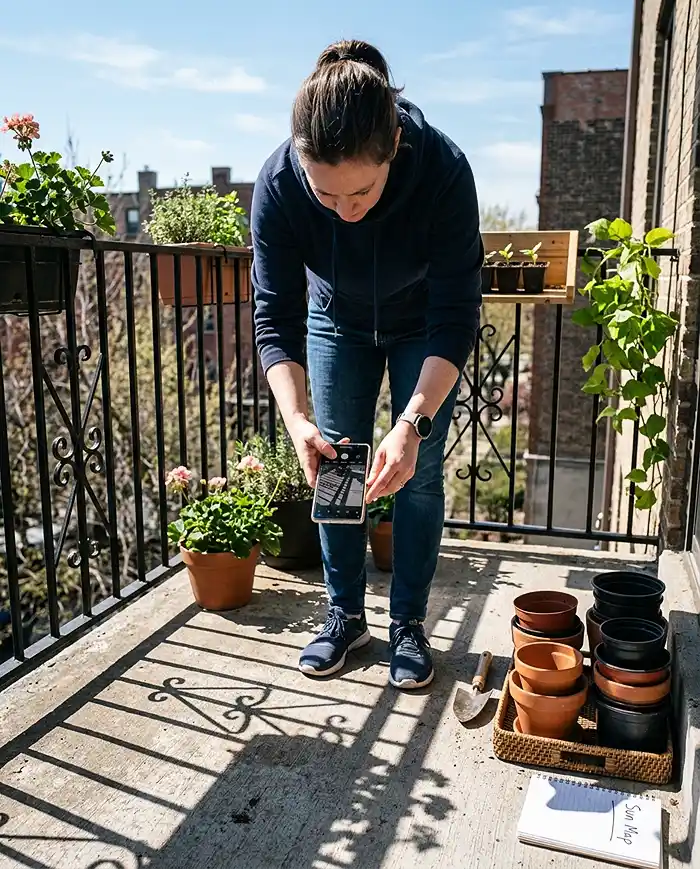
Fruiting vegetables like tomatoes and peppers need 6+ hours of direct sun. Shade-tolerant herbs, including mint, parsley, and cilantro, tolerate 4 hours and even afternoon shade.
On my zone 6b balcony, the east railing gets 5 hours of morning sun. That’s where my parsley and cilantro live now, after two failed tomato attempts there.
Measuring Floor Space and Walkways
Reserve at least 30 inches of clear walkway for foot traffic and chair movement. That’s non-negotiable if you actually want to sit out there.
- Corners: perfect for vertical trellises or tiered stands
- Railings: ideal for lightweight railing planters with herbs
- Wall space: mount hooks for hanging baskets of trailing thyme
- Floor edges: line with grow bags for shallow-rooted greens
Measure twice. I once crammed a 24-inch tomato pot into a walkway and spent all July stepping around it.
Core Layout Strategies for Small Patio Gardens
Zoning by Plant Height and Sun Need
Put tall vegetables like indeterminate tomatoes or pole beans toward the back or center of your small patio garden. Their height won’t block light from shorter plants there.
Ring the perimeter with herbs and low growers: thyme, chives, lettuce, and strawberries. Everyone gets even light instead of fighting over it.
This single change fixed my worst early mistake, a row of zucchini that shaded out an entire basil crop by mid-July.
Grouping by Water and Feeding Requirements
Heavy feeders like tomatoes, peppers, and squash want rich soil and weekly feeding. Mediterranean herbs like rosemary, thyme, and sage prefer lean soil and minimal fertilizer.
Mixing them in one container means overfeeding your herbs into leggy, flavorless growth, or starving your vegetables. Group by need, not by convenience.
| Group | Examples | Watering Frequency |
|---|---|---|
| Heavy feeders | Tomatoes, peppers, squash | Daily in summer heat |
| Moderate feeders | Lettuce, basil, chives | Every 2-3 days |
| Lean-soil herbs | Rosemary, thyme, sage, oregano | Once weekly, let soil dry |
Using Vertical Structures to Multiply Growing Area
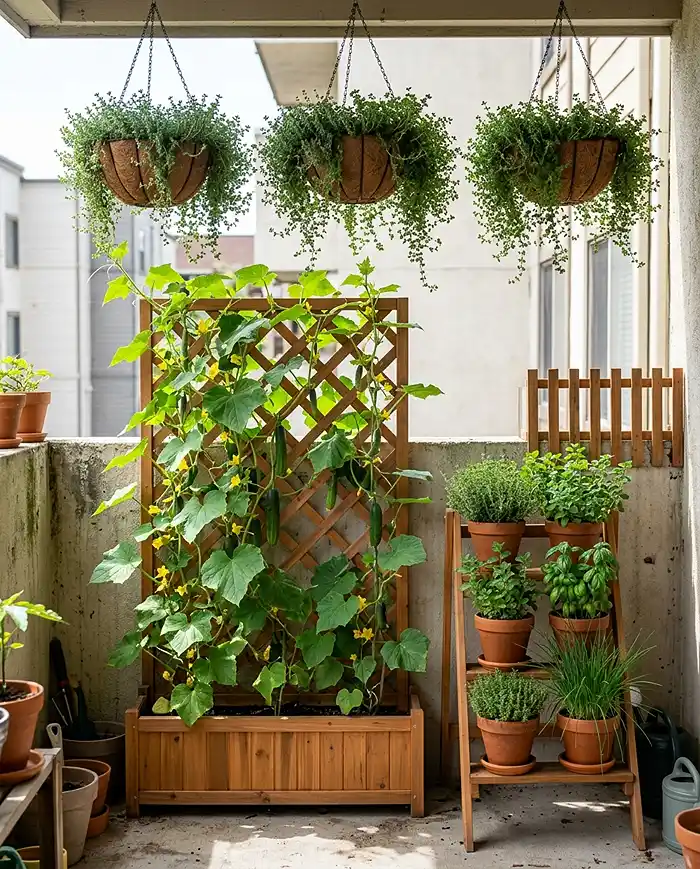
A single 4-foot trellis can double your growing area without stealing an inch of floor space. I run cucumbers up mine against the wall each June.
- Tiered plant stands: stack 3 levels of herbs in the footprint of one pot
- Railing planters: add 6-10 linear feet of planting without touching the floor
- Wall-mounted trellises: support pole beans, peas, or cucumbers
- Hanging baskets: perfect for trailing strawberries or cascading thyme
Best Herb and Vegetable Pairings for Container Layouts
These pairings come from years of trial and error, not theory. They share light, water, and soil needs, which is the real test of a good companion pairing.
- Tomato, basil, marigold: classic trio, marigold repels nematodes and whiteflies
- Pepper, chives: chives deter aphids without competing for root space
- Lettuce, parsley, nasturtium: nasturtium acts as a trap crop for aphids
- Zucchini, dill: dill attracts beneficial predatory wasps
- Strawberry, thyme: both love lean, well-drained soil and full sun
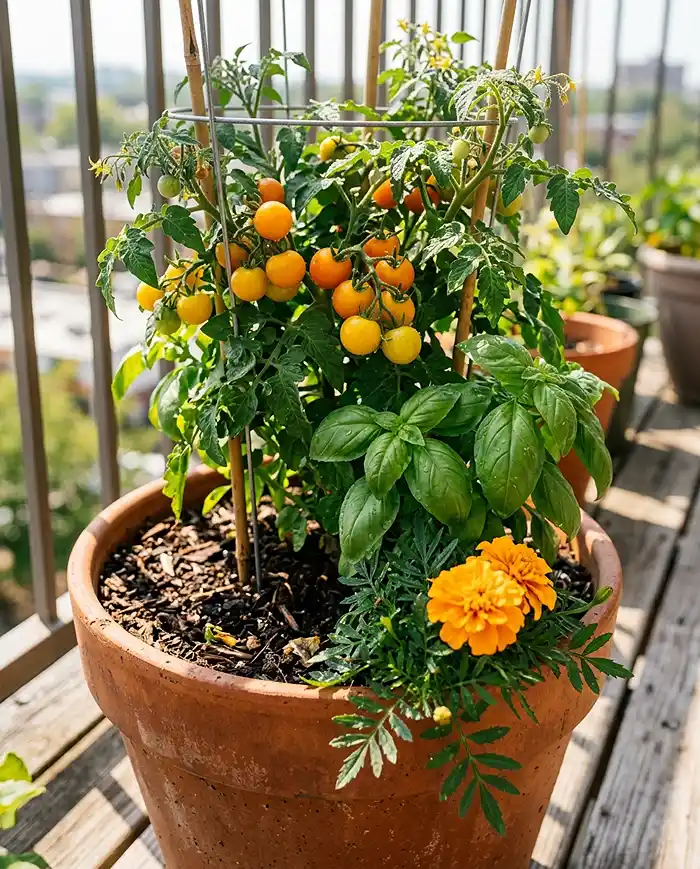
My tomato-basil-marigold container has outproduced every solo tomato pot I’ve grown since 2019.
Choosing Containers and Sizing for Mixed Plantings
Root depth decides whether plants can share a pot. Match container size to the deepest-rooted plant in the group, not the shallowest.
| Container Size | Best For | Notes |
|---|---|---|
| 5 gallon | Single tomato or pepper plant | Needs daily watering in heat |
| 10-15 gallon | Tomato plus 2-3 basil plants | Shared feeding schedule works well |
| 3-5 gallon | Herb trios like thyme, oregano, chives | Use unglazed terracotta for drainage |
| 12+ inch deep | Carrots or potatoes | Depth matters more than width here |
Materials and Tools Checklist for Your Patio Garden Setup
Here’s exactly what I keep on hand for a mixed herb and vegetable patio setup, small space gardening version.
- Assorted containers: 3-gallon, 10-gallon, and 15-gallon sizes
- One 4-6 foot trellis or bamboo stakes for climbers
- Quality potting mix with perlite, avoid garden soil in containers
- Drip trays to protect flooring and retain moisture
- Watering can with a narrow spout, or a hose with a shower-head attachment
- Pruning snips for deadheading and herb harvesting
Step-by-Step: Designing and Planting Your Patio Layout
Step 1: Sketch Your Zones on Paper
Draw your patio to rough scale and mark sun zones from your earlier tracking. Assign height groups, herbs, and vegetables to specific areas before buying anything.
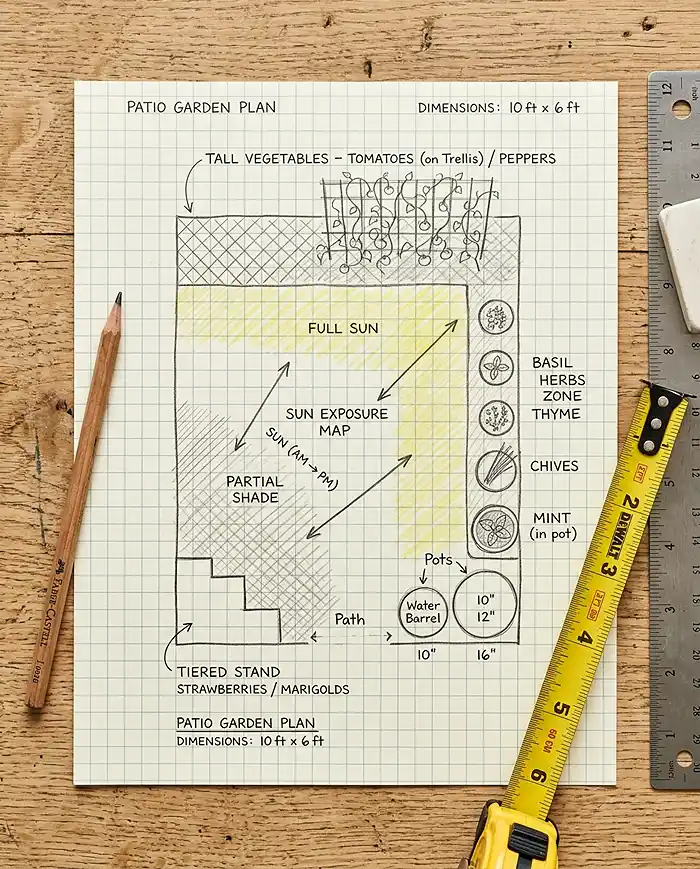
This 10-minute sketch saved me from buying three pots that never would have fit.
Step 2: Install Vertical Structures and Larger Containers First
Place trellises and your biggest vegetable pots first since they anchor the whole tiny garden idea. Fill in around them with smaller herb containers after.
Step 3: Plant by Compatibility and Harvest Access
Put frequently harvested herbs, like basil and chives, closest to your door. Finish with companion plants for pest control further out.
Watering and Feeding Strategy for Mixed Plantings
Group containers by thirst level so you’re not overwatering herbs while shorting your tomatoes. This single habit prevents most root rot I see on patios.
Feed heavy-feeding vegetables every 2 weeks with a balanced liquid fertilizer. Skip feeding lean-soil herbs almost entirely, they perform better a little neglected.
Self-watering containers are worth it for anyone who travels. I switched my basil to one after a work trip cost me an entire plant.
Seasonal Rotation for Continuous Harvests
Spring and Summer Planting Priorities
Start warm-season vegetables like tomatoes and peppers after your last frost date. Succession-sow lettuce and cilantro every 2-3 weeks for continuous harvest through summer.
Fall Transition and Cool-Season Swaps
As tomatoes finish in September, swap in cold-hardy greens like kale and spinach. Parsley and chives handle light frost fine and often survive into November.
Regional Considerations for Climate and Hardiness Zones
Your USDA hardiness zone shapes both timing and plant choice for any small patio garden. Gardeners in zone 9 or 10 can grow rosemary as a perennial, while zone 5 gardeners treat it as an annual.
Rainfall matters too. Arid climates need daily watering for shallow containers, while humid Southeast gardens should watch for fungal issues in crowded plantings.
Common Problems and Solutions
Overcrowding Reducing Yield and Airflow
Stunted growth, yellowing lower leaves, and powdery mildew usually mean overcrowding. Thin plants and add 4-6 inches of spacing between containers to restore airflow.
One Plant Type Shading Out Another
If herbs look leggy and pale, a taller vegetable is likely stealing their light. Move the tall plant toward the back or center of your layout.
Inconsistent Watering Causing Stress in Mixed Containers
Wilting one day and waterlogged the next signals mismatched water needs sharing a pot. Regroup plants by thirst level or switch to self-watering containers.
small patio garden layout with herbs and vegetables FAQs
Can I grow vegetables and herbs together in the same container?
Yes, as long as they share similar sun and water needs. Tomato and basil is the classic example, since both want full sun and consistent moisture.
What’s the best layout for a small patio vegetable and herb garden?
Zone by plant height and sun need, placing tall vegetables toward the back or center and herbs along the edges. Add vertical structures like trellises and railing planters to maximize growing area.
How much sun do patio vegetables and herbs need?
Fruiting vegetables like tomatoes and peppers need 6 or more hours of direct sun daily. Most herbs tolerate 4 to 6 hours, with some, like mint and parsley, handling partial shade.
How do I keep a small patio garden from feeling overcrowded?
Use vertical growing structures like trellises and tiered stands to add space without expanding the footprint. Regularly edit out underperforming plants to protect airflow and yield.
How big of a container do herbs and vegetables need on a patio?
Shallow-rooted herbs do fine in 3 to 5 gallon pots, while tomatoes and peppers need at least 10 to 15 gallons. Match container size to your deepest-rooted plant in any mixed grouping.
Conclusion and Key Takeaways
A working small patio garden layout with herbs and vegetables comes down to zoning by sun, height, and water need, then adding vertical structures to multiply space.
Check out this detailed patio layout guide and these space-saving small garden ideas for more tiny garden ideas to build on this plan.
New to container growing altogether? Start with our apartment gardening for beginners guide before you buy your first pot.
- Zone by sun exposure and plant height before buying containers
- Group plants by water and feeding needs, not just by type
- Use trellises, tiered stands, and railing planters to multiply space
- Match container size to root depth for any shared planting
- Rotate seasonally to keep your small patio garden layout with herbs and vegetables producing year-round