
Hanging Herb Garden Kitchen Window Ideas
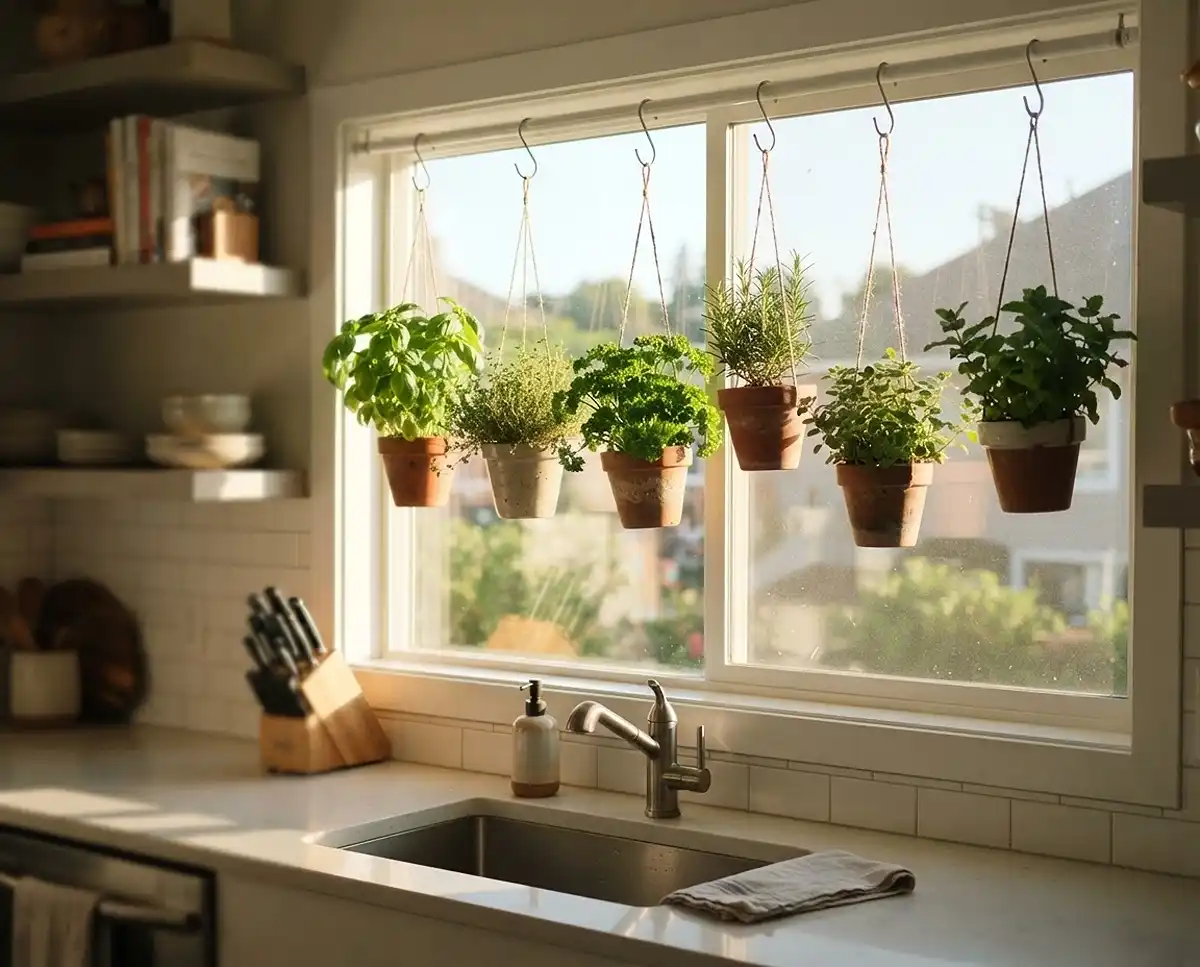
A hanging herb garden kitchen window transforms the unused space over your kitchen window into a practical spice rack. These herb garden ideas save counter space, use free sunlight, and put fresh basil within arm’s reach of your cutting board.
I grow a five-pot hanging setup over my east-facing kitchen sink in zone 6b, and it’s the single best small-space upgrade I’ve made in six years of apartment gardening. No more wilted grocery-store cilantro going slimy in the crisper.
Table of Contents
Why a Hanging Herb Garden Is Perfect for Your Kitchen Window
Counter space in most kitchens is at a premium, and a windowsill herb pot eats into prep room fast. Hanging the herbs above the glass instead solves that instantly. You get the same direct light a windowsill offers, but the counter underneath stays clear for cutting boards and dish racks.
There’s a practical cooking win too. Herbs hung at eye level over the sink mean you snip a sprig of thyme mid-recipe instead of digging through the fridge. It’s the kind of small-space gardening trick that pays off every single dinner.
Assessing Your Window’s Light and Structural Suitability
Reading Your Window’s Sun Exposure
South-facing windows get the most consistent, intense light, usually 6 or more hours daily, and suit sun-hungry herbs like basil and rosemary. East-facing windows give a gentler morning burst, good for parsley and chives. West-facing windows deliver hot afternoon sun that can scorch tender leaves. North-facing windows are the toughest spot; stick to shade-tolerant herbs like mint.
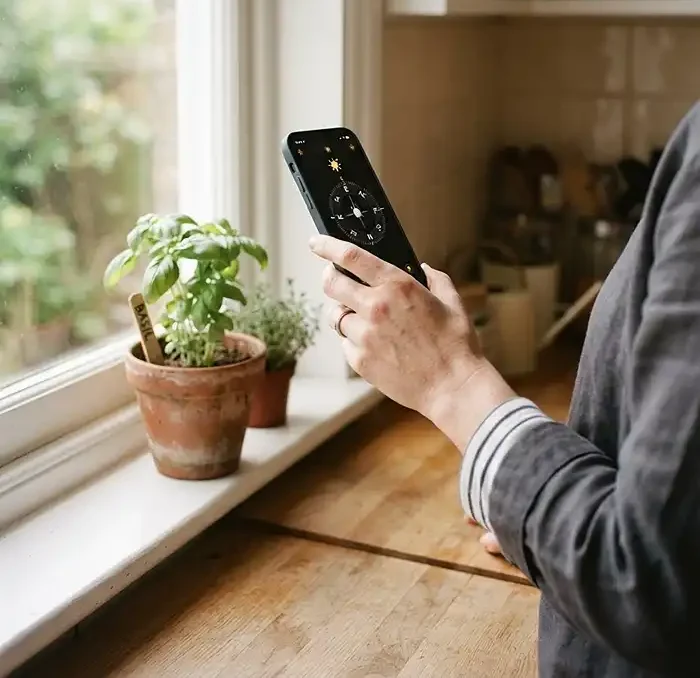
Watch your window for a full day before committing. I assumed my kitchen window was west-facing for a year and lost two rosemary plants to leaf scorch before I checked with a compass app and realized it faced southwest.
Checking Weight Limits and Mounting Surfaces
Curtain rods are rated for fabric, not wet soil, so don’t trust them with more than one small pot. Tension rods work for lightweight plastic containers under a pound each. Drilling into the window frame or an adjacent stud gives you real weight capacity, up to 15-20 pounds per anchor with a proper toggle bolt.
Ceiling anchors near the window are the sturdiest option for anything heavier, like ceramic pots or a full mason jar rack.
Choosing the Best Herbs for a Hanging Kitchen Garden
Match your herb picks to the light reading you just took. Full-sun herbs need at least 6 hours of direct light; partial-light herbs tolerate 3-4 hours and bright indirect light the rest of the day.
- Basil (Genovese or Thai varieties) — full sun, bushy habit, pinch weekly to prevent legginess
- Thyme — full sun, trailing growth habit that looks great spilling out of a hanging pot
- Rosemary — full sun, slow-growing, needs excellent drainage to avoid root rot
- Mint — partial light, aggressive spreader, best kept solo in its own pot
- Parsley — partial light, tolerates the gentler east-window morning sun well
- Chives — partial light, compact and forgiving for beginners
Curly parsley bolted (went to seed early) on me twice in a too-warm west window before I moved it to a cooler east-facing spot, where it’s been productive for four months straight.
Materials and Tools You’ll Need
Here’s the concrete shopping list I actually used for my own setup, roughly $45 total at a hardware store.
| Item | Purpose | Approx. Cost |
|---|---|---|
| Tension or curtain rod (28-48 in.) | Main support across window | $10-18 |
| S-hooks (set of 6) | Hang pots from the rod | $5 |
| Macrame hangers | Suspend pots at staggered heights | $4-8 each |
| Lightweight pots with drainage | Housing for each herb | $3-7 each |
| Potting mix (not garden soil) | Well-drained growing medium | $8-12 |
| Drill and wall anchors | Secure mounting into frame/wall | $10-20 |
| Drip trays | Catch overflow water | $1-3 each |
Popular Hanging Herb Garden Styles to Try
Mason Jar Wall-Mounted Herb Rack
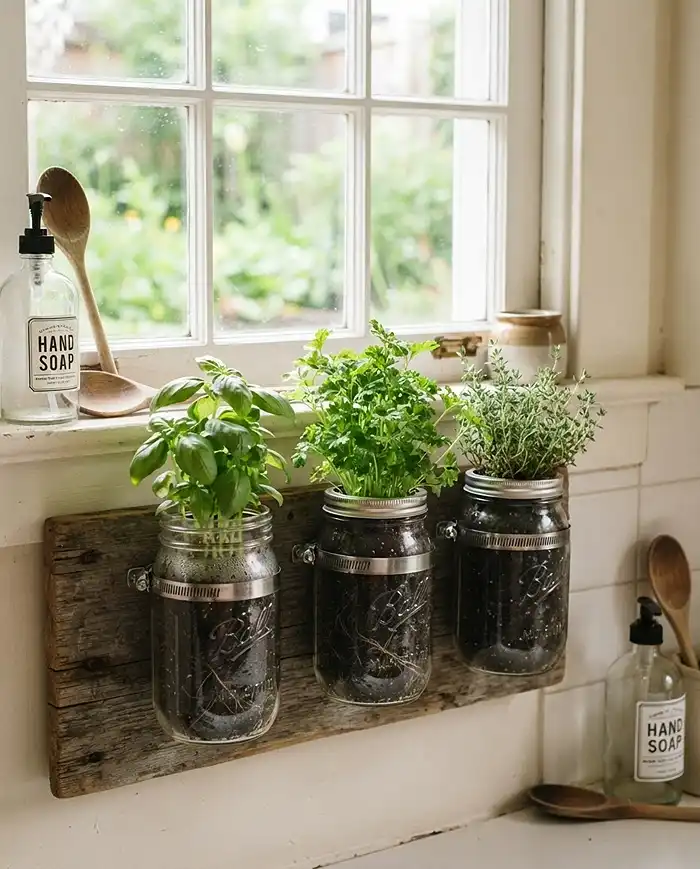
Screw pipe clamps or a slotted wooden board directly below the window frame, then slide mason jars into the clamps. This style keeps herbs low enough to see clearly and works well in kitchens without much overhead clearance. It’s sturdy, cheap, and easy to remove jars for watering at the sink.
Macrame Hanger Herb Pots
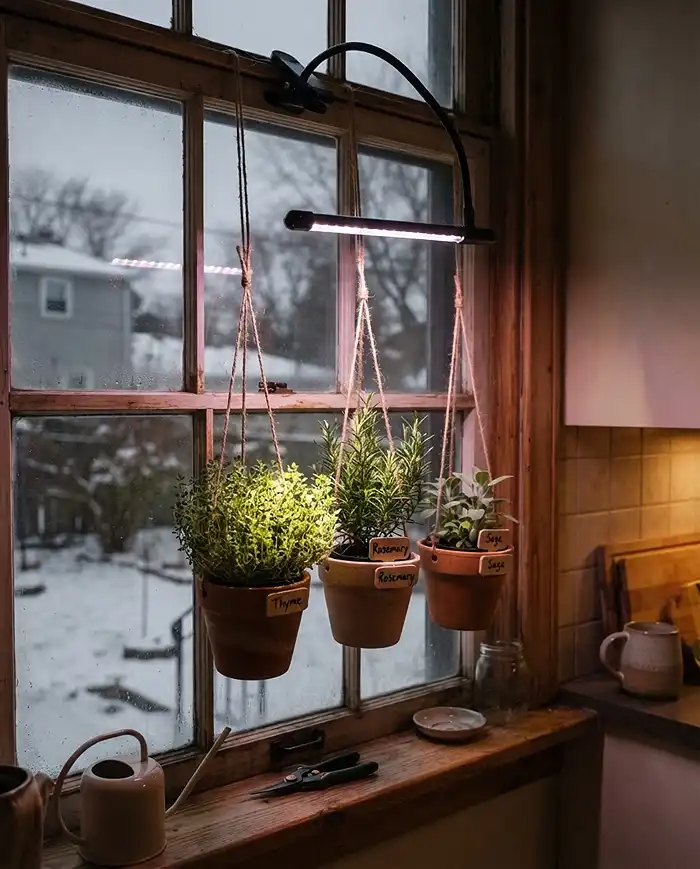
Hang individual pots at staggered heights from a tension rod or a ceiling hook using macrame hangers. Staggering heights, say 6 inches apart, keeps taller herbs like rosemary from shading shorter ones like thyme. It’s the look most people picture when they think of vertical gardening indoors.
Window-Mounted Shelf or Floating Ledge System
Slim floating shelves installed across the window, spaced 8-10 inches apart vertically, create a tiered display without any hanging hardware. This works especially well on windows with deep trim, since the shelf brackets have something solid to anchor into.
Tension Rod Suspended Planter Line
A tension rod wedged inside the window frame, fitted with S-hooks, lets you suspend small pots right at plant-eye level with zero drilling. It’s the fastest setup to install and just as fast to take down if you’re renting.
Step-by-Step Installation Guide
Step 1 – Measure and Mark Mounting Points
Measure your window’s full width and subtract 2 inches on each side for clearance. Divide that number by the pot count to space hangers evenly, then mark each anchor or hook point lightly in pencil before drilling anything.
Step 2 – Install Hardware and Test Weight
Secure your rod, hooks, or shelf brackets according to the packaging instructions, using wall anchors in drywall or toggle bolts for anything over 10 pounds. Hang the empty pots first and let them sit for a day to confirm nothing shifts or sags.
Step 3 – Plant and Arrange Herbs
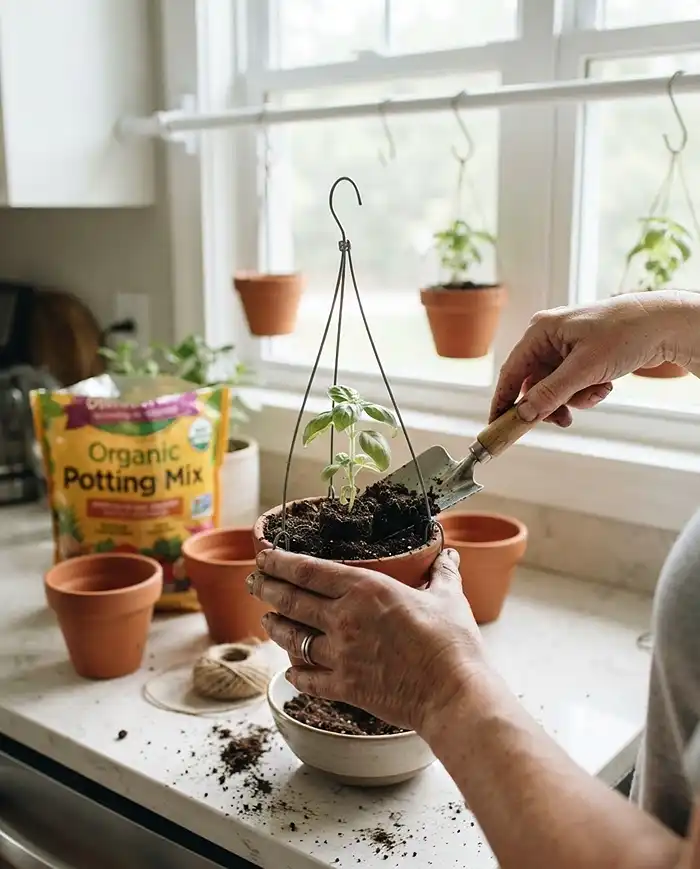
Fill each pot two-thirds with potting mix, plant your herb at the same depth it sat in its nursery pot, and top off with more mix. Place taller herbs like rosemary toward the back or center so they don’t block light from shorter, sun-loving neighbors.
Watering and Drainage Solutions for Hanging Herbs
Overwatering, not underwatering, kills most hanging herbs. Check soil moisture with a finger before watering; if the top inch is dry, water until it drains from the bottom.
Drip trays under each pot catch runoff before it hits your counter or floor. Self-watering pots with a built-in reservoir cut watering frequency down to once every 5-7 days, which is handy if you travel often. In my kitchen, basil in a standard pot needs water every 2-3 days in summer; the self-watering mint pot next to it needs it once a week.
Seasonal Care and Maintenance
Spring and Summer Growth Management
Prune and harvest regularly during peak growing months; taking the top third off basil every week actually speeds up new growth. Rotate each pot a quarter turn weekly so all sides get even light, since hanging pots near glass often lean toward the brightest spot.
Fall and Winter Light Adjustments
As daylight hours shrink, move pots as close to the glass as safely possible without touching cold panes. A small clip-on grow light running 12-14 hours a day makes up the difference; I run one over my thyme and rosemary from November through February.
Regional and Climate Considerations
Your USDA hardiness zone matters less indoors than your home’s heating and humidity levels. Dry forced-air heat in northern zones (5-7) can dehydrate herbs fast in winter, so I mist mine or run a small humidifier nearby. In humid Gulf Coast climates, the same herbs may need less frequent watering but better airflow to prevent fungal issues on leaves.
Common Problems & Solutions
Leggy or Weak Herb Growth
Thin, stretched stems almost always mean insufficient light. Rotate the pot toward the brightest angle, or add a grow light if the window simply doesn’t deliver enough hours, especially in winter.
Water Dripping onto Counters or Floors
This is a drainage placement problem, not a watering problem. Add a drip tray under every pot, switch to self-watering containers, or water pots in the sink and let them fully drain before rehanging.
Herbs Wilting Despite Regular Watering
Check for root-bound roots circling the pot’s bottom, poor drainage holes, or heat stress from a pot sitting too close to hot glass in a west window. Repotting into a slightly larger container usually fixes root-bound wilting within a week or two.
For more layout inspiration, this roundup of hanging herb garden ideas for kitchens covers additional styles worth trying. If you’re working with an outdoor space too, these vertical garden wall ideas for small patios apply the same balcony vertical garden logic outdoors. And for a tiered option that skips hanging pots entirely, check out these vertical herb ladder ideas.
For science-backed guidance on light hours and troubleshooting leggy growth, Penn State Extension’s guide to growing herbs indoors is a solid reference to bookmark.
hanging herb garden kitchen window FAQs
What herbs grow best in a hanging kitchen window garden?
Basil, thyme, rosemary, parsley, and chives are the easiest choices. Basil, thyme, and rosemary need full sun (6+ hours), while parsley and chives tolerate partial light in east or north-facing windows.
How do I hang plants without drilling into my window frame?
Use a tension rod wedged inside the frame with S-hooks, adhesive hooks rated for the pot’s weight, or a freestanding plant stand positioned in front of the window. All three options work well for renters.
How much sunlight do kitchen herbs need?
Most culinary herbs need 4-6 hours of direct sunlight daily. Sun-loving herbs like basil and rosemary want the higher end of that range, while herbs like mint and parsley tolerate less.
Can I keep a hanging herb garden alive in winter?
Yes, by moving pots closer to the glass and adding a clip-on grow light for 12-14 hours a day as natural daylight shortens. Cut back watering slightly too, since herbs grow slower in low winter light.
Conclusion
A hanging herb garden over your kitchen window is one of the highest-payoff space saving garden ideas you can try this season. Match your herbs to your light, mount hardware that can actually hold wet soil, and keep a drip tray under every pot.
Start small with three pots, see how the light and watering rhythm work for your kitchen, then expand. As of this growing season, it’s still the easiest way to turn unused window space into a working spice rack.
Key Takeaways
- A hanging herb garden kitchen window setup saves counter space while keeping herbs within reach of your cutting board
- Match herb choice to your window’s actual light exposure — south and west windows suit full-sun herbs, north and shaded east windows suit mint and parsley
- Always test weight-bearing hardware with empty pots first; curtain rods can’t hold wet soil
- Drip trays or self-watering pots prevent water damage to counters and floors below
- Add a grow light in fall and winter to keep herbs productive as daylight hours shrink