

Small Patio Garden Ideas for Renters
If you’re renting and think a beautiful patio garden is out of reach, you’re missing out. The best small patio garden ideas for renters work around lease rules, protect your deposit, and move with you when you go.
Table of Contents
Renter-Friendly Patio Gardening: What You Need to Know
A small patio garden doesn’t have to mean compromises. Renters actually have a design advantage: everything has to be portable, which forces you to think smarter about your space.
The golden rule is simple — no permanent changes. That means no drilling, no painting, no anchoring anything to walls or floors. But within those limits, you can create something genuinely beautiful.
The best setups use containers, freestanding structures, and modular layouts. You build a garden you love today, and when you move, it all comes with you. That’s small space gardening done right.
Know Your Lease and Patio Limits First
Before you spend a cent, pull out your lease and read it. Most rental agreements have specific rules about patios, and skipping this step can cost you your security deposit.
Look for clauses about: structural modifications, weight limits on balconies or decks, drainage rules, and anything about “alterations.” If you’re unsure, email your landlord and keep the reply. Written permission is worth a lot.
Weight matters more than most renters realize. A large ceramic planter filled with wet soil can weigh 80+ lbs. Multiply that by ten containers and you could be looking at serious structural concerns — especially on upper-floor balconies.
Damage-Free Rules: What Most Leases Restrict
Quick Answer: Most leases prohibit drilling, painting, and permanent fixtures. The workaround is building a garden that’s entirely freestanding and floor-based.
Common restrictions renters face:
- No drilling into walls, railings, or ceilings
- No painting or staining patio surfaces
- No permanent fixtures like built-in planters or pergola footings
- No blocking emergency exits or shared walkways
- Weight limits on decks and balconies (check your specific building code)
Real Example: When I rented a second-floor apartment in Portland, my lease banned “any fasteners on exterior surfaces.” I built my entire small space gardening setup on a wheeled dolly system. Passed inspection, kept my deposit, and took every plant with me.
Pro Tip: Photograph your patio before you set up a single pot — date-stamped evidence protects you if there’s ever a dispute about pre-existing damage.
Assessing Sun, Shade, and Space
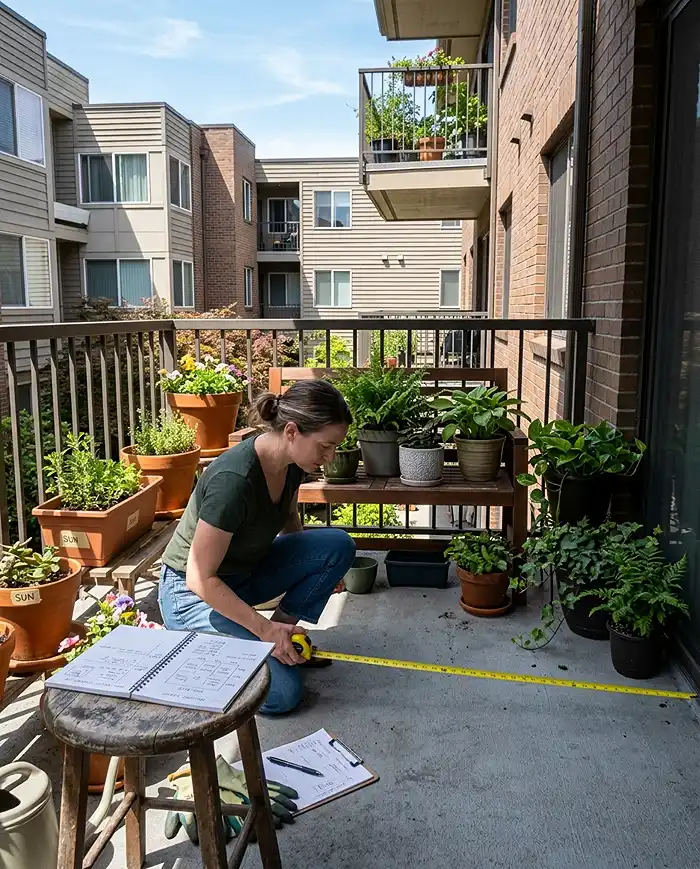
Quick Answer: Track sunlight for one full day before buying any plants. Most patio gardening failures come from mismatched light, not lack of skill.
How to map your patio light:
- Check sun exposure at 8am, 12pm, and 4pm — note which areas are lit vs. shaded
- Full sun = 6+ hours of direct light; part shade = 3-6 hours; full shade = under 3 hours
- Measure your usable floor space in feet so you know how many containers fit
- Note wind exposure — high-rise patios dry out plants fast and need windbreak solutions
Pro Tip: Reflective surfaces like white walls or glass doors can boost light by 20-30%, which opens up more plant options on shaded patios.
Plan a Portable Garden You Can Take With You
This is where small patio garden ideas for renters get fun. Design everything as if you’re moving in six months — because you might be.
Modular thinking means every element works independently and can be rearranged or relocated without disassembly. A freestanding trellis, a set of stackable planters, a folding bistro set — none of these need to be “installed.” They just need to be placed.
Think in zones: one anchor piece (like a tall planter or vertical shelf), a mid-layer of potted plants, and a ground-level arrangement. This creates visual depth without permanent structure.
Check out these tips for arranging pots on a small balcony to nail the layout before you start buying containers.
Choosing Lightweight, Movable Containers
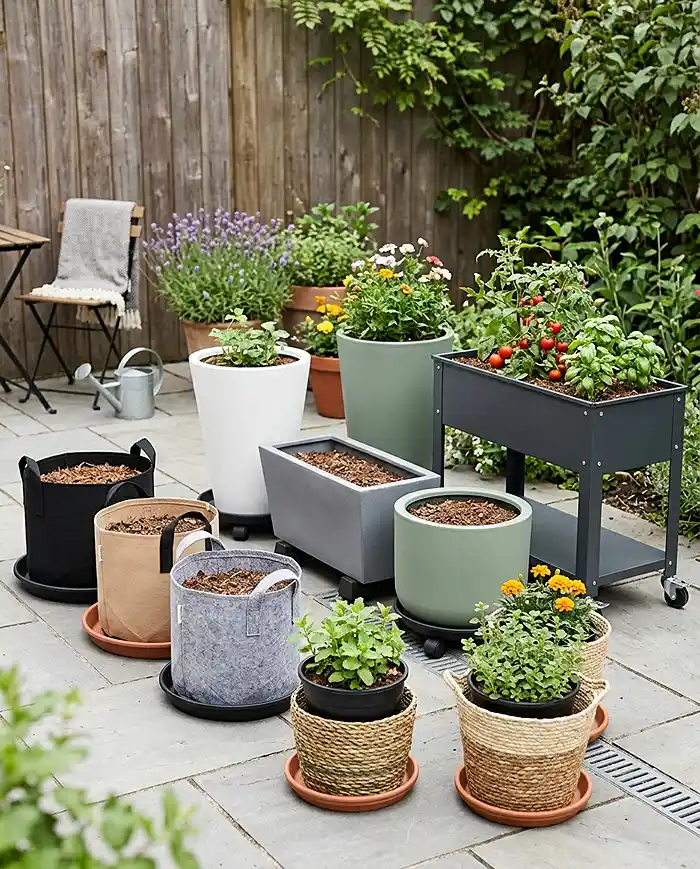
Quick Answer: Fabric pots, fiberglass planters, and rolling planter boxes are your best friends as a renter. They’re light, durable, and floor-friendly.
| Container Type | Best For | Watch Out For |
|---|---|---|
| Fabric grow bags | Vegetables, herbs, deep-rooted plants | Dry out faster — water more often |
| Lightweight fiberglass | Large statement plants, trees | More expensive upfront |
| Rolling planter boxes | Moving plants for sun-chasing | Wheels can mark soft patio surfaces |
| Plastic nursery pots in baskets | Budget setups, easy repotting | Less durable long-term |
Real Example: I swapped all my heavy ceramic pots for 7-gallon fabric bags one spring. The weight difference was staggering — and my tomatoes grew better with the improved root aeration.
Pro Tip: Place pot feet under every container. They improve drainage, protect the patio surface, and cost about $1 each.
No-Drill Vertical Gardening Ideas
Vertical gardening is the secret weapon of urban gardening in small spaces. Going up gives you more growing area without using more floor space — and you can do it entirely without a drill.
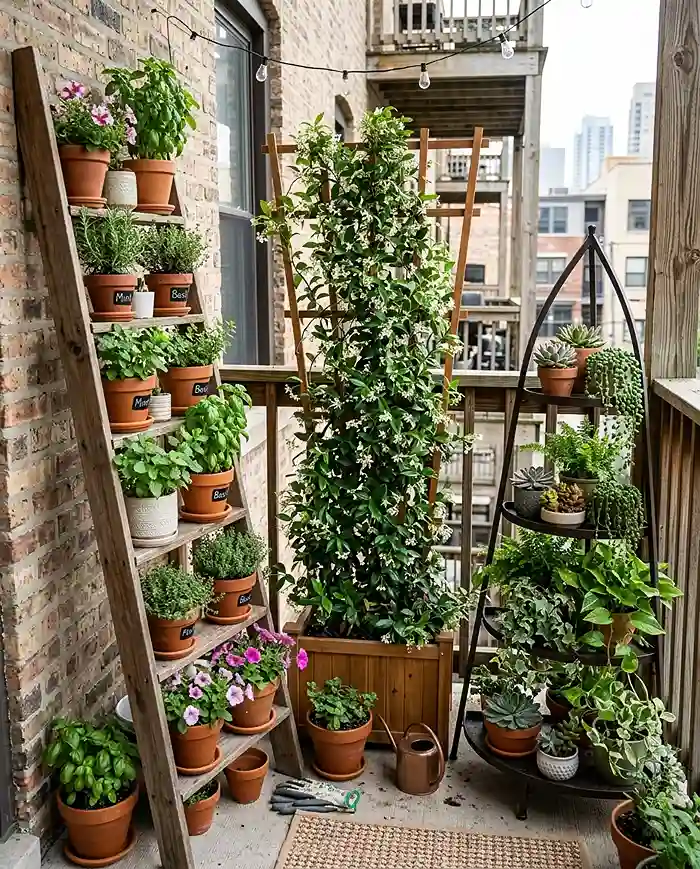
The key is freestanding structures. A leaning ladder shelf, a tiered plant stand, or a standalone trellis all create vertical interest without touching your walls. And when you move, they disassemble in minutes.
For inspiration on maximizing a small footprint, browse these small balcony garden ideas that work without any drilling or permanent installation.
Freestanding Trellises, Shelves, and Plant Stands
Quick Answer: A freestanding trellis or tiered plant stand can triple your growing capacity without touching a wall or railing.
Best freestanding vertical options for renters:
- A-frame trellis: Self-supporting, perfect for cucumbers, beans, or climbing flowers like morning glory
- Tiered plant stand: Gets 4-6 pots into the footprint of one — great for herbs and succulents
- Leaning ladder shelf: Leans against a wall without fasteners; holds 5-6 pots on angled rungs
- Baker’s rack style shelf: Holds heavy containers, easy to load and unload when moving
Pro Tip: Leaning structures need a grippy base — place a rubber mat underneath to prevent sliding and protect patio flooring.
Railing Planters and Tension-Rod Solutions
Quick Answer: Hook-on railing planters and tension rod shelving add greenery to vertical space without any permanent attachment.
Clip-on railing planters hang over the railing edge with a hook system — no screws involved. Confirm your railing width before buying (most fit 2-6 inch railings). Keep them lightweight: herbs and trailing plants work best here.
Tension rod plant shelves work like a shower caddy. They press against two walls in a corner and hold multiple small pots at eye level. Perfect for a shaded corner with ferns or pothos.
Pro Tip: Always check that railing planters face inward over your patio, not outward — a falling pot is a safety hazard and a lease violation in most buildings.
Best Plants for a Renter’s Patio Garden
The best tiny garden ideas are only as good as the plants backing them up. Choose varieties that thrive in containers, tolerate moves, and don’t punish you for an occasional missed watering.
Match plants to your light conditions first. Then factor in how much time you realistically have for care. A low-maintenance setup you actually maintain beats an ambitious one you neglect.
Low-Maintenance Flowers and Foliage
Quick Answer: Petunias, marigolds, and ornamental grasses are nearly move-proof and perform well in containers across USDA zones 4-10.
| Plant | Light Needs | Container Size | Notes |
|---|---|---|---|
| Wave Petunias | Full sun | 10″+ pot | Trailing, covers bare soil beautifully |
| Marigolds | Full sun | 6-8″ pot | Pest-deterrent, deadhead for more blooms |
| Ornamental Grass | Full to part sun | 12″+ pot | Drought-tolerant, adds movement |
| Hostas | Part to full shade | 12″+ pot | Bold foliage, thrives in low light |
| Calibrachoa | Full sun | 10″+ pot | Self-cleaning, no deadheading needed |
Pro Tip: Calibrachoa [million bells] are the most forgiving flowers for renters — they self-clean, need minimal fuss, and look expensive in window boxes.
Container Herbs and Compact Edibles
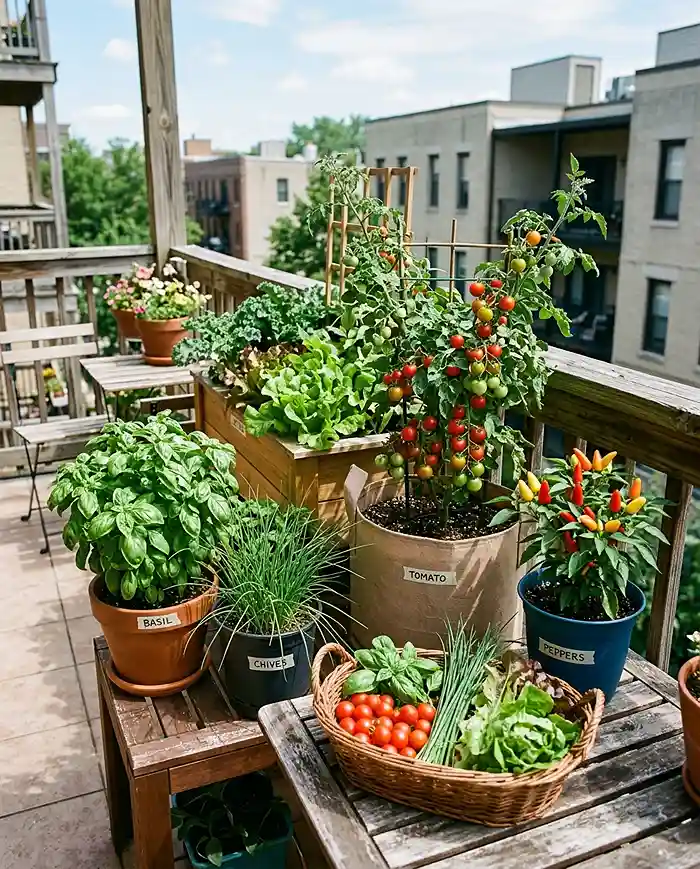
Quick Answer: Basil, chives, cherry tomatoes, and dwarf peppers all produce well in containers and give you something useful from your small patio garden.
Best edibles for renters’ containers:
- Basil: Grows in a 6″ pot, thrives in full sun, harvest regularly to prevent flowering
- Cherry tomatoes (Tumbling Tom or Tiny Tim): Bred for containers, mature in 55-65 days
- Dwarf peppers: ‘Lunchbox’ variety stays under 18″ and produces heavily
- Chives: Cut-and-come-again herb that tolerates part shade, perennial in zones 4-8
- Lettuce: Grows in shallow 6″ containers, harvest outer leaves for months
Real Example: One summer I grew a full salad garden on a 6×8 ft rental balcony in Seattle: two cherry tomato plants, a pot of mixed lettuce, basil, and chives. We ate from it every week for three months.
Pro Tip: Plant herbs near your kitchen door — you’re far more likely to actually use them if they’re within arm’s reach.
Privacy and Screening Without Permanent Fixtures
Privacy is the top complaint renters have about patio gardening — and it’s totally solvable without drilling a single hole.
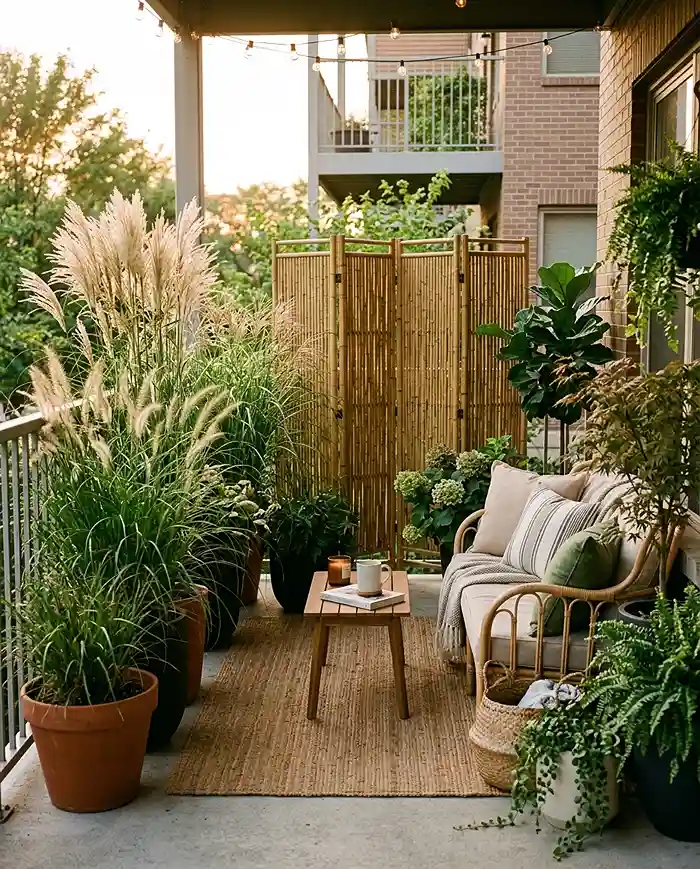
Freestanding bamboo screens or lattice panels (available at most garden centers) create an instant visual barrier. Place them in large ballast planters filled with gravel for stability. They look intentional and move easily.
Tall potted plants like bamboo (in containers to control spread), ornamental grasses, or arborvitae in large pots create a living privacy screen that looks stunning. Place three or four in a staggered line along the exposed edge of your patio.
For a climbing plant effect without a drilled trellis, lean a freestanding A-frame trellis against the area and train a fast-growing annual like black-eyed Susan vine or morning glory up it. By midsummer, you’ll have full coverage.
Tools and Materials Checklist
Here’s what every renter-friendly patio garden needs before you plant anything:
- Fabric grow bags or lightweight fiberglass containers (various sizes)
- Plant dollies or rolling platforms for heavy pots
- Pot feet (ceramic or plastic) for every container
- Large saucers for water collection — clear ones show sediment buildup
- Interlocking patio mat tiles or outdoor rug for floor protection
- Freestanding trellis or tiered plant stand
- Quality potting mix (not garden soil — too heavy, compacts in containers)
- Slow-release fertilizer granules (feeds for 3-4 months)
- Watering can or hose with a wand attachment
Step-by-Step: Setting Up Your Renter’s Patio Garden
Setting up in the right order prevents problems. Do this once and your small patio garden ideas for renters will stay deposit-safe all season.
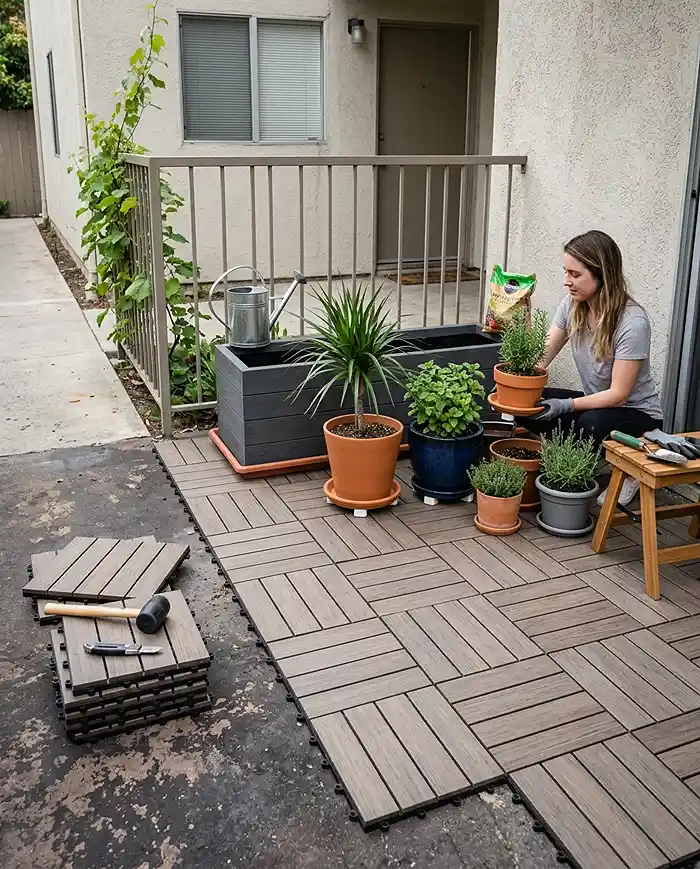
Step 1 — Protect the floor first. Lay your interlocking tiles or outdoor rug before anything else. This protects patio surfaces from stains, scratches, and water damage.
Step 2 — Place your anchor piece. This is your tallest, most visually dominant element — a freestanding trellis, a large statement planter, or a tiered shelf. Get this right before filling in around it.
Step 3 — Add mid-height plants. Medium containers with flowering plants or foliage go in next, arranged around your anchor piece. Odd numbers (3 or 5 containers) look more natural than even groupings.
Step 4 — Fill in ground level. Low-growing herbs, ground-cover plants, or trailing varieties complete the layered look. Pot feet go under every single container.
Step 5 — Add seating and finishing touches. Place your chair, small table, or bistro set last. This prevents you from boxing yourself in.
Protecting the Patio Floor From Stains and Water
Quick Answer: Pot feet, large saucers, and waterproof mats between containers and the patio surface prevent staining, waterlogging, and deposit-risking damage.
Every single pot needs a saucer. Watermarks and rust stains from unprotected pots are the most common deposit deduction in rental properties with patios.
For DIY pallet garden builds that work on patios, check the DIY pallet garden guide — it includes floor-protection tips specifically for renter situations.
Pro Tip: Elevate your entire setup slightly with deck tiles — this improves drainage, prevents pooling under your setup, and keeps the floor dry after heavy rain.
Styling Your Patio on a Budget
A great small space gardening setup doesn’t need to be expensive. Most of the visual impact comes from cohesion, not cost.
Pick one or two accent colors and repeat them through your containers, cushions, and decor. Mismatched pots look cluttered; a consistent palette looks curated.
Budget styling wins that make a big difference:
- Outdoor rug (even $20 from a discount store instantly defines the space)
- String lights strung across a freestanding frame — warm white, not cool white
- Thrifted metal buckets, colanders, or vintage crates as planted containers
- A small bistro set in a corner creates a destination, not just a storage area
- Spray-paint mismatched plastic pots in one consistent matte color
Seasonal Care and Easy Maintenance
Container gardens need a little more attention than in-ground beds — but “a little more” is still manageable with the right system.
Watering: Containers dry out faster than garden beds. In summer, most pots need water every 1-2 days. Stick your finger an inch into the soil — if it’s dry, water deeply until it drains from the bottom.
Feeding: Add slow-release granular fertilizer at planting, then use liquid fertilizer every 2 weeks once plants are actively growing. Container soil gets depleted fast.
Seasonal transitions: In fall, pull tender annuals before frost (zones 5 and below). Move frost-sensitive plants indoors or to a sheltered corner. Perennial herbs like chives and oregano can overwinter outdoors in zones 5-8.
The Royal Horticultural Society’s container care guide is one of the best free resources for seasonal container maintenance across climates.
Common Problems and Solutions
Plants Drying Out on a Hot, Exposed Patio
Quick Answer: Group containers together, use self-watering pots, and add a shade cloth during peak afternoon heat.
Grouped containers create a microclimate — they shade each other’s soil and reduce moisture loss. This alone can cut your watering frequency by 30%.
Self-watering planters with built-in reservoirs are a game-changer for hot, exposed patios in urban gardening conditions. Plants drink what they need, when they need it.
Worried About Damaging the Patio Surface
Quick Answer: Pot feet, large saucers, and interlocking deck tiles between containers and the patio floor prevent all the common damage types.
The main culprits are rust stains from metal containers, watermarks from sitting saucers, and scratches from heavy pots being dragged. Address all three with protective layering before your first plant goes down.
Limited Sunlight on a Shaded Patio
Quick Answer: Shade-tolerant plants like ferns, hostas, impatiens, and mint thrive with just 2-3 hours of indirect light.
Don’t try to fight shade with sun-lovers — you’ll lose. Instead, lean into it with shade plants and use reflective surfaces (white walls, mirrors, silver-toned containers) to bounce available light around. A shade garden can be just as lush and interesting as a sunny one.
Frequently Asked Questions
How can renters garden without damaging the property?
Stick entirely to containers, freestanding structures, and portable setups. Use pot feet and saucers under every planter, lay protective matting on the patio floor, and avoid drilling, painting, or anchoring anything to walls or railings. Get landlord permission in writing if you plan any large installations.
What are the best plants for a rental patio?
Low-maintenance choices like petunias, marigolds, calibrachoa, and hostas (for shade) are reliable performers. For edibles, cherry tomatoes, basil, chives, and dwarf peppers all produce well in containers. Match your plant choices to your actual light conditions first.
How do I create privacy on a rental patio?
Use freestanding bamboo screens or lattice panels weighted in gravel-filled planters. Tall container plants like ornamental grasses, bamboo, or arborvitae in large pots create a living screen. A freestanding trellis with a fast-growing annual like morning glory gives full coverage by midsummer.
Can I take my patio garden with me when I move?
Yes — that’s the whole point of a container-based setup. Every pot, plant stand, trellis, and tile moves with you. Fabric grow bags are especially easy to transport. Design your garden to be modular from day one and a move becomes a one-truck afternoon.
Key Takeaways
- The best small patio garden ideas for renters are built entirely on containers, freestanding structures, and portable elements — no drilling, no permanent changes
- Read your lease and assess your sun exposure before buying a single plant or pot
- Lightweight containers (fabric bags, fiberglass) and pot feet protect your deposit and make moving day manageable
- Vertical gardening with freestanding shelves and trellises doubles your growing space without touching walls
- Match plants to your actual light conditions — a shade patio garden with hostas and ferns beats a struggling sun-lover every time